Elements of a Short Story Terms
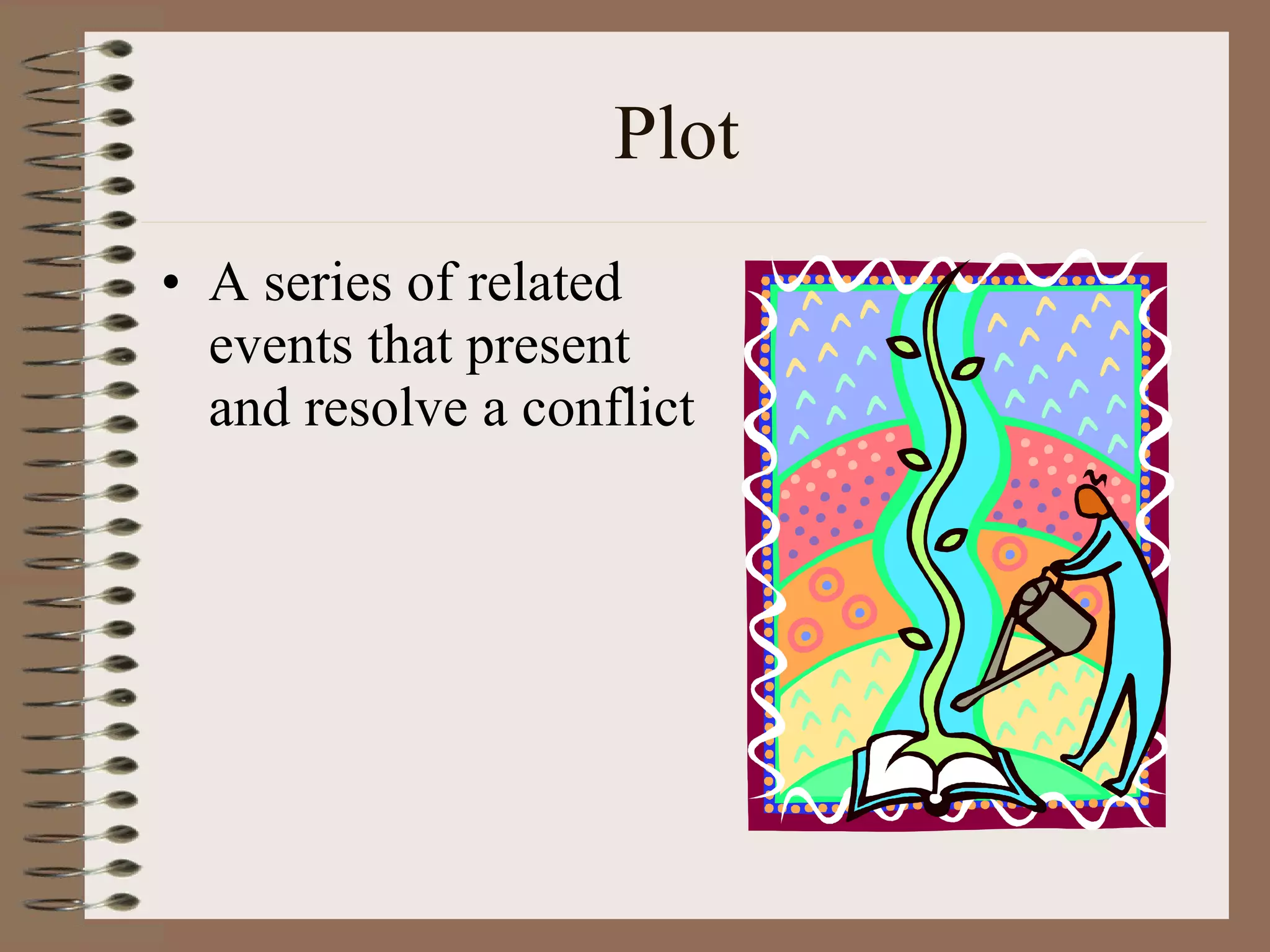
Plot A series of related events that present and resolve a conflict
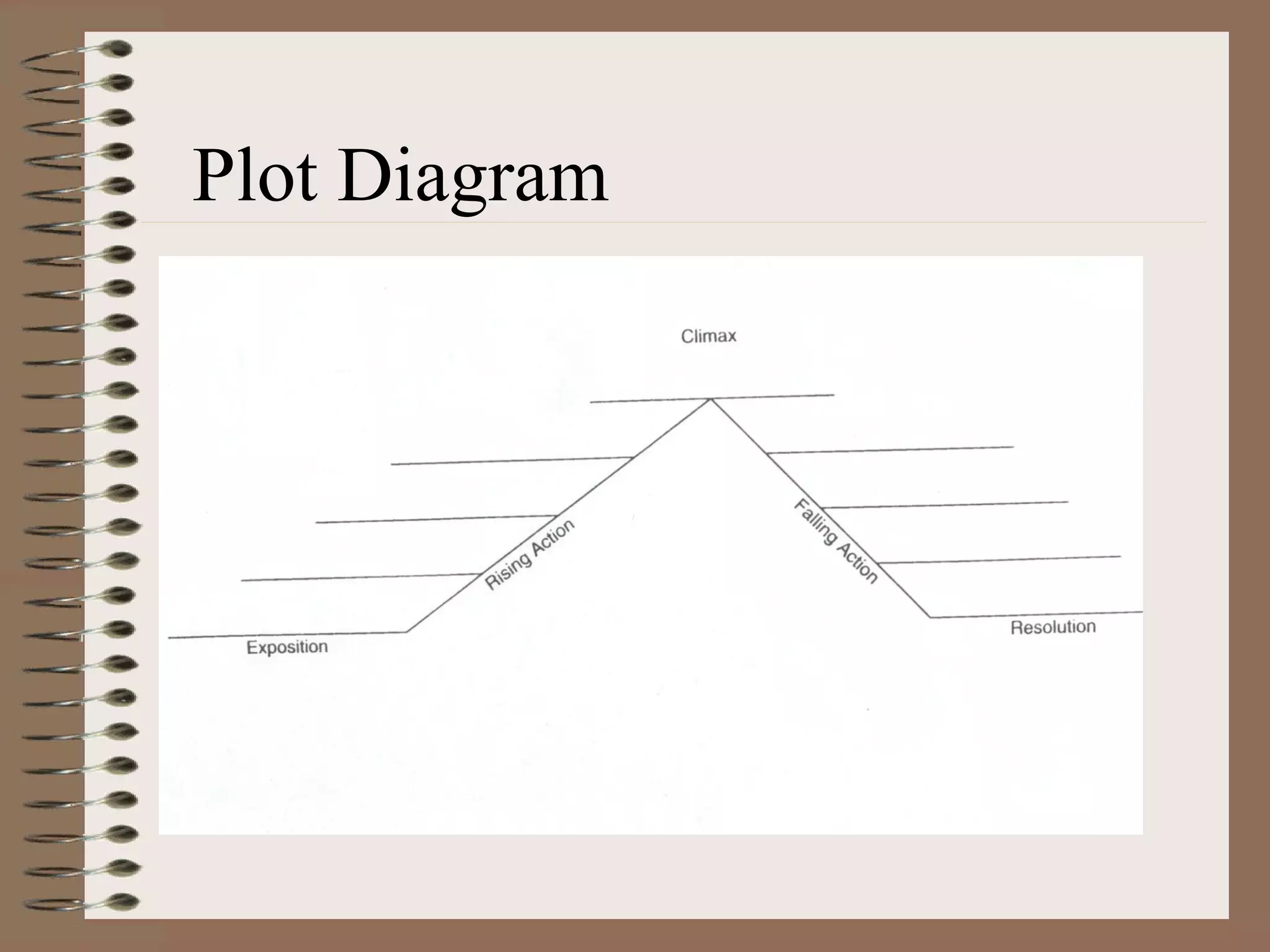
Plot Diagram
Exposition and Rising Action Exposition The part of the story, usually near  the beginning, in which the  characters are introduced, the  background is explained, and the  setting is described. Rising Action The central part of a story during which various problems arise after a conflict is introduced.
Climax, Falling Action and Resolution Climax The most exciting point in the story, when the conflict is decided   Falling Action The action and dialogue following the climax that lead the reader into the story’s end. Resolution - The conflict is resolved (positively or negatively) and the story is brought to a close   - Also know as “Denouement”
Main characters Protagonist MAIN CHARACTER  of the story Often, hero or character the audience is supposed to feel most sympathetic for Not always…for example, the  main character  could be a serial killer. Antagonist primary adversary of the protagonist Sometimes the villain  Again, not always. In the previous example, the  policeman  who is trying to catch the serial killer (who is the main character, and therefore the protagonist) is the  antagonist .
Conflict The Primary struggle between the main character or characters and an adverse character, group or force   Internal Conflict A struggle between a character and him/herself   External Conflict A  struggle between a character and an outside force. Man vs. Man Man vs. Nature Man vs. Supernatural Man vs. Society
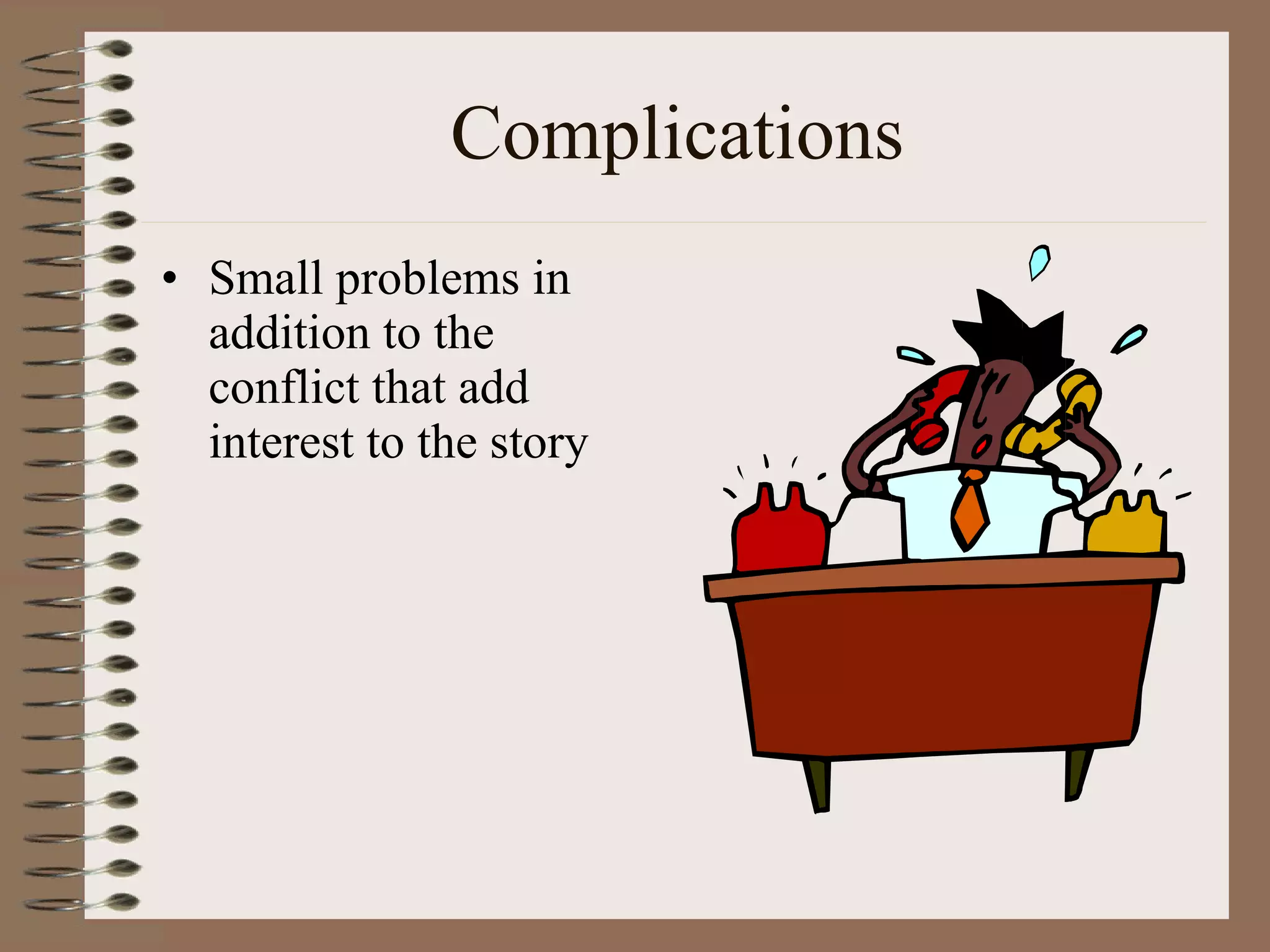
Complications Small problems in addition to the conflict that add interest to the story
Suspense The uncertainty or anxiety that a reader feels about what will happen in a story   Foreshadowing Dilemma Mystery Reversal
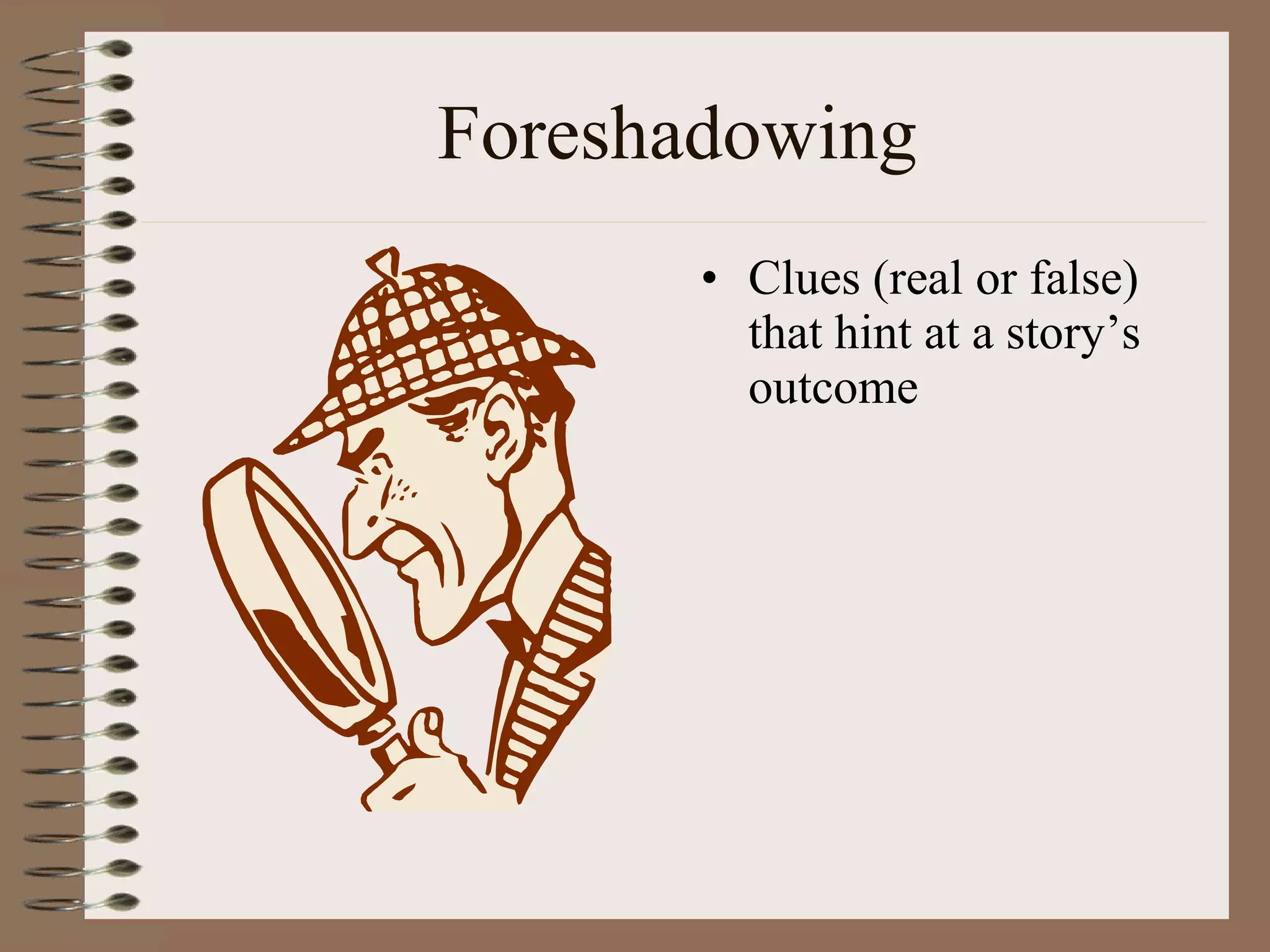
Foreshadowing Clues (real or false) that hint at a story’s outcome
Dilemma A character that we care about is in peril or must choose between two dangerous courses of action
Mystery The creation of suspense by withholding information or by presenting unusual circumstances
Reversal A sudden change in a character’s situation from good to bad or vice versa
Characterization The technique used by a writer to create and reveal the personalities of the characters in a written work.  This may be done by: Direct Characterization The author directly states aspects of the character’s personality i.e.  He was a  grumpy  and  unfriendly  old man, known for his  hatred of young children and puppies . Indirect Characterization More common method for most characters, especially major characters We must infer personality traits from the story
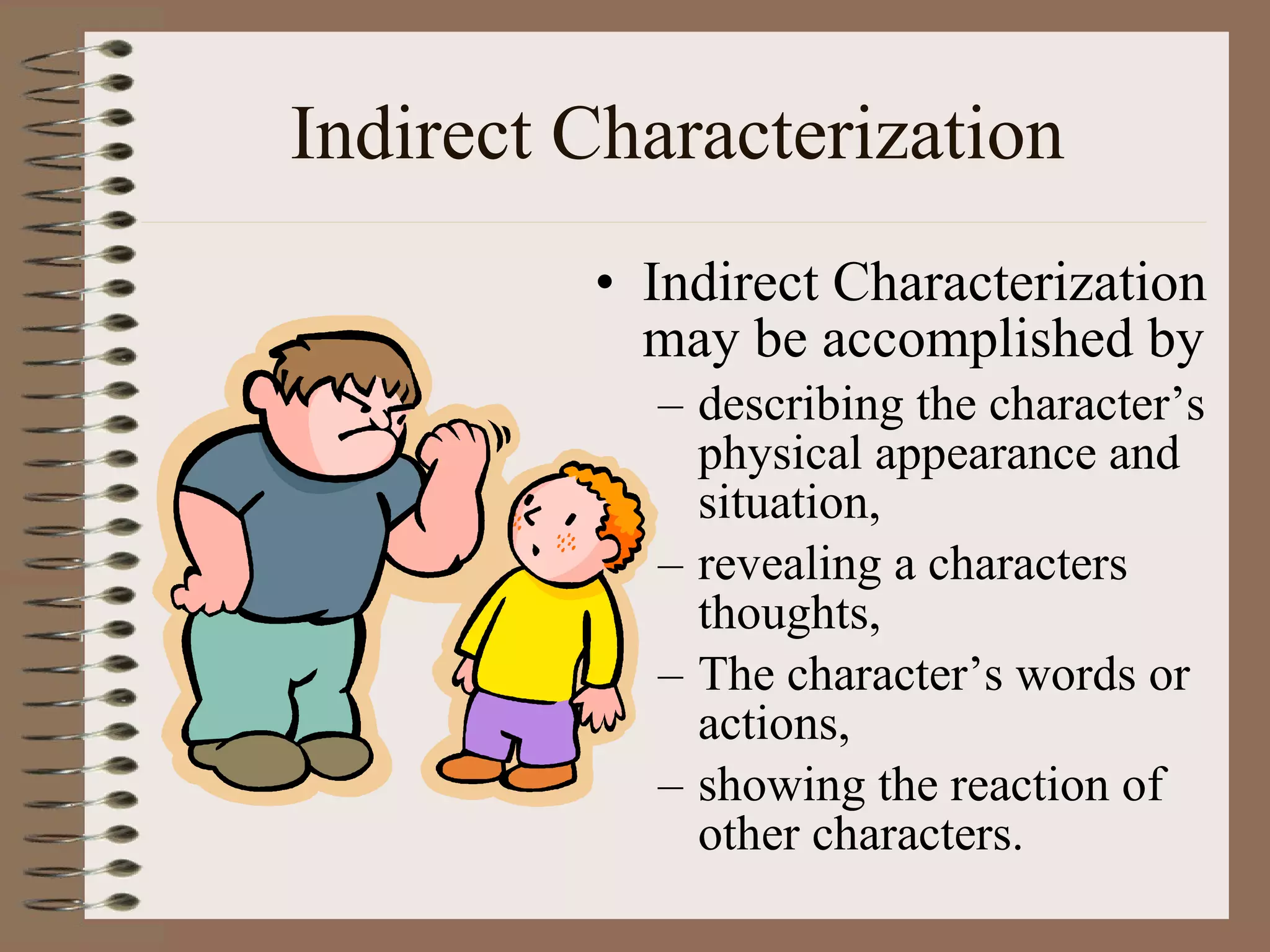
Indirect Characterization Indirect Characterization may be accomplished by describing the character’s physical appearance and situation,  revealing a characters thoughts,  The character’s words or actions,  showing the reaction of other characters.
Types of Characters Flat Character shows only one trait  Round Character Shows many different traits, good and bad  Static Character character does not change through the course of the story Dynamic Character character develops and grows during the course of the story
Setting The  time  and  place  in which the action of a narrative occurs
Theme The underlying meaning of a literary work.  This differs from the subject in that it involves a statement of opinion about that subject.  The theme may be stated or implied.  Not every literary work has a theme, and some have more than one
Point of View The relationship between the narrator of a story and the characters in it   Narrator  is NOT the same as  author Types of POV: First Person Third Person, Omniscient Third Person, Limited Omniscient Third Person, Objective
P.O.V. continued First Person The narrator offers a personal account of their own experiences or describes what happens to other characters as the narrator sees it   Third Person The narrator stands outside the action (non-participatory) and presents  Omniscient (all-knowing) point of view   Can see the thoughts & emotions of all (or numerous) characters Limited Omniscient focuses on one character ’s thoughts and viewpoints Objective Describes only what can be seen “ Reporter style”
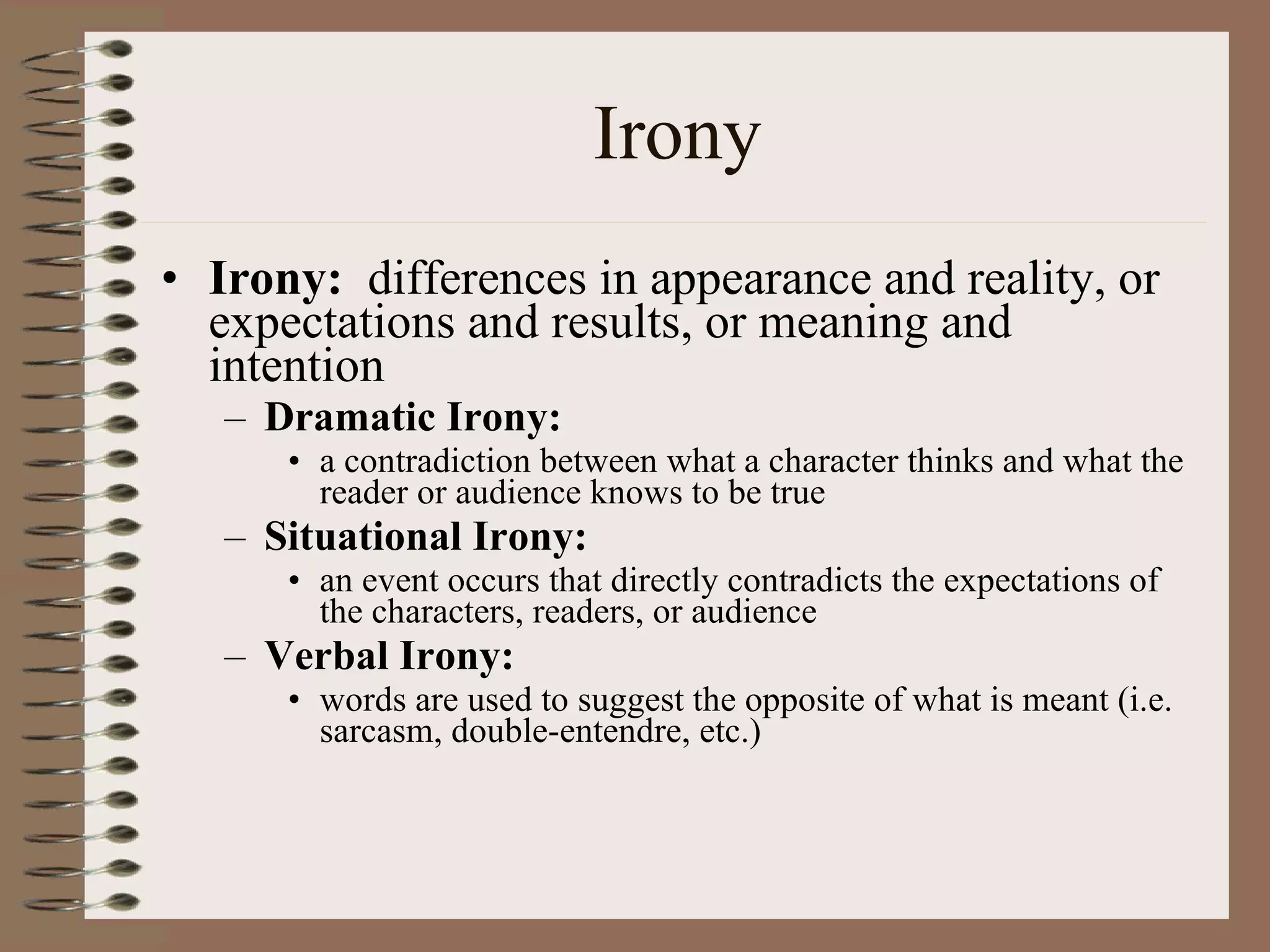
Irony Irony:  differences in appearance and reality, or expectations and results, or meaning and intention Dramatic Irony:  a contradiction between what a character thinks and what the reader or audience knows to be true Situational Irony:   an event occurs that directly contradicts the expectations of the characters, readers, or audience Verbal Irony:  words are used to suggest the opposite of what is meant (i.e. sarcasm, double-entendre, etc.)

Literary Elements

  • 1.
    Elements of aShort Story Terms
  • 2.
    Plot A seriesof related events that present and resolve a conflict
  • 3.
  • 4.
    Exposition and RisingAction Exposition The part of the story, usually near the beginning, in which the characters are introduced, the background is explained, and the setting is described. Rising Action The central part of a story during which various problems arise after a conflict is introduced.
  • 5.
    Climax, Falling Actionand Resolution Climax The most exciting point in the story, when the conflict is decided Falling Action The action and dialogue following the climax that lead the reader into the story’s end. Resolution - The conflict is resolved (positively or negatively) and the story is brought to a close - Also know as “Denouement”
  • 6.
    Main characters ProtagonistMAIN CHARACTER of the story Often, hero or character the audience is supposed to feel most sympathetic for Not always…for example, the main character could be a serial killer. Antagonist primary adversary of the protagonist Sometimes the villain Again, not always. In the previous example, the policeman who is trying to catch the serial killer (who is the main character, and therefore the protagonist) is the antagonist .
  • 7.
    Conflict The Primarystruggle between the main character or characters and an adverse character, group or force Internal Conflict A struggle between a character and him/herself External Conflict A struggle between a character and an outside force. Man vs. Man Man vs. Nature Man vs. Supernatural Man vs. Society
  • 8.
    Complications Small problemsin addition to the conflict that add interest to the story
  • 9.
    Suspense The uncertaintyor anxiety that a reader feels about what will happen in a story Foreshadowing Dilemma Mystery Reversal
  • 10.
    Foreshadowing Clues (realor false) that hint at a story’s outcome
  • 11.
    Dilemma A characterthat we care about is in peril or must choose between two dangerous courses of action
  • 12.
    Mystery The creationof suspense by withholding information or by presenting unusual circumstances
  • 13.
    Reversal A suddenchange in a character’s situation from good to bad or vice versa
  • 14.
    Characterization The techniqueused by a writer to create and reveal the personalities of the characters in a written work. This may be done by: Direct Characterization The author directly states aspects of the character’s personality i.e. He was a grumpy and unfriendly old man, known for his hatred of young children and puppies . Indirect Characterization More common method for most characters, especially major characters We must infer personality traits from the story
  • 15.
    Indirect Characterization IndirectCharacterization may be accomplished by describing the character’s physical appearance and situation, revealing a characters thoughts, The character’s words or actions, showing the reaction of other characters.
  • 16.
    Types of CharactersFlat Character shows only one trait Round Character Shows many different traits, good and bad Static Character character does not change through the course of the story Dynamic Character character develops and grows during the course of the story
  • 17.
    Setting The time and place in which the action of a narrative occurs
  • 18.
    Theme The underlyingmeaning of a literary work. This differs from the subject in that it involves a statement of opinion about that subject. The theme may be stated or implied. Not every literary work has a theme, and some have more than one
  • 19.
    Point of ViewThe relationship between the narrator of a story and the characters in it Narrator is NOT the same as author Types of POV: First Person Third Person, Omniscient Third Person, Limited Omniscient Third Person, Objective
  • 20.
    P.O.V. continued FirstPerson The narrator offers a personal account of their own experiences or describes what happens to other characters as the narrator sees it Third Person The narrator stands outside the action (non-participatory) and presents Omniscient (all-knowing) point of view Can see the thoughts & emotions of all (or numerous) characters Limited Omniscient focuses on one character ’s thoughts and viewpoints Objective Describes only what can be seen “ Reporter style”
  • 21.
    Irony Irony: differences in appearance and reality, or expectations and results, or meaning and intention Dramatic Irony: a contradiction between what a character thinks and what the reader or audience knows to be true Situational Irony: an event occurs that directly contradicts the expectations of the characters, readers, or audience Verbal Irony: words are used to suggest the opposite of what is meant (i.e. sarcasm, double-entendre, etc.)