Downloaded 131 times

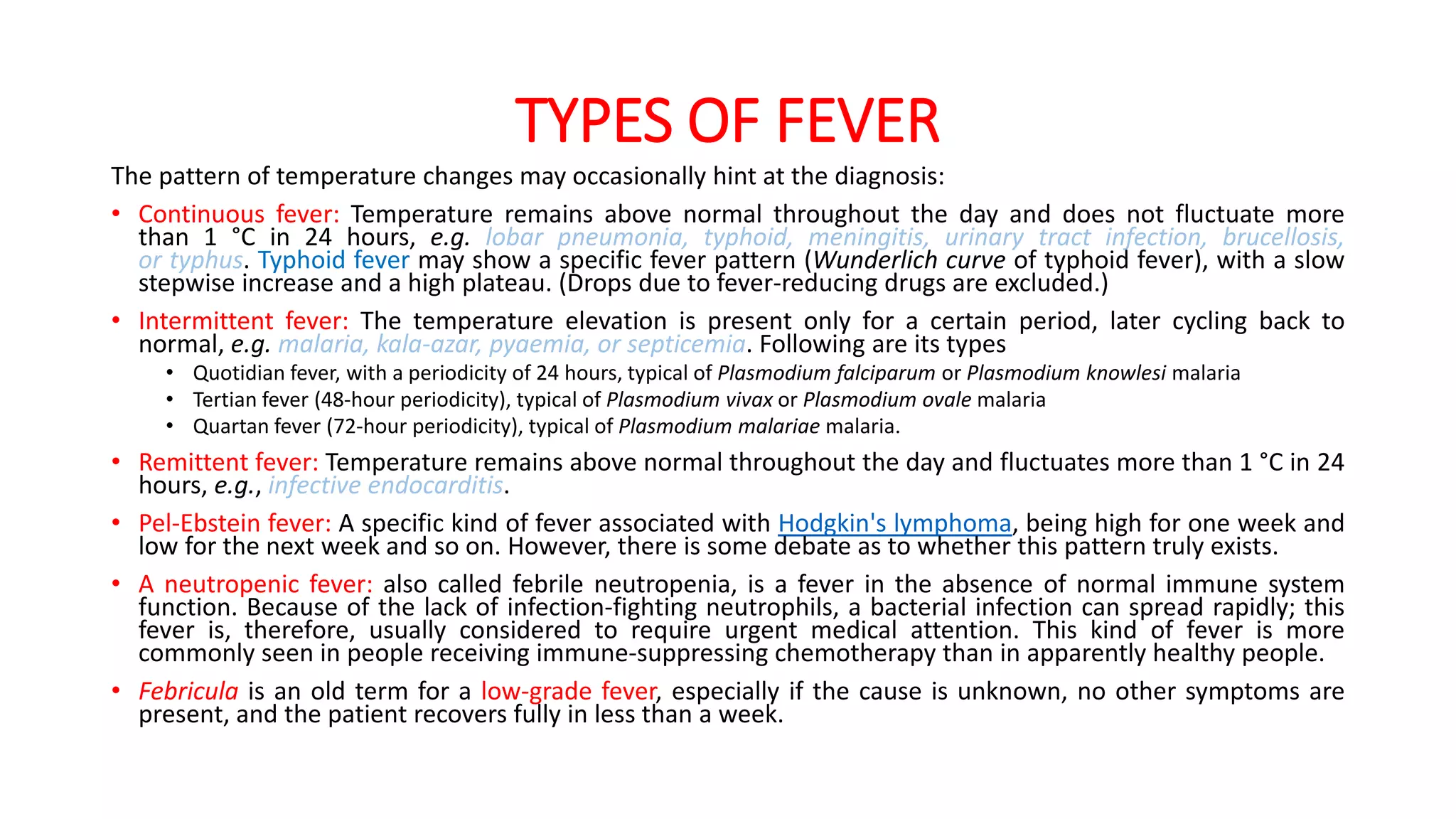

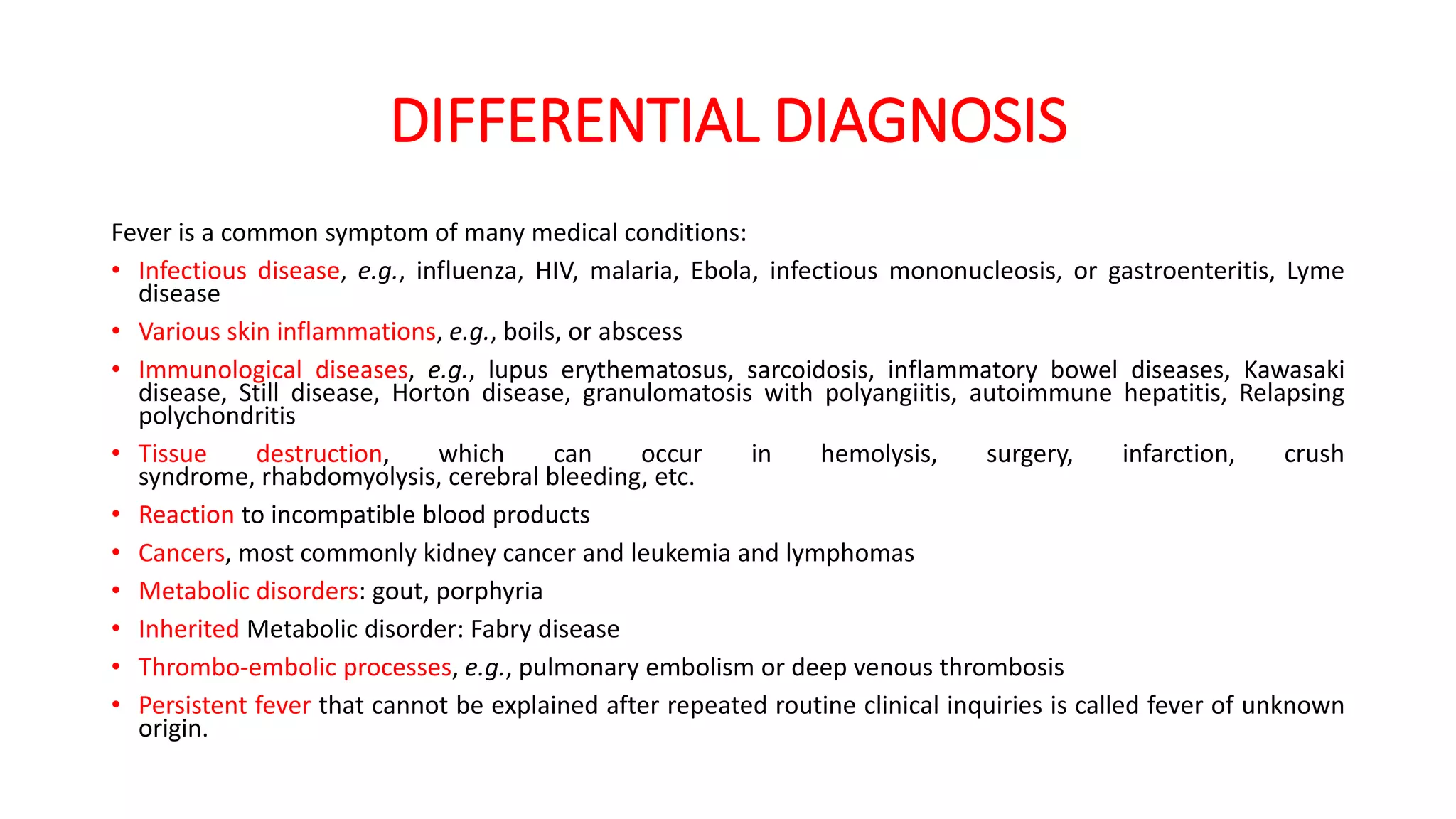


Fever is defined as a body temperature above the normal range due to an increase in the body's temperature set point. There are different types of fevers classified by their temperature patterns, including continuous, intermittent, remittent, and hyperpyrexia (extreme fever over 106.7°F). Fever has many potential causes, including infections by viruses, bacteria, parasites, and fungi, as well as non-infectious conditions like autoimmune diseases, cancers, and metabolic disorders. Treatment focuses on reducing fever through conservative measures like rest, fluids, and antipyretic medications like acetaminophen and ibuprofen.


![Nephrotic syndrome [full]](https://cdn.slidesharecdn.com/ss_thumbnails/nephroticsyndromefull-161026190255-thumbnail.jpg?width=640&height=640&fit=bounds)


![Hepatitis [full]](https://cdn.slidesharecdn.com/ss_thumbnails/hepatitisfull-161102103834-thumbnail.jpg?width=640&height=640&fit=bounds)


