Pyrexia of
Unknown Origin
- Dr. Akif A.B
-Fever >38.3*C (101*F) on atleast 2 occasions
- illness duration more than 3 weeks
-No known immunocompromised state
-Uncertain diagnosis despite one week of inpatient evaluation
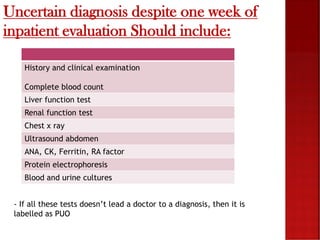
Uncertain diagnosis despite one week of
inpatient evaluation Should include:
History and clinical examination
Complete blood count
Liver function test
Renal function test
Chest x ray
Ultrasound abdomen
ANA, CK, Ferritin, RA factor
Protein electrophoresis
Blood and urine cultures
- If all these tests doesn’t lead a doctor to a diagnosis, then it is
labelled as PUO
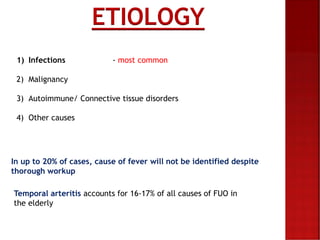
ETIOLOGY
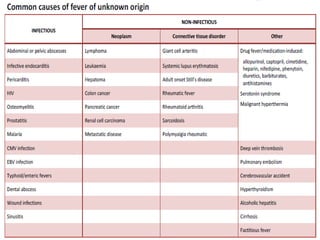
1) Infections - most common
2) Malignancy
3) Autoimmune/ Connective tissue disorders
4) Other causes
In up to 20% of cases, cause of fever will not be identified despite
thorough workup
Temporal arteritis accounts for 16-17% of all causes of FUO in
the elderly
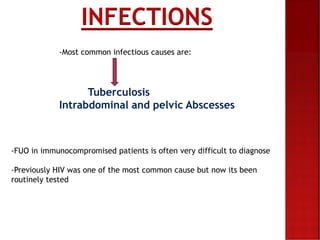
INFECTIONS
-Most common infectious causes are:
Tuberculosis
Intrabdominal and pelvic Abscesses
-FUO in immunocompromised patients is often very difficult to diagnose
-Previously HIV was one of the most common cause but now its been
routinely tested
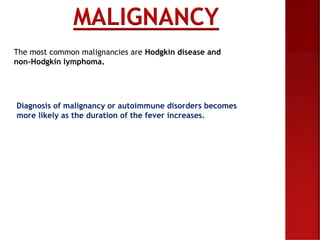
The most common malignancies are Hodgkin disease and
non-Hodgkin lymphoma.
MALIGNANCY
Diagnosis of malignancy or autoimmune disorders becomes
more likely as the duration of the fever increases.
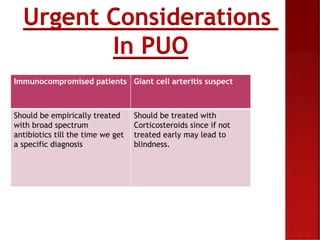
Urgent Considerations
In PUO
Immunocompromised patients Giant cell arteritis suspect
Should be empirically treated
with broad spectrum
antibiotics till the time we get
a specific diagnosis
Should be treated with
Corticosteroids since if not
treated early may lead to
blindness.
Work up
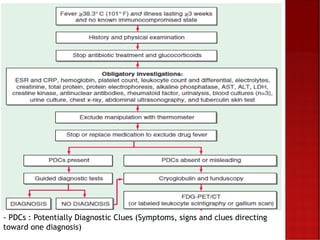
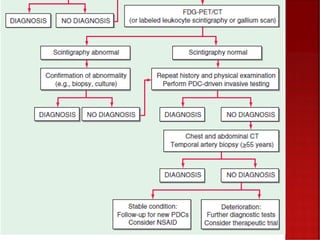
- PDCs : Potentially Diagnostic Clues (Symptoms, signs and clues directing
toward one diagnosis)
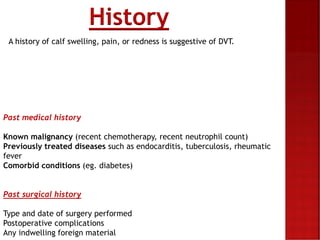
History
Past medical history
Known malignancy (recent chemotherapy, recent neutrophil count)
Previously treated diseases such as endocarditis, tuberculosis, rheumatic
fever
Comorbid conditions (eg. diabetes)
Past surgical history
Type and date of surgery performed
Postoperative complications
Any indwelling foreign material
A history of calf swelling, pain, or redness is suggestive of DVT.
Medication history
Full list of medications
Include over-the-counter and herbal remedies
Social history
Recent travel history
Sexual history including enquiring about sexual practices
Recreational drug use
Hobbies including exposure to pets/animals
Employment history including exposures
Unusual dietary habits eg. consumption of unpasteurised
dairy products or rare meats
History
Skin and nail bed exam for clubbing, nodules, lesions, rashes
Temporal artery palpation
Gums and oral cavity
Auscultation for bruits and murmurs
Abdominal palpation for hepatosplenomegaly
Rectal examination for abscesses
Testicular examination
Palpate for lymphadenopathy
Focal neurologic signs
Musculoskeletal: bony tenderness, joint effusion
Examination
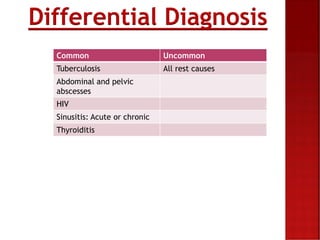
Differential Diagnosis
Common Uncommon
Tuberculosis All rest causes
Abdominal and pelvic
abscesses
HIV
Sinusitis: Acute or chronic
Thyroiditis
References:
1) Harrison’s 19th edition
2) PUO, BMJ
Tuberculosis
fever of unknown origin

fever of unknown origin

  • 1.
  • 2.
    -Fever >38.3*C (101*F)on atleast 2 occasions - illness duration more than 3 weeks -No known immunocompromised state -Uncertain diagnosis despite one week of inpatient evaluation
  • 3.
    Uncertain diagnosis despiteone week of inpatient evaluation Should include: History and clinical examination Complete blood count Liver function test Renal function test Chest x ray Ultrasound abdomen ANA, CK, Ferritin, RA factor Protein electrophoresis Blood and urine cultures - If all these tests doesn’t lead a doctor to a diagnosis, then it is labelled as PUO
  • 4.
    ETIOLOGY 1) Infections -most common 2) Malignancy 3) Autoimmune/ Connective tissue disorders 4) Other causes In up to 20% of cases, cause of fever will not be identified despite thorough workup Temporal arteritis accounts for 16-17% of all causes of FUO in the elderly
  • 6.
    INFECTIONS -Most common infectiouscauses are: Tuberculosis Intrabdominal and pelvic Abscesses -FUO in immunocompromised patients is often very difficult to diagnose -Previously HIV was one of the most common cause but now its been routinely tested
  • 7.
    The most commonmalignancies are Hodgkin disease and non-Hodgkin lymphoma. MALIGNANCY Diagnosis of malignancy or autoimmune disorders becomes more likely as the duration of the fever increases.
  • 8.
    Urgent Considerations In PUO Immunocompromisedpatients Giant cell arteritis suspect Should be empirically treated with broad spectrum antibiotics till the time we get a specific diagnosis Should be treated with Corticosteroids since if not treated early may lead to blindness.
  • 9.
  • 10.
    - PDCs :Potentially Diagnostic Clues (Symptoms, signs and clues directing toward one diagnosis)
  • 12.
    History Past medical history Knownmalignancy (recent chemotherapy, recent neutrophil count) Previously treated diseases such as endocarditis, tuberculosis, rheumatic fever Comorbid conditions (eg. diabetes) Past surgical history Type and date of surgery performed Postoperative complications Any indwelling foreign material A history of calf swelling, pain, or redness is suggestive of DVT.
  • 13.
    Medication history Full listof medications Include over-the-counter and herbal remedies Social history Recent travel history Sexual history including enquiring about sexual practices Recreational drug use Hobbies including exposure to pets/animals Employment history including exposures Unusual dietary habits eg. consumption of unpasteurised dairy products or rare meats History
  • 14.
    Skin and nailbed exam for clubbing, nodules, lesions, rashes Temporal artery palpation Gums and oral cavity Auscultation for bruits and murmurs Abdominal palpation for hepatosplenomegaly Rectal examination for abscesses Testicular examination Palpate for lymphadenopathy Focal neurologic signs Musculoskeletal: bony tenderness, joint effusion Examination
  • 15.
    Differential Diagnosis Common Uncommon TuberculosisAll rest causes Abdominal and pelvic abscesses HIV Sinusitis: Acute or chronic Thyroiditis
  • 16.
  • 17.