 By the third month of development, all major blood vessels are present and
functioning.
 Fetus have blood flow to & from placenta.
 Resistance to blood flow is high in lungs
DEFINITION
‘The fetal circulation is the circulatory system of a human fetus, often
encompassing the entire fetoplcental circulation which includes the umbilical cord
and the blood vessels within the placenta that carry fetal blood.’
CHARACTERISTICS
• Placenta is the source of oxygen for the fetus
• Fetus lung received less than 1 percent of blood volume
• No gas exchange occurs in lungs
• Right atrium of heart have highest concentration of oxygenated blood
• Presence of Unique structures
Cardiac output- during fetal life 350 ml per kg per minute
Following birth 500 ml per minute
Heart rate= 12.-140 per minute
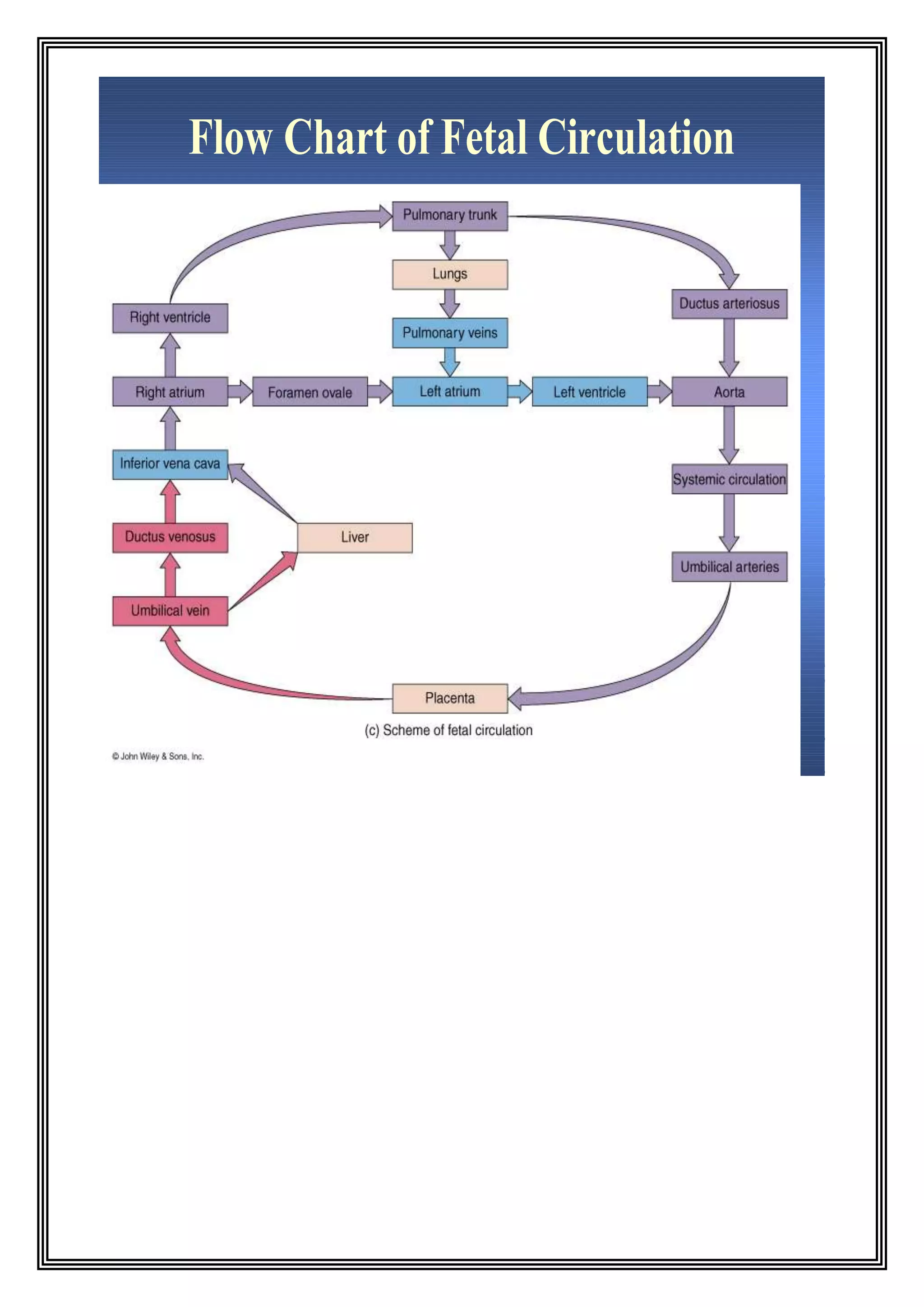
Flow Chart of Fetal Circulation
FLOW OF CIRCULATION
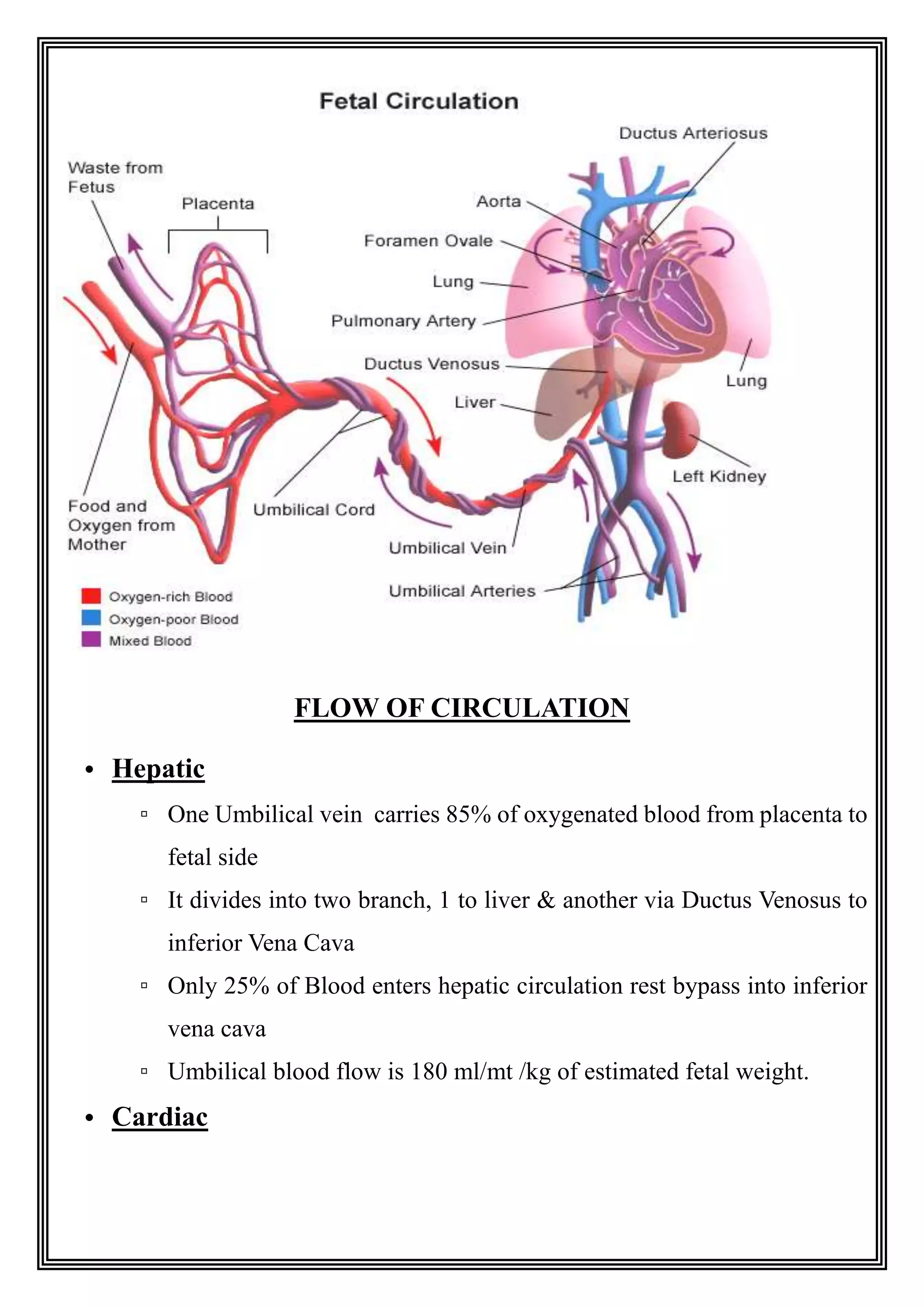
• Hepatic
▫ One Umbilical vein carries 85% of oxygenated blood from placenta to
fetal side
▫ It divides into two branch, 1 to liver & another via Ductus Venosus to
inferior Vena Cava
▫ Only 25% of Blood enters hepatic circulation rest bypass into inferior
vena cava
▫ Umbilical blood flow is 180 ml/mt /kg of estimated fetal weight.
• Cardiac
▫ Blood receives from Superior & Inferior Vena Cava into Rt. Atrium
pass through the Foramen Ovale to Lt. Atrium (More than 1/3rd
of total
blood received)
▫ Some blood passes from Rt. Atrium to Rt. Ventricle & from there to
pulmonary artery
▫ Blood of Lt. Atrium enters into Lt. Ventricle & from there to Aorta
(Oxygenated blood)
• Pulmonary
▫ Blood of pulmonary artery by pass the lungs & enters into Descending
aorta via Ductus Arteriosus (De-oxygenated blood)
▫ Small amount of blood reaches lungs for development & returns to Lt.
Atrium via Pulmonary Vein (No gas exchange takes place)
▫ Pulmonary blood flow is estimated to be 75 ml/kg of fetal weight
• Systemic
▫ Blood receives in aorta goes to Carotid artery & Head (maximum
oxygenated blood)
▫ Descending aorta have mixed blood to supply the lower half of the body
▫ Umbilical artery, arising from Hypo gastric artery, branch of internal
iliac artery carries waste & deoxygenated blood back to placenta
WHAT HAPPENS AT BIRTH?
The change from fetal to postnatal circulation happens very quickly.
Changes are initiated by baby’s first breath.
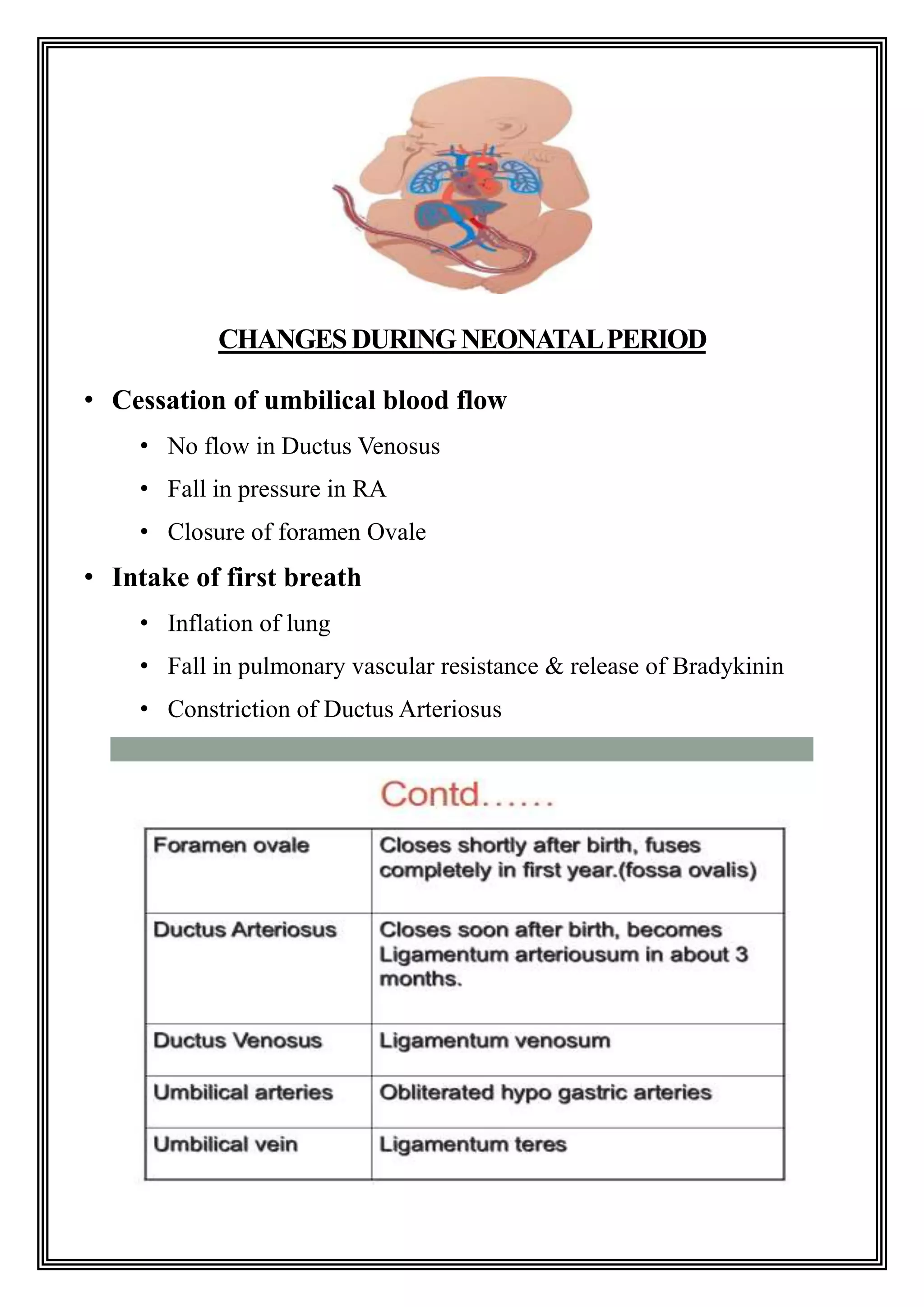
CHANGESDURINGNEONATALPERIOD
• Cessation of umbilical blood flow
• No flow in Ductus Venosus
• Fall in pressure in RA
• Closure of foramen Ovale
• Intake of first breath
• Inflation of lung
• Fall in pulmonary vascular resistance & release of Bradykinin
• Constriction of Ductus Arteriosus
 Nutritional – Breast feeding
 Elimination – Kidney & GI system
 Temperature regulation
 Development of communication
FETAL VS INFANT CIRCULATION
FETAL INFANT
 Low pressure system  High pressure system
 Right to left shunting  Left to right shunting
 Lungs non-functional  Lungs functional
 Increased pulmonary resistance  Decreased pulmonary
resistance
 Decreased systemic resistance  Increased systemic resistance

Fetal circulation

  • 1.
     By thethird month of development, all major blood vessels are present and functioning.  Fetus have blood flow to & from placenta.  Resistance to blood flow is high in lungs DEFINITION ‘The fetal circulation is the circulatory system of a human fetus, often encompassing the entire fetoplcental circulation which includes the umbilical cord and the blood vessels within the placenta that carry fetal blood.’ CHARACTERISTICS • Placenta is the source of oxygen for the fetus • Fetus lung received less than 1 percent of blood volume • No gas exchange occurs in lungs • Right atrium of heart have highest concentration of oxygenated blood • Presence of Unique structures
  • 2.
    Cardiac output- duringfetal life 350 ml per kg per minute Following birth 500 ml per minute Heart rate= 12.-140 per minute
  • 3.
    Flow Chart ofFetal Circulation
  • 4.
    FLOW OF CIRCULATION •Hepatic ▫ One Umbilical vein carries 85% of oxygenated blood from placenta to fetal side ▫ It divides into two branch, 1 to liver & another via Ductus Venosus to inferior Vena Cava ▫ Only 25% of Blood enters hepatic circulation rest bypass into inferior vena cava ▫ Umbilical blood flow is 180 ml/mt /kg of estimated fetal weight. • Cardiac
  • 5.
    ▫ Blood receivesfrom Superior & Inferior Vena Cava into Rt. Atrium pass through the Foramen Ovale to Lt. Atrium (More than 1/3rd of total blood received) ▫ Some blood passes from Rt. Atrium to Rt. Ventricle & from there to pulmonary artery ▫ Blood of Lt. Atrium enters into Lt. Ventricle & from there to Aorta (Oxygenated blood) • Pulmonary ▫ Blood of pulmonary artery by pass the lungs & enters into Descending aorta via Ductus Arteriosus (De-oxygenated blood) ▫ Small amount of blood reaches lungs for development & returns to Lt. Atrium via Pulmonary Vein (No gas exchange takes place) ▫ Pulmonary blood flow is estimated to be 75 ml/kg of fetal weight • Systemic ▫ Blood receives in aorta goes to Carotid artery & Head (maximum oxygenated blood) ▫ Descending aorta have mixed blood to supply the lower half of the body ▫ Umbilical artery, arising from Hypo gastric artery, branch of internal iliac artery carries waste & deoxygenated blood back to placenta WHAT HAPPENS AT BIRTH? The change from fetal to postnatal circulation happens very quickly. Changes are initiated by baby’s first breath.
  • 6.
    CHANGESDURINGNEONATALPERIOD • Cessation ofumbilical blood flow • No flow in Ductus Venosus • Fall in pressure in RA • Closure of foramen Ovale • Intake of first breath • Inflation of lung • Fall in pulmonary vascular resistance & release of Bradykinin • Constriction of Ductus Arteriosus
  • 7.
     Nutritional –Breast feeding  Elimination – Kidney & GI system  Temperature regulation  Development of communication FETAL VS INFANT CIRCULATION FETAL INFANT  Low pressure system  High pressure system  Right to left shunting  Left to right shunting  Lungs non-functional  Lungs functional  Increased pulmonary resistance  Decreased pulmonary resistance  Decreased systemic resistance  Increased systemic resistance