CARBOHYDRATES
 It is one of the most important macro
nutrient required in our body.
 Carbohydrates are the main source of
energy in all the activities.
 Carbohydrates are the simplest source
of energy.
 It is made up of compound C,H,O.
 Here C stands for carbon, H stands for
hydrogen, O stands for oxygen.
CARBOHYDRATES
 Glucose is the simplest form of
carbohydrate and the instant
source of energy.
 Reserve amount of carbohydrates
are stored in liver and muscles in
the form of glycogen.
 1gram of carbohydrates provides 4
calories.
CARBOHYDRATES
 The main two forms of carbohydrates
are:-
a) Sugars (found in milk, table sugar, fruits
and candy).
b) Starch (found in grains, cereals, breads,
pasta etc).
• The carbohydrates break down into
sugar glucose is absorbed into blood
stream which makes the sugar level in
the blood go up. As sugar level go up,
pancreas releases a hormone called
insulin. Insulin is needed to move the
glucose from the blood into the cells,
where it can be used as the source of
energy.
CLASSIFICATION OF CARBOHYDRATES
 There are two types of carbohydrates:-
1. Simple carbohydrates also called
monosaccharide and they are simple
sugars and quickest in providing
energy. For eg :- potatoes, carrot.
2. Complex carbohydrates.
 Further classified into two types:-
a) Disaccharides ( sucrose, lactose,
maltose , breads, cereals, whole pulses
)
b) Polysaccharides ( starch, glycogen )
FUNCTIONS OF CARBOHYDRATES
 Carbohydrates have following
major functions in our body:-
a) Blood sugars and insulin.
b) Provides energy.
c) Triggers hunger and fullness.
d) Mood.
e) Digestion.
f) Brain functionality.
g) Weight.
A:-Blood sugars and Insulin
 When the blood sugar level
increases the pancreas secrets a
hormone called insulin which
regulates the blood sugar level.
 If the blood sugar cannot be
regulated by the insulin then the
person can suffer from disease
called Diabetes.
B:- PROVIDES ENERGY
 As we discussed before
carbohydrates are the instant and
major source of energy.
 Carbohydrates are easy to digest
and dissolves fast into blood,
which provides energy.
 1 gram of carbohydrates provides 4
calories.
C:- TRIGGERS HUNGER AND FULLNESS
 Carbohydrates triggers hunger
as they digest quickly in the
body, so the amount of hunger
increases.
 Small amount of carbohydrates
can make you full.
 For example :- rice, fruits etc.
FUNCTIONS
D:- MOOD
As carbohydrates provides instant
energy they make our mood relax
and feel good.
E:- DIGESTION
Carbohydrates are easy to digest.
So the carbohydrates are helpful
for us to improve the digestion.
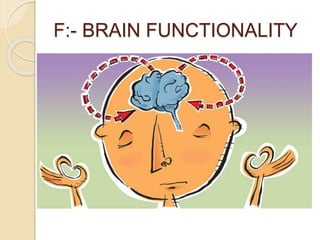
F:- BRAIN FUNCTIONALITY
G:- WEIGHT
 Carbohydrates helps in maintaining
weight of an individual.
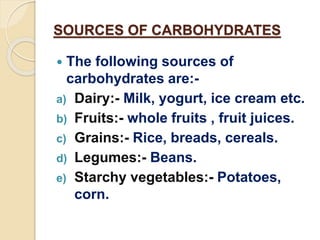
SOURCES OF CARBOHYDRATES
 The following sources of
carbohydrates are:-
a) Dairy:- Milk, yogurt, ice cream etc.
b) Fruits:- whole fruits , fruit juices.
c) Grains:- Rice, breads, cereals.
d) Legumes:- Beans.
e) Starchy vegetables:- Potatoes,
corn.
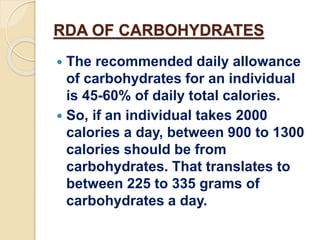
RDA OF CARBOHYDRATES
 The recommended daily allowance
of carbohydrates for an individual
is 45-60% of daily total calories.
 So, if an individual takes 2000
calories a day, between 900 to 1300
calories should be from
carbohydrates. That translates to
between 225 to 335 grams of
carbohydrates a day.
REFERENCES
 BOOK:-
a) PARK.K, “ Park`s Text Book Of Preventive
And Social Medicine”. Pub: Bhanot (23RD
Edition), Page(613-615).
b) SINGH.A, “Essentials Of Physical Education”.
Pub: Kalyani Publishers (Fifth Edition), Page
(318-320).
 INTERNET:-
a) www.hsph.harvard.edu/nutritionalsource/carb
ohydrates
Carbohydrates functions and sources

Carbohydrates functions and sources

  • 1.
    CARBOHYDRATES  It isone of the most important macro nutrient required in our body.  Carbohydrates are the main source of energy in all the activities.  Carbohydrates are the simplest source of energy.  It is made up of compound C,H,O.  Here C stands for carbon, H stands for hydrogen, O stands for oxygen.
  • 2.
    CARBOHYDRATES  Glucose isthe simplest form of carbohydrate and the instant source of energy.  Reserve amount of carbohydrates are stored in liver and muscles in the form of glycogen.  1gram of carbohydrates provides 4 calories.
  • 3.
    CARBOHYDRATES  The maintwo forms of carbohydrates are:- a) Sugars (found in milk, table sugar, fruits and candy). b) Starch (found in grains, cereals, breads, pasta etc). • The carbohydrates break down into sugar glucose is absorbed into blood stream which makes the sugar level in the blood go up. As sugar level go up, pancreas releases a hormone called insulin. Insulin is needed to move the glucose from the blood into the cells, where it can be used as the source of energy.
  • 4.
    CLASSIFICATION OF CARBOHYDRATES There are two types of carbohydrates:- 1. Simple carbohydrates also called monosaccharide and they are simple sugars and quickest in providing energy. For eg :- potatoes, carrot. 2. Complex carbohydrates.  Further classified into two types:- a) Disaccharides ( sucrose, lactose, maltose , breads, cereals, whole pulses ) b) Polysaccharides ( starch, glycogen )
  • 5.
    FUNCTIONS OF CARBOHYDRATES Carbohydrates have following major functions in our body:- a) Blood sugars and insulin. b) Provides energy. c) Triggers hunger and fullness. d) Mood. e) Digestion. f) Brain functionality. g) Weight.
  • 6.
    A:-Blood sugars andInsulin  When the blood sugar level increases the pancreas secrets a hormone called insulin which regulates the blood sugar level.  If the blood sugar cannot be regulated by the insulin then the person can suffer from disease called Diabetes.
  • 7.
    B:- PROVIDES ENERGY As we discussed before carbohydrates are the instant and major source of energy.  Carbohydrates are easy to digest and dissolves fast into blood, which provides energy.  1 gram of carbohydrates provides 4 calories.
  • 8.
    C:- TRIGGERS HUNGERAND FULLNESS  Carbohydrates triggers hunger as they digest quickly in the body, so the amount of hunger increases.  Small amount of carbohydrates can make you full.  For example :- rice, fruits etc.
  • 9.
    FUNCTIONS D:- MOOD As carbohydratesprovides instant energy they make our mood relax and feel good. E:- DIGESTION Carbohydrates are easy to digest. So the carbohydrates are helpful for us to improve the digestion.
  • 10.
  • 11.
    G:- WEIGHT  Carbohydrateshelps in maintaining weight of an individual.
  • 12.
    SOURCES OF CARBOHYDRATES The following sources of carbohydrates are:- a) Dairy:- Milk, yogurt, ice cream etc. b) Fruits:- whole fruits , fruit juices. c) Grains:- Rice, breads, cereals. d) Legumes:- Beans. e) Starchy vegetables:- Potatoes, corn.
  • 13.
    RDA OF CARBOHYDRATES The recommended daily allowance of carbohydrates for an individual is 45-60% of daily total calories.  So, if an individual takes 2000 calories a day, between 900 to 1300 calories should be from carbohydrates. That translates to between 225 to 335 grams of carbohydrates a day.
  • 14.
    REFERENCES  BOOK:- a) PARK.K,“ Park`s Text Book Of Preventive And Social Medicine”. Pub: Bhanot (23RD Edition), Page(613-615). b) SINGH.A, “Essentials Of Physical Education”. Pub: Kalyani Publishers (Fifth Edition), Page (318-320).  INTERNET:- a) www.hsph.harvard.edu/nutritionalsource/carb ohydrates