Fandom and
Popular Culture

   Active Audiences
Fans??

•   What are you a fan of?


•   How do you interact?

•   Would you class yourself as a “true fan?”
    Why?
Active
                                       Audiences

•   How can Marxist studies and others alike suggest
    that an audience is completely passive in the 21st
    Century??
•   Being a fan is one part, and sometimes a highly
    significant part, of our self-identities. What‟s
    been dubbed ‘media fandom’ – the detailed
    appreciation of particular media texts is, for some
    people, just as much an aspect of who they are
    as, say, their class, age, or their gender.
‘Uses and Gratifications’
                               concerns what people do
                               with the media, rather than
                               how they might become
                               attached to, and invested
                               in, particular media texts.

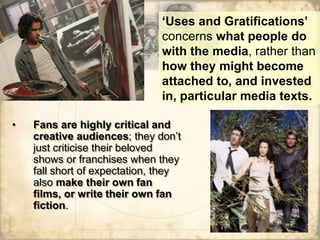
•   Fans are highly critical and
    creative audiences; they don‟t
    just criticise their beloved
    shows or franchises when they
    fall short of expectation, they
    also make their own fan
    films, or write their own fan
    fiction.
The Anti-Fan

•   Do you dislike something in the media so much you would
    call yourself an anti fan? Is there a type of music that you
    purposefully say you don‟t like? Why??
•   Anti-fans are people who are passionate about a media
    text, but negatively so; they loathe or detest what they
    take it to represent.
•   ‘Horror films are allegedly sick and twisted and those who
    enjoy them are wrong in the head’ (according to horror’s
    many anti-fans).
•   Whereas media fandom might allow us to
    define, culturally, what sort of person we are, with what
    sort of tastes and interests, ‘anti-fandom’ is about who
    we are not, and what sorts of identities we seek to define
    ourselves against, and in strong opposition to.
‘Morrisey and the Smiths had such an impact on me        Music
when I was an outcast in High School. He changed my
life – I wouldn’t be here otherwise. My Chemical
                                                        Fandom
romance’s desire to save people stems from what The
Smiths did for me.’ (Gerard Way, frontman My Chemical
                                                        and the
romance, interviewed in NME, 10 June 2006)              Internet
•    What resources are available on the internet for
     a music fan? Discuss and feedback.
•    How can a fan use the internet to become a
     „true fan‟ – Web 2.0!
•    How can the internet encourage fans to be
     creative and provide a social network to share
     their genius (or not)?
•    How can all this link into group communication
     and identity construction?
Potential Question

•   Does modern technologies hinder or
    assist the Music Industry?

Fandom and Popular Culture

  • 1.
  • 2.
    Fans?? • What are you a fan of? • How do you interact? • Would you class yourself as a “true fan?” Why?
  • 3.
    Active Audiences • How can Marxist studies and others alike suggest that an audience is completely passive in the 21st Century?? • Being a fan is one part, and sometimes a highly significant part, of our self-identities. What‟s been dubbed ‘media fandom’ – the detailed appreciation of particular media texts is, for some people, just as much an aspect of who they are as, say, their class, age, or their gender.
  • 4.
    ‘Uses and Gratifications’ concerns what people do with the media, rather than how they might become attached to, and invested in, particular media texts. • Fans are highly critical and creative audiences; they don‟t just criticise their beloved shows or franchises when they fall short of expectation, they also make their own fan films, or write their own fan fiction.
  • 5.
    The Anti-Fan • Do you dislike something in the media so much you would call yourself an anti fan? Is there a type of music that you purposefully say you don‟t like? Why?? • Anti-fans are people who are passionate about a media text, but negatively so; they loathe or detest what they take it to represent. • ‘Horror films are allegedly sick and twisted and those who enjoy them are wrong in the head’ (according to horror’s many anti-fans). • Whereas media fandom might allow us to define, culturally, what sort of person we are, with what sort of tastes and interests, ‘anti-fandom’ is about who we are not, and what sorts of identities we seek to define ourselves against, and in strong opposition to.
  • 6.
    ‘Morrisey and theSmiths had such an impact on me Music when I was an outcast in High School. He changed my life – I wouldn’t be here otherwise. My Chemical Fandom romance’s desire to save people stems from what The Smiths did for me.’ (Gerard Way, frontman My Chemical and the romance, interviewed in NME, 10 June 2006) Internet • What resources are available on the internet for a music fan? Discuss and feedback. • How can a fan use the internet to become a „true fan‟ – Web 2.0! • How can the internet encourage fans to be creative and provide a social network to share their genius (or not)? • How can all this link into group communication and identity construction?
  • 7.
    Potential Question • Does modern technologies hinder or assist the Music Industry?