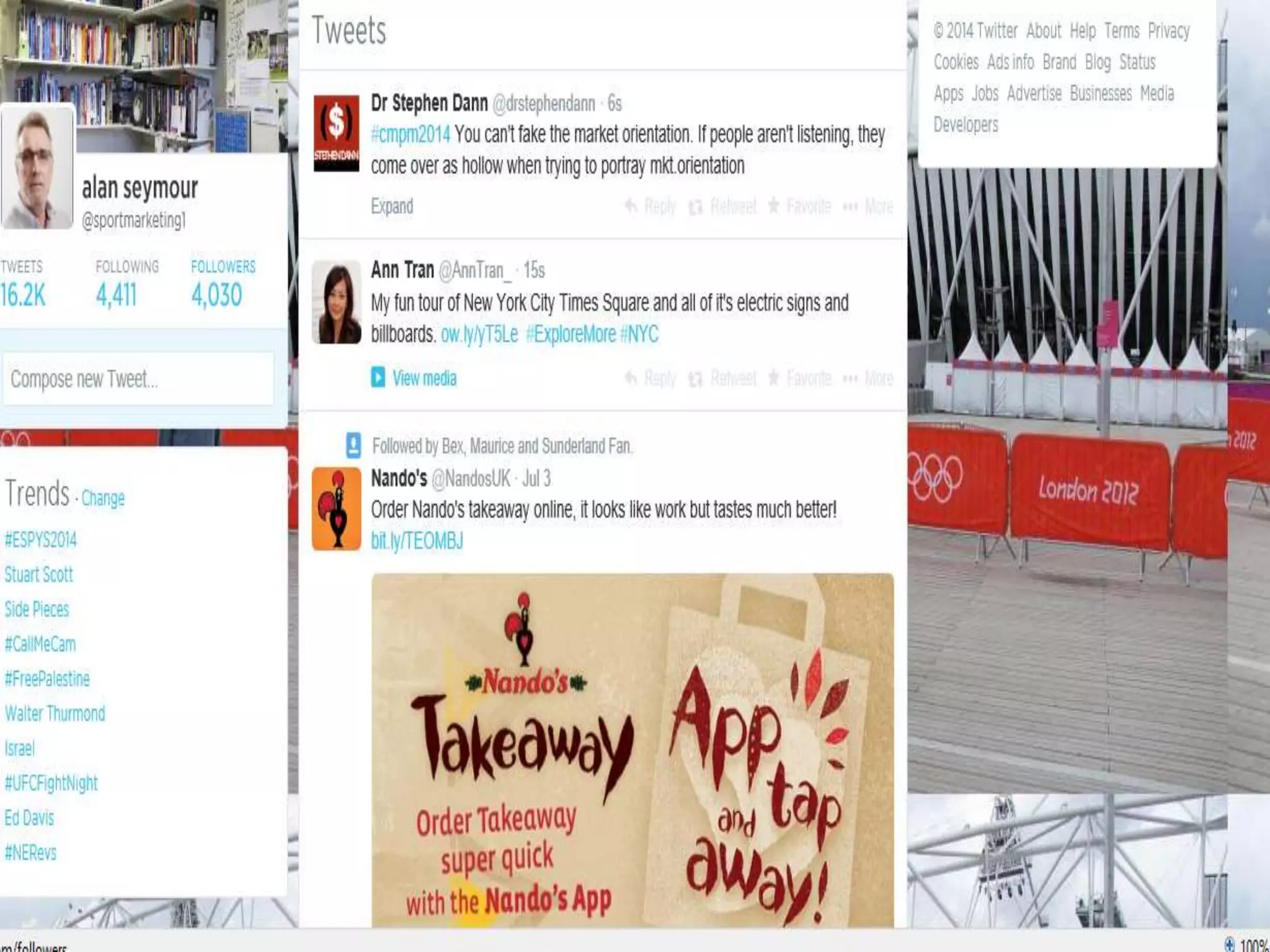
‘Fans & Fandom’ 
{ 
An enquiry into fan engagement 
Alan J Seymour 
EASM 2014
The Follow ME Approach
Expert 
Tribal 
Celebrity 
Fandom Following-ETC
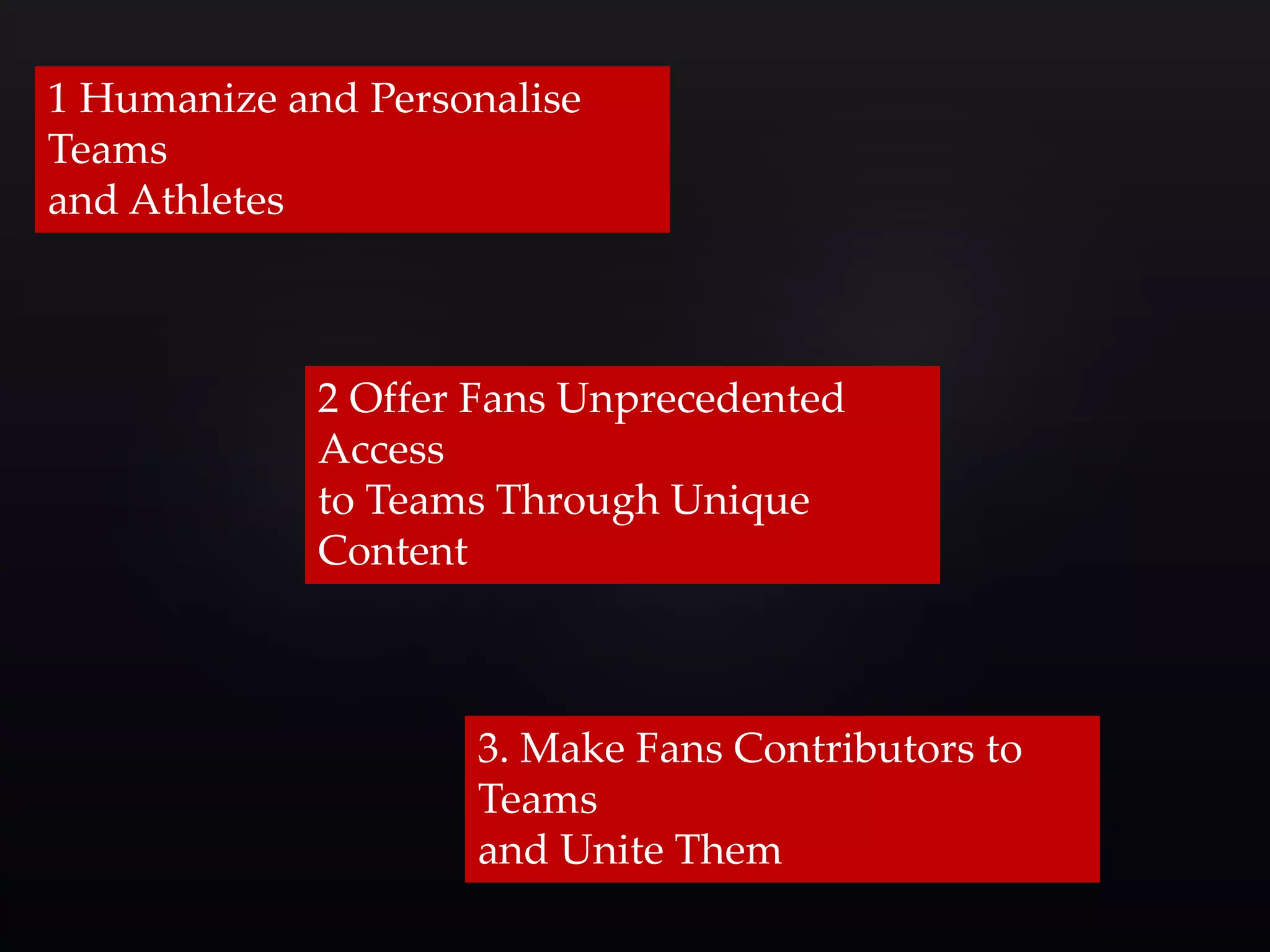
1 Humanize and Personalise 
Teams 
and Athletes 
2 Offer Fans Unprecedented 
Access 
to Teams Through Unique 
Content 
3. Make Fans Contributors to 
Teams 
and Unite Them
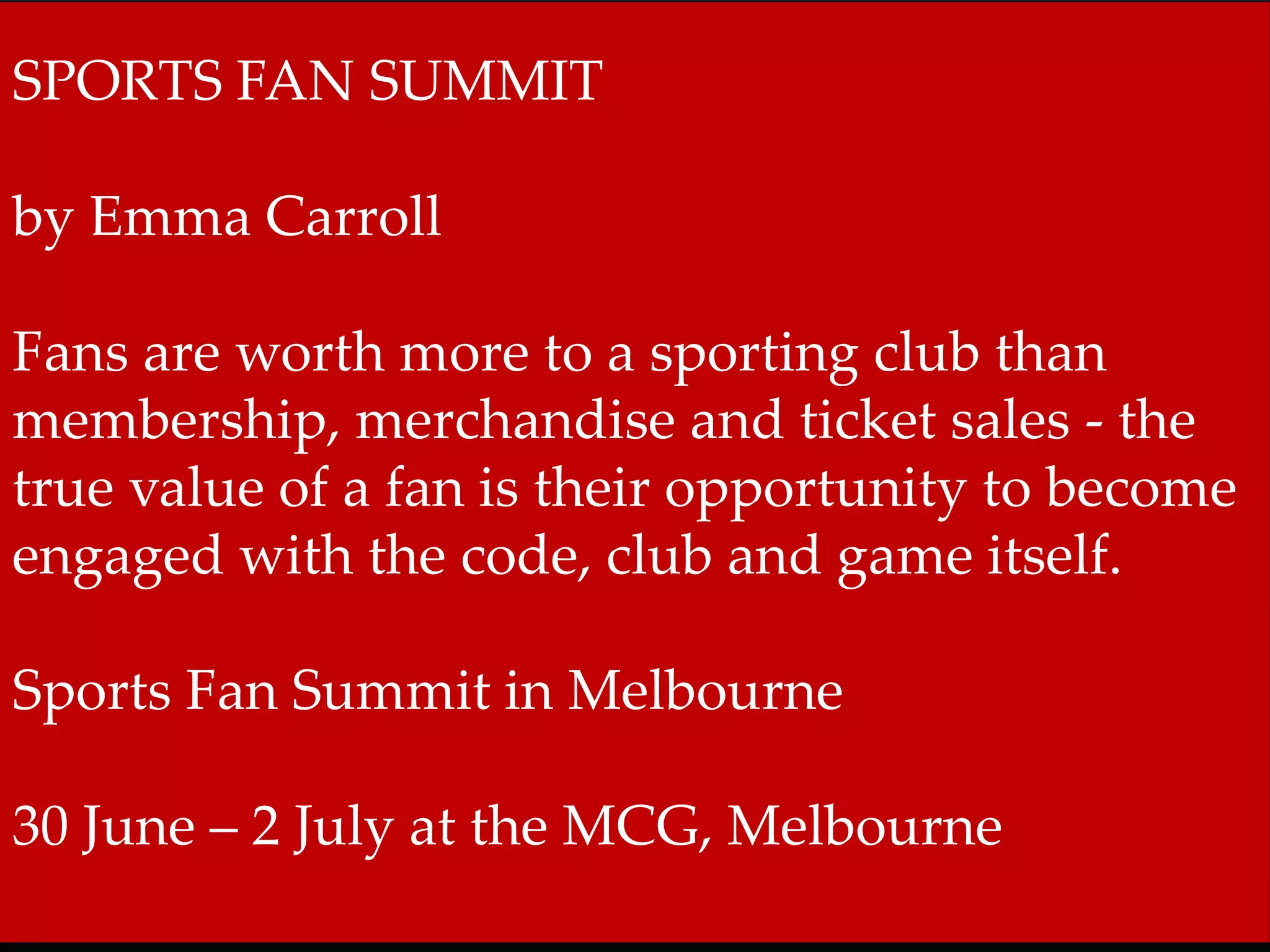
SPORTS FAN SUMMIT 
by Emma Carroll 
Fans are worth more to a sporting club than 
membership, merchandise and ticket sales - the 
true value of a fan is their opportunity to become 
engaged with the code, club and game itself. 
Sports Fan Summit in Melbourne 
30 June – 2 July at the MCG, Melbourne
 https://www.surveymonkey. 
com/results/SM-SMZT7CX8/ 
{ Research Results
{ 
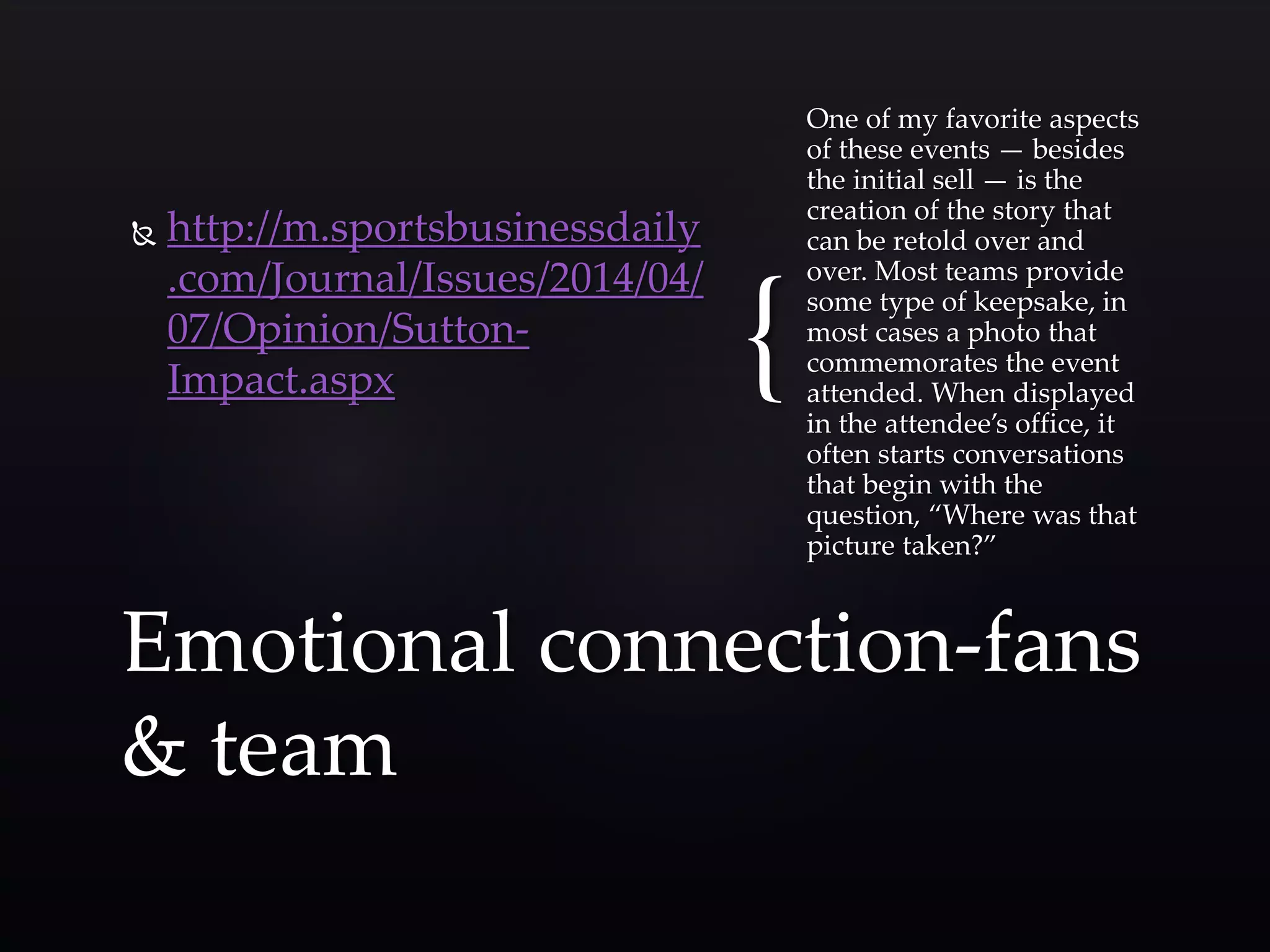
 http://m.sportsbusinessdaily 
.com/Journal/Issues/2014/04/ 
07/Opinion/Sutton- 
Impact.aspx 
One of my favorite aspects 
of these events — besides 
the initial sell — is the 
creation of the story that 
can be retold over and 
over. Most teams provide 
some type of keepsake, in 
most cases a photo that 
commemorates the event 
attended. When displayed 
in the attendee’s office, it 
often starts conversations 
that begin with the 
question, “Where was that 
picture taken?” 
Emotional connection-fans 
& team
{ 
 http://www.youtube.com/w 
atch?v=HySzVQnB0Go&feat 
ure=player_embedded 
Good content 
garners good 
engagement 
FAN STUDIES
What is a fan? A person who cannot be anything other than 
devoted, loyal, obsessed, stubborn, blinkered or all of these? As 
stated in the Urban Dictionary a sports fan is‘ A person who loves 
sports as an entertainment outlet and is highly interested in one or 
more sport or sports team’ 
(http://www.urbandictionary.com/define.php?term=sports%20fanat 
ic). 
Psychologists are closing in on the conclusion that sport has many of the same 
effects on spectators as religion does [Barber, 2012]. As considered by Daniel 
Wann [2001], a leading sport psychologist at Murray State University, and his 
co-authors: 
"The similarities between sport fandom and organized religion are striking. 
Consider the vocabulary associated with both: faith, devotion, worship, ritual, 
dedication, sacrifice, commitment, spirit, prayer, suffering, festival, and 
celebration." p. 198
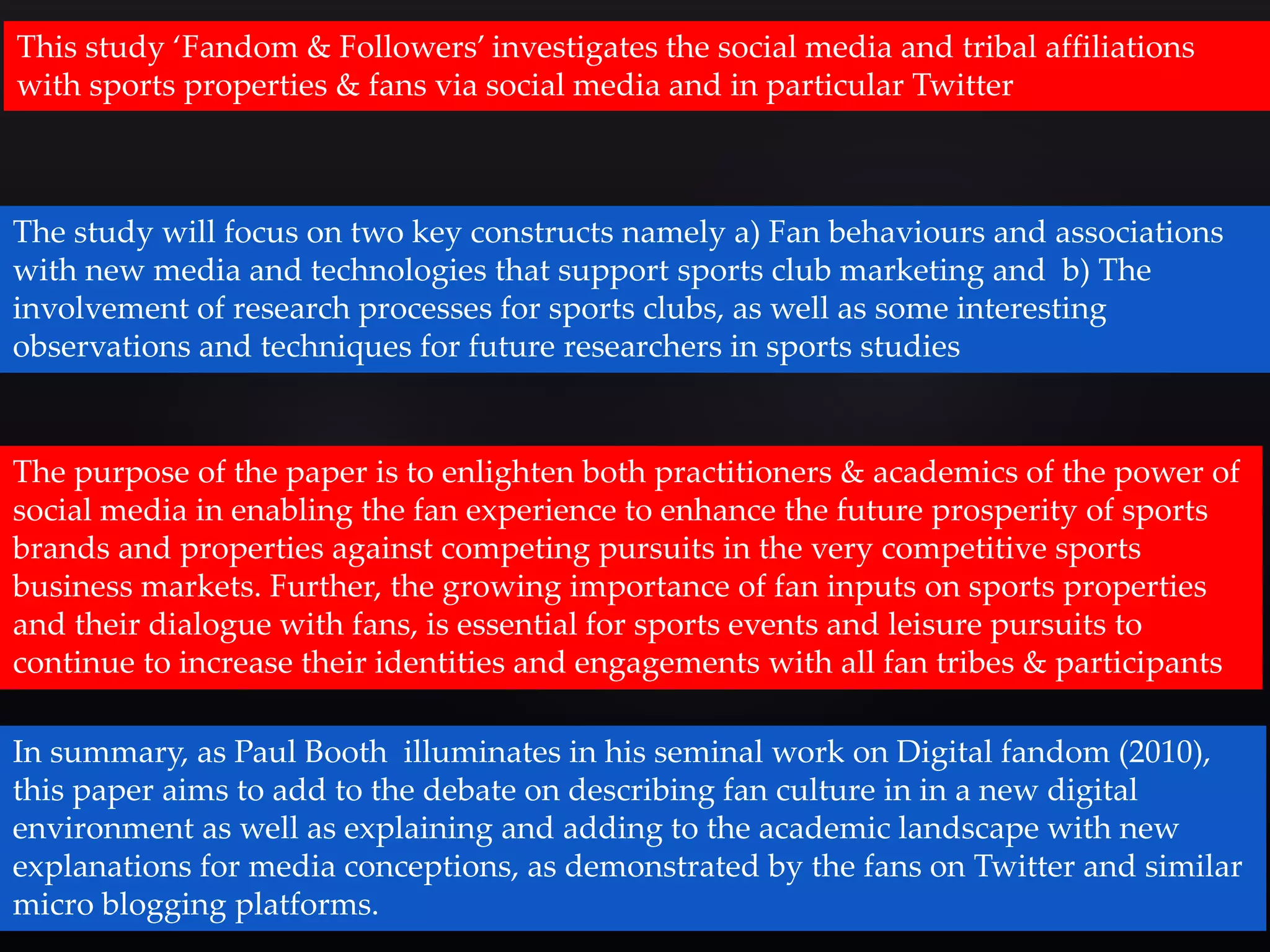
This study ‘Fandom & Followers’ investigates the social media and tribal affiliations 
with sports properties & fans via social media and in particular Twitter 
The study will focus on two key constructs namely a) Fan behaviours and associations 
with new media and technologies that support sports club marketing and b) The 
involvement of research processes for sports clubs, as well as some interesting 
observations and techniques for future researchers in sports studies 
The purpose of the paper is to enlighten both practitioners & academics of the power of 
social media in enabling the fan experience to enhance the future prosperity of sports 
brands and properties against competing pursuits in the very competitive sports 
business markets. Further, the growing importance of fan inputs on sports properties 
and their dialogue with fans, is essential for sports events and leisure pursuits to 
continue to increase their identities and engagements with all fan tribes & participants 
In summary, as Paul Booth illuminates in his seminal work on Digital fandom (2010), 
this paper aims to add to the debate on describing fan culture in in a new digital 
environment as well as explaining and adding to the academic landscape with new 
explanations for media conceptions, as demonstrated by the fans on Twitter and similar 
micro blogging platforms.
Events dictate 
fanaticism 
{ http://m.firstpost.com/blogs/what-makes- 
a-sports-fan-into-a-sports-fanatic- 
1667233.html
Any questions? 
{ Contact 
Alan.seymour@northampton.ac.uk
References 
Browning & Sanderson, J (2012) The Positives and Negatives of Twitter: Exploring How Student- 
Athletes International Journal of Sport Communication, 2012, 5, 503-521 
Booth (2010) Digital Fandom: New Media Studies Paul Lang Publishers New York 
Sanderson, J., & Kassing, J.W. (2011). Tweets and blogs: Transformative, adversarial, and Integrative 
developments in sports media. In A.C. Billings (Ed.), Sports media: Transformation, Integration, 
consumption (pp. 114–127). New York: Routledge. 
Dugan, L. (2012, February 21). Twitter to surpass 500 million registered users’ Retrieved from 
http://www.mediabistro.com/alltwitter/500-million-registeredusers_b18842 
Seymour, A & Thompson, R (2011) Action Replays Sports Conference University of Northampton 
2011 
Fuchs, C. (2014) Social Media: A critical Introduction London Sage 
T L Tuten & M R Solomon (2013): Social Media Marketing: New International Edition Pearson 
London 
M S Barker, D I Barker F Borman & K E Neher (2013) Social Media Marketing: A Strategic Approach 
1st Edition Cengage Learning Stamford

Fanscoventryfinal

  • 1.
    ‘Fans & Fandom’ { An enquiry into fan engagement Alan J Seymour EASM 2014
  • 5.
    The Follow MEApproach
  • 7.
    Expert Tribal Celebrity Fandom Following-ETC
  • 10.
    1 Humanize andPersonalise Teams and Athletes 2 Offer Fans Unprecedented Access to Teams Through Unique Content 3. Make Fans Contributors to Teams and Unite Them
  • 11.
    SPORTS FAN SUMMIT by Emma Carroll Fans are worth more to a sporting club than membership, merchandise and ticket sales - the true value of a fan is their opportunity to become engaged with the code, club and game itself. Sports Fan Summit in Melbourne 30 June – 2 July at the MCG, Melbourne
  • 12.
  • 14.
    {  http://m.sportsbusinessdaily .com/Journal/Issues/2014/04/ 07/Opinion/Sutton- Impact.aspx One of my favorite aspects of these events — besides the initial sell — is the creation of the story that can be retold over and over. Most teams provide some type of keepsake, in most cases a photo that commemorates the event attended. When displayed in the attendee’s office, it often starts conversations that begin with the question, “Where was that picture taken?” Emotional connection-fans & team
  • 15.
    {  http://www.youtube.com/w atch?v=HySzVQnB0Go&feat ure=player_embedded Good content garners good engagement FAN STUDIES
  • 16.
    What is afan? A person who cannot be anything other than devoted, loyal, obsessed, stubborn, blinkered or all of these? As stated in the Urban Dictionary a sports fan is‘ A person who loves sports as an entertainment outlet and is highly interested in one or more sport or sports team’ (http://www.urbandictionary.com/define.php?term=sports%20fanat ic). Psychologists are closing in on the conclusion that sport has many of the same effects on spectators as religion does [Barber, 2012]. As considered by Daniel Wann [2001], a leading sport psychologist at Murray State University, and his co-authors: "The similarities between sport fandom and organized religion are striking. Consider the vocabulary associated with both: faith, devotion, worship, ritual, dedication, sacrifice, commitment, spirit, prayer, suffering, festival, and celebration." p. 198
  • 17.
    This study ‘Fandom& Followers’ investigates the social media and tribal affiliations with sports properties & fans via social media and in particular Twitter The study will focus on two key constructs namely a) Fan behaviours and associations with new media and technologies that support sports club marketing and b) The involvement of research processes for sports clubs, as well as some interesting observations and techniques for future researchers in sports studies The purpose of the paper is to enlighten both practitioners & academics of the power of social media in enabling the fan experience to enhance the future prosperity of sports brands and properties against competing pursuits in the very competitive sports business markets. Further, the growing importance of fan inputs on sports properties and their dialogue with fans, is essential for sports events and leisure pursuits to continue to increase their identities and engagements with all fan tribes & participants In summary, as Paul Booth illuminates in his seminal work on Digital fandom (2010), this paper aims to add to the debate on describing fan culture in in a new digital environment as well as explaining and adding to the academic landscape with new explanations for media conceptions, as demonstrated by the fans on Twitter and similar micro blogging platforms.
  • 18.
    Events dictate fanaticism { http://m.firstpost.com/blogs/what-makes- a-sports-fan-into-a-sports-fanatic- 1667233.html
  • 19.
    Any questions? {Contact Alan.seymour@northampton.ac.uk
  • 20.
    References Browning &Sanderson, J (2012) The Positives and Negatives of Twitter: Exploring How Student- Athletes International Journal of Sport Communication, 2012, 5, 503-521 Booth (2010) Digital Fandom: New Media Studies Paul Lang Publishers New York Sanderson, J., & Kassing, J.W. (2011). Tweets and blogs: Transformative, adversarial, and Integrative developments in sports media. In A.C. Billings (Ed.), Sports media: Transformation, Integration, consumption (pp. 114–127). New York: Routledge. Dugan, L. (2012, February 21). Twitter to surpass 500 million registered users’ Retrieved from http://www.mediabistro.com/alltwitter/500-million-registeredusers_b18842 Seymour, A & Thompson, R (2011) Action Replays Sports Conference University of Northampton 2011 Fuchs, C. (2014) Social Media: A critical Introduction London Sage T L Tuten & M R Solomon (2013): Social Media Marketing: New International Edition Pearson London M S Barker, D I Barker F Borman & K E Neher (2013) Social Media Marketing: A Strategic Approach 1st Edition Cengage Learning Stamford