FALSE CEILING
MATERIALS
KARTHIKA M
CONTENT INTRODUCTION TYPES OF
MATERIAL
CONCLUSION REFERENCE
INTRODUCTION
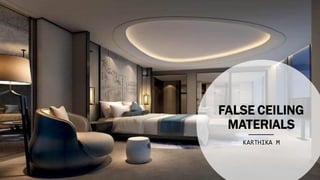
A false ceiling is a ceiling made
beneath the main ceiling of the room or
building. In other words, it is a
second layer of roof suspended from the
main roof with the help of metal or
wooden frame. It is also known as
dropped ceiling. False ceiling has
multiple advantages. It improves the
aesthetics of the room. False ceiling
is provided to keep the room cool
during summer and warm in winter. It is
also provided to conceal the ugly mesh
of electrical wires, light fixtures,
air-conditioning ducts and other
fixtures.
TYPES OF MATERIAL(USED FOR FALSE CEILING)
GYPSUM BOARD
• A hydrated sulfate of
calcium, gypsum is
becoming
a preferred choice to
create a false ceiling as
it is lightweight, fire-
resistant, sound-
insulated, and easy on
the pocket.
• With an iron framework
to support, one can
hang these square boards
in any pattern.
• To finish the look,
paint, laminate or even
use wallpaper over these
easy-to-install boards to
suit the design of the
room in question.
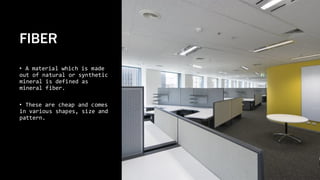
FIBER
• A material which is made
out of natural or synthetic
mineral is defined as
mineral fiber.
• These are cheap and comes
in various shapes, size and
pattern.
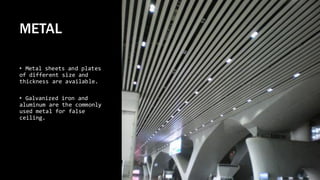
METAL
• Metal sheets and plates
of different size and
thickness are available.
• Galvanized iron and
aluminum are the commonly
used metal for false
ceiling.
WOOD
• Wooden false ceiling are
most common in use these
days.
• Leaves a pleasant impact
on viewers eyes.
• Hollow wooden blocks,
wooden panels or wooden
boards are the common
product form.
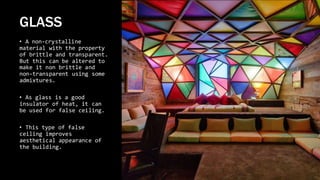
GLASS
• A non-crystalline
material with the property
of brittle and transparent.
But this can be altered to
make it non brittle and
non-transparent using some
admixtures.
• As glass is a good
insulator of heat, it can
be used for false ceiling.
• This type of false
ceiling improves
aesthetical appearance of
the building.
• The materials used in this type of ceilings are
either leather or cloth. As both the used
materials are man-made they can be given any
form, shape and design which improves the
aesthetic view of interior of the building.
• As these collects dust and has low light
transferring property it’s only used in
temporary tents or other temporary buildings.
SYNTHETIC LEATHER/
CLOTH
POP
(PLASTER OF PARIS)
• POP is still the material
of dominance when it
comes to designing the
ceiling.
• It gives a smooth finish
and one can mould it to
suit any design
innovation on the
ceiling.
• This versatile material
suits modern homes the
best where warm cove
lighting brightens the
house
GYPTONE
For an office environment,
the design revolves around
good acoustics and
efficient air conditioning.
To this effect, Gyptone
ceilings (essentially
perforated plasterboard)
are favourable.
Additionally, these are
visually presentable, easy
to maintain and have a long
life span.
PVC
• PVC false ceiling is attractive, durable and
water resistant.
• Since it is made from PVC material hence its
maintenance cost is almost zero.
• In this type of false ceiling PVC panels are
fixed in the framework of Aluminium T-sections.
• PVC panels are available in plenty of
attractive colours and designs.
CONCLUSION
• False ceiling is an example of modern
construction and architecture in both
residential and commercial
applications.
• False ceilings can be differentiated
into many types based on their uses,
material used and appearance and
visibility.
REFERENCE
https://www.urbanclap.com/bl
og/interiors/false-ceiling-
materials/
https://starsricha.snydle.com/f
alse-ceiling-materials.html

False Ceiling Material

  • 1.
  • 2.
    CONTENT INTRODUCTION TYPESOF MATERIAL CONCLUSION REFERENCE
  • 3.
    INTRODUCTION A false ceilingis a ceiling made beneath the main ceiling of the room or building. In other words, it is a second layer of roof suspended from the main roof with the help of metal or wooden frame. It is also known as dropped ceiling. False ceiling has multiple advantages. It improves the aesthetics of the room. False ceiling is provided to keep the room cool during summer and warm in winter. It is also provided to conceal the ugly mesh of electrical wires, light fixtures, air-conditioning ducts and other fixtures.
  • 4.
    TYPES OF MATERIAL(USEDFOR FALSE CEILING)
  • 5.
    GYPSUM BOARD • Ahydrated sulfate of calcium, gypsum is becoming a preferred choice to create a false ceiling as it is lightweight, fire- resistant, sound- insulated, and easy on the pocket. • With an iron framework to support, one can hang these square boards in any pattern. • To finish the look, paint, laminate or even use wallpaper over these easy-to-install boards to suit the design of the room in question.
  • 6.
    FIBER • A materialwhich is made out of natural or synthetic mineral is defined as mineral fiber. • These are cheap and comes in various shapes, size and pattern.
  • 7.
    METAL • Metal sheetsand plates of different size and thickness are available. • Galvanized iron and aluminum are the commonly used metal for false ceiling.
  • 8.
    WOOD • Wooden falseceiling are most common in use these days. • Leaves a pleasant impact on viewers eyes. • Hollow wooden blocks, wooden panels or wooden boards are the common product form.
  • 9.
    GLASS • A non-crystalline materialwith the property of brittle and transparent. But this can be altered to make it non brittle and non-transparent using some admixtures. • As glass is a good insulator of heat, it can be used for false ceiling. • This type of false ceiling improves aesthetical appearance of the building.
  • 10.
    • The materialsused in this type of ceilings are either leather or cloth. As both the used materials are man-made they can be given any form, shape and design which improves the aesthetic view of interior of the building. • As these collects dust and has low light transferring property it’s only used in temporary tents or other temporary buildings. SYNTHETIC LEATHER/ CLOTH
  • 11.
    POP (PLASTER OF PARIS) •POP is still the material of dominance when it comes to designing the ceiling. • It gives a smooth finish and one can mould it to suit any design innovation on the ceiling. • This versatile material suits modern homes the best where warm cove lighting brightens the house
  • 12.
    GYPTONE For an officeenvironment, the design revolves around good acoustics and efficient air conditioning. To this effect, Gyptone ceilings (essentially perforated plasterboard) are favourable. Additionally, these are visually presentable, easy to maintain and have a long life span.
  • 13.
    PVC • PVC falseceiling is attractive, durable and water resistant. • Since it is made from PVC material hence its maintenance cost is almost zero. • In this type of false ceiling PVC panels are fixed in the framework of Aluminium T-sections. • PVC panels are available in plenty of attractive colours and designs.
  • 14.
    CONCLUSION • False ceilingis an example of modern construction and architecture in both residential and commercial applications. • False ceilings can be differentiated into many types based on their uses, material used and appearance and visibility.
  • 15.