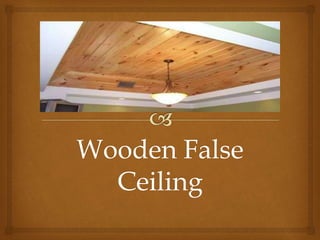
Wooden False
Ceiling

PRELIMS
•INTRODUCTION
MANUFACTURING & PROS-CONS
•MANUFACTURING
•PROS AND CONS
CONTRUCTION
•WOODEN CEILING TYPES
•LAYING METHOD
INDEX

 WOODEN CEILING IS USED AS PRIMARY AS
WELL AS SECONDARY CEILING.
• PRIMARY:- ROOF STRUCTURE
• SECONDARY:- FALSE CEILING
IT IS USED BOTH FOR PROVIDING ROOFING
AND FOR AESTHETICAL PURPOSE IN A BUILDING.
IT CAN BE USED BOTH FOR DOMESTIC AND
COMMERCIAL PURPOSE.
INTRODUCTION

These are of following types:-
 Drop ceiling
 Ceiling tiles
 Plank ceiling(tongue and groove)
 Coffered ceiling
 Suspended ceiling
CEILING TYPES

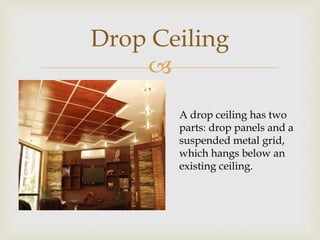
Drop Ceiling
A drop ceiling has two
parts: drop panels and a
suspended metal grid,
which hangs below an
existing ceiling.

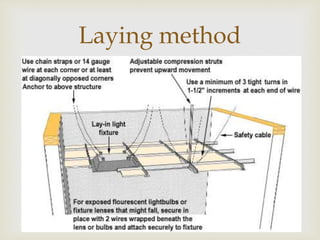
Laying method

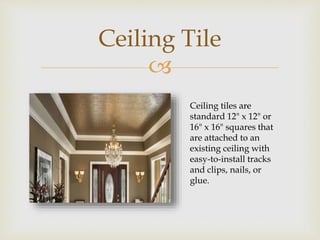
Ceiling Tile
Ceiling tiles are
standard 12" x 12" or
16" x 16" squares that
are attached to an
existing ceiling with
easy-to-install tracks
and clips, nails, or
glue.

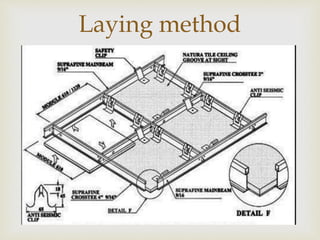
Laying method

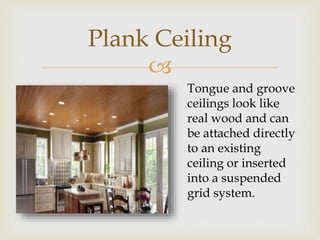
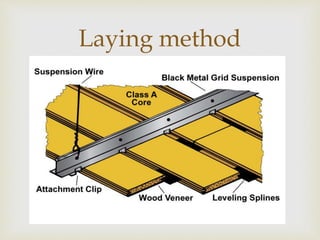
Plank Ceiling
Tongue and groove
ceilings look like
real wood and can
be attached directly
to an existing
ceiling or inserted
into a suspended
grid system.

Laying method

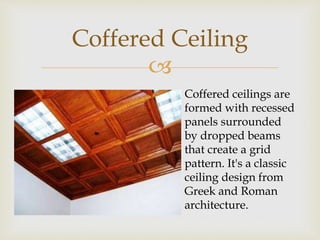
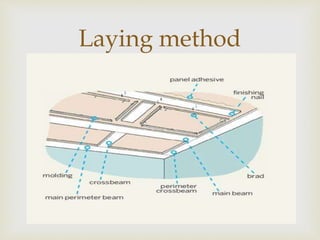
Coffered Ceiling
Coffered ceilings are
formed with recessed
panels surrounded
by dropped beams
that create a grid
pattern. It's a classic
ceiling design from
Greek and Roman
architecture.

Laying method

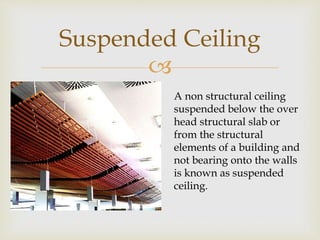
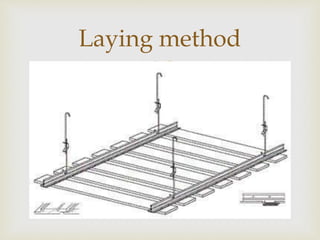
Suspended Ceiling
A non structural ceiling
suspended below the over
head structural slab or
from the structural
elements of a building and
not bearing onto the walls
is known as suspended
ceiling.

Laying method

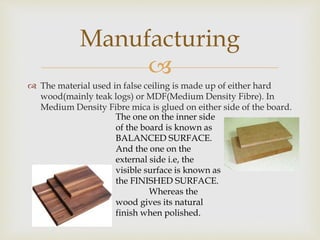
 The material used in false ceiling is made up of either hard
wood(mainly teak logs) or MDF(Medium Density Fibre). In
Medium Density Fibre mica is glued on either side of the board.
Manufacturing
The one on the inner side
of the board is known as
BALANCED SURFACE.
And the one on the
external side i.e, the
visible surface is known as
the FINISHED SURFACE.
Whereas the
wood gives its natural
finish when polished.

Pros And Cons
Advantages :-
i. Provides decorative and artistic look to the room.
ii. Provides better insulation.
iii. It is popular and gives a warm feeling to the room.
iv. It is stylish in design.
Disadvantages:-
i. It is very expensive.
ii. It is more prone to termite attack.
iii. It has weak difficult structure.
iv. It is difficult to clean.

EFFORTED BY:-
 ABHISHEK SAXENA
 B.Arch

Wooden false ciling

  • 1.
  • 2.
     PRELIMS •INTRODUCTION MANUFACTURING & PROS-CONS •MANUFACTURING •PROSAND CONS CONTRUCTION •WOODEN CEILING TYPES •LAYING METHOD INDEX
  • 3.
      WOODEN CEILINGIS USED AS PRIMARY AS WELL AS SECONDARY CEILING. • PRIMARY:- ROOF STRUCTURE • SECONDARY:- FALSE CEILING IT IS USED BOTH FOR PROVIDING ROOFING AND FOR AESTHETICAL PURPOSE IN A BUILDING. IT CAN BE USED BOTH FOR DOMESTIC AND COMMERCIAL PURPOSE. INTRODUCTION
  • 4.
     These are offollowing types:-  Drop ceiling  Ceiling tiles  Plank ceiling(tongue and groove)  Coffered ceiling  Suspended ceiling CEILING TYPES
  • 5.
     Drop Ceiling A dropceiling has two parts: drop panels and a suspended metal grid, which hangs below an existing ceiling.
  • 6.
  • 7.
     Ceiling Tile Ceiling tilesare standard 12" x 12" or 16" x 16" squares that are attached to an existing ceiling with easy-to-install tracks and clips, nails, or glue.
  • 8.
  • 9.
     Plank Ceiling Tongue andgroove ceilings look like real wood and can be attached directly to an existing ceiling or inserted into a suspended grid system.
  • 10.
  • 11.
     Coffered Ceiling Coffered ceilingsare formed with recessed panels surrounded by dropped beams that create a grid pattern. It's a classic ceiling design from Greek and Roman architecture.
  • 12.
  • 13.
     Suspended Ceiling A nonstructural ceiling suspended below the over head structural slab or from the structural elements of a building and not bearing onto the walls is known as suspended ceiling.
  • 14.
  • 15.
      The materialused in false ceiling is made up of either hard wood(mainly teak logs) or MDF(Medium Density Fibre). In Medium Density Fibre mica is glued on either side of the board. Manufacturing The one on the inner side of the board is known as BALANCED SURFACE. And the one on the external side i.e, the visible surface is known as the FINISHED SURFACE. Whereas the wood gives its natural finish when polished.
  • 16.
     Pros And Cons Advantages:- i. Provides decorative and artistic look to the room. ii. Provides better insulation. iii. It is popular and gives a warm feeling to the room. iv. It is stylish in design. Disadvantages:- i. It is very expensive. ii. It is more prone to termite attack. iii. It has weak difficult structure. iv. It is difficult to clean.
  • 17.