Manjula Rajput
Assistant Professor
Shri Shankaracharya Mahavidyalaya,
Junwani Bhilai
An organization exists and operates in an
ever-changing environment. For its
survival & growth, an organization has to
constantly interact, react and adjust itself
to the environmental forces and to
diagnose them.
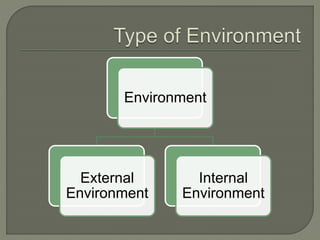
Environment
External
Environment
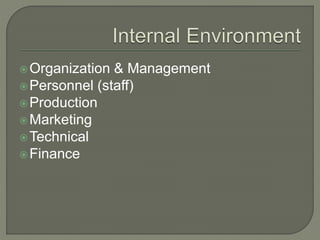
Internal
Environment
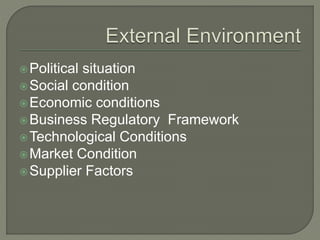
Political situation
Social condition
Economic conditions
Business Regulatory Framework
Technological Conditions
Market Condition
Supplier Factors
Organization & Management
Personnel (staff)
Production
Marketing
Technical
Finance
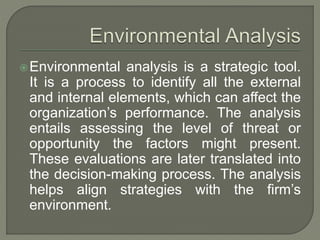
Environmental analysis is a strategic tool.
It is a process to identify all the external
and internal elements, which can affect the
organization’s performance. The analysis
entails assessing the level of threat or
opportunity the factors might present.
These evaluations are later translated into
the decision-making process. The analysis
helps align strategies with the firm’s
environment.
 Our market is facing changes every day.
Many new things develop over time and the
whole scenario can alter in only a few
seconds. There are some factors that are
beyond your control. But, you can control a lot
of these things Businesses are greatly
influenced by their environment. All the
situational factors which determine day to day
circumstances impact firms. So, businesses
must constantly analyze the trade
environment and the market.
There are many strategic analysis tools
that a firm can use, but some are more
common. The most used detailed analysis
of the environment is the PESTLE
analysis.
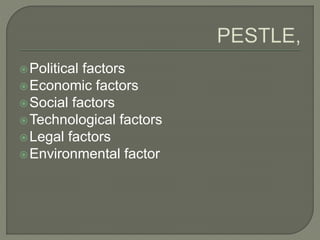
Political factors
Economic factors
Social factors
Technological factors
Legal factors
Environmental factor
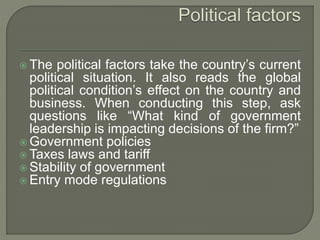
 The political factors take the country’s current
political situation. It also reads the global
political condition’s effect on the country and
business. When conducting this step, ask
questions like “What kind of government
leadership is impacting decisions of the firm?”
 Government policies
 Taxes laws and tariff
 Stability of government
 Entry mode regulations
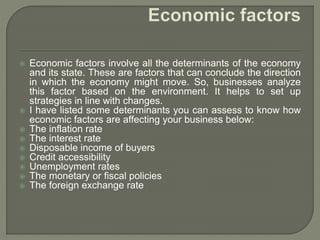
 Economic factors involve all the determinants of the economy
and its state. These are factors that can conclude the direction
in which the economy might move. So, businesses analyze
this factor based on the environment. It helps to set up
strategies in line with changes.
 I have listed some determinants you can assess to know how
economic factors are affecting your business below:
 The inflation rate
 The interest rate
 Disposable income of buyers
 Credit accessibility
 Unemployment rates
 The monetary or fiscal policies
 The foreign exchange rate
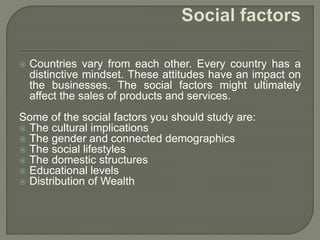
 Countries vary from each other. Every country has a
distinctive mindset. These attitudes have an impact on
the businesses. The social factors might ultimately
affect the sales of products and services.
Some of the social factors you should study are:
 The cultural implications
 The gender and connected demographics
 The social lifestyles
 The domestic structures
 Educational levels
 Distribution of Wealth
 Technology is advancing continuously. The
advancement is greatly influencing businesses.
Performing environmental analysis on these factors will
help you stay up to date with the changes. Technology
alters every minute. This is why companies must stay
connected all the time. Firms should integrate when
needed. Technological factors will help you know how
the consumers react to various trends.
 Firms can use these factors for their benefit:
 New discoveries
 Rate of technological obsolescence
 Rate of technological advances
 Innovative technological platforms
 Legislative changes take place from time to time. Many
of these changes affect the business environment. If a
regulatory body sets up a regulation for industries, for
example, that law would impact industries and
business in that economy. So, businesses should also
analyze the legal developments in respective
environments.
 I have mentioned some legal factors you need to be
aware of:
 Product regulations
 Employment regulations
 Competitive regulations
 Patent infringements
 Health and safety regulations
Geographical location
The climate and weather
Waste disposal laws
Energy consumption regulation
People’s attitude towards the environment
 Identifying: First of all, the factors which influence
the business entity are to be identified, to improve
its position in the market. The identification is
performed at various levels, i.e. company level,
market level, national level and global level.
 Scanning: Scanning implies the process of
critically examining the factors that highly influence
the business, as all the factors identified in the
previous step effects the entity with the same
intensity. Once the important factors are identified,
strategies can be made for its improvement.
 Analyzing: In this step, a careful analysis of all the
environmental factors is made to determine their effect on
different business levels and on the business as a whole.
Different tools available for the analysis include benchmarking,
Delphi technique and scenario building.
 Forecasting: After identification, examination and analysis,
lastly the impact of the variables is to be forecasted.
Environmental analysis is an ongoing process and follows a
holistic approach, that continuously scans the forces effecting
the business environment and covers 360 degrees of the
horizon, rather than a specific segment.
 The internal insights provided by the environmental analysis
are used to assess employee’s performance, customer
satisfaction, maintenance cost, etc. to take corrective action
wherever required. Further, the external metrics help in
responding to the environment in a positive manner and also
aligning the strategies according to the objectives of the
organization.
 Environmental analysis helps in the detection of threats at an
early stage, that assist the organization in developing
strategies for its survival. Add to that, it identifies opportunities,
such as prospective customers, new product, segment and
technology, to occupy a maximum share of the market than its
competitors.
Dr. O. P. Gupta
www.google
businessjargons.com
pestleanalysis.com

External environmental analysis

  • 1.
    Manjula Rajput Assistant Professor ShriShankaracharya Mahavidyalaya, Junwani Bhilai
  • 2.
    An organization existsand operates in an ever-changing environment. For its survival & growth, an organization has to constantly interact, react and adjust itself to the environmental forces and to diagnose them.
  • 3.
  • 4.
    Political situation Social condition Economicconditions Business Regulatory Framework Technological Conditions Market Condition Supplier Factors
  • 5.
    Organization & Management Personnel(staff) Production Marketing Technical Finance
  • 6.
    Environmental analysis isa strategic tool. It is a process to identify all the external and internal elements, which can affect the organization’s performance. The analysis entails assessing the level of threat or opportunity the factors might present. These evaluations are later translated into the decision-making process. The analysis helps align strategies with the firm’s environment.
  • 7.
     Our marketis facing changes every day. Many new things develop over time and the whole scenario can alter in only a few seconds. There are some factors that are beyond your control. But, you can control a lot of these things Businesses are greatly influenced by their environment. All the situational factors which determine day to day circumstances impact firms. So, businesses must constantly analyze the trade environment and the market.
  • 8.
    There are manystrategic analysis tools that a firm can use, but some are more common. The most used detailed analysis of the environment is the PESTLE analysis.
  • 9.
    Political factors Economic factors Socialfactors Technological factors Legal factors Environmental factor
  • 10.
     The politicalfactors take the country’s current political situation. It also reads the global political condition’s effect on the country and business. When conducting this step, ask questions like “What kind of government leadership is impacting decisions of the firm?”  Government policies  Taxes laws and tariff  Stability of government  Entry mode regulations
  • 11.
     Economic factorsinvolve all the determinants of the economy and its state. These are factors that can conclude the direction in which the economy might move. So, businesses analyze this factor based on the environment. It helps to set up strategies in line with changes.  I have listed some determinants you can assess to know how economic factors are affecting your business below:  The inflation rate  The interest rate  Disposable income of buyers  Credit accessibility  Unemployment rates  The monetary or fiscal policies  The foreign exchange rate
  • 12.
     Countries varyfrom each other. Every country has a distinctive mindset. These attitudes have an impact on the businesses. The social factors might ultimately affect the sales of products and services. Some of the social factors you should study are:  The cultural implications  The gender and connected demographics  The social lifestyles  The domestic structures  Educational levels  Distribution of Wealth
  • 13.
     Technology isadvancing continuously. The advancement is greatly influencing businesses. Performing environmental analysis on these factors will help you stay up to date with the changes. Technology alters every minute. This is why companies must stay connected all the time. Firms should integrate when needed. Technological factors will help you know how the consumers react to various trends.  Firms can use these factors for their benefit:  New discoveries  Rate of technological obsolescence  Rate of technological advances  Innovative technological platforms
  • 14.
     Legislative changestake place from time to time. Many of these changes affect the business environment. If a regulatory body sets up a regulation for industries, for example, that law would impact industries and business in that economy. So, businesses should also analyze the legal developments in respective environments.  I have mentioned some legal factors you need to be aware of:  Product regulations  Employment regulations  Competitive regulations  Patent infringements  Health and safety regulations
  • 15.
    Geographical location The climateand weather Waste disposal laws Energy consumption regulation People’s attitude towards the environment
  • 16.
     Identifying: Firstof all, the factors which influence the business entity are to be identified, to improve its position in the market. The identification is performed at various levels, i.e. company level, market level, national level and global level.  Scanning: Scanning implies the process of critically examining the factors that highly influence the business, as all the factors identified in the previous step effects the entity with the same intensity. Once the important factors are identified, strategies can be made for its improvement.
  • 17.
     Analyzing: Inthis step, a careful analysis of all the environmental factors is made to determine their effect on different business levels and on the business as a whole. Different tools available for the analysis include benchmarking, Delphi technique and scenario building.  Forecasting: After identification, examination and analysis, lastly the impact of the variables is to be forecasted. Environmental analysis is an ongoing process and follows a holistic approach, that continuously scans the forces effecting the business environment and covers 360 degrees of the horizon, rather than a specific segment.
  • 18.
     The internalinsights provided by the environmental analysis are used to assess employee’s performance, customer satisfaction, maintenance cost, etc. to take corrective action wherever required. Further, the external metrics help in responding to the environment in a positive manner and also aligning the strategies according to the objectives of the organization.  Environmental analysis helps in the detection of threats at an early stage, that assist the organization in developing strategies for its survival. Add to that, it identifies opportunities, such as prospective customers, new product, segment and technology, to occupy a maximum share of the market than its competitors.
  • 19.
    Dr. O. P.Gupta www.google businessjargons.com pestleanalysis.com