Quality of Work Life
Presentation by-APURV MAURYA
MBA 2nd sem
MONIRBA (ALLAHABAD)
Introduction
What is quality of work life?
Quality of work life refers to the favourableness or
unfavourableness of the job environment of an
organisation for its employees. It is a term which
covers a person’s feelings about every dimension
of its work e.g. economic incentives and rewards,
job security ,working conditions, organisational
and interpersonal relationships etc.
Characteristics of Q.W.L
•Job satisfaction
•Career growth
•Development of employee
•Considers humans as asset
•Job change:
1) job rotation
2) job enlargement
3) job enrichment
•Participation in management
•Proper physical conditions
Objectives of Q.W.L
• To create a positive attitude in the minds
of the employees.
• To increase the productivity.
• To improve standards of living of the
employees.
• To increase the effectiveness of the
organization (goal accomplishment,
profitability etc.)
Methods to improve Q.W.L
1) Flexi Time – flexi time is a scheme where an organization
gives its employees the opportunity of a flexible working
hours arrangement. It has many advantages employee
retention, higher productivity, lesser work pressure and
increase employee loyalty.
Example of Flexi Time work schedule
(Total 8 hours of work should be done in a day.)
7am to 9 am starting time
9am to 11:30am core time
11:30am to 1pm Flexible lunch time (half an hour)
1pm to 4pm core time
4pm to 6pm flexible time for quitting
2)Flexi place- it is a working style which allows
employees to work from alternative places
instead of office itself. For example, an
employee may choose to work in the office or
from home or even a cafe.
Objectives
Increases job performance
Improves company loyalty
 Reduces work stress
Reduces employee turnover
3)Alternative work schedules-
Alternative work schedules encompass a variety of
options that create workplace flexibility related to
how many hours employees work and when and
where they work. Flexible work arrangements include
scheduling options such as compressed workweeks
wherein employees work four 10-hour days instead of
five eight-hour days. Alternative scheduling also
might include telecommuting options or
arrangements such as job-sharing and part-time
schedules
4) Compressed work week- It allows an
employee to work a traditional 35-40 hour work
week in less than the traditional number of
work days. It can be negotiated in different
ways. For example, a full-time employee
scheduled to work 40 hours per week could
work 10 hour days instead of 8 hour days.
Advantages
Full day off during work week
Keeping your full time income and benefits
Reduced commuting time
5)Job rotation- job rotation is a management
approach where employees are shifted from
one job to another.
Why is it done?
Reduce boredom
Brings variety
Same level of job
Not a challenging job
1
3
24
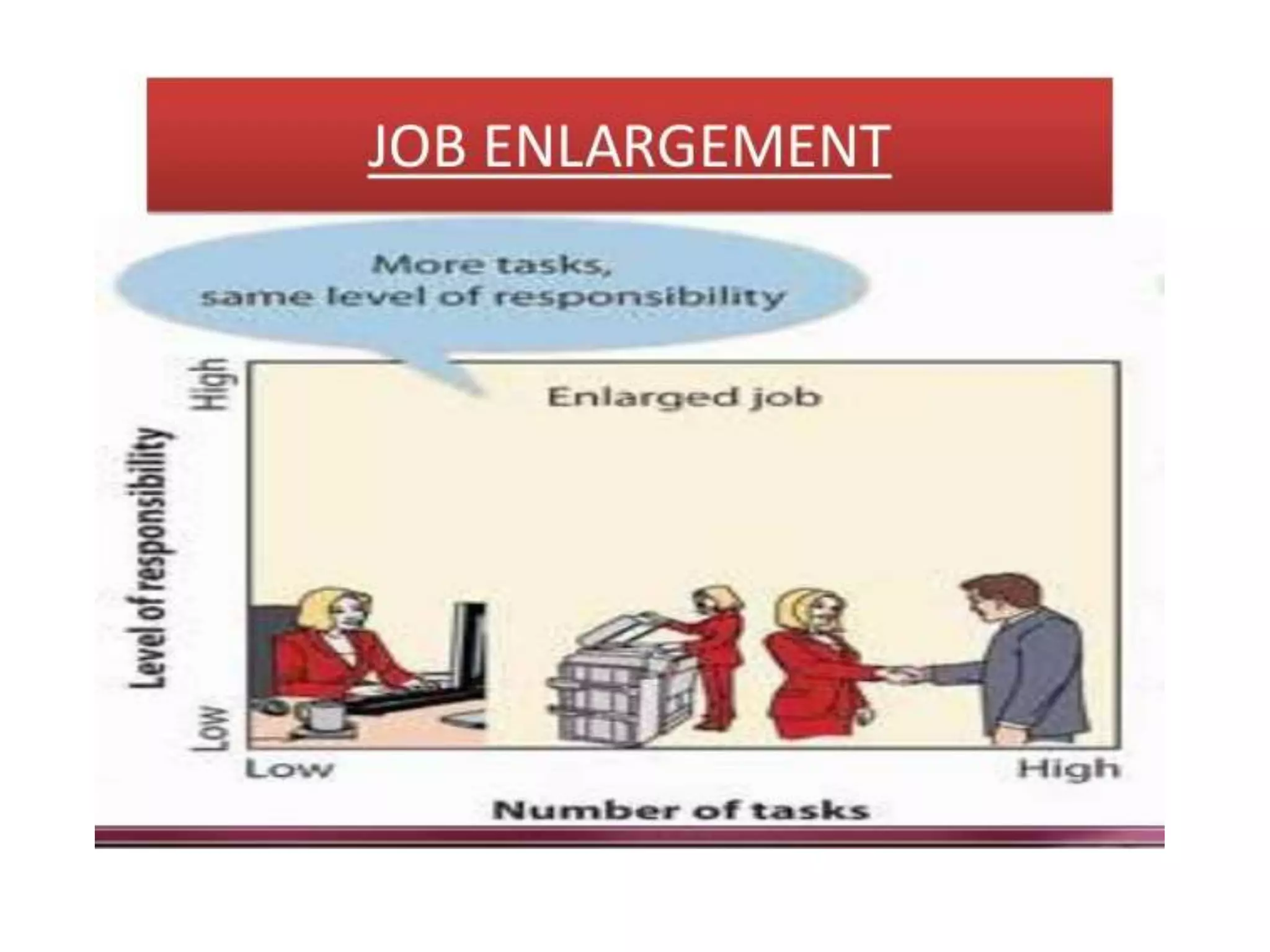
6) Job Enlargement-it means increasing
the scope of a job through extending the
range of its job duties and responsibilities
generally within the same level and
periphery.
Horizontal expansion of the job
No additional skill required
Brings variety in the job
7)Job enrichment- it a technique used to
increase the satisfaction among the
employees by delegating higher authority
and responsibility to them and thereby
enabling them to use their abilities to the
fullest.
Vertical expansion of job
Level of responsibility increases
Additional job requires variety in skills
Makes job challenging
Limitations of Q.W.L
1.Lack of management support
2.Lack of communication
3.Delay in decisions
4.Immature decisions
5.Danger of failure
6.Few positions in small companies
7.Ever increasing demand of
employee
Thank you

Quality of work life HRM

  • 1.
    Quality of WorkLife Presentation by-APURV MAURYA MBA 2nd sem MONIRBA (ALLAHABAD)
  • 2.
    Introduction What is qualityof work life? Quality of work life refers to the favourableness or unfavourableness of the job environment of an organisation for its employees. It is a term which covers a person’s feelings about every dimension of its work e.g. economic incentives and rewards, job security ,working conditions, organisational and interpersonal relationships etc.
  • 3.
    Characteristics of Q.W.L •Jobsatisfaction •Career growth •Development of employee •Considers humans as asset •Job change: 1) job rotation 2) job enlargement 3) job enrichment •Participation in management •Proper physical conditions
  • 4.
    Objectives of Q.W.L •To create a positive attitude in the minds of the employees. • To increase the productivity. • To improve standards of living of the employees. • To increase the effectiveness of the organization (goal accomplishment, profitability etc.)
  • 5.
    Methods to improveQ.W.L 1) Flexi Time – flexi time is a scheme where an organization gives its employees the opportunity of a flexible working hours arrangement. It has many advantages employee retention, higher productivity, lesser work pressure and increase employee loyalty. Example of Flexi Time work schedule (Total 8 hours of work should be done in a day.) 7am to 9 am starting time 9am to 11:30am core time 11:30am to 1pm Flexible lunch time (half an hour) 1pm to 4pm core time 4pm to 6pm flexible time for quitting
  • 6.
    2)Flexi place- itis a working style which allows employees to work from alternative places instead of office itself. For example, an employee may choose to work in the office or from home or even a cafe. Objectives Increases job performance Improves company loyalty  Reduces work stress Reduces employee turnover
  • 7.
    3)Alternative work schedules- Alternativework schedules encompass a variety of options that create workplace flexibility related to how many hours employees work and when and where they work. Flexible work arrangements include scheduling options such as compressed workweeks wherein employees work four 10-hour days instead of five eight-hour days. Alternative scheduling also might include telecommuting options or arrangements such as job-sharing and part-time schedules
  • 8.
    4) Compressed workweek- It allows an employee to work a traditional 35-40 hour work week in less than the traditional number of work days. It can be negotiated in different ways. For example, a full-time employee scheduled to work 40 hours per week could work 10 hour days instead of 8 hour days. Advantages Full day off during work week Keeping your full time income and benefits Reduced commuting time
  • 9.
    5)Job rotation- jobrotation is a management approach where employees are shifted from one job to another. Why is it done? Reduce boredom Brings variety Same level of job Not a challenging job 1 3 24
  • 10.
    6) Job Enlargement-itmeans increasing the scope of a job through extending the range of its job duties and responsibilities generally within the same level and periphery. Horizontal expansion of the job No additional skill required Brings variety in the job
  • 12.
    7)Job enrichment- ita technique used to increase the satisfaction among the employees by delegating higher authority and responsibility to them and thereby enabling them to use their abilities to the fullest. Vertical expansion of job Level of responsibility increases Additional job requires variety in skills Makes job challenging
  • 15.
    Limitations of Q.W.L 1.Lackof management support 2.Lack of communication 3.Delay in decisions 4.Immature decisions 5.Danger of failure 6.Few positions in small companies 7.Ever increasing demand of employee
  • 16.