EXPLAINING VISUAL-VERBAL
RELATIONSHIPS
DIRECTION:
Analyze closely the given verbal-visual
presentations through graphs,
infographics, tables, and information
maps. Write the letter of your answer on
a separate sheet.
1. IN THE CONCEPT MAP BELOW, WHICH ONE IS NOT A
PART OF SPEECH?
2. WHICH PART OF THE PIE HAS THE BIGGEST MONTHLY BUDGET
OF ANTHONY’S EXPENSES?
3. HOW MANY PERCENT IS THE BUDGET FOR HOUSE RENTAL?
4. HOW MANY STUDENTS CHOOSE ONLINE LEARNING?
5. WHICH LEARNING MODALITY DO STUDENTS LIKE THE MOST?
6. WHICH SPORT HAS THE HIGHEST NUMBER OF VOTES?
7. IN WHICH MONTH DOES MS. DYNAH EARN THE HIGHEST?
8. HOW MUCH IS THE INCREASE OF MS. DYNAH’S INCOME FROM
MAY TO JUNE?
9. HOW MANY SECONDS DO YOU NEED TO WASH YOUR HANDS?
WHAT ARE VISUAL-VERBAL ILLUSTRATIONS?
Visual-verbal illustrations are the ways of
presenting information in a simple and
attractive manner to catch the readers’
interest.
These illustrations help explain concepts
easily using graphs, maps, tables,
infographics, charts and the like.
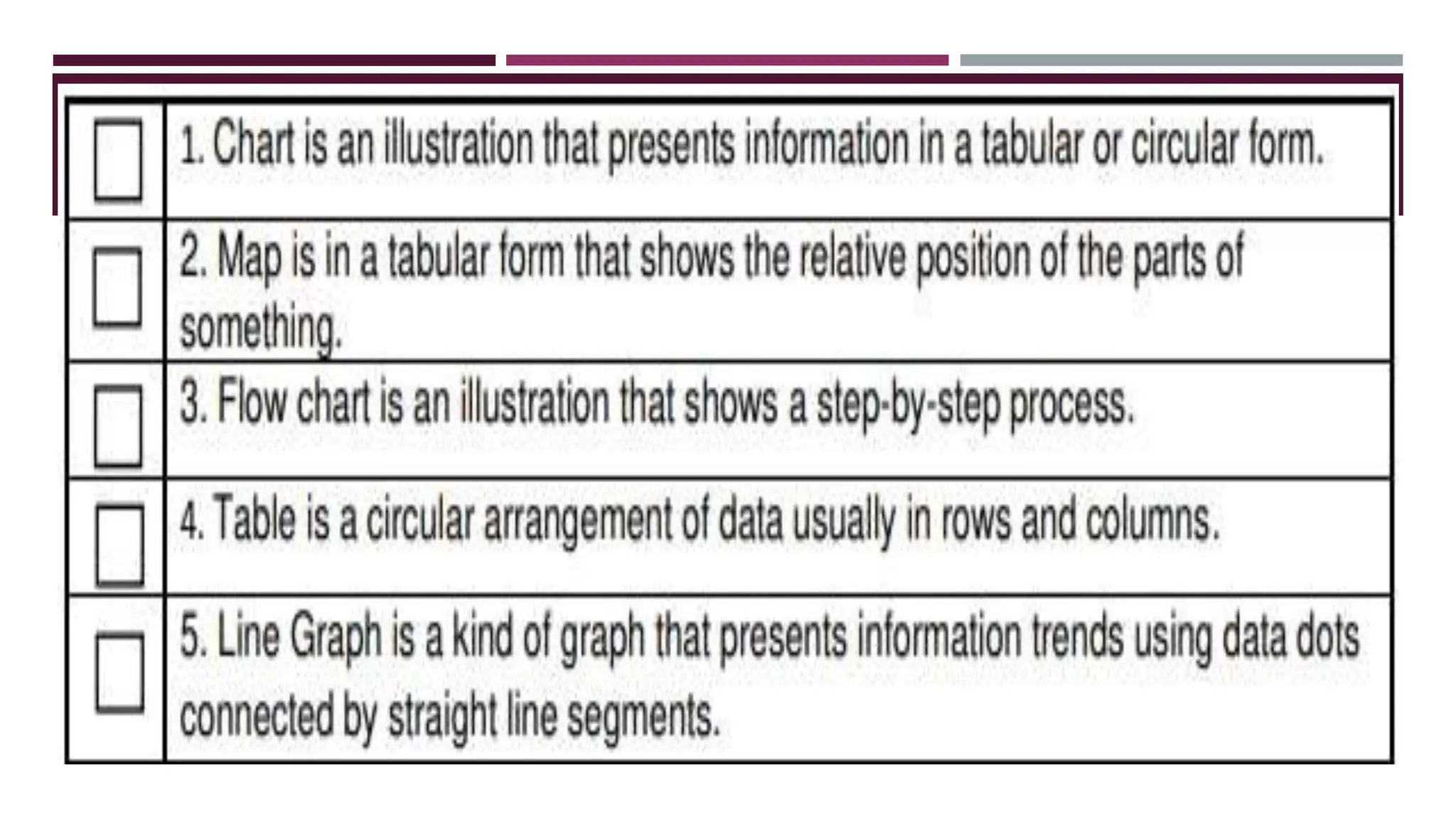
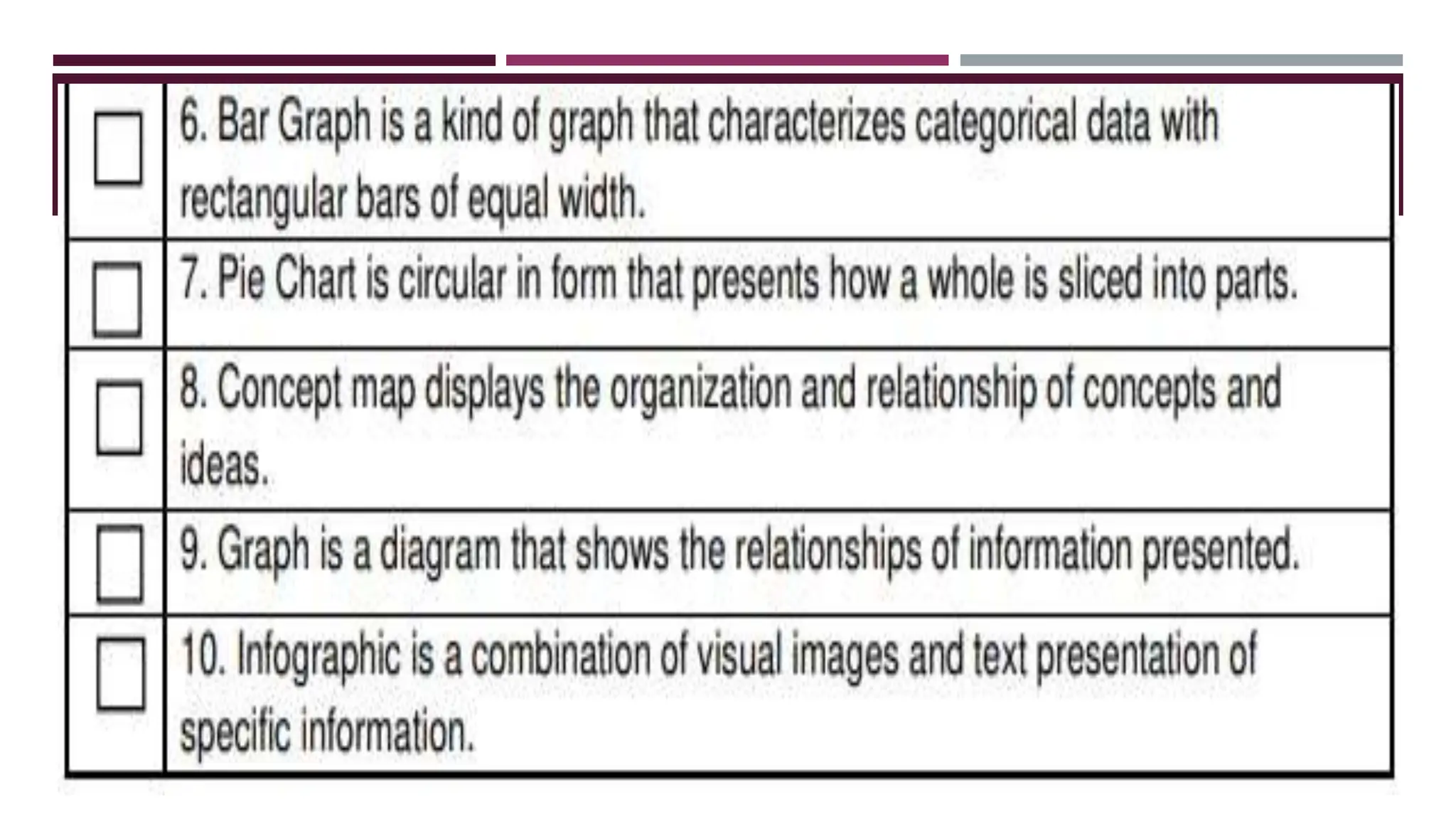
1. GRAPH
is a diagram that shows the
relationships of information presented.
Line Graph and Bar Graph are the two
kinds of a graph.
A. LINE GRAPH
 is a kind of graph that presents information trends
using data dots connected by straight line
segments.
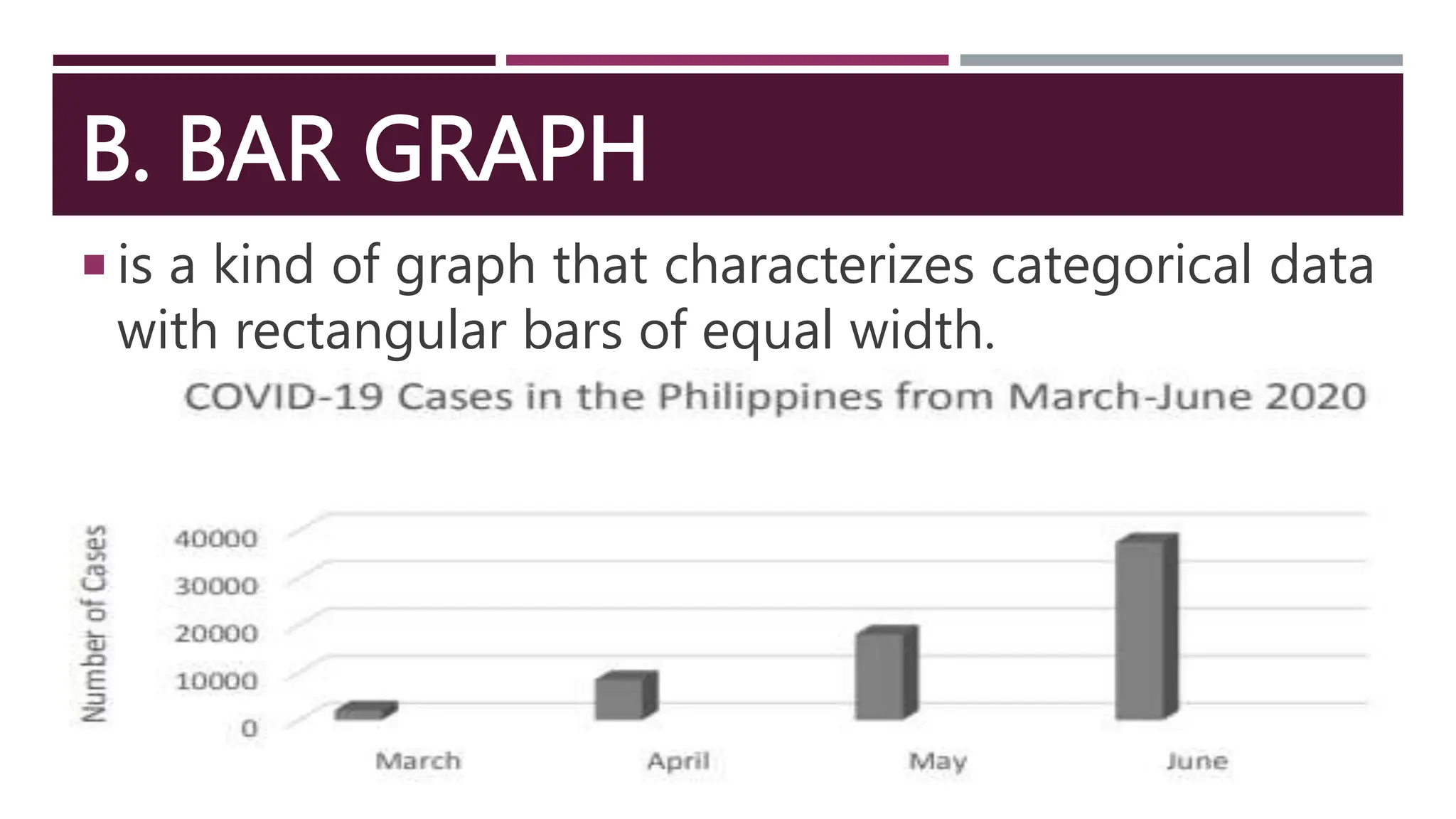
B. BAR GRAPH
 is a kind of graph that characterizes categorical data
with rectangular bars of equal width.
2. TABLE
 is an organized arrangement of data usually in rows
and columns.
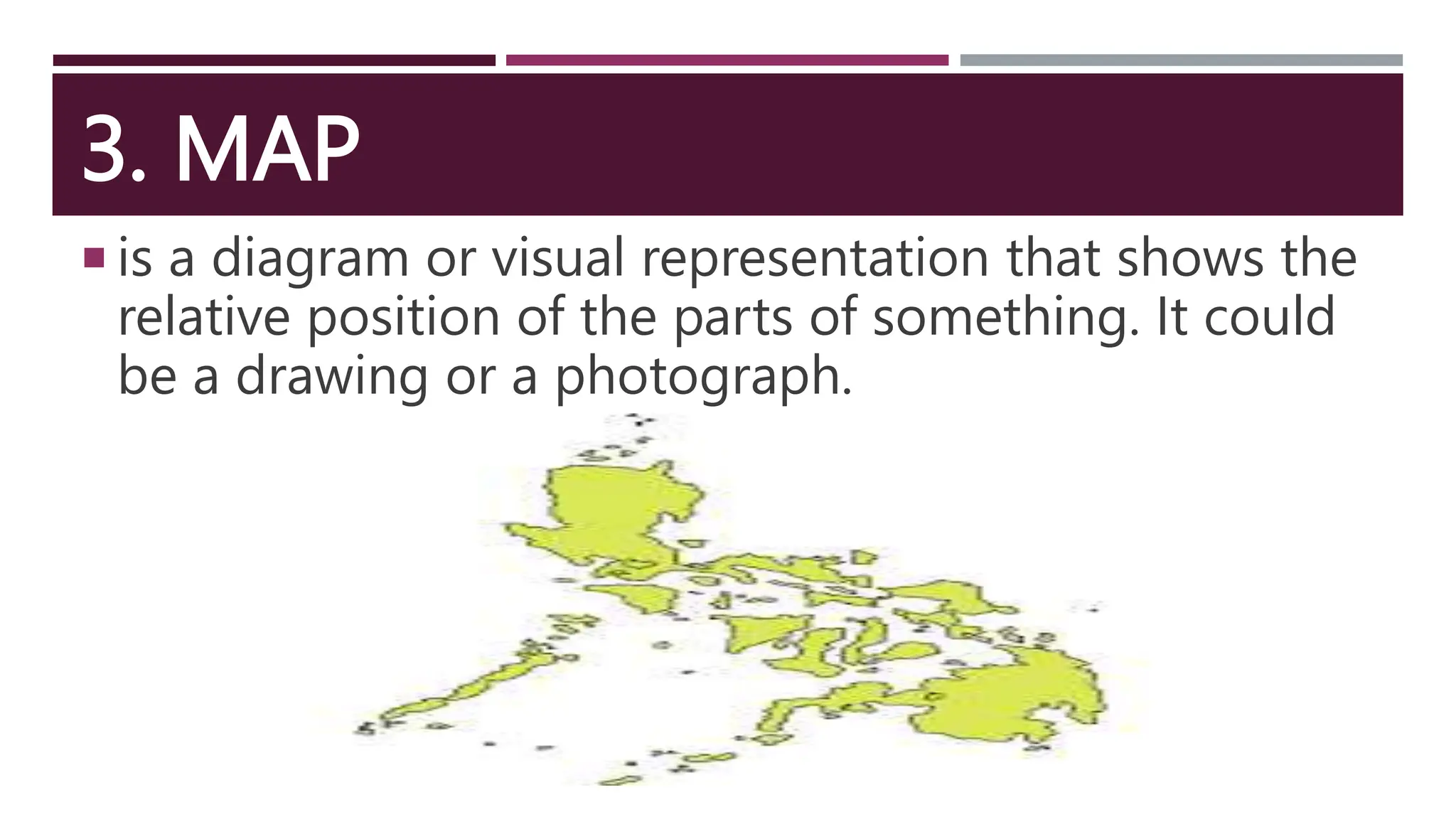
3. MAP
 is a diagram or visual representation that shows the
relative position of the parts of something. It could
be a drawing or a photograph.
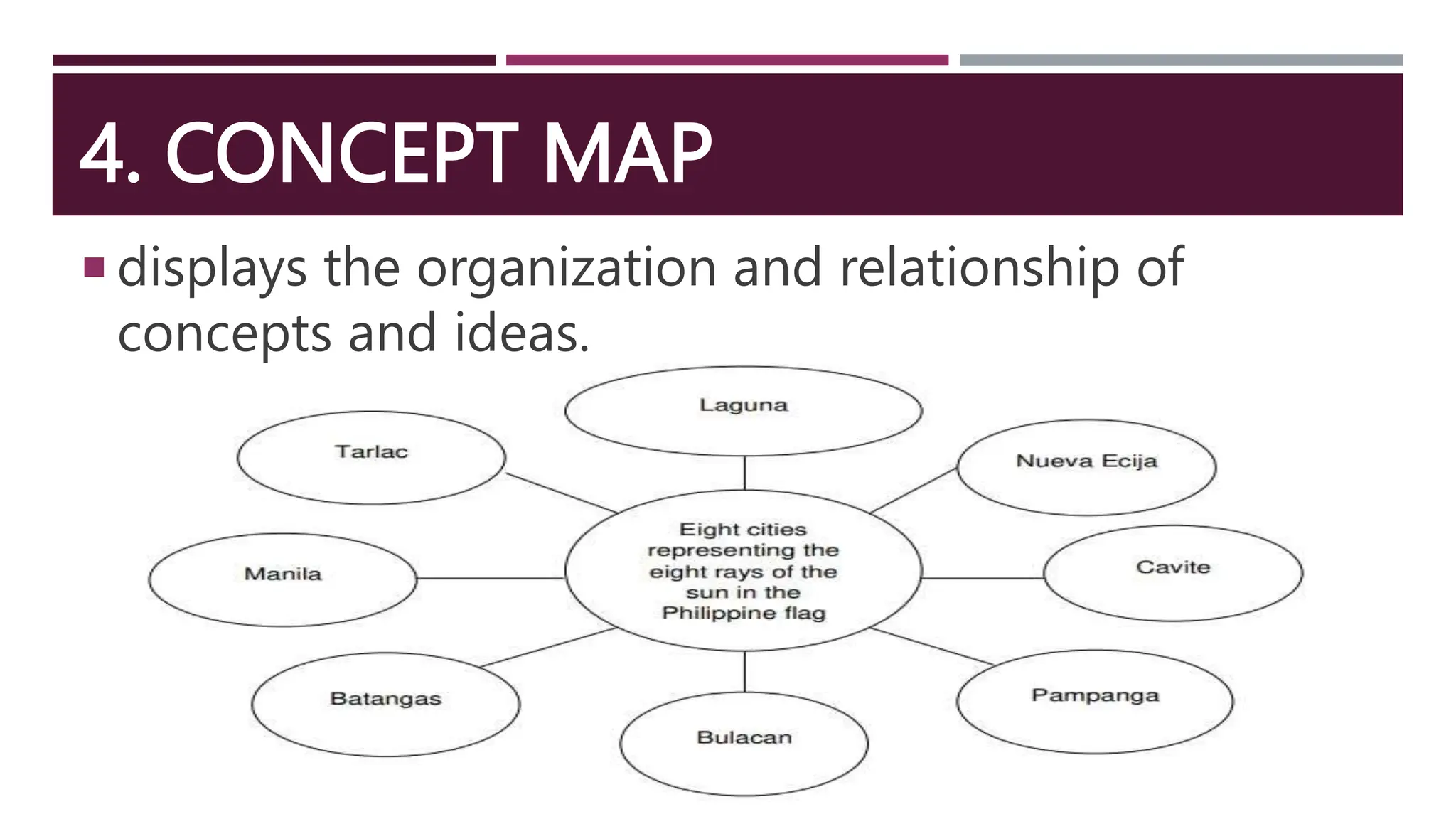
4. CONCEPT MAP
 displays the organization and relationship of
concepts and ideas.
5. CHART
is an illustration that presents
information in a tabular or circular
form.
Pie Chart and Flow Chart are the two
kinds of a chart.
A. PIE CHART
is circular in form that presents how a whole is
sliced into parts
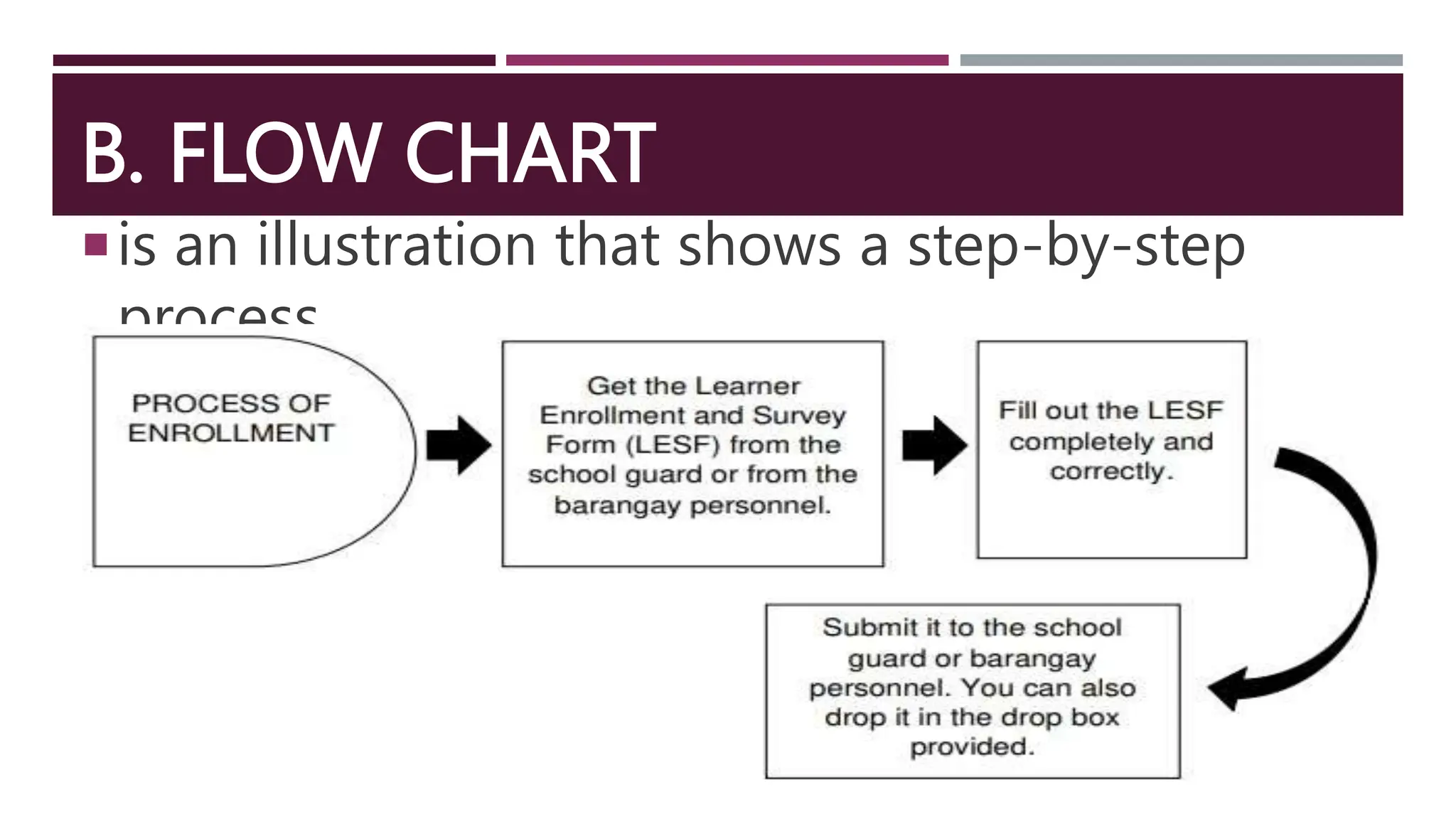
B. FLOW CHART
is an illustration that shows a step-by-step
process.
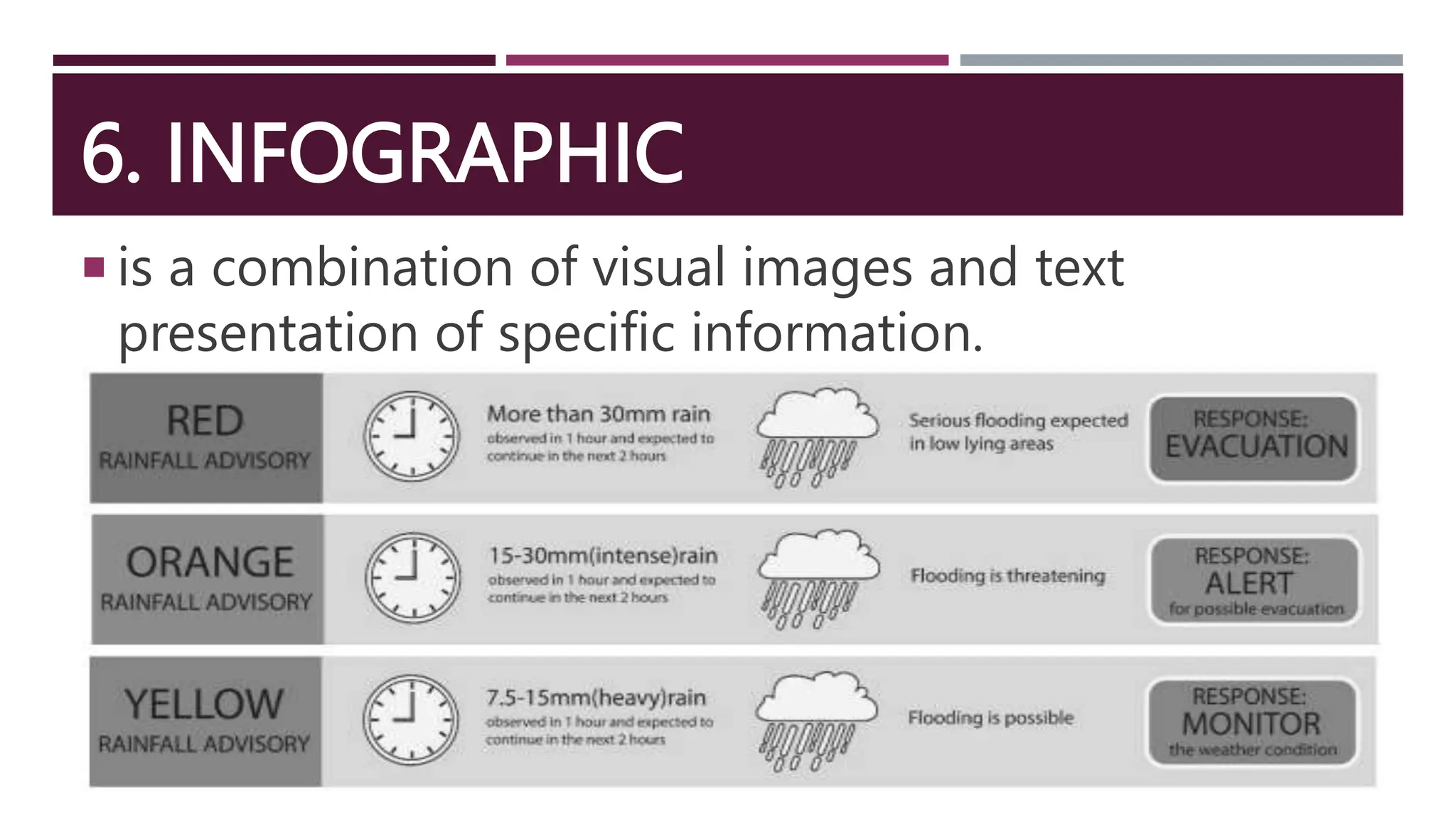
6. INFOGRAPHIC
 is a combination of visual images and text
presentation of specific information.
DIRECTION:
Put a check mark (✓) in the box if the
statement is true. Put an (X) mark if the
statement is false. Write your answers on a
separate sheet.
READ AND TAKE NOTE OF THE IMPORTANT DETAILS MENTIONED
IN THE SELECTION BELOW.
EARLY WARNING
There are some ways we can learn that a disaster is
coming, like monitoring the weather, observing increasing
water levels in rivers, or knowing that a tsunami often
follows an earthquake. There are different people who can
keep you informed about what you should do and where
you can go. This could be your family, neighbors, and the
media. Sometimes, police or local officials will also inform
you if you need to leave your home.
READ AND TAKE NOTE OF THE IMPORTANT DETAILS MENTIONED
IN THE SELECTION BELOW.
You may even have a local RC 143 Disaster
Management Team that will help you in these times,
guiding you on when to evacuate, what to bring, and
where to go to stay safe in times of disaster. Your
community may have a local warning system to
announce if a hazard is approaching. This warning
system could be a megaphone, a bell, a rain gauge, a
colored flag, or a bamboo clapper. It’s important to
listen, watch, and talk to people around you.
ACTIVITY 1
What are the ways to learn if a disaster is
coming?
What are the local warning devices used to
announce the approaching disaster?
Have you ever experienced a disaster before?
If yes, what disaster was it?
 What precautionary measures did you do?
ACTIVITY 2
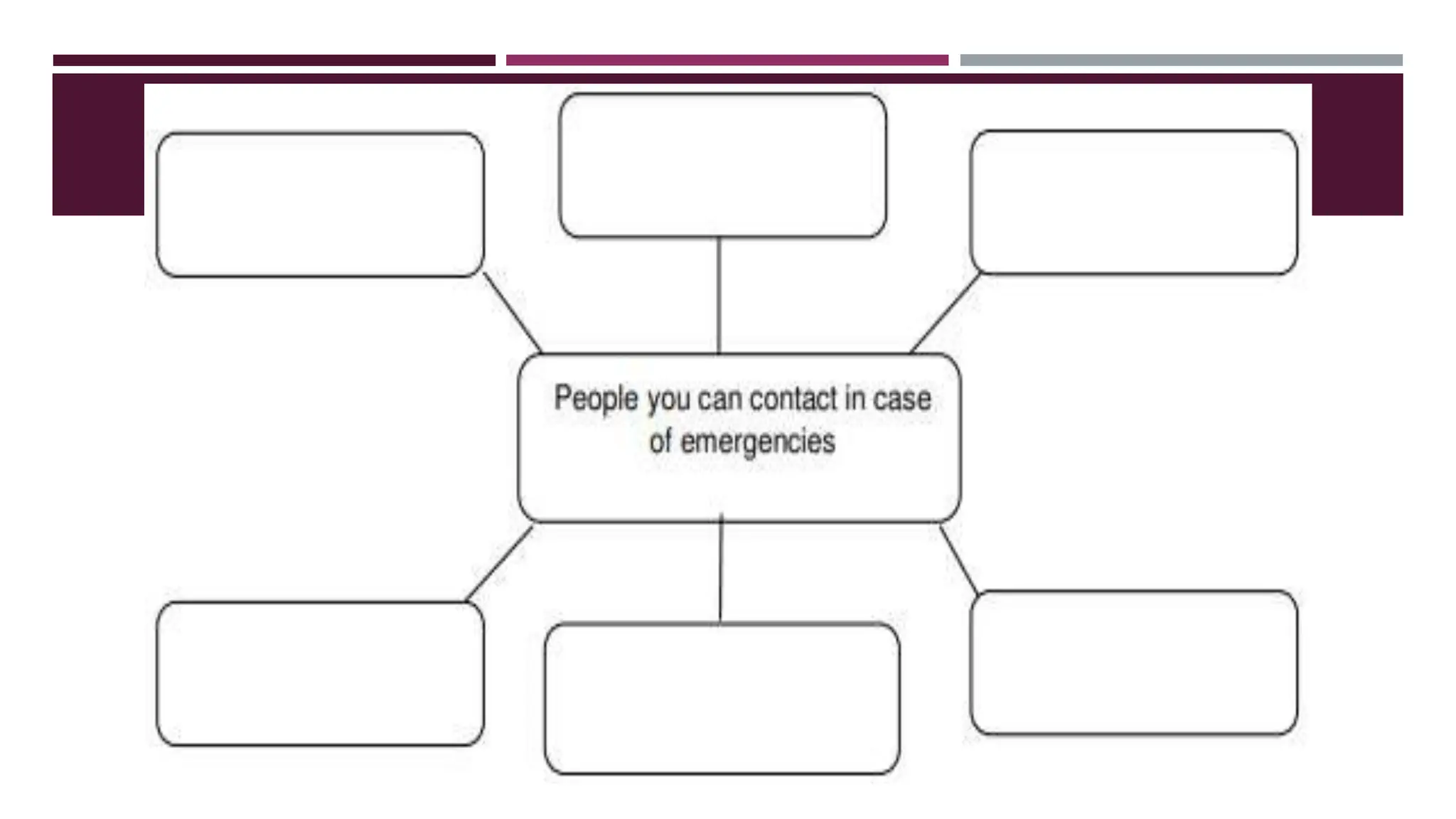
Based on the selection “Early
Warning”, identify the people you can
contact in case of emergencies by
filling in the concept map below.
Write your answers on a ½ sheet of
paper.
DIRECTION:
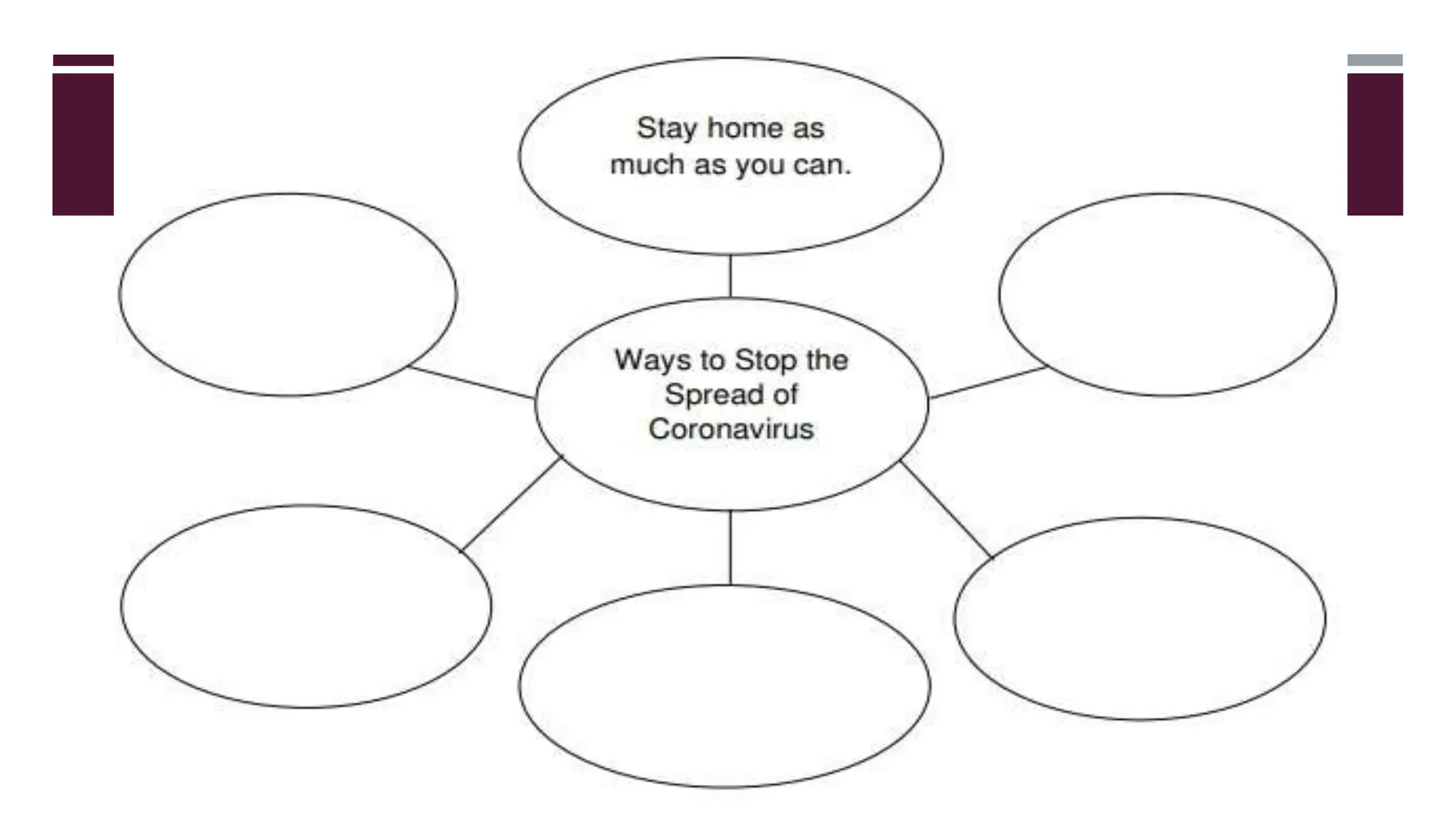
Read and analyze the text below
to complete the concept map with
ways to stop the spread of
coronavirus.
HOW TO STOP THE SPREAD OF CORONAVIRUS
1. STAY home as much as you can.
2. KEEP a safe distance from people.
3. WASH hands often for 20 seconds.
4. WEAR face mask when going out and in public
places.
5. COVER your mouth when sneezing or coughing.
6. CALL for an emergency assistance when symptoms
arise.
Explaining Visual-Verbal Relationships.pptx

Explaining Visual-Verbal Relationships.pptx

  • 1.
  • 2.
    DIRECTION: Analyze closely thegiven verbal-visual presentations through graphs, infographics, tables, and information maps. Write the letter of your answer on a separate sheet.
  • 3.
    1. IN THECONCEPT MAP BELOW, WHICH ONE IS NOT A PART OF SPEECH?
  • 4.
    2. WHICH PARTOF THE PIE HAS THE BIGGEST MONTHLY BUDGET OF ANTHONY’S EXPENSES?
  • 5.
    3. HOW MANYPERCENT IS THE BUDGET FOR HOUSE RENTAL?
  • 6.
    4. HOW MANYSTUDENTS CHOOSE ONLINE LEARNING?
  • 7.
    5. WHICH LEARNINGMODALITY DO STUDENTS LIKE THE MOST?
  • 8.
    6. WHICH SPORTHAS THE HIGHEST NUMBER OF VOTES?
  • 9.
    7. IN WHICHMONTH DOES MS. DYNAH EARN THE HIGHEST?
  • 10.
    8. HOW MUCHIS THE INCREASE OF MS. DYNAH’S INCOME FROM MAY TO JUNE?
  • 11.
    9. HOW MANYSECONDS DO YOU NEED TO WASH YOUR HANDS?
  • 12.
    WHAT ARE VISUAL-VERBALILLUSTRATIONS? Visual-verbal illustrations are the ways of presenting information in a simple and attractive manner to catch the readers’ interest. These illustrations help explain concepts easily using graphs, maps, tables, infographics, charts and the like.
  • 13.
    1. GRAPH is adiagram that shows the relationships of information presented. Line Graph and Bar Graph are the two kinds of a graph.
  • 14.
    A. LINE GRAPH is a kind of graph that presents information trends using data dots connected by straight line segments.
  • 15.
    B. BAR GRAPH is a kind of graph that characterizes categorical data with rectangular bars of equal width.
  • 16.
    2. TABLE  isan organized arrangement of data usually in rows and columns.
  • 17.
    3. MAP  isa diagram or visual representation that shows the relative position of the parts of something. It could be a drawing or a photograph.
  • 18.
    4. CONCEPT MAP displays the organization and relationship of concepts and ideas.
  • 19.
    5. CHART is anillustration that presents information in a tabular or circular form. Pie Chart and Flow Chart are the two kinds of a chart.
  • 20.
    A. PIE CHART iscircular in form that presents how a whole is sliced into parts
  • 21.
    B. FLOW CHART isan illustration that shows a step-by-step process.
  • 22.
    6. INFOGRAPHIC  isa combination of visual images and text presentation of specific information.
  • 23.
    DIRECTION: Put a checkmark (✓) in the box if the statement is true. Put an (X) mark if the statement is false. Write your answers on a separate sheet.
  • 26.
    READ AND TAKENOTE OF THE IMPORTANT DETAILS MENTIONED IN THE SELECTION BELOW. EARLY WARNING There are some ways we can learn that a disaster is coming, like monitoring the weather, observing increasing water levels in rivers, or knowing that a tsunami often follows an earthquake. There are different people who can keep you informed about what you should do and where you can go. This could be your family, neighbors, and the media. Sometimes, police or local officials will also inform you if you need to leave your home.
  • 27.
    READ AND TAKENOTE OF THE IMPORTANT DETAILS MENTIONED IN THE SELECTION BELOW. You may even have a local RC 143 Disaster Management Team that will help you in these times, guiding you on when to evacuate, what to bring, and where to go to stay safe in times of disaster. Your community may have a local warning system to announce if a hazard is approaching. This warning system could be a megaphone, a bell, a rain gauge, a colored flag, or a bamboo clapper. It’s important to listen, watch, and talk to people around you.
  • 28.
    ACTIVITY 1 What arethe ways to learn if a disaster is coming? What are the local warning devices used to announce the approaching disaster? Have you ever experienced a disaster before? If yes, what disaster was it?  What precautionary measures did you do?
  • 29.
    ACTIVITY 2 Based onthe selection “Early Warning”, identify the people you can contact in case of emergencies by filling in the concept map below. Write your answers on a ½ sheet of paper.
  • 31.
    DIRECTION: Read and analyzethe text below to complete the concept map with ways to stop the spread of coronavirus.
  • 32.
    HOW TO STOPTHE SPREAD OF CORONAVIRUS 1. STAY home as much as you can. 2. KEEP a safe distance from people. 3. WASH hands often for 20 seconds. 4. WEAR face mask when going out and in public places. 5. COVER your mouth when sneezing or coughing. 6. CALL for an emergency assistance when symptoms arise.