English
Class
B. Interpret information
presented in a text
Objectives
A. Analyze visual-verbal
relationships through tables,
graphs, infographics, and
information maps;
Activity
Time
A. GRAPH
B. MAP
C. VENN DIAGRAM
.
It is a diagram or visual
representation that shows the relative
position of the parts of something. It
could be a drawing or a photograph.
Activity
Time
A. GRAPH
B. MAP
C. VENN DIAGRAM
.
It is a diagram that
shows the relationships
of information
presented.
Activity
Time
A. GRAPH
B. CHART
C. VENN DIAGRAM
.
It is an illustration that
presents information in
a tabular or circular
form.
Activity
Time
A. GRAPH
B. INFOGRAPHICS
C. VENN DIAGRAM
.
It is a combination of
visual images and text
presentation of specific
information.

Activity
Time
A. GRAPH
B. INFOGRAPHICS
C. FLOWCHART
.
It is an illustration
that shows a step-by-
step process.
Visual-
Verbal
Illustration
 Visual-verbal illustrations are the ways of
presenting information in a simple and
attractive manner to catch the readers’
interest.
 These illustrations help explain concepts
easily using graphs, maps, tables,
infographics, charts and the like.
What are visual-verbal illustrations?
Is a diagram that shows the
relationships of
information presented.
1. Graph
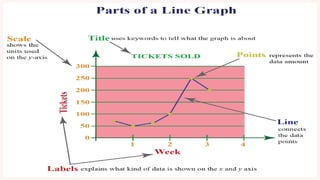
 Is a kind of graph that
presents information trends
using data dots connected by
straight line segments.
a. Line Graph
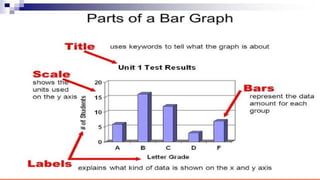
 is a kind of graph that
characterizes categorical
data with rectangular bars of
equal width..
b. Bar Graph
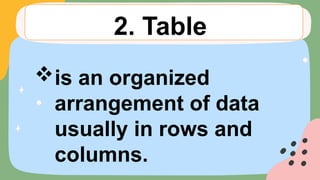
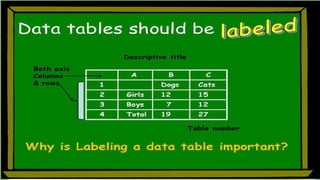
is an organized
arrangement of data
usually in rows and
columns.
2. Table
 are designed to explain, inform, and
present facts of specific topics. These
texts can be accompanied by visual
cues to provide or further highlight
information.
EXPOSITORY TEXT
 Textbooks
 News articles
 Magazine articles
 Information websites
 History books
 Science books
EXPOSITORY TEXT
Directions: Read and analyze the
given expository texts. Choose at
least two of the texts and make the
needed appropriate visual illustration
suggested for each. Use a separate
sheet of paper for your illustration.
1. In times of disaster, you may need to evacuate from your house and go
to a safe place. At other times, you may need to stay indoors.
If you are asked to evacuate, it is best to have an evacuation map to get to
a safe place. The map should be known to all members of the family. It
should contain landmarks in the community (ex. churches, schools, health
centers, fire stations, police stations, barangay halls) and if possible,
evacuation centers with routes that show how to get there.
Draw your house and the route to get to the evacuation center in your
area. Mark all the roads as well as the buildings mentioned above.
In your community, where do you go in times of disaster?
Suggested illustration: Map or Flow chart
Source: "Get Ready For Disasters: Workbook For Intermediate Students". 2016. Deped LR Portal. https://lrmds.deped.gov.ph/detail/11265.
2. I was at school, and it was raining very hard. A warning had been issued
on the radio that the area might be flooded. Our teacher told us that
classes have to be cancelled because of the bad weather. We finished
school 2 hours early, so everyone could go home safely.
As I arrived home, I saw mom and dad in the kitchen preparing some
dinner. They had not heard the announcement! So, I told them about it.
Dad packed a first aid kit, some water, food, a whistle, a blanket, a
flashlight, and my little sister’s medicine. Mom and I went next door to see
if our elderly neighbor, Anna, knew about the evacuation. Anna has
difficulty in hearing, and she had not heard the warning on the radio. When
mom told her that we need to leave, she got her survival kit from her
closet.
Suggested illustration: Concept Map or Chart
Source: "Get Ready For Disasters: Workbook For Intermediate Students". 2016. Deped LR Portal. https://lrmds.deped.gov.ph/detail/11265.
3. The earth is made up of three layers: the crust, the mantle, and the core.
The outer layer, called the crust, is between 16 and 40 kilometers thick. It
floats on a thicker layer known as the mantle, which is 2,895 kilometers
thick. The core, which is 3,475 kilometers thick, is surrounded by the
mantle. The innermost part is solid (the inner core) while the outer part is
liquid (the outer core).
Suggested illustration: Concept Map or Chart
Source: Paulin, Senen. 2000. "PROBE S Or M, Anyone?". Deped LR Portal. https://lrmds.deped.gov.ph/detail/564.
4. As a young teen, Riz does not enjoy as much as other teenagers would. Her
weekends are spent on looking for work so she can earn her allowance. She
spends two hundred pesos a week. One hundred pesos for her lunch, eighty pesos
for her fare and twenty pesos for classroom dues.
She earns more than what she needs for the week. On Saturdays, her routine
would be to go to a distant relative and wash clothes for a small earning of one
hundred pesos. In the afternoon, she volunteers weeding at a neighbor’s garden for
an hour and greatly receives fifty pesos for the work extended.
On Sundays after church, she would iron out her teacher’s uniform for a fee of one
hundred pesos. Despite her weekend routine, she remains to be one of the
smartest in class.
Suggested illustration: Pie Chart or Table
Source: Grade 7 English Learner's Material. 1st ed. Pasig City, Philippines: Department of Education, 2017.
Thank
you
See you next time!

2-visual-verbal.presentation in English 8

  • 1.
  • 2.
    B. Interpret information presentedin a text Objectives A. Analyze visual-verbal relationships through tables, graphs, infographics, and information maps;
  • 3.
    Activity Time A. GRAPH B. MAP C.VENN DIAGRAM . It is a diagram or visual representation that shows the relative position of the parts of something. It could be a drawing or a photograph.
  • 4.
    Activity Time A. GRAPH B. MAP C.VENN DIAGRAM . It is a diagram that shows the relationships of information presented.
  • 5.
    Activity Time A. GRAPH B. CHART C.VENN DIAGRAM . It is an illustration that presents information in a tabular or circular form.
  • 6.
    Activity Time A. GRAPH B. INFOGRAPHICS C.VENN DIAGRAM . It is a combination of visual images and text presentation of specific information.
  • 7.
    Activity Time A. GRAPH B. INFOGRAPHICS C.FLOWCHART . It is an illustration that shows a step-by- step process.
  • 8.
  • 9.
     Visual-verbal illustrationsare the ways of presenting information in a simple and attractive manner to catch the readers’ interest.  These illustrations help explain concepts easily using graphs, maps, tables, infographics, charts and the like. What are visual-verbal illustrations?
  • 10.
    Is a diagramthat shows the relationships of information presented. 1. Graph
  • 11.
     Is akind of graph that presents information trends using data dots connected by straight line segments. a. Line Graph
  • 13.
     is akind of graph that characterizes categorical data with rectangular bars of equal width.. b. Bar Graph
  • 15.
    is an organized arrangementof data usually in rows and columns. 2. Table
  • 17.
     are designedto explain, inform, and present facts of specific topics. These texts can be accompanied by visual cues to provide or further highlight information. EXPOSITORY TEXT
  • 18.
     Textbooks  Newsarticles  Magazine articles  Information websites  History books  Science books EXPOSITORY TEXT
  • 21.
    Directions: Read andanalyze the given expository texts. Choose at least two of the texts and make the needed appropriate visual illustration suggested for each. Use a separate sheet of paper for your illustration.
  • 22.
    1. In timesof disaster, you may need to evacuate from your house and go to a safe place. At other times, you may need to stay indoors. If you are asked to evacuate, it is best to have an evacuation map to get to a safe place. The map should be known to all members of the family. It should contain landmarks in the community (ex. churches, schools, health centers, fire stations, police stations, barangay halls) and if possible, evacuation centers with routes that show how to get there. Draw your house and the route to get to the evacuation center in your area. Mark all the roads as well as the buildings mentioned above. In your community, where do you go in times of disaster? Suggested illustration: Map or Flow chart Source: "Get Ready For Disasters: Workbook For Intermediate Students". 2016. Deped LR Portal. https://lrmds.deped.gov.ph/detail/11265.
  • 23.
    2. I wasat school, and it was raining very hard. A warning had been issued on the radio that the area might be flooded. Our teacher told us that classes have to be cancelled because of the bad weather. We finished school 2 hours early, so everyone could go home safely. As I arrived home, I saw mom and dad in the kitchen preparing some dinner. They had not heard the announcement! So, I told them about it. Dad packed a first aid kit, some water, food, a whistle, a blanket, a flashlight, and my little sister’s medicine. Mom and I went next door to see if our elderly neighbor, Anna, knew about the evacuation. Anna has difficulty in hearing, and she had not heard the warning on the radio. When mom told her that we need to leave, she got her survival kit from her closet. Suggested illustration: Concept Map or Chart Source: "Get Ready For Disasters: Workbook For Intermediate Students". 2016. Deped LR Portal. https://lrmds.deped.gov.ph/detail/11265.
  • 24.
    3. The earthis made up of three layers: the crust, the mantle, and the core. The outer layer, called the crust, is between 16 and 40 kilometers thick. It floats on a thicker layer known as the mantle, which is 2,895 kilometers thick. The core, which is 3,475 kilometers thick, is surrounded by the mantle. The innermost part is solid (the inner core) while the outer part is liquid (the outer core). Suggested illustration: Concept Map or Chart Source: Paulin, Senen. 2000. "PROBE S Or M, Anyone?". Deped LR Portal. https://lrmds.deped.gov.ph/detail/564.
  • 25.
    4. As ayoung teen, Riz does not enjoy as much as other teenagers would. Her weekends are spent on looking for work so she can earn her allowance. She spends two hundred pesos a week. One hundred pesos for her lunch, eighty pesos for her fare and twenty pesos for classroom dues. She earns more than what she needs for the week. On Saturdays, her routine would be to go to a distant relative and wash clothes for a small earning of one hundred pesos. In the afternoon, she volunteers weeding at a neighbor’s garden for an hour and greatly receives fifty pesos for the work extended. On Sundays after church, she would iron out her teacher’s uniform for a fee of one hundred pesos. Despite her weekend routine, she remains to be one of the smartest in class. Suggested illustration: Pie Chart or Table Source: Grade 7 English Learner's Material. 1st ed. Pasig City, Philippines: Department of Education, 2017.
  • 26.