Celente French 
VPEK 875 
Module 1 
Dr.E. Du Plessis
1. Analysis of assumptions and approaches 
within the psycho-analytical approach. 
2. Relating this theoretical framework in 
advanced psychiatric nursing science by 
arguing how this theory influences advanced 
psychiatric nursing science. 
3. Identification of concepts and relevant 
terminology in psychiatric nursing science 
and synthesizing these concepts in order to 
develop a conceptual framework for 
advanced psychiatric nursing.
Born 8 January 1902 in 
Chicago. 
One of 6 children. 
Studied Theology, then moved 
to psychology. 
Abandoned Christianity and the 
Church when he decided to 
follow psychology, according to 
Thorne & Sanders (2013) this 
may be related to the fact that 
Rogers was brought up in a 
home where Religion was a 
very large, important aspect of 
the family’s lives. 
Rogers was very sick as a child 
and was seen by the family as 
the one that always needs 
extra care.
Person centered theory 
Self concept seen as most important part of 
personality. 
Congruence & Incongruence 
Subjective experiences are more important 
than objective reality when it comes to 
personality.
Inspired 
by 
Maslow’s 
hierarchy 
of needs.
According to Weiten (2010:509) Rogers 
developed the human potential movement, the 
focus of this movement is on self-realization 
through sensitivity training aimed at enhancing 
growth. 
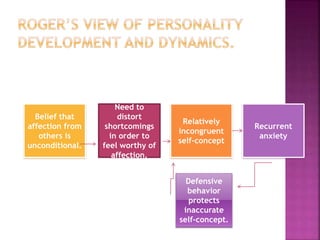
Rogers called the gap between self-concept and 
reality incongruence. 
Conditional and unconditional love from parents 
 unconditional love fosters congruence, 
conditional love fosters incongruence. 
Experiences that threaten personal views cause 
anxiety. The more inaccurate self-concept is, he 
larger amount of anxiety one will perceive when 
feeling threatened (Weiten, 2010:509)
Belief that 
affection from 
others is 
unconditional. 
Need to 
distort 
shortcomings 
in order to 
feel worthy of 
affection. 
Relatively 
incongruent 
self-concept 
Recurrent 
anxiety 
Defensive 
behavior 
protects 
inaccurate 
self-concept.
Can assist nurses is gaining and assessing self awareness 
and personal growth. 
Nurses have been following client centered, non-directive 
approach for years as established by Rogers. 
According to Brooks & Clarke (2011) Rogers stated that there 
are three conditions for effective patient based therapy. 
1. Genuineness where nurses have an open relationship with 
patients with mutual respect and understanding. 
2. Unconditional regard and acceptance in a non-judgmental 
manner. 
3. Empathy where the nurse shows insight and 
understanding into the patient’s situation. 
This applies to nursing in general not just psychiatric nursing.
phenomenological and existentialist 
unique human issues, such as the self, self-actualization, 
health, hope, love, creativity, 
nature, being, becoming, individuality, and 
meaning—that is, a concrete understanding 
of human existence.
Person centered approach. 
Belief that an individual has the ability to 
understand themselves and challenge 
themselves toward attitude and behaviors. 
(actualizing tendency) 
Believes that counseling can enable the 
patient to become what they are capable of. 
Helps the psychiatric nurse to determine what 
the patient thinks about themselves, and what 
they are capable of-goal orientated. 
Assists nurses in basic skills needed for 
effective counseling, but also with skills to be 
a nurse. Caring, understanding, non-judgmental, 
honest, genuine, open.
“the organized consistent conceptual 
gestalt composed of perceptions of the 
characteristics of 'I' or 'me' and the 
perceptions of the relationships of the 'I' or 
'me' to others and to various aspects of 
life, together with the values attached to 
these perceptions. It is a gestalt which is 
available to awareness though not 
necessarily in awareness. It is a fluid and 
changing gestalt, a process, but at any 
given moment it is a specific entity.” 
(Rogers, 1959)[
incongruence :refers to the discrepancy between the self-concept and 
reality. 
Congruence: fairly accurate match between the self-concept and reality. 
Self actualization 
Organismic self 
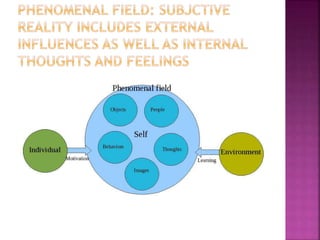
phenomenal field 
Our subjective reality, all that we are aware of, including objects and 
people, and our behaviour, thoughts, images, and ideas. 
holistic 
Relating to the whole instead of a separation into parts. 
Humanistic
BROOKS, A. & CLARKE, L. 2011. Combining client-centred therapy with attribution theory. 
Mental health practice, 14(9):34-37. 
http://www.google.co.za/webhp?sourceid=navclient&ie=UTF-8 Date of access: 2/3/14 
Dobbins, M., Ciliska, D., Coskerill, R., Barnsley, J., Dicenso, A. 2002. a framework for the 
disemmination and utilization of research forhealth-care policy and practice. 
Weiten, W. 2012. Psychology: Themes and Variations: Themes and Variations. Electronic 
book. 
http://books.google.co.za/books?id=sILajOhJpOsC&pg=PT555&dq=carl+rogers+humanistic 
+theory&hl=en&sa=X&ei=fDQVU8ThOIm3hQf2tIGYBQ&ved=0CDYQ6AEwAg#v=onepage& 
q=carl%20rogers%20humanistic%20theory&f=false . Date of access: 1/3/2014 
Thorne & Sanders. 2013. Key figures in counseling and therapy Carl Rogers. 3rd ed. 
London. SAGE publications. Electronic book. 
http://books.google.co.za/books?id=NuE2zkBxGX8C&printsec=frontcover&dq=carl+rogers+ 
humanistic+theory&hl=en&sa=X&ei=WUkVU_mWJ5OThQf23oCQBA&ved=0CEcQ6AEwAw 
#v=onepage&q=carl%20rogers%20humanistic%20theory&f=false Date of access: 1/3/14 
Townsend, C. 2012. Psychiatric Mental Health Nursing: Concepts of Care in Evidence- 
Based Practice. Philadelphia. F. A. Davis company. 
http://books.google.co.za/books?hl=en&lr=&id=fXj2AAAAQBAJ&oi=fnd&pg=PP2&dq=psychi 
atric+nursing+and+freud&ots=Ym1STYCXp3&sig=NoG1phnRHkfXl0IXylU3Sq5gsPs#v=one 
page&q=psychiatric%20nursing%20and%20freud&f=false 
Date of access: 28/2/2014

Existential approach: psychiatric nursing (Carl Rogers)

  • 1.
    Celente French VPEK875 Module 1 Dr.E. Du Plessis
  • 2.
    1. Analysis ofassumptions and approaches within the psycho-analytical approach. 2. Relating this theoretical framework in advanced psychiatric nursing science by arguing how this theory influences advanced psychiatric nursing science. 3. Identification of concepts and relevant terminology in psychiatric nursing science and synthesizing these concepts in order to develop a conceptual framework for advanced psychiatric nursing.
  • 3.
    Born 8 January1902 in Chicago. One of 6 children. Studied Theology, then moved to psychology. Abandoned Christianity and the Church when he decided to follow psychology, according to Thorne & Sanders (2013) this may be related to the fact that Rogers was brought up in a home where Religion was a very large, important aspect of the family’s lives. Rogers was very sick as a child and was seen by the family as the one that always needs extra care.
  • 4.
    Person centered theory Self concept seen as most important part of personality. Congruence & Incongruence Subjective experiences are more important than objective reality when it comes to personality.
  • 5.
    Inspired by Maslow’s hierarchy of needs.
  • 6.
    According to Weiten(2010:509) Rogers developed the human potential movement, the focus of this movement is on self-realization through sensitivity training aimed at enhancing growth. Rogers called the gap between self-concept and reality incongruence. Conditional and unconditional love from parents  unconditional love fosters congruence, conditional love fosters incongruence. Experiences that threaten personal views cause anxiety. The more inaccurate self-concept is, he larger amount of anxiety one will perceive when feeling threatened (Weiten, 2010:509)
  • 7.
    Belief that affectionfrom others is unconditional. Need to distort shortcomings in order to feel worthy of affection. Relatively incongruent self-concept Recurrent anxiety Defensive behavior protects inaccurate self-concept.
  • 8.
    Can assist nursesis gaining and assessing self awareness and personal growth. Nurses have been following client centered, non-directive approach for years as established by Rogers. According to Brooks & Clarke (2011) Rogers stated that there are three conditions for effective patient based therapy. 1. Genuineness where nurses have an open relationship with patients with mutual respect and understanding. 2. Unconditional regard and acceptance in a non-judgmental manner. 3. Empathy where the nurse shows insight and understanding into the patient’s situation. This applies to nursing in general not just psychiatric nursing.
  • 10.
    phenomenological and existentialist unique human issues, such as the self, self-actualization, health, hope, love, creativity, nature, being, becoming, individuality, and meaning—that is, a concrete understanding of human existence.
  • 11.
    Person centered approach. Belief that an individual has the ability to understand themselves and challenge themselves toward attitude and behaviors. (actualizing tendency) Believes that counseling can enable the patient to become what they are capable of. Helps the psychiatric nurse to determine what the patient thinks about themselves, and what they are capable of-goal orientated. Assists nurses in basic skills needed for effective counseling, but also with skills to be a nurse. Caring, understanding, non-judgmental, honest, genuine, open.
  • 12.
    “the organized consistentconceptual gestalt composed of perceptions of the characteristics of 'I' or 'me' and the perceptions of the relationships of the 'I' or 'me' to others and to various aspects of life, together with the values attached to these perceptions. It is a gestalt which is available to awareness though not necessarily in awareness. It is a fluid and changing gestalt, a process, but at any given moment it is a specific entity.” (Rogers, 1959)[
  • 13.
    incongruence :refers tothe discrepancy between the self-concept and reality. Congruence: fairly accurate match between the self-concept and reality. Self actualization Organismic self phenomenal field Our subjective reality, all that we are aware of, including objects and people, and our behaviour, thoughts, images, and ideas. holistic Relating to the whole instead of a separation into parts. Humanistic
  • 15.
    BROOKS, A. &CLARKE, L. 2011. Combining client-centred therapy with attribution theory. Mental health practice, 14(9):34-37. http://www.google.co.za/webhp?sourceid=navclient&ie=UTF-8 Date of access: 2/3/14 Dobbins, M., Ciliska, D., Coskerill, R., Barnsley, J., Dicenso, A. 2002. a framework for the disemmination and utilization of research forhealth-care policy and practice. Weiten, W. 2012. Psychology: Themes and Variations: Themes and Variations. Electronic book. http://books.google.co.za/books?id=sILajOhJpOsC&pg=PT555&dq=carl+rogers+humanistic +theory&hl=en&sa=X&ei=fDQVU8ThOIm3hQf2tIGYBQ&ved=0CDYQ6AEwAg#v=onepage& q=carl%20rogers%20humanistic%20theory&f=false . Date of access: 1/3/2014 Thorne & Sanders. 2013. Key figures in counseling and therapy Carl Rogers. 3rd ed. London. SAGE publications. Electronic book. http://books.google.co.za/books?id=NuE2zkBxGX8C&printsec=frontcover&dq=carl+rogers+ humanistic+theory&hl=en&sa=X&ei=WUkVU_mWJ5OThQf23oCQBA&ved=0CEcQ6AEwAw #v=onepage&q=carl%20rogers%20humanistic%20theory&f=false Date of access: 1/3/14 Townsend, C. 2012. Psychiatric Mental Health Nursing: Concepts of Care in Evidence- Based Practice. Philadelphia. F. A. Davis company. http://books.google.co.za/books?hl=en&lr=&id=fXj2AAAAQBAJ&oi=fnd&pg=PP2&dq=psychi atric+nursing+and+freud&ots=Ym1STYCXp3&sig=NoG1phnRHkfXl0IXylU3Sq5gsPs#v=one page&q=psychiatric%20nursing%20and%20freud&f=false Date of access: 28/2/2014