 Presented by: Celente French –Nursing
Services Manager
 Determining the objectives of the act
 Advantages of the MHCA
 Definitions
 Rights of the MHCU
 Principles for provision of care, treatment and
rehabilitation.
 Consent
 Voluntary, assisted and involuntary admission
 72 hours assessment
 Appeals
 To provide for the care, treatment and
rehabilitation of persons who are mentally ill;
to set out different procedures to be followed in
the admission of such persons; to establish
Review Boards in respect of every health
establishment; to determine their powers and
functions; to provide for the care and
administration of the property of mentally ill
persons; to repeal certain laws; and to provide
for matters connected therewith.
 Integrates psychiatric into overall healthcare.
 MHCU’s treated nearer to home, least
restricted environment, enhances contact with
family.
 No premature discharges, no overcrowding
psychiatric institutions.
 More quality time with inpatients.
 Destigmatisation
 Assisted care, treatment and rehabilitation:
Provision of health implementation to persons
incapable of making informed decisions due to
their mental health status and who do not
refuse the health interventions.
 Assisted mental healthcare user:
A person receiving assisted care, treatment and
rehabilitation.
 Associate:
Individual with substantial or material interest
in the well-being of the MHCU.
 Care and rehabilitation centers:
Health establishment providing care, treatment
and rehabilitation to individuals with mental
health disorders.
 Health establishment:
Registered healthcare facility: hospital/clinic.
 Mental illness:
Positive diagnosis of a mental health related
illness in terms of diagnostic criteria guidelines,
and diagnosed by a mental healthcare
practitioner.
 Maximum security facility
A ward or unit within a psychiatric hospital
that is designated in a manner to ensure secure
holding of a mental healthcare user; staff with
security training are deployed to ensure that
MHCU does not abscond.
 Best interest of MHCU
 Respect, human dignity and privacy,
 Consent to care, treatment and rehabilitation,
 Refuse treatment/admission unless:
emergency/assisted/involuntary/state pt,
 No unfair discrimination due to mental illness,
 Exploitation or abuse – (report MHCA 2)
 Determinations concerning mental health
status,
 Disclosure of information,
 Limitations on inmate adult relationships,
 Right to legal representation,
 Discharge reports – (form MHCA 03)
 Knowledge and information of rights
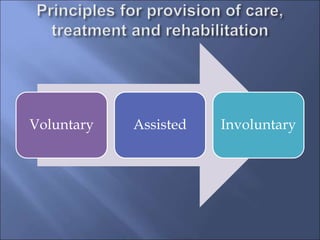
Voluntary Assisted Involuntary
 Provide care, treatment and rehabilitation if:
 - User has given consent /
 - Authorized by court or review board /
 - Due to mental illness, any delay may result in
death or serious harm to the user or others, or
serious damage /loss of property of user or
others .
 Emergency admission
 Report to review board in 24 hours.
 Voluntary
 Assisted
 Involuntary
 Emergency involuntary
 Capable of full informed consent.
 Requires C,T&R for own safety/safety of others,
 MHCU incapable of making informed decision,
 MHCU does not resist, application by family
member/”associate”,
 If under 18, parent/guardian must apply
 If family member/associate unavailable, HC
provider makes application- states efforts to
contact family
 Applicant must have seem MHCU within last 7/7
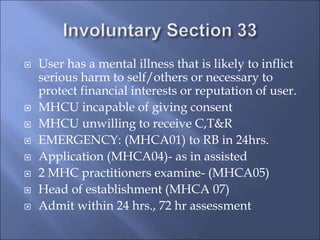
 User has a mental illness that is likely to inflict
serious harm to self/others or necessary to
protect financial interests or reputation of user.
 MHCU incapable of giving consent
 MHCU unwilling to receive C,T&R
 EMERGENCY: (MHCA01) to RB in 24hrs.
 Application (MHCA04)- as in assisted
 2 MHC practitioners examine- (MHCA05)
 Head of establishment (MHCA 07)
 Admit within 24 hrs., 72 hr assessment
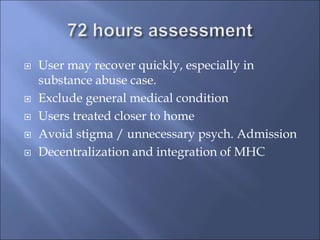
 User may recover quickly, especially in
substance abuse case.
 Exclude general medical condition
 Users treated closer to home
 Avoid stigma / unnecessary psych. Admission
 Decentralization and integration of MHC
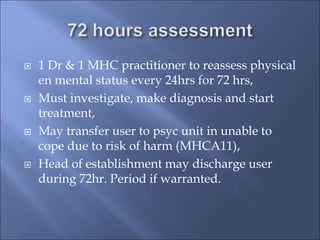
 1 Dr & 1 MHC practitioner to reassess physical
en mental status every 24hrs for 72 hrs,
 Must investigate, make diagnosis and start
treatment,
 May transfer user to psyc unit in unable to
cope due to risk of harm (MHCA11),
 Head of establishment may discharge user
during 72hr. Period if warranted.
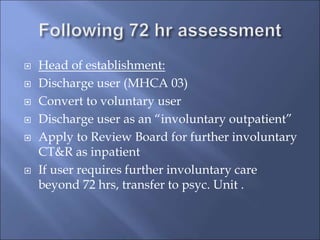
 Head of establishment:
 Discharge user (MHCA 03)
 Convert to voluntary user
 Discharge user as an “involuntary outpatient”
 Apply to Review Board for further involuntary
CT&R as inpatient
 If user requires further involuntary care
beyond 72 hrs, transfer to psyc. Unit .
 Mental healthcare user
 Spouse
 Next of kin
 Partner
 Guardian
 Appeal within 30 days of head of
establishments decision.
 Appeal must contain facts and grounds for
appeal
 Appeal must be considered within 30 days of
receipt, if upheld the MHCU must be
discharged.
 South Africa. 2002. Mental Health Care Act 17 of 2002.
http://www.capementalhealth.co.za/Images/Act.pdf
Date of access: 17 February 2015.

MHCA 17 of 2002.

  • 1.
     Presented by:Celente French –Nursing Services Manager
  • 2.
     Determining theobjectives of the act  Advantages of the MHCA  Definitions  Rights of the MHCU  Principles for provision of care, treatment and rehabilitation.  Consent  Voluntary, assisted and involuntary admission  72 hours assessment  Appeals
  • 3.
     To providefor the care, treatment and rehabilitation of persons who are mentally ill; to set out different procedures to be followed in the admission of such persons; to establish Review Boards in respect of every health establishment; to determine their powers and functions; to provide for the care and administration of the property of mentally ill persons; to repeal certain laws; and to provide for matters connected therewith.
  • 4.
     Integrates psychiatricinto overall healthcare.  MHCU’s treated nearer to home, least restricted environment, enhances contact with family.  No premature discharges, no overcrowding psychiatric institutions.  More quality time with inpatients.  Destigmatisation
  • 5.
     Assisted care,treatment and rehabilitation: Provision of health implementation to persons incapable of making informed decisions due to their mental health status and who do not refuse the health interventions.  Assisted mental healthcare user: A person receiving assisted care, treatment and rehabilitation.
  • 6.
     Associate: Individual withsubstantial or material interest in the well-being of the MHCU.  Care and rehabilitation centers: Health establishment providing care, treatment and rehabilitation to individuals with mental health disorders.
  • 7.
     Health establishment: Registeredhealthcare facility: hospital/clinic.  Mental illness: Positive diagnosis of a mental health related illness in terms of diagnostic criteria guidelines, and diagnosed by a mental healthcare practitioner.
  • 8.
     Maximum securityfacility A ward or unit within a psychiatric hospital that is designated in a manner to ensure secure holding of a mental healthcare user; staff with security training are deployed to ensure that MHCU does not abscond.
  • 9.
     Best interestof MHCU  Respect, human dignity and privacy,  Consent to care, treatment and rehabilitation,  Refuse treatment/admission unless: emergency/assisted/involuntary/state pt,  No unfair discrimination due to mental illness,  Exploitation or abuse – (report MHCA 2)
  • 10.
     Determinations concerningmental health status,  Disclosure of information,  Limitations on inmate adult relationships,  Right to legal representation,  Discharge reports – (form MHCA 03)  Knowledge and information of rights
  • 11.
  • 12.
     Provide care,treatment and rehabilitation if:  - User has given consent /  - Authorized by court or review board /  - Due to mental illness, any delay may result in death or serious harm to the user or others, or serious damage /loss of property of user or others .  Emergency admission  Report to review board in 24 hours.
  • 14.
     Voluntary  Assisted Involuntary  Emergency involuntary
  • 15.
     Capable offull informed consent.
  • 16.
     Requires C,T&Rfor own safety/safety of others,  MHCU incapable of making informed decision,  MHCU does not resist, application by family member/”associate”,  If under 18, parent/guardian must apply  If family member/associate unavailable, HC provider makes application- states efforts to contact family  Applicant must have seem MHCU within last 7/7
  • 17.
     User hasa mental illness that is likely to inflict serious harm to self/others or necessary to protect financial interests or reputation of user.  MHCU incapable of giving consent  MHCU unwilling to receive C,T&R  EMERGENCY: (MHCA01) to RB in 24hrs.  Application (MHCA04)- as in assisted  2 MHC practitioners examine- (MHCA05)  Head of establishment (MHCA 07)  Admit within 24 hrs., 72 hr assessment
  • 18.
     User mayrecover quickly, especially in substance abuse case.  Exclude general medical condition  Users treated closer to home  Avoid stigma / unnecessary psych. Admission  Decentralization and integration of MHC
  • 19.
     1 Dr& 1 MHC practitioner to reassess physical en mental status every 24hrs for 72 hrs,  Must investigate, make diagnosis and start treatment,  May transfer user to psyc unit in unable to cope due to risk of harm (MHCA11),  Head of establishment may discharge user during 72hr. Period if warranted.
  • 20.
     Head ofestablishment:  Discharge user (MHCA 03)  Convert to voluntary user  Discharge user as an “involuntary outpatient”  Apply to Review Board for further involuntary CT&R as inpatient  If user requires further involuntary care beyond 72 hrs, transfer to psyc. Unit .
  • 21.
     Mental healthcareuser  Spouse  Next of kin  Partner  Guardian
  • 22.
     Appeal within30 days of head of establishments decision.  Appeal must contain facts and grounds for appeal  Appeal must be considered within 30 days of receipt, if upheld the MHCU must be discharged.
  • 23.
     South Africa.2002. Mental Health Care Act 17 of 2002. http://www.capementalhealth.co.za/Images/Act.pdf Date of access: 17 February 2015.