Exam Technique & Study Tips  PDHPE
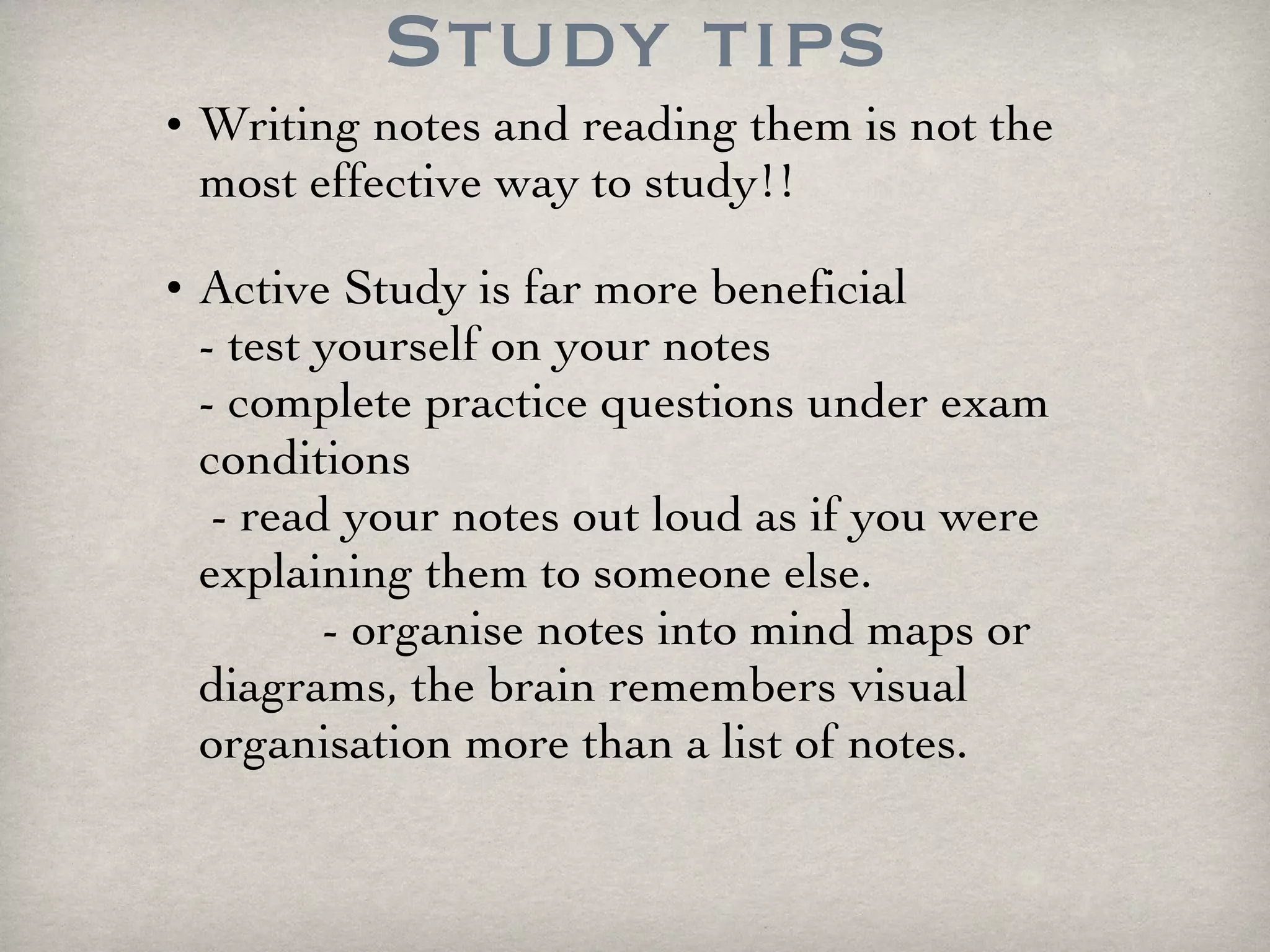
Study tips Writing notes and reading them is not the most effective way to study!!  Active Study is far more beneficial  - test yourself on your notes  - complete practice questions under exam conditions  - read your notes out loud as if you were explaining them to someone else.  - organise notes into mind maps or diagrams, the brain remembers visual organisation more than a list of notes.
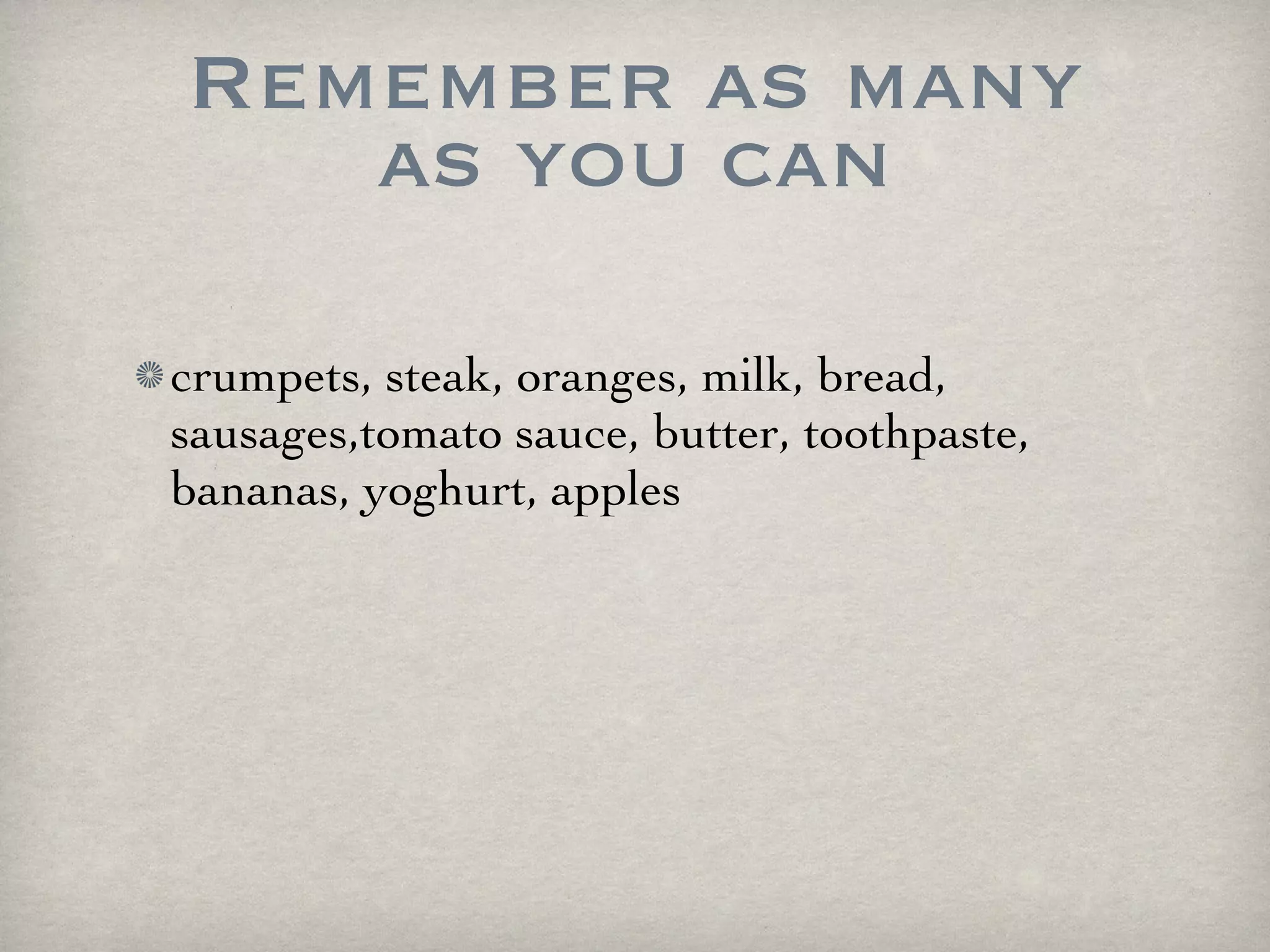
Remember as many as you can crumpets, steak, oranges, milk, bread, sausages,tomato sauce, butter, toothpaste, bananas, yoghurt, apples
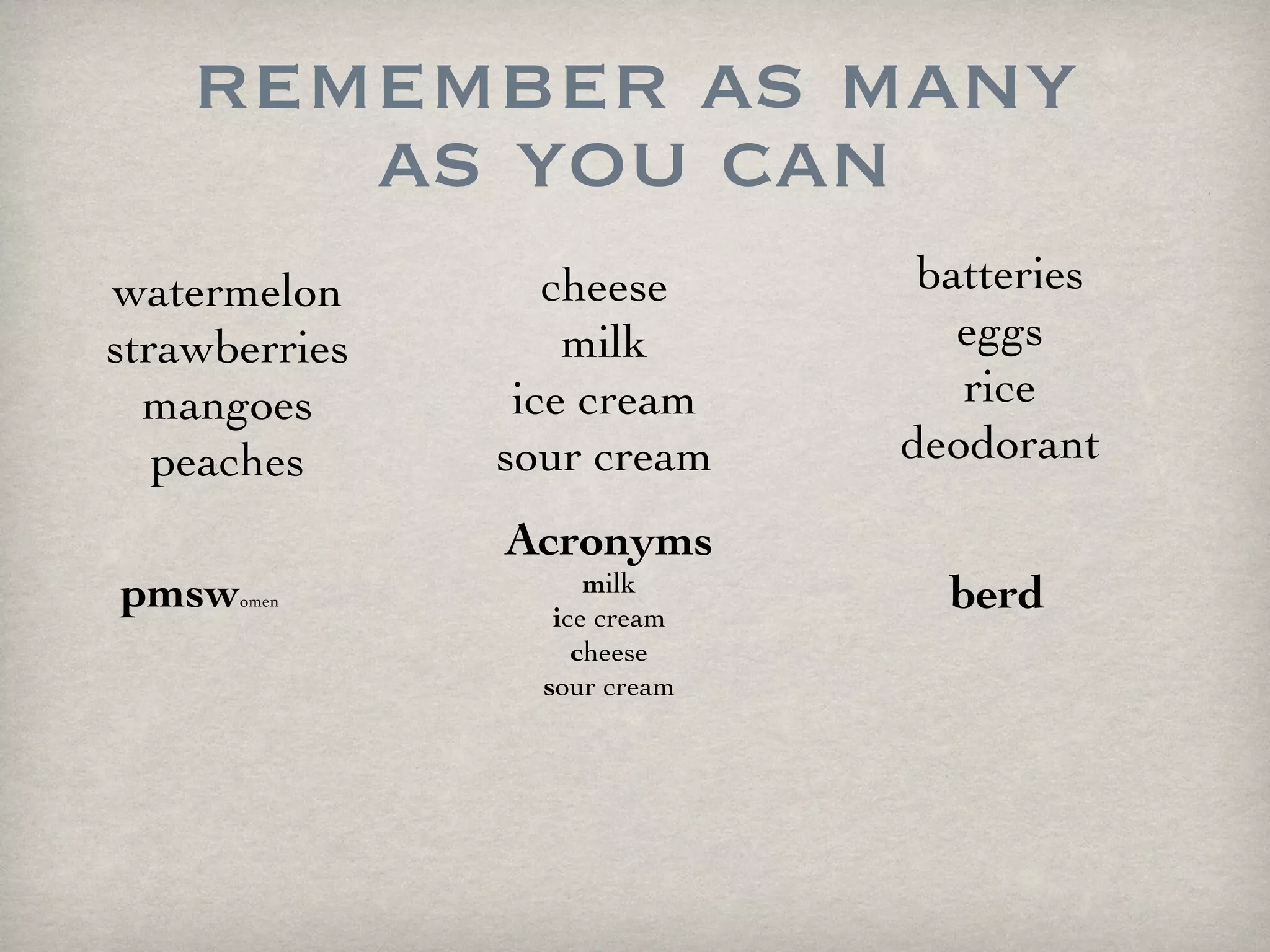
remember as many as you can watermelon strawberries mangoes peaches cheese milk ice cream sour cream batteries eggs rice deodorant Acronyms m ilk i ce cream c heese s our cream pmsw omen berd
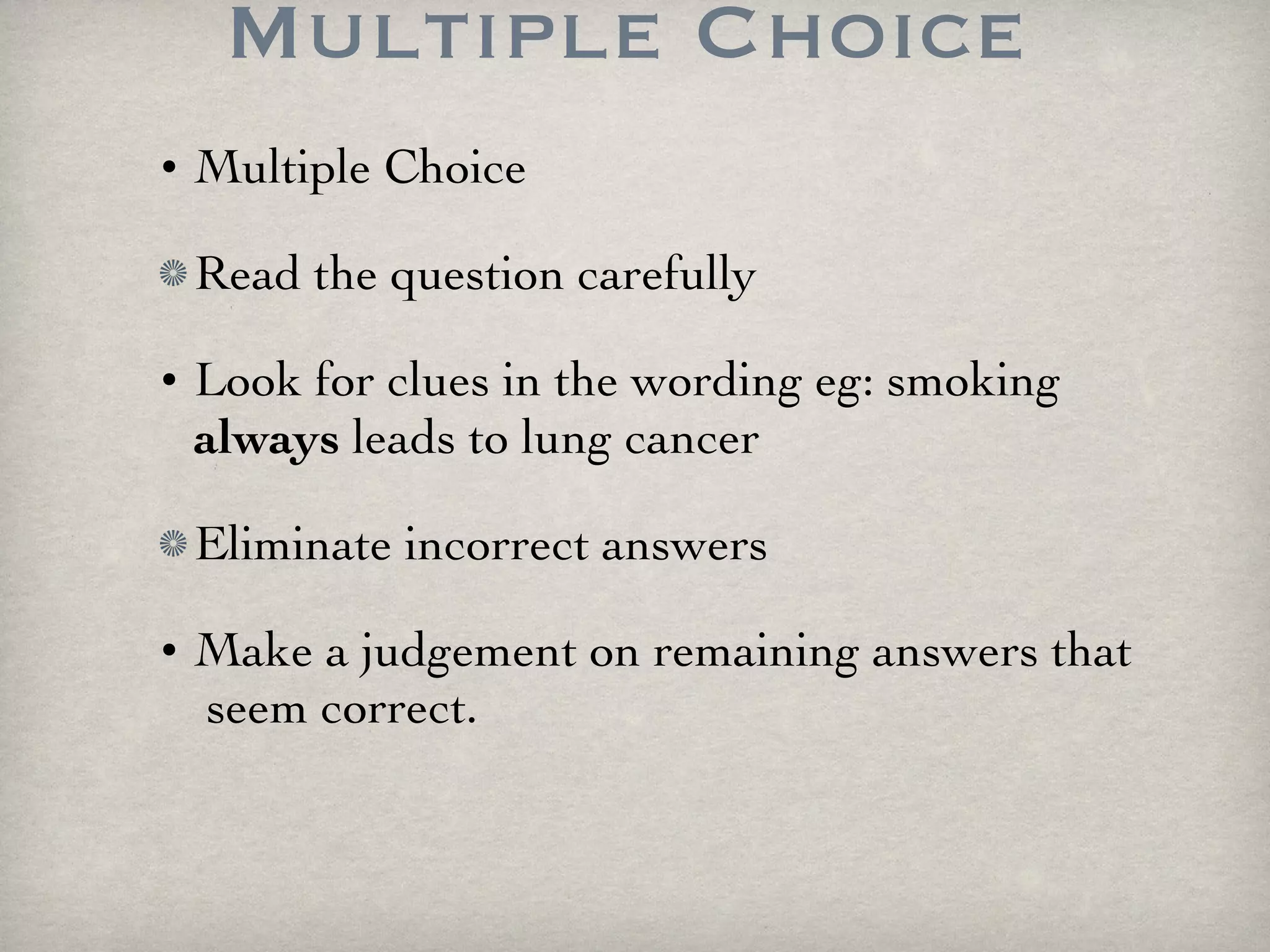
Multiple Choice Multiple Choice Read the question carefully Look for clues in the wording eg: smoking  always  leads to lung cancer Eliminate incorrect answers Make a judgement on remaining answers that  seem correct.
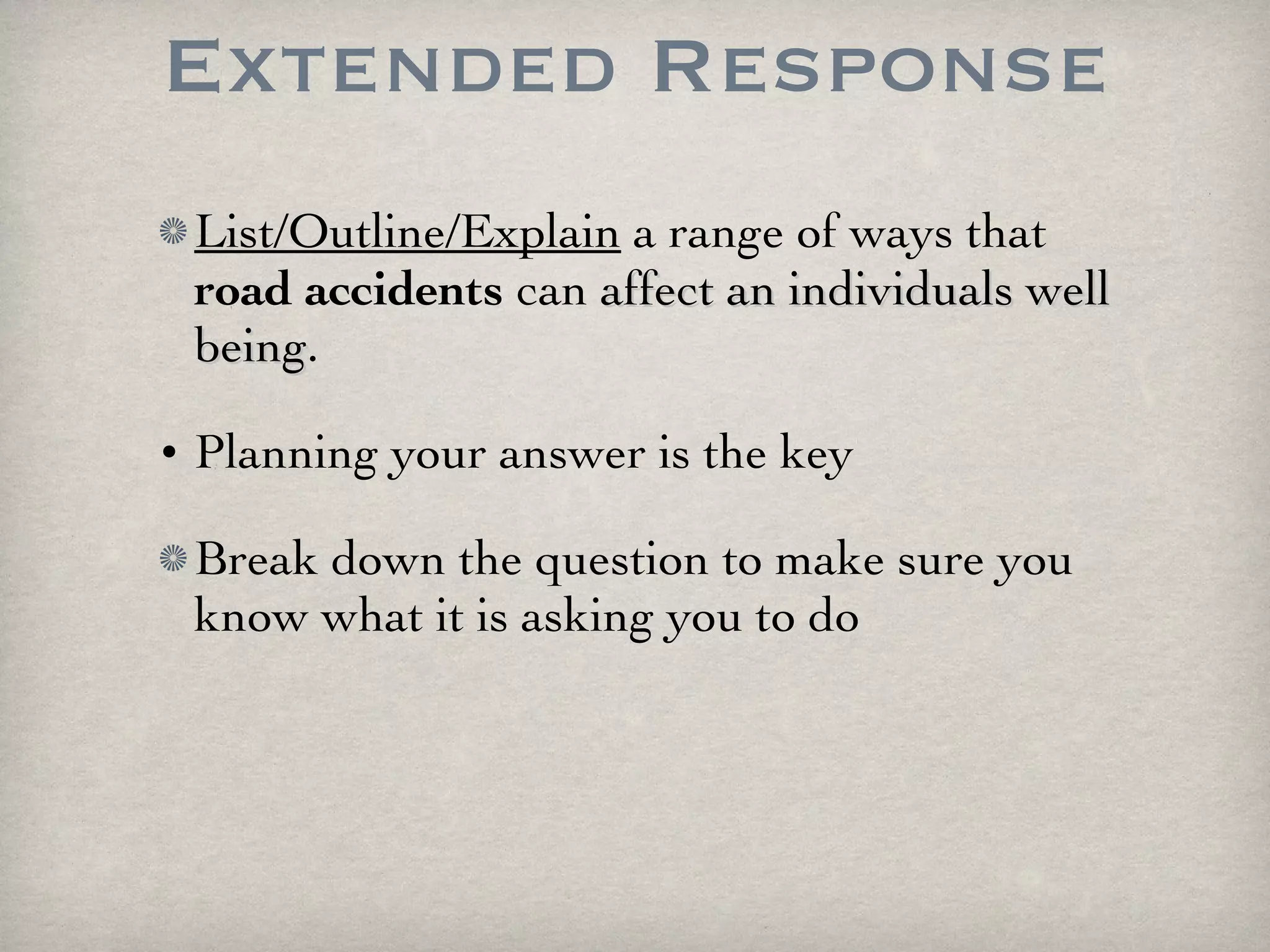
Extended Response List/Outline/Explain  a range of ways that  road accidents  can  affect an individuals well being . Planning your answer is the key Break down the question to make sure you know what it is asking you to do
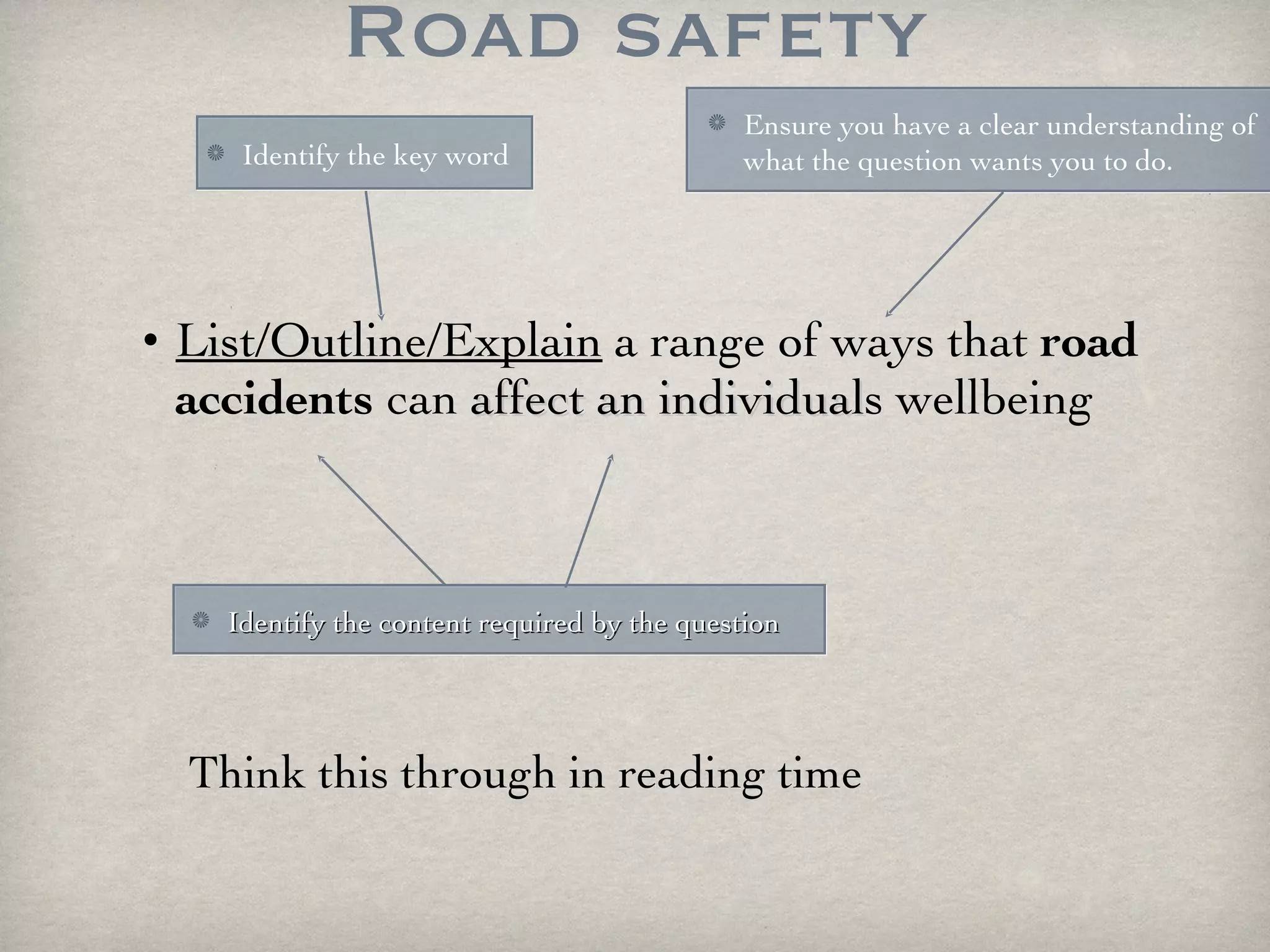
Road safety List/Outline/Explain  a range of ways that  road accidents  can  affect an individual s wellbeing Think this through in reading time Identify the key word Identify the content required by the question Ensure you have a clear understanding of what the question wants you to do.
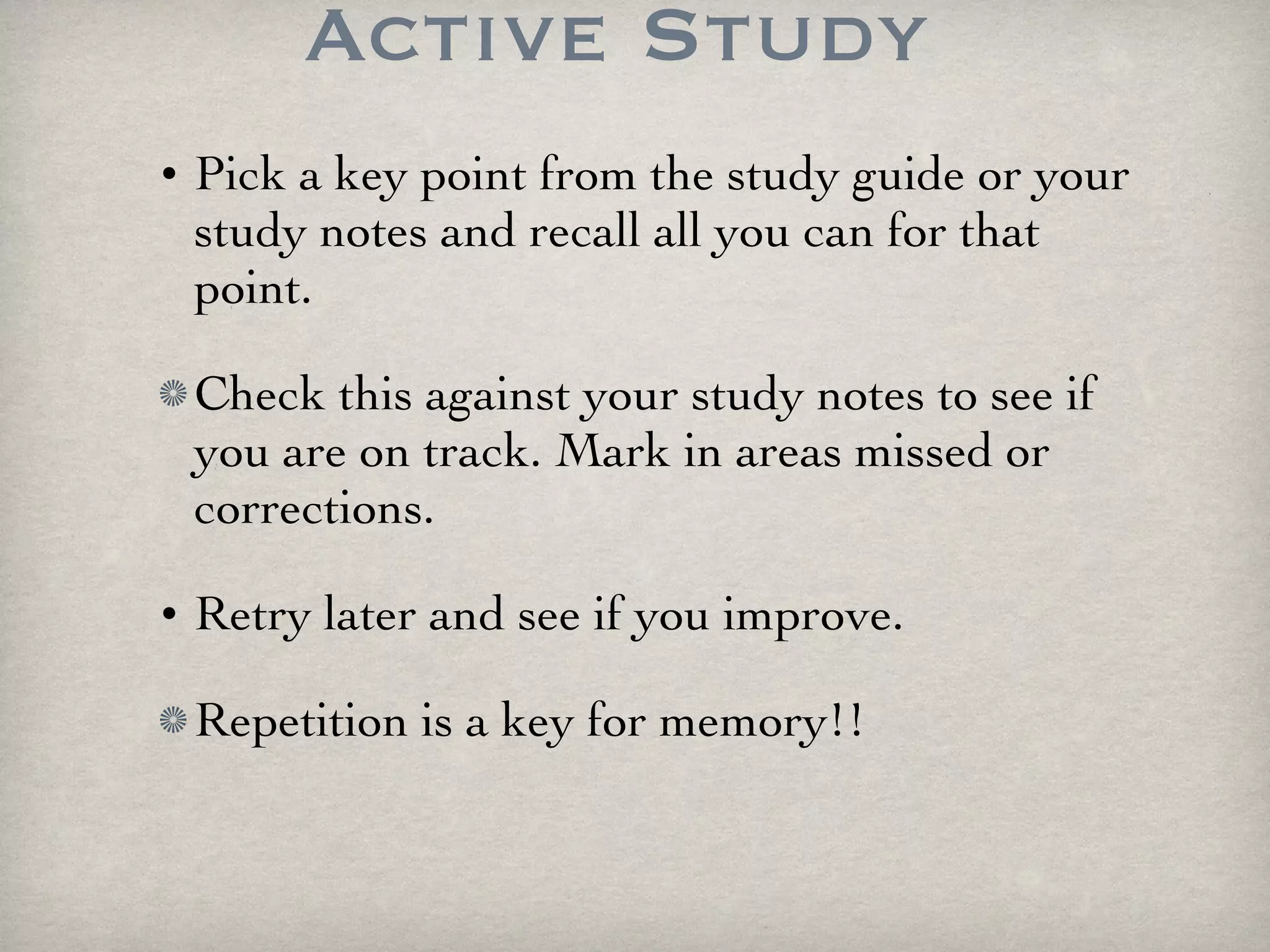
Active Study Pick a key point from the study guide or your study notes and recall all you can for that point. Check this against your study notes to see if you are on track. Mark in areas missed or corrections. Retry later and see if you improve. Repetition is a key for memory!!
Time management Use reading time to carefully read all questions Consider a plan of attack. Eg: Answer higher mark questions early so you do not run out of time, Plan answers straight after reading time - key points for each / mindmaps etc Do not spend too much time/write too much for small mark questions Work out how long you can spend on each question eg: 60 marks in 60 minutes = 1 minute per mark

Exam Technique

  • 1.
    Exam Technique &Study Tips PDHPE
  • 2.
    Study tips Writingnotes and reading them is not the most effective way to study!! Active Study is far more beneficial - test yourself on your notes - complete practice questions under exam conditions - read your notes out loud as if you were explaining them to someone else. - organise notes into mind maps or diagrams, the brain remembers visual organisation more than a list of notes.
  • 3.
    Remember as manyas you can crumpets, steak, oranges, milk, bread, sausages,tomato sauce, butter, toothpaste, bananas, yoghurt, apples
  • 4.
    remember as manyas you can watermelon strawberries mangoes peaches cheese milk ice cream sour cream batteries eggs rice deodorant Acronyms m ilk i ce cream c heese s our cream pmsw omen berd
  • 5.
    Multiple Choice MultipleChoice Read the question carefully Look for clues in the wording eg: smoking always leads to lung cancer Eliminate incorrect answers Make a judgement on remaining answers that seem correct.
  • 6.
    Extended Response List/Outline/Explain a range of ways that road accidents can affect an individuals well being . Planning your answer is the key Break down the question to make sure you know what it is asking you to do
  • 7.
    Road safety List/Outline/Explain a range of ways that road accidents can affect an individual s wellbeing Think this through in reading time Identify the key word Identify the content required by the question Ensure you have a clear understanding of what the question wants you to do.
  • 8.
    Active Study Picka key point from the study guide or your study notes and recall all you can for that point. Check this against your study notes to see if you are on track. Mark in areas missed or corrections. Retry later and see if you improve. Repetition is a key for memory!!
  • 9.
    Time management Usereading time to carefully read all questions Consider a plan of attack. Eg: Answer higher mark questions early so you do not run out of time, Plan answers straight after reading time - key points for each / mindmaps etc Do not spend too much time/write too much for small mark questions Work out how long you can spend on each question eg: 60 marks in 60 minutes = 1 minute per mark