The Basics of Learning 
Some ways to make studying more 
effective, and hopefully easier.
Contents: 
 1. Procrastination 
 2. Memory 
 3. How to become a better learner & Tips for Tests 
 4. Sources
Section 1. Procrastination 
English: procrastination Turkish: erteleme, geciktirme, oyalanma 
Most of us procrastinate at some point, usually with things we must do 
for work or school. Sometimes, when we think of those things we must 
do, we feel bad, both physically and mentally. This is quite normal, and 
there are ways to make this situation better.
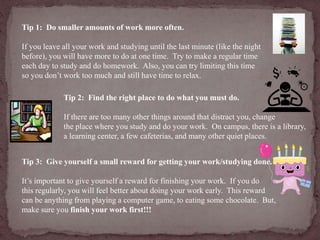
Tip 1: Do smaller amounts of work more often. 
If you leave all your work and studying until the last minute (like the night 
before), you will have more to do at one time. Try to make a regular time 
each day to study and do homework. Also, you can try limiting this time 
so you don’t work too much and still have time to relax. 
Tip 2: Find the right place to do what you must do. 
If there are too many other things around that distract you, change 
the place where you study and do your work. On campus, there is a library, 
a learning center, a few cafeterias, and many other quiet places. 
Tip 3: Give yourself a small reward for getting your work/studying done. 
It’s important to give yourself a reward for finishing your work. If you do 
this regularly, you will feel better about doing your work early. This reward 
can be anything from playing a computer game, to eating some chocolate. But, 
make sure you finish your work first!!!
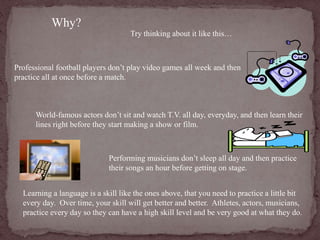
Why? 
Try thinking about it like this… 
Professional football players don’t play video games all week and then 
practice all at once before a match. 
World-famous actors don’t sit and watch T.V. all day, everyday, and then learn their 
lines right before they start making a show or film. 
Performing musicians don’t sleep all day and then practice 
their songs an hour before getting on stage. 
Learning a language is a skill like the ones above, that you need to practice a little bit 
every day. Over time, your skill will get better and better. Athletes, actors, musicians, 
practice every day so they can have a high skill level and be very good at what they do.
2. Memory 
The first important thing about memory is that 
there are two main types: 
long-term memory, and working-memory. 
Working memory deals with all the things you are doing now. If I write a list of 
10 words on the board, and give you a few minutes, you will probably remember 
most of them. But, what about tomorrow? Or what about next week? If I give 
you a phone number right now, will you be able to reach into your pocket or bag, 
take out your telephone and dial that number? Or will you have forgotten it by then? 
This is why we also have… 
Long-term memory.
Long-term memory 
Now, imagine that you can write down those 10 words and that phone number. 
Not only that, I will give you a week to memorize them all. This time next week, 
I’m going to ask you to tell me these words and this phone number. You will not 
be able to look at your notes. Do you think you can do that? 
I bet most of you will. 
This is because you are storing this information in your long-term memory. 
It’s like a big depot, or an external hard drive for all kinds of information you 
want to remember. 
These two types of memory are located in different parts of the brain, so they don’t 
always work together automatically. If you want to ‘transfer’ information from 
your working memory to your long-term memory, you have to do a bit of work. 
How? 
Repeating things, studying regularly, writing things down (sometimes more than once), 
using memory tools like acronyms (e.g. FANBOYS – for, and, nor, but, or, yet, & so) 
and using what you have learned.
So, if you want to remember vocabulary, grammar points, and generally anything 
you are studying study more often, repeat things, write things down, and use what 
you have learned. Your brain will develop a system that will help you remember 
information you need, whenever you need it. If you wait until the last minute, 
your brain won’t have enough time to develop this system.
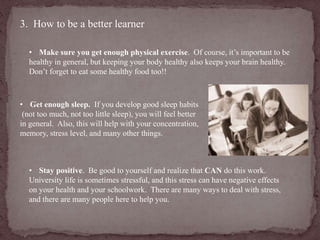
3. How to be a better learner 
• Make sure you get enough physical exercise. Of course, it’s important to be 
healthy in general, but keeping your body healthy also keeps your brain healthy. 
Don’t forget to eat some healthy food too!! 
• Get enough sleep. If you develop good sleep habits 
(not too much, not too little sleep), you will feel better 
in general. Also, this will help with your concentration, 
memory, stress level, and many other things. 
• Stay positive. Be good to yourself and realize that CAN do this work. 
University life is sometimes stressful, and this stress can have negative effects 
on your health and your schoolwork. There are many ways to deal with stress, 
and there are many people here to help you.
Tips for tests 
• Study regularly. As we have seen, regular study helps you remember more, 
and it also reduces the stress you experience when you write exams. When you 
know the material, you will feel more confident. Don’t cram for exams! This will only 
help put things in your working memory, not your long-term memory, and that’s the 
kind of memory you need to do well in your exams and other schoolwork. 
• Don’t panic! I usually tell my students that the first thing they should do in the 
exams is panic…panic for a few seconds, and then, turn it off and get busy. Again, this 
is about stress. Studies have shown that when students feel stress (even if they know 
the material very well) they have more trouble answering the question correctly. This is 
also related to memory, as we mentioned before. Try breathing deeply and telling 
yourself that you CAN do it! And remember, the stress of taking an exam is 
usually worse than the exam. 
• Remember to get a good night’s sleep. We’ve already talked about the how 
important sleep is for studying and learning, and if you’ve followed the first step 
(study regularly), give your body and brain a rest so they can be prepared for exams.
Sources: 
All information taken from 
• Learning How to Learn: Powerful mental tools to help you 
master tough subjects 
by Dr. Terrence Sejnowski, Dr. Barbara Oakley 
• https://www.coursera.org/course/ learning

Learning basics with pics

  • 1.
    The Basics ofLearning Some ways to make studying more effective, and hopefully easier.
  • 2.
    Contents:  1.Procrastination  2. Memory  3. How to become a better learner & Tips for Tests  4. Sources
  • 3.
    Section 1. Procrastination English: procrastination Turkish: erteleme, geciktirme, oyalanma Most of us procrastinate at some point, usually with things we must do for work or school. Sometimes, when we think of those things we must do, we feel bad, both physically and mentally. This is quite normal, and there are ways to make this situation better.
  • 4.
    Tip 1: Dosmaller amounts of work more often. If you leave all your work and studying until the last minute (like the night before), you will have more to do at one time. Try to make a regular time each day to study and do homework. Also, you can try limiting this time so you don’t work too much and still have time to relax. Tip 2: Find the right place to do what you must do. If there are too many other things around that distract you, change the place where you study and do your work. On campus, there is a library, a learning center, a few cafeterias, and many other quiet places. Tip 3: Give yourself a small reward for getting your work/studying done. It’s important to give yourself a reward for finishing your work. If you do this regularly, you will feel better about doing your work early. This reward can be anything from playing a computer game, to eating some chocolate. But, make sure you finish your work first!!!
  • 5.
    Why? Try thinkingabout it like this… Professional football players don’t play video games all week and then practice all at once before a match. World-famous actors don’t sit and watch T.V. all day, everyday, and then learn their lines right before they start making a show or film. Performing musicians don’t sleep all day and then practice their songs an hour before getting on stage. Learning a language is a skill like the ones above, that you need to practice a little bit every day. Over time, your skill will get better and better. Athletes, actors, musicians, practice every day so they can have a high skill level and be very good at what they do.
  • 6.
    2. Memory Thefirst important thing about memory is that there are two main types: long-term memory, and working-memory. Working memory deals with all the things you are doing now. If I write a list of 10 words on the board, and give you a few minutes, you will probably remember most of them. But, what about tomorrow? Or what about next week? If I give you a phone number right now, will you be able to reach into your pocket or bag, take out your telephone and dial that number? Or will you have forgotten it by then? This is why we also have… Long-term memory.
  • 7.
    Long-term memory Now,imagine that you can write down those 10 words and that phone number. Not only that, I will give you a week to memorize them all. This time next week, I’m going to ask you to tell me these words and this phone number. You will not be able to look at your notes. Do you think you can do that? I bet most of you will. This is because you are storing this information in your long-term memory. It’s like a big depot, or an external hard drive for all kinds of information you want to remember. These two types of memory are located in different parts of the brain, so they don’t always work together automatically. If you want to ‘transfer’ information from your working memory to your long-term memory, you have to do a bit of work. How? Repeating things, studying regularly, writing things down (sometimes more than once), using memory tools like acronyms (e.g. FANBOYS – for, and, nor, but, or, yet, & so) and using what you have learned.
  • 8.
    So, if youwant to remember vocabulary, grammar points, and generally anything you are studying study more often, repeat things, write things down, and use what you have learned. Your brain will develop a system that will help you remember information you need, whenever you need it. If you wait until the last minute, your brain won’t have enough time to develop this system.
  • 9.
    3. How tobe a better learner • Make sure you get enough physical exercise. Of course, it’s important to be healthy in general, but keeping your body healthy also keeps your brain healthy. Don’t forget to eat some healthy food too!! • Get enough sleep. If you develop good sleep habits (not too much, not too little sleep), you will feel better in general. Also, this will help with your concentration, memory, stress level, and many other things. • Stay positive. Be good to yourself and realize that CAN do this work. University life is sometimes stressful, and this stress can have negative effects on your health and your schoolwork. There are many ways to deal with stress, and there are many people here to help you.
  • 10.
    Tips for tests • Study regularly. As we have seen, regular study helps you remember more, and it also reduces the stress you experience when you write exams. When you know the material, you will feel more confident. Don’t cram for exams! This will only help put things in your working memory, not your long-term memory, and that’s the kind of memory you need to do well in your exams and other schoolwork. • Don’t panic! I usually tell my students that the first thing they should do in the exams is panic…panic for a few seconds, and then, turn it off and get busy. Again, this is about stress. Studies have shown that when students feel stress (even if they know the material very well) they have more trouble answering the question correctly. This is also related to memory, as we mentioned before. Try breathing deeply and telling yourself that you CAN do it! And remember, the stress of taking an exam is usually worse than the exam. • Remember to get a good night’s sleep. We’ve already talked about the how important sleep is for studying and learning, and if you’ve followed the first step (study regularly), give your body and brain a rest so they can be prepared for exams.
  • 11.
    Sources: All informationtaken from • Learning How to Learn: Powerful mental tools to help you master tough subjects by Dr. Terrence Sejnowski, Dr. Barbara Oakley • https://www.coursera.org/course/ learning