WHAT ARE THE PRIORITY ISSUES FOR IMPROVING AUSTRALIA’S HEALTH?Groups Experiencing Health Inequities	Generally speaking Australians health status is improving. However, this is not shared Australia-wide. There are fundamental differences in the level of health for particular groups. Groups within Australia experience inequities (unfair differences in levels of health status).	Aboriginal and Torres Strait Islanders	Socio-economically disadvantaged	People living in rural and remote areas	Australians born overseas	Elderly	People with disabilities
Aboriginal and Torres Strait Islander PeoplesMajor inequalities exist in the health status of Aboriginal and Torres Strait Islander peoples.Die younger
Reduced quality of life
More likely to experience disabilityThe nature and extent of health inequitiesLower life expectancy
Infant mortality is 3 times higher than the national average. However, the gap is closing due to better maternal and infant health care.
Poorer mental health
Higher hospitalisations
Poorer sexual health
Higher incidence of diabetes
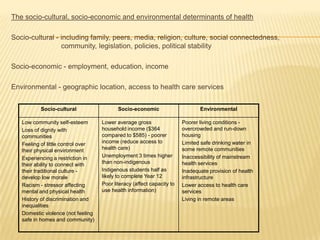
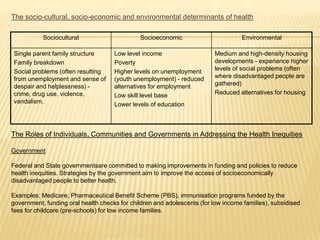
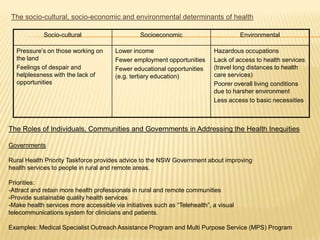
Higher mortality rates for cardiovascular disease, injuries, respiratory diseases, cancer, endocrine disorders and digestive disordersThe socio-cultural, socio-economic and environmental determinants of healthSocio-cultural - including family, peers, media, religion, culture, social connectedness, 		         community, legislation, policies, political stabilitySocio-economic - employment, education, income Environmental - geographic location, access to health care services
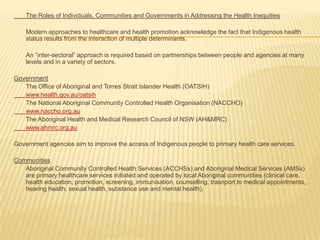
	The Roles of Individuals, Communities and Governments in Addressing the Health Inequities	Modern approaches to healthcare and health promotion acknowledge the fact that Indigenous health status results from the interaction of multiple determinants.	An “inter-sectoral” approach is required based on partnerships between people and agencies at many levels and in a variety of sectors.Government	The Office of Aboriginal and Torres Strait Islander Health (OATSIH)	www.health.gov.au/oatsih	The National Aboriginal Community Controlled Health Organisation (NACCHO)	www.naccho.org.au	The Aboriginal Health and Medical Research Council of NSW (AH&MRC)	www.ahmrc.org.auGovernment agencies aim to improve the access of Indigenous people to primary health care services.Communities	Aboriginal Community Controlled Health Services (ACCHSs) and Aboriginal Medical Services (AMSs) are primary healthcare services initiated and operated by local Aboriginal communities (clinical care, health education, promotion, screening, immunisation, counselling, trasnport to medical appointments, hearing health, sexual health, substance use and mental health).
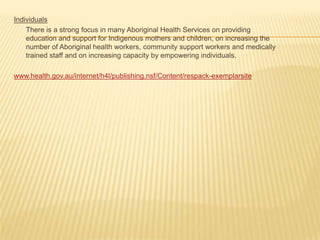
Individuals	There is a strong focus in many Aboriginal Health Services on providing education and support for Indigenous mothers and children, on increasing the number of Aboriginal health workers, community support workers and medically trained staff and on increasing capacity by empowering individuals.www.health.gov.au/internet/h4l/publishing.nsf/Content/respack-exemplarsite
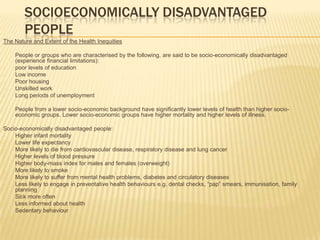
SOCIOECONOMICALLY DISADVANTAGED PEOPLEThe Nature and Extent of the Health Inequities	People or groups who are characterised by the following, are said to be socio-economically disadvantaged (experience financial limitations):poor levels of education
Low income

Groups Experiencing Inequities

  • 1.
    WHAT ARE THEPRIORITY ISSUES FOR IMPROVING AUSTRALIA’S HEALTH?Groups Experiencing Health Inequities Generally speaking Australians health status is improving. However, this is not shared Australia-wide. There are fundamental differences in the level of health for particular groups. Groups within Australia experience inequities (unfair differences in levels of health status). Aboriginal and Torres Strait Islanders Socio-economically disadvantaged People living in rural and remote areas Australians born overseas Elderly People with disabilities
  • 2.
    Aboriginal and TorresStrait Islander PeoplesMajor inequalities exist in the health status of Aboriginal and Torres Strait Islander peoples.Die younger
  • 3.
  • 4.
    More likely toexperience disabilityThe nature and extent of health inequitiesLower life expectancy
  • 5.
    Infant mortality is3 times higher than the national average. However, the gap is closing due to better maternal and infant health care.
  • 6.
  • 7.
  • 8.
  • 9.
  • 10.
    Higher mortality ratesfor cardiovascular disease, injuries, respiratory diseases, cancer, endocrine disorders and digestive disordersThe socio-cultural, socio-economic and environmental determinants of healthSocio-cultural - including family, peers, media, religion, culture, social connectedness, community, legislation, policies, political stabilitySocio-economic - employment, education, income Environmental - geographic location, access to health care services
  • 11.
    The Roles ofIndividuals, Communities and Governments in Addressing the Health Inequities Modern approaches to healthcare and health promotion acknowledge the fact that Indigenous health status results from the interaction of multiple determinants. An “inter-sectoral” approach is required based on partnerships between people and agencies at many levels and in a variety of sectors.Government The Office of Aboriginal and Torres Strait Islander Health (OATSIH) www.health.gov.au/oatsih The National Aboriginal Community Controlled Health Organisation (NACCHO) www.naccho.org.au The Aboriginal Health and Medical Research Council of NSW (AH&MRC) www.ahmrc.org.auGovernment agencies aim to improve the access of Indigenous people to primary health care services.Communities Aboriginal Community Controlled Health Services (ACCHSs) and Aboriginal Medical Services (AMSs) are primary healthcare services initiated and operated by local Aboriginal communities (clinical care, health education, promotion, screening, immunisation, counselling, trasnport to medical appointments, hearing health, sexual health, substance use and mental health).
  • 12.
    Individuals There is astrong focus in many Aboriginal Health Services on providing education and support for Indigenous mothers and children, on increasing the number of Aboriginal health workers, community support workers and medically trained staff and on increasing capacity by empowering individuals.www.health.gov.au/internet/h4l/publishing.nsf/Content/respack-exemplarsite
  • 13.
    SOCIOECONOMICALLY DISADVANTAGED PEOPLETheNature and Extent of the Health Inequities People or groups who are characterised by the following, are said to be socio-economically disadvantaged (experience financial limitations):poor levels of education
  • 14.