PDHPE ASSESSMENT 4 BY SAM CARLTON  TEACHER MR. TANNOUS
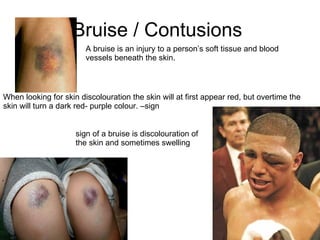
Bruise / Contusions  A bruise is an injury to a person’s soft tissue and blood vessels beneath the skin.  sign of a bruise is discolouration of the skin and sometimes swelling  When looking for skin discolouration the skin will at first appear red, but overtime the skin will turn a dark red- purple colour. –sign
Bruise / Contusions  First for of management for bruising is to apply and compress ice on the injured/ bruised section of body. If possible elevate above the heart. Also try to minimise movement until internal bleeding is stopped.
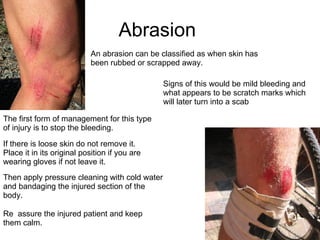
Abrasion  An abrasion can be classified as when skin has been rubbed or scrapped away. Signs of this would be mild bleeding and what appears to be scratch marks which will later turn into a scab The first form of management for this type of injury is to stop the bleeding. If there is loose skin do not remove it. Place it in its original position if you are wearing gloves if not leave it.  Then apply pressure cleaning with cold water and bandaging the injured section of the body.  Re  assure the injured patient and keep them calm.
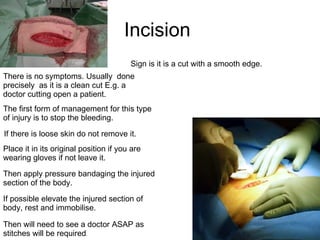
Incision  Sign is it is a cut with a smooth edge.  There is no symptoms. Usually  done precisely  as it is a clean cut E.g. a doctor cutting open a patient.  The first form of management for this type of injury is to stop the bleeding. If there is loose skin do not remove it.  Place it in its original position if you are wearing gloves if not leave it. Then apply pressure bandaging the injured section of the body.  Then will need to see a doctor ASAP as stitches will be required . If possible elevate the injured section of body, rest and immobilise.
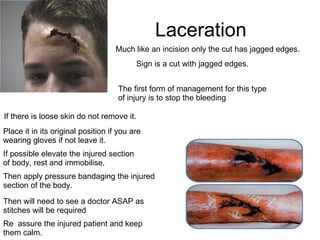
Laceration Sign is a cut with jagged edges.  The first form of management for this type of injury is to stop the bleeding If there is loose skin do not remove it.  Place it in its original position if you are wearing gloves if not leave it. Then apply pressure bandaging the injured section of the body.  Then will need to see a doctor ASAP as stitches will be required . Much like an incision only the cut has jagged edges. If possible elevate the injured section of body, rest and immobilise.  Re  assure the injured patient and keep them calm.
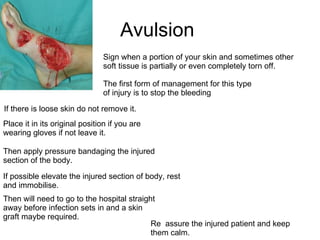
Avulsion  Sign when a portion of your skin and sometimes other soft tissue is partially or even completely torn off.  The first form of management for this type of injury is to stop the bleeding Then apply pressure bandaging the injured section of the body.  Then will need to go to the hospital straight away before infection sets in and a skin graft maybe required.  If there is loose skin do not remove it.  Place it in its original position if you are wearing gloves if not leave it. If possible elevate the injured section of body, rest and immobilise.  Re  assure the injured patient and keep them calm.
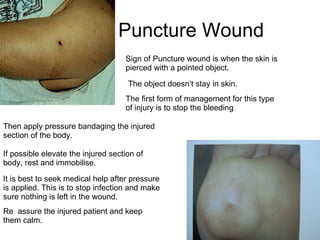
Puncture Wound  Sign of Puncture wound is when the skin is pierced with a pointed object. The object doesn’t stay in skin.  The first form of management for this type of injury is to stop the bleeding Then apply pressure bandaging the injured section of the body.  It is best to seek medical help after pressure is applied. This is to stop infection and make sure nothing is left in the wound.  If possible elevate the injured section of body, rest and immobilise.  Re  assure the injured patient and keep them calm.
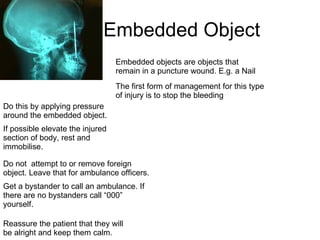
Embedded Object  Embedded objects are objects that remain in a puncture wound. E.g. a Nail  The first form of management for this type of injury is to stop the bleeding Do this by applying pressure around the embedded object. Do not  attempt to or remove foreign object. Leave that for ambulance officers. Get a bystander to call an ambulance. If there are no bystanders call ā€œ000ā€ yourself.  Reassure the patient that they will be alright and keep them calm. If possible elevate the injured section of body, rest and immobilise.
Treatment that applies for all injuries. Keep the patients head level with their heart and raise the injured body part above the heart.  Protect patient from excessive heat or cold.  Reassure the patient, keep them calm and wait with them until medic arrives or they can be transported to a hospital/doctor. While waiting for an ambulance or performing treatment keep bystanders away.  If bleeding persists don’t ever remove dressing/bandaging. Apply further pads and bandaging.
Treatment that applies for all injuries. Pressure both direct and only use indirect as a last resort. Rest, ice, compression, elevation and referral of the injured part. (bruise/contusion not included). Immobilise.
Bibliography Vaughn, C. (2003) republished 2006.  surf lifesaving training manual 32 nd  edition.  http://www.skincare-news.com/resources/bruise.jpg   http://www.reviewjournal.com/lvrj_home/2006/Feb-26-Sun-2006/photos/2mosley.jpg   http://presleyphotography.com/lexx/photos/abrasions.jpg   http://svana.org/photos/crash_2004-01-24/1600x1200/img_0468.jpg   http://www.svenskkirurgi.se/skf/bilder/Lateral-avl-incision.jpg http://www.surgeons.org.uk/images/stories/OperationHowto/GeneralSurgery/Appendicectomy_Incision.jpg http://www.sarpy.com/ema/drill/laceration.jpg http://www.orthosupersite.com/images/content/OT/200705/38_image1.jpg
Bibliography http://www.novafamilypodiatry.com/files/Foot_help_pics/PunctureWoundAbscess.jpg http://www.legacyhealth.org/images/Housecalls/bb_arm.jpg http://msnbcmedia.msn.com/j/msnbc/Components/Photos/050117/050117_nail_head_hmed7a.h2.jpg

Bruises

  • 1.
    PDHPE ASSESSMENT 4BY SAM CARLTON TEACHER MR. TANNOUS
  • 2.
    Bruise / Contusions A bruise is an injury to a person’s soft tissue and blood vessels beneath the skin. sign of a bruise is discolouration of the skin and sometimes swelling When looking for skin discolouration the skin will at first appear red, but overtime the skin will turn a dark red- purple colour. –sign
  • 3.
    Bruise / Contusions First for of management for bruising is to apply and compress ice on the injured/ bruised section of body. If possible elevate above the heart. Also try to minimise movement until internal bleeding is stopped.
  • 4.
    Abrasion Anabrasion can be classified as when skin has been rubbed or scrapped away. Signs of this would be mild bleeding and what appears to be scratch marks which will later turn into a scab The first form of management for this type of injury is to stop the bleeding. If there is loose skin do not remove it. Place it in its original position if you are wearing gloves if not leave it. Then apply pressure cleaning with cold water and bandaging the injured section of the body. Re assure the injured patient and keep them calm.
  • 5.
    Incision Signis it is a cut with a smooth edge. There is no symptoms. Usually done precisely as it is a clean cut E.g. a doctor cutting open a patient. The first form of management for this type of injury is to stop the bleeding. If there is loose skin do not remove it. Place it in its original position if you are wearing gloves if not leave it. Then apply pressure bandaging the injured section of the body. Then will need to see a doctor ASAP as stitches will be required . If possible elevate the injured section of body, rest and immobilise.
  • 6.
    Laceration Sign isa cut with jagged edges. The first form of management for this type of injury is to stop the bleeding If there is loose skin do not remove it. Place it in its original position if you are wearing gloves if not leave it. Then apply pressure bandaging the injured section of the body. Then will need to see a doctor ASAP as stitches will be required . Much like an incision only the cut has jagged edges. If possible elevate the injured section of body, rest and immobilise. Re assure the injured patient and keep them calm.
  • 7.
    Avulsion Signwhen a portion of your skin and sometimes other soft tissue is partially or even completely torn off. The first form of management for this type of injury is to stop the bleeding Then apply pressure bandaging the injured section of the body. Then will need to go to the hospital straight away before infection sets in and a skin graft maybe required. If there is loose skin do not remove it. Place it in its original position if you are wearing gloves if not leave it. If possible elevate the injured section of body, rest and immobilise. Re assure the injured patient and keep them calm.
  • 8.
    Puncture Wound Sign of Puncture wound is when the skin is pierced with a pointed object. The object doesn’t stay in skin. The first form of management for this type of injury is to stop the bleeding Then apply pressure bandaging the injured section of the body. It is best to seek medical help after pressure is applied. This is to stop infection and make sure nothing is left in the wound. If possible elevate the injured section of body, rest and immobilise. Re assure the injured patient and keep them calm.
  • 9.
    Embedded Object Embedded objects are objects that remain in a puncture wound. E.g. a Nail The first form of management for this type of injury is to stop the bleeding Do this by applying pressure around the embedded object. Do not attempt to or remove foreign object. Leave that for ambulance officers. Get a bystander to call an ambulance. If there are no bystanders call ā€œ000ā€ yourself. Reassure the patient that they will be alright and keep them calm. If possible elevate the injured section of body, rest and immobilise.
  • 10.
    Treatment that appliesfor all injuries. Keep the patients head level with their heart and raise the injured body part above the heart. Protect patient from excessive heat or cold. Reassure the patient, keep them calm and wait with them until medic arrives or they can be transported to a hospital/doctor. While waiting for an ambulance or performing treatment keep bystanders away. If bleeding persists don’t ever remove dressing/bandaging. Apply further pads and bandaging.
  • 11.
    Treatment that appliesfor all injuries. Pressure both direct and only use indirect as a last resort. Rest, ice, compression, elevation and referral of the injured part. (bruise/contusion not included). Immobilise.
  • 12.
    Bibliography Vaughn, C.(2003) republished 2006. surf lifesaving training manual 32 nd edition. http://www.skincare-news.com/resources/bruise.jpg http://www.reviewjournal.com/lvrj_home/2006/Feb-26-Sun-2006/photos/2mosley.jpg http://presleyphotography.com/lexx/photos/abrasions.jpg http://svana.org/photos/crash_2004-01-24/1600x1200/img_0468.jpg http://www.svenskkirurgi.se/skf/bilder/Lateral-avl-incision.jpg http://www.surgeons.org.uk/images/stories/OperationHowto/GeneralSurgery/Appendicectomy_Incision.jpg http://www.sarpy.com/ema/drill/laceration.jpg http://www.orthosupersite.com/images/content/OT/200705/38_image1.jpg
  • 13.