Evolution of a
Computer
Stick and Stones
The first people use
their fingers in counting.
They also used sticks,
ropes, and stones to
make counting easier.
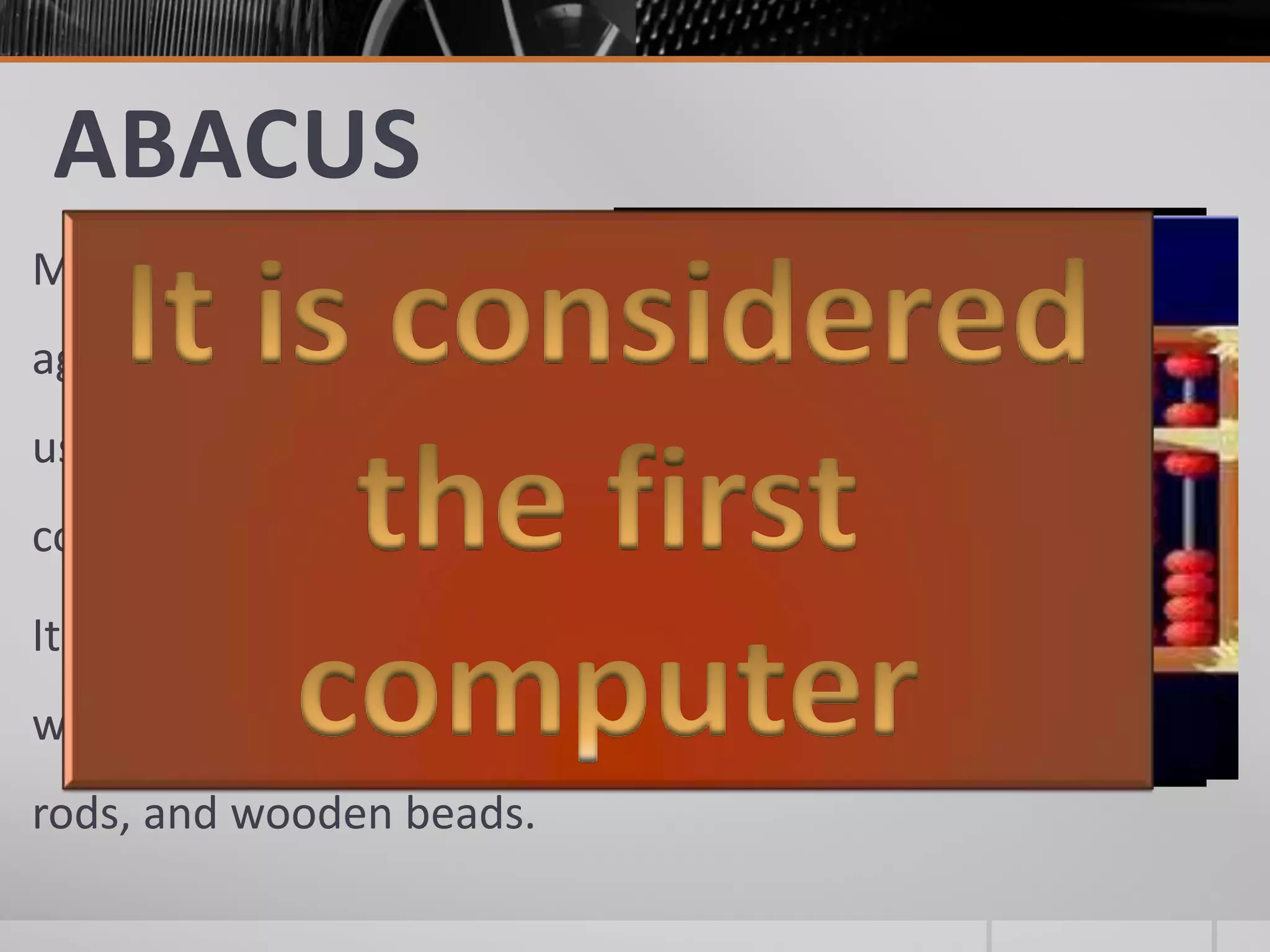
ABACUS
More than 4, 000 years
ago, the Chinese started
using the abacus for
counting and calculating.
It is usually made of
wooden frame, metal
rods, and wooden beads.
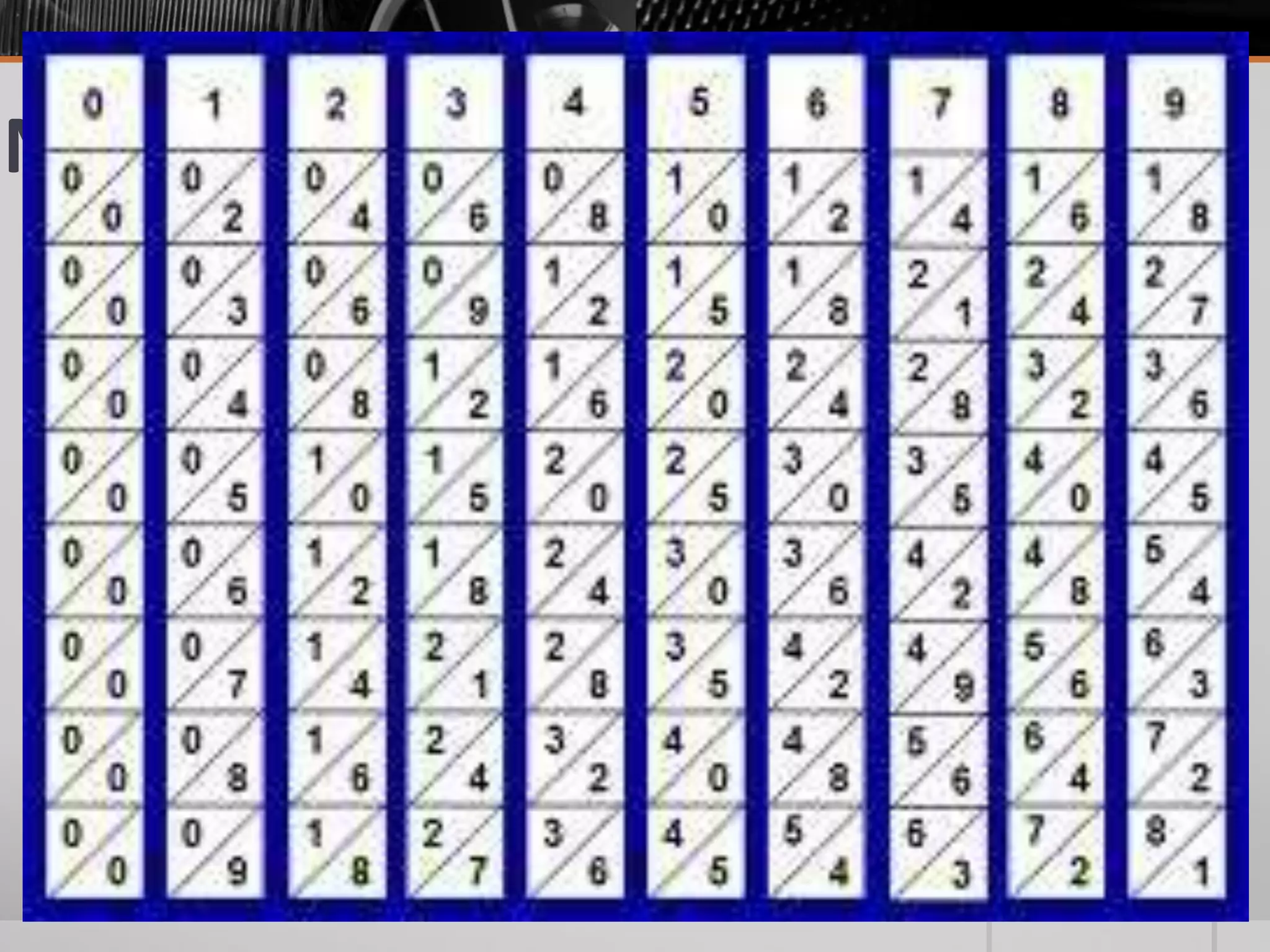
NAPIER’S BONE
In 1612, John Napier
from Scotland invented
a device made of rods.
It was use to multiply
and divide numbers.
This device was called
Napier’s Bones.
PASCALINE
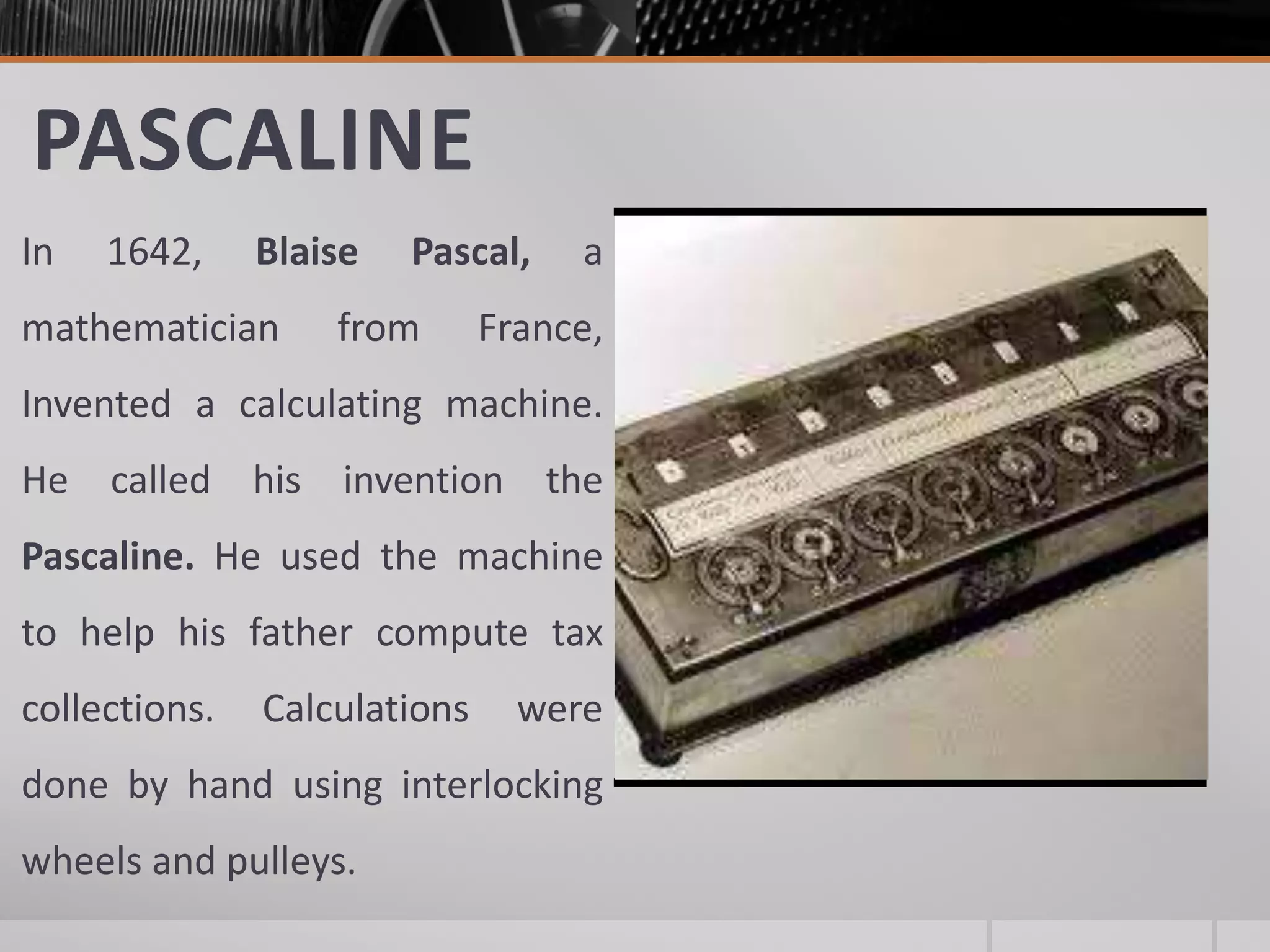
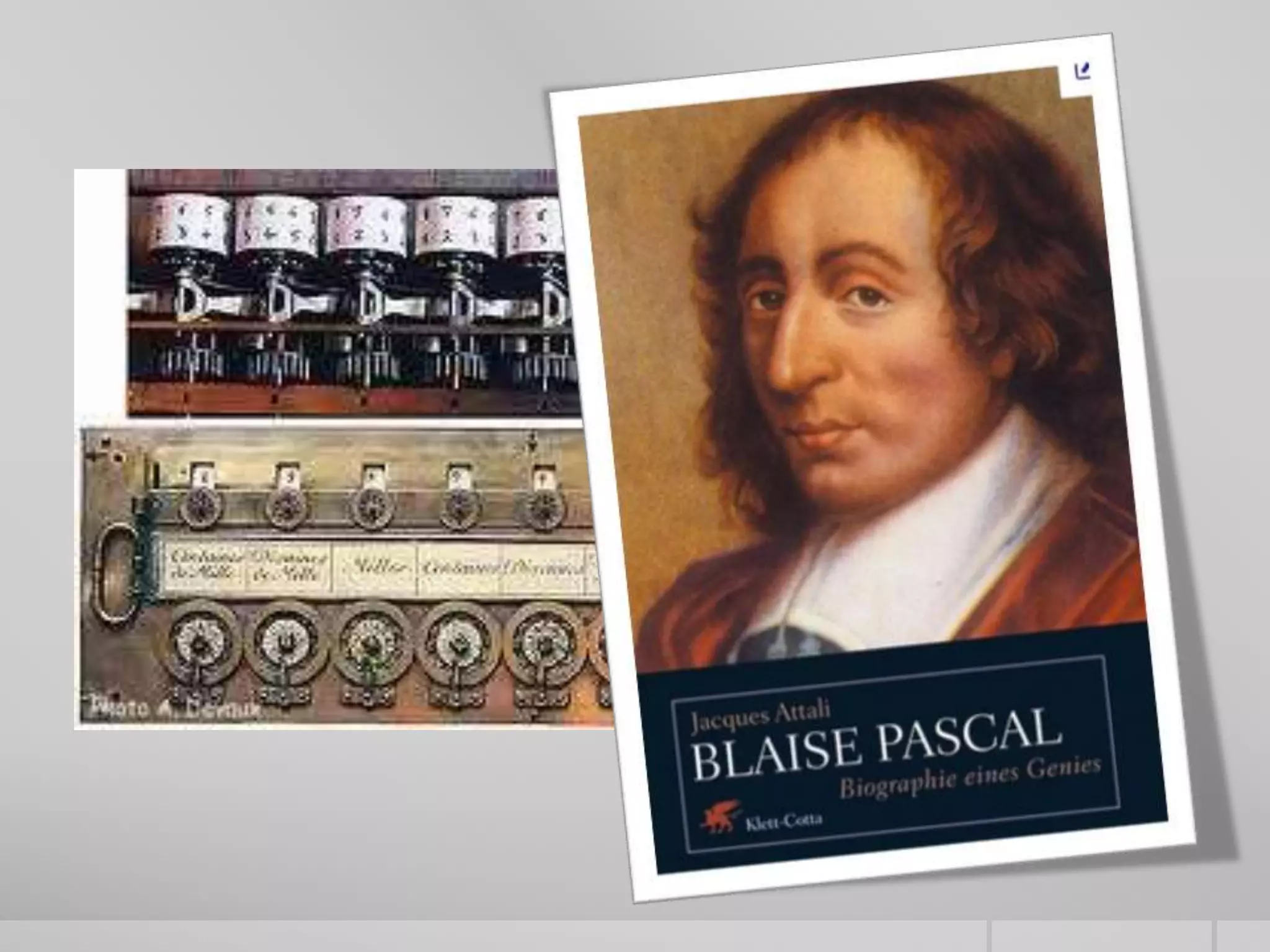
In 1642, Blaise Pascal, a
mathematician from France,
Invented a calculating machine.
He called his invention the
Pascaline. He used the machine
to help his father compute tax
collections. Calculations were
done by hand using interlocking
wheels and pulleys.
STEPPED RECKONER
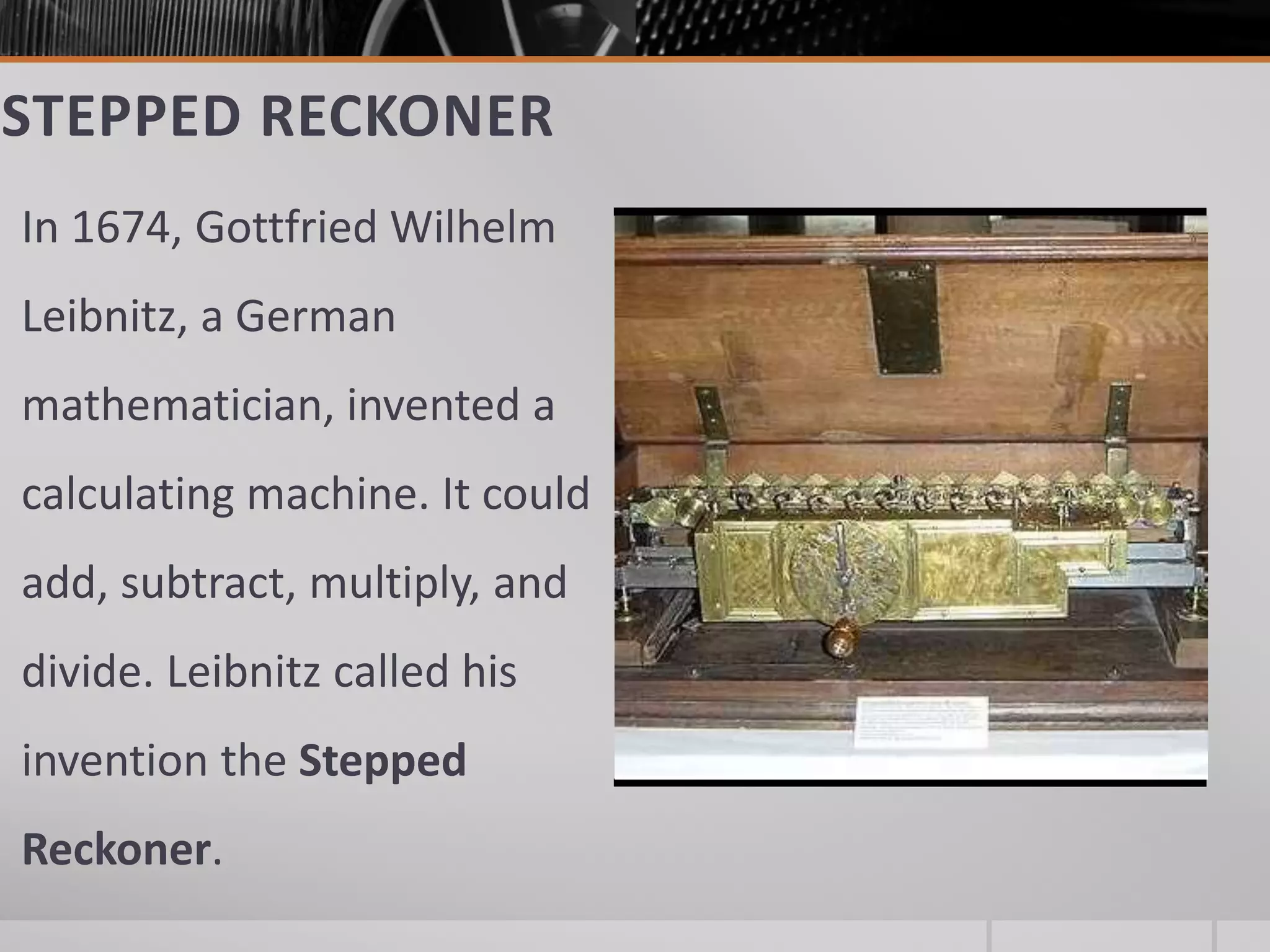
In 1674, Gottfried Wilhelm
Leibnitz, a German
mathematician, invented a
calculating machine. It could
add, subtract, multiply, and
divide. Leibnitz called his
invention the Stepped
Reckoner.
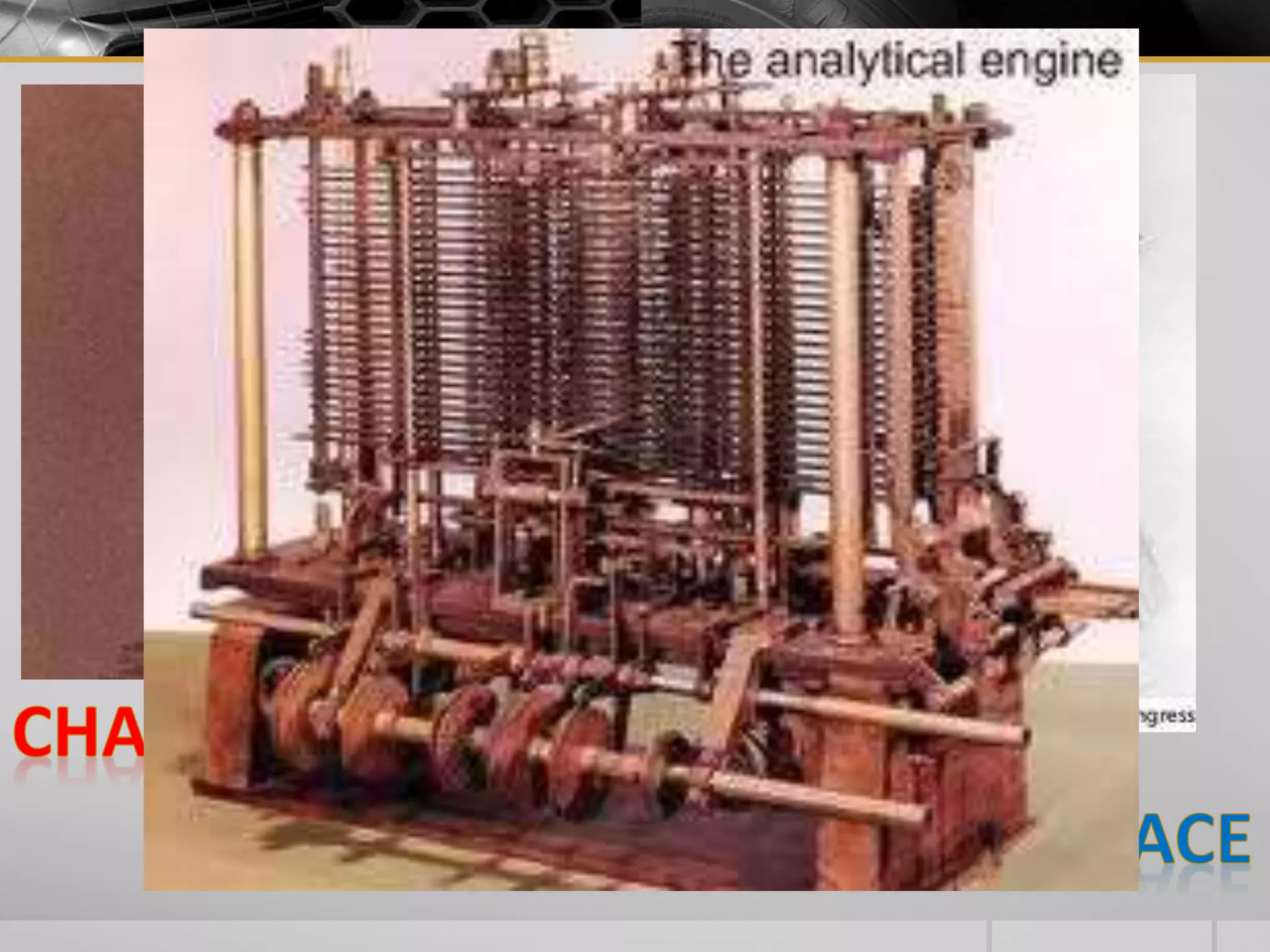
Analytical Engine
This was designed by
Charles Babbage in 1833. He
was helped by Lady Ada
Augusta Lovelace. The machine
was not completed, but
modern computers are based
on Babbage’s original design.
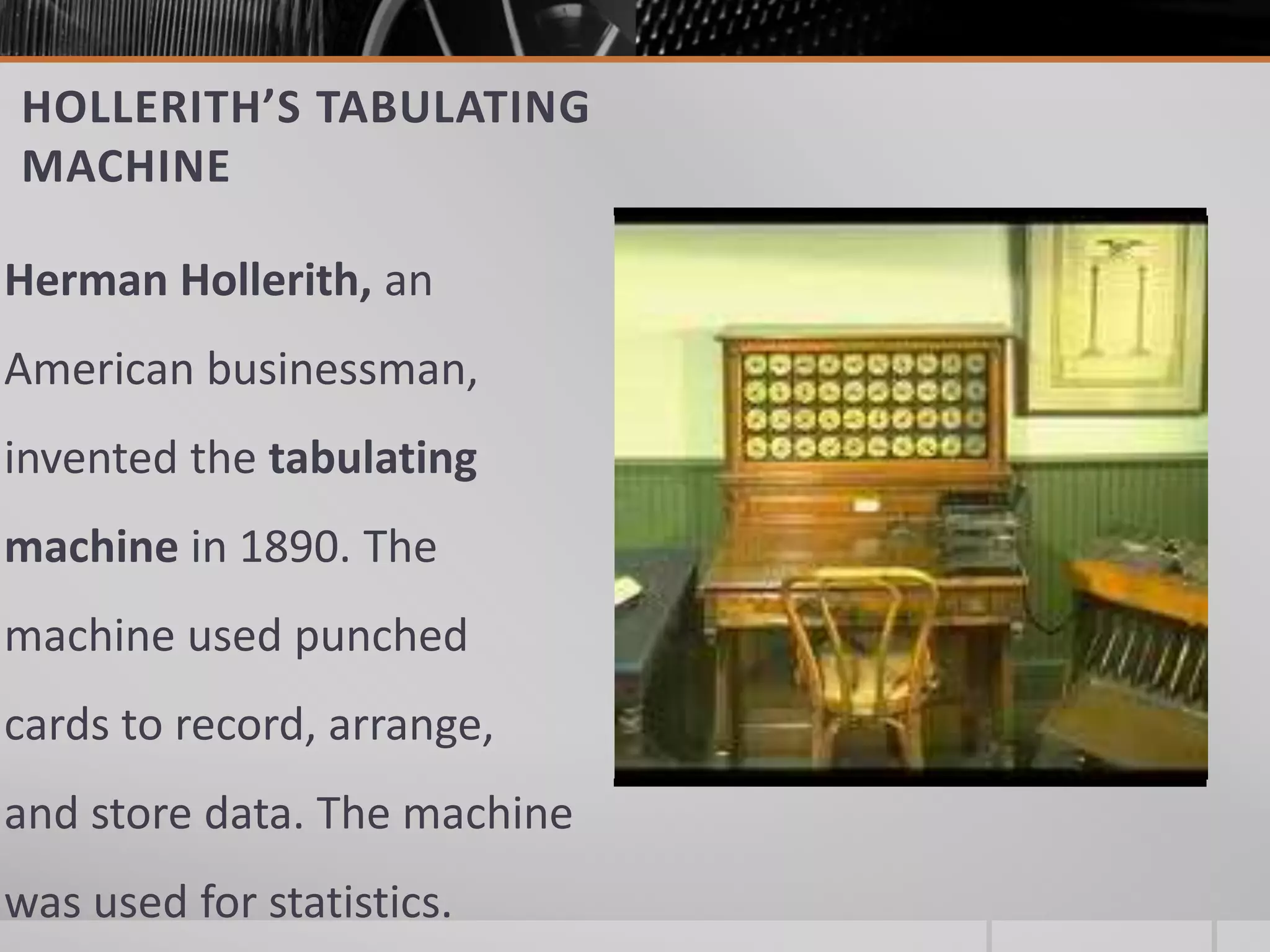
HOLLERITH’S TABULATING
MACHINE
Herman Hollerith, an
American businessman,
invented the tabulating
machine in 1890. The
machine used punched
cards to record, arrange,
and store data. The machine
was used for statistics.
The First
Electronic
Computer
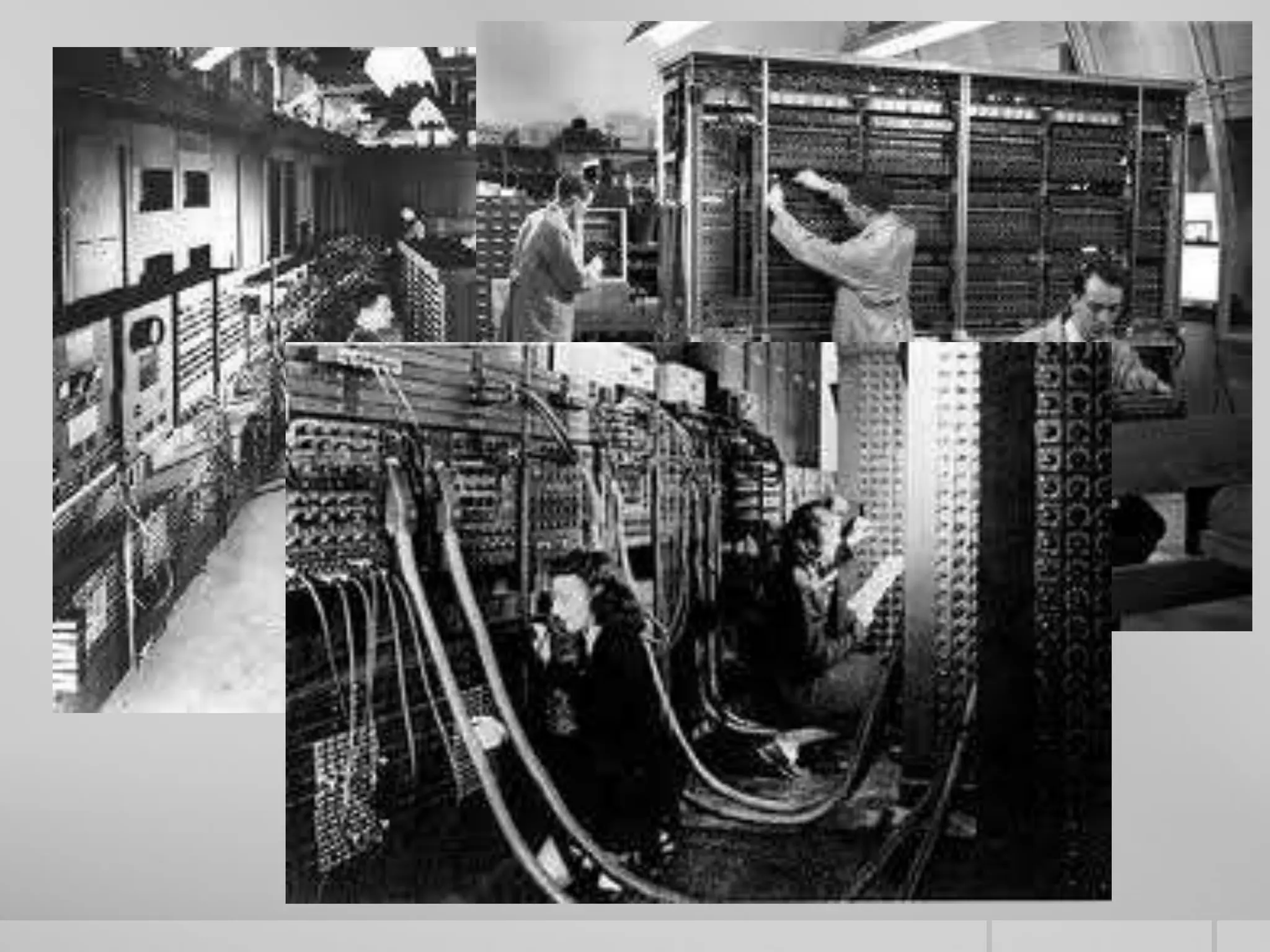
The ENIAC ( Electronic
Numerical Integrator and
Computer) was built in 1946
in the United States. It
helped design weapons.
ENIAC used vacuum tubes
and valves for computing
and sending electrical
signals.
The
Shrinking
Computer
Evolution of a computer 1

Evolution of a computer 1

  • 1.
  • 2.
    Stick and Stones Thefirst people use their fingers in counting. They also used sticks, ropes, and stones to make counting easier.
  • 3.
    ABACUS More than 4,000 years ago, the Chinese started using the abacus for counting and calculating. It is usually made of wooden frame, metal rods, and wooden beads.
  • 4.
    NAPIER’S BONE In 1612,John Napier from Scotland invented a device made of rods. It was use to multiply and divide numbers. This device was called Napier’s Bones.
  • 5.
    PASCALINE In 1642, BlaisePascal, a mathematician from France, Invented a calculating machine. He called his invention the Pascaline. He used the machine to help his father compute tax collections. Calculations were done by hand using interlocking wheels and pulleys.
  • 7.
    STEPPED RECKONER In 1674,Gottfried Wilhelm Leibnitz, a German mathematician, invented a calculating machine. It could add, subtract, multiply, and divide. Leibnitz called his invention the Stepped Reckoner.
  • 9.
    Analytical Engine This wasdesigned by Charles Babbage in 1833. He was helped by Lady Ada Augusta Lovelace. The machine was not completed, but modern computers are based on Babbage’s original design.
  • 11.
    HOLLERITH’S TABULATING MACHINE Herman Hollerith,an American businessman, invented the tabulating machine in 1890. The machine used punched cards to record, arrange, and store data. The machine was used for statistics.
  • 13.
  • 14.
    The ENIAC (Electronic Numerical Integrator and Computer) was built in 1946 in the United States. It helped design weapons. ENIAC used vacuum tubes and valves for computing and sending electrical signals.
  • 16.