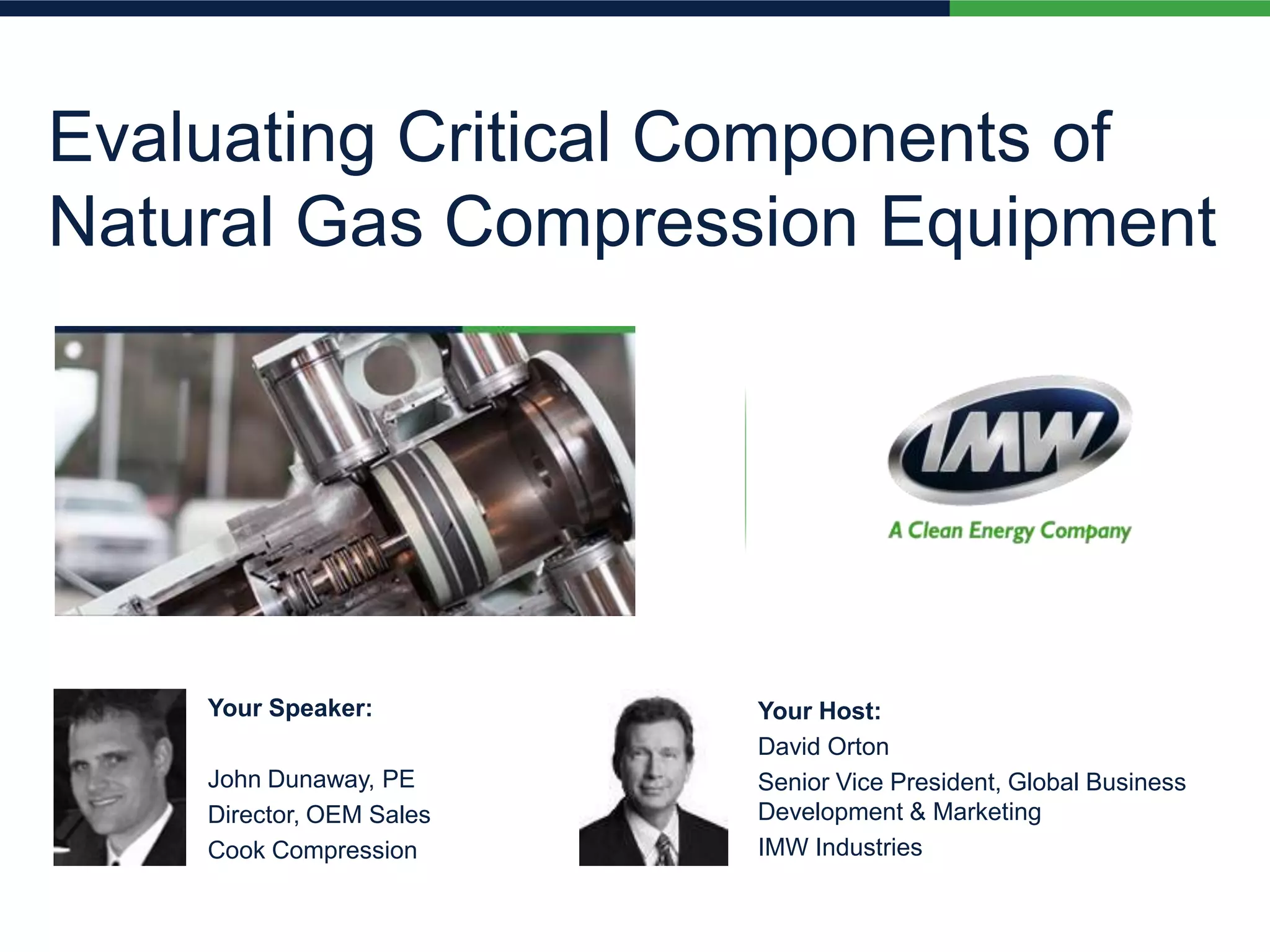
Evaluating Critical Components of
Natural Gas Compression Equipment

Your Speaker:
John Dunaway, PE
Director, OEM Sales
Cook Compression

Your Host:
David Orton
Senior Vice President, Global Business
Development & Marketing
IMW Industries
About IMW
IMW has been manufacturing industrial machinery since 1912, and has evolved to be a leading
manufacturer of natural gas compression systems, serving all major markets Globally. Equipment
is currently operating mid-east to North of the Arctic Circle.
•
•

Quality Products & Leader in CNG Compression
Non-Lubricated Compression for Clean CNG

A variety of configurations for all applications
A Clean Energy Company

IMW operates as a wholly owned subsidiary of Clean Energy Fuels Corp. (NASDAQ: CLNE).
Clean Energy is the largest provider of natural gas fuel for transportation in North America and a
global leader in the expanding natural gas vehicle market.
Clean Energy has operations in CNG and LNG vehicle fueling, construction and operation of
CNG and LNG fueling stations, biomethane production, and compressor technology.
Upcoming Webinars
www.imw.ca/cng-webinars/
•
•

Free Monthly Webinars
Documented CPD Credits

More CPD Info or Board Room Attendance:

webinars@imw.ca
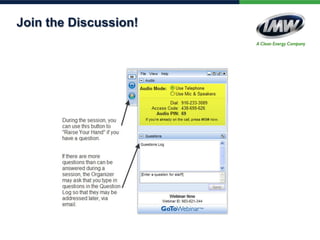
Join the Discussion!
6

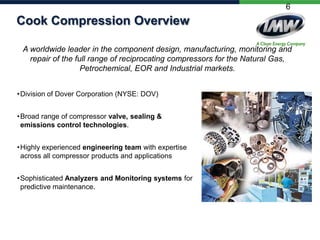
Cook Compression Overview
A worldwide leader in the component design, manufacturing, monitoring and
repair of the full range of reciprocating compressors for the Natural Gas,
Petrochemical, EOR and Industrial markets.
• Division of Dover Corporation (NYSE: DOV)
• Broad range of compressor valve, sealing &
emissions control technologies.
• Highly experienced engineering team with expertise
across all compressor products and applications
• Sophisticated Analyzers and Monitoring systems for
predictive maintenance.
7

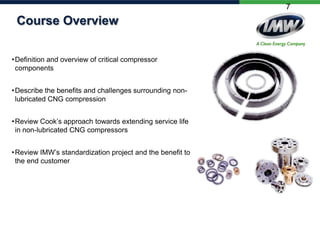
Course Overview
• Definition and overview of critical compressor
components
• Describe the benefits and challenges surrounding nonlubricated CNG compression
• Review Cook’s approach towards extending service life
in non-lubricated CNG compressors
• Review IMW’s standardization project and the benefit to
the end customer
8

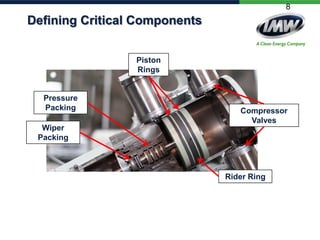
Defining Critical Components
Piston
Rings

Pressure
Packing

Compressor
Valves

Evaluating Critical
Components of Natural Gas
Compression Rider Ring
Wiper
Packing
9

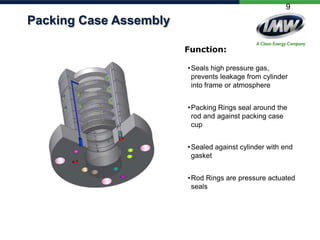
Packing Case Assembly
Function:
• Seals high pressure gas,
prevents leakage from cylinder
into frame or atmosphere
• Packing Rings seal around the
rod and against packing case
cup
• Sealed against cylinder with end
gasket
• Rod Rings are pressure actuated
seals
10

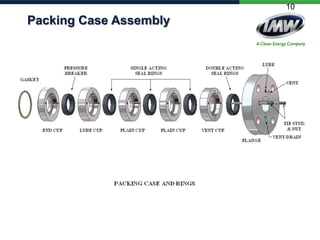
Packing Case Assembly
11

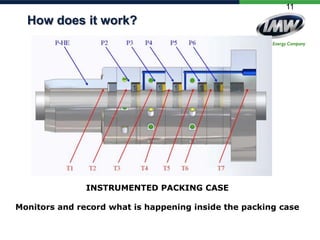
How does it work?

INSTRUMENTED PACKING CASE

Monitors and record what is happening inside the packing case
12

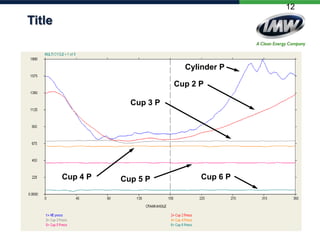
Title

Cylinder P
Cup 2 P

Cup 3 P

Cup 4 P

Cup 5 P

Cup 6 P
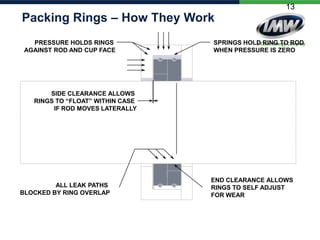
Packing Rings – How They Work
PRESSURE HOLDS RINGS
AGAINST ROD AND CUP FACE

13

SPRINGS HOLD RING TO ROD
WHEN PRESSURE IS ZERO

SIDE CLEARANCE ALLOWS
RINGS TO “FLOAT” WITHIN CASE
IF ROD MOVES LATERALLY

ALL LEAK PATHS
BLOCKED BY RING OVERLAP

END CLEARANCE ALLOWS
RINGS TO SELF ADJUST
FOR WEAR
14

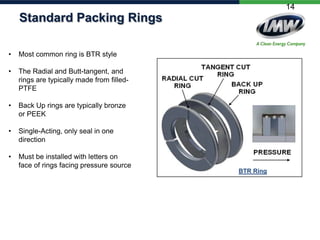
Standard Packing Rings
•

Most common ring is BTR style

•

The Radial and Butt-tangent, and
rings are typically made from filledPTFE

•

Back Up rings are typically bronze
or PEEK

•

Single-Acting, only seal in one
direction

•

Must be installed with letters on
face of rings facing pressure source

BTR Ring
15

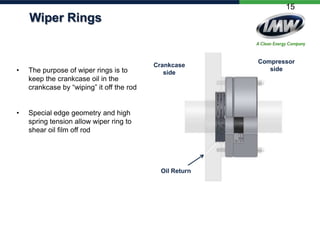
Wiper Rings

•

The purpose of wiper rings is to
keep the crankcase oil in the
crankcase by “wiping” it off the rod

•

Crankcase
side

Special edge geometry and high
spring tension allow wiper ring to
shear oil film off rod

Oil Return

Compressor
side
16

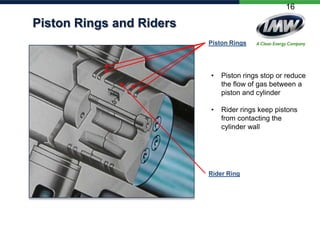
Piston Rings and Riders
Piston Rings

•

Piston rings stop or reduce
the flow of gas between a
piston and cylinder

•

Rider rings keep pistons
from contacting the
cylinder wall

Rider Ring
17

Piston Rings and Riders
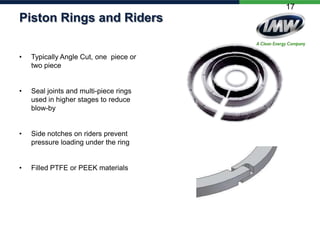
•

Typically Angle Cut, one piece or
two piece

•

Seal joints and multi-piece rings
used in higher stages to reduce
blow-by

•

Side notches on riders prevent
pressure loading under the ring

•

Filled PTFE or PEEK materials
18

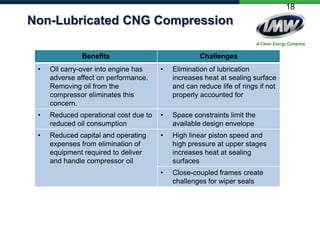
Non-Lubricated CNG Compression
Benefits

Challenges

•

Oil carry-over into engine has
adverse affect on performance.
Removing oil from the
compressor eliminates this
concern.

•

Elimination of lubrication
increases heat at sealing surface
and can reduce life of rings if not
properly accounted for

•

Reduced operational cost due to
reduced oil consumption

•

Space constraints limit the
available design envelope

•

Reduced capital and operating
expenses from elimination of
equipment required to deliver
and handle compressor oil

•

High linear piston speed and
high pressure at upper stages
increases heat at sealing
surfaces

•

Close-coupled frames create
challenges for wiper seals
19

Non-Lube CNG Design Approach

•

A combination of upgraded materials and proper seal design is the key to
extending service life

•

Material selection – must select a material that performs in the absence of oil

•

Product design – Heat and oil carryover are the enemies of ring life. We must
select designs that minimize these factors.

•

Application Experience – Knowing which technologies best fit non-lube CNG
applications
20

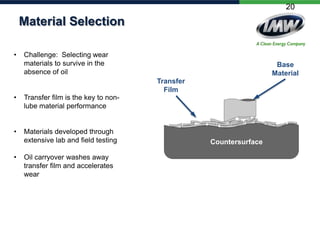
Material Selection
•

Challenge: Selecting wear
materials to survive in the
absence of oil

Base
Material
Transfer
Film

•

Transfer film is the key to nonlube material performance

•

Materials developed through
extensive lab and field testing

•

Oil carryover washes away
transfer film and accelerates
wear

Countersurface
21

Material Selection

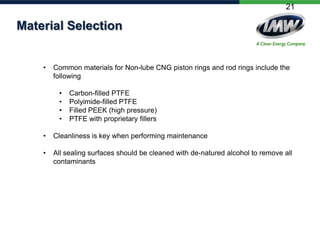
•

Common materials for Non-lube CNG piston rings and rod rings include the
following
•
•
•
•

Carbon-filled PTFE
Polyimide-filled PTFE
Filled PEEK (high pressure)
PTFE with proprietary fillers

•

Cleanliness is key when performing maintenance

•

All sealing surfaces should be cleaned with de-natured alcohol to remove all
contaminants
22

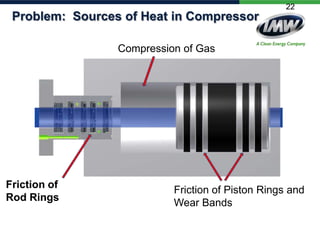
Problem: Sources of Heat in Compressor
Compression of Gas

Friction of
Rod Rings

Friction of Piston Rings and
Wear Bands
IMW Standard Compressors
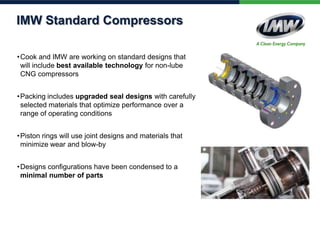
• Cook and IMW are working on standard designs that
will include best available technology for non-lube
CNG compressors
• Packing includes upgraded seal designs with carefully
selected materials that optimize performance over a
range of operating conditions

• Piston rings will use joint designs and materials that
minimize wear and blow-by
• Designs configurations have been condensed to a
minimal number of parts
Key Takeaways
• High service life can be achieved in non-lube CNG compressors when
the proper considerations are taken
• Heat and oil carryover are the enemies of service life, especially in nonlube applications

• To maximize life, use the a combination of product designs and wear
materials designed to reduce heat generation, limit oil carryover and
minimize wear rates
• Take proper cleanliness precautions during maintenance to promote
material transfer film development
• Standardized IMW compressors will utilize best available technology
with a goal of achieving high service life, low lead times and high spares
availability
Questions?
Contact Us!
IMW Industries
43676 Progress Way
Chilliwack, BC,
Canada V2R 0C3

+1 604-795-9491
www.imw.ca
Questions?
sales@imw.ca

webinars@imw.ca

CNG Compression Equipment Webinar - Evaluating Critical Components of Natural Gas Compressors

  • 1.
    Evaluating Critical Componentsof Natural Gas Compression Equipment Your Speaker: John Dunaway, PE Director, OEM Sales Cook Compression Your Host: David Orton Senior Vice President, Global Business Development & Marketing IMW Industries
  • 2.
    About IMW IMW hasbeen manufacturing industrial machinery since 1912, and has evolved to be a leading manufacturer of natural gas compression systems, serving all major markets Globally. Equipment is currently operating mid-east to North of the Arctic Circle. • • Quality Products & Leader in CNG Compression Non-Lubricated Compression for Clean CNG A variety of configurations for all applications
  • 3.
    A Clean EnergyCompany IMW operates as a wholly owned subsidiary of Clean Energy Fuels Corp. (NASDAQ: CLNE). Clean Energy is the largest provider of natural gas fuel for transportation in North America and a global leader in the expanding natural gas vehicle market. Clean Energy has operations in CNG and LNG vehicle fueling, construction and operation of CNG and LNG fueling stations, biomethane production, and compressor technology.
  • 4.
    Upcoming Webinars www.imw.ca/cng-webinars/ • • Free MonthlyWebinars Documented CPD Credits More CPD Info or Board Room Attendance: webinars@imw.ca
  • 5.
  • 6.
    6 Cook Compression Overview Aworldwide leader in the component design, manufacturing, monitoring and repair of the full range of reciprocating compressors for the Natural Gas, Petrochemical, EOR and Industrial markets. • Division of Dover Corporation (NYSE: DOV) • Broad range of compressor valve, sealing & emissions control technologies. • Highly experienced engineering team with expertise across all compressor products and applications • Sophisticated Analyzers and Monitoring systems for predictive maintenance.
  • 7.
    7 Course Overview • Definitionand overview of critical compressor components • Describe the benefits and challenges surrounding nonlubricated CNG compression • Review Cook’s approach towards extending service life in non-lubricated CNG compressors • Review IMW’s standardization project and the benefit to the end customer
  • 8.
    8 Defining Critical Components Piston Rings Pressure Packing Compressor Valves EvaluatingCritical Components of Natural Gas Compression Rider Ring Wiper Packing
  • 9.
    9 Packing Case Assembly Function: •Seals high pressure gas, prevents leakage from cylinder into frame or atmosphere • Packing Rings seal around the rod and against packing case cup • Sealed against cylinder with end gasket • Rod Rings are pressure actuated seals
  • 10.
  • 11.
    11 How does itwork? INSTRUMENTED PACKING CASE Monitors and record what is happening inside the packing case
  • 12.
    12 Title Cylinder P Cup 2P Cup 3 P Cup 4 P Cup 5 P Cup 6 P
  • 13.
    Packing Rings –How They Work PRESSURE HOLDS RINGS AGAINST ROD AND CUP FACE 13 SPRINGS HOLD RING TO ROD WHEN PRESSURE IS ZERO SIDE CLEARANCE ALLOWS RINGS TO “FLOAT” WITHIN CASE IF ROD MOVES LATERALLY ALL LEAK PATHS BLOCKED BY RING OVERLAP END CLEARANCE ALLOWS RINGS TO SELF ADJUST FOR WEAR
  • 14.
    14 Standard Packing Rings • Mostcommon ring is BTR style • The Radial and Butt-tangent, and rings are typically made from filledPTFE • Back Up rings are typically bronze or PEEK • Single-Acting, only seal in one direction • Must be installed with letters on face of rings facing pressure source BTR Ring
  • 15.
    15 Wiper Rings • The purposeof wiper rings is to keep the crankcase oil in the crankcase by “wiping” it off the rod • Crankcase side Special edge geometry and high spring tension allow wiper ring to shear oil film off rod Oil Return Compressor side
  • 16.
    16 Piston Rings andRiders Piston Rings • Piston rings stop or reduce the flow of gas between a piston and cylinder • Rider rings keep pistons from contacting the cylinder wall Rider Ring
  • 17.
    17 Piston Rings andRiders • Typically Angle Cut, one piece or two piece • Seal joints and multi-piece rings used in higher stages to reduce blow-by • Side notches on riders prevent pressure loading under the ring • Filled PTFE or PEEK materials
  • 18.
    18 Non-Lubricated CNG Compression Benefits Challenges • Oilcarry-over into engine has adverse affect on performance. Removing oil from the compressor eliminates this concern. • Elimination of lubrication increases heat at sealing surface and can reduce life of rings if not properly accounted for • Reduced operational cost due to reduced oil consumption • Space constraints limit the available design envelope • Reduced capital and operating expenses from elimination of equipment required to deliver and handle compressor oil • High linear piston speed and high pressure at upper stages increases heat at sealing surfaces • Close-coupled frames create challenges for wiper seals
  • 19.
    19 Non-Lube CNG DesignApproach • A combination of upgraded materials and proper seal design is the key to extending service life • Material selection – must select a material that performs in the absence of oil • Product design – Heat and oil carryover are the enemies of ring life. We must select designs that minimize these factors. • Application Experience – Knowing which technologies best fit non-lube CNG applications
  • 20.
    20 Material Selection • Challenge: Selectingwear materials to survive in the absence of oil Base Material Transfer Film • Transfer film is the key to nonlube material performance • Materials developed through extensive lab and field testing • Oil carryover washes away transfer film and accelerates wear Countersurface
  • 21.
    21 Material Selection • Common materialsfor Non-lube CNG piston rings and rod rings include the following • • • • Carbon-filled PTFE Polyimide-filled PTFE Filled PEEK (high pressure) PTFE with proprietary fillers • Cleanliness is key when performing maintenance • All sealing surfaces should be cleaned with de-natured alcohol to remove all contaminants
  • 22.
    22 Problem: Sources ofHeat in Compressor Compression of Gas Friction of Rod Rings Friction of Piston Rings and Wear Bands
  • 23.
    IMW Standard Compressors •Cook and IMW are working on standard designs that will include best available technology for non-lube CNG compressors • Packing includes upgraded seal designs with carefully selected materials that optimize performance over a range of operating conditions • Piston rings will use joint designs and materials that minimize wear and blow-by • Designs configurations have been condensed to a minimal number of parts
  • 24.
    Key Takeaways • Highservice life can be achieved in non-lube CNG compressors when the proper considerations are taken • Heat and oil carryover are the enemies of service life, especially in nonlube applications • To maximize life, use the a combination of product designs and wear materials designed to reduce heat generation, limit oil carryover and minimize wear rates • Take proper cleanliness precautions during maintenance to promote material transfer film development • Standardized IMW compressors will utilize best available technology with a goal of achieving high service life, low lead times and high spares availability
  • 25.
  • 26.
    Contact Us! IMW Industries 43676Progress Way Chilliwack, BC, Canada V2R 0C3 +1 604-795-9491 www.imw.ca Questions? sales@imw.ca webinars@imw.ca

Editor's Notes