Good Mafternoon! 10/2/15
EQ: What were the motivations and goals of exploration?
HW: Letter DUE Tuesday!
SISS
Do you like peanut butter and jelly sandwiches?
•Pick up the handout and glue it on to page 32.
•Update your Table of Contents.
* You need BYOT
DateDate ## TitleTitle
10/2 32 Exploration Notes
Directions
Step #1- Use technology to complete your guided
notes (check on weebly)
Step #2- When you finish, pick up a map from the
TEAL tray
Follow the directions in the PowerPoint to create
your map of the empires.
If you finish early:
- Work on your Final Log
- Study for your SS quiz on exploration
- Make a Quizlet or Kahoot to help you study
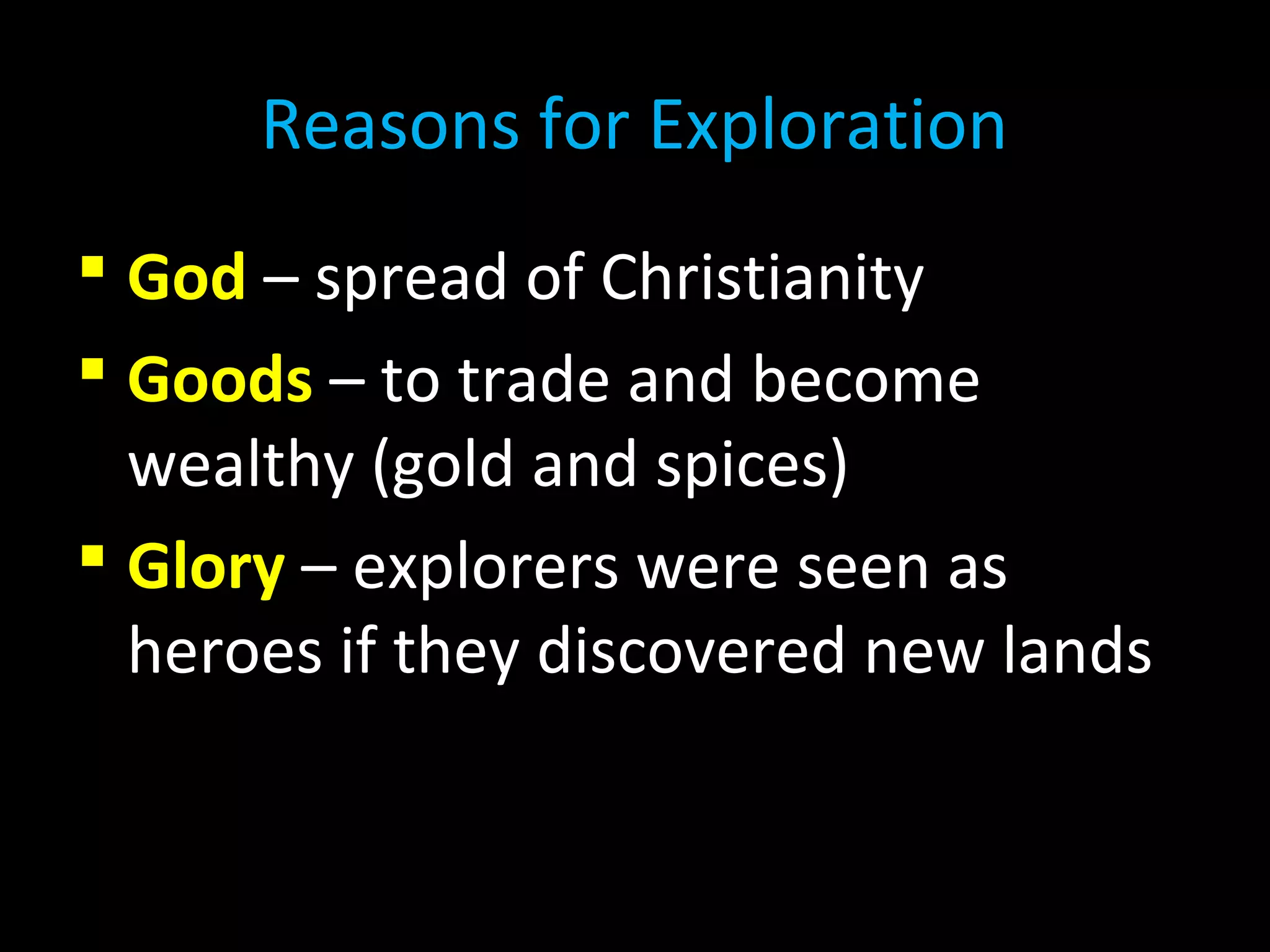
 God – spread of Christianity
 Goods – to trade and become
wealthy (gold and spices)
 Glory – explorers were seen as
heroes if they discovered new lands
Reasons for Exploration
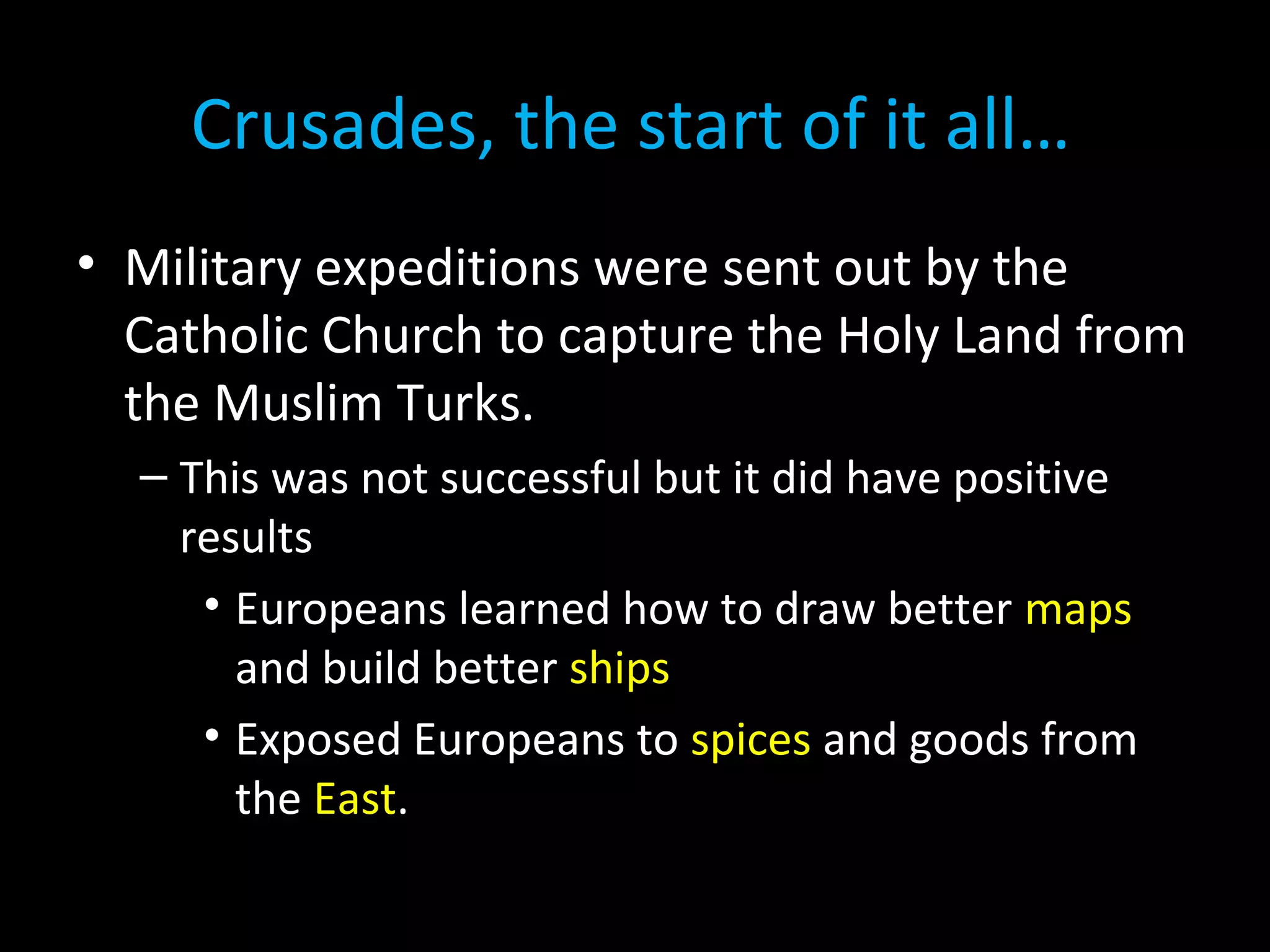
• Military expeditions were sent out by the
Catholic Church to capture the Holy Land from
the Muslim Turks.
– This was not successful but it did have positive
results
• Europeans learned how to draw better maps
and build better ships
• Exposed Europeans to spices and goods from
the East.
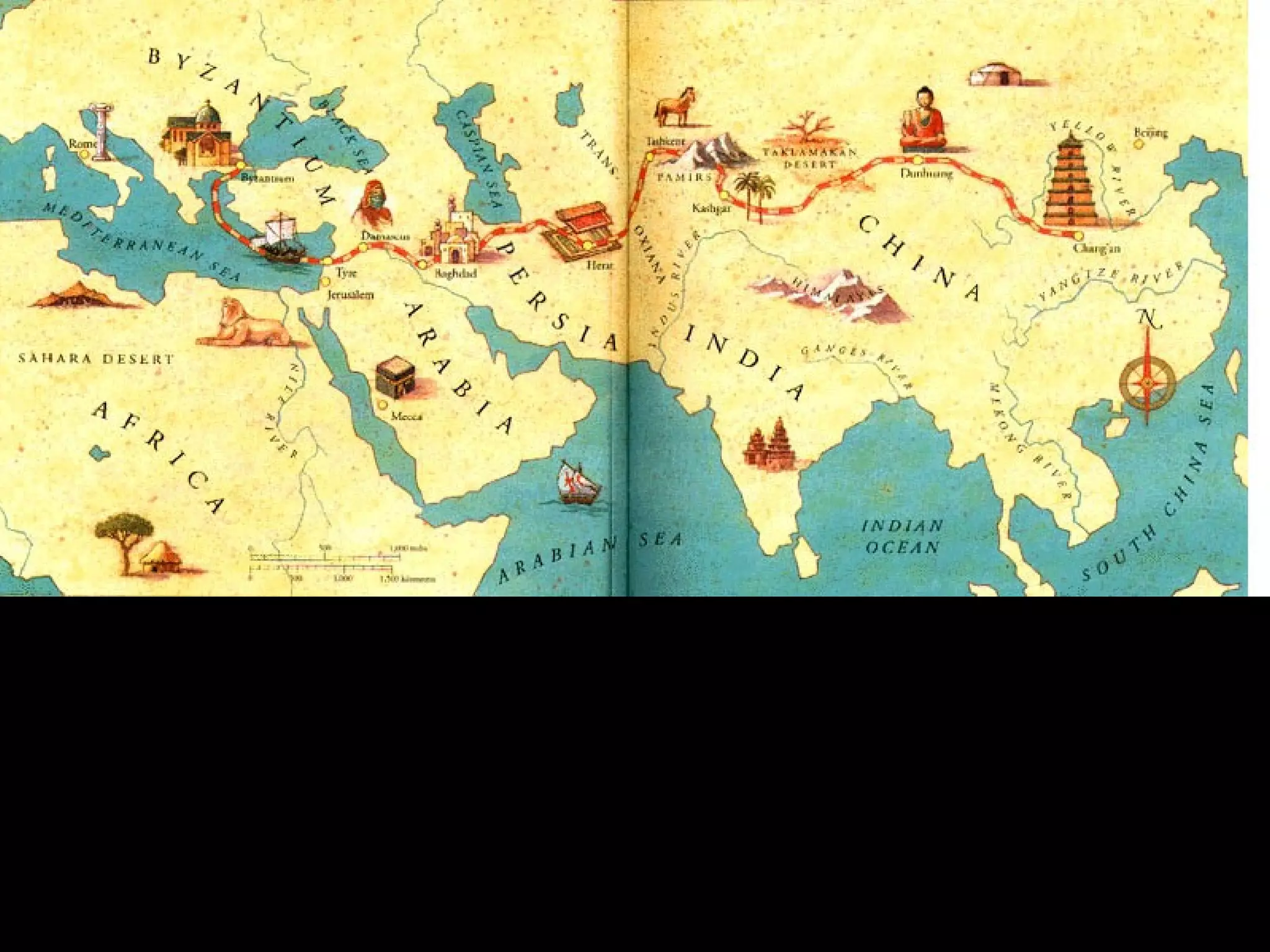
Crusades, the start of it all…
3
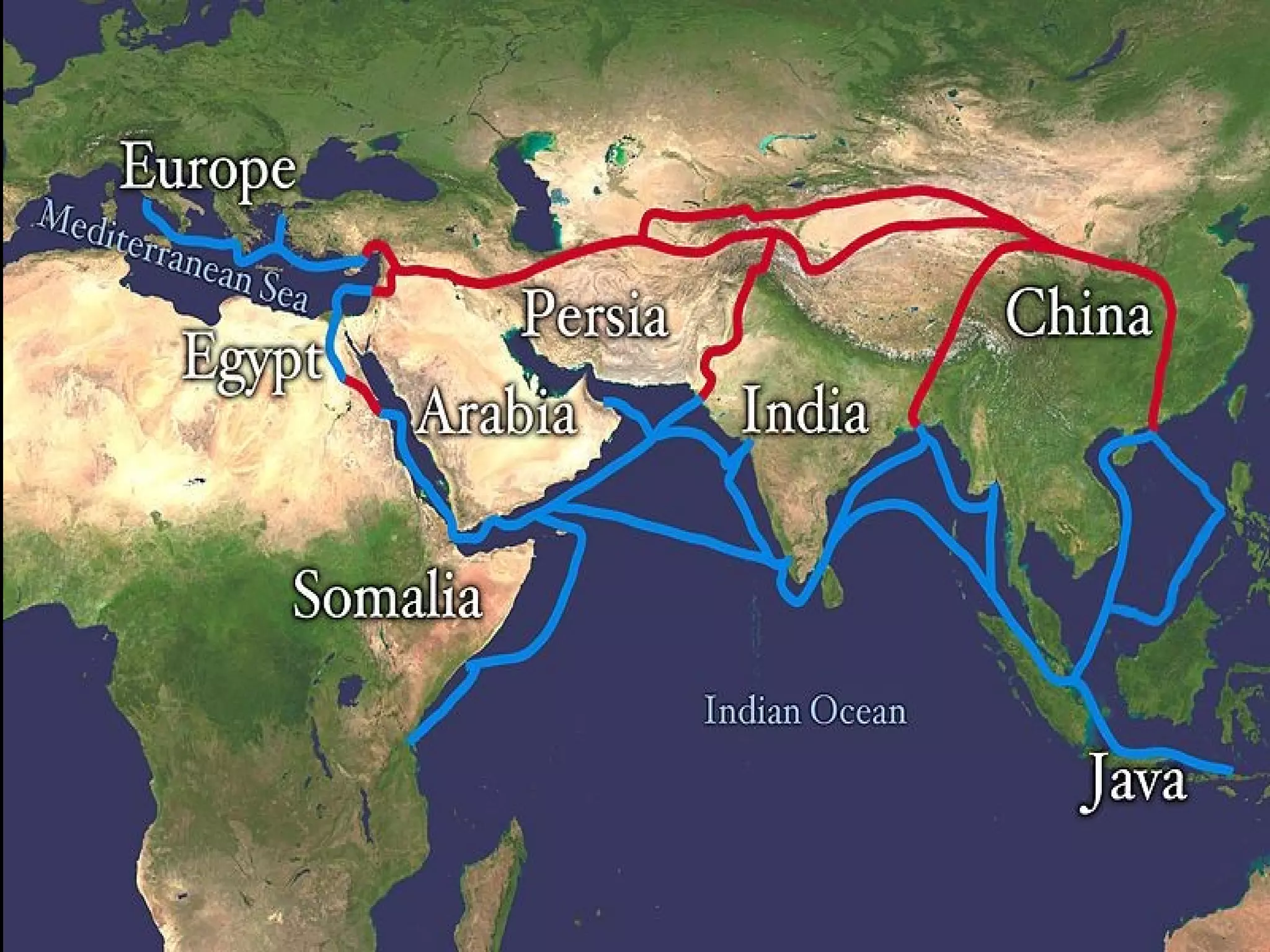
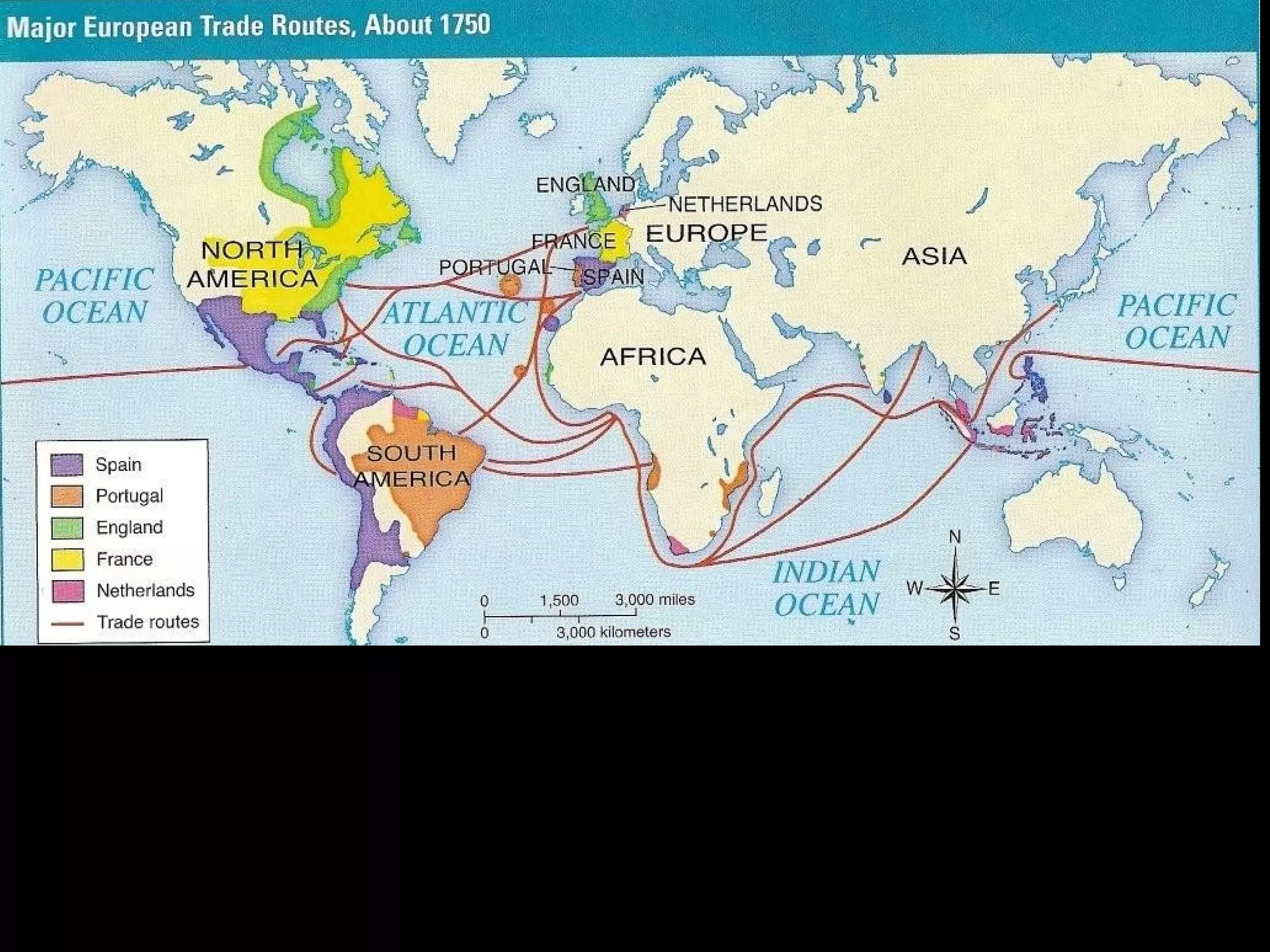
 European countries were looking for trade
routes to India and China
 Did not want to go through Mediterranean Sea,
dangerous territory
 Wanted access to the spices that were
available
 Cut out the Middle man and get products cheaper
Exploration Begins
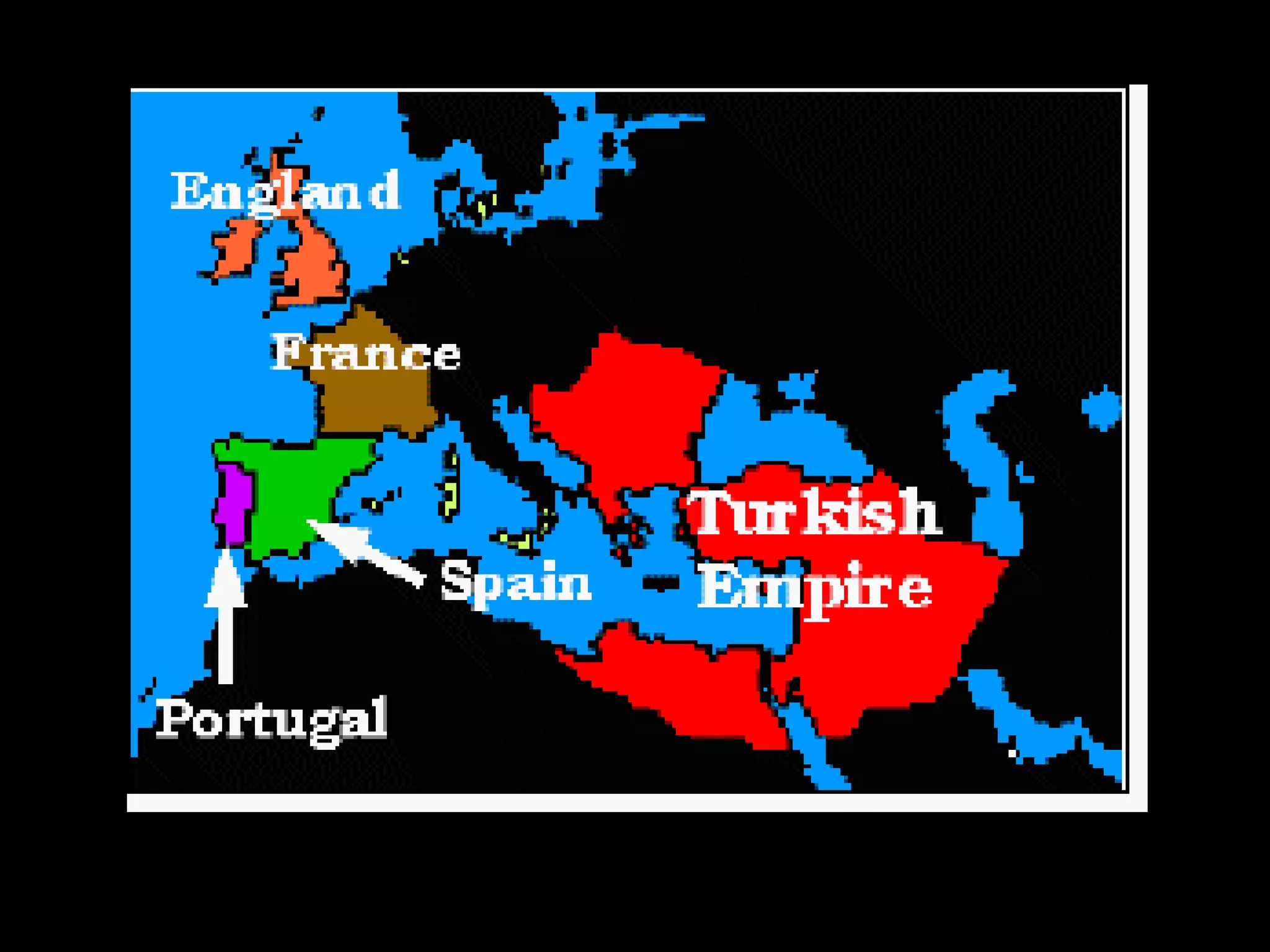
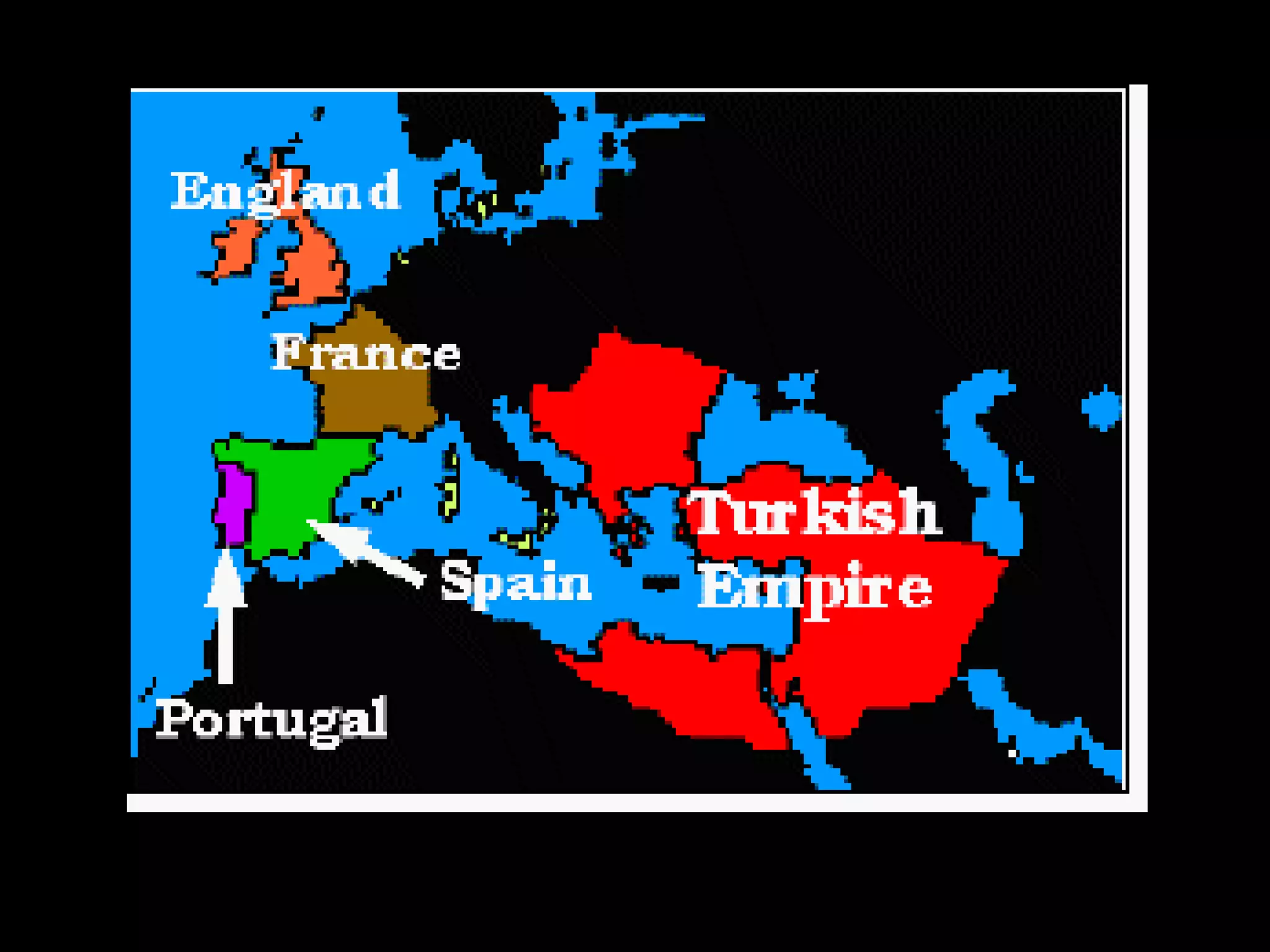
This increased the empires of …..
The 1400s were a time of discovery and
exploration for Europe.
Main countries involved in exploration:
 Portugal
 Spain
 England
 France
P
 1st Europeans to explore the
unknown New World
 1st to sail around the tip of Africa to
Asia
 Also wanted to spread Christianity
PORTUGAL
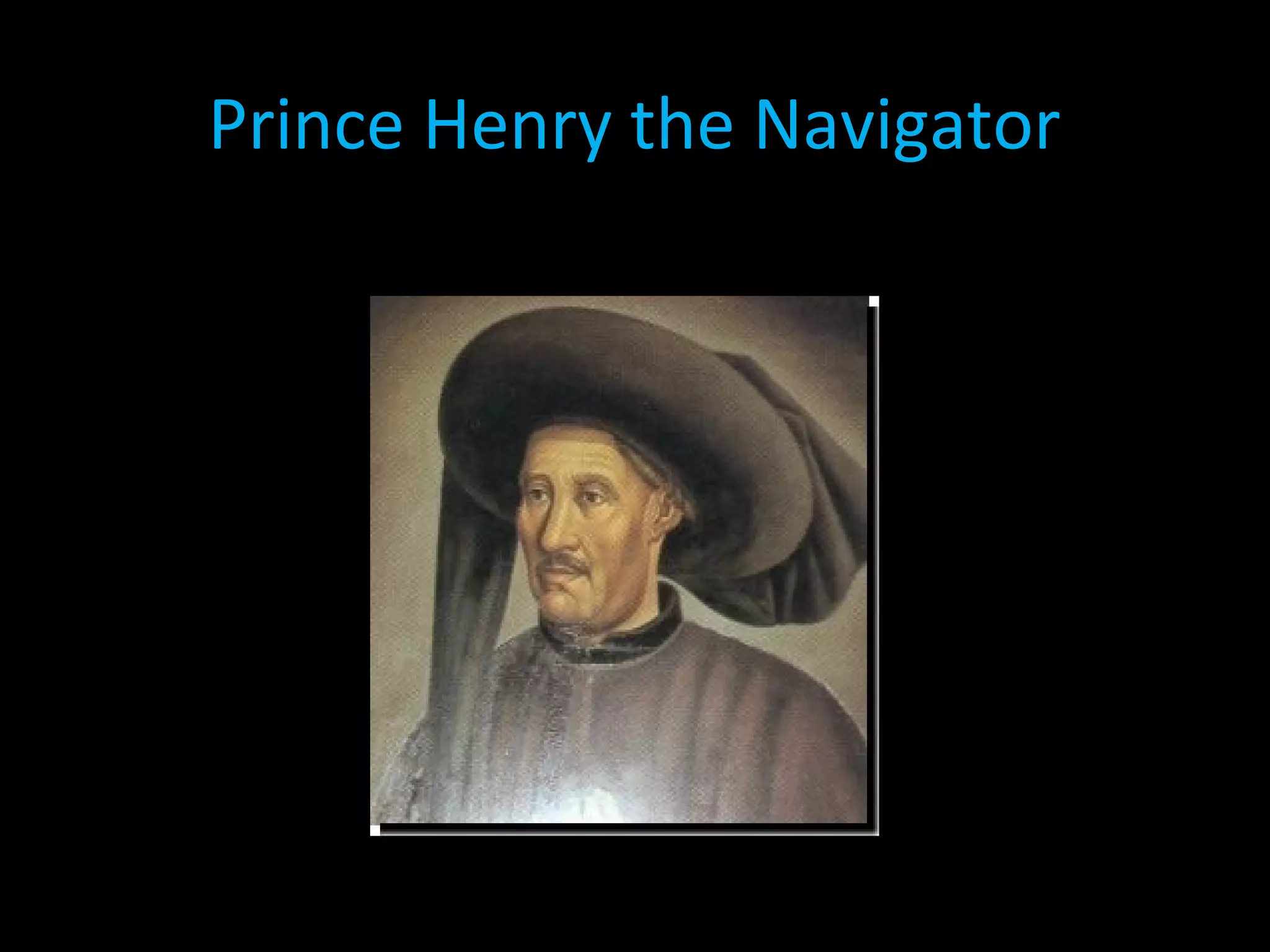
Prince Henry the Navigator
 Son of Portuguese king
 1418: started the first school for navigation
(taught map making, navigation, and
astronomy)
 1434: sent an expedition to sail around
dangerous West African coast
 Made more than 50 trips down Africa’s west
coast
Prince Henry the Navigator
• Unable to make money trading gold, so he
tried creating sugar plantations
• Sugar cane – very profitable crop, but very
labor intensive
• So, Prince Henry imported slaves from Africa
• Encouraged a slave trade that lasted another
400 years.
• Portugal grew very wealthy, Brazil was the
most profitable colony
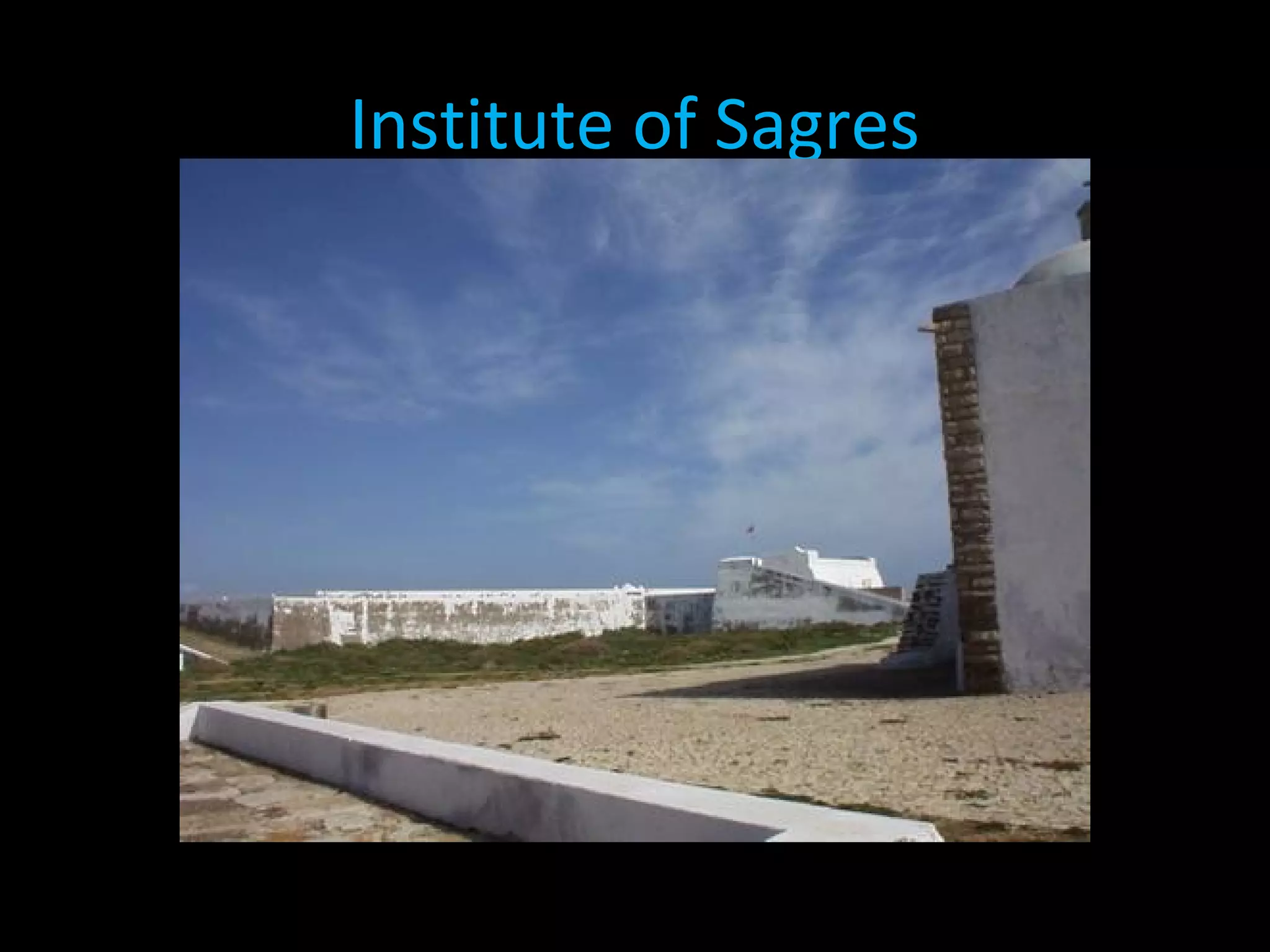
Institute of Sagres
• The Institute of Sagres was an important
research center in Portugal where several
breakthrough discoveries in mathematics and
naval technology occurred.
Institute of Sagres
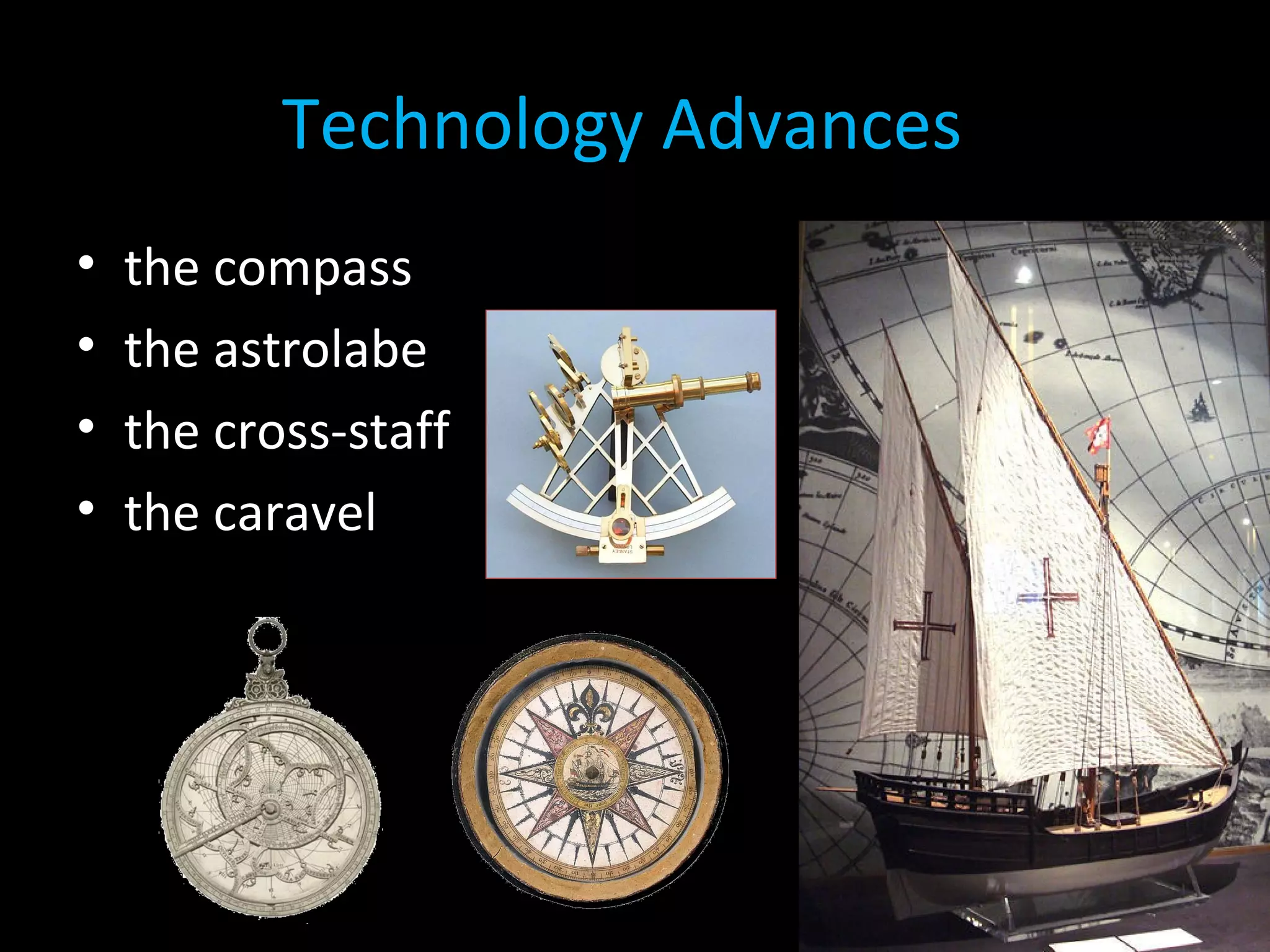
Technology Advances!
• the compass
• the astrolabe
• the cross-staff
• the caravel
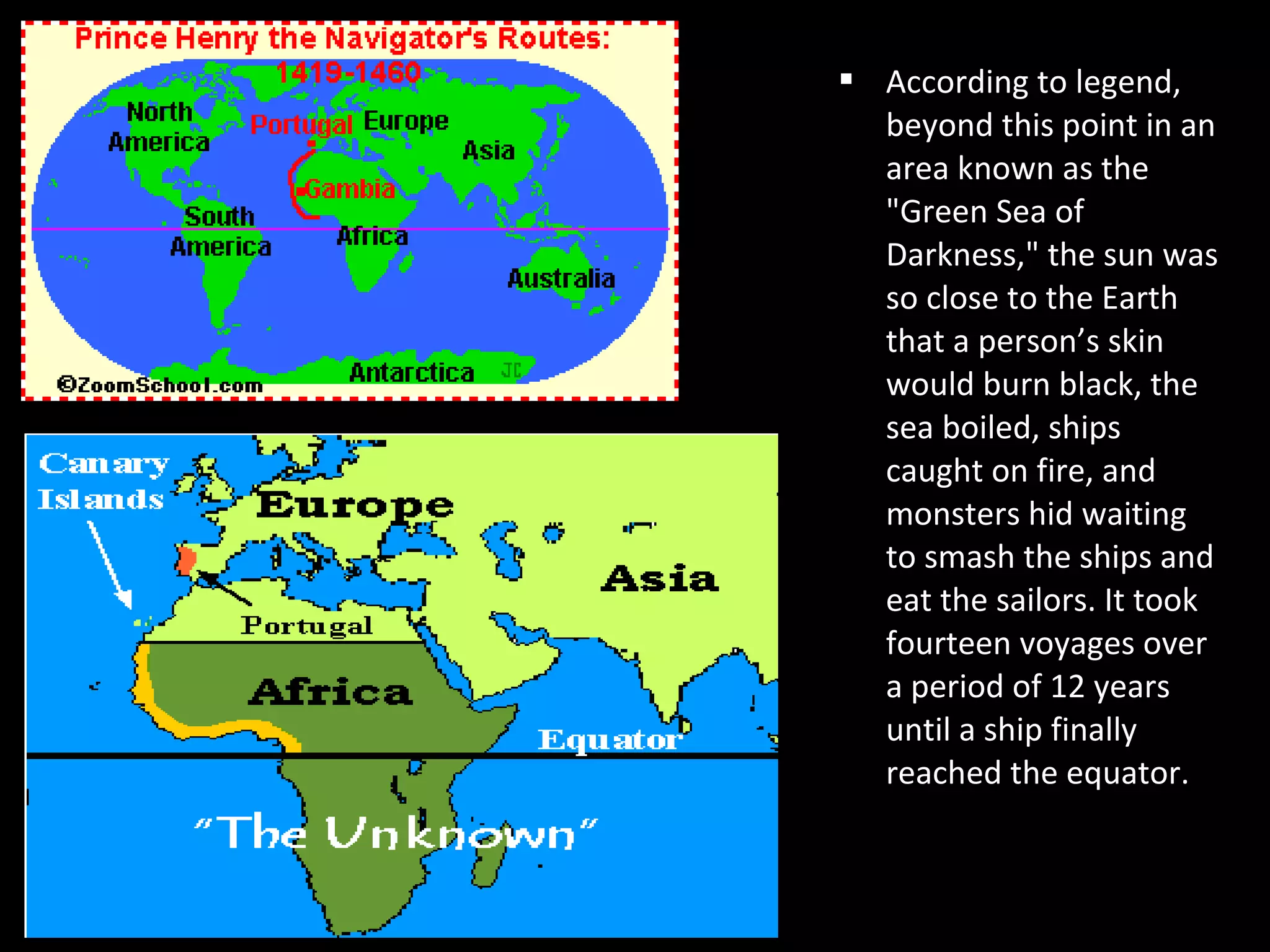
 According to legend,
beyond this point in an
area known as the
"Green Sea of
Darkness," the sun was
so close to the Earth
that a person’s skin
would burn black, the
sea boiled, ships
caught on fire, and
monsters hid waiting
to smash the ships and
eat the sailors. It took
fourteen voyages over
a period of 12 years
until a ship finally
reached the equator.
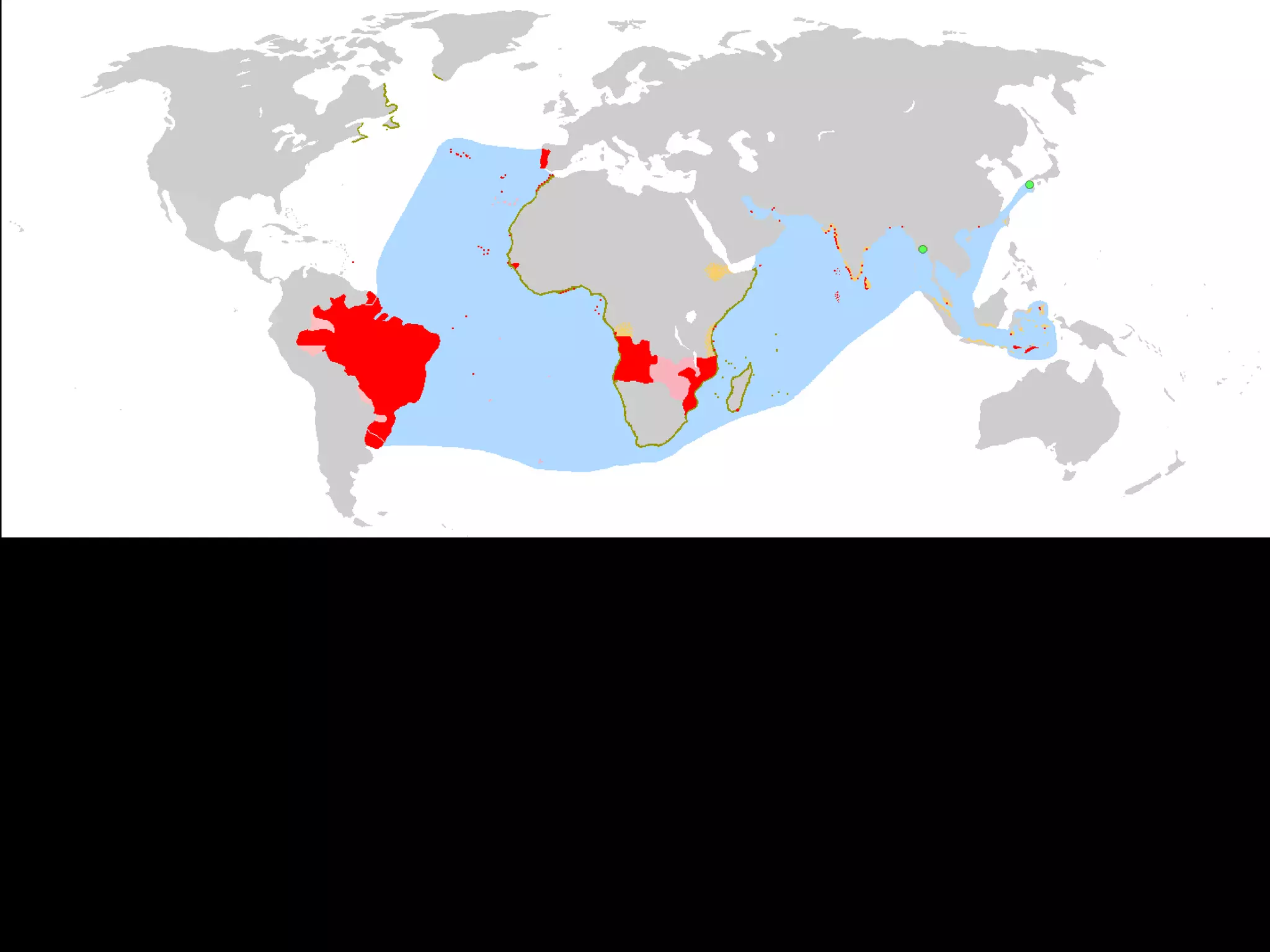
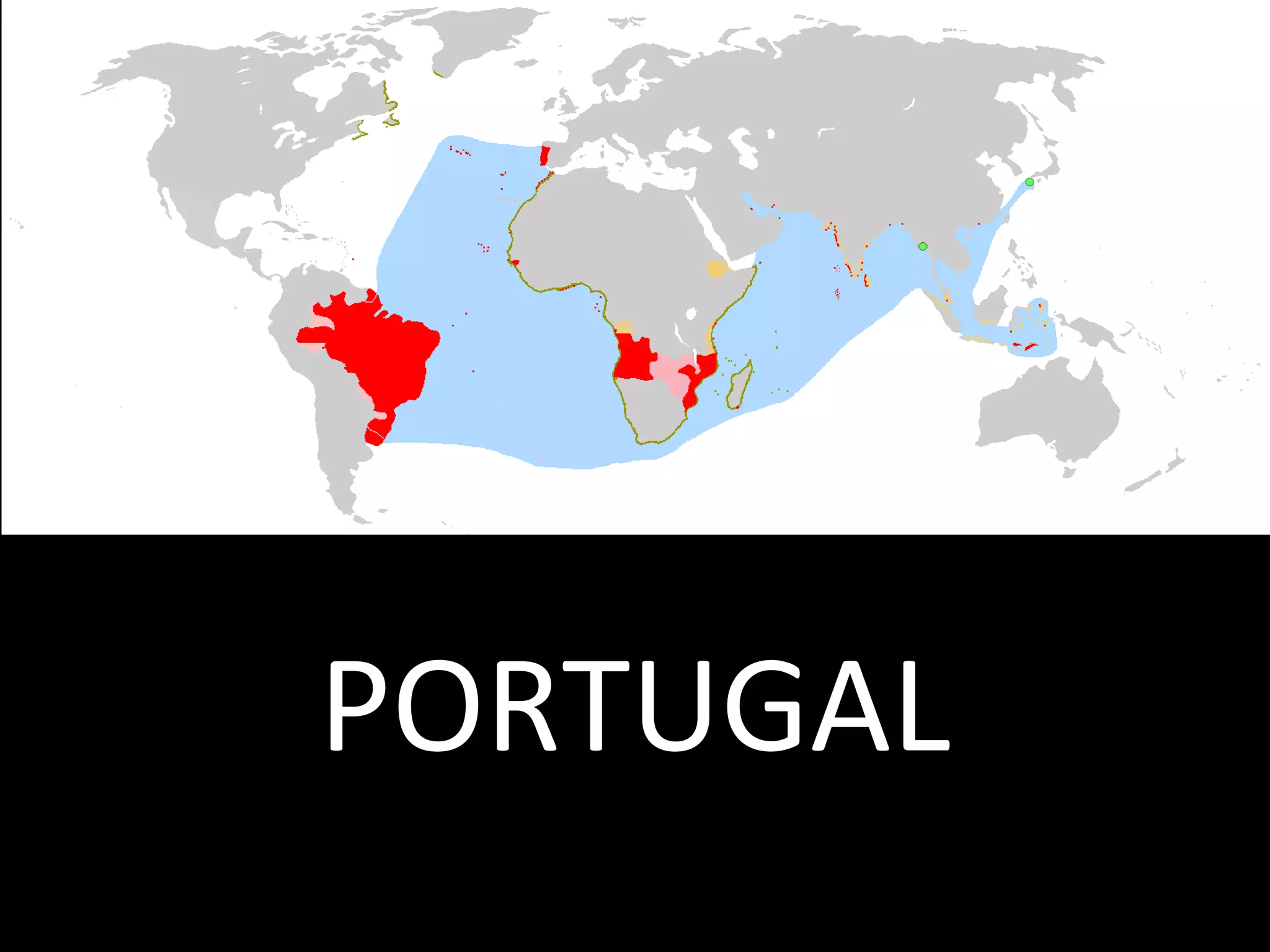
• For the next 300 years, Portuguese sailors
continued to explore West Africa where they
established trading forts and posts
– By 1571, a string of outposts connected Portugal
to Africa, India, South Pacific Islands and Japan
• Portugal grew wealthy from these trade
routes, but its most profitable colony was
Brazil.
Portugal’s Empire
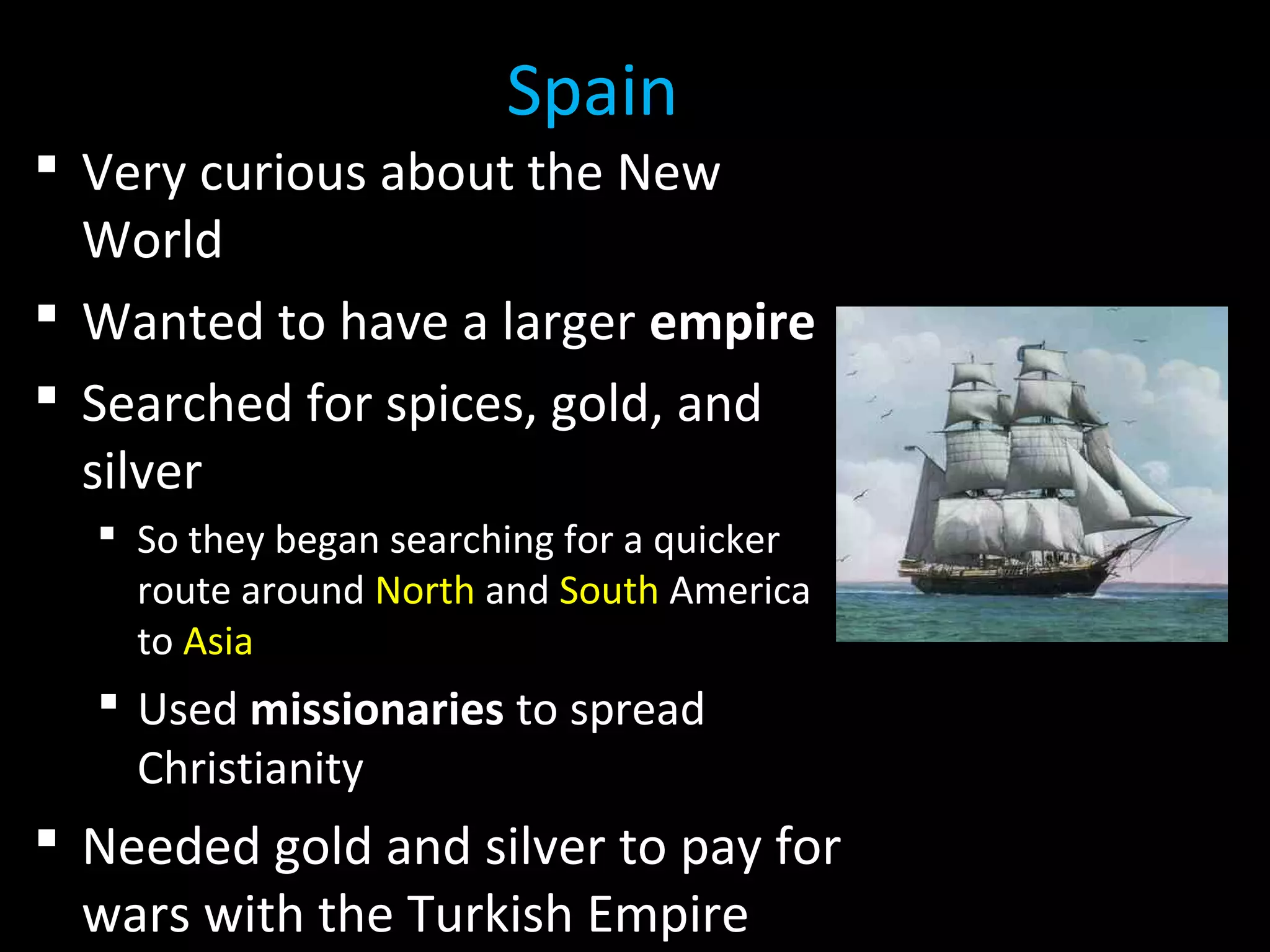
 Very curious about the New
World
 Wanted to have a larger empire
 Searched for spices, gold, and
silver
 So they began searching for a quicker
route around North and South America
to Asia
 Used missionaries to spread
Christianity
 Needed gold and silver to pay for
wars with the Turkish Empire
Spain
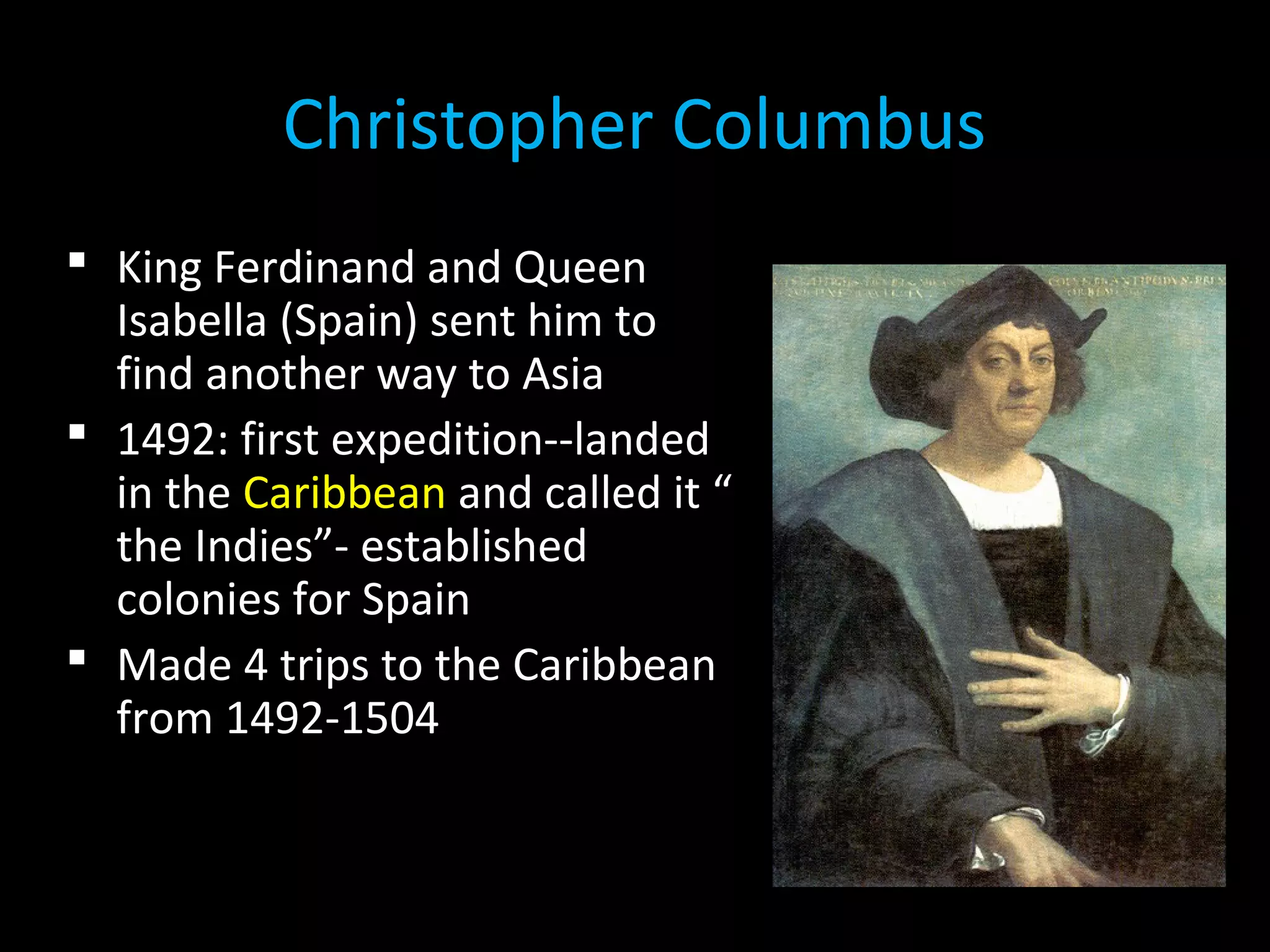
 King Ferdinand and Queen
Isabella (Spain) sent him to
find another way to Asia
 1492: first expedition--landed
in the Caribbean and called it “
the Indies”- established
colonies for Spain
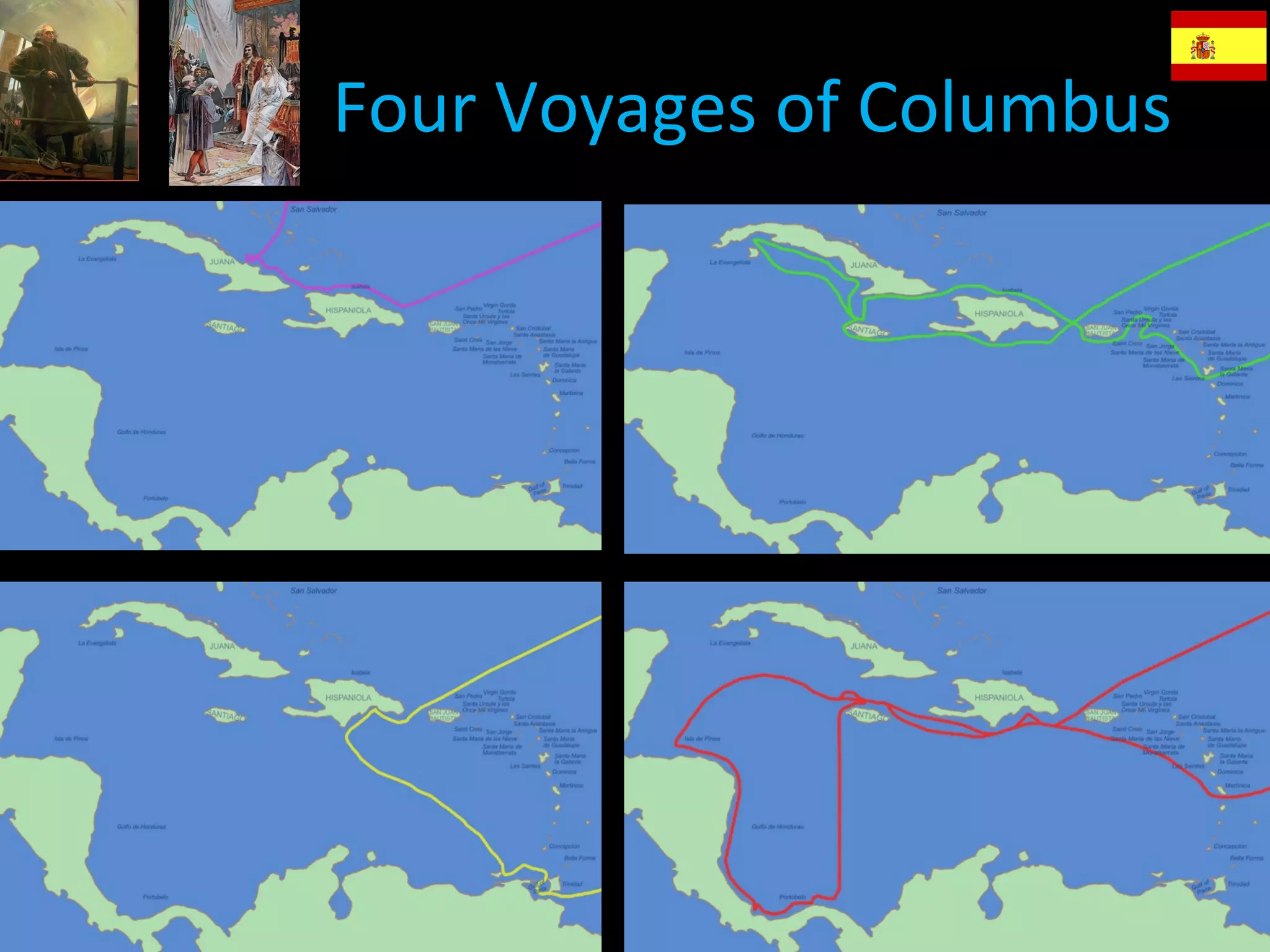
 Made 4 trips to the Caribbean
from 1492-1504
Christopher Columbus
Four Voyages of Columbus
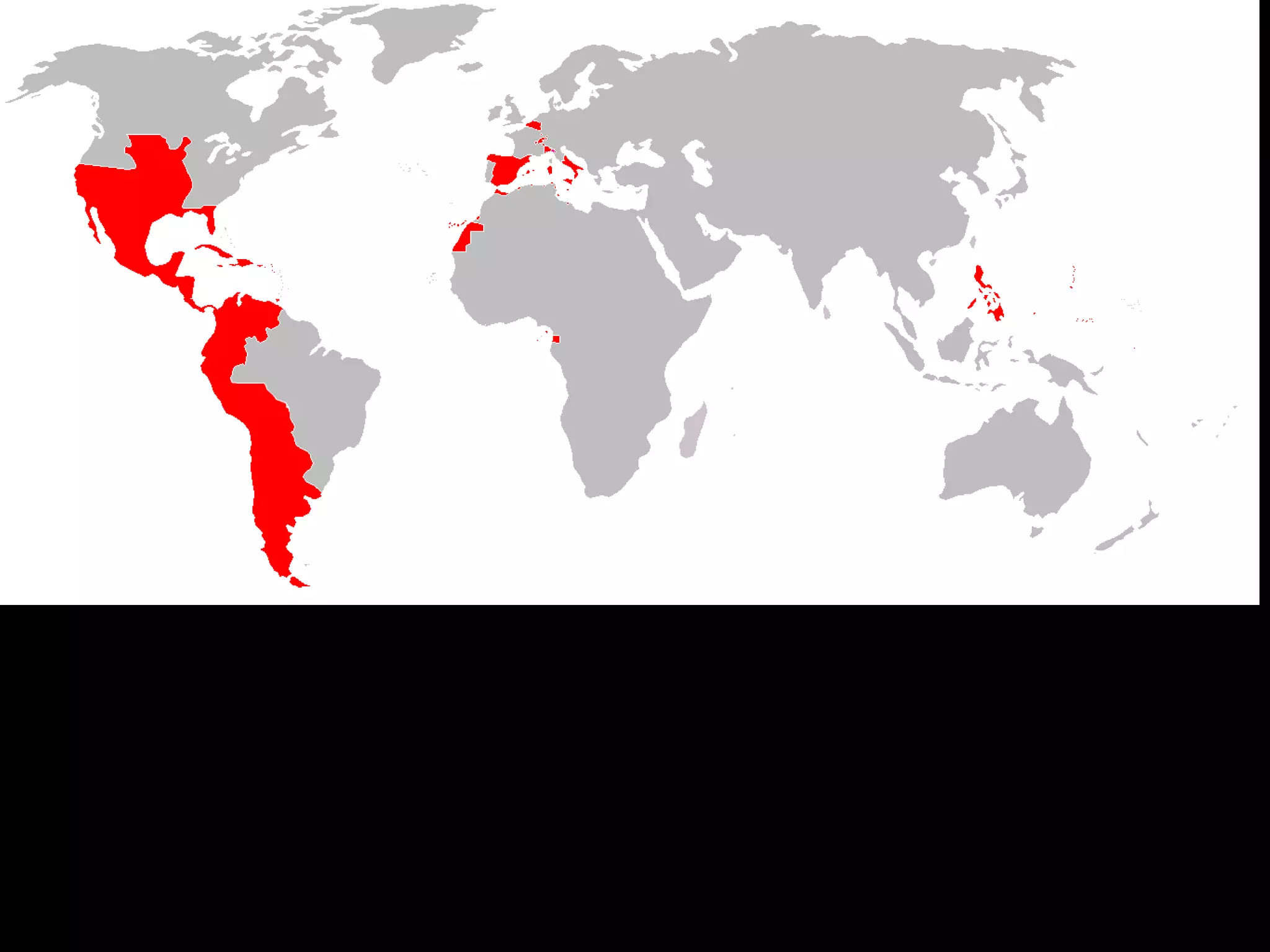
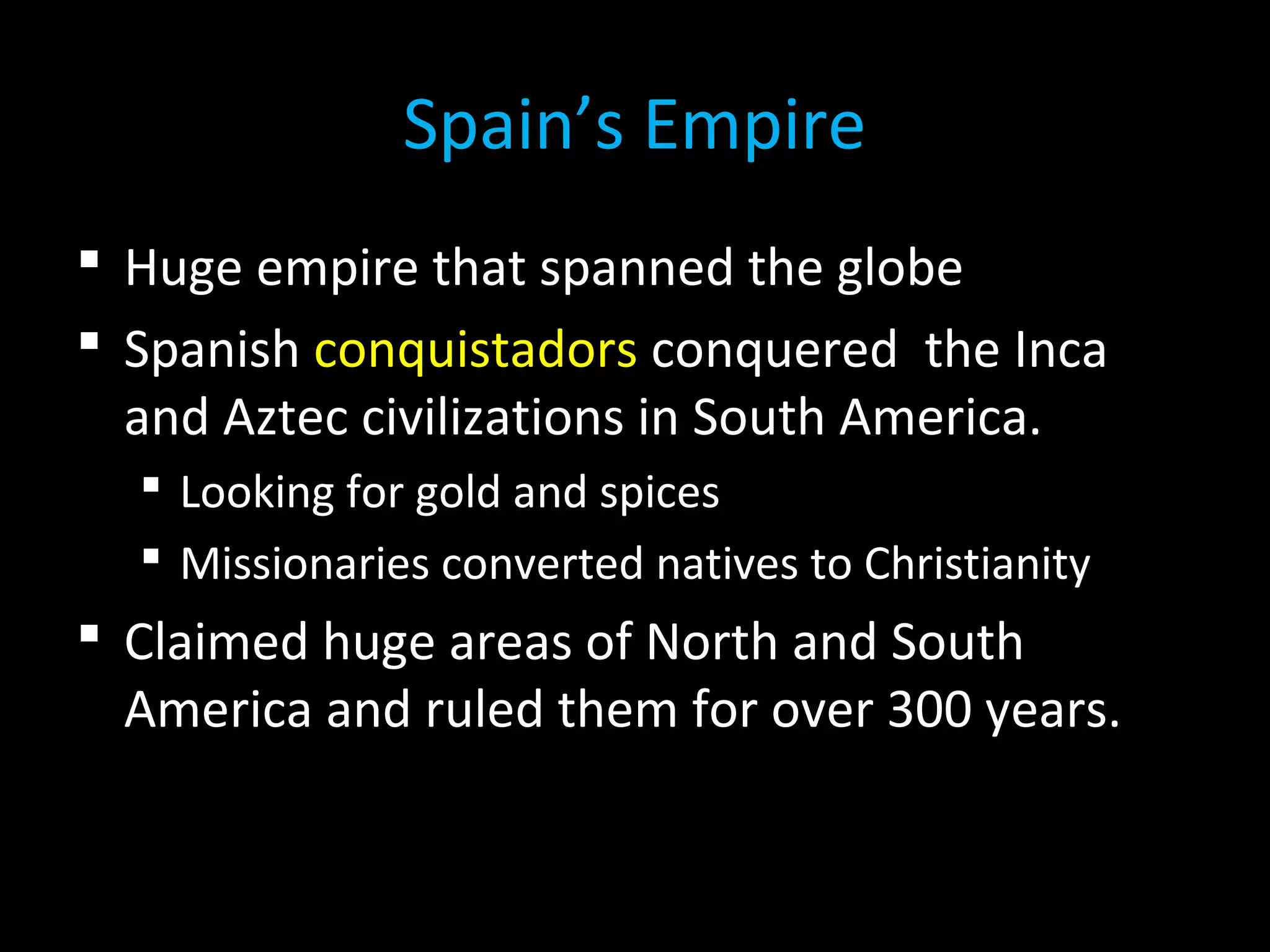
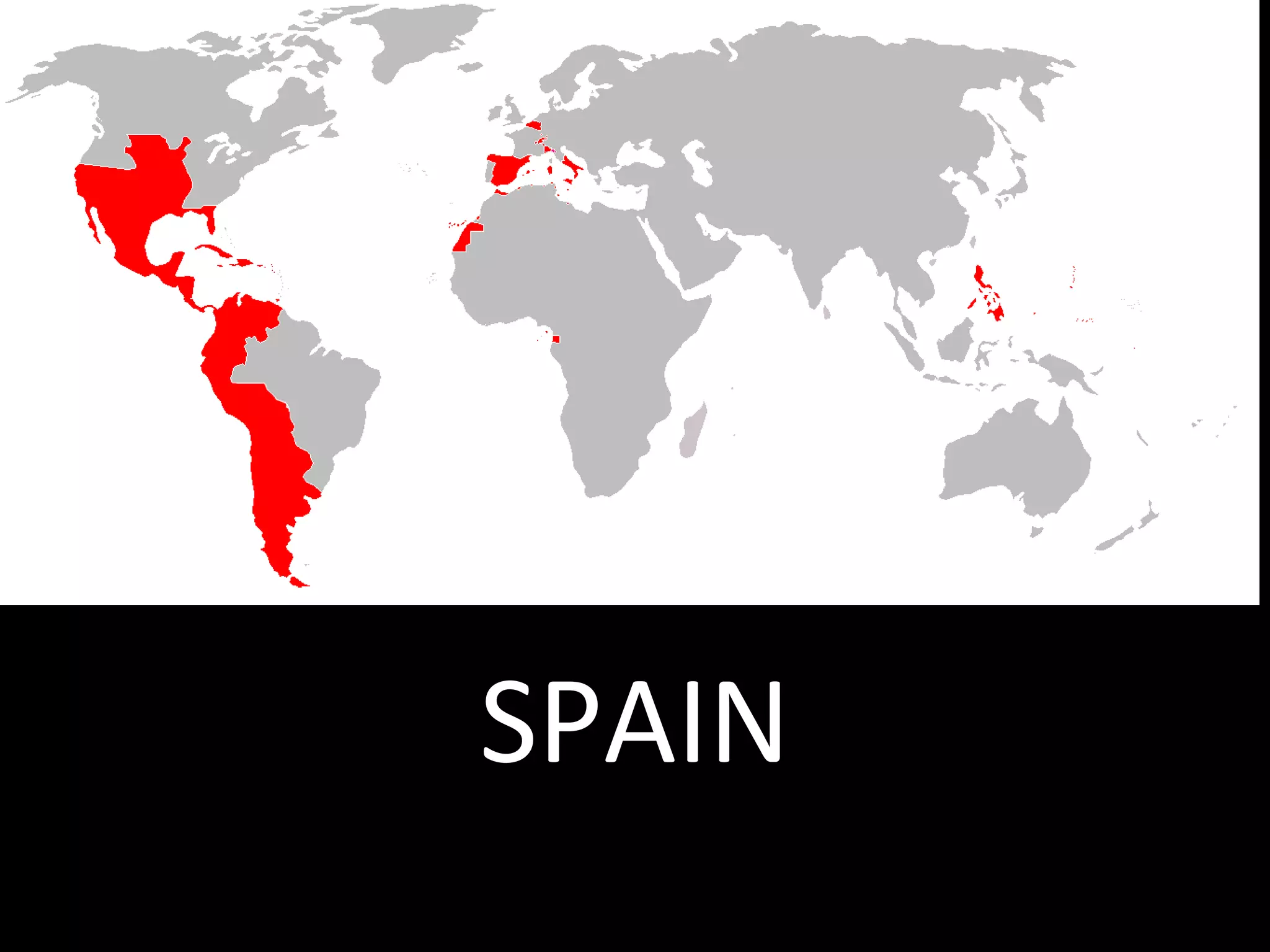
 Huge empire that spanned the globe
 Spanish conquistadors conquered the Inca
and Aztec civilizations in South America.
 Looking for gold and spices
 Missionaries converted natives to Christianity
 Claimed huge areas of North and South
America and ruled them for over 300 years.
Spain’s Empire
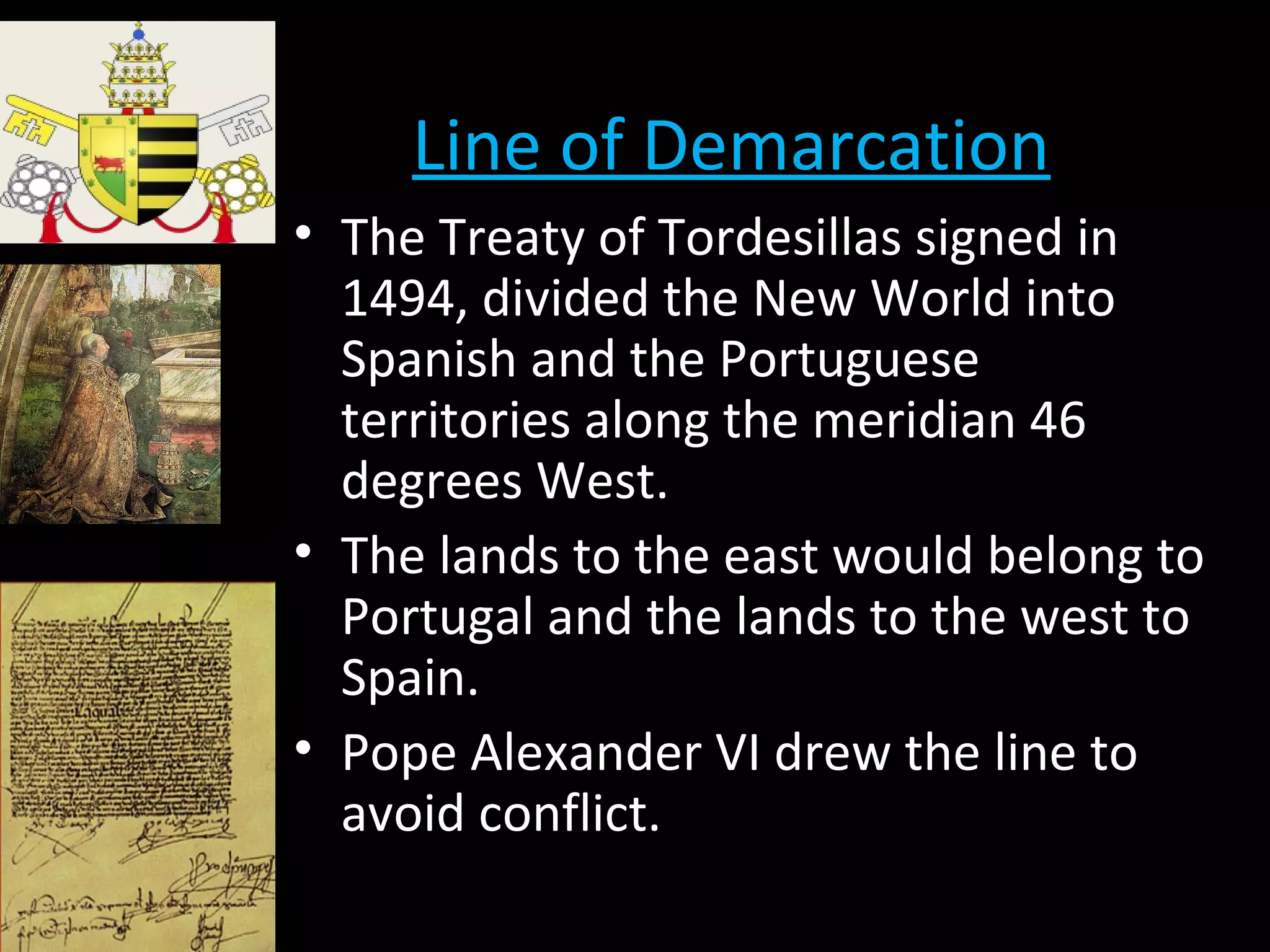
Line of Demarcation
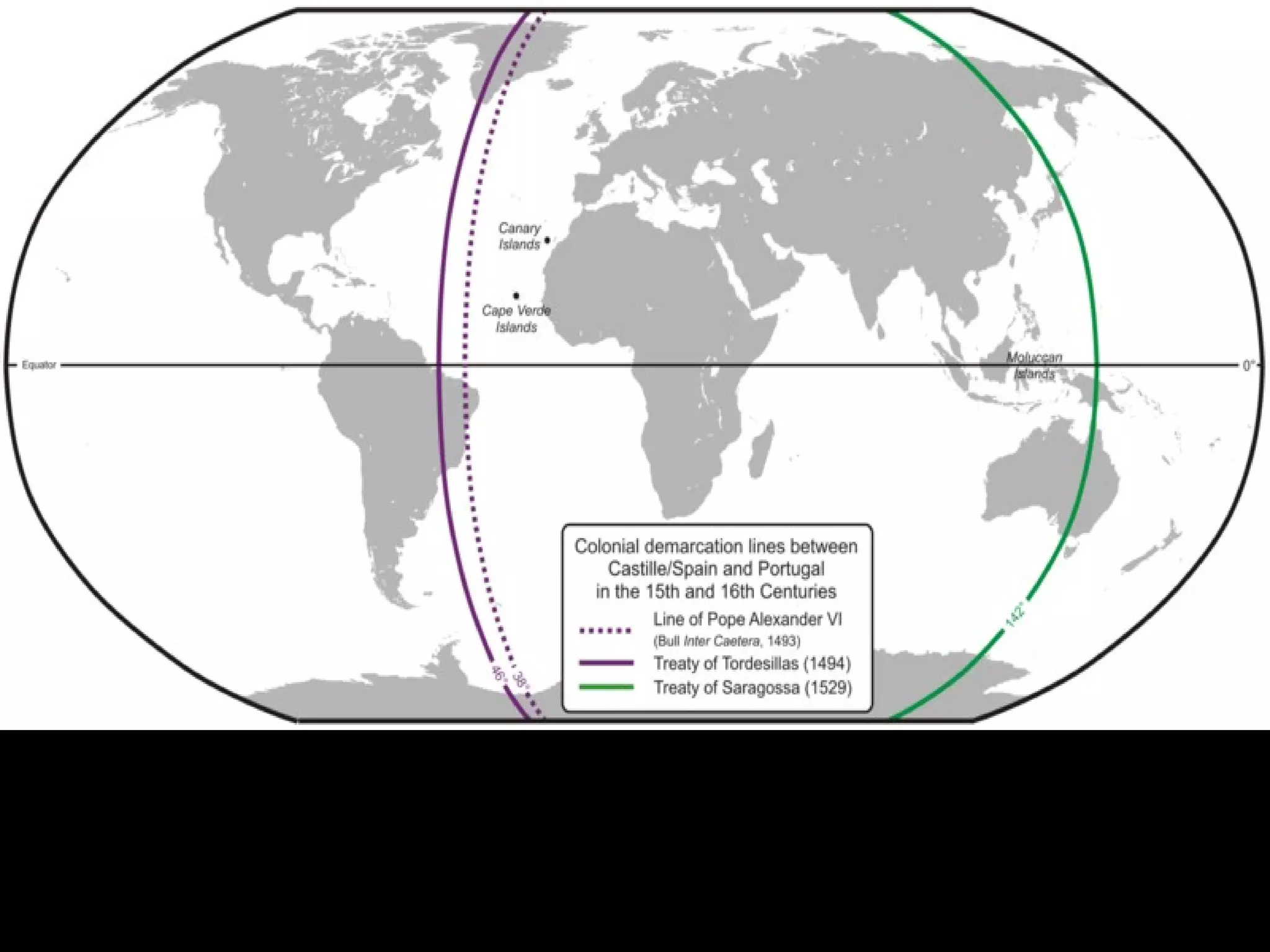
• The Treaty of Tordesillas signed in
1494, divided the New World into
Spanish and the Portuguese
territories along the meridian 46
degrees West.
• The lands to the east would belong to
Portugal and the lands to the west to
Spain.
• Pope Alexander VI drew the line to
avoid conflict.
Line(s) of Demarcation
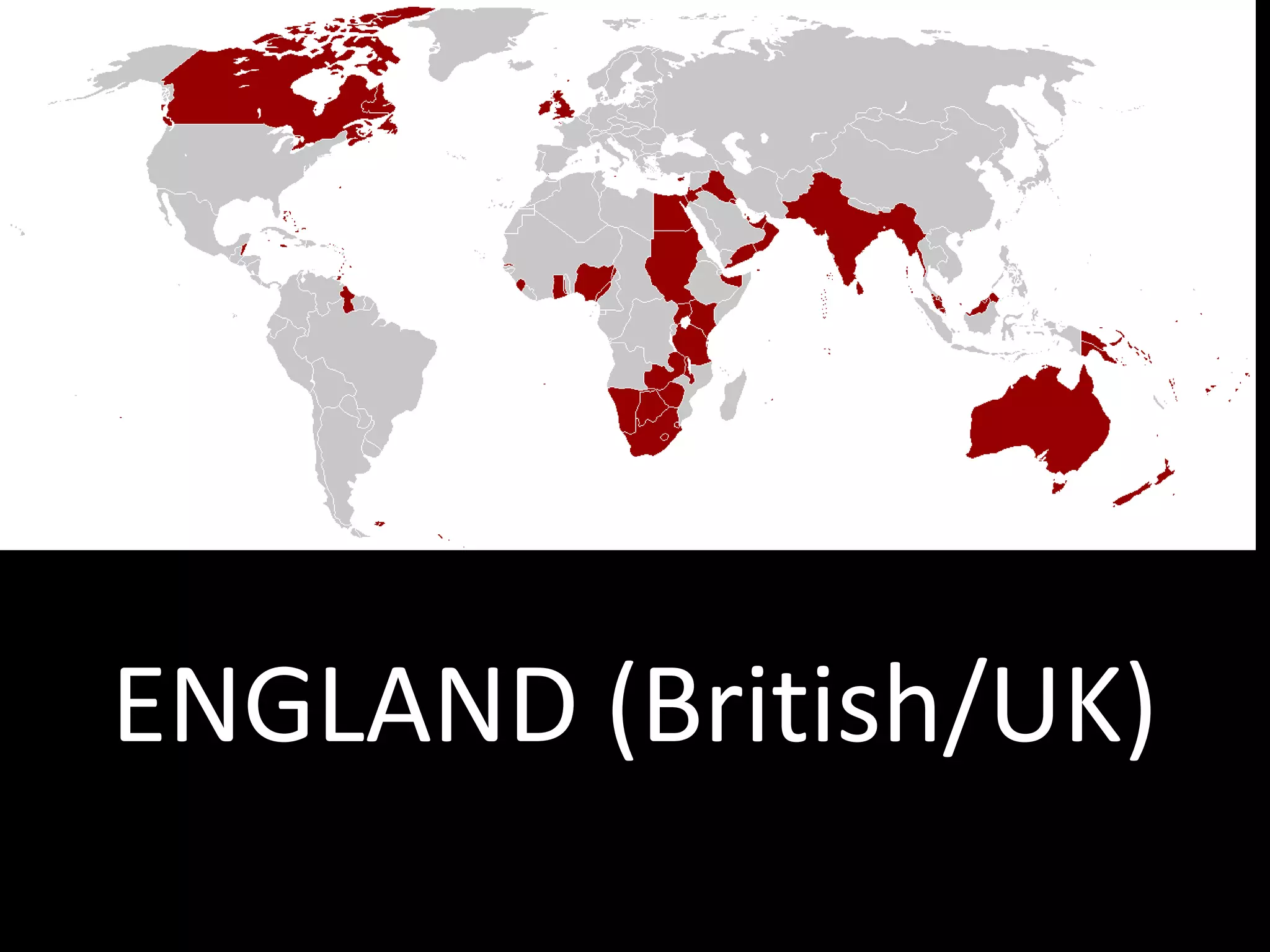
England’s Empire
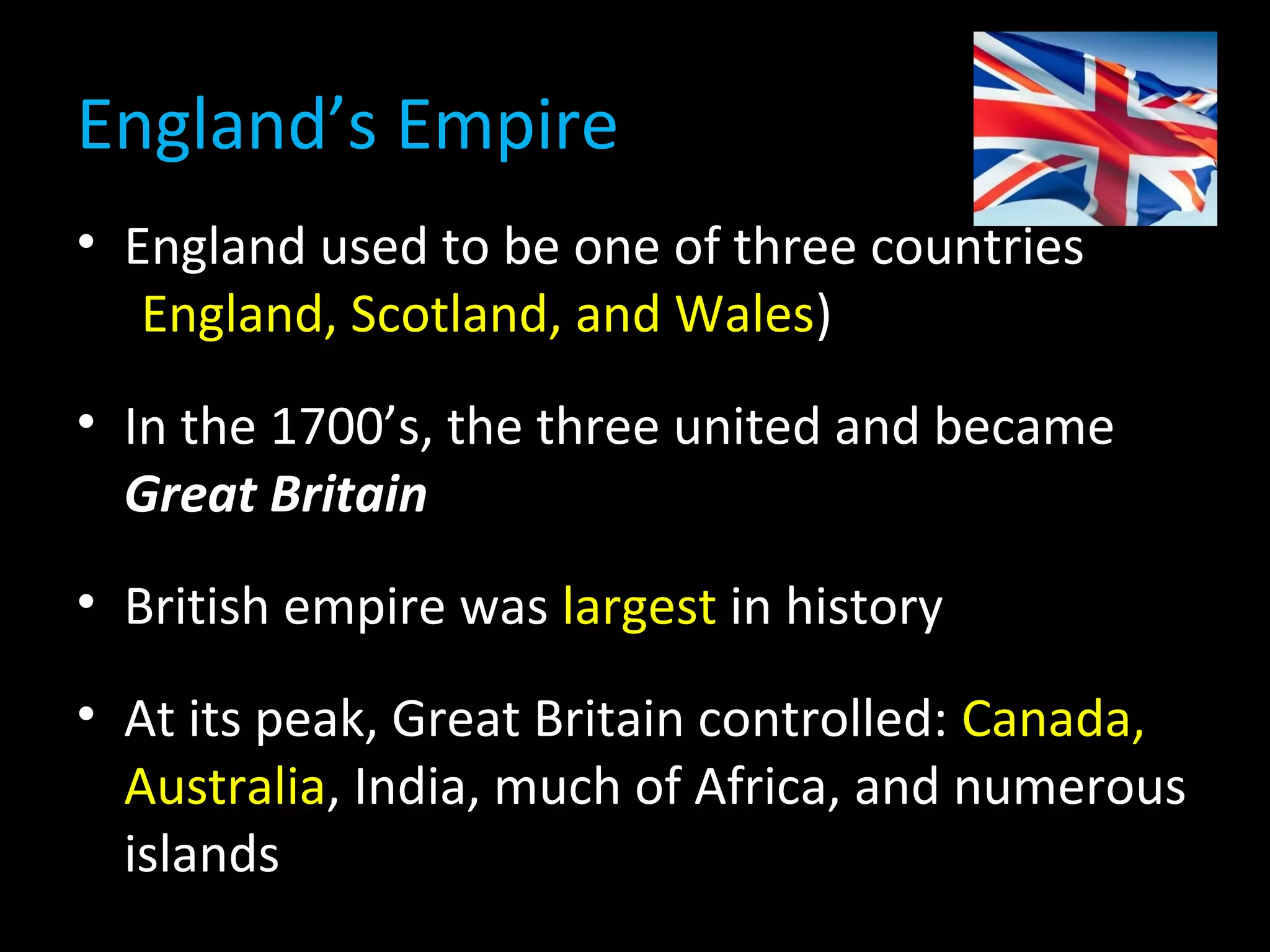
• England used to be one of three countries
(England, Scotland, and Wales)
• In the 1700’s, the three united and became
Great Britain
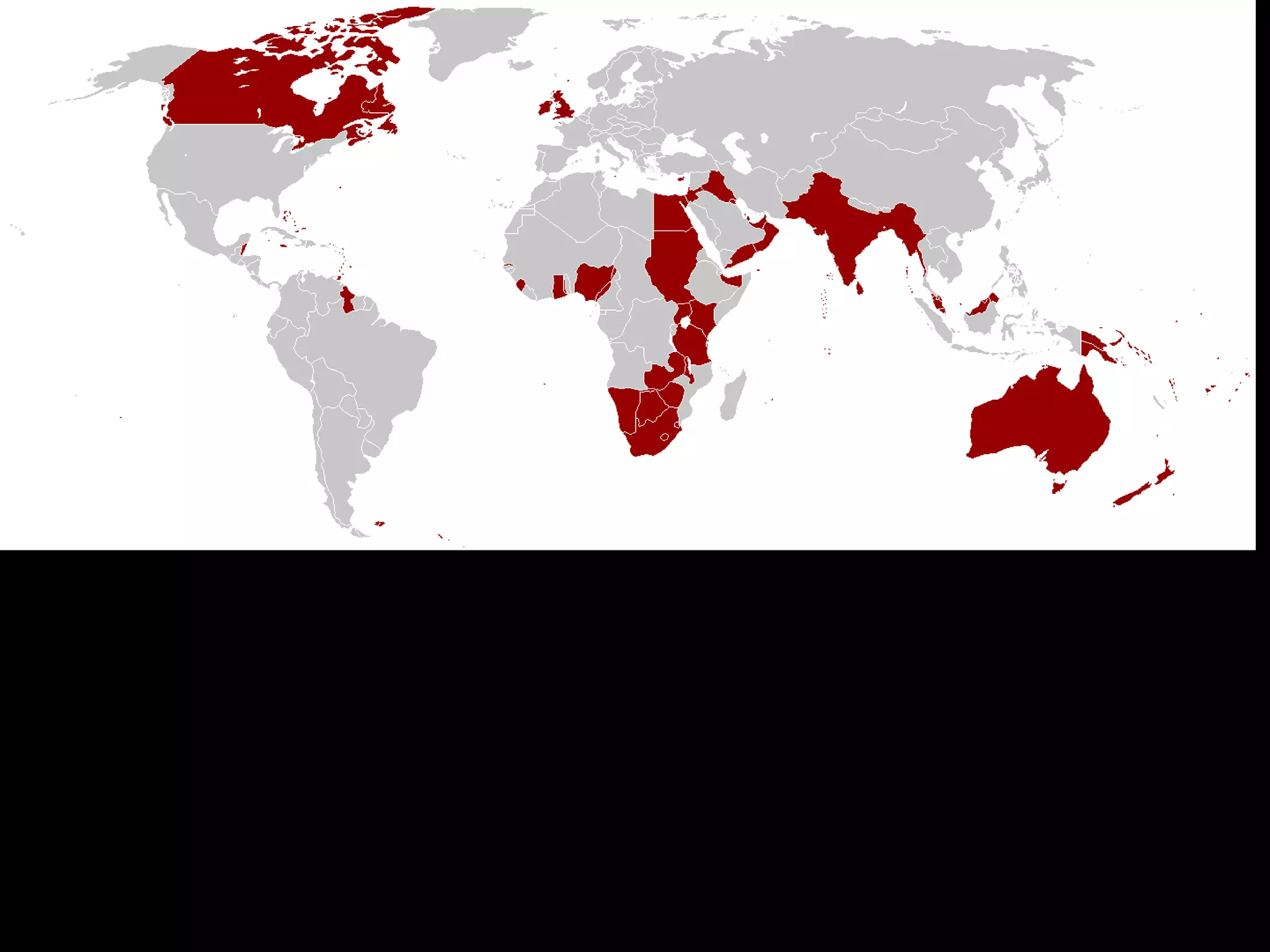
• British empire was largest in history
• At its peak, Great Britain controlled: Canada,
Australia, India, much of Africa, and numerous
islands
 Searched for riches, gold, and silver (like
Spain, but navy wasn’t as powerful)
 At one time Great Britain controlled: Canada,
Australia, India, parts of Africa, and many
islands
 Controlled America until 1776, Canada until
the 20th
century
 Colonized Australia and used it as a penal
colony (prison colony)
ENGLAND
The Sun Never Sets
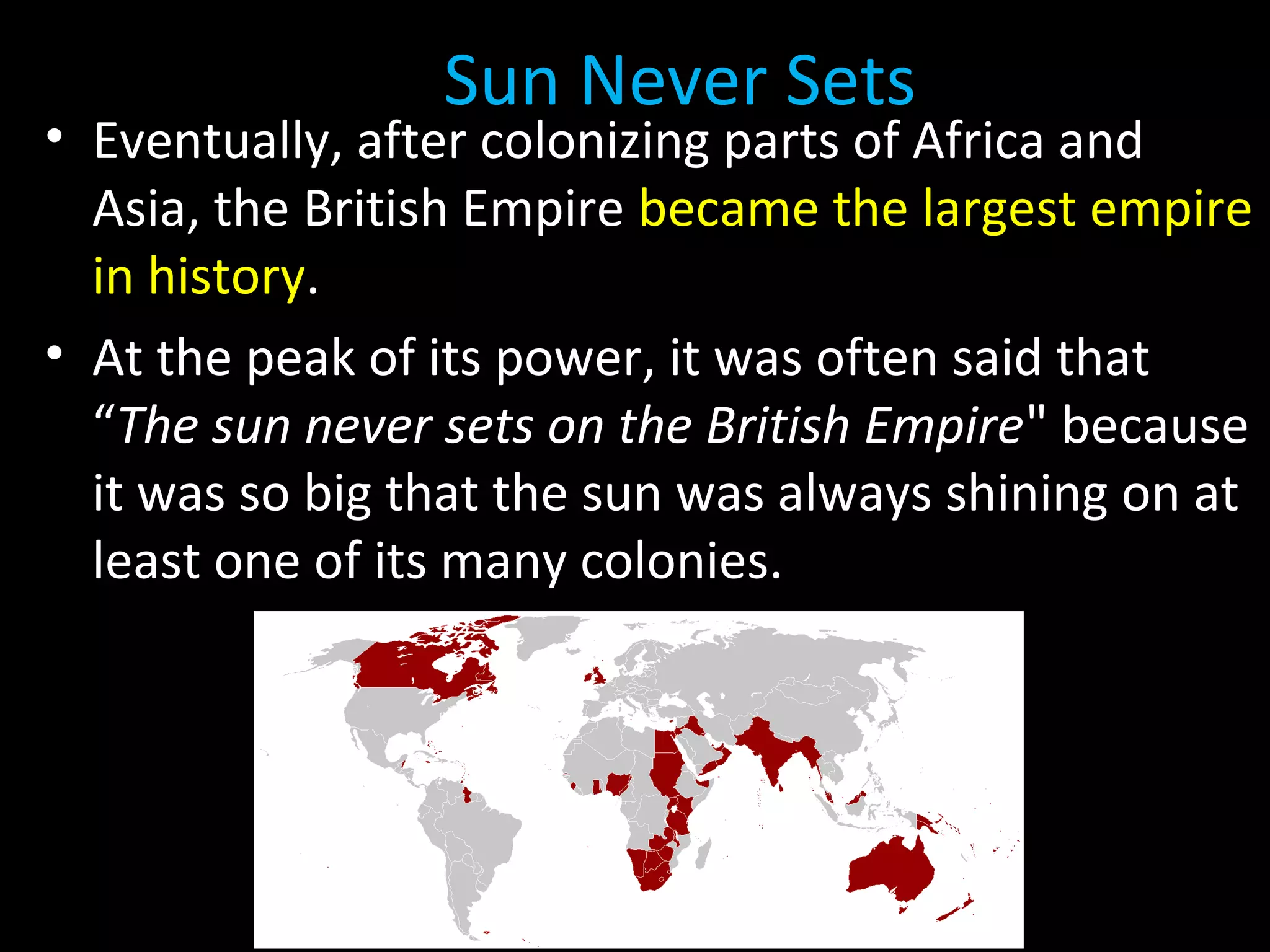
• Eventually, after colonizing parts of Africa and
Asia, the British Empire became the largest empire
in history.
• At the peak of its power, it was often said that
“The sun never sets on the British Empire" because
it was so big that the sun was always shining on at
least one of its many colonies.
One-fourth of the World
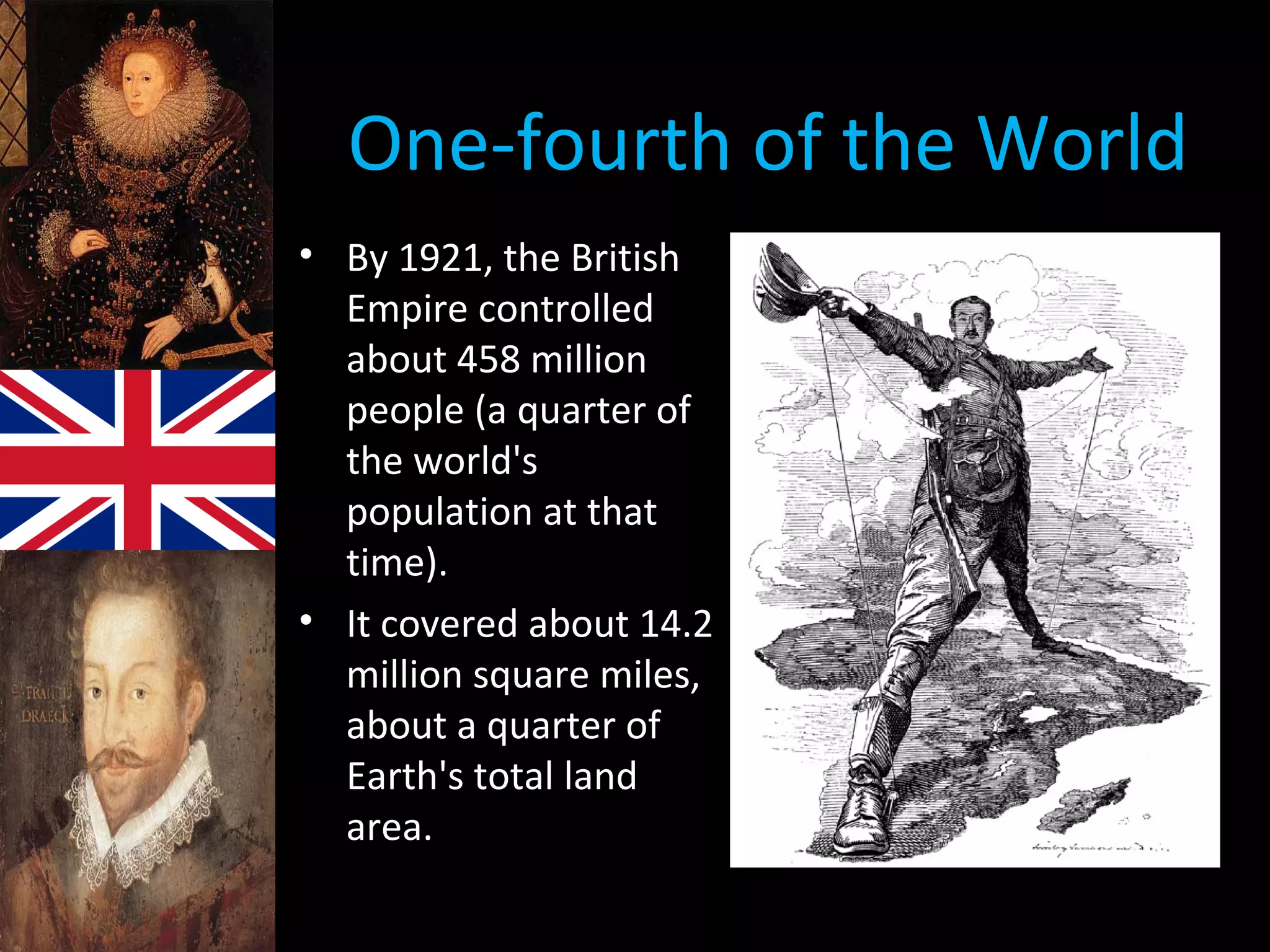
• By 1921, the British
Empire controlled
about 458 million
people (a quarter of
the world's
population at that
time).
• It covered about 14.2
million square miles,
about a quarter of
Earth's total land
area.
• Cartoon showing Brit, Cecil Rhodes and his
desire to control all of Africa.
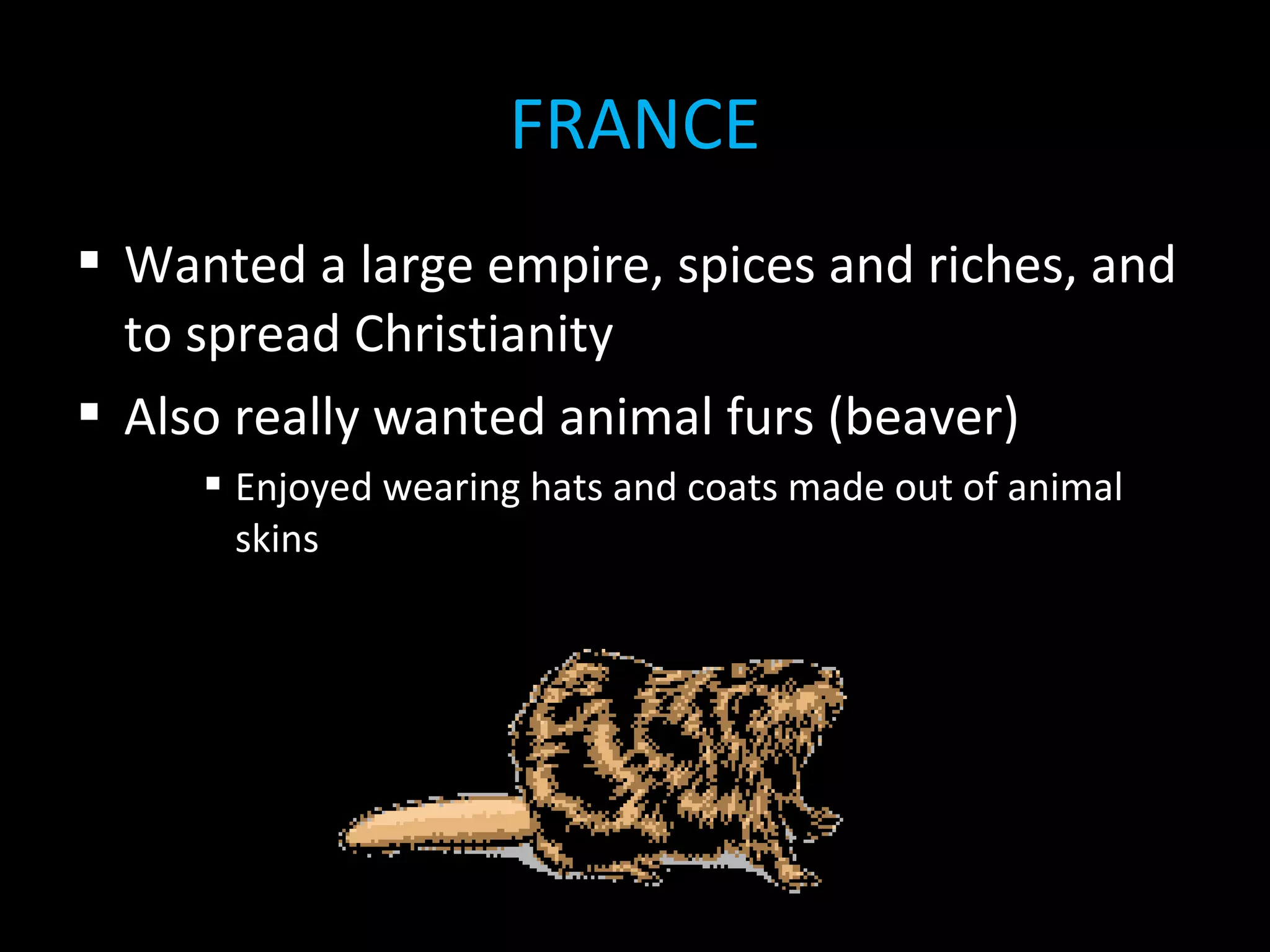
 Wanted a large empire, spices and riches, and
to spread Christianity
 Also really wanted animal furs (beaver)
 Enjoyed wearing hats and coats made out of animal
skins
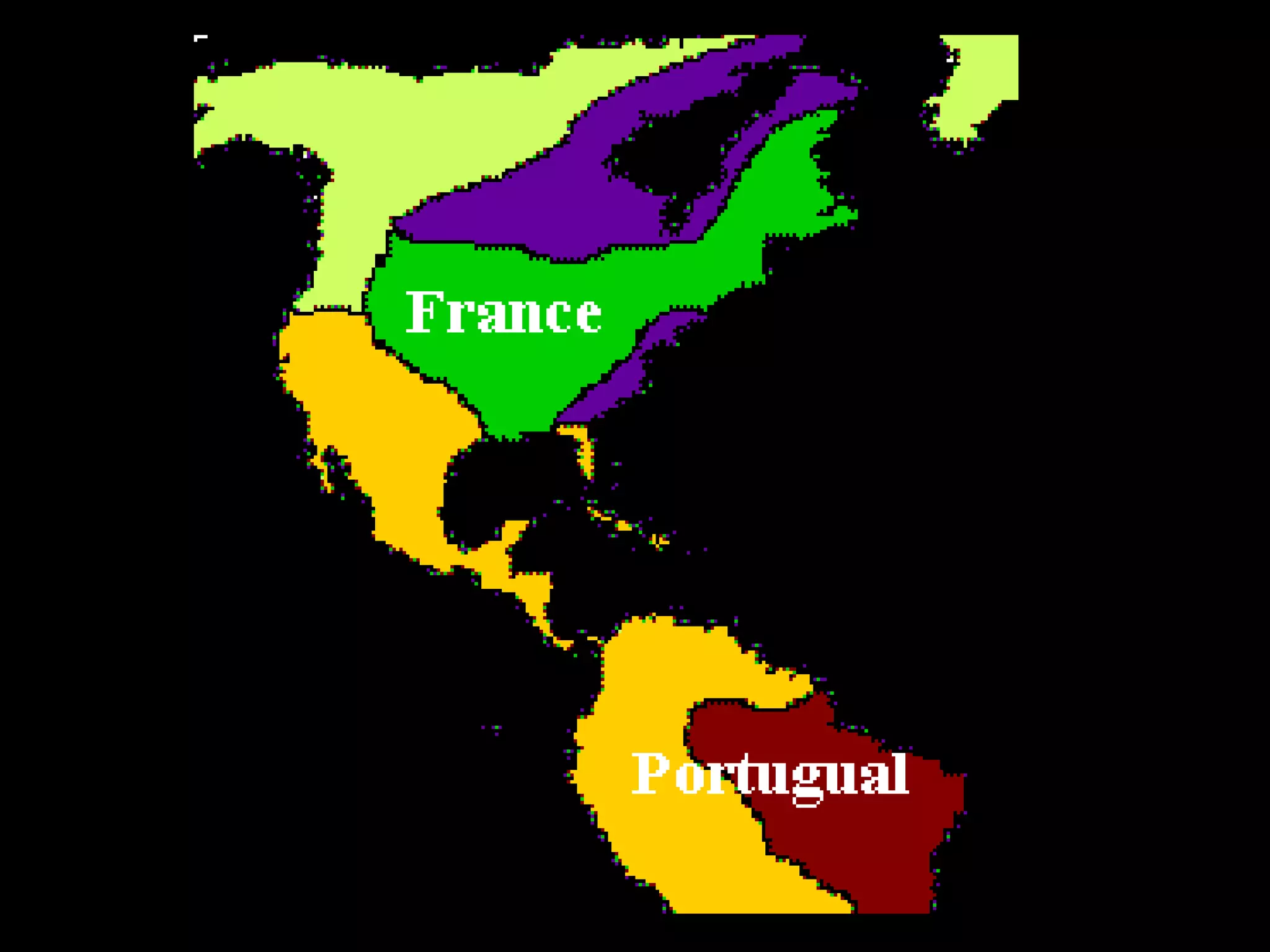
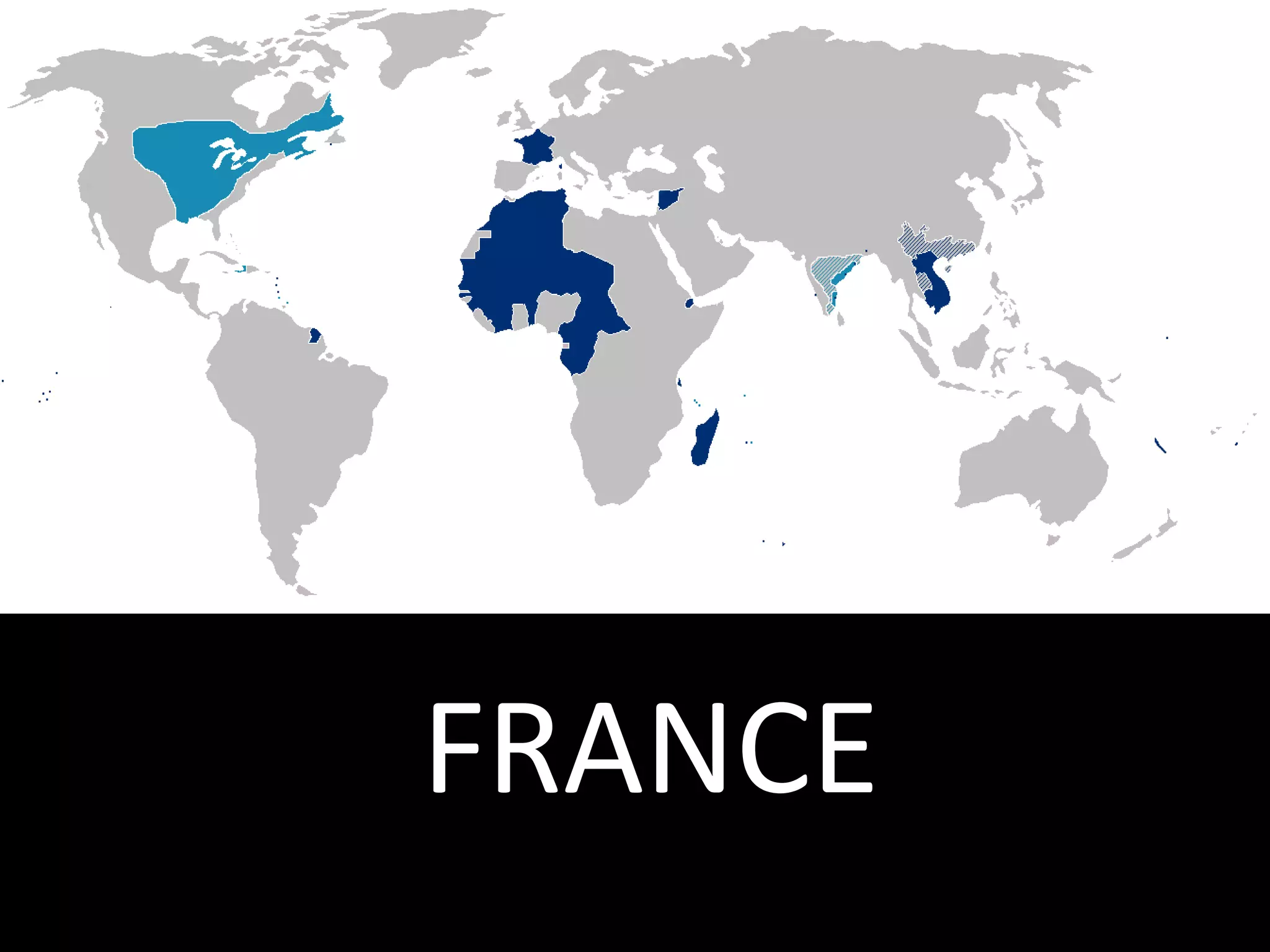
FRANCE
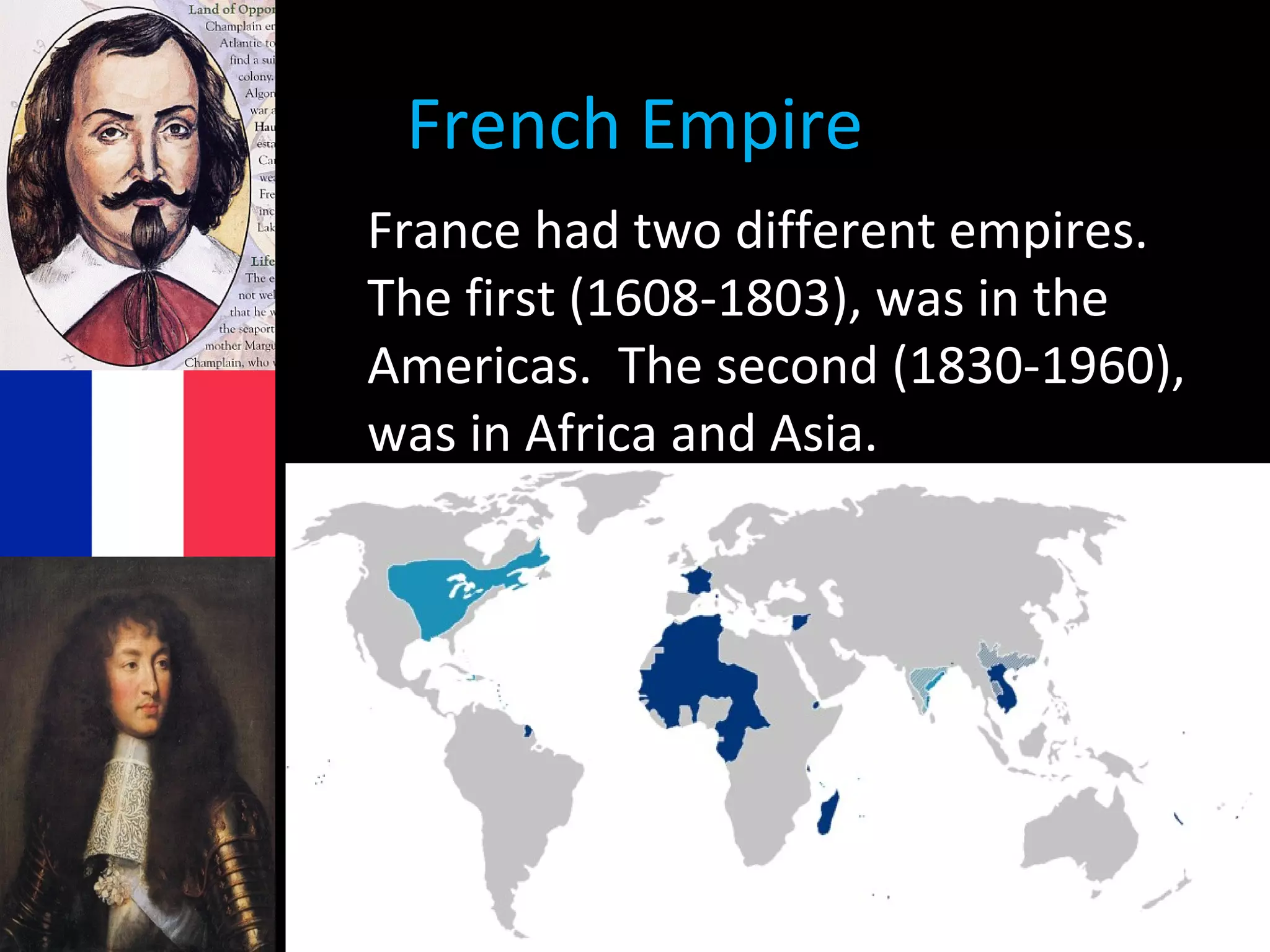
 France possessed colonies around the world
from 1600 to 1900.
 Also dominated much of the European
Continent
 By 1812, France controlled much of Germany,
Italy and France
 Heavy influence on parts of Canada (Quebec),
and parts of South America, Southeast Asia,
and Northwest Africa.
France’s Empire
French Empire
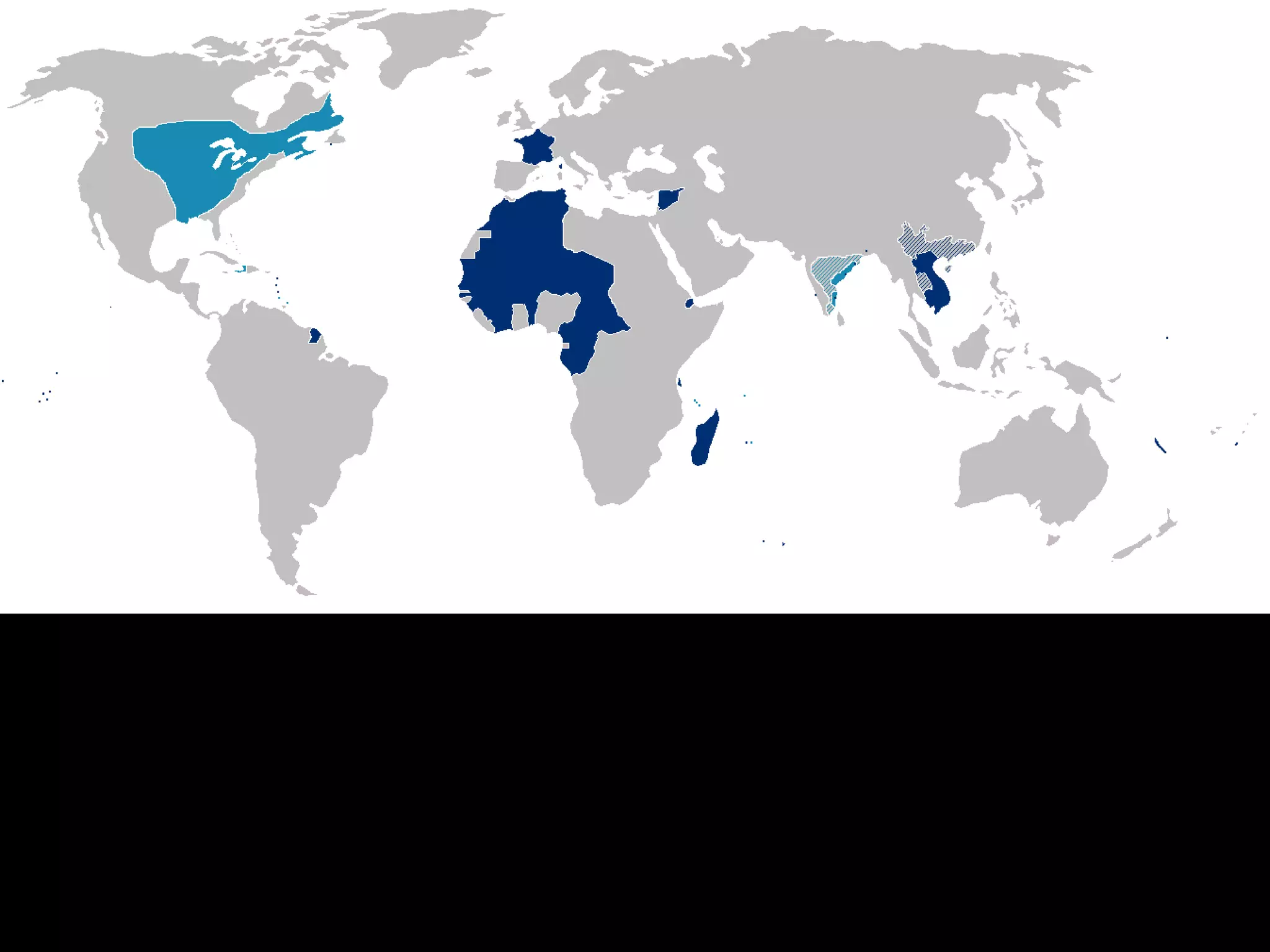
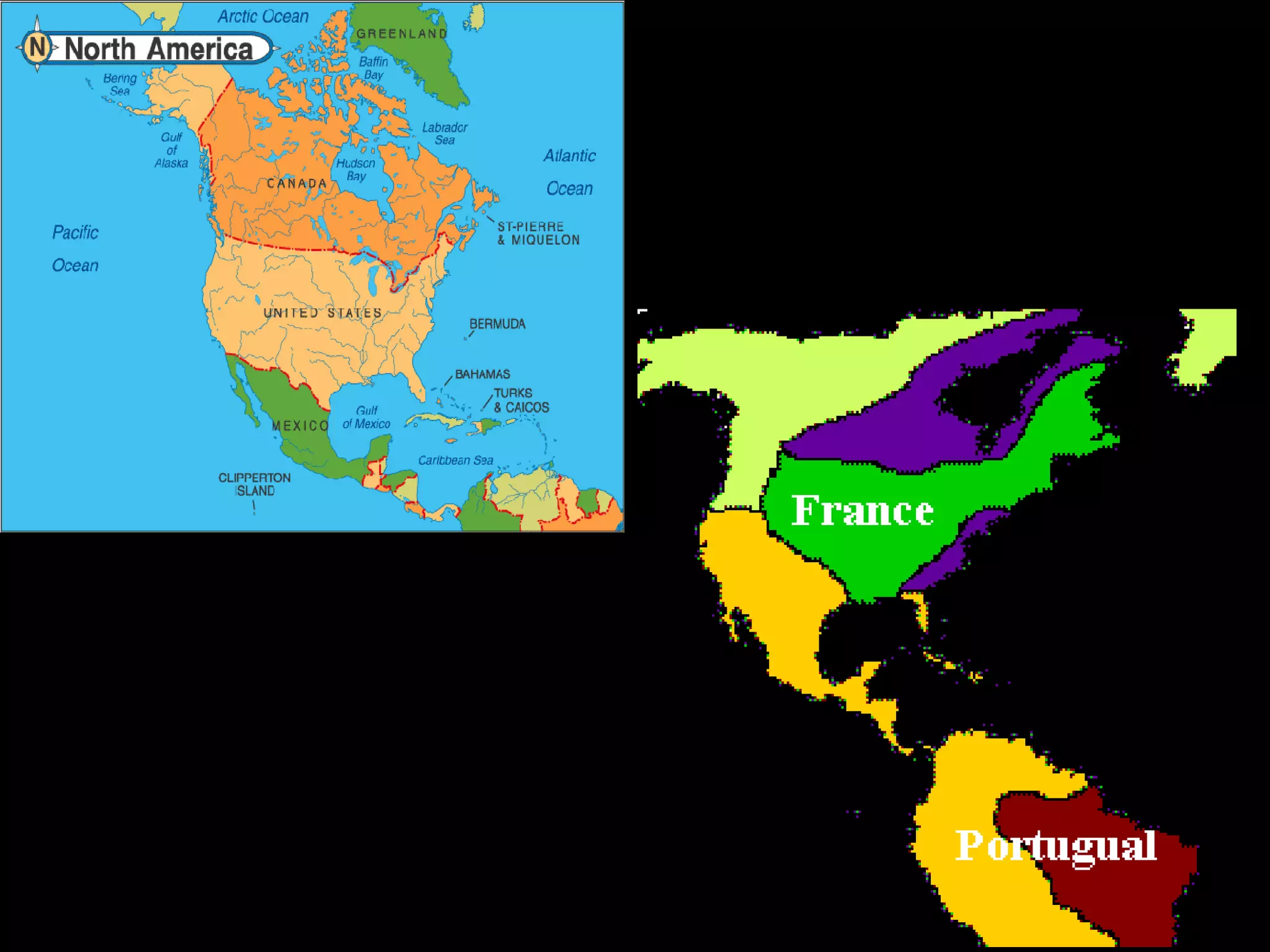
France had two different empires.
The first (1608-1803), was in the
Americas. The second (1830-1960),
was in Africa and Asia.
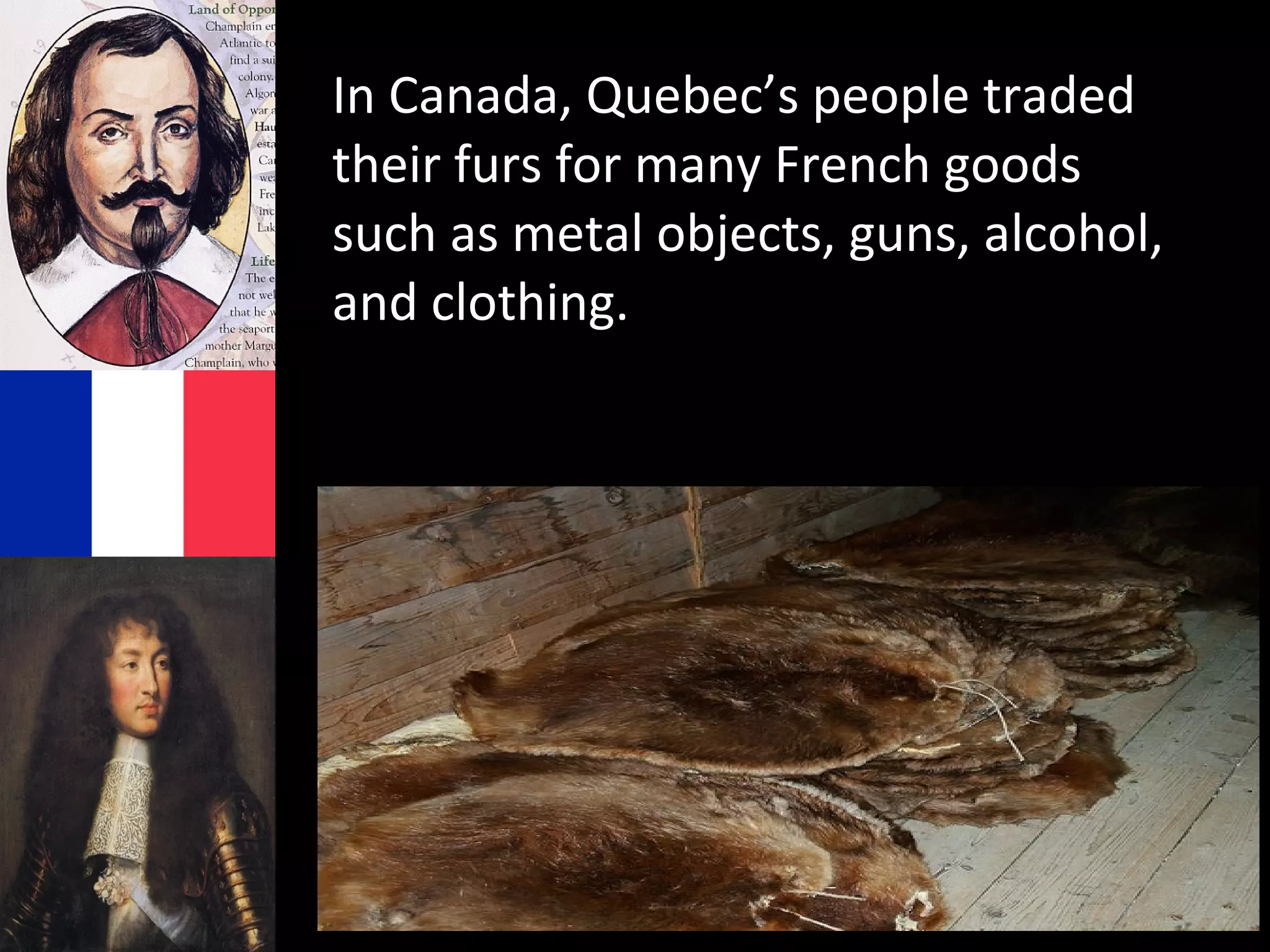
In Canada, Quebec’s people traded
their furs for many French goods
such as metal objects, guns, alcohol,
and clothing.
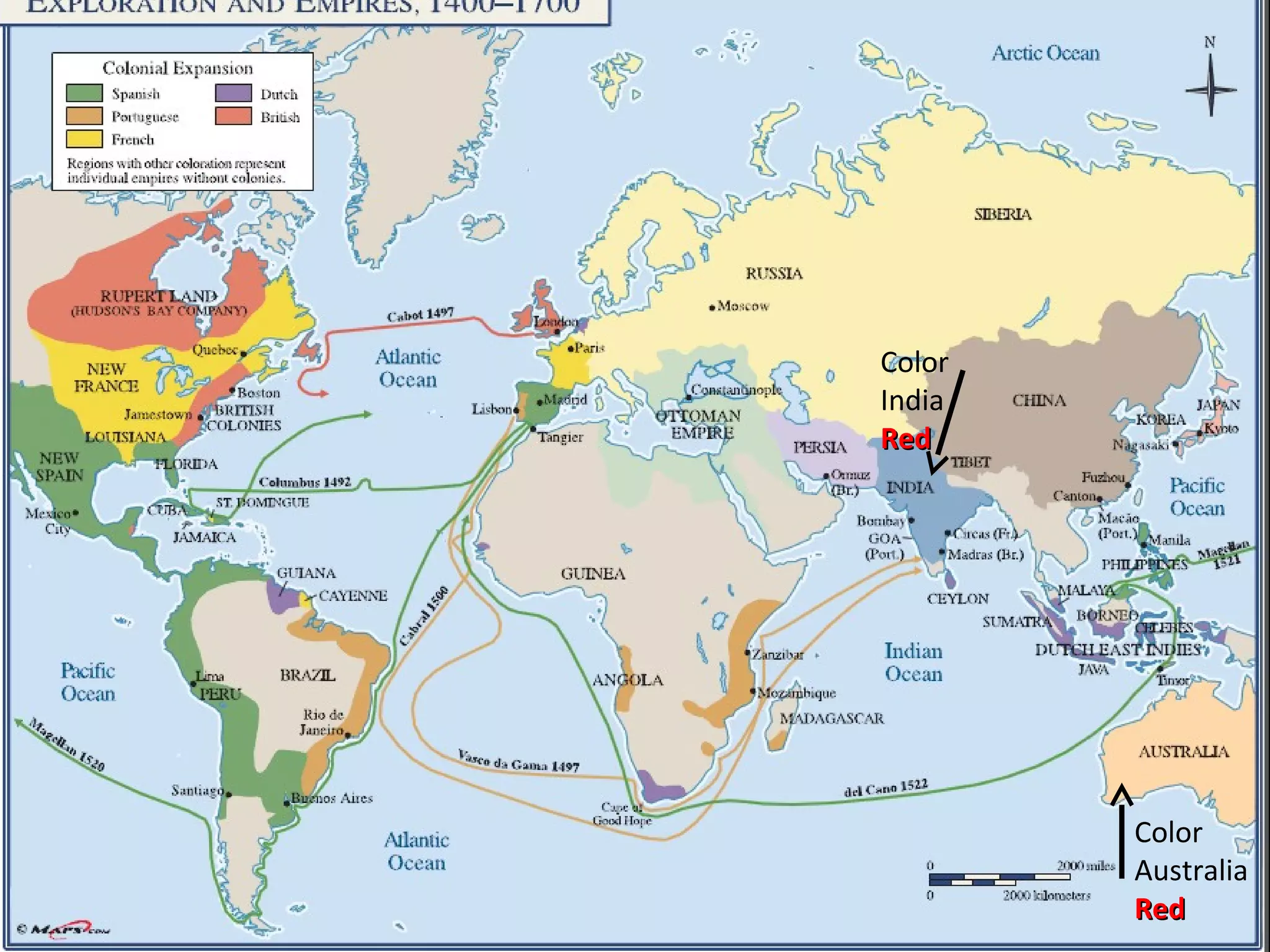
DirectionsDirections
Take out your map and get crayons or
colored pencils out. You will need to
create a key to trace the empires
(color where they colonized)
- USE 4 DIFFERENT COLORS
P
PORTUGAL
SPAIN
ENGLAND (British/UK)
FRANCE
Color
India
RedRed
Color
Australia
RedRed

Unit 2 age of exploration- guided notes

  • 1.
    Good Mafternoon! 10/2/15 EQ:What were the motivations and goals of exploration? HW: Letter DUE Tuesday! SISS Do you like peanut butter and jelly sandwiches? •Pick up the handout and glue it on to page 32. •Update your Table of Contents. * You need BYOT DateDate ## TitleTitle 10/2 32 Exploration Notes
  • 2.
    Directions Step #1- Usetechnology to complete your guided notes (check on weebly) Step #2- When you finish, pick up a map from the TEAL tray Follow the directions in the PowerPoint to create your map of the empires. If you finish early: - Work on your Final Log - Study for your SS quiz on exploration - Make a Quizlet or Kahoot to help you study
  • 3.
     God –spread of Christianity  Goods – to trade and become wealthy (gold and spices)  Glory – explorers were seen as heroes if they discovered new lands Reasons for Exploration
  • 4.
    • Military expeditionswere sent out by the Catholic Church to capture the Holy Land from the Muslim Turks. – This was not successful but it did have positive results • Europeans learned how to draw better maps and build better ships • Exposed Europeans to spices and goods from the East. Crusades, the start of it all…
  • 5.
  • 8.
     European countrieswere looking for trade routes to India and China  Did not want to go through Mediterranean Sea, dangerous territory  Wanted access to the spices that were available  Cut out the Middle man and get products cheaper Exploration Begins
  • 9.
    This increased theempires of ….. The 1400s were a time of discovery and exploration for Europe. Main countries involved in exploration:  Portugal  Spain  England  France
  • 11.
  • 12.
     1st Europeansto explore the unknown New World  1st to sail around the tip of Africa to Asia  Also wanted to spread Christianity PORTUGAL
  • 14.
  • 15.
     Son ofPortuguese king  1418: started the first school for navigation (taught map making, navigation, and astronomy)  1434: sent an expedition to sail around dangerous West African coast  Made more than 50 trips down Africa’s west coast Prince Henry the Navigator
  • 16.
    Prince Henry theNavigator • Unable to make money trading gold, so he tried creating sugar plantations • Sugar cane – very profitable crop, but very labor intensive • So, Prince Henry imported slaves from Africa • Encouraged a slave trade that lasted another 400 years. • Portugal grew very wealthy, Brazil was the most profitable colony
  • 17.
    Institute of Sagres •The Institute of Sagres was an important research center in Portugal where several breakthrough discoveries in mathematics and naval technology occurred.
  • 18.
  • 19.
    Technology Advances! • thecompass • the astrolabe • the cross-staff • the caravel
  • 20.
     According tolegend, beyond this point in an area known as the "Green Sea of Darkness," the sun was so close to the Earth that a person’s skin would burn black, the sea boiled, ships caught on fire, and monsters hid waiting to smash the ships and eat the sailors. It took fourteen voyages over a period of 12 years until a ship finally reached the equator.
  • 21.
    • For thenext 300 years, Portuguese sailors continued to explore West Africa where they established trading forts and posts – By 1571, a string of outposts connected Portugal to Africa, India, South Pacific Islands and Japan • Portugal grew wealthy from these trade routes, but its most profitable colony was Brazil. Portugal’s Empire
  • 23.
     Very curiousabout the New World  Wanted to have a larger empire  Searched for spices, gold, and silver  So they began searching for a quicker route around North and South America to Asia  Used missionaries to spread Christianity  Needed gold and silver to pay for wars with the Turkish Empire Spain
  • 24.
     King Ferdinandand Queen Isabella (Spain) sent him to find another way to Asia  1492: first expedition--landed in the Caribbean and called it “ the Indies”- established colonies for Spain  Made 4 trips to the Caribbean from 1492-1504 Christopher Columbus
  • 25.
  • 26.
     Huge empirethat spanned the globe  Spanish conquistadors conquered the Inca and Aztec civilizations in South America.  Looking for gold and spices  Missionaries converted natives to Christianity  Claimed huge areas of North and South America and ruled them for over 300 years. Spain’s Empire
  • 27.
    Line of Demarcation •The Treaty of Tordesillas signed in 1494, divided the New World into Spanish and the Portuguese territories along the meridian 46 degrees West. • The lands to the east would belong to Portugal and the lands to the west to Spain. • Pope Alexander VI drew the line to avoid conflict.
  • 28.
  • 30.
    England’s Empire • Englandused to be one of three countries (England, Scotland, and Wales) • In the 1700’s, the three united and became Great Britain • British empire was largest in history • At its peak, Great Britain controlled: Canada, Australia, India, much of Africa, and numerous islands
  • 31.
     Searched forriches, gold, and silver (like Spain, but navy wasn’t as powerful)  At one time Great Britain controlled: Canada, Australia, India, parts of Africa, and many islands  Controlled America until 1776, Canada until the 20th century  Colonized Australia and used it as a penal colony (prison colony) ENGLAND
  • 32.
    The Sun NeverSets • Eventually, after colonizing parts of Africa and Asia, the British Empire became the largest empire in history. • At the peak of its power, it was often said that “The sun never sets on the British Empire" because it was so big that the sun was always shining on at least one of its many colonies.
  • 33.
    One-fourth of theWorld • By 1921, the British Empire controlled about 458 million people (a quarter of the world's population at that time). • It covered about 14.2 million square miles, about a quarter of Earth's total land area. • Cartoon showing Brit, Cecil Rhodes and his desire to control all of Africa.
  • 35.
     Wanted alarge empire, spices and riches, and to spread Christianity  Also really wanted animal furs (beaver)  Enjoyed wearing hats and coats made out of animal skins FRANCE
  • 36.
     France possessedcolonies around the world from 1600 to 1900.  Also dominated much of the European Continent  By 1812, France controlled much of Germany, Italy and France  Heavy influence on parts of Canada (Quebec), and parts of South America, Southeast Asia, and Northwest Africa. France’s Empire
  • 37.
    French Empire France hadtwo different empires. The first (1608-1803), was in the Americas. The second (1830-1960), was in Africa and Asia.
  • 38.
    In Canada, Quebec’speople traded their furs for many French goods such as metal objects, guns, alcohol, and clothing.
  • 40.
    DirectionsDirections Take out yourmap and get crayons or colored pencils out. You will need to create a key to trace the empires (color where they colonized) - USE 4 DIFFERENT COLORS
  • 41.
  • 42.
  • 43.
  • 44.
  • 46.