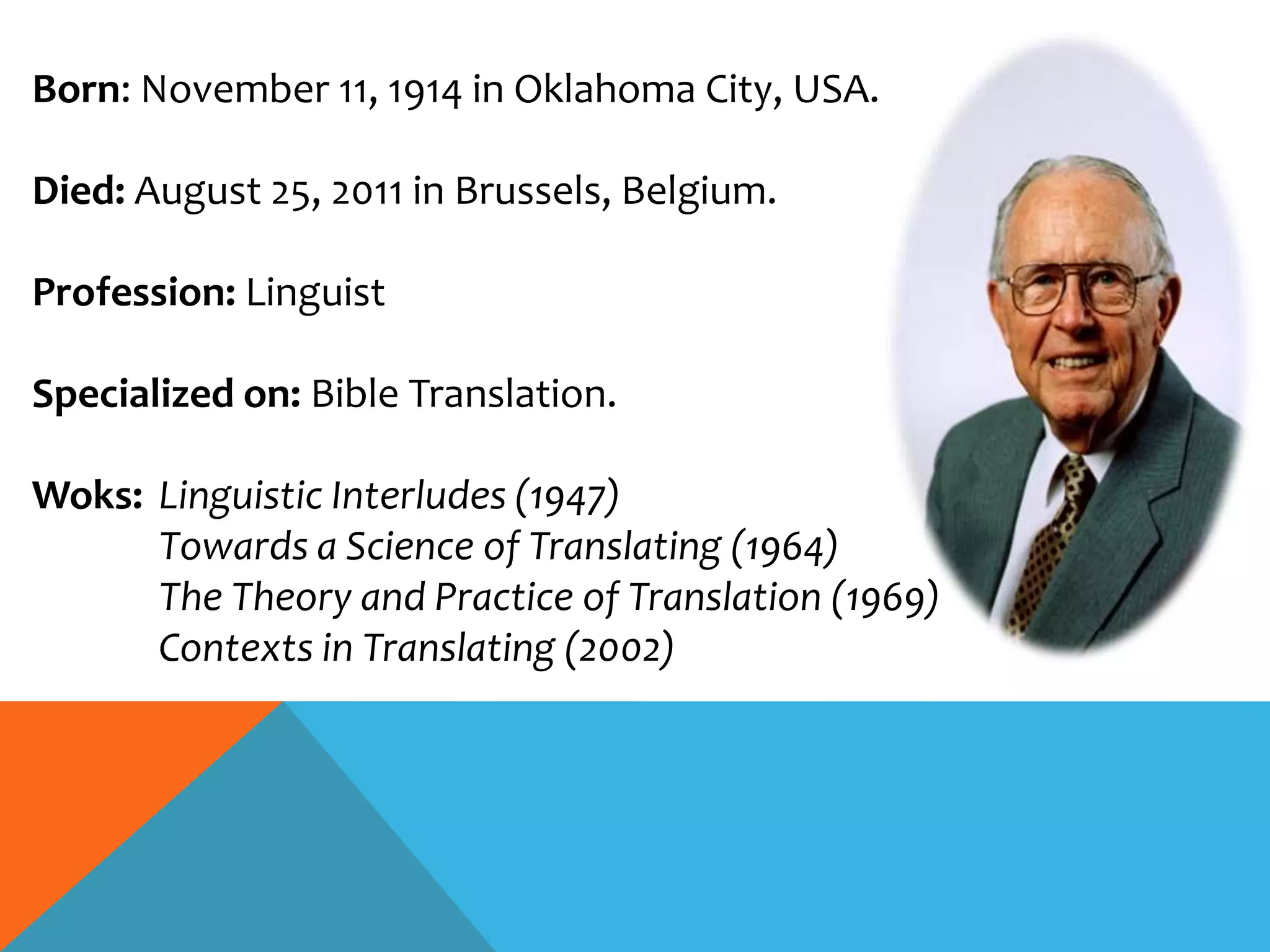
Born: November 11, 1914 in Oklahoma City, USA.

Died: August 25, 2011 in Brussels, Belgium.

Profession: Linguist

Specialized on: Bible Translation.

Woks: Linguistic Interludes (1947)
      Towards a Science of Translating (1964)
      The Theory and Practice of Translation (1969)
      Contexts in Translating (2002)
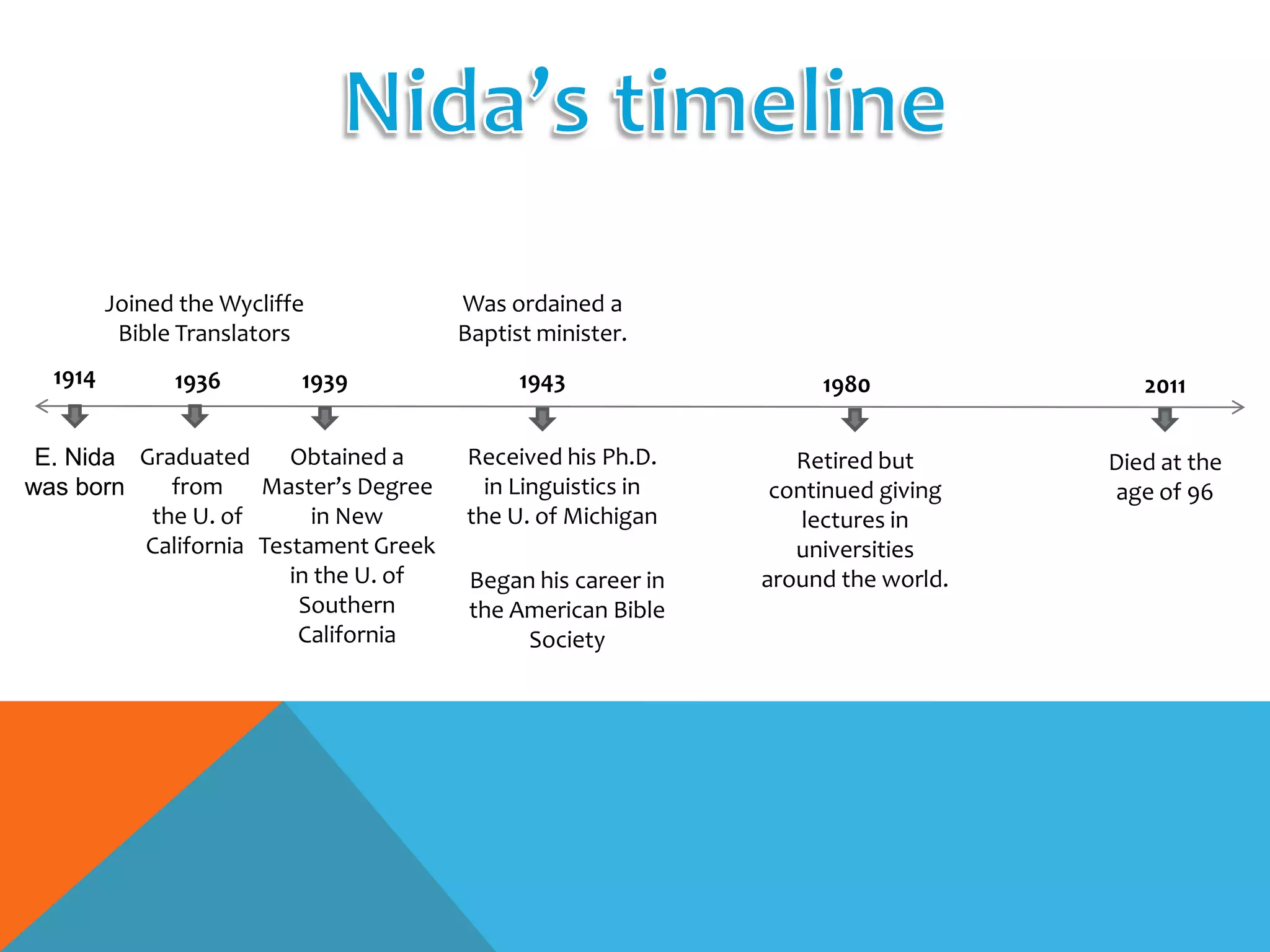
Joined the Wycliffe          Was ordained a
          Bible Translators           Baptist minister.
  1914         1936        1939             1943                  1980              2011

 E. Nida Graduated     Obtained a     Received his Ph.D.        Retired but      Died at the
was born    from    Master’s Degree     in Linguistics in     continued giving   age of 96
          the U. of      in New       the U. of Michigan         lectures in
         California Testament Greek                             universities
                       in the U. of    Began his career in   around the world.
                        Southern       the American Bible
                        California          Society
The father of
Dynamic Equivalence or
Functional Equivalence
¨Quality of a translation in which the
message of the original text has been
so transported into the receptor
language that the response of the
receptor is essentially like that of the
original receptors.¨
Eugene Nida
The Theory and Practice of Translation
1.   Reproducing the message.
2.   Equivalence rather than identity.
3.   Natural Equivalent.
4.   The closest equivalent.
5.   The priority of meaning.
6.   The significance of style.
7.   A system of priorities.
         *Contextual consistency over verbal consistency
         * Dynamic equivalence over formal correspondence
         * The aural form over the written form
         * Form which are understandable to audience over
         traditionally more prestigious ones.
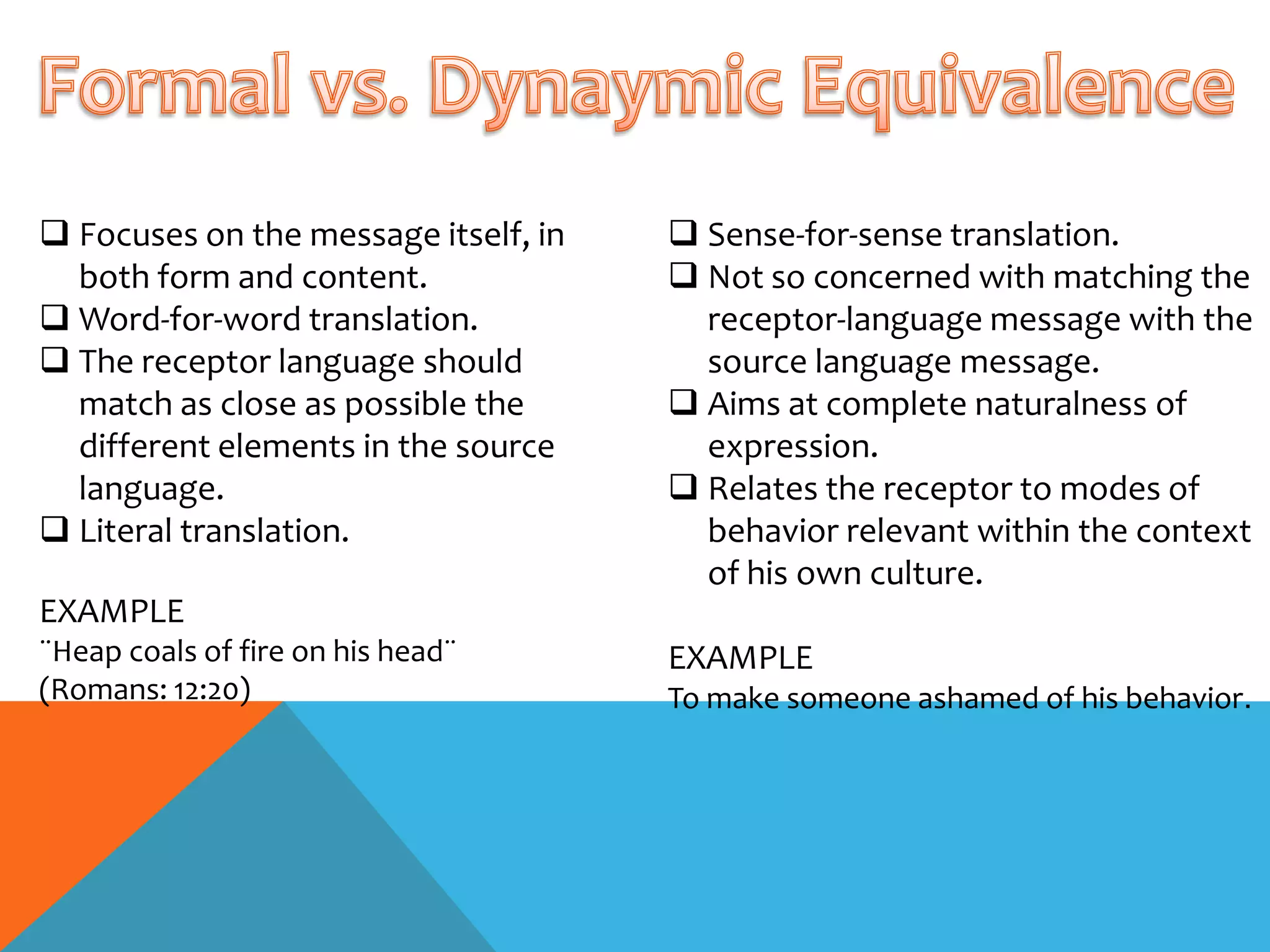
 Focuses on the message itself, in    Sense-for-sense translation.
  both form and content.               Not so concerned with matching the
 Word-for-word translation.            receptor-language message with the
 The receptor language should          source language message.
  match as close as possible the       Aims at complete naturalness of
  different elements in the source      expression.
  language.                            Relates the receptor to modes of
 Literal translation.                  behavior relevant within the context
                                        of his own culture.
EXAMPLE
¨Heap coals of fire on his head¨      EXAMPLE
(Romans: 12:20)                       To make someone ashamed of his behavior.
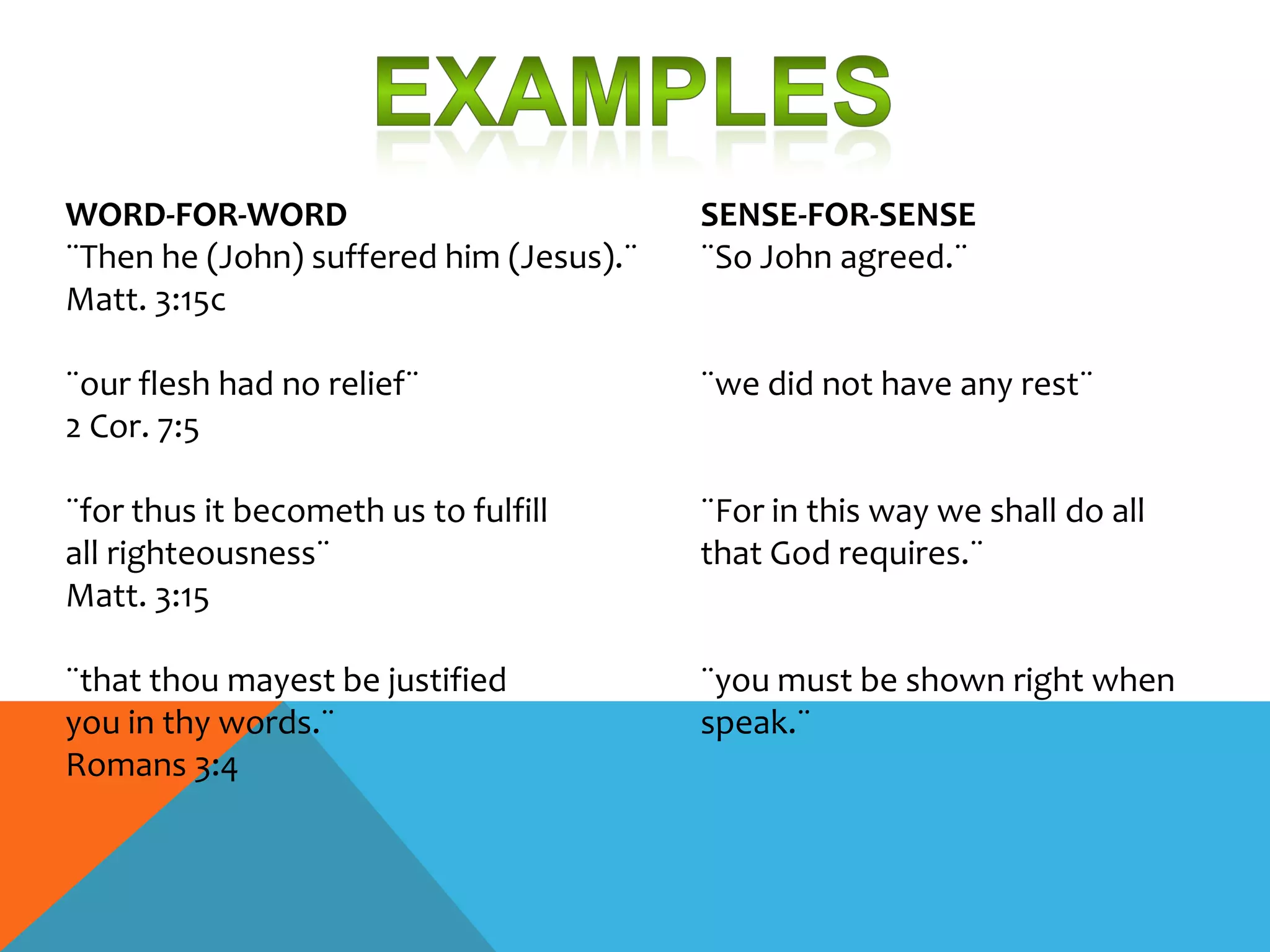
WORD-FOR-WORD                            SENSE-FOR-SENSE
¨Then he (John) suffered him (Jesus).¨   ¨So John agreed.¨
Matt. 3:15c

¨our flesh had no relief¨                ¨we did not have any rest¨
2 Cor. 7:5

¨for thus it becometh us to fulfill      ¨For in this way we shall do all
all righteousness¨                       that God requires.¨
Matt. 3:15

¨that thou mayest be justified           ¨you must be shown right when
you in thy words.¨                       speak.¨
Romans 3:4
Eugene nida presentation

Eugene nida presentation

  • 2.
    Born: November 11,1914 in Oklahoma City, USA. Died: August 25, 2011 in Brussels, Belgium. Profession: Linguist Specialized on: Bible Translation. Woks: Linguistic Interludes (1947) Towards a Science of Translating (1964) The Theory and Practice of Translation (1969) Contexts in Translating (2002)
  • 3.
    Joined the Wycliffe Was ordained a Bible Translators Baptist minister. 1914 1936 1939 1943 1980 2011 E. Nida Graduated Obtained a Received his Ph.D. Retired but Died at the was born from Master’s Degree in Linguistics in continued giving age of 96 the U. of in New the U. of Michigan lectures in California Testament Greek universities in the U. of Began his career in around the world. Southern the American Bible California Society
  • 4.
    The father of DynamicEquivalence or Functional Equivalence
  • 5.
    ¨Quality of atranslation in which the message of the original text has been so transported into the receptor language that the response of the receptor is essentially like that of the original receptors.¨ Eugene Nida The Theory and Practice of Translation
  • 6.
    1. Reproducing the message. 2. Equivalence rather than identity. 3. Natural Equivalent. 4. The closest equivalent. 5. The priority of meaning. 6. The significance of style. 7. A system of priorities. *Contextual consistency over verbal consistency * Dynamic equivalence over formal correspondence * The aural form over the written form * Form which are understandable to audience over traditionally more prestigious ones.
  • 7.
     Focuses onthe message itself, in  Sense-for-sense translation. both form and content.  Not so concerned with matching the  Word-for-word translation. receptor-language message with the  The receptor language should source language message. match as close as possible the  Aims at complete naturalness of different elements in the source expression. language.  Relates the receptor to modes of  Literal translation. behavior relevant within the context of his own culture. EXAMPLE ¨Heap coals of fire on his head¨ EXAMPLE (Romans: 12:20) To make someone ashamed of his behavior.
  • 8.
    WORD-FOR-WORD SENSE-FOR-SENSE ¨Then he (John) suffered him (Jesus).¨ ¨So John agreed.¨ Matt. 3:15c ¨our flesh had no relief¨ ¨we did not have any rest¨ 2 Cor. 7:5 ¨for thus it becometh us to fulfill ¨For in this way we shall do all all righteousness¨ that God requires.¨ Matt. 3:15 ¨that thou mayest be justified ¨you must be shown right when you in thy words.¨ speak.¨ Romans 3:4