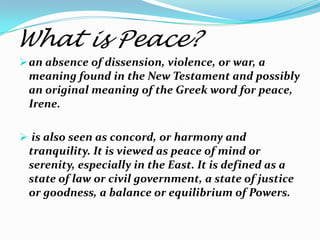
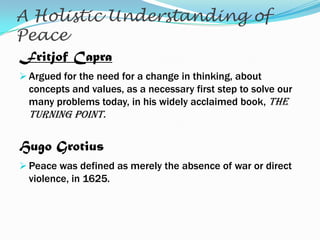
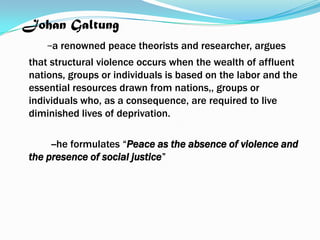
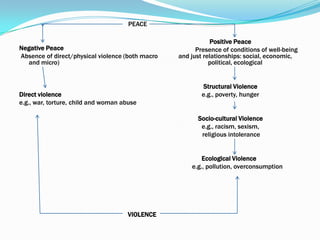
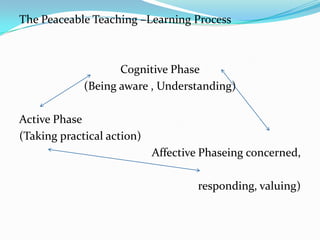
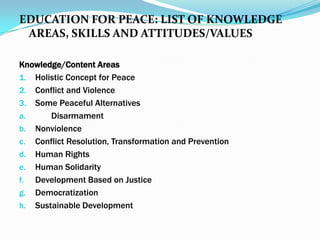
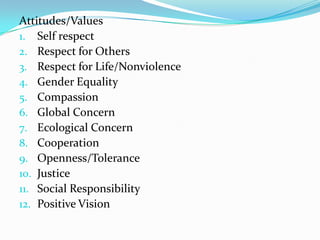
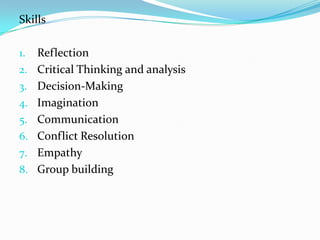
Peace has traditionally been defined as the absence of war or direct violence. However, in the 1960s an alternative view emerged that peace also requires the absence of structural violence in societies. Structural violence refers to indirect ways that people suffer due to social, political, and economic injustices built into systems. Johan Galtung argued for defining peace positively as both the absence of direct and structural violence, and the presence of social justice. Educating for peace is now seen as an ethical imperative and a way to challenge beliefs that war cannot be avoided, with the goal of cultivating non-violent and just societies.