 Culture in society refers to the ways of life of
the members of a society, or of groups within
the society.
It includes how people constructed their life,
customs, values, norms, religions,
ceremonies, show the way they dress, eat,
drink ect.
In other words culture includes all our
behaviours and structured all our lives.
 Culture compromises both intangible aspects
(beliefs, ideas and values) which form the
content of culture, and tangible aspects (the
objects, symbols or technology) which
represents that content.
 Sosyologlar kulturden söz ettiklerinde, insan
toplumlarının devralınan degil, ögrenilen
özellikleriyle ilgilenirler. Bir toplumun kulturu
hem maddi olmayan (kulturun içerigini
olusturan inanç, dusunce ve degerler)
hem de maddi yönlerden (bu içerigi temsil
eden nesneler, simgeler ya da teknoloji)
olusur.
In all cultures are the ideas which defined
what is considered important and desirable.
2Are the rules of behaviour which reflect or
embody a culture’s values.
 Butun kulturlerin temelinde yer alan konu,
neyin önemli degerli ve istenir oldugunu
tanımlayan dusuncelerdir. Bu soyut
dusunceler ya da degerler, insanlar toplumsal
dunya ile etkilesim içindeyken onların
yaptıklarını anlamlı kılar ya da onlara yol
gösterir.
Also norms and values work together to
shape how members of culture behave
within their everyday life.
Example: Hospitality gets norms like giving
gifts, visited etc.
Every culture differ from each other by
values and norms.
Example: Individualism is a new value-
modern society.
In world are so many societies that have high
technology but they do not accept
individualism as values for their society
(Arabia).
 Even within one society, community or
groups, values may be contradictory
(Children and parents; Between people with
different religions ect).
 In our changing life, filled with the global
movement of people,ideas,goods and
information,it is not suprising that we
encounter instance of cultural values in
conflict.
 The diversity of human bahviour,practices
and cultural beliefs forms are so remarkable
in a society.
 Acceptable forms of behaviour vary widely
from culture to culture and often contrast
dramaticaly with what people from Western
societies consider ‘normal’.
(Marriages in early age; Family structure;
Way they give salutes; Kissing)
- In this type of culture are not found a vary of
differences.
-Monoculture structure is founded generaly in
small societies.
-But some modern societies such as Japon,
have remained fairly monocultural and are
marked by high levels of cultural homogenety.
-Subculture do not refer just only ethnic or
linguistic groups within a large society.
They concern any segments of population
which are distinguishable from the rest of
society by their cultural patterns.
 Subcultures are very broad in scape and
might include Goths, Computer hackers,
Hippies, Fans of hip hop or football club
supporters est.
 Every culture has its own unique patterns of
behaviour, which seem alien to people from
other cultural backgrounds.
 Often people feel disoriented when they
become immersed in a new culture.
This happens because they have lost the
‘familiar’ reference points which help them
understand the world around them and have
not yet learned how to navigate in the new
culture.
 The process by which children or other new
member of society learn the way of life of
their society.
Also socialization is the primary channel for
the transmission of culture over time and
generations.
1-Primary Socialization: is the time when
children learn language and basic behavioural
patterns which form the foundation for latter
learning.
The family is the main agent of socialization
during this phase.
 2-Secondary Socialization: In this phase
other agents of the socialization take over
some of responsibility from family.
Schools, peer groups, organizations,
workplace and media become socializing
forces for individuals.
 Social interactions in these context help
people learn the values, norms and beliefs
which make up the patterns of their culture.
 Identity is the fact of collecting ‘data’ from
the family and the society’s culture where a
social actor is living. Form birth to death we
are involved in interaction with others
certainly conditions our personalities, the
values we hold and the behaviour we engage
in.
Socialization is also at the origin of our very
individual and freedom.
Self identities refers to the process of self
development through which we formulate a
unique sense of ourselves and our own
relationships to the world around us.
Refers to the characteristics that are
attributed to an individual by others social
actors and by the culture’s values and norms.
That can be seen as markers that indicate who
that person is, in basic sense.
 Social identity: involve a collective
dimension. They mark ways that others mark
them at the same way (common values,
common norms etc).
 Through the process of socialization,
individuals learn about social roles. Social
roles are defined by the social active and
passive life.
Expectations that a person in given social
position follows is called also the part of a
social role. A social actor, has so much social
roles in everyday life.
 The Greek philosopher Heraclitus pointed out
that a person can not step into the same river
twice.
On the second occasion, the river is different,
since water has flowed along it and the
person has change in subtle ways too.
(Difficult to defined, because there is a sense
in which everything changes all of the time)
The changes that are going on in the world
today are producing different cultures and
societies are much more interdependent that
they everywhere before.
(Electronic communications)
Has an effect on the development of human
social organization.
(Chiefs, Lords, Kings, Governments etc)
Includes the effects of religion, leadership and
communication system.
3 Includes the effects of:
1- Religion may be either a conservative or an
innovative force in social life.
2- The invention of writing for instance allows
for keeping of records, making possible
increased control of material resources and
the development of large scale organizations.
 3- Politics has always been the main factor
for social change (France and Britain
revolution).
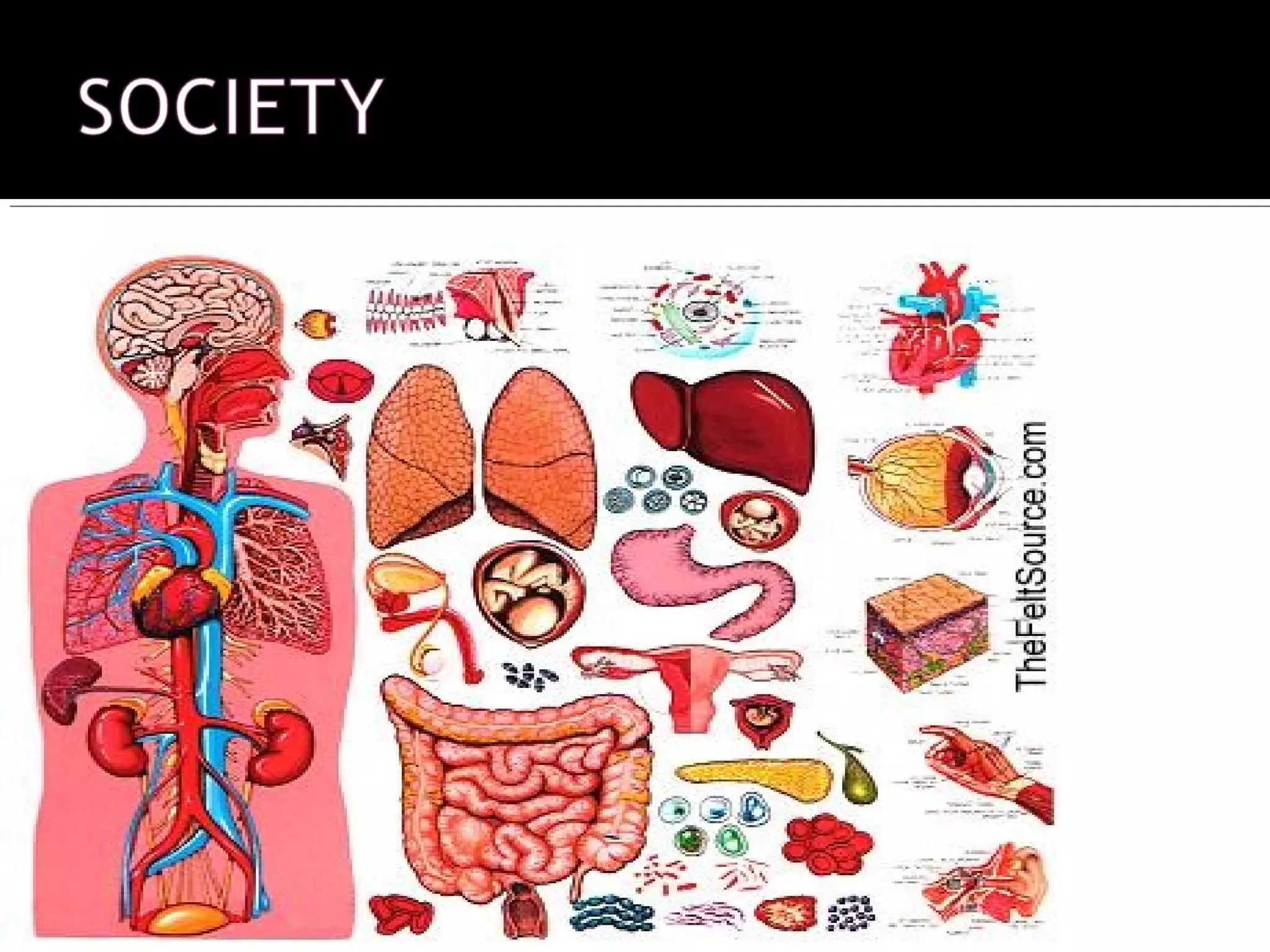
 A society is a system of interrelationships
which connects individuals together.
 It includes groups and communities of
people that have relationships to each other
by reference of culture.
They do not have division of rich and poor but
difference of position tend to be at age and
gender.
This type of societies are not primitive people,
because they contain natural life.
Duties:
1- WOMEN: gather crops, cook, bring up the
children
2- MAN: always hunter, tend to domain in public
and ceremonial position
http://www.youtube.com/watch?v=Pro6X_Kc5wA
Raising domesticated animals and cultivations.
Are people that relying mainly on the
domesticated livestock ( sheep, goats etc).
Migrate according to the seasonal changes
(Nomadic hosts).
Today: Africa, Middle East, Central Asia)
Are people that grow crops (practice agricultures
and Horticulture).
Duties: Collections of crops
Many pastoral and agrarian societies still exist in
the modern world, concentrated in areas of
Africa, Middle East and Central Asia (Kazakhstan
and Mongolia).
http://www.youtube.com/watch?v=lvwg56IbWpY&fea
The society were based on the development of
cities, showed very pronounced inequality of
wealth and power.
Were associated with the rule of Kings or
Emperors.
Because the involved the use of writing, science
and art flourished, they are often called
civilization base.
http://www.youtube.com/watch?v=gRdfX7ut8gw
 The modern world contains industrial
societies.
Industrialization refers to the emergence of
machine production, based on the use of
inanimate power resources like steam or
electricity.
 The industrial modern societies or
developed societies which are utterly
different from any previous type of social
order and their development has
consequences stretching for beyond their
European origins(it is an ideology and
propaganda of western country).

Lecture 2 culture and society

  • 2.
     Culture insociety refers to the ways of life of the members of a society, or of groups within the society. It includes how people constructed their life, customs, values, norms, religions, ceremonies, show the way they dress, eat, drink ect. In other words culture includes all our behaviours and structured all our lives.
  • 3.
     Culture compromisesboth intangible aspects (beliefs, ideas and values) which form the content of culture, and tangible aspects (the objects, symbols or technology) which represents that content.
  • 4.
     Sosyologlar kulturdensöz ettiklerinde, insan toplumlarının devralınan degil, ögrenilen özellikleriyle ilgilenirler. Bir toplumun kulturu hem maddi olmayan (kulturun içerigini olusturan inanç, dusunce ve degerler) hem de maddi yönlerden (bu içerigi temsil eden nesneler, simgeler ya da teknoloji) olusur.
  • 5.
    In all culturesare the ideas which defined what is considered important and desirable. 2Are the rules of behaviour which reflect or embody a culture’s values.
  • 6.
     Butun kulturlerintemelinde yer alan konu, neyin önemli degerli ve istenir oldugunu tanımlayan dusuncelerdir. Bu soyut dusunceler ya da degerler, insanlar toplumsal dunya ile etkilesim içindeyken onların yaptıklarını anlamlı kılar ya da onlara yol gösterir.
  • 7.
    Also norms andvalues work together to shape how members of culture behave within their everyday life. Example: Hospitality gets norms like giving gifts, visited etc.
  • 8.
    Every culture differfrom each other by values and norms. Example: Individualism is a new value- modern society. In world are so many societies that have high technology but they do not accept individualism as values for their society (Arabia).
  • 9.
     Even withinone society, community or groups, values may be contradictory (Children and parents; Between people with different religions ect).
  • 10.
     In ourchanging life, filled with the global movement of people,ideas,goods and information,it is not suprising that we encounter instance of cultural values in conflict.
  • 11.
     The diversityof human bahviour,practices and cultural beliefs forms are so remarkable in a society.  Acceptable forms of behaviour vary widely from culture to culture and often contrast dramaticaly with what people from Western societies consider ‘normal’. (Marriages in early age; Family structure; Way they give salutes; Kissing)
  • 12.
    - In thistype of culture are not found a vary of differences. -Monoculture structure is founded generaly in small societies. -But some modern societies such as Japon, have remained fairly monocultural and are marked by high levels of cultural homogenety.
  • 13.
    -Subculture do notrefer just only ethnic or linguistic groups within a large society. They concern any segments of population which are distinguishable from the rest of society by their cultural patterns.
  • 14.
     Subcultures arevery broad in scape and might include Goths, Computer hackers, Hippies, Fans of hip hop or football club supporters est.
  • 15.
     Every culturehas its own unique patterns of behaviour, which seem alien to people from other cultural backgrounds.
  • 16.
     Often peoplefeel disoriented when they become immersed in a new culture. This happens because they have lost the ‘familiar’ reference points which help them understand the world around them and have not yet learned how to navigate in the new culture.
  • 17.
     The processby which children or other new member of society learn the way of life of their society. Also socialization is the primary channel for the transmission of culture over time and generations.
  • 18.
    1-Primary Socialization: isthe time when children learn language and basic behavioural patterns which form the foundation for latter learning. The family is the main agent of socialization during this phase.
  • 19.
     2-Secondary Socialization:In this phase other agents of the socialization take over some of responsibility from family. Schools, peer groups, organizations, workplace and media become socializing forces for individuals.
  • 20.
     Social interactionsin these context help people learn the values, norms and beliefs which make up the patterns of their culture.
  • 21.
     Identity isthe fact of collecting ‘data’ from the family and the society’s culture where a social actor is living. Form birth to death we are involved in interaction with others certainly conditions our personalities, the values we hold and the behaviour we engage in. Socialization is also at the origin of our very individual and freedom.
  • 22.
    Self identities refersto the process of self development through which we formulate a unique sense of ourselves and our own relationships to the world around us.
  • 23.
    Refers to thecharacteristics that are attributed to an individual by others social actors and by the culture’s values and norms. That can be seen as markers that indicate who that person is, in basic sense.
  • 24.
     Social identity:involve a collective dimension. They mark ways that others mark them at the same way (common values, common norms etc).
  • 25.
     Through theprocess of socialization, individuals learn about social roles. Social roles are defined by the social active and passive life. Expectations that a person in given social position follows is called also the part of a social role. A social actor, has so much social roles in everyday life.
  • 26.
     The Greekphilosopher Heraclitus pointed out that a person can not step into the same river twice. On the second occasion, the river is different, since water has flowed along it and the person has change in subtle ways too. (Difficult to defined, because there is a sense in which everything changes all of the time)
  • 27.
    The changes thatare going on in the world today are producing different cultures and societies are much more interdependent that they everywhere before. (Electronic communications)
  • 28.
    Has an effecton the development of human social organization. (Chiefs, Lords, Kings, Governments etc) Includes the effects of religion, leadership and communication system.
  • 29.
    3 Includes theeffects of: 1- Religion may be either a conservative or an innovative force in social life. 2- The invention of writing for instance allows for keeping of records, making possible increased control of material resources and the development of large scale organizations.
  • 30.
     3- Politicshas always been the main factor for social change (France and Britain revolution).
  • 33.
     A societyis a system of interrelationships which connects individuals together.  It includes groups and communities of people that have relationships to each other by reference of culture.
  • 35.
    They do nothave division of rich and poor but difference of position tend to be at age and gender. This type of societies are not primitive people, because they contain natural life. Duties: 1- WOMEN: gather crops, cook, bring up the children 2- MAN: always hunter, tend to domain in public and ceremonial position http://www.youtube.com/watch?v=Pro6X_Kc5wA
  • 36.
    Raising domesticated animalsand cultivations. Are people that relying mainly on the domesticated livestock ( sheep, goats etc). Migrate according to the seasonal changes (Nomadic hosts). Today: Africa, Middle East, Central Asia)
  • 37.
    Are people thatgrow crops (practice agricultures and Horticulture). Duties: Collections of crops Many pastoral and agrarian societies still exist in the modern world, concentrated in areas of Africa, Middle East and Central Asia (Kazakhstan and Mongolia). http://www.youtube.com/watch?v=lvwg56IbWpY&fea
  • 38.
    The society werebased on the development of cities, showed very pronounced inequality of wealth and power. Were associated with the rule of Kings or Emperors. Because the involved the use of writing, science and art flourished, they are often called civilization base. http://www.youtube.com/watch?v=gRdfX7ut8gw
  • 39.
     The modernworld contains industrial societies. Industrialization refers to the emergence of machine production, based on the use of inanimate power resources like steam or electricity.
  • 40.
     The industrialmodern societies or developed societies which are utterly different from any previous type of social order and their development has consequences stretching for beyond their European origins(it is an ideology and propaganda of western country).