AGENDA
ERP:
• What is OOPs
• What are the concepts of OOPs
• Why we need it
• Benefits of OOPs
Enterprise Resource Planning -ERP
Aashish Kumar
Bafflesol Technologies Pvt. Ltd.
4
What is ERP?
• The practice of consolidating an enterprise’s
planning, manufacturing, sales and marketing
efforts into one management system.
• Combines all databases across departments into
a single database that can be accessed by all
employees.
• ERP automates the tasks involved in performing a
business process.
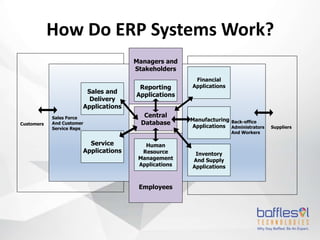
Employees
Managers and
Stakeholders
How Do ERP Systems Work?
Central
Database
Reporting
Applications
Human
Resource
Management
Applications
Financial
Applications
Manufacturing
Applications
Inventory
And Supply
Applications
Service
Applications
Sales and
Delivery
Applications
Sales Force
And Customer
Service Reps
Customers Back-office
Administrators
And Workers
Suppliers
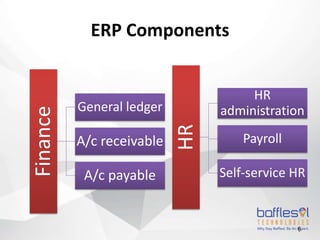
ERP Components
Finance
General ledger
A/c receivable
A/c payable
6
HR
HR
administration
Payroll
Self-service HR
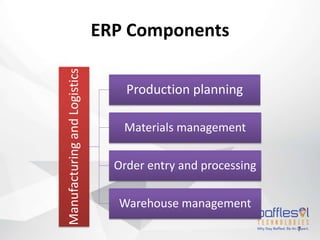
ERP Components
7
ManufacturingandLogistics
Production planning
Materials management
Order entry and processing
Warehouse management
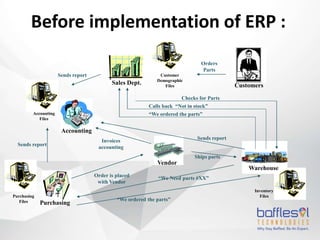
Before implementation of ERP :
Customers
Customer
Demographic
Files
Sales Dept.
Vendor
Orders
Parts
Accounting
Accounting
Files
Purchasing
Purchasing
Files
Order is placed
with Vendor
Invoices
accounting
Inventory
Files
Warehouse
Checks for Parts
Calls back “Not in stock”
“We ordered the parts”
“We Need parts #XX”
“We ordered the parts”
Sends report
Sends report
Sends report
Ships parts
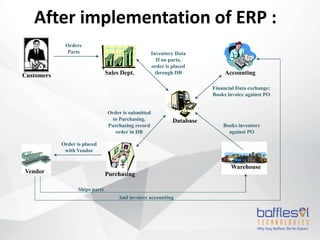
After implementation of ERP :
Database
Customers Sales Dept.
Purchasing
Warehouse
Accounting
Vendor
Inventory Data
If no parts,
order is placed
through DB
Orders
Parts
Order is submitted
to Purchasing.
Purchasing record
order in DB
Order is placed
with Vendor
And invoices accounting
Financial Data exchange;
Books invoice against PO
Books inventory
against PO
Ships parts
10
Why ERP is needed ?
3 Major Reasons:
• To integrate financial data.
• To standardize manufacturing processes.
• To standardize HR information.
11
Conclusion
• The benefits of a properly selected and implemented
ERP system can be significant.
– Reduction on inventory costs and on raw material costs.
– Lead-time for customers, production time, and production
costs can be reduced.
Microsoft Dynamics AX
• It is the ERP Software product
• And part of the Microsoft Dynamics family
• It provides the comprehensive core
functionaltiy
12
• Provide proactive solutions to predict business
Dynamics.
• Better Insights with smart Intelligence.
•
• Superior Intuitive User Experience.
• Cloud Version to complement on premise tool.
13
Why Microsoft Dynamics AX
Operational
• Agility
• Simplicity
14
Thank You

Microsoft Dynamics AX ERP Training | Bafflesol Academy of Learning

  • 2.
    AGENDA ERP: • What isOOPs • What are the concepts of OOPs • Why we need it • Benefits of OOPs
  • 3.
    Enterprise Resource Planning-ERP Aashish Kumar Bafflesol Technologies Pvt. Ltd.
  • 4.
    4 What is ERP? •The practice of consolidating an enterprise’s planning, manufacturing, sales and marketing efforts into one management system. • Combines all databases across departments into a single database that can be accessed by all employees. • ERP automates the tasks involved in performing a business process.
  • 5.
    Employees Managers and Stakeholders How DoERP Systems Work? Central Database Reporting Applications Human Resource Management Applications Financial Applications Manufacturing Applications Inventory And Supply Applications Service Applications Sales and Delivery Applications Sales Force And Customer Service Reps Customers Back-office Administrators And Workers Suppliers
  • 6.
    ERP Components Finance General ledger A/creceivable A/c payable 6 HR HR administration Payroll Self-service HR
  • 7.
    ERP Components 7 ManufacturingandLogistics Production planning Materialsmanagement Order entry and processing Warehouse management
  • 8.
    Before implementation ofERP : Customers Customer Demographic Files Sales Dept. Vendor Orders Parts Accounting Accounting Files Purchasing Purchasing Files Order is placed with Vendor Invoices accounting Inventory Files Warehouse Checks for Parts Calls back “Not in stock” “We ordered the parts” “We Need parts #XX” “We ordered the parts” Sends report Sends report Sends report Ships parts
  • 9.
    After implementation ofERP : Database Customers Sales Dept. Purchasing Warehouse Accounting Vendor Inventory Data If no parts, order is placed through DB Orders Parts Order is submitted to Purchasing. Purchasing record order in DB Order is placed with Vendor And invoices accounting Financial Data exchange; Books invoice against PO Books inventory against PO Ships parts
  • 10.
    10 Why ERP isneeded ? 3 Major Reasons: • To integrate financial data. • To standardize manufacturing processes. • To standardize HR information.
  • 11.
    11 Conclusion • The benefitsof a properly selected and implemented ERP system can be significant. – Reduction on inventory costs and on raw material costs. – Lead-time for customers, production time, and production costs can be reduced.
  • 12.
    Microsoft Dynamics AX •It is the ERP Software product • And part of the Microsoft Dynamics family • It provides the comprehensive core functionaltiy 12
  • 13.
    • Provide proactivesolutions to predict business Dynamics. • Better Insights with smart Intelligence. • • Superior Intuitive User Experience. • Cloud Version to complement on premise tool. 13 Why Microsoft Dynamics AX
  • 14.
  • 15.