ERP
      Shivani Parikh
Enterprise Resource Planning (ERP)

Definition of ERP:

•   A business management system that integrates all facets of the business,
    including   planning,   manufacturing,   Quality,   Maintenance   sales   and
    marketing


•   It attempts to integrate all departments and functions across a company
    onto a single computer system that can serve all those different
    departments’ particular needs


•   ERP systems can run on a variety of hardware and network configurations,
    typically employing a database as a repository for information
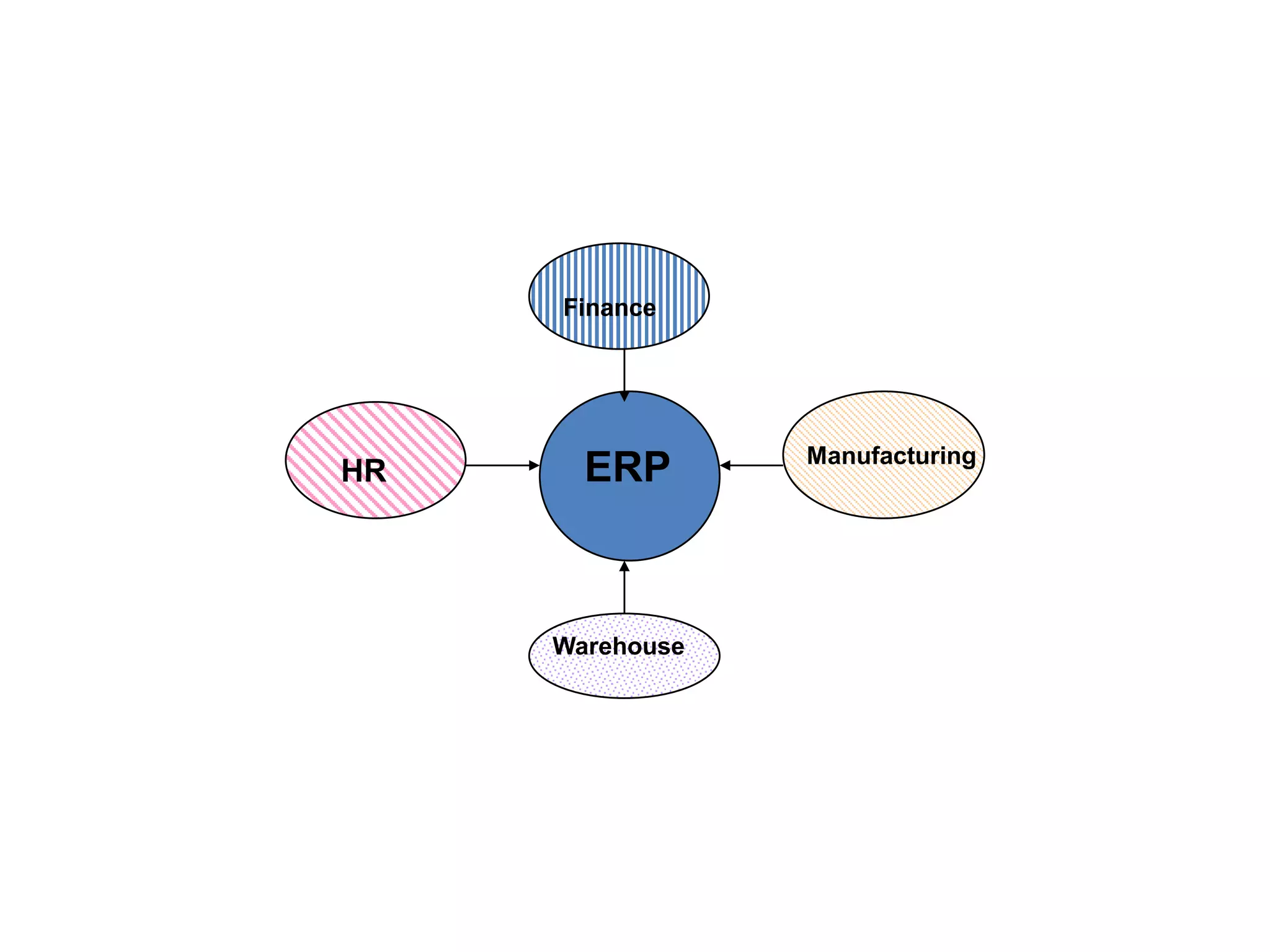
Finance


                 Manufacturing
HR     ERP


     Warehouse
ERP
ERP systems typically include the following characteristics:


•   An integrated system that operates in real time (or next to real time),
    without relying on periodic updates

•   A common database, which supports all applications.

•   A consistent look and feel throughout each module.

•   Installation of the system without elaborate application/data integration by
    the Information Technology (IT) department
ERP
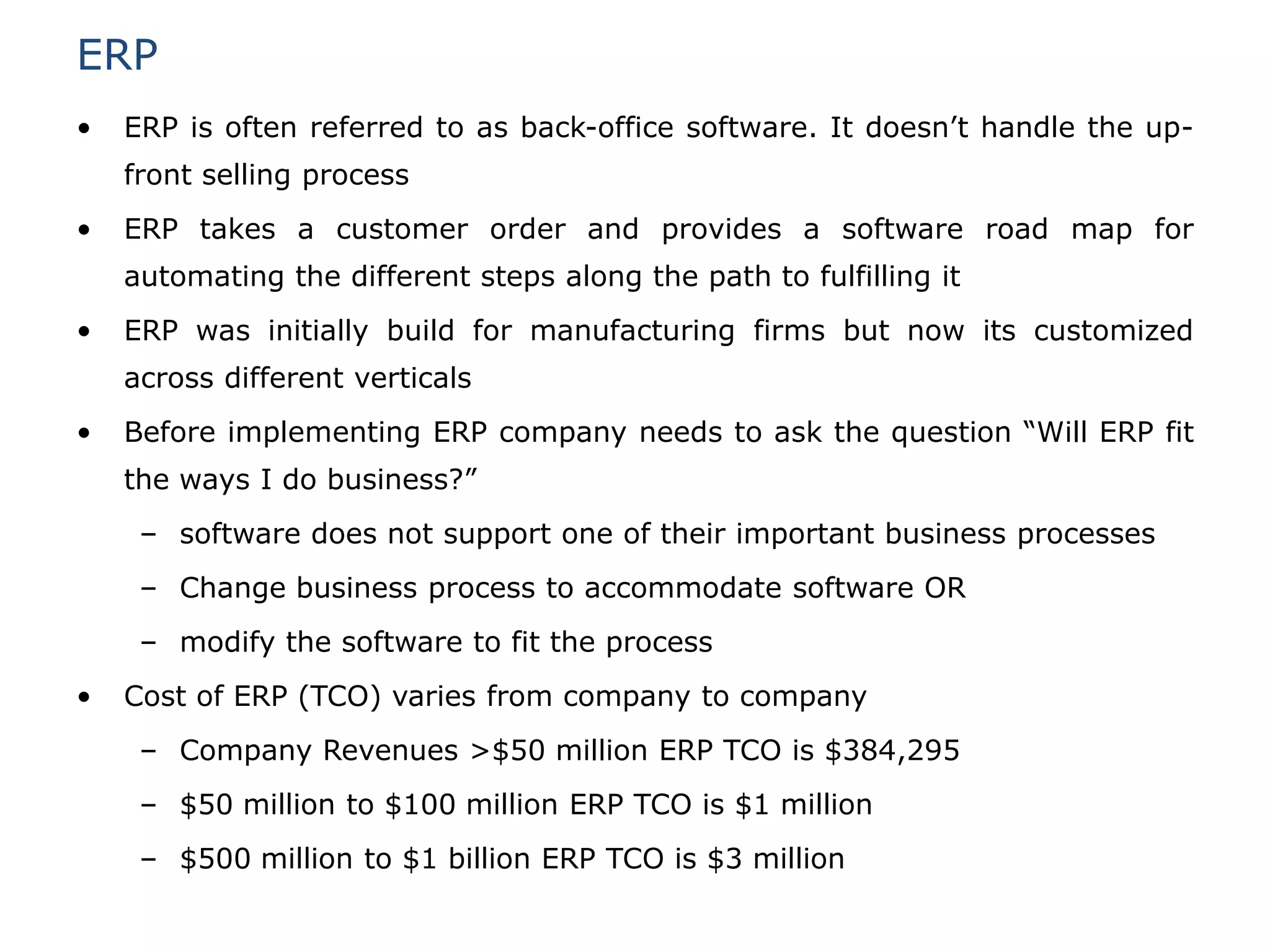
•   ERP is often referred to as back-office software. It doesn’t handle the up-
    front selling process
•   ERP takes a customer order and provides a software road map for
    automating the different steps along the path to fulfilling it
•   ERP was initially build for manufacturing firms but now its customized
    across different verticals
•   Before implementing ERP company needs to ask the question “Will ERP fit
    the ways I do business?”
     – software does not support one of their important business processes
     – Change business process to accommodate software OR
     – modify the software to fit the process
•   Cost of ERP (TCO) varies from company to company
     – Company Revenues >$50 million ERP TCO is $384,295
     – $50 million to $100 million ERP TCO is $1 million
     – $500 million to $1 billion ERP TCO is $3 million
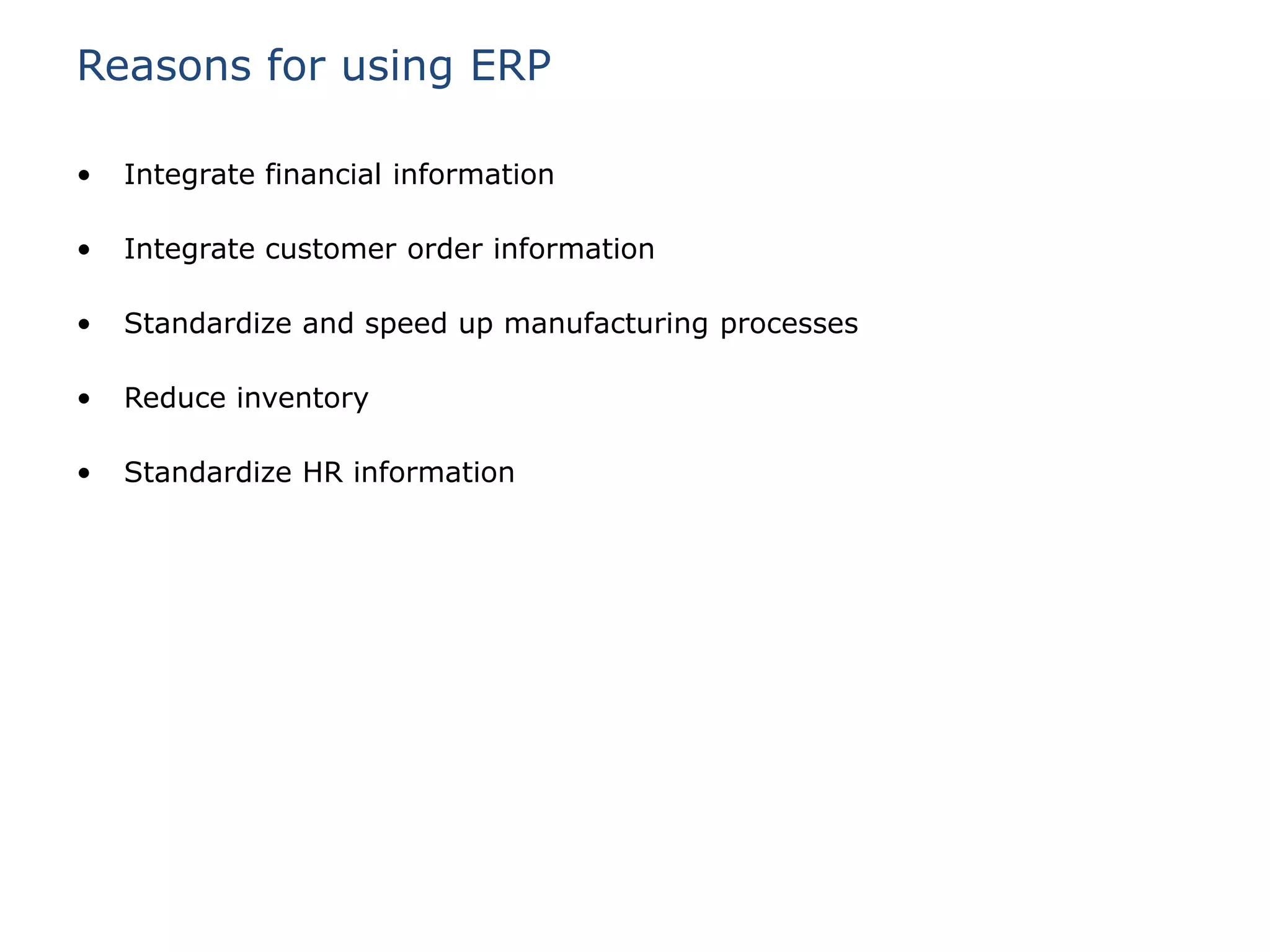
Reasons for using ERP

•   Integrate financial information

•   Integrate customer order information

•   Standardize and speed up manufacturing processes

•   Reduce inventory

•   Standardize HR information
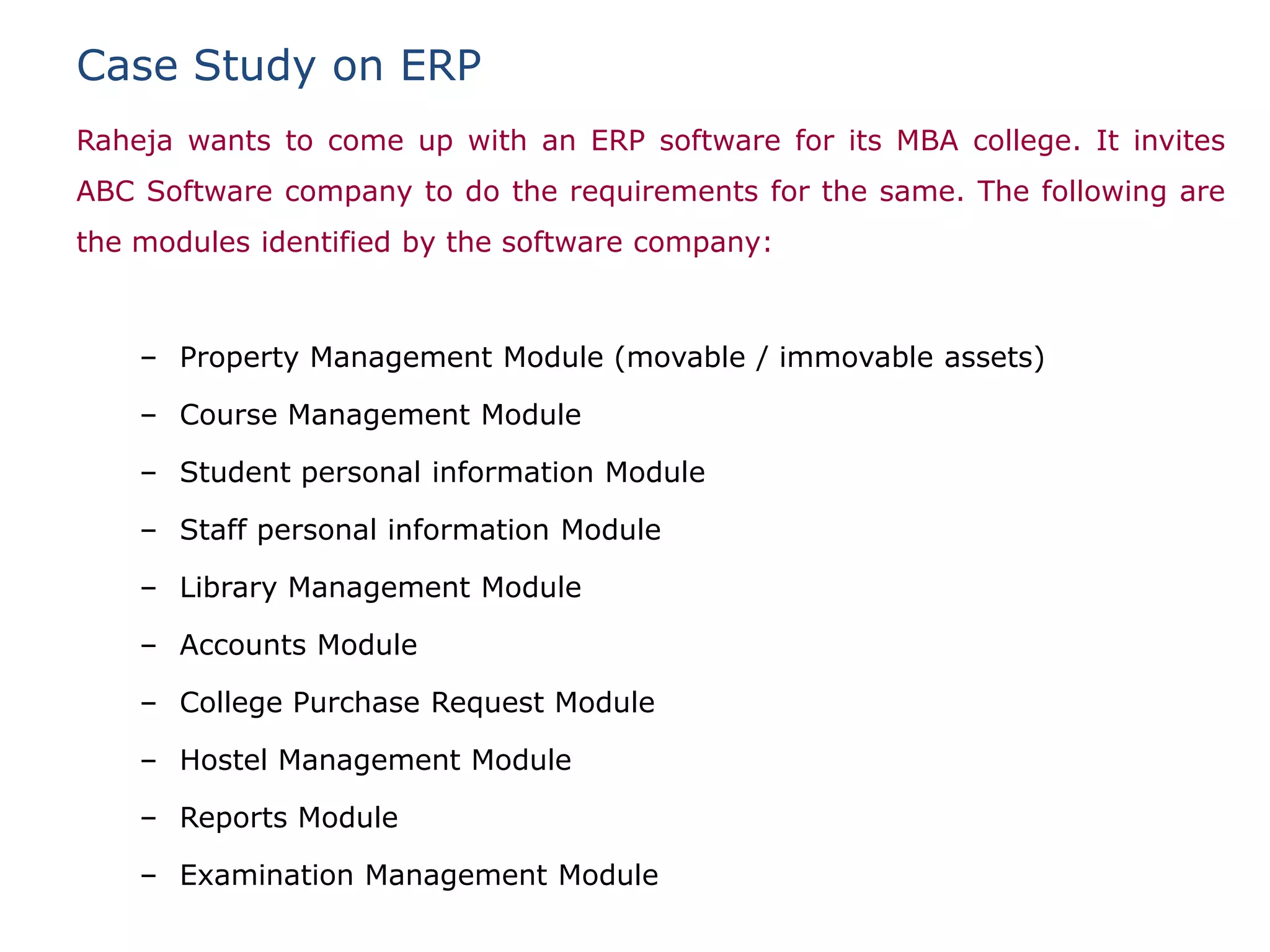
Case Study on ERP
Raheja wants to come up with an ERP software for its MBA college. It invites
ABC Software company to do the requirements for the same. The following are
the modules identified by the software company:


    – Property Management Module (movable / immovable assets)

    – Course Management Module

    – Student personal information Module

    – Staff personal information Module

    – Library Management Module

    – Accounts Module

    – College Purchase Request Module

    – Hostel Management Module

    – Reports Module

    – Examination Management Module
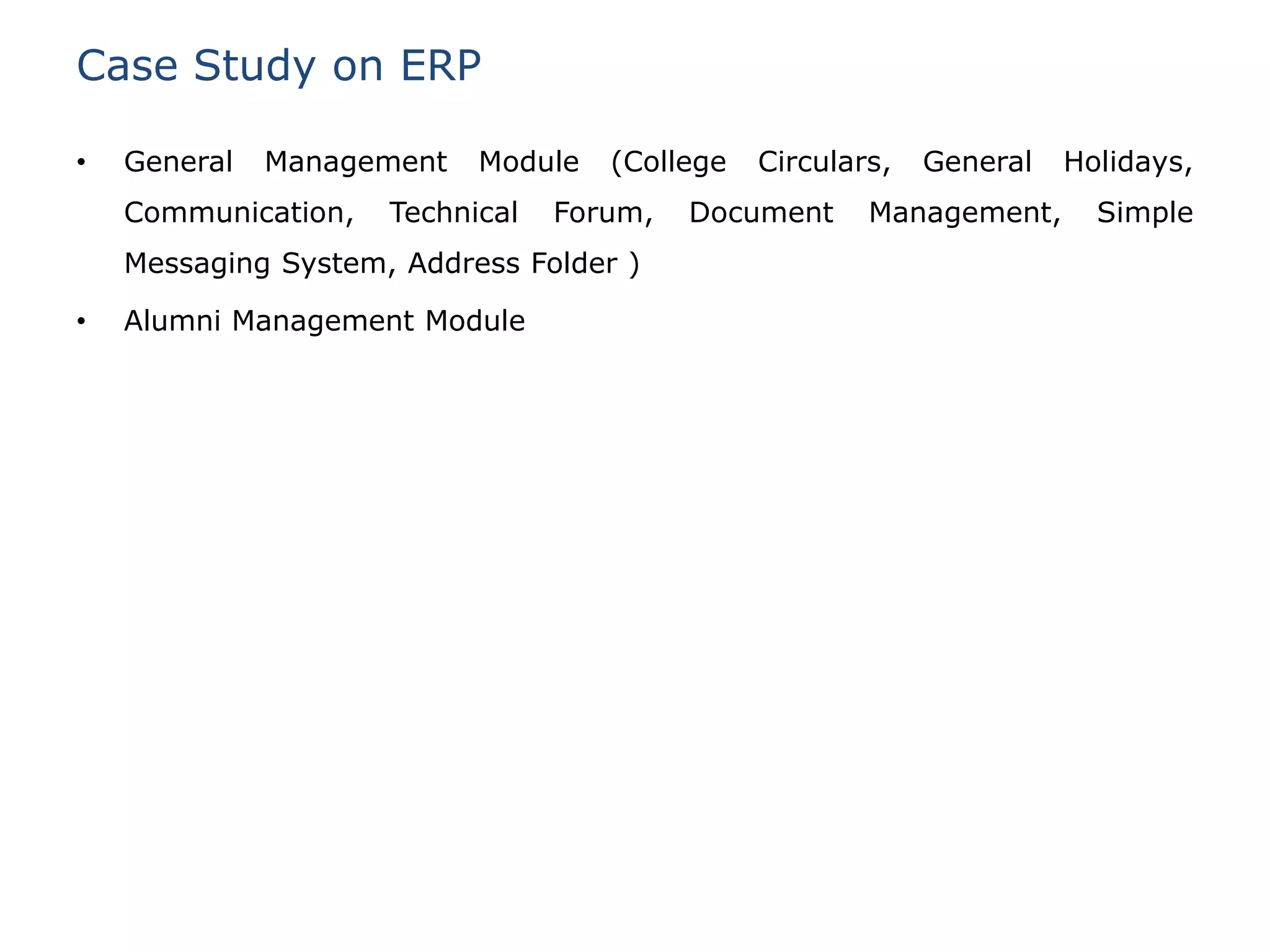
Case Study on ERP

•   General   Management   Module   (College   Circulars,   General   Holidays,
    Communication,   Technical   Forum,   Document     Management,      Simple
    Messaging System, Address Folder )

•   Alumni Management Module
Thank You

Erp

  • 1.
    ERP Shivani Parikh
  • 2.
    Enterprise Resource Planning(ERP) Definition of ERP: • A business management system that integrates all facets of the business, including planning, manufacturing, Quality, Maintenance sales and marketing • It attempts to integrate all departments and functions across a company onto a single computer system that can serve all those different departments’ particular needs • ERP systems can run on a variety of hardware and network configurations, typically employing a database as a repository for information
  • 3.
    Finance Manufacturing HR ERP Warehouse
  • 4.
    ERP ERP systems typicallyinclude the following characteristics: • An integrated system that operates in real time (or next to real time), without relying on periodic updates • A common database, which supports all applications. • A consistent look and feel throughout each module. • Installation of the system without elaborate application/data integration by the Information Technology (IT) department
  • 5.
    ERP • ERP is often referred to as back-office software. It doesn’t handle the up- front selling process • ERP takes a customer order and provides a software road map for automating the different steps along the path to fulfilling it • ERP was initially build for manufacturing firms but now its customized across different verticals • Before implementing ERP company needs to ask the question “Will ERP fit the ways I do business?” – software does not support one of their important business processes – Change business process to accommodate software OR – modify the software to fit the process • Cost of ERP (TCO) varies from company to company – Company Revenues >$50 million ERP TCO is $384,295 – $50 million to $100 million ERP TCO is $1 million – $500 million to $1 billion ERP TCO is $3 million
  • 6.
    Reasons for usingERP • Integrate financial information • Integrate customer order information • Standardize and speed up manufacturing processes • Reduce inventory • Standardize HR information
  • 7.
    Case Study onERP Raheja wants to come up with an ERP software for its MBA college. It invites ABC Software company to do the requirements for the same. The following are the modules identified by the software company: – Property Management Module (movable / immovable assets) – Course Management Module – Student personal information Module – Staff personal information Module – Library Management Module – Accounts Module – College Purchase Request Module – Hostel Management Module – Reports Module – Examination Management Module
  • 8.
    Case Study onERP • General Management Module (College Circulars, General Holidays, Communication, Technical Forum, Document Management, Simple Messaging System, Address Folder ) • Alumni Management Module
  • 9.