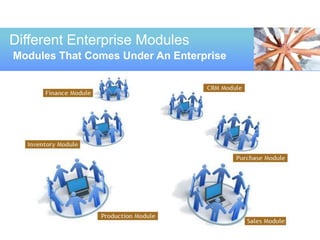
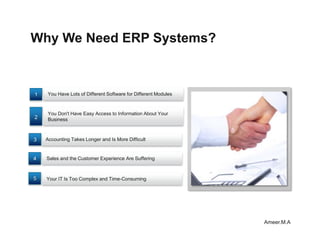
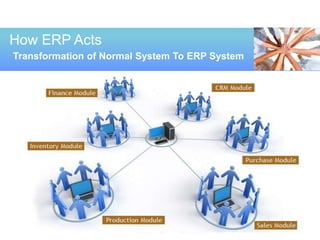
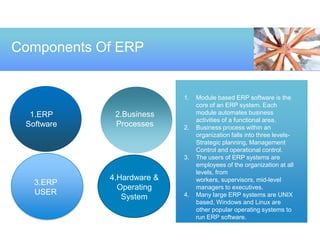
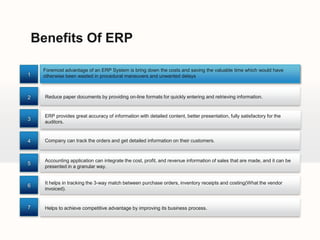
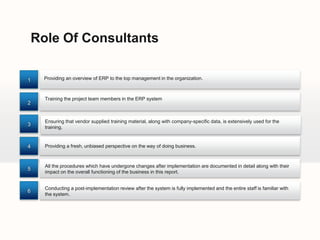
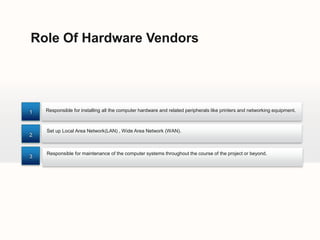
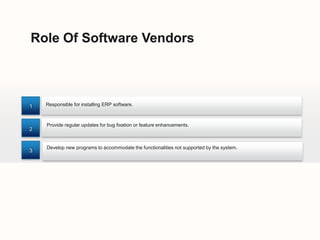


1) ERP systems integrate software modules across business functions like accounting, sales, inventory, and customer relationship management to provide a centralized source of information. 2) Implementing ERP reduces costs by eliminating separate software systems, speeds up processes like order tracking, and provides accurate company-wide data reporting. 3) Consultants, hardware vendors, and software vendors all play important roles in a successful ERP implementation through activities like system installation, training, maintenance, and software updates.


![AIS102-ERP in AIS [Lecture] - ERP in Accounting Information System.pdf](https://cdn.slidesharecdn.com/ss_thumbnails/ais102-erpinaislecture-260108015916-73c7c633-thumbnail.jpg?width=640&height=640&fit=bounds)
![Erp Enterprise Resource Planning[1]](https://cdn.slidesharecdn.com/ss_thumbnails/erpenterpriseresourceplanning1-1223721554705020-8-thumbnail.jpg?width=640&height=640&fit=bounds)


