
Contents
1. What is ERP?
2. Why we need ERP?
3. Traditional Business Process.
4. Morden Business Process.
5. Major problem without ERP.
6. Advantages of ERP.
7. Types of ERP.
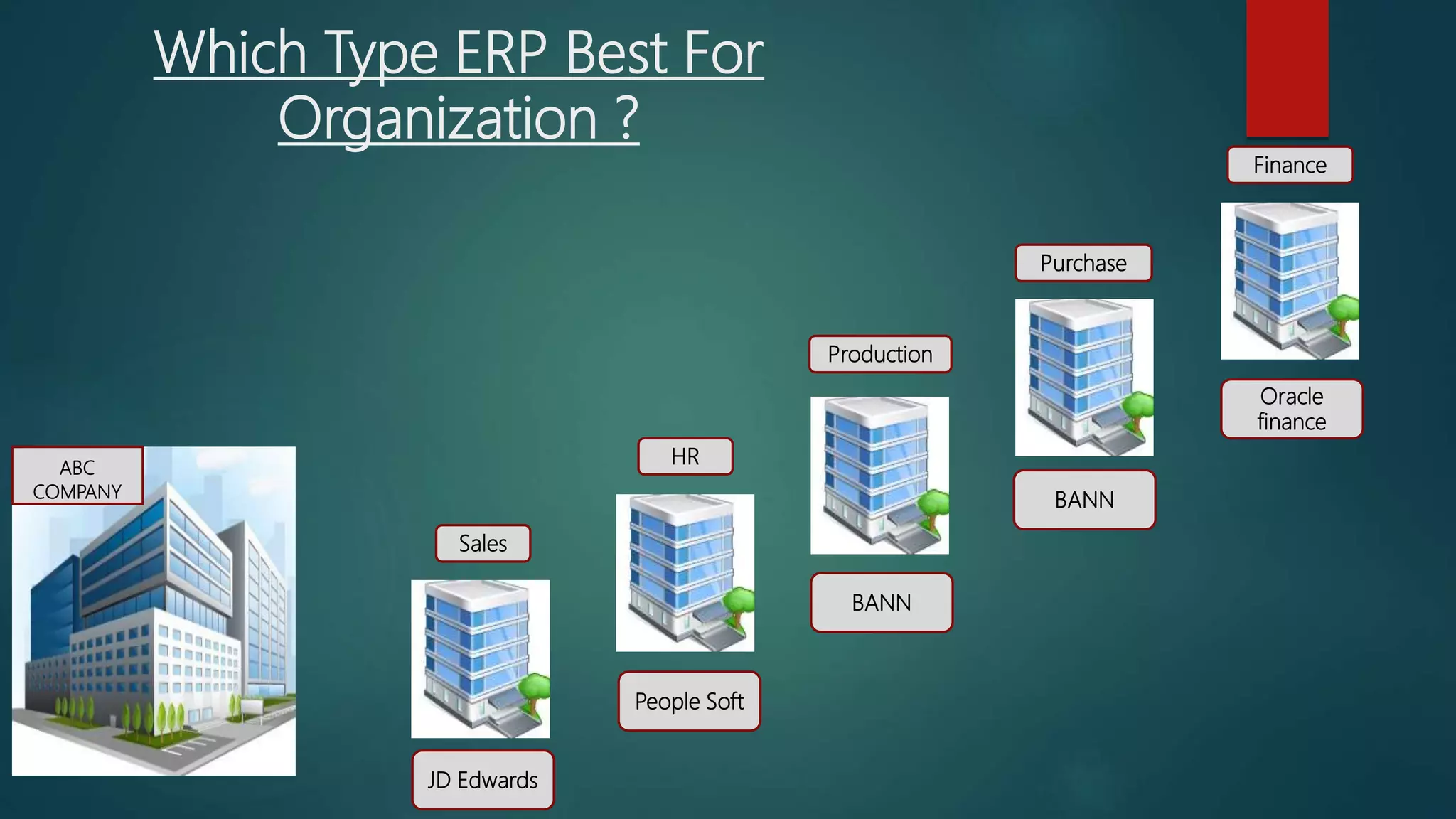
8. Which TYPE ERP best FOR organization?
9. Introduction of SAP ERP in short.
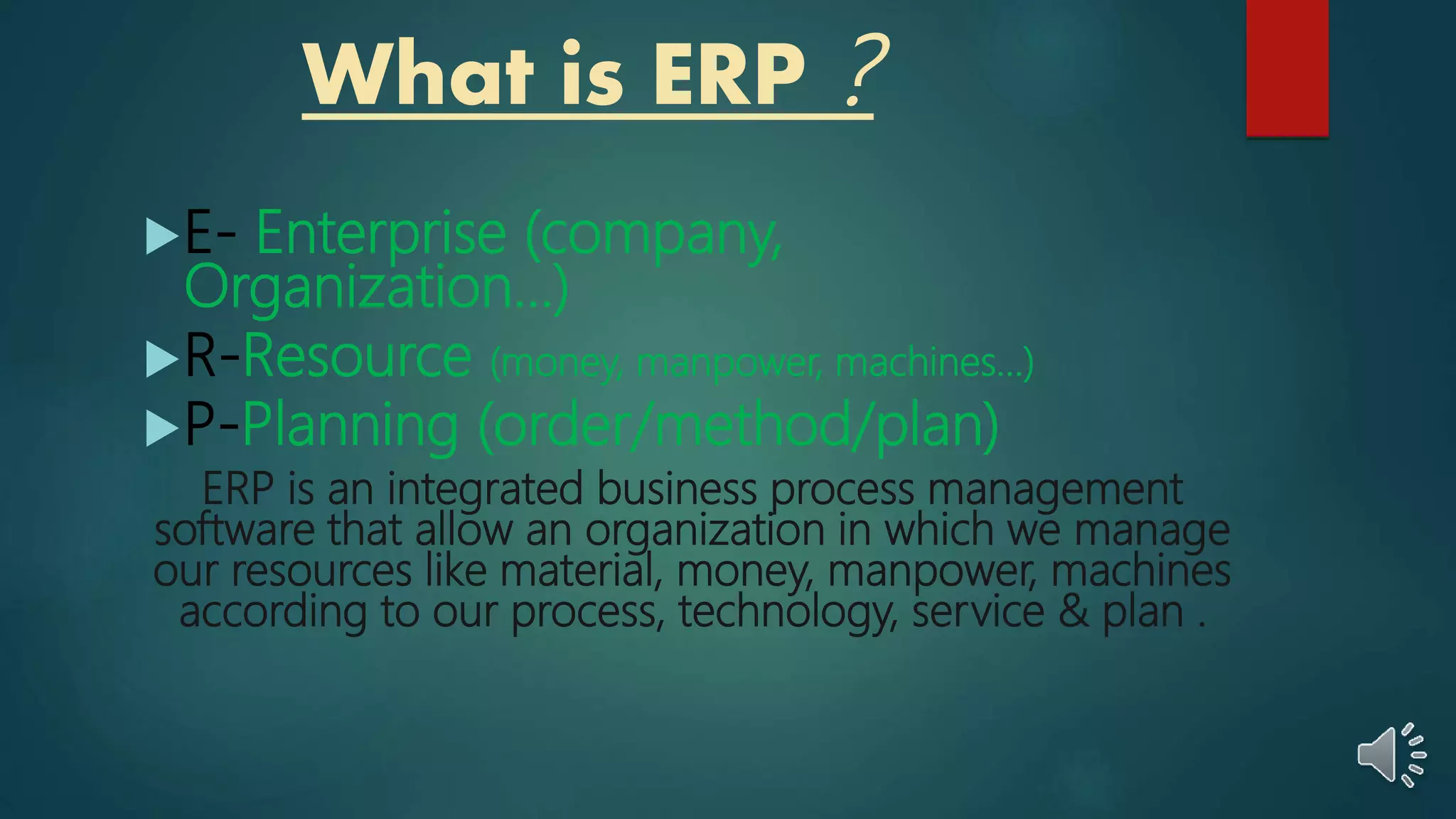
What is ERP ?
E- Enterprise (company,
Organization…)
R-Resource (money, manpower, machines…)
P-Planning (order/method/plan)
ERP is an integrated business process management
software that allow an organization in which we manage
our resources like material, money, manpower, machines
according to our process, technology, service & plan .
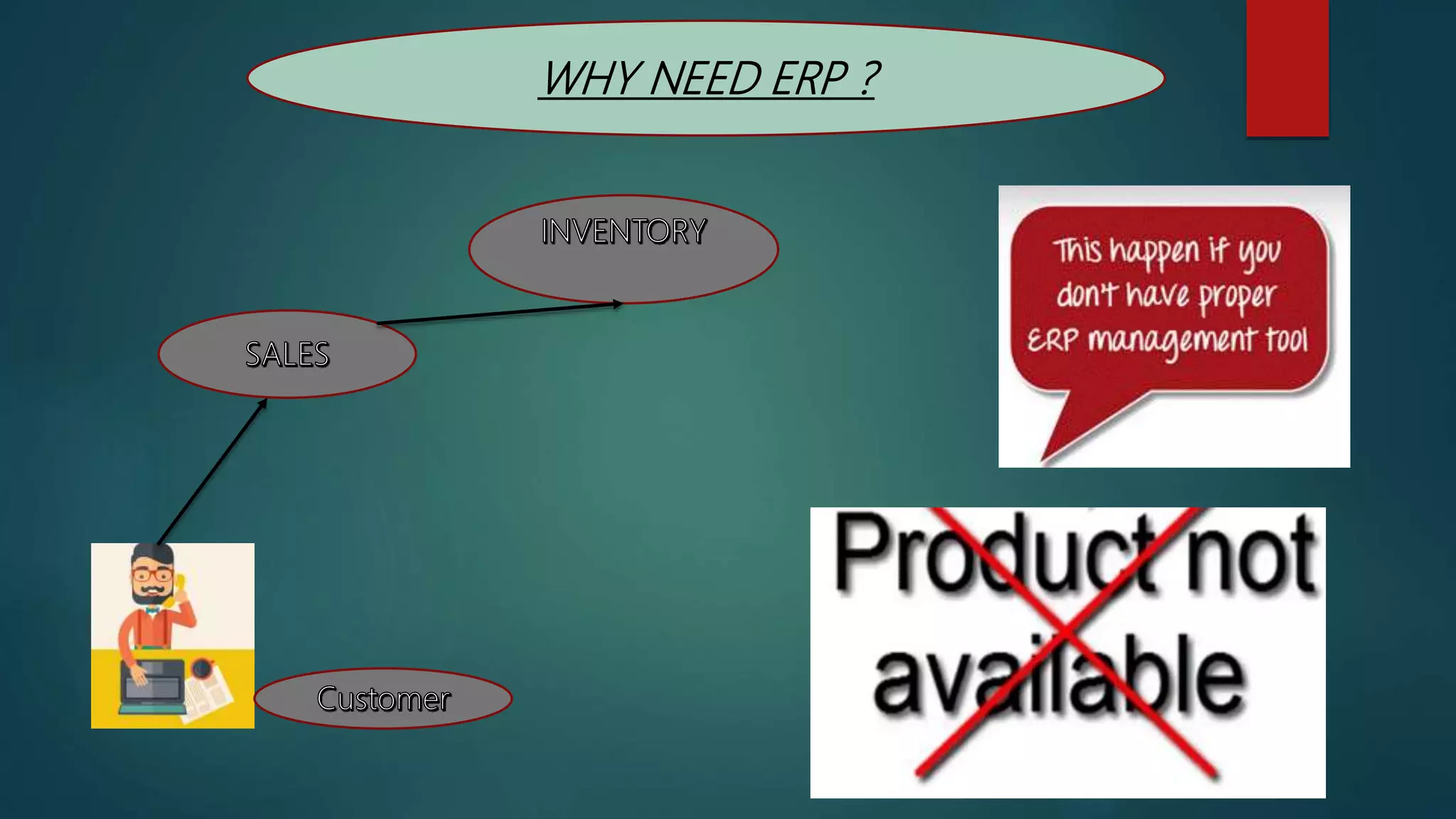
WHY NEED ERP ?
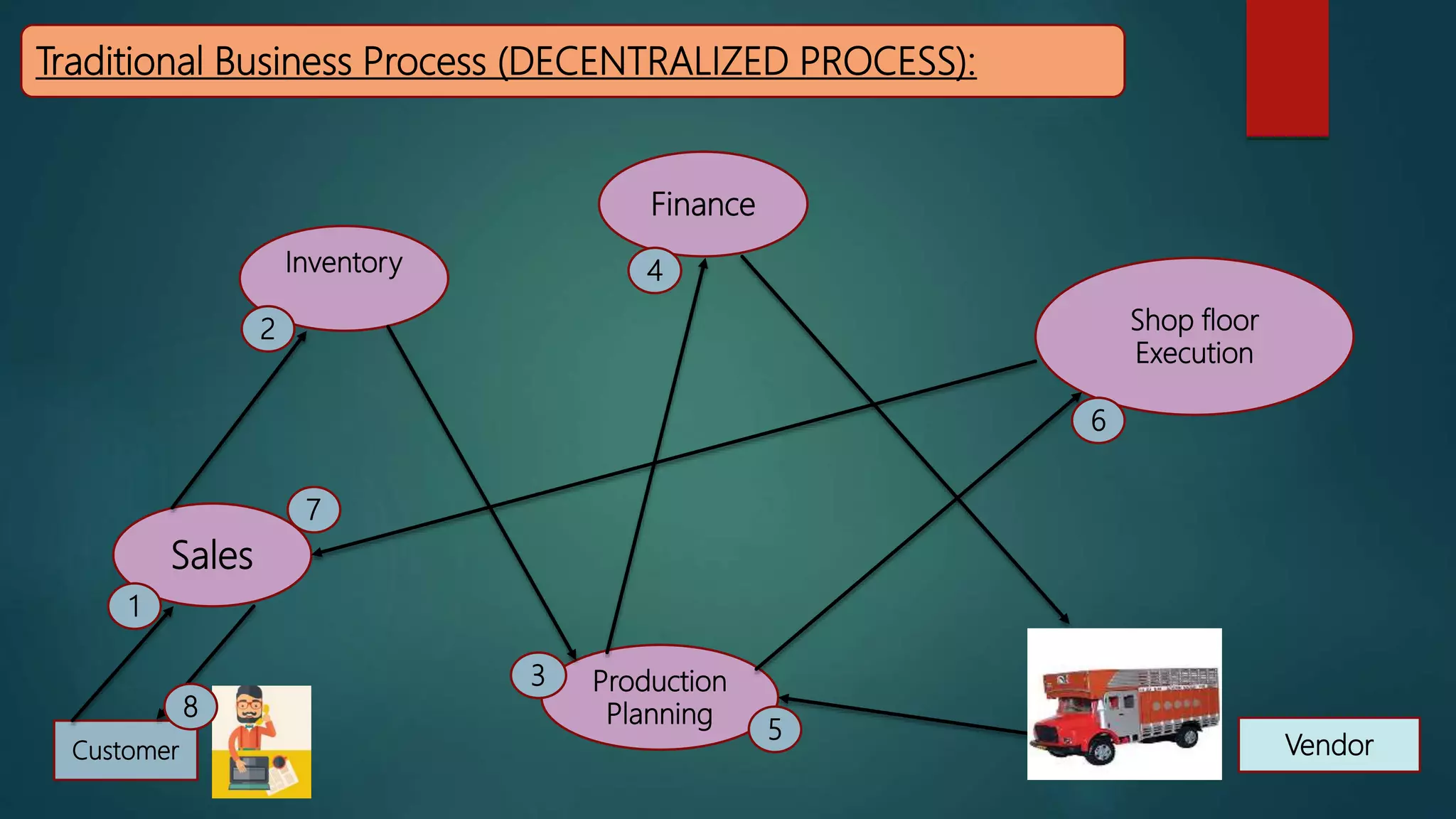
Customer
Sales
Inventory
Finance
Production
Planning
Shop floor
Execution
1
2
3
4
5
6
7
8
Vendor
Traditional Business Process (DECENTRALIZED PROCESS):
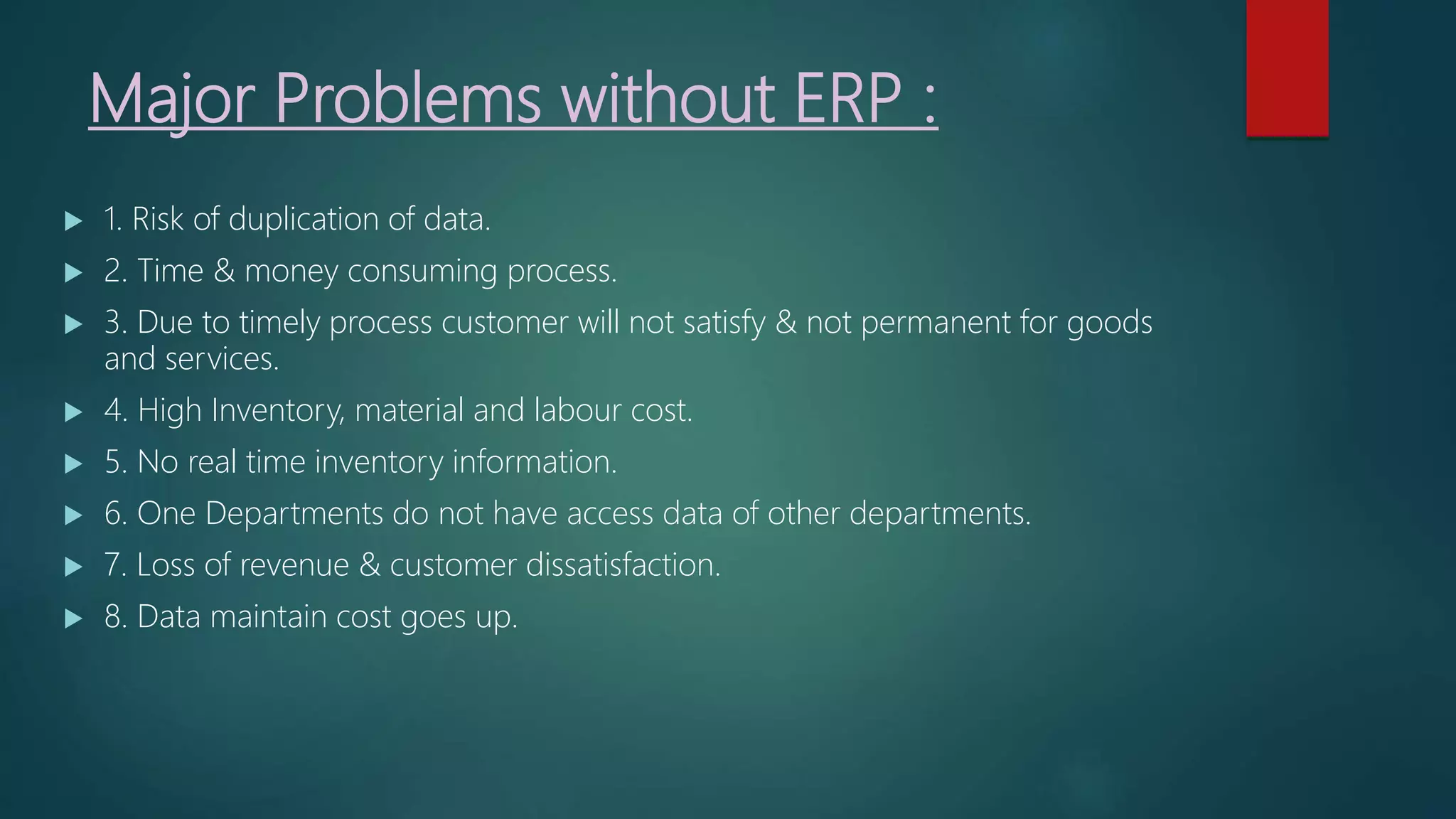
Major Problems without ERP :
 1. Risk of duplication of data.
 2. Time & money consuming process.
 3. Due to timely process customer will not satisfy & not permanent for goods
and services.
 4. High Inventory, material and labour cost.
 5. No real time inventory information.
 6. One Departments do not have access data of other departments.
 7. Loss of revenue & customer dissatisfaction.
 8. Data maintain cost goes up.
Morden Business Process (CENTRALIZED PROCESS) : ERP
Sales
Inventory
Finance
HR
Shop
Floor
execution
Vendor
Production
Planning
Customer
ERP
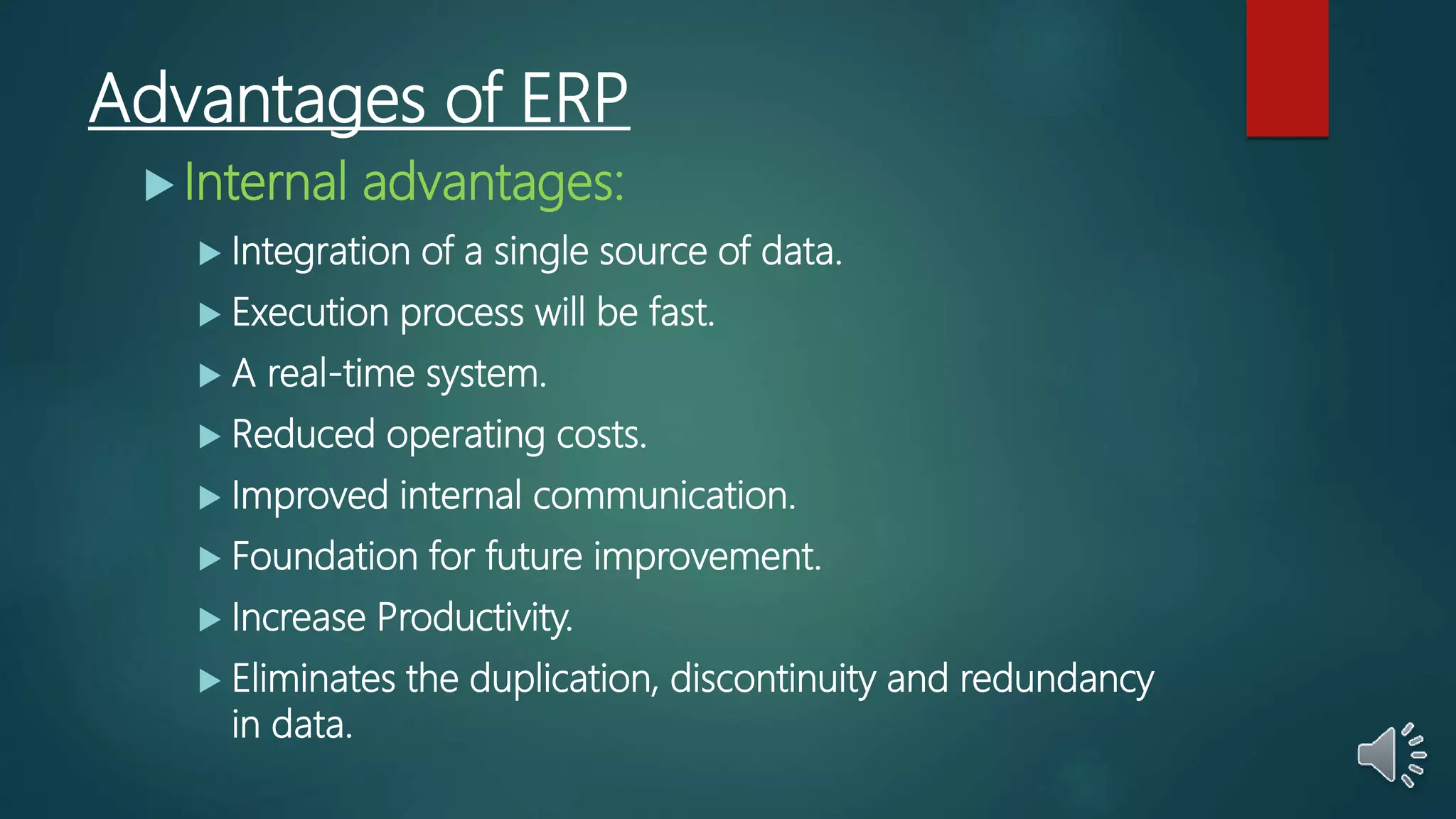
Advantages of ERP
 Internal advantages:
 Integration of a single source of data.
 Execution process will be fast.
 A real-time system.
 Reduced operating costs.
 Improved internal communication.
 Foundation for future improvement.
 Increase Productivity.
 Eliminates the duplication, discontinuity and redundancy
in data.
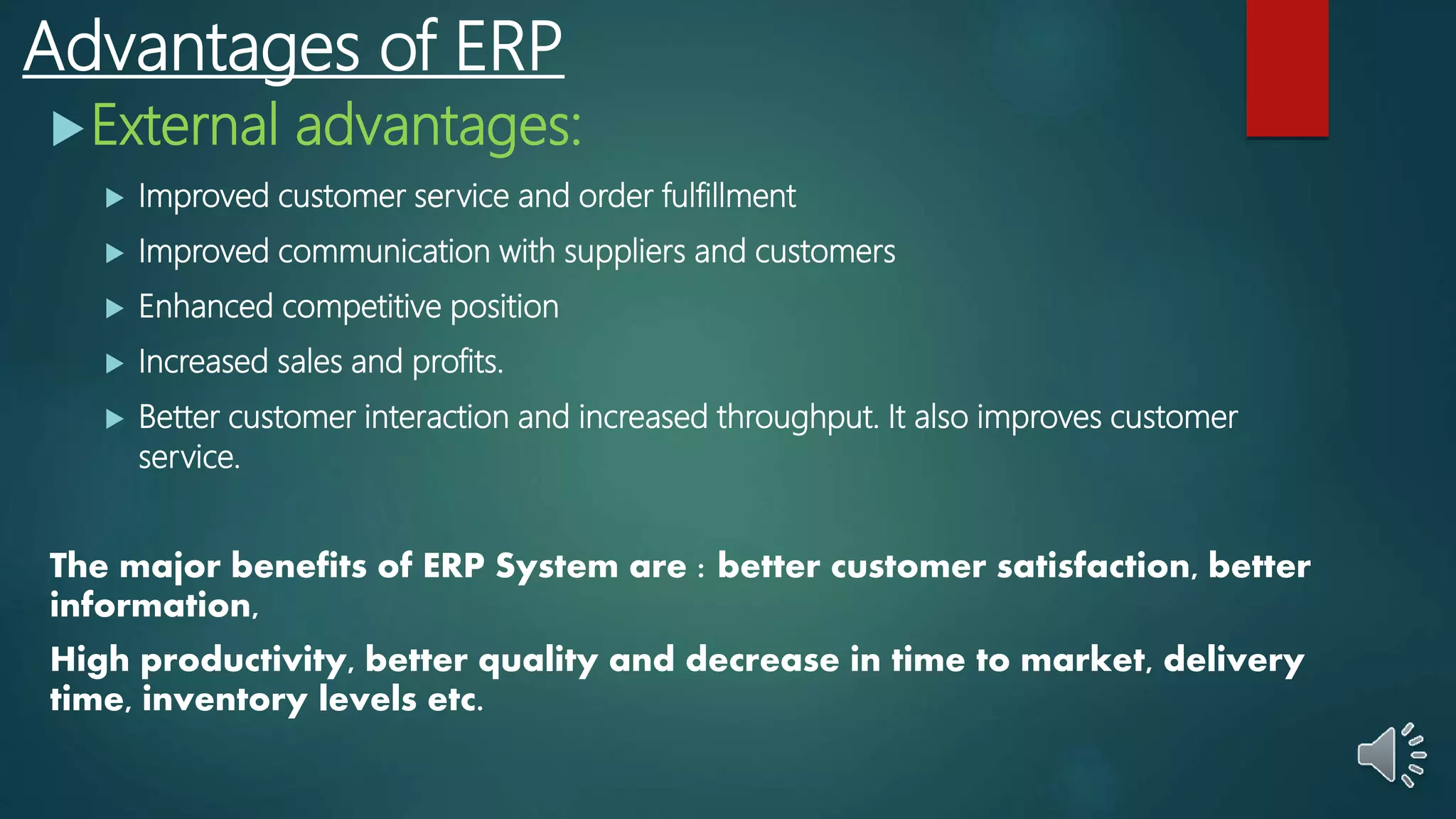
Advantages of ERP
External advantages:
 Improved customer service and order fulfillment
 Improved communication with suppliers and customers
 Enhanced competitive position
 Increased sales and profits.
 Better customer interaction and increased throughput. It also improves customer
service.
The major benefits of ERP System are : better customer satisfaction, better
information,
High productivity, better quality and decrease in time to market, delivery
time, inventory levels etc.
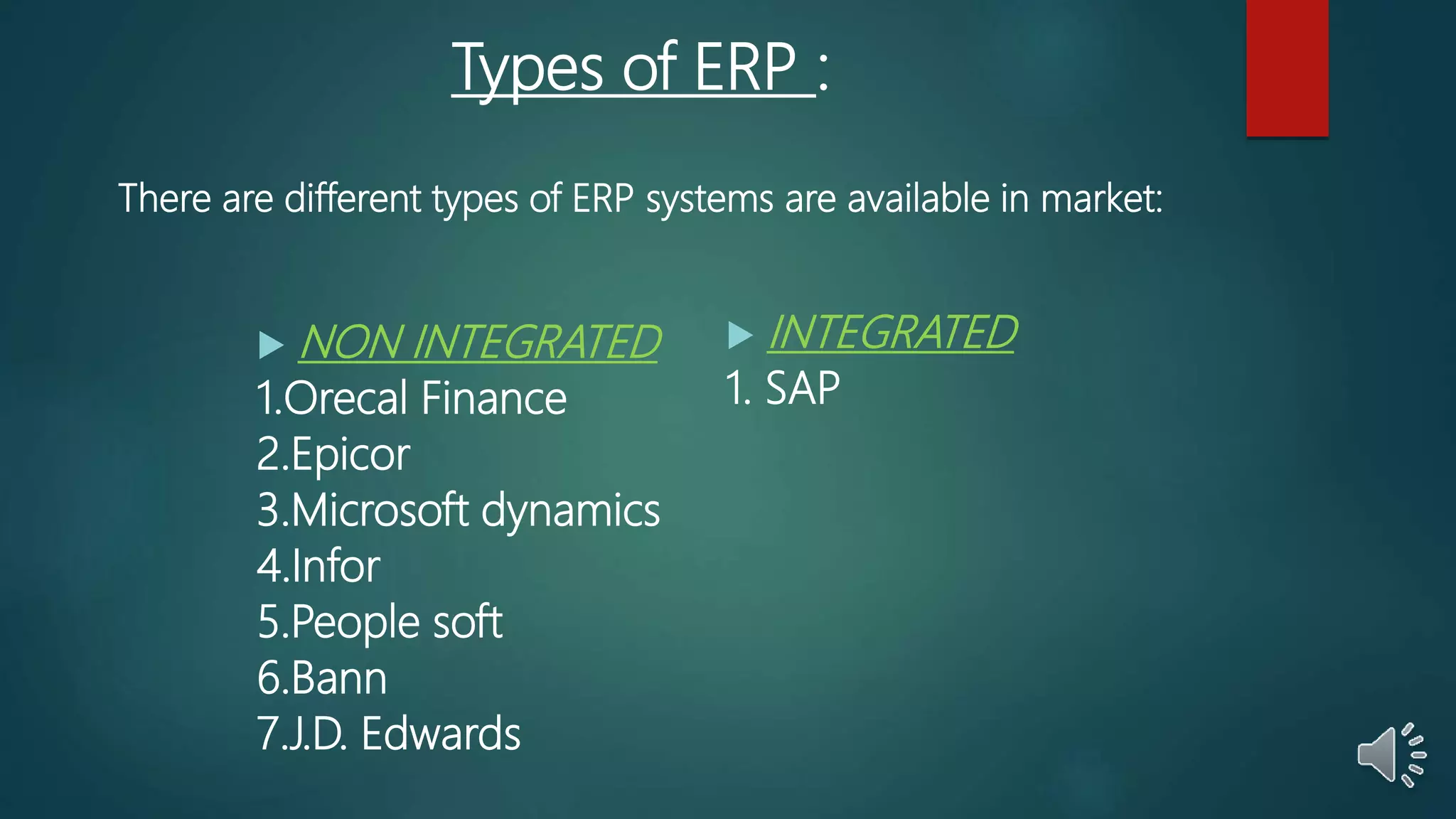
Types of ERP :
There are different types of ERP systems are available in market:
 NON INTEGRATED
1.Orecal Finance
2.Epicor
3.Microsoft dynamics
4.Infor
5.People soft
6.Bann
7.J.D. Edwards
 INTEGRATED
1. SAP
Which Type ERP Best For
Organization ?
ABC
COMPANY
Sales
Production
HR
Purchase
Finance
Oracle
finance
People Soft
BANN
JD Edwards
BANN
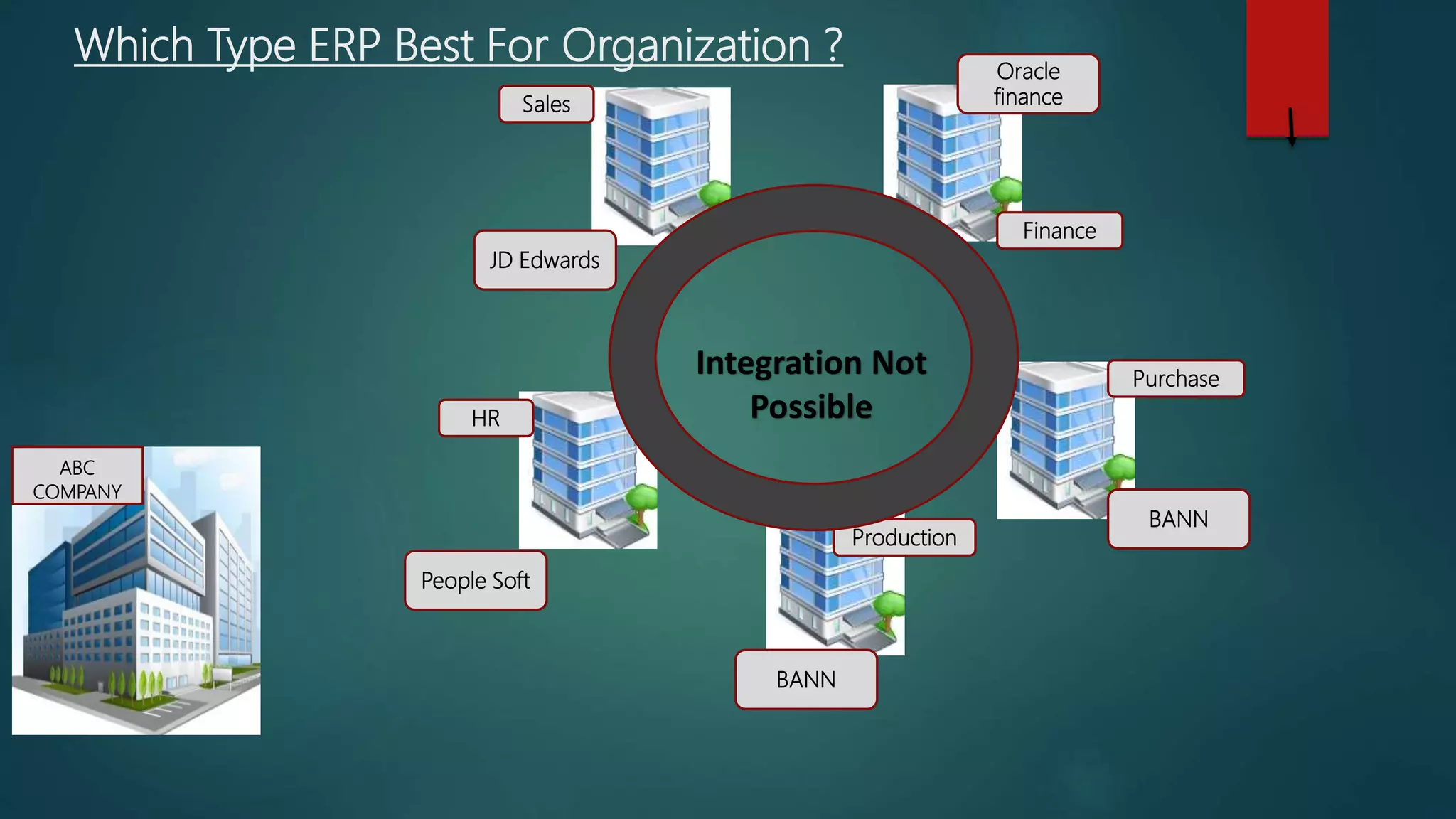
Which Type ERP Best For Organization ?
ABC
COMPANY
Sales
Production
HR
Purchase
Finance
Oracle
finance
People Soft
BANN
JD Edwards
BANN
Integration Not
Possible
ABC
Company
Integrated ERP ?
SAP
Sales
ProductionHR Purchase
Finance
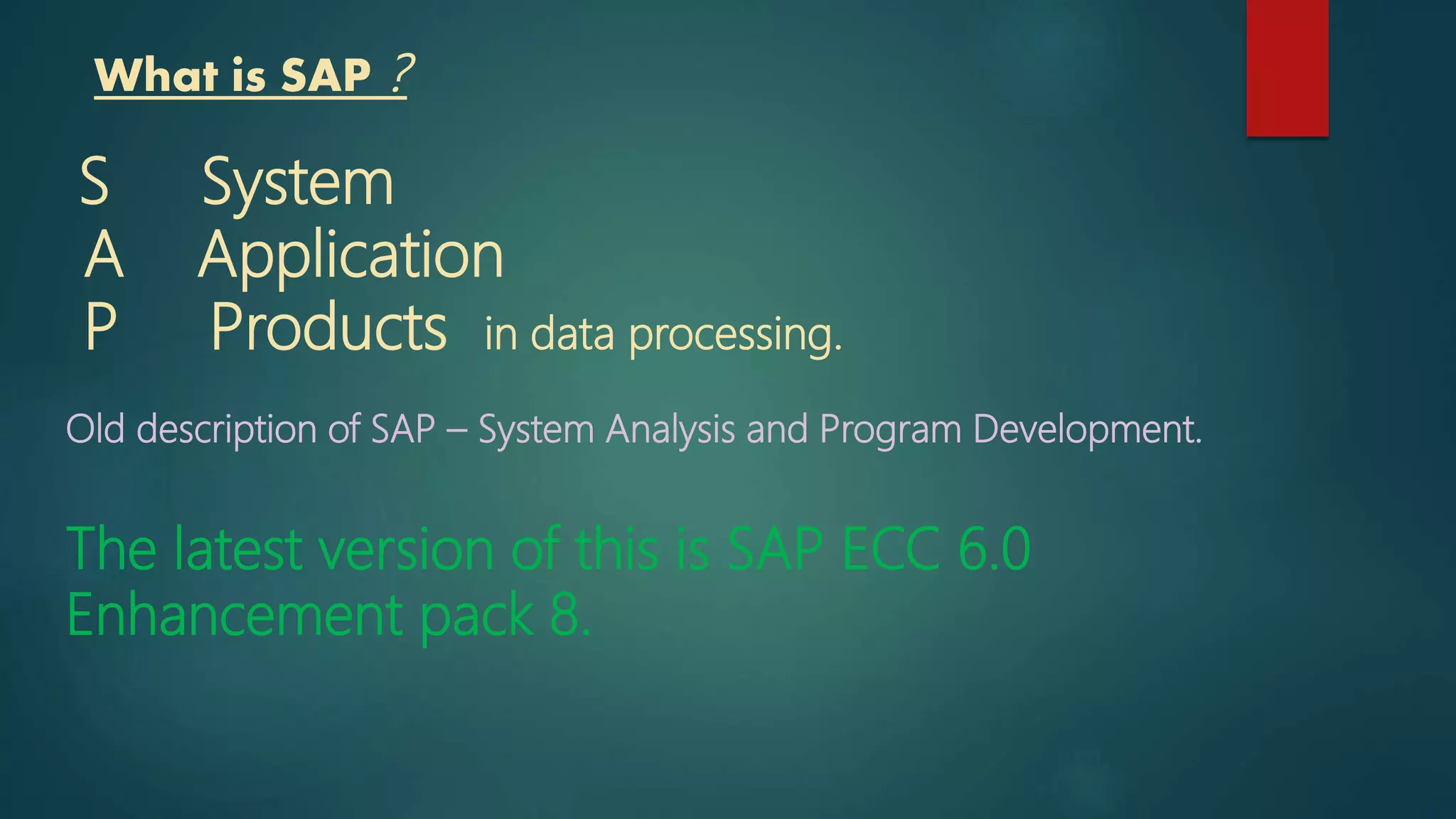
What is SAP ?
S System
A Application
P Products in data processing.
Old description of SAP – System Analysis and Program Development.
The latest version of this is SAP ECC 6.0
Enhancement pack 8.
1972
5 Employee 1. KLAUS TSCHIRA
2. HANS WERNER HEKTOR
3. HASSO PALTTNER
4. DIETMAR HOPP
5. CLAUS WELLENRUTHER
SAP AG was started in
Wall Dorf city, Germany.
IBM
They want to make a ERP Package for all the
department in the world wide.
So they Planned for SAP
SAP ERP Package
SD PP MM FI
BASIS SCMCO ABAP
PE QACRM HR
Now SAP AG company having
full ERP package with diff.
module for all department of
any company at Globally.
IBM
Thanks for being
here !!!!!!
BY:
Keshav Kumar Gangwar
+91 8791032000
+91 9985787479

What is ERP

  • 1.
    Contents 1. What isERP? 2. Why we need ERP? 3. Traditional Business Process. 4. Morden Business Process. 5. Major problem without ERP. 6. Advantages of ERP. 7. Types of ERP. 8. Which TYPE ERP best FOR organization? 9. Introduction of SAP ERP in short.
  • 2.
    What is ERP? E- Enterprise (company, Organization…) R-Resource (money, manpower, machines…) P-Planning (order/method/plan) ERP is an integrated business process management software that allow an organization in which we manage our resources like material, money, manpower, machines according to our process, technology, service & plan .
  • 3.
  • 4.
  • 5.
    Major Problems withoutERP :  1. Risk of duplication of data.  2. Time & money consuming process.  3. Due to timely process customer will not satisfy & not permanent for goods and services.  4. High Inventory, material and labour cost.  5. No real time inventory information.  6. One Departments do not have access data of other departments.  7. Loss of revenue & customer dissatisfaction.  8. Data maintain cost goes up.
  • 6.
    Morden Business Process(CENTRALIZED PROCESS) : ERP Sales Inventory Finance HR Shop Floor execution Vendor Production Planning Customer ERP
  • 7.
    Advantages of ERP Internal advantages:  Integration of a single source of data.  Execution process will be fast.  A real-time system.  Reduced operating costs.  Improved internal communication.  Foundation for future improvement.  Increase Productivity.  Eliminates the duplication, discontinuity and redundancy in data.
  • 8.
    Advantages of ERP Externaladvantages:  Improved customer service and order fulfillment  Improved communication with suppliers and customers  Enhanced competitive position  Increased sales and profits.  Better customer interaction and increased throughput. It also improves customer service. The major benefits of ERP System are : better customer satisfaction, better information, High productivity, better quality and decrease in time to market, delivery time, inventory levels etc.
  • 9.
    Types of ERP: There are different types of ERP systems are available in market:  NON INTEGRATED 1.Orecal Finance 2.Epicor 3.Microsoft dynamics 4.Infor 5.People soft 6.Bann 7.J.D. Edwards  INTEGRATED 1. SAP
  • 10.
    Which Type ERPBest For Organization ? ABC COMPANY Sales Production HR Purchase Finance Oracle finance People Soft BANN JD Edwards BANN
  • 11.
    Which Type ERPBest For Organization ? ABC COMPANY Sales Production HR Purchase Finance Oracle finance People Soft BANN JD Edwards BANN Integration Not Possible
  • 12.
  • 13.
    What is SAP? S System A Application P Products in data processing. Old description of SAP – System Analysis and Program Development. The latest version of this is SAP ECC 6.0 Enhancement pack 8.
  • 14.
    1972 5 Employee 1.KLAUS TSCHIRA 2. HANS WERNER HEKTOR 3. HASSO PALTTNER 4. DIETMAR HOPP 5. CLAUS WELLENRUTHER SAP AG was started in Wall Dorf city, Germany. IBM They want to make a ERP Package for all the department in the world wide. So they Planned for SAP
  • 15.
    SAP ERP Package SDPP MM FI BASIS SCMCO ABAP PE QACRM HR Now SAP AG company having full ERP package with diff. module for all department of any company at Globally. IBM
  • 16.
    Thanks for being here!!!!!! BY: Keshav Kumar Gangwar +91 8791032000 +91 9985787479