-VIVEK CHAUHAN (16081)
B.Sc Forestry (Hons.)
UUHF/College of Forestry
ERGONOMICS
ERGONOMICS-What is it?
Derived from two Greek words:
“Ergon” meaning work
&
“Nomoi” meaning natural laws.
Hence, ergonomists study human
capabilities in relationship to work demands.
Definition :
An applied science concerned with designing
and arranging objects so that people can use
them in a safer and more efficient manner.
• It is a way to make jobs/tasks fit the employees
better.
• It is a way to make work easier.
How does ergonomics affect you?
• It can help you do work safely
• It can make you more comfortable
• It can prevent injuries
• Improve the performance and productivity
• Improve the health & safety
• Ergonomics can reduce the likelihood of an accident.
• The study of ergonomics enables a person to know
how to provide safety for a worker and his
environment.
Types of ergonomics
1.Physical ergonomics is the human body’s responses to physical
and physiological work loads. Repetitive strain injuries from
repetition, vibration, force, and posture fall into this category.
2. Cognitive ergonomics deals with the mental processes and
capacities of humans when at work. Mental strain from
workload, decision making, human error, and training fall into
this category.
3. Organizational ergonomics deals with the organizational
structures, policies and processes in the work environment, such
as shift work, scheduling, job satisfaction, motivation,
supervision, teamwork, telecommuting, and ethics.
Various- aspects :
• the job being done and the demands on the
worker.
• the equipment used.
• the information used.
• the physical environment.
• the social environment.
Ergonomists consider all the
physical aspects of a person :
• body size and shape;
• fitness and strength;
• posture;
• the senses, especially vision, hearing and touch;
and
• the stresses and strains on muscles, joints,
nerves.
Ergonomists also consider the
psychological aspects of a person :
• mental abilities;
• personality;
• knowledge; and
• experience.
Major objectives
• The most productive use of human capabilities
• The maintenance of human health and well-
being
History
• As early as 18th century doctors noted that
workers who required to maintain body positions
for long periods of time developed
musculoskeletal problems.
• Within last 20 years research has clearly
established connections between certain job tasks
and MSD.
1) Static work: musculoskeletal effort required
to hold a certain position, even a comfortable
one.
Example: sit & work at computers;
keeping head and torso upright requires small
or great amounts of static work depending on
the efficiency of the body positions we chose.
What two elements are at work?
• Force: amount of tension our muscles generate
Example: tilting your head forward or backward
from a neutral, vertical position quadruples the
amount of force acting on your lower neck
vertebrae.
What to do ??
• Warm up & stretch before activities that are repetitive, static
or prolonged.
• Take frequent breaks from ANY sustained posture every 20-
30 minutes.
• Respect pain- positions or stop painful activity.
• Recognize early signs of inflammatory process.
PREVENT, PREVENT, PREVENT !!!
• Maintain erect position of back & neck with shoulders
relaxed.
• Position equipment & work directly in front of and close to
your major tasks.
• Keep upper arms close to the body, elbows 90-100 degrees.
• Keep feet flat on floor, upper body weight resting on “sits
bones”.
• Wrists as neutral as possible; safe zone for wrist movement
is 15 degrees in all directions
• Use the largest joints & muscles to do the job
• Use 2 hands to lift rather than one, even with
light objects and tasks.
• Avoid lifting work the forearm in full pronation
(palm down) or supination (palm up)
• Slide or push & pull objects instead of lifting
• Keep reaching to a minimum
• Carry objects close to body at waist level
Body Mechanics :
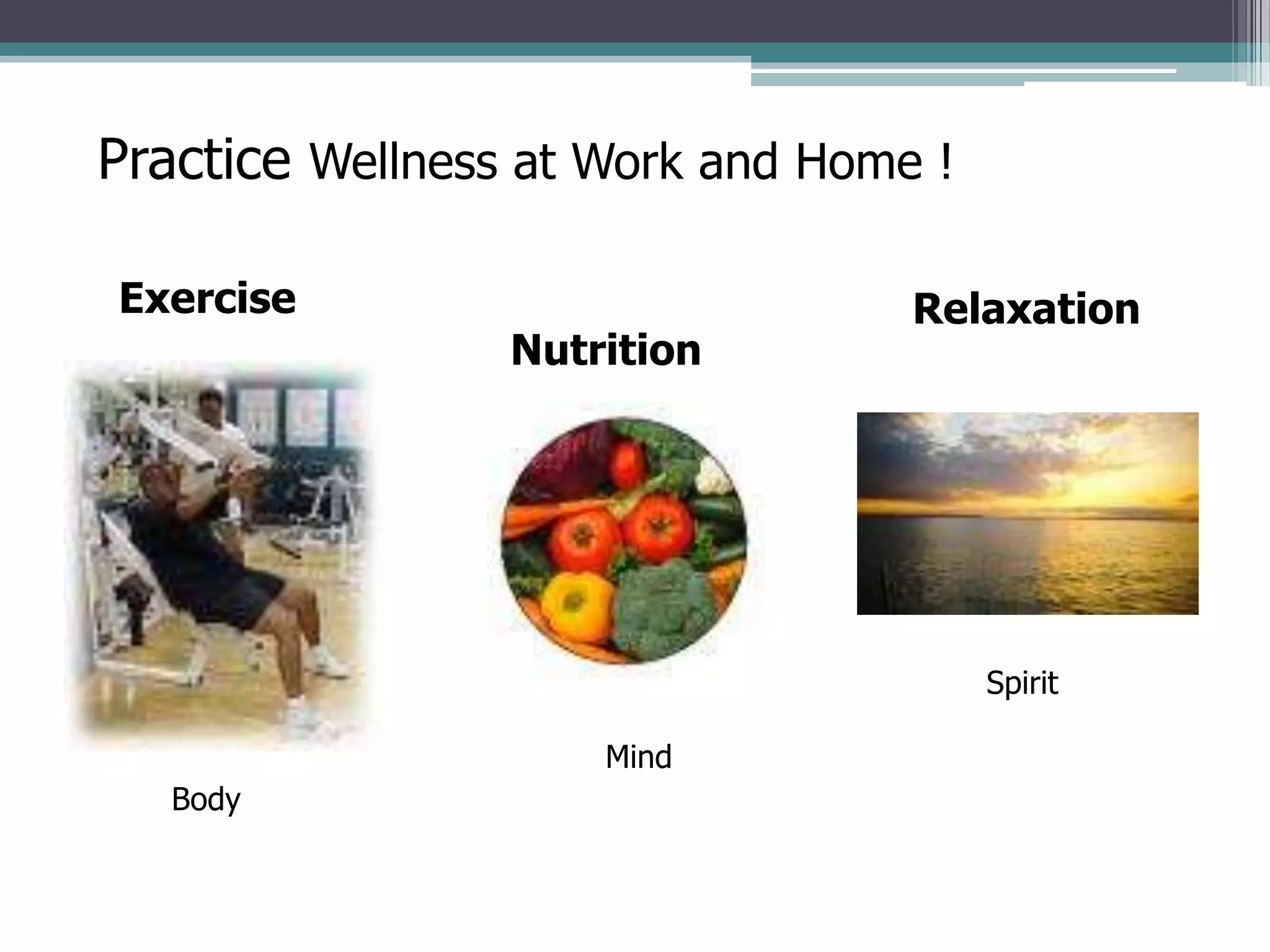
Practice Wellness at Work and Home !
Exercise
Nutrition
Relaxation
Body
Mind
Spirit
The benefits of applying
ergonomic principles:
- Maximize productivity, efficiency and quality.
- Reduce MSD risk by eliminating or minimizing
ergonomic risk factors.
- Improve employee morale.
- Cost savings associated with injury-related
absenteeism, treatment, and new hire training.
 It can help you do work safely.
 It can make you more comfortable.
 It can prevent injuries.
An ounce of Prevention is worth a
pound of cure !
Nutshell
• Minimize ergonomic risk factors in your area.
• Stretch throughout the shift especially before and
after activities that require awkward positions or
lifting.
• Pay attention to your body and know your physical
limitations.
• Report ergonomics issues through appropriate
channels.
• Ergonomic injuries are preventable, and you own
your own safety.

Ergonomics

  • 1.
    -VIVEK CHAUHAN (16081) B.ScForestry (Hons.) UUHF/College of Forestry ERGONOMICS
  • 2.
    ERGONOMICS-What is it? Derivedfrom two Greek words: “Ergon” meaning work & “Nomoi” meaning natural laws. Hence, ergonomists study human capabilities in relationship to work demands.
  • 3.
    Definition : An appliedscience concerned with designing and arranging objects so that people can use them in a safer and more efficient manner. • It is a way to make jobs/tasks fit the employees better. • It is a way to make work easier.
  • 4.
    How does ergonomicsaffect you? • It can help you do work safely • It can make you more comfortable • It can prevent injuries • Improve the performance and productivity • Improve the health & safety • Ergonomics can reduce the likelihood of an accident. • The study of ergonomics enables a person to know how to provide safety for a worker and his environment.
  • 5.
    Types of ergonomics 1.Physicalergonomics is the human body’s responses to physical and physiological work loads. Repetitive strain injuries from repetition, vibration, force, and posture fall into this category. 2. Cognitive ergonomics deals with the mental processes and capacities of humans when at work. Mental strain from workload, decision making, human error, and training fall into this category. 3. Organizational ergonomics deals with the organizational structures, policies and processes in the work environment, such as shift work, scheduling, job satisfaction, motivation, supervision, teamwork, telecommuting, and ethics.
  • 6.
    Various- aspects : •the job being done and the demands on the worker. • the equipment used. • the information used. • the physical environment. • the social environment.
  • 7.
    Ergonomists consider allthe physical aspects of a person : • body size and shape; • fitness and strength; • posture; • the senses, especially vision, hearing and touch; and • the stresses and strains on muscles, joints, nerves.
  • 8.
    Ergonomists also considerthe psychological aspects of a person : • mental abilities; • personality; • knowledge; and • experience.
  • 9.
    Major objectives • Themost productive use of human capabilities • The maintenance of human health and well- being
  • 10.
    History • As earlyas 18th century doctors noted that workers who required to maintain body positions for long periods of time developed musculoskeletal problems. • Within last 20 years research has clearly established connections between certain job tasks and MSD.
  • 11.
    1) Static work:musculoskeletal effort required to hold a certain position, even a comfortable one. Example: sit & work at computers; keeping head and torso upright requires small or great amounts of static work depending on the efficiency of the body positions we chose. What two elements are at work?
  • 12.
    • Force: amountof tension our muscles generate Example: tilting your head forward or backward from a neutral, vertical position quadruples the amount of force acting on your lower neck vertebrae.
  • 13.
    What to do?? • Warm up & stretch before activities that are repetitive, static or prolonged. • Take frequent breaks from ANY sustained posture every 20- 30 minutes. • Respect pain- positions or stop painful activity. • Recognize early signs of inflammatory process. PREVENT, PREVENT, PREVENT !!!
  • 14.
    • Maintain erectposition of back & neck with shoulders relaxed. • Position equipment & work directly in front of and close to your major tasks. • Keep upper arms close to the body, elbows 90-100 degrees. • Keep feet flat on floor, upper body weight resting on “sits bones”. • Wrists as neutral as possible; safe zone for wrist movement is 15 degrees in all directions
  • 15.
    • Use thelargest joints & muscles to do the job • Use 2 hands to lift rather than one, even with light objects and tasks. • Avoid lifting work the forearm in full pronation (palm down) or supination (palm up) • Slide or push & pull objects instead of lifting • Keep reaching to a minimum • Carry objects close to body at waist level Body Mechanics :
  • 16.
    Practice Wellness atWork and Home ! Exercise Nutrition Relaxation Body Mind Spirit
  • 17.
    The benefits ofapplying ergonomic principles: - Maximize productivity, efficiency and quality. - Reduce MSD risk by eliminating or minimizing ergonomic risk factors. - Improve employee morale. - Cost savings associated with injury-related absenteeism, treatment, and new hire training.  It can help you do work safely.  It can make you more comfortable.  It can prevent injuries.
  • 18.
    An ounce ofPrevention is worth a pound of cure !
  • 19.
    Nutshell • Minimize ergonomicrisk factors in your area. • Stretch throughout the shift especially before and after activities that require awkward positions or lifting. • Pay attention to your body and know your physical limitations. • Report ergonomics issues through appropriate channels. • Ergonomic injuries are preventable, and you own your own safety.