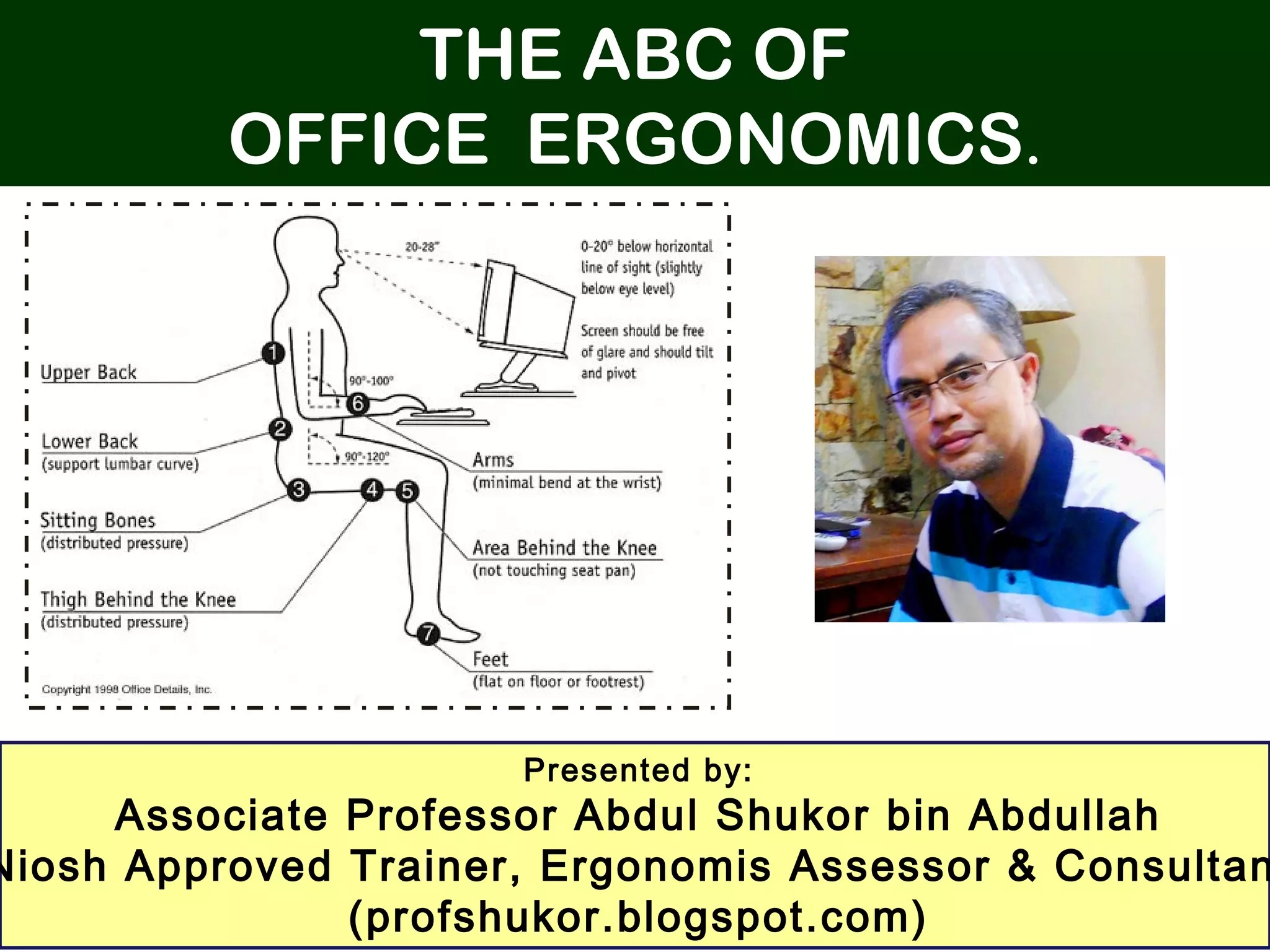
THE ABC OF
OFFICE ERGONOMICS.
Presented by:
Associate Professor Abdul Shukor bin Abdullah
Niosh Approved Trainer, Ergonomis Assessor & Consultan
(profshukor.blogspot.com)
2
Objectives Of Today’s Talk
At the end of this talk, participants ill be able to gain an
awareness and able to understand on:
1. National Regulations on Occupational Safety & Health
Hazards
2. Office Ergonomics
3. Practical Counter Measures to minimise the risks to
Body Health and overall Safety at work
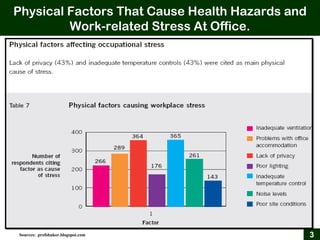
Physical Factors That Cause Health Hazards and
Work-related Stress At Office.
3Sources: profshukor.blogspot.com
What is ERGONOMICS?
4
‘Ergonomics’ is derived from two Greek words
Ergon meaning ‘work’ and
Nomos meaning ‘principles or laws’
Ergonomics = The Science of WorkErgonomics = The Science of Work
Ergonomics is not a new science, although the term
has become more common lately. The phrase
was first coined in 1857.
Definition of ERGONOMICS
5
“Ergonomics is essentially fitting the
workplace to the worker. The
better the fit the higher the level of
safety and worker efficiency.”
Fitting the Task to the Human ~
Grandjean 1990
Occupational Safety & Health Act (OSHA)
1994 - Ministry of Human Resource
6
OSHA 1994 is a set of regulations enacted in
Parliament with a broad scope involving many
Sections. In its broadest sense, the Act aims at:
● the promotion and maintenance of the highest
degree of physical, mental and social well-
being of workers in all occupations;
● the prevention among workers of
adverse effects on health caused by their
working conditions;
7
● the placing and maintenance of workers in an
occupational environment adapted to physical
and mental needs; (right person for the job)
● the adaptation of work to humans. (task fits to
the worker’s capability’)
Occupational Safety & Health Act (OSHA)
1994 - Ministry of Human Resource
Both EMPLOYERS and EMPLOYEES can be prosecuted and penalised
under OSHA 1994
Sections 15, 16, 17, 18 – General Duties of EMPLOYERS
Sections 24, 25, 26, 27 – General Duties of EMPLOYEES
Office Environmental Factors
8
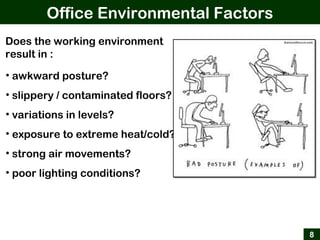
• awkward posture?
• slippery / contaminated floors?
• variations in levels?
• exposure to extreme heat/cold?
• strong air movements?
• poor lighting conditions?
Does the working environment
result in :
Employees who have discomfort problems at office.
9
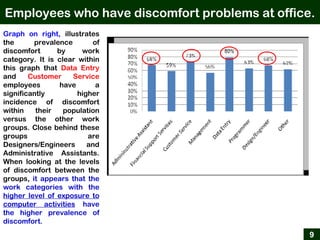
Graph on right, illustrates
the prevalence of
discomfort by work
category. It is clear within
this graph that Data Entry
and Customer Service
employees have a
significantly higher
incidence of discomfort
within their population
versus the other work
groups. Close behind these
groups are
Designers/Engineers and
Administrative Assistants.
When looking at the levels
of discomfort between the
groups, it appears that the
work categories with the
higher level of exposure to
computer activities have
the higher prevalence of
discomfort.
Major Cause: SEDENTARY Activities
10
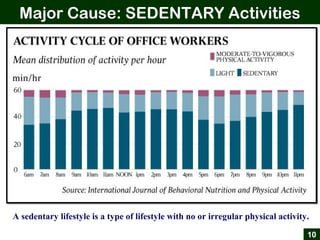
A sedentary lifestyle is a type of lifestyle with no or irregular physical activity.
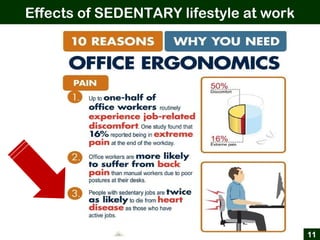
Effects of SEDENTARY lifestyle at work
11
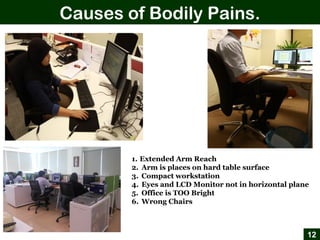
Causes of Bodily Pains.
12
1. Extended Arm Reach
2. Arm is places on hard table surface
3. Compact workstation
4. Eyes and LCD Monitor not in horizontal plane
5. Office is TOO Bright
6. Wrong Chairs
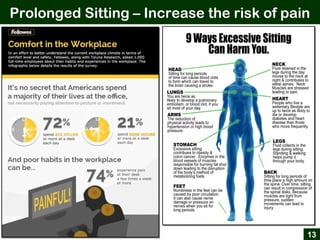
Prolonged Sitting – Increase the risk of pain
13
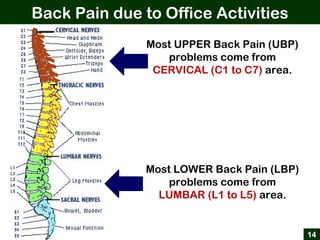
Back Pain due to Office Activities
14
Most UPPER Back Pain (UBP)
problems come from
CERVICAL (C1 to C7) area.
Most LOWER Back Pain (LBP)
problems come from
LUMBAR (L1 to L5) area.
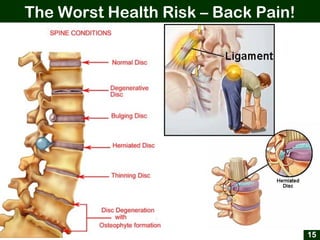
The Worst Health Risk – Back Pain!
15
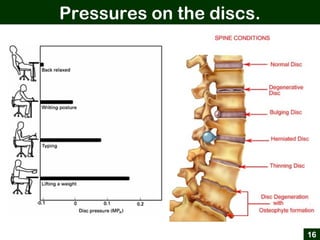
Pressures on the discs.
16
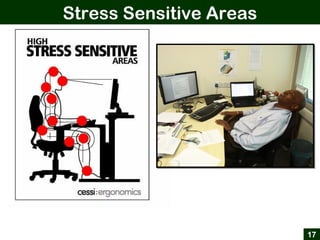
Stress Sensitive Areas
17
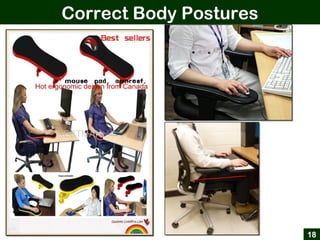
Correct Body Postures
18
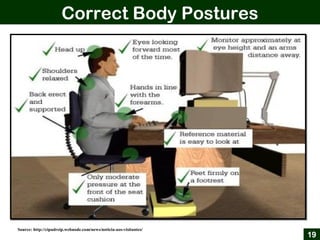
Correct Body Postures
19
Source: http://cipadreip.webnode.com/news/noticia-aos-visitantes/
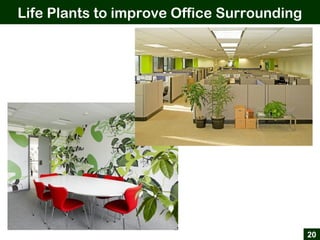
Life Plants to improve Office Surrounding
20
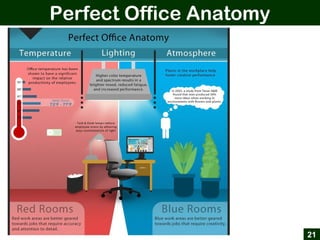
Perfect Office Anatomy
21
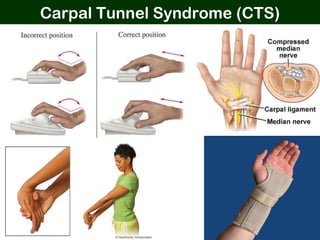
Carpal Tunnel Syndrome (CTS)
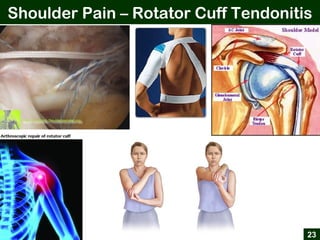
Shoulder Pain – Rotator Cuff Tendonitis
23
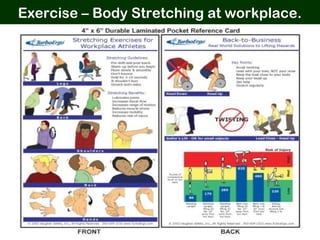
Exercise – Body Stretching at workplace.
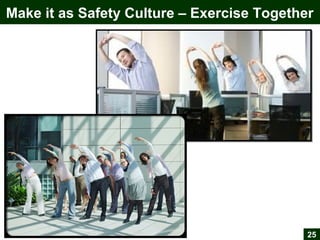
Make it as Safety Culture – Exercise Together
25
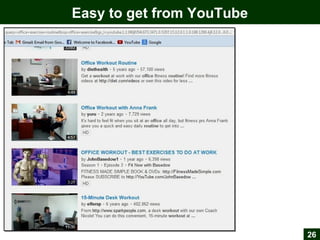
Easy to get from YouTube
26
Action Plan For You…
27
Form A Team or Committee
Identify Sources of the Safety and Health Hazards
Select and Develop Counter Measures and Effective Solutions
Set 1 Day for Office ‘Community Program’
Green the OFFICE
Install Proper Workstation Equipment
THANK YOU.
28
Questions?
TQ and Take care of your health and safety.
Prof. Abdul Shukor
Email: prof.shukor@gmail.com

OFFICE ERGONOMICS: WHAT, HOW & WHY. An Essential Reading For Office Workers.

  • 1.
    THE ABC OF OFFICEERGONOMICS. Presented by: Associate Professor Abdul Shukor bin Abdullah Niosh Approved Trainer, Ergonomis Assessor & Consultan (profshukor.blogspot.com)
  • 2.
    2 Objectives Of Today’sTalk At the end of this talk, participants ill be able to gain an awareness and able to understand on: 1. National Regulations on Occupational Safety & Health Hazards 2. Office Ergonomics 3. Practical Counter Measures to minimise the risks to Body Health and overall Safety at work
  • 3.
    Physical Factors ThatCause Health Hazards and Work-related Stress At Office. 3Sources: profshukor.blogspot.com
  • 4.
    What is ERGONOMICS? 4 ‘Ergonomics’is derived from two Greek words Ergon meaning ‘work’ and Nomos meaning ‘principles or laws’ Ergonomics = The Science of WorkErgonomics = The Science of Work Ergonomics is not a new science, although the term has become more common lately. The phrase was first coined in 1857.
  • 5.
    Definition of ERGONOMICS 5 “Ergonomicsis essentially fitting the workplace to the worker. The better the fit the higher the level of safety and worker efficiency.” Fitting the Task to the Human ~ Grandjean 1990
  • 6.
    Occupational Safety &Health Act (OSHA) 1994 - Ministry of Human Resource 6 OSHA 1994 is a set of regulations enacted in Parliament with a broad scope involving many Sections. In its broadest sense, the Act aims at: ● the promotion and maintenance of the highest degree of physical, mental and social well- being of workers in all occupations; ● the prevention among workers of adverse effects on health caused by their working conditions;
  • 7.
    7 ● the placingand maintenance of workers in an occupational environment adapted to physical and mental needs; (right person for the job) ● the adaptation of work to humans. (task fits to the worker’s capability’) Occupational Safety & Health Act (OSHA) 1994 - Ministry of Human Resource Both EMPLOYERS and EMPLOYEES can be prosecuted and penalised under OSHA 1994 Sections 15, 16, 17, 18 – General Duties of EMPLOYERS Sections 24, 25, 26, 27 – General Duties of EMPLOYEES
  • 8.
    Office Environmental Factors 8 •awkward posture? • slippery / contaminated floors? • variations in levels? • exposure to extreme heat/cold? • strong air movements? • poor lighting conditions? Does the working environment result in :
  • 9.
    Employees who havediscomfort problems at office. 9 Graph on right, illustrates the prevalence of discomfort by work category. It is clear within this graph that Data Entry and Customer Service employees have a significantly higher incidence of discomfort within their population versus the other work groups. Close behind these groups are Designers/Engineers and Administrative Assistants. When looking at the levels of discomfort between the groups, it appears that the work categories with the higher level of exposure to computer activities have the higher prevalence of discomfort.
  • 10.
    Major Cause: SEDENTARYActivities 10 A sedentary lifestyle is a type of lifestyle with no or irregular physical activity.
  • 11.
    Effects of SEDENTARYlifestyle at work 11
  • 12.
    Causes of BodilyPains. 12 1. Extended Arm Reach 2. Arm is places on hard table surface 3. Compact workstation 4. Eyes and LCD Monitor not in horizontal plane 5. Office is TOO Bright 6. Wrong Chairs
  • 13.
    Prolonged Sitting –Increase the risk of pain 13
  • 14.
    Back Pain dueto Office Activities 14 Most UPPER Back Pain (UBP) problems come from CERVICAL (C1 to C7) area. Most LOWER Back Pain (LBP) problems come from LUMBAR (L1 to L5) area.
  • 15.
    The Worst HealthRisk – Back Pain! 15
  • 16.
  • 17.
  • 18.
  • 19.
    Correct Body Postures 19 Source:http://cipadreip.webnode.com/news/noticia-aos-visitantes/
  • 20.
    Life Plants toimprove Office Surrounding 20
  • 21.
  • 22.
  • 23.
    Shoulder Pain –Rotator Cuff Tendonitis 23
  • 24.
    Exercise – BodyStretching at workplace.
  • 25.
    Make it asSafety Culture – Exercise Together 25
  • 26.
    Easy to getfrom YouTube 26
  • 27.
    Action Plan ForYou… 27 Form A Team or Committee Identify Sources of the Safety and Health Hazards Select and Develop Counter Measures and Effective Solutions Set 1 Day for Office ‘Community Program’ Green the OFFICE Install Proper Workstation Equipment
  • 28.
    THANK YOU. 28 Questions? TQ andTake care of your health and safety. Prof. Abdul Shukor Email: prof.shukor@gmail.com