There are few information system whose
design and implementation challenge a
company like ERP.
A new ERP implementation can
dramatically improve business process.
But when an implementation fails or takes
a prolonged and huge amounts of money
and effort could be misspent(unwanted
expenses)
 Inadequate Definition of Requirement
 Resistance to change
 Inadequate Resource
 Inadequate Training and Education
 Lack of Top MGMT support
 Unrealistic Expectations of benefits
 Miscalculation of time and efforts
 Poor communication
 S/W business process incompatibility
 Poor Project design and MGMT
 Poor ERP package selection
 Other
ERP implementation are more likely to fail,
be delayed, cost more than forecast or fail
to deliver full functionality than they are to
succeed
It is important to be aware of how ERP as
a technology evolved, what its strengths
and weaknesses are and the nature of
important implementation challenges
1. Inadequate definition of requirements is on
of the major challenges faced by the
implementation team.
2. The requirements definition should clearly
specify the issues and problems that the
ERP system is supposed to solve.
3. If the requirements are properly specified
then the implementation team can go about
their job including selection of the ERP
package that is best suited to meet these
needs, the area where customization is
needed.
4. Failing to provide these (which is the
managements responsibility)could result
in the selection of the wrong ERP
package, unnecessary customization,
lack of employee re-training and so on, all
of which can result in the failure of the
ERP implementation.
1. Implementing an ERP system is a change
and it is human nature to resist change.
2. So any ERP implementation will face
some amount of resistance.
3. User will be skeptical (dilemma) about the
new system.
4. But for successful implementation of ERP
the co-operation of every one is required .
5. ERP is first an attitude, then a system.
6. So if employees are not convinced about
the importance of ERP and the benefits of
using an ERP tool or system they will not
be fully co-operative.
7. Which can result in the failure of the
system.
1. The biggest ERP challenge faced by
organizations is recognizing that the integration
of previously un-integrated job functions requires
that knowledge/expert workers support.
2. Understanding has a specific definition in an ERP
context: “Understanding an architecture”
indicates that the organizational legacy systems
and the ERP are documented and
articulated(expressed) as a digital blueprint
illustrating the interconnections among the
component metadata.
1. ERP implementation is a very costly
matter that requires a variety of
resources- money, manpower, s/w, h/w,
and so on.
2. It is not like that the company mgmt
would support the idea of unlimited
funding for ERP implementation project.
3. Instead of that it should from control
stance (point of view) a budget needs to
be established.
4. And this will be based on an estimate of the
likely costs.
5. There are many things/items that will be
missed during the preparation of the budget
but will consume money during the
implementation
6. The long implementation duration will
escalate (increase) money costs.
7. Getting the right persons with necessary
skills, aptitude and enthusiasm is one of the
most difficult tasks faced by ERP
implementation team.
1. The commitment of top management to the
diffusion(spread) of innovations throughout an
organization has been well documented.
2. In initial project’s life, no single factor is
responsible/predictive of its success as the
support of top management
3. The role of top mgmt , in IT implementations
include developing an understanding of the
capabilities and limitations of IT, establishing
reasonable goals for IT systems, strong
commitment to the successful implementation of
IT and communicating the corporate IT strategy
to all employees.
4. So going ahead without solid backing from top
management is a sure for disaster.
1. The management should make sure that
the organization, the work process and
the employees are
amenable(ready/willing) to adapt to the
ERP system.
1. The role of training to facilitate software
implementation is well documented in the
Management Information System (MIS).
2. Lack of user training and failure to
completely understand how enterprise
applications change business processes
frequently appear to be responsible for
problem ERP implementations and failures.
3. ERP projects appear to have a 6 month
learning curve at the beginning of the
project.
4. Minimally persons who uses ERP system
need to be trained on how they work and
how they relate to the business process
early on in implementation process.
5. Although many companies use consultants
to help during the implementation process, it
is important to transfer that knowledge from
consultant to internal employee through
training.
1. Information system failure has been defined as
the inability of an Information System to meet a
specific stakeholder groups expectations and
successfully managing user expectations has
been found to be related to successful system
implementation.
2. The expectations of a company may exceed the
capabilities of the system.
3. ERP systems may fail to meet expectations
despite positive contributions to the organization
if , the systems are oversold by the vendors.
1. Selecting a good ERP solution provider is
another challenge.
2. Analyze the capabilities of the ERP service
provider and make sure the provider has the
capabilities and the expertise to provide you
with a good solution.
3. The choice of the package involves
important decisions regarding budgets, time
frames, goals and deliverables that will
shape the entire project.
1. Project management activities span the
life of the project from initiating the project
to closing it.
2. The project planning and control is a
function of the project’s characteristics
such as project size, experiences with the
technology and project structure.

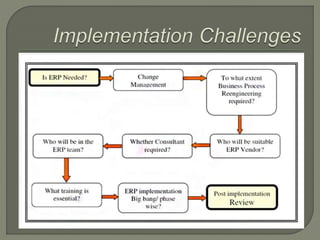
ERP Implementation challenges

  • 3.
    There are fewinformation system whose design and implementation challenge a company like ERP. A new ERP implementation can dramatically improve business process. But when an implementation fails or takes a prolonged and huge amounts of money and effort could be misspent(unwanted expenses)
  • 4.
     Inadequate Definitionof Requirement  Resistance to change  Inadequate Resource  Inadequate Training and Education  Lack of Top MGMT support  Unrealistic Expectations of benefits  Miscalculation of time and efforts  Poor communication  S/W business process incompatibility  Poor Project design and MGMT  Poor ERP package selection  Other
  • 5.
    ERP implementation aremore likely to fail, be delayed, cost more than forecast or fail to deliver full functionality than they are to succeed It is important to be aware of how ERP as a technology evolved, what its strengths and weaknesses are and the nature of important implementation challenges
  • 6.
    1. Inadequate definitionof requirements is on of the major challenges faced by the implementation team. 2. The requirements definition should clearly specify the issues and problems that the ERP system is supposed to solve. 3. If the requirements are properly specified then the implementation team can go about their job including selection of the ERP package that is best suited to meet these needs, the area where customization is needed.
  • 7.
    4. Failing toprovide these (which is the managements responsibility)could result in the selection of the wrong ERP package, unnecessary customization, lack of employee re-training and so on, all of which can result in the failure of the ERP implementation.
  • 8.
    1. Implementing anERP system is a change and it is human nature to resist change. 2. So any ERP implementation will face some amount of resistance. 3. User will be skeptical (dilemma) about the new system. 4. But for successful implementation of ERP the co-operation of every one is required .
  • 9.
    5. ERP isfirst an attitude, then a system. 6. So if employees are not convinced about the importance of ERP and the benefits of using an ERP tool or system they will not be fully co-operative. 7. Which can result in the failure of the system.
  • 10.
    1. The biggestERP challenge faced by organizations is recognizing that the integration of previously un-integrated job functions requires that knowledge/expert workers support. 2. Understanding has a specific definition in an ERP context: “Understanding an architecture” indicates that the organizational legacy systems and the ERP are documented and articulated(expressed) as a digital blueprint illustrating the interconnections among the component metadata.
  • 11.
    1. ERP implementationis a very costly matter that requires a variety of resources- money, manpower, s/w, h/w, and so on. 2. It is not like that the company mgmt would support the idea of unlimited funding for ERP implementation project. 3. Instead of that it should from control stance (point of view) a budget needs to be established.
  • 12.
    4. And thiswill be based on an estimate of the likely costs. 5. There are many things/items that will be missed during the preparation of the budget but will consume money during the implementation 6. The long implementation duration will escalate (increase) money costs. 7. Getting the right persons with necessary skills, aptitude and enthusiasm is one of the most difficult tasks faced by ERP implementation team.
  • 13.
    1. The commitmentof top management to the diffusion(spread) of innovations throughout an organization has been well documented. 2. In initial project’s life, no single factor is responsible/predictive of its success as the support of top management 3. The role of top mgmt , in IT implementations include developing an understanding of the capabilities and limitations of IT, establishing reasonable goals for IT systems, strong commitment to the successful implementation of IT and communicating the corporate IT strategy to all employees. 4. So going ahead without solid backing from top management is a sure for disaster.
  • 14.
    1. The managementshould make sure that the organization, the work process and the employees are amenable(ready/willing) to adapt to the ERP system.
  • 15.
    1. The roleof training to facilitate software implementation is well documented in the Management Information System (MIS). 2. Lack of user training and failure to completely understand how enterprise applications change business processes frequently appear to be responsible for problem ERP implementations and failures. 3. ERP projects appear to have a 6 month learning curve at the beginning of the project.
  • 16.
    4. Minimally personswho uses ERP system need to be trained on how they work and how they relate to the business process early on in implementation process. 5. Although many companies use consultants to help during the implementation process, it is important to transfer that knowledge from consultant to internal employee through training.
  • 17.
    1. Information systemfailure has been defined as the inability of an Information System to meet a specific stakeholder groups expectations and successfully managing user expectations has been found to be related to successful system implementation. 2. The expectations of a company may exceed the capabilities of the system. 3. ERP systems may fail to meet expectations despite positive contributions to the organization if , the systems are oversold by the vendors.
  • 18.
    1. Selecting agood ERP solution provider is another challenge. 2. Analyze the capabilities of the ERP service provider and make sure the provider has the capabilities and the expertise to provide you with a good solution. 3. The choice of the package involves important decisions regarding budgets, time frames, goals and deliverables that will shape the entire project.
  • 19.
    1. Project managementactivities span the life of the project from initiating the project to closing it. 2. The project planning and control is a function of the project’s characteristics such as project size, experiences with the technology and project structure.