By: Steph , Lindsey, Kerri, Sam, Steffi, and Katie
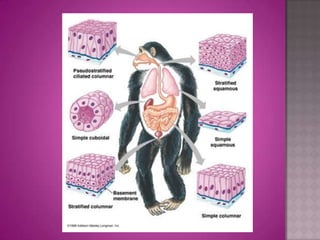
 Count   the layers
    Simple: 1 layer
    Stratified: looks and is several layers
    Pseudostratified / Transitional: Looks like several
     layers, but all the cells contact the basement membrane
 What   cell is on the top layer?
    Squamous: Flat (scaly)
    Cuboidal: about as wide as it is tall
    Columnar: much taller than it is wide
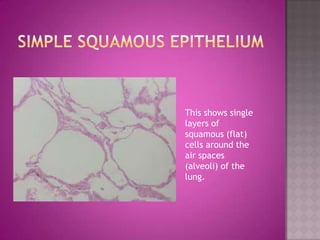
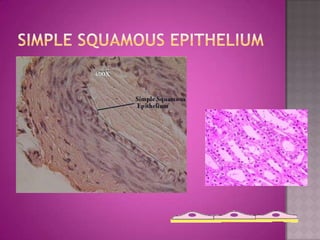
 Singlelayer of thin squamous cells resting on
  a basement membrane
 Location:
     Air sac of lungs
     Forms the walls of capillaries
     Forms serous membranes
         Membranes that lines the ventral body cavity and
          cavity and covers the organs inside it
This shows single
layers of
squamous (flat)
cells around the
air spaces
(alveoli) of the
lung.
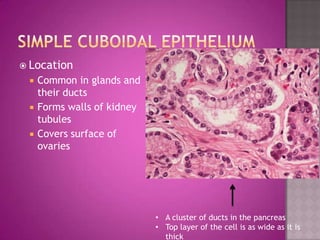
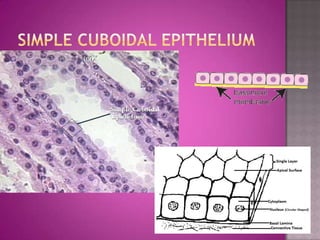
 Location
    Common in glands and
     their ducts
    Forms walls of kidney
     tubules
    Covers surface of
     ovaries


                             • A cluster of ducts in the pancreas
                             • Top layer of the cell is as wide as it is
                               thick
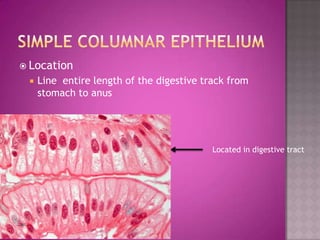
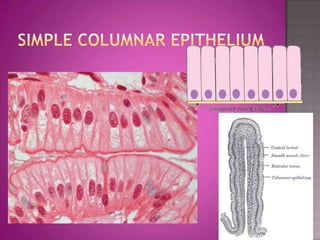
 Location
    Line entire length of the digestive track from
     stomach to anus


                                           Located in digestive tract
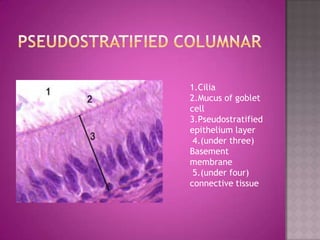
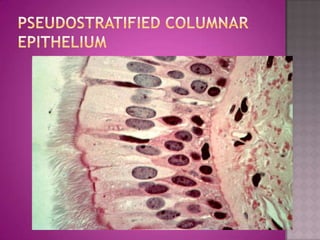
 Nonciliated type in male’s sperm-carrying
 ducts of large glands; ciliated variety lines
 the trachea, most of the upper respiratory
 tract
1.Cilia
2.Mucus of goblet
cell
3.Pseudostratified
epithelium layer
 4.(under three)
Basement
membrane
 5.(under four)
connective tissue
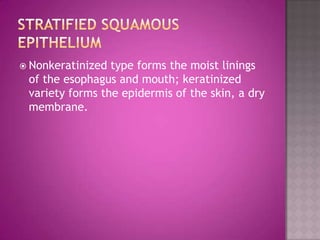
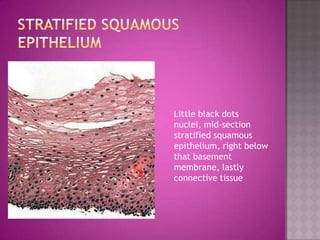
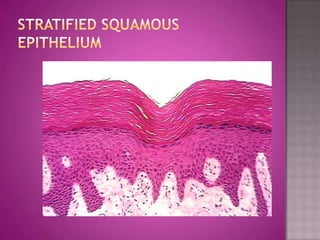
 Nonkeratinized type forms the moist linings
 of the esophagus and mouth; keratinized
 variety forms the epidermis of the skin, a dry
 membrane.
Little black dots
nuclei, mid-section
stratified squamous
epithelium, right below
that basement
membrane, lastly
connective tissue
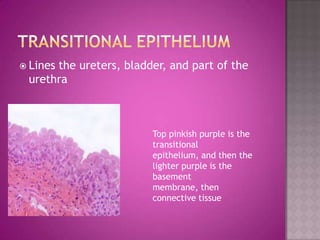
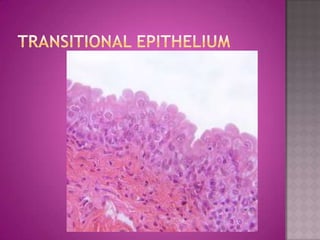
 Lines
      the ureters, bladder, and part of the
 urethra


                        Top pinkish purple is the
                        transitional
                        epithelium, and then the
                        lighter purple is the
                        basement
                        membrane, then
                        connective tissue
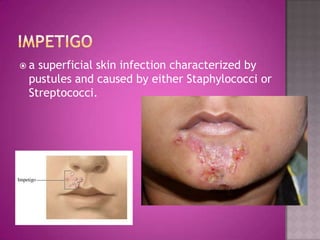
Impetigo
a superficial skin infection characterized by
 pustules and caused by either Staphylococci or
 Streptococci.
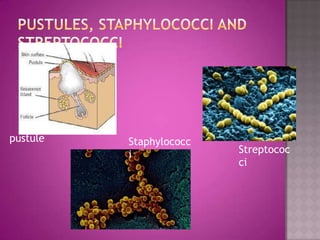
pustule   Staphylococc
          i              Streptococ
                         ci
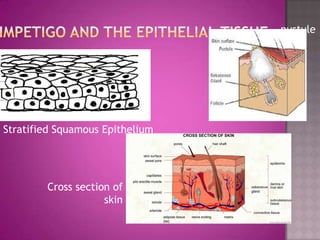
pustule


Stratified Squamous Epithelium


        Cross section of
                    skin
• Inflammatory, chronically
  relapsing, non-contagious and itchy
  skin disorder
• Type of eczema
• Also known as "prurigo Besnier,"
  "neurodermitis," "endogenous
  eczema," "flexural eczema,"
  "infantile eczema," and "prurigo
  diathésique
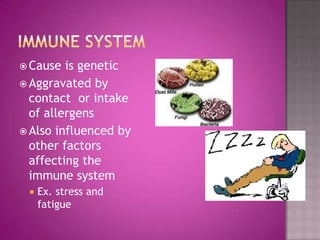
 Cause  is genetic
 Aggravated by
  contact or intake
  of allergens
 Also influenced by
  other factors
  affecting the
  immune system
    Ex. stress and
     fatigue
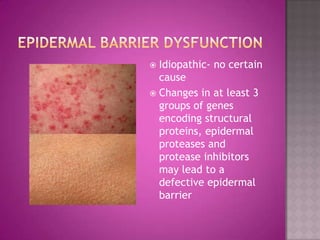
 Idiopathic- no certain
  cause
 Changes in at least 3
  groups of genes
  encoding structural
  proteins, epidermal
  proteases and
  protease inhibitors
  may lead to a
  defective epidermal
  barrier
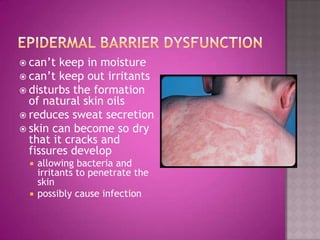
 can’t keep in moisture
 can’t keep out irritants
 disturbs the formation
  of natural skin oils
 reduces sweat secretion
 skin can become so dry
  that it cracks and
  fissures develop
  allowing bacteria and
   irritants to penetrate the
   skin
  possibly cause infection

Epithelium tissue

  • 1.
    By: Steph ,Lindsey, Kerri, Sam, Steffi, and Katie
  • 2.
     Count the layers  Simple: 1 layer  Stratified: looks and is several layers  Pseudostratified / Transitional: Looks like several layers, but all the cells contact the basement membrane  What cell is on the top layer?  Squamous: Flat (scaly)  Cuboidal: about as wide as it is tall  Columnar: much taller than it is wide
  • 3.
     Singlelayer ofthin squamous cells resting on a basement membrane  Location:  Air sac of lungs  Forms the walls of capillaries  Forms serous membranes  Membranes that lines the ventral body cavity and cavity and covers the organs inside it
  • 4.
    This shows single layersof squamous (flat) cells around the air spaces (alveoli) of the lung.
  • 5.
     Location  Common in glands and their ducts  Forms walls of kidney tubules  Covers surface of ovaries • A cluster of ducts in the pancreas • Top layer of the cell is as wide as it is thick
  • 6.
     Location  Line entire length of the digestive track from stomach to anus Located in digestive tract
  • 7.
     Nonciliated typein male’s sperm-carrying ducts of large glands; ciliated variety lines the trachea, most of the upper respiratory tract
  • 8.
    1.Cilia 2.Mucus of goblet cell 3.Pseudostratified epitheliumlayer 4.(under three) Basement membrane 5.(under four) connective tissue
  • 9.
     Nonkeratinized typeforms the moist linings of the esophagus and mouth; keratinized variety forms the epidermis of the skin, a dry membrane.
  • 10.
    Little black dots nuclei,mid-section stratified squamous epithelium, right below that basement membrane, lastly connective tissue
  • 11.
     Lines the ureters, bladder, and part of the urethra Top pinkish purple is the transitional epithelium, and then the lighter purple is the basement membrane, then connective tissue
  • 13.
  • 14.
    a superficial skininfection characterized by pustules and caused by either Staphylococci or Streptococci.
  • 15.
    pustule Staphylococc i Streptococ ci
  • 16.
  • 23.
    • Inflammatory, chronically relapsing, non-contagious and itchy skin disorder • Type of eczema • Also known as "prurigo Besnier," "neurodermitis," "endogenous eczema," "flexural eczema," "infantile eczema," and "prurigo diathésique
  • 24.
     Cause is genetic  Aggravated by contact or intake of allergens  Also influenced by other factors affecting the immune system  Ex. stress and fatigue
  • 25.
     Idiopathic- nocertain cause  Changes in at least 3 groups of genes encoding structural proteins, epidermal proteases and protease inhibitors may lead to a defective epidermal barrier
  • 26.
     can’t keepin moisture  can’t keep out irritants  disturbs the formation of natural skin oils  reduces sweat secretion  skin can become so dry that it cracks and fissures develop  allowing bacteria and irritants to penetrate the skin  possibly cause infection