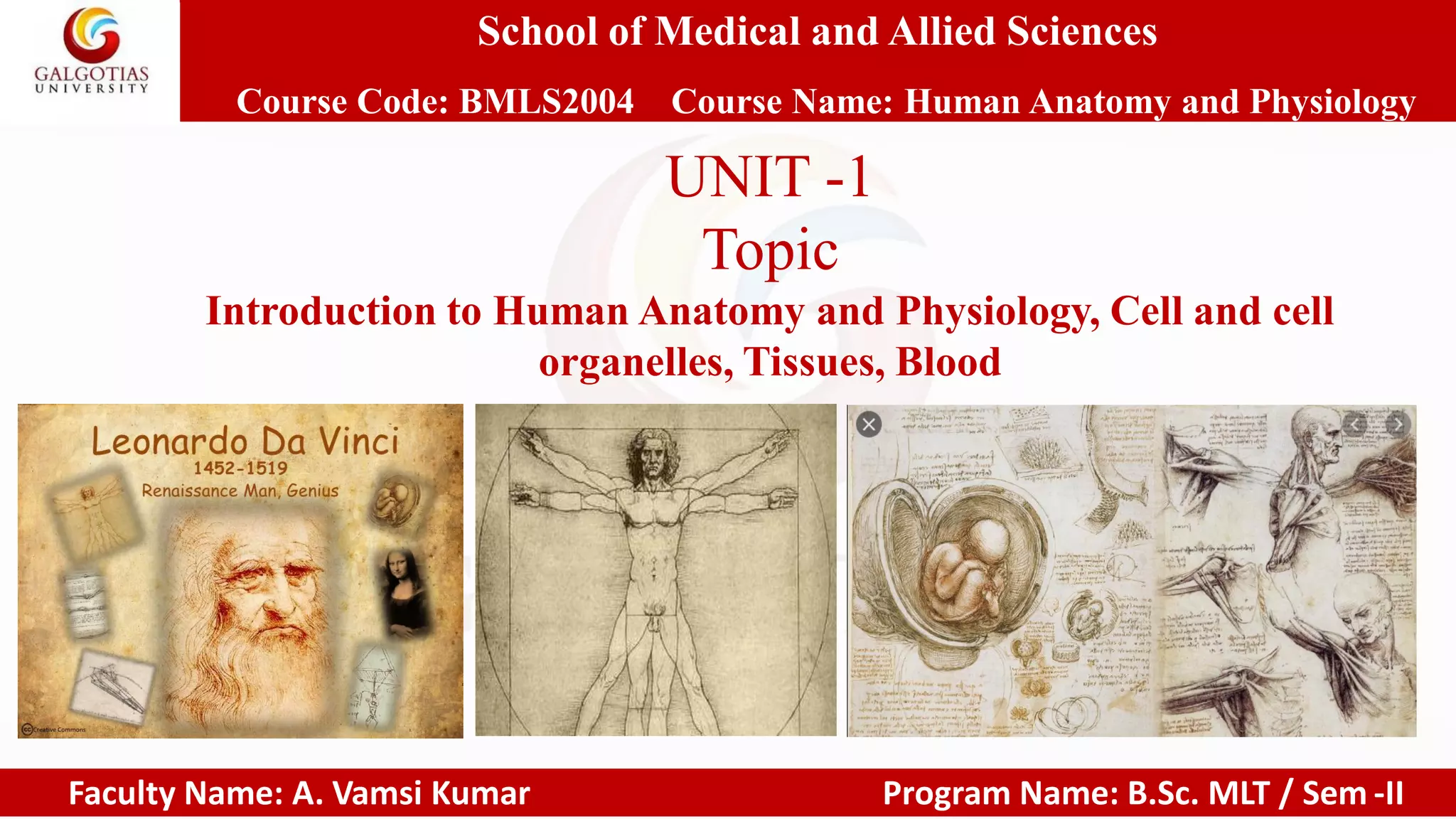
School of Medical and Allied Sciences
Course Code: BMLS2004 Course Name: Human Anatomy and Physiology
Faculty Name: A. Vamsi Kumar Program Name: B.Sc. MLT / Sem -II
UNIT -1
Topic
Introduction to Human Anatomy and Physiology, Cell and cell
organelles, Tissues, Blood
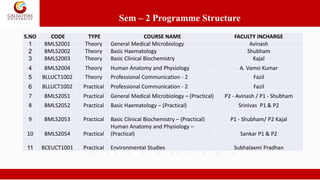
Sem – 2 Programme Structure
S.NO CODE TYPE COURSE NAME FACULTY INCHARGE
1 BMLS2001 Theory General Medical Microbiology Avinash
2 BMLS2002 Theory Basic Haematology Shubham
3 BMLS2003 Theory Basic Clinical Biochemistry Kajal
4 BMLS2004 Theory Human Anatomy and Physiology A. Vamsi Kumar
5 BLLUCT1002 Theory Professional Communication - 2 Fazil
6 BLLUCT1002 Practical Professional Communication - 2 Fazil
7 BMLS2051 Practical General Medical Microbiology – (Practical) P2 - Avinash / P1 - Shubham
8 BMLS2052 Practical Basic Haematology – (Practical) Srinivas P1 & P2
9 BMLS2053 Practical Basic Clinical Biochemistry – (Practical) P1 - Shubham/ P2 Kajal
10 BMLS2054 Practical
Human Anatomy and Physiology –
(Practical) Sankar P1 & P2
11 BCEUCT1001 Practical Environmental Studies Subhalaxmi Pradhan
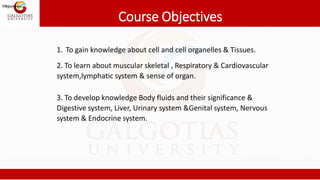
Course Objectives
1. To gain knowledge about cell and cell organelles & Tissues.
2. To learn about muscular skeletal , Respiratory & Cardiovascular
system,lymphatic system & sense of organ.
3. To develop knowledge Body fluids and their significance &
Digestive system, Liver, Urinary system &Genital system, Nervous
system & Endocrine system.
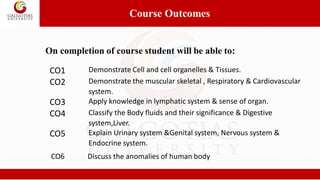
Objectives:
CO1 Demonstrate Cell and cell organelles & Tissues.
CO2 Demonstrate the muscular skeletal , Respiratory & Cardiovascular
system.
CO3 Apply knowledge in lymphatic system & sense of organ.
CO4 Classify the Body fluids and their significance & Digestive
system,Liver.
CO5 Explain Urinary system &Genital system, Nervous system &
Endocrine system.
On completion of course student will be able to:
Course Outcomes
CO6 Discuss the anomalies of human body
Syllabus Overview
Unit-1: Introduction to human Anatomy and Physiology,Cell and cell organelles,Tissues,Blood.
hours: 12
Introduction to human Anatomy and Physiology:Cell and cell organelles,Structure and
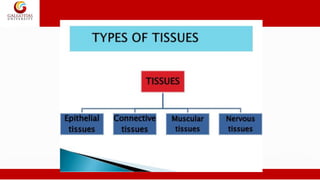
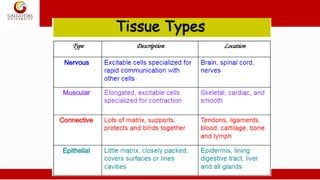
classification,Function,Cell division (Mitosis and Meiosis).Tissues: Definition,Classification with
structure and Functions,Epithelial tissues,Connective tissues,Muscular tissues,Nervous
tissue.:Blood:Composition,Function of blood.
Unit-2: Muscular skeletal & system,Respiratory system,Cardiovascular system. hours: 12
Muscular skeletal system: Introduction,Classification,Structure and function of skeletal system,
muscles and joints,Various movements of body.Respiratory system: Introduction, Structure,
Function,Mechanism of breathing and respiration,Various terms involved in respiratory
System,Vital capacity,Total Volume,Reserve volume,Total lung capacity. Cardiovascular system:
Anatomy and physiology of heart,Blood circulation,Arteries and veins,Conductive system of
heart,Cardiac cycle,Introduction to ECG.
Syllabus Overview
Unit – 3 Lymphatic system & Structure and function of sense organ. hours:12
Lymphatic system:Introduction, Structure and function, Lymph nodes,Spleen,Thymus gland,
Tonsils.Structure and function of sense organ: Eye, Ear,Nose,Tongue.
Unit-4: Body fluids and their significance & Digestive system,Liver. hours: 12
Body fluids and their significance: Important terms, types of body fluid, total body water, avenues by
which water leaves and enters body, general principles for fluid balance, cardinal principle, How body
fluids maintain Homeostasis, Electrolytes & ions Function of electrolytes, How electrolyte imbalance
leads to fluid imbalance. Digestive system: Organization; accessory organs; structure & function (Mouth,
Tongue, Teeth, Esophagus, Pharynx, Stomach, Intestine, Rectum, Anus); Digestive glands; physiology of
digestion of carbohydrates, lipids & proteins.Liver: structure and function.
Unit-5: Urinarysystem &Genital system,Nervous system & Endocrine system. hours: 12
Urinarysystem:Mainparts,Structure&functionofkidney,structureof nephron, physiology of excretion &
urine formation,urine,additional excretory organs.
Genital system: Structure of male and female reproductive system, Gametogenesis in male & female,
menstrual cycle. Placenta and extra embryonic membranes.Nervous system: Parts, function & structure;
brain, spinal cord, spinal & cranial nerves; all & none principle, role of neurotransmitters in transmission of
nerve impulse,Endocrine system: Endocrine & exocrine glands, their location, structure & functions.
Syllabus Overview
Unit-6 Anomalies of human body 8 Hours
Human body anomalies-General ,Developmental ,Congenital
Materials
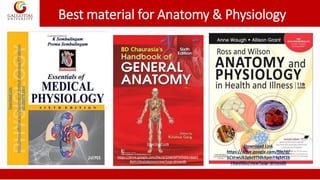
Best material for Anatomy & Physiology
Download
Link:
https://www.pdfdrive.com/essentials-of-medical-physiology-6th-edition-
e32299678.html
Download Link
https://drive.google.com/file/d/1SWOlPTKfK84mBdXT
BbfH29IxDz6jsVxs/view?usp=drivesdk
Download Link
https://drive.google.com/file/d/
1CVrwUk2gbJ9TfdkXpmY4gbH1b
FKwsNZv/view?usp=drivesdk
Unit – 1
Unit-1: Introduction to human Anatomy and Physiology,Cell and cell
organelles,Tissues,Blood.
hours: 12
Introduction to human Anatomy and Physiology:Cell and cell
organelles,Structure and classification,Function,Cell division (Mitosis
and Meiosis).Tissues: Definition,Classification with structure and
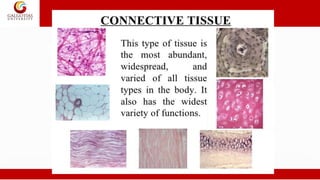
Functions,Epithelial tissues,Connective tissues,Muscular
tissues,Nervous tissue.:Blood:Composition,Function of blood.
Anatomy Definition
Physiology Definition
• Definition of Physiology Physiology: The study of how living organisms
function, including such processes as nutrition, movement, and
reproduction.
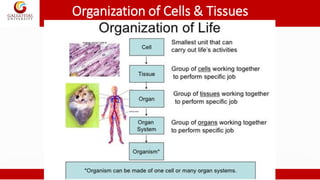
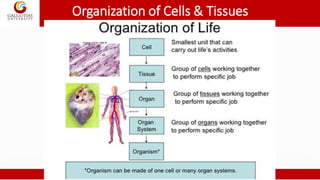
Organization of Cells & Tissues
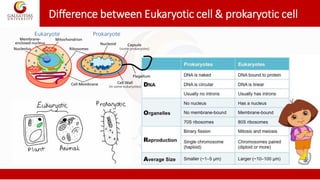
Difference between Eukaryotic cell & prokaryotic cell
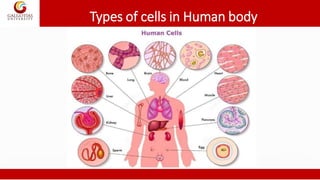
Types of cells in Human body
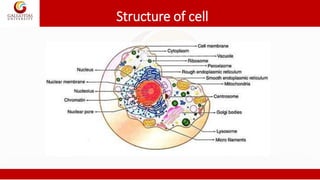
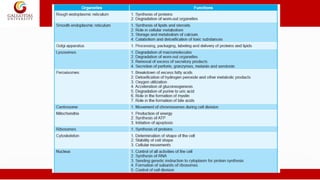
Structure of cell
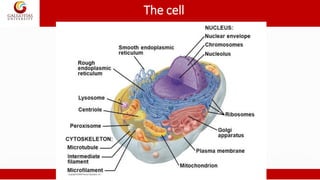
The cell
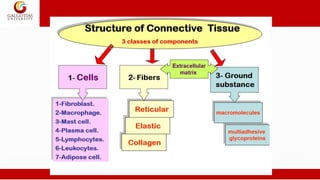
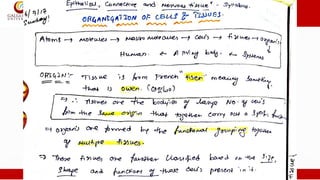
Organization of Cells & Tissues
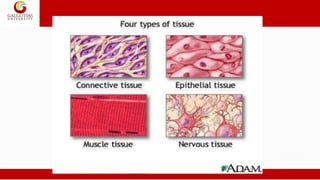
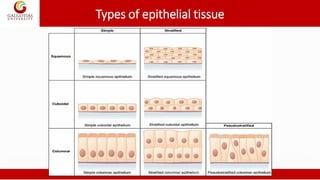
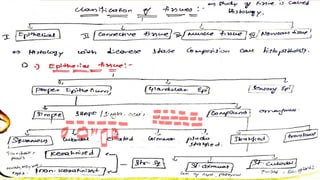
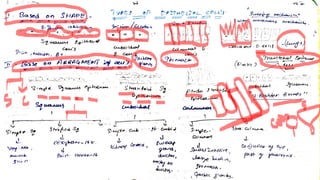
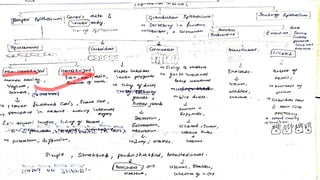
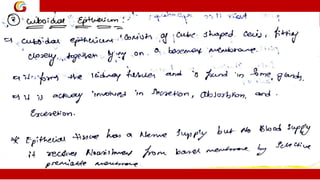
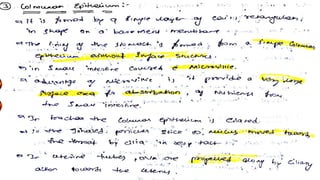
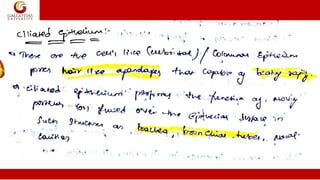
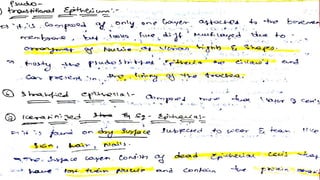
Types of epithelial tissue
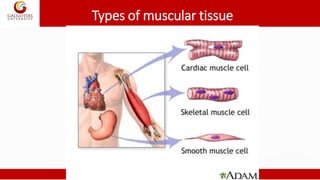
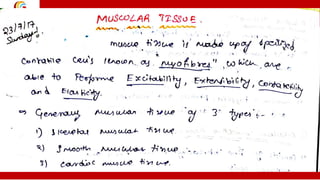
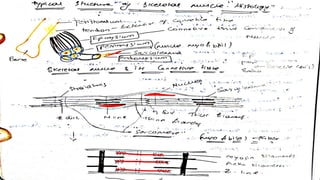
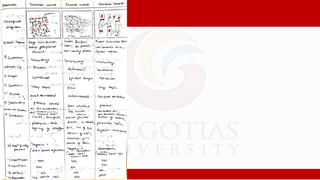
Types of muscular tissue
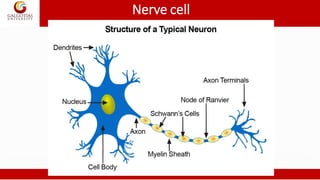
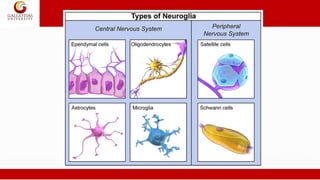
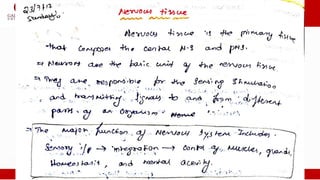
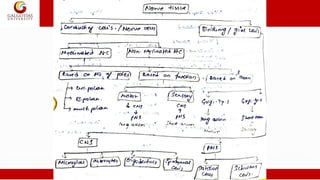
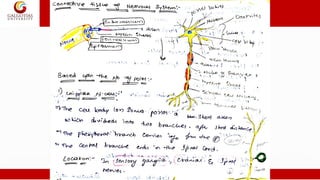
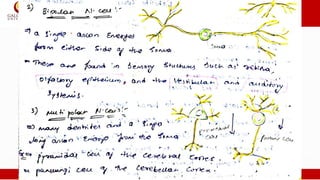
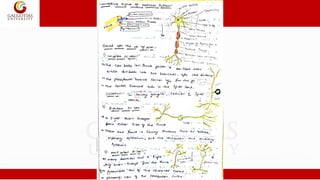
Nerve cell
Reference
• https://www.slideshare.net/martamosquera/human-tissues-
71115193
• https://www.slideshare.net/abhilashachaudhary4/tissue-and-its-
types
• https://www.slideshare.net/abhilashachaudhary4/tissue-and-its-
types
• https://www.slideshare.net/abhilashachaudhary4/tissue-and-its-
types
Youtube videos
• https://www.youtube.com/watch?v=cj8dDTHGJBY
• https://www.youtube.com/watch?v=T-UsSmD7miI
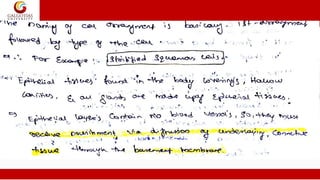
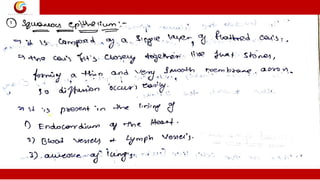
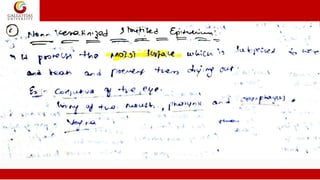
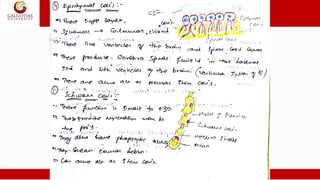
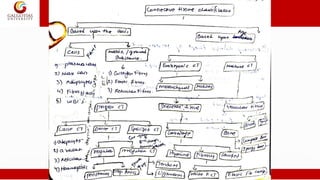
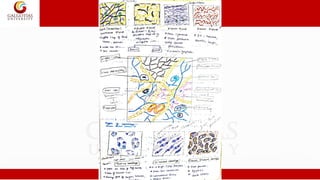
Epithelial tissue Notes

Epithelial tissue Notes

  • 1.
    School of Medicaland Allied Sciences Course Code: BMLS2004 Course Name: Human Anatomy and Physiology Faculty Name: A. Vamsi Kumar Program Name: B.Sc. MLT / Sem -II UNIT -1 Topic Introduction to Human Anatomy and Physiology, Cell and cell organelles, Tissues, Blood
  • 3.
    Sem – 2Programme Structure S.NO CODE TYPE COURSE NAME FACULTY INCHARGE 1 BMLS2001 Theory General Medical Microbiology Avinash 2 BMLS2002 Theory Basic Haematology Shubham 3 BMLS2003 Theory Basic Clinical Biochemistry Kajal 4 BMLS2004 Theory Human Anatomy and Physiology A. Vamsi Kumar 5 BLLUCT1002 Theory Professional Communication - 2 Fazil 6 BLLUCT1002 Practical Professional Communication - 2 Fazil 7 BMLS2051 Practical General Medical Microbiology – (Practical) P2 - Avinash / P1 - Shubham 8 BMLS2052 Practical Basic Haematology – (Practical) Srinivas P1 & P2 9 BMLS2053 Practical Basic Clinical Biochemistry – (Practical) P1 - Shubham/ P2 Kajal 10 BMLS2054 Practical Human Anatomy and Physiology – (Practical) Sankar P1 & P2 11 BCEUCT1001 Practical Environmental Studies Subhalaxmi Pradhan
  • 4.
    Course Objectives 1. Togain knowledge about cell and cell organelles & Tissues. 2. To learn about muscular skeletal , Respiratory & Cardiovascular system,lymphatic system & sense of organ. 3. To develop knowledge Body fluids and their significance & Digestive system, Liver, Urinary system &Genital system, Nervous system & Endocrine system. Objectives:
  • 5.
    CO1 Demonstrate Celland cell organelles & Tissues. CO2 Demonstrate the muscular skeletal , Respiratory & Cardiovascular system. CO3 Apply knowledge in lymphatic system & sense of organ. CO4 Classify the Body fluids and their significance & Digestive system,Liver. CO5 Explain Urinary system &Genital system, Nervous system & Endocrine system. On completion of course student will be able to: Course Outcomes CO6 Discuss the anomalies of human body
  • 6.
    Syllabus Overview Unit-1: Introductionto human Anatomy and Physiology,Cell and cell organelles,Tissues,Blood. hours: 12 Introduction to human Anatomy and Physiology:Cell and cell organelles,Structure and classification,Function,Cell division (Mitosis and Meiosis).Tissues: Definition,Classification with structure and Functions,Epithelial tissues,Connective tissues,Muscular tissues,Nervous tissue.:Blood:Composition,Function of blood. Unit-2: Muscular skeletal & system,Respiratory system,Cardiovascular system. hours: 12 Muscular skeletal system: Introduction,Classification,Structure and function of skeletal system, muscles and joints,Various movements of body.Respiratory system: Introduction, Structure, Function,Mechanism of breathing and respiration,Various terms involved in respiratory System,Vital capacity,Total Volume,Reserve volume,Total lung capacity. Cardiovascular system: Anatomy and physiology of heart,Blood circulation,Arteries and veins,Conductive system of heart,Cardiac cycle,Introduction to ECG.
  • 7.
    Syllabus Overview Unit –3 Lymphatic system & Structure and function of sense organ. hours:12 Lymphatic system:Introduction, Structure and function, Lymph nodes,Spleen,Thymus gland, Tonsils.Structure and function of sense organ: Eye, Ear,Nose,Tongue. Unit-4: Body fluids and their significance & Digestive system,Liver. hours: 12 Body fluids and their significance: Important terms, types of body fluid, total body water, avenues by which water leaves and enters body, general principles for fluid balance, cardinal principle, How body fluids maintain Homeostasis, Electrolytes & ions Function of electrolytes, How electrolyte imbalance leads to fluid imbalance. Digestive system: Organization; accessory organs; structure & function (Mouth, Tongue, Teeth, Esophagus, Pharynx, Stomach, Intestine, Rectum, Anus); Digestive glands; physiology of digestion of carbohydrates, lipids & proteins.Liver: structure and function.
  • 8.
    Unit-5: Urinarysystem &Genitalsystem,Nervous system & Endocrine system. hours: 12 Urinarysystem:Mainparts,Structure&functionofkidney,structureof nephron, physiology of excretion & urine formation,urine,additional excretory organs. Genital system: Structure of male and female reproductive system, Gametogenesis in male & female, menstrual cycle. Placenta and extra embryonic membranes.Nervous system: Parts, function & structure; brain, spinal cord, spinal & cranial nerves; all & none principle, role of neurotransmitters in transmission of nerve impulse,Endocrine system: Endocrine & exocrine glands, their location, structure & functions. Syllabus Overview Unit-6 Anomalies of human body 8 Hours Human body anomalies-General ,Developmental ,Congenital
  • 9.
  • 10.
    Best material forAnatomy & Physiology Download Link: https://www.pdfdrive.com/essentials-of-medical-physiology-6th-edition- e32299678.html Download Link https://drive.google.com/file/d/1SWOlPTKfK84mBdXT BbfH29IxDz6jsVxs/view?usp=drivesdk Download Link https://drive.google.com/file/d/ 1CVrwUk2gbJ9TfdkXpmY4gbH1b FKwsNZv/view?usp=drivesdk
  • 11.
    Unit – 1 Unit-1:Introduction to human Anatomy and Physiology,Cell and cell organelles,Tissues,Blood. hours: 12 Introduction to human Anatomy and Physiology:Cell and cell organelles,Structure and classification,Function,Cell division (Mitosis and Meiosis).Tissues: Definition,Classification with structure and Functions,Epithelial tissues,Connective tissues,Muscular tissues,Nervous tissue.:Blood:Composition,Function of blood.
  • 12.
  • 13.
    Physiology Definition • Definitionof Physiology Physiology: The study of how living organisms function, including such processes as nutrition, movement, and reproduction.
  • 15.
  • 16.
    Difference between Eukaryoticcell & prokaryotic cell
  • 17.
    Types of cellsin Human body
  • 18.
  • 20.
  • 21.
  • 26.
  • 28.
  • 29.
  • 64.
    Reference • https://www.slideshare.net/martamosquera/human-tissues- 71115193 • https://www.slideshare.net/abhilashachaudhary4/tissue-and-its- types •https://www.slideshare.net/abhilashachaudhary4/tissue-and-its- types • https://www.slideshare.net/abhilashachaudhary4/tissue-and-its- types
  • 65.
    Youtube videos • https://www.youtube.com/watch?v=cj8dDTHGJBY •https://www.youtube.com/watch?v=T-UsSmD7miI