IMPACT OF HCN CHANNEL MUTATION ON
EPILEPSY
YANAMALA VIJAY RAJ12/21/2015
Outline
12/21/2015
 Epilepsy
 HCN channel
 K channel
 Signal transduction pathways
 Interactions
Hyper-polarization activated cyclic
nucleotide (HCN)
 Non selective channel
 Brian and heart
 Oscillatory rhythm
 HCN channels have a major role in controlling
neuronal excitability, dendritic integration of
synaptic potentials, synaptic transmission, and
rhythmic oscillatory activity in individual neurons
and neuronal networks.
12/21/2015
Structure
12/21/2015
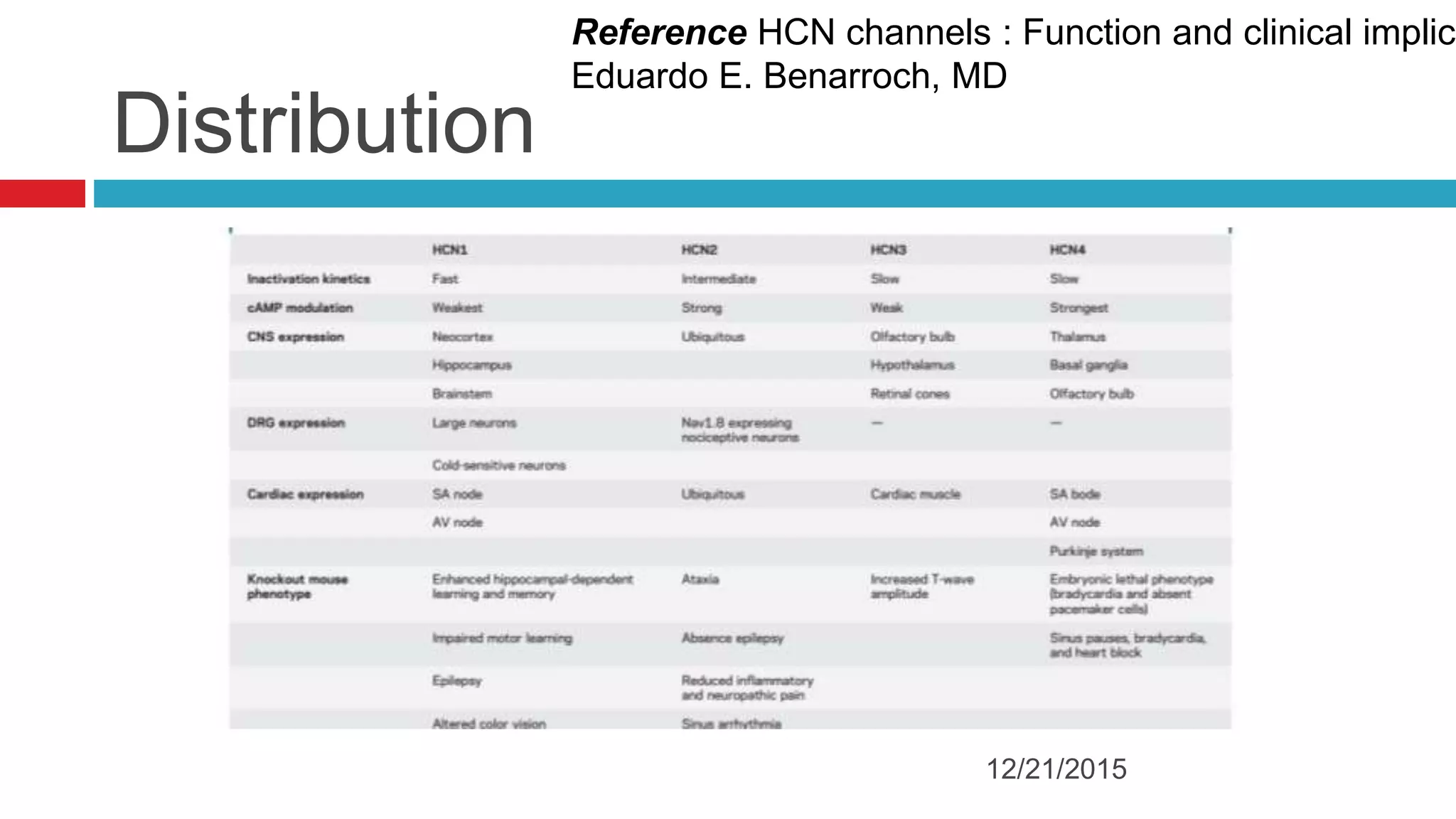
Distribution
12/21/2015
Reference HCN channels : Function and clinical implica
Eduardo E. Benarroch, MD
Functions
12/21/2015
Reference HCN channels : Function and clinical implic
Eduardo E. Benarroch, MD
HCN role in epilepsy
 Abnormal regulation of HCN expression or function has been
implicated in epilepsy.
 However, the role of HCN dysregulation in epilepsy is complex.
Studies in experimental models indicate that both upregulation
and downregulation of HCN channels can be associated with
seizures;
 Different HCN types may contribute to different extents to focal or
generalized epilepsy syndromes; and the role of HCN channels
strongly depends on cellular localization and physiologic context.
12/21/2015
Complications
 The number of surface-expressed HCN channels influences the
magnitude and properties of Ih.
 Mechanisms controlling the number of surface HCN channels act at
different time-scales.
 At a relatively long time scale (hours to days), transcriptional regulation
determines the total amount of HCN channel protein in the cell.
 This regulation is isoform-specific, acts via specific transcription factors,
and depends on network activity.
12/21/2015
Transcription factors altering HCN
 NRSF also known as REST, repressor
element 1-silencing transcription factor).
 repressor element 1-silencing transcription
factor), which binds to neuron restrictive
silencer elements (NRSE).
12/21/2015
Post-translational modifications of
HCN
 HCN channels are heavily glycosylated in the mammalian brain and
glycosylation influences both the total number of HCN channels in the
membrane and their heteromerization.
 Modulation of HCN channel surface expression at shorter time-scales
can occur via local regulation of channel membrane insertion,
internalization and recycling.
 Importantly, the dynamics of HCN channel trafficking and surface
expression are activity-dependent, with implications to neuroplasticity
and disease.
 TRIP8b (an auxiliary protein that interacts directly with HCN channels)12/21/2015

The targeting of HCN channels to distinct sub-cellular domains
influences their location dependent roles in regulation of excitability.
 Distinct distribution patterns of HCN channels exist in dendrites of
specific cell types and brain regions, as well as during development.
 Whereas ample information exists on the distribution of HCN
channels, little is known of the molecular mechanisms that underlie
their targeting.
12/21/2015
Reporting of HCN role in epilepsy
 Enhanced levels of HCN1 channel expression and dendritic
localization were found in granule cells of the dentate gyrus.
 Recent work has identified a mutation in the HCN2 gene and
augmentation of Ih in patients with genetic epilepsy with
febrile seizures plus (GEFS).
 Deletion of the HCN1 gene in mice results in increased
excitability and seizure susceptibility, and reduction or
deletion of the HCN2 isoform leads to spontaneous ‘absence’
seizures. 12/21/2015
 In accord with the diverse regulatory mechanisms and versatile
functions of Ih in the normal brain, the dysregulation of Ih and HCN
channels in epilepsy is dynamic and intricate.
12/21/2015
REFERENCE: Jasper's Basic Mechanisms of the Epilepsies. 4th edition,
Noebels JL, Avoli M, Rogawski MA, et al., editors. Bethesda (MD): National
Center for Biotechnology Information (US); 2012.
12/21/2015
REFERENCE: Jasper's Basic Mechanisms of the Epilepsies [Internet]. 4th
edition, Noebels JL, Avoli M, Rogawski MA, et al., editors. Bethesda (MD):
National Center for Biotechnology Information (US); 2012.
12/21/2015
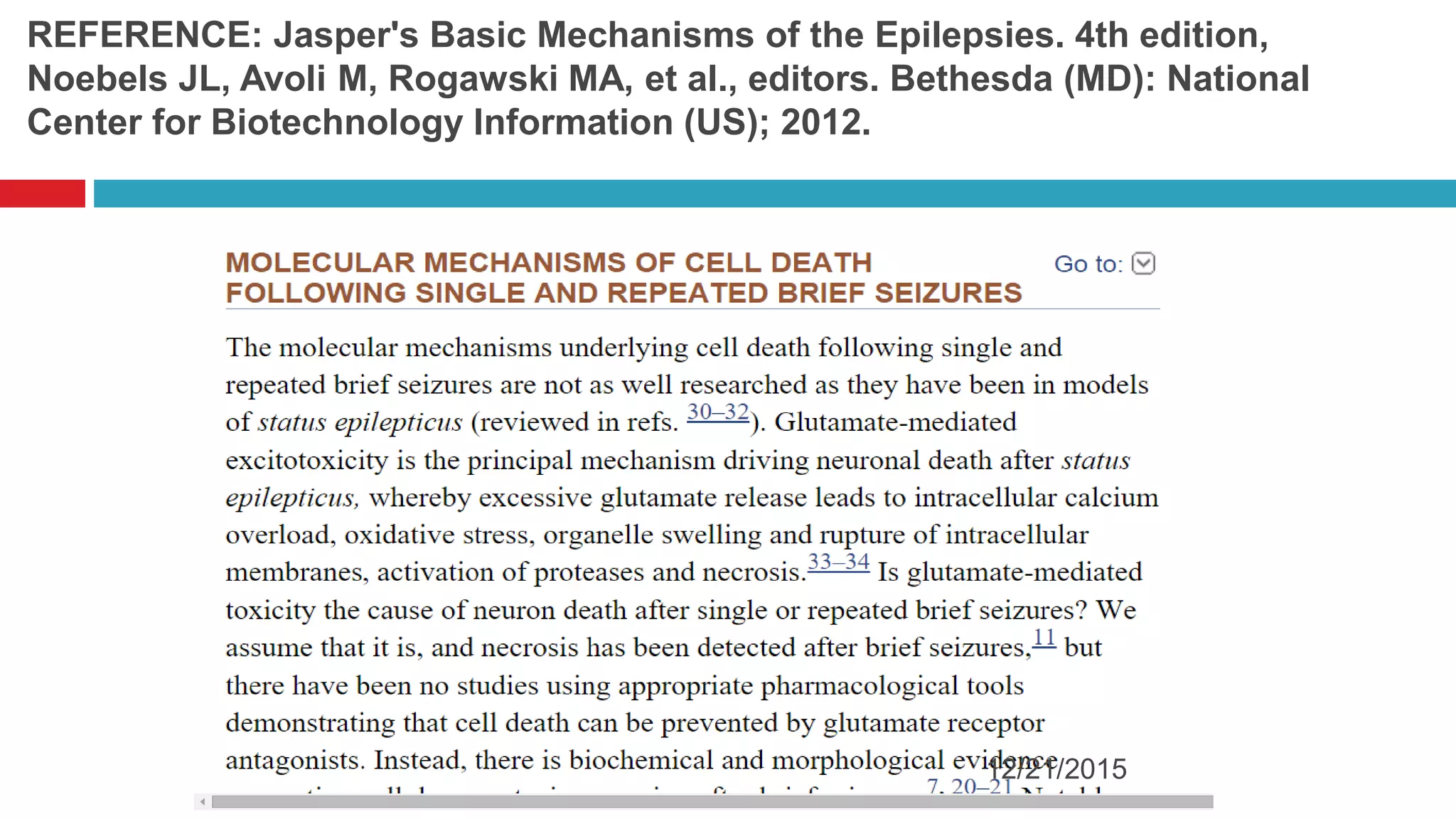
Do Seizures Cause Neuronal Death in the Human Hippocampus?
Luisa L Rocha, MD PhD, Maria-Leonor Lopez-Meraz, PhD, Jerome Niquet
PhD and Claude G Wasterlain MD,
 Based on Indirect Markers of Neuronal Injury, it
is conformed that repetitive seizures caused
neuronal death.
12/21/2015
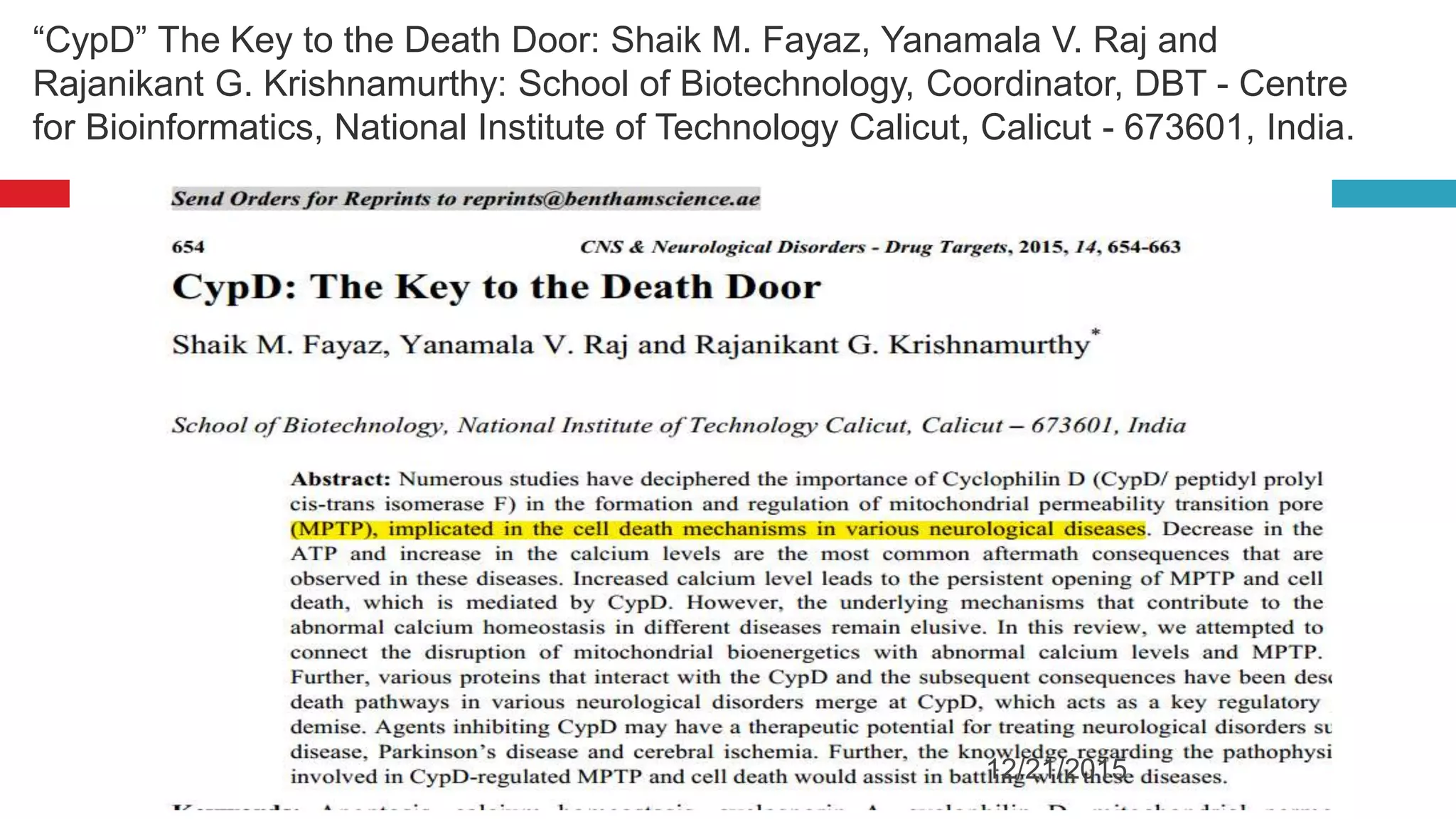
“CypD” The Key to the Death Door: Shaik M. Fayaz, Yanamala V. Raj and
Rajanikant G. Krishnamurthy: School of Biotechnology, Coordinator, DBT - Centre
for Bioinformatics, National Institute of Technology Calicut, Calicut - 673601, India.
12/21/2015
Genotype–phenotype correlations in neonatal epilepsies caused by mutations in the
voltage sensor of K v7.2 potassium channel subunits Francesco Micelia, Maria Virginia
Soldovierib, Paolo Ambrosinob, Vincenzo Barresea, Michele Migliorec, Maria Roberta
Ciliod,e,1, and Maurizio Taglialatela
1. Mutations in Kv7.2 gene encoding for voltage
dependent potassium channel cause neonatal
epilepsies.
2. Kv7.2 channels fall under delayed rectifiers
category.
3. Mutations reported in S4 domain
12/21/2015
Potassium channels
12/21/2015
12/21/2015
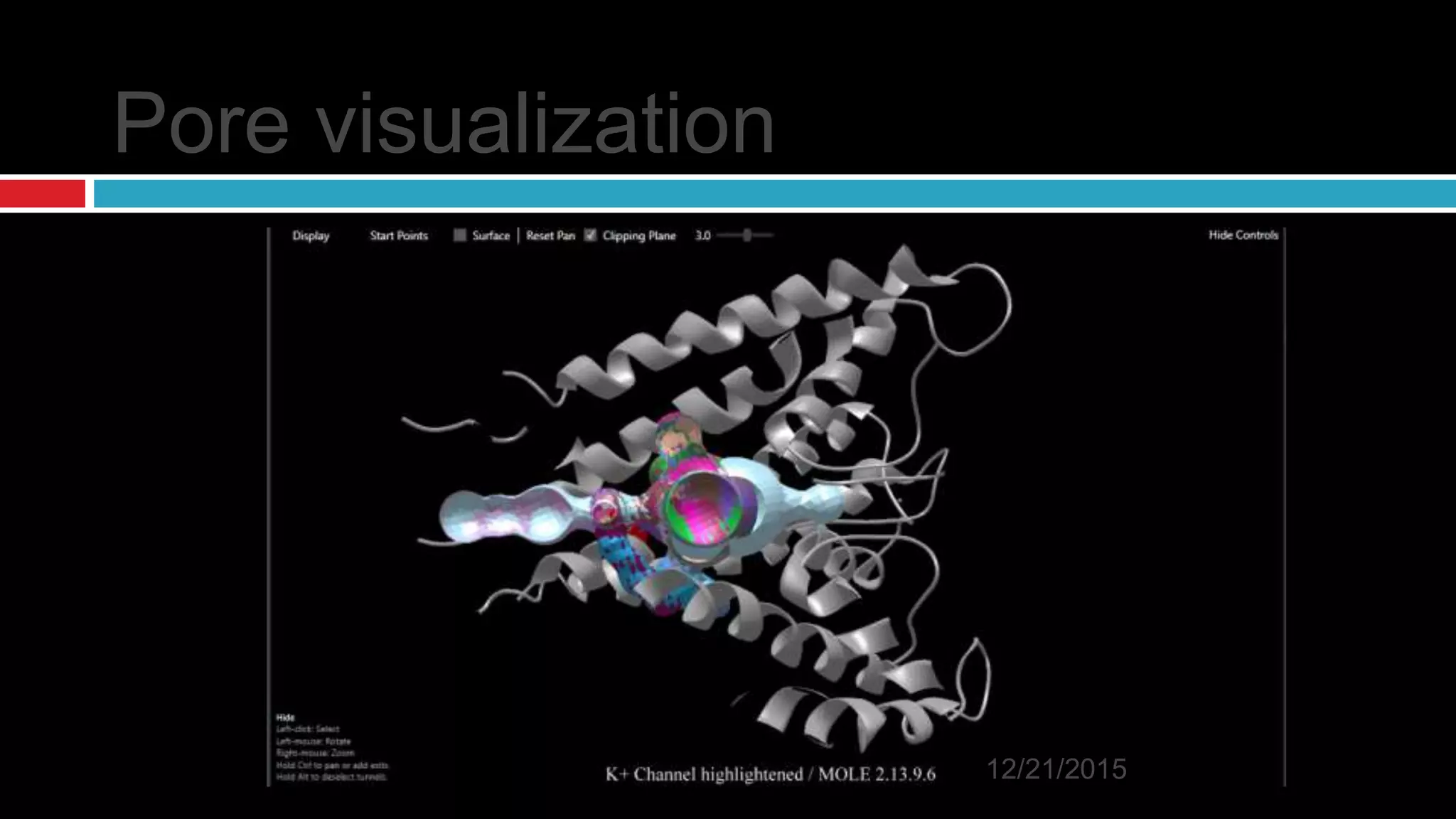
Pore visualization
12/21/2015
Domains
12/21/2015
Mutations
1. R213W
2. R213Q
Mutations markedly destabilized open state
causing decrease in channel voltage sensitivity.
12/21/2015
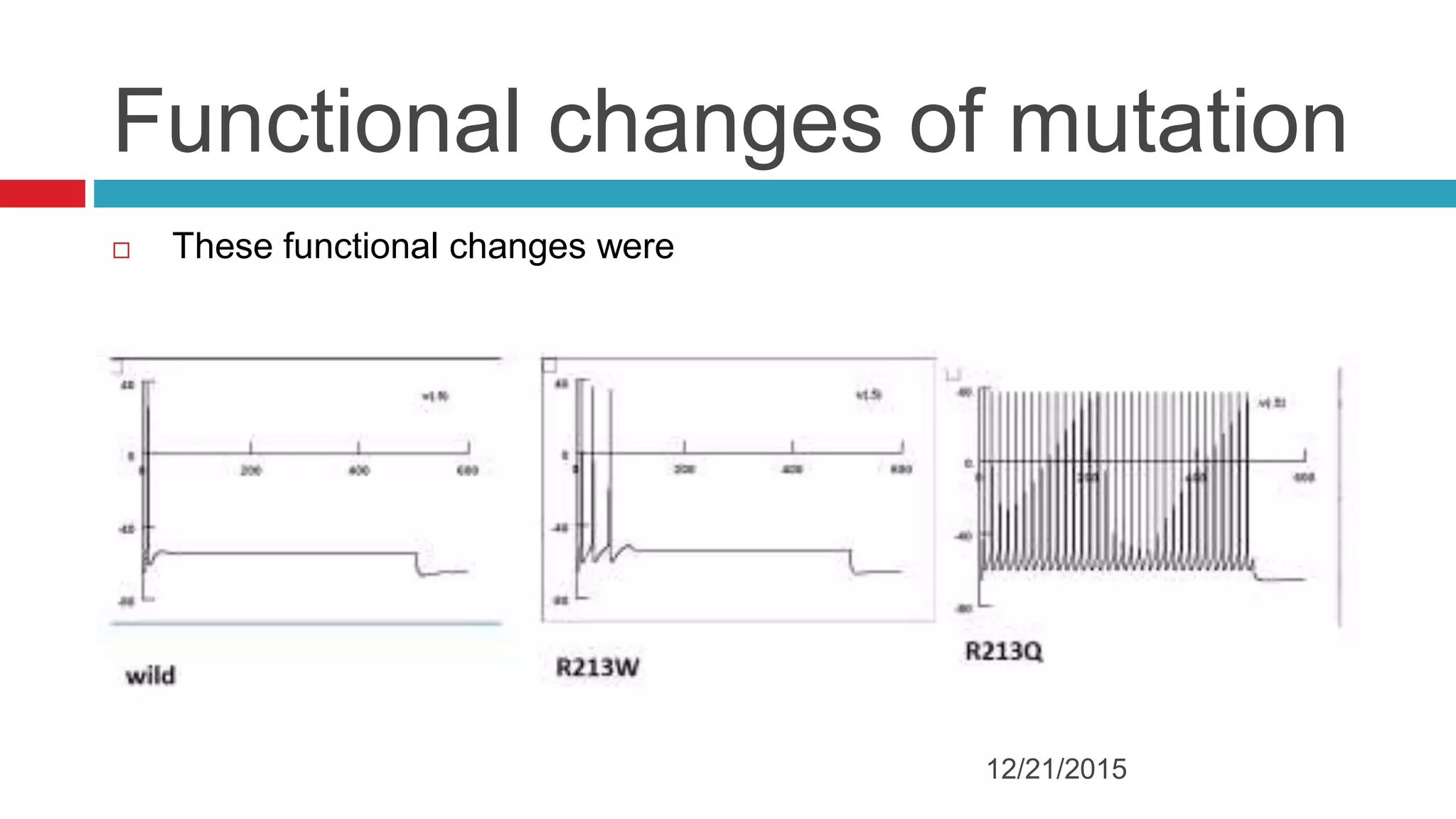
Functional changes of mutation
 These functional changes were
1. More pronounced for channels incorporating R213Q- than R213W-
carrying KV7.2 subunits.
2. (ii) proportional to the number of mutant subunits incorporated;
3. (iii) fully restored by the neuronal Kv7 activator retigabin.
NOTE: Both mutations increased firing, but R213Q has more dramatically
functional changes compared to others.
12/21/2015
Anticonvulsant therapy
 Kv7 openers as a targeted anticonvulsant therapy to improve
developmental outcome in neonates with KV7.2 encephalopathy
CLINICAL IDENTIFICATIONS:
1. seizures with psychomotor retardation,
2. suppression-burst pattern at EEG,
3. and distinct neuroradiological features
12/21/2015
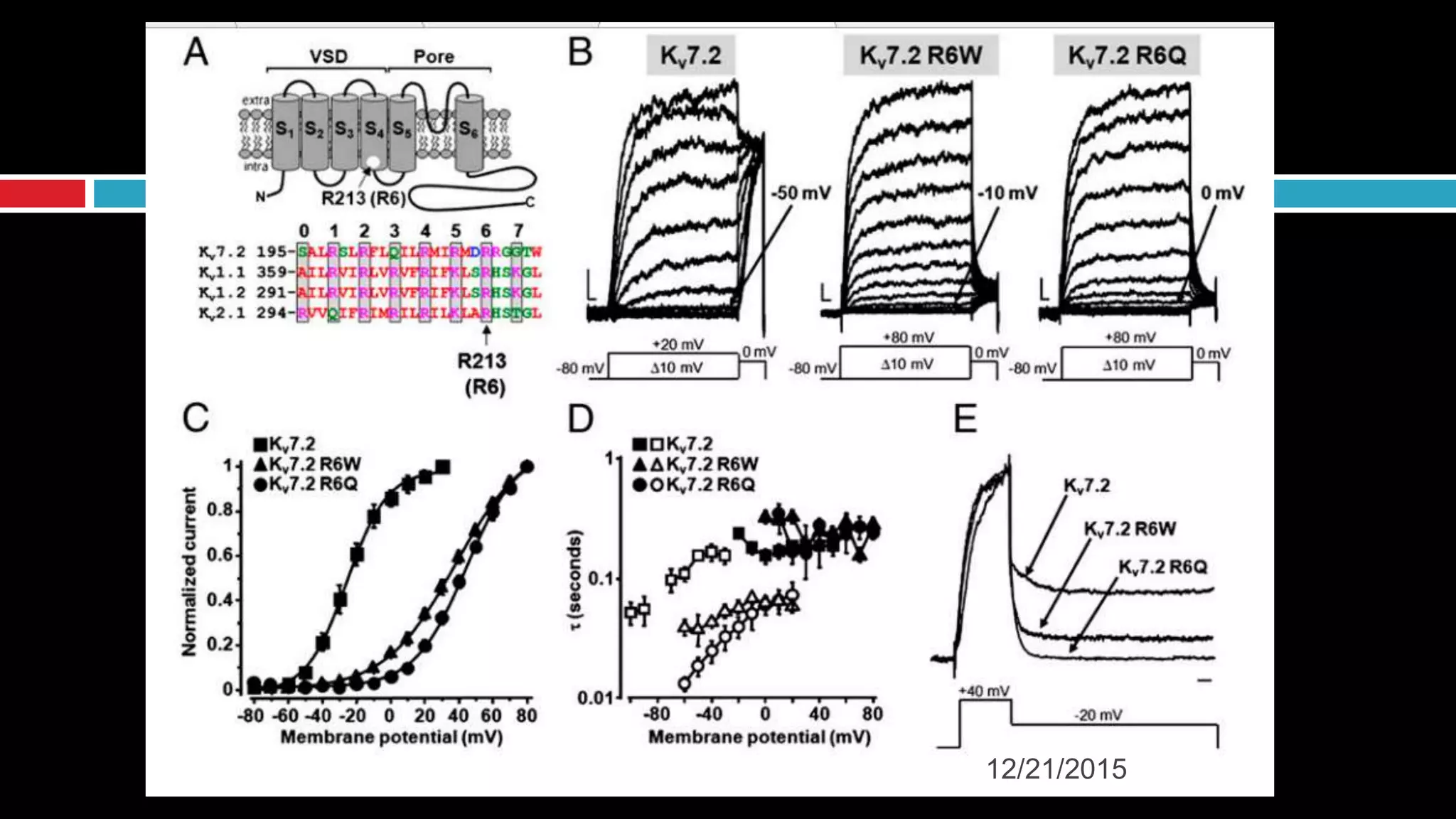
 Threshold voltages for current activation were
-50mV in Kv7.2
−10 mV in Kv7.2 R6W channels
0 mV in Kv7.2 R6Q channels.
 The half activation potential (V1/2) was −23 mV in Kv7.2
channels;
this value was right-shifted by
i. 58 mV R6W mutant
ii. 68 mV R6Q mutant
12/21/2015
Deactivation kinetics
 Deactivation kinetics of KV7.2 R6W & KV7.2 R6Q channels were
faster than KV7.2 channels.
 At the end of a −20 mV step, a significant fraction of KV7.2 channels
appeared to still be in the open state; by contrast, more complete
deactivation was observed for KV7.2 R6W and KV7.2 R6Q channels,
the latter being fully closed at the end of the voltage step.
12/21/2015
12/21/2015
Functional and Pharmacological Properties of KV7.2 and/or KV7.3
Heteromeric Channels Incorporating Mutant KV7.2 R6W and R6Q
Subunits.
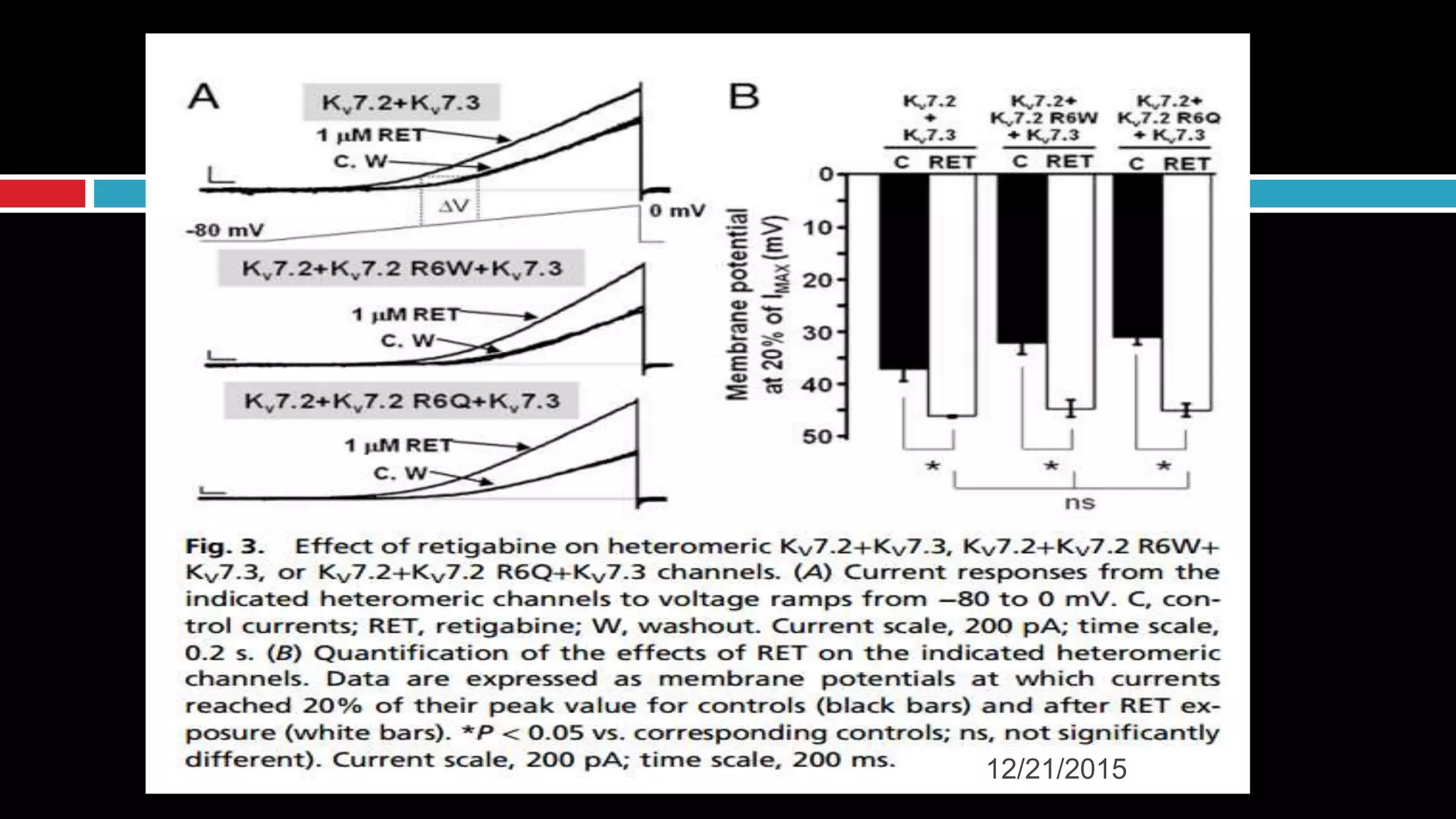
 To evaluate the possible functional changes caused by KV7.2 R6W and
KV7.2 R6Q mutant subunits in Heteromeric assembly with KV7.2 and/or
KV7.3 subunits.
 CHO cells were transfected with KV7.2+KV7.3 cDNAs at a 1:1 ratio to
mimic the genetic balance of normal individuals, and with KV7.2+KV7.2
R6W+KV7.3 or KV7.2+KV7.2 R6Q+KV7.3 (each at 0.5:0.5:1 ratio) to
mimic the genetic balance of individuals who carried the mutant KV7.2
alleles in heterozygosity.
12/21/2015

Incorporation of KV7.3 subunits into KV7.2+KV7.3, heteromeric
channels generated currents with larger size and a reduced
sensitivity to the pore blocker tetraethylammonium (TEA) than
KV7.2 homomers.
 Compared with KV7.2+KV7.3-transfected cells, cells transfected
with KV7.2+KV7.2 R6W+KV7.3 or KV7.2+KV7.2 R6Q+KV7.3
cDNAs generated K+ currents of identical size and TEA sensitivity,
suggesting that these mutations failed to interfere with heteromeric
subunit assembly.
12/21/2015
12/21/2015
12/21/2015
12/21/2015
HCN hyperpolarization-activated cation channels inhibit EPSPs
by interactions with M-type K+ channels Meena S George, L F
Abbott & Steven A Siegelbaum
 Characterization of HCN channels on dendritic processing of
subthreshold excitatory postsynaptic potentials (EPSPs).
 The HCN channels generated an excitatory inward current (Ih) that
exerted a direct depolarizing effect on the peak voltage of weak EPSPs,
but produced a paradoxical hyperpolarizing effect on the peak voltage of
stronger, but still subthreshold EPSPs.
 Its found that the inhibitory action of (Ih) was caused by its interaction
with the delayed-rectifier M-type K current.
12/21/2015
M current
 M current is a type of non-inactivating potassium current
first discovered in bullfrog sympathetic ganglion cells.
 The M-channel is important in raising the threshold for firing
an action potential. It is unique because it is open at rest and
even more likely to be open during depolarization.
 The M-channel is a PIP2-regulated ion channel.
12/21/2015
12/21/2015
PIP2 role in rundown of HCN
 The voltage dependence of activation of the HCN hyperpolarization-
activated cation channels is shifted in inside-out patches by -40 to -60
mV relatively.
 Role of phosphatidylinositol 4,5-bisphosphate PIP(2) in HCN channel
rundown, as hydrolysis of PIP(2) by lipid phosphatases is thought to
underlie rundown of several other channels.
 We find that bath application of exogenous PIP(2) reverses the effect of
rundown, producing a large depolarizing shift in HCN2 activation.12/21/2015
Coordinated signal integration a t the M-type
potassium channel upon muscarinic stimulation
Anastasia Kosenko1, Seungwoo Kang1, Ida M
Smith1, Derek L Greene1, Lorene K Langeberg2,
John D Scott2
and Naoto Hoshi1,*
1Department of Pharmacology, University of
California, Irvine, CA, USA and 2Department of
Pharmacology, Howard Hughes Medical Institute,
University of Washington, Seattle, WA, USA
12/21/2015
NEUROSCIENCE
Third Edition
12/21/2015
Regulation of gating and rundown of HCN
hyperpolarization-activated channels by
exogenous and endogenous PIP2.
Pian P1, Bucchi A, Robinson RB, Siegelbaum SA.
Author information
1Center for Neurobiology and Behavior, Columbia
University Medical Center, New York, NY 10032,
USA.
12/21/2015
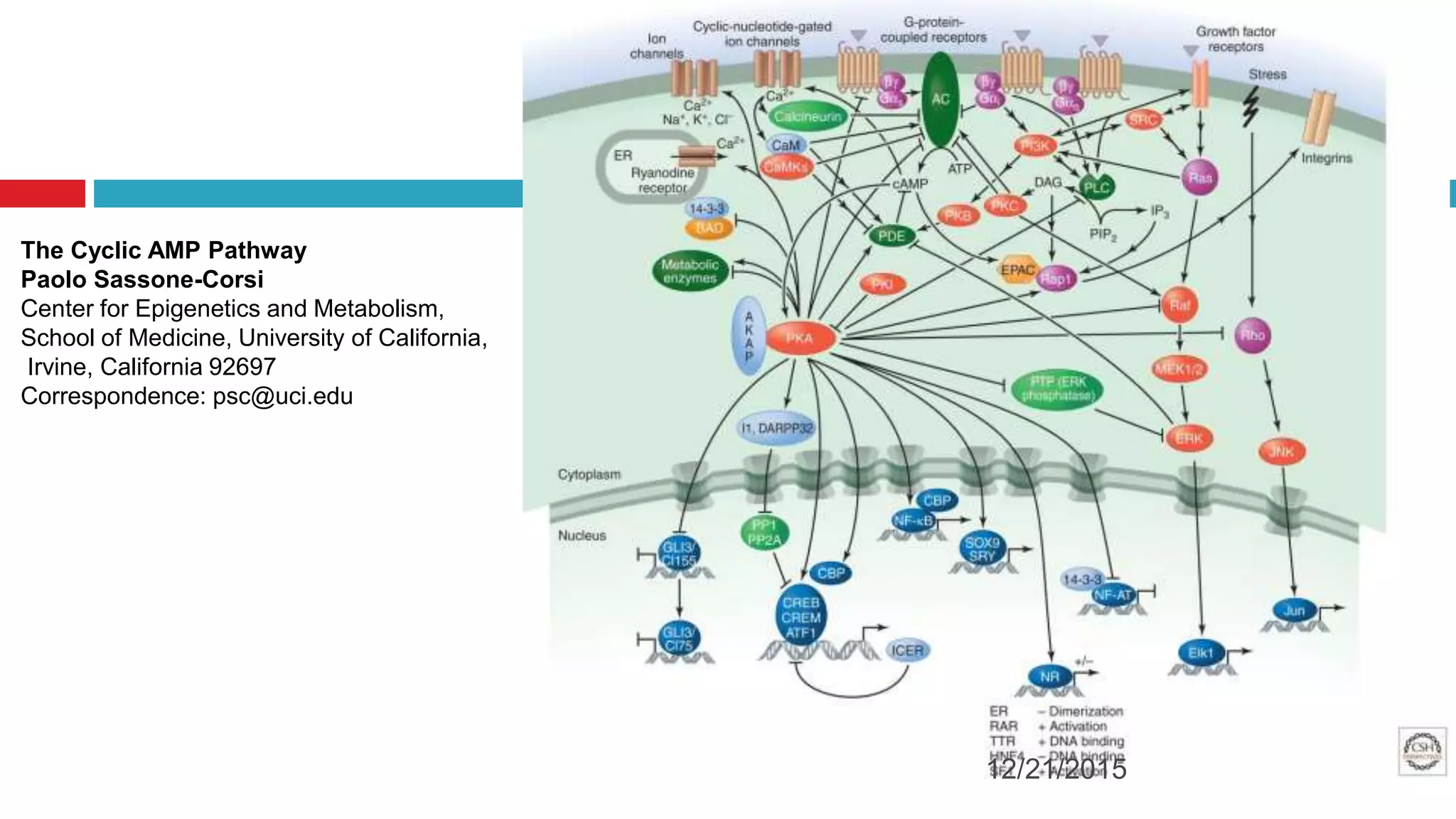
The Cyclic AMP Pathway
Paolo Sassone-Corsi
Center for Epigenetics and Metabolism,
School of Medicine, University of California,
Irvine, California 92697
Correspondence: psc@uci.edu
12/21/2015
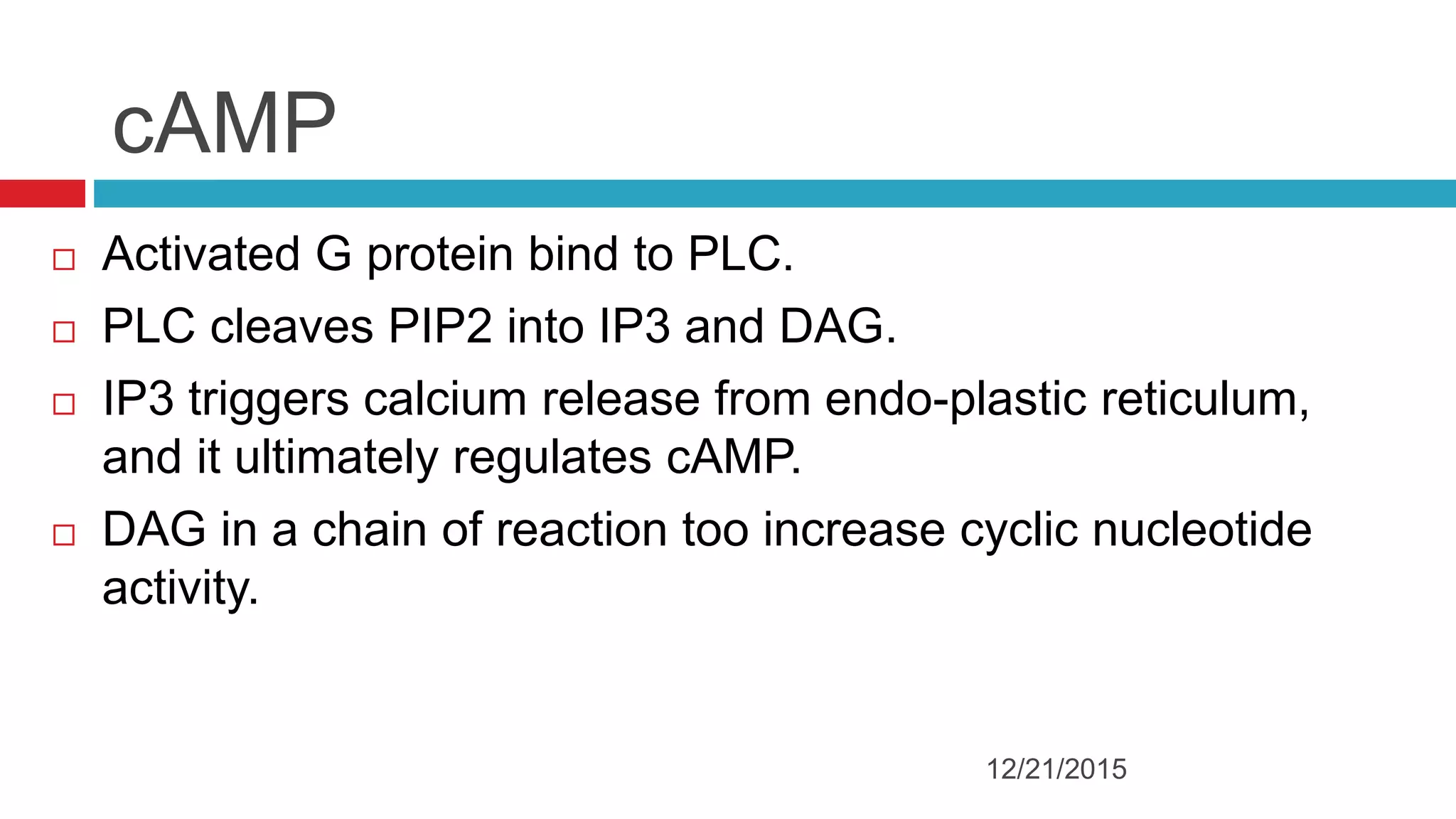
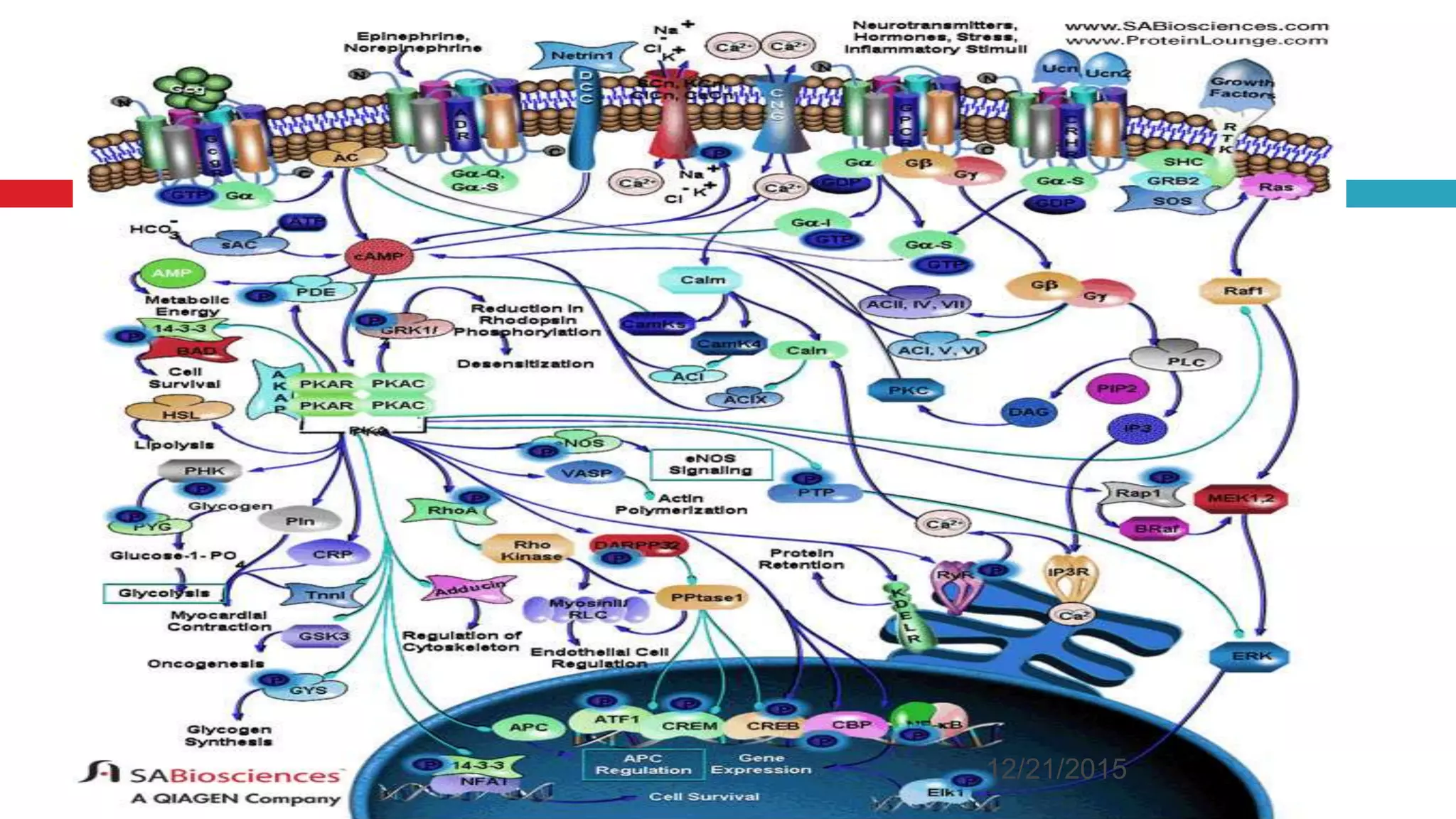
cAMP
 Activated G protein bind to PLC.
 PLC cleaves PIP2 into IP3 and DAG.
 IP3 triggers calcium release from endo-plastic reticulum,
and it ultimately regulates cAMP.
 DAG in a chain of reaction too increase cyclic nucleotide
activity.
12/21/2015
12/21/2015
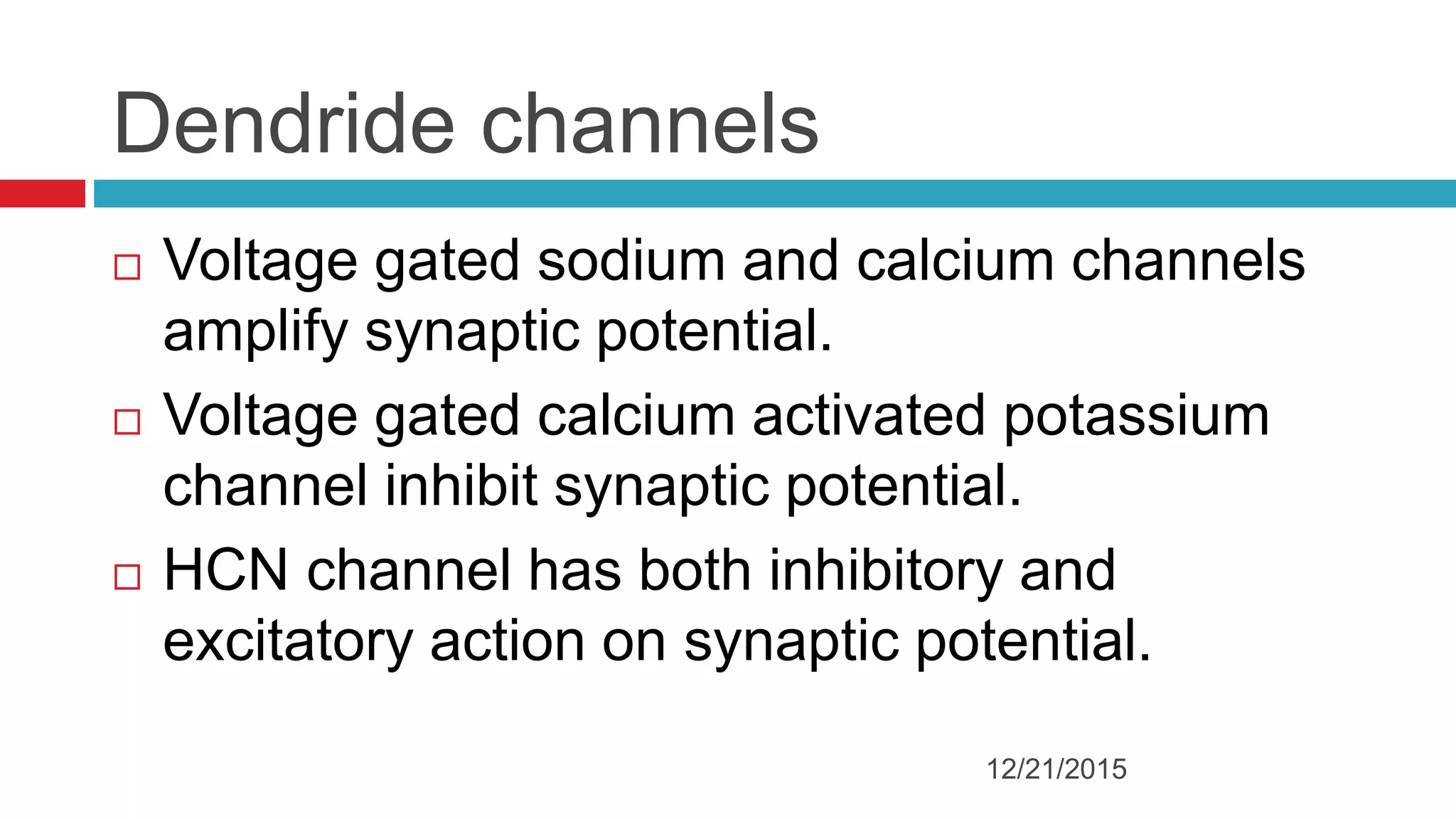
Dendride channels
 Voltage gated sodium and calcium channels
amplify synaptic potential.
 Voltage gated calcium activated potassium
channel inhibit synaptic potential.
 HCN channel has both inhibitory and
excitatory action on synaptic potential.
12/21/2015
HCN role
 Unlike most voltage-gated channels, HCN channels activate with
hyperpolarization and deactivate with depolarization.
 Their mixed permeability to K+ and Na+ ions results in a reversal potential
( Eh) of approximately –30 mV, causing these channels to generate an
excitatory inward current ( Ih) at subthreshold potentials.
 These biophysical properties underlie the role of (Ih) as a pacemaker
current in cardiac myocytes and thala-mocortical relay neurons, in which
activation of Ih following action potential repolarization generates a
depolarizing current that drives spontaneous, rhythmic firing.
12/21/2015
 HCN channels are not spontaneously active, Ih contributes 5 to
10-mV depolarizing influence on the resting membrane potential
(RMP) and increases the resting membrane conductance (that
is, it lowers the input resistance).
 Conversely from the fact that Ih provides a depolarizing current
at subthreshold potentials, results from several studies have
indicated that it has a paradoxical inhibitory effect on the ability
of an EPSP to trigger an action potential.
 Thus, enhancement of Ih by the anticonvulsant lamotrigine,
application of dopamine or induction of long-term potentiation
decreases excitability and spike firing.
12/21/2015
 Conversely, downregulation of Ih via genetic deletion of HCN1,
pharmacological blockade using cesium or the organic antagonist ZD7288
following induction of long-term depression or seizures increases EPSP
amplitude, temporal summation and spike firing.
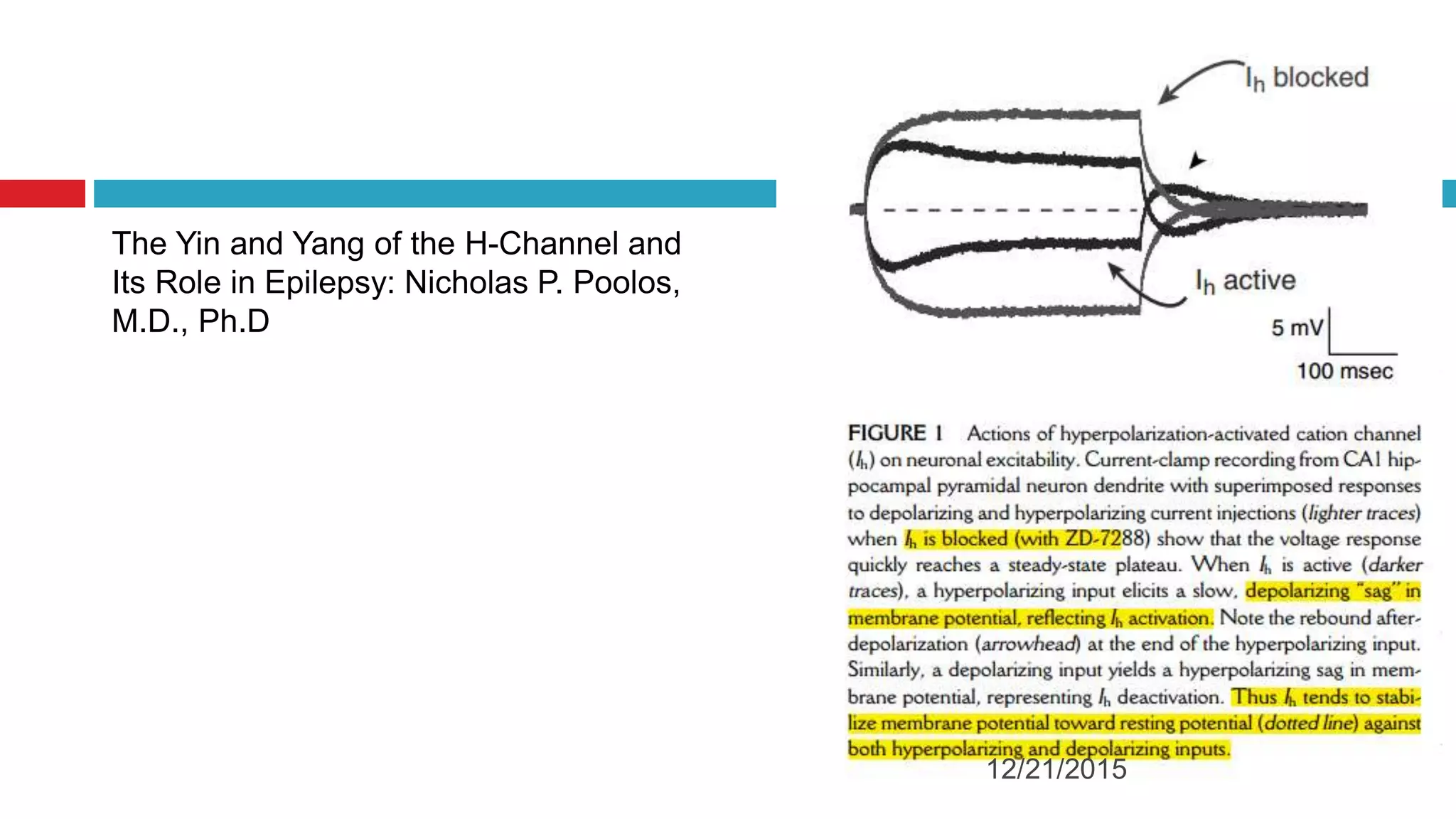
 The inhibitory effects of Ih , by which we mean the inhibition that is seen when
Ih is enhanced, have generally been attributed to its ability to increase the
resting membrane conductance.
 This so-called ‘shunting effect’ on the excitatory postsynaptic current
decreases the amplitude of an EPSP with EPSP amplitude being defined as
the difference between the peak voltage of an EPSP (V peak) and the resting
potential.
12/21/2015
The Yin and Yang of the H-Channel and
Its Role in Epilepsy: Nicholas P. Poolos,
M.D., Ph.D
12/21/2015
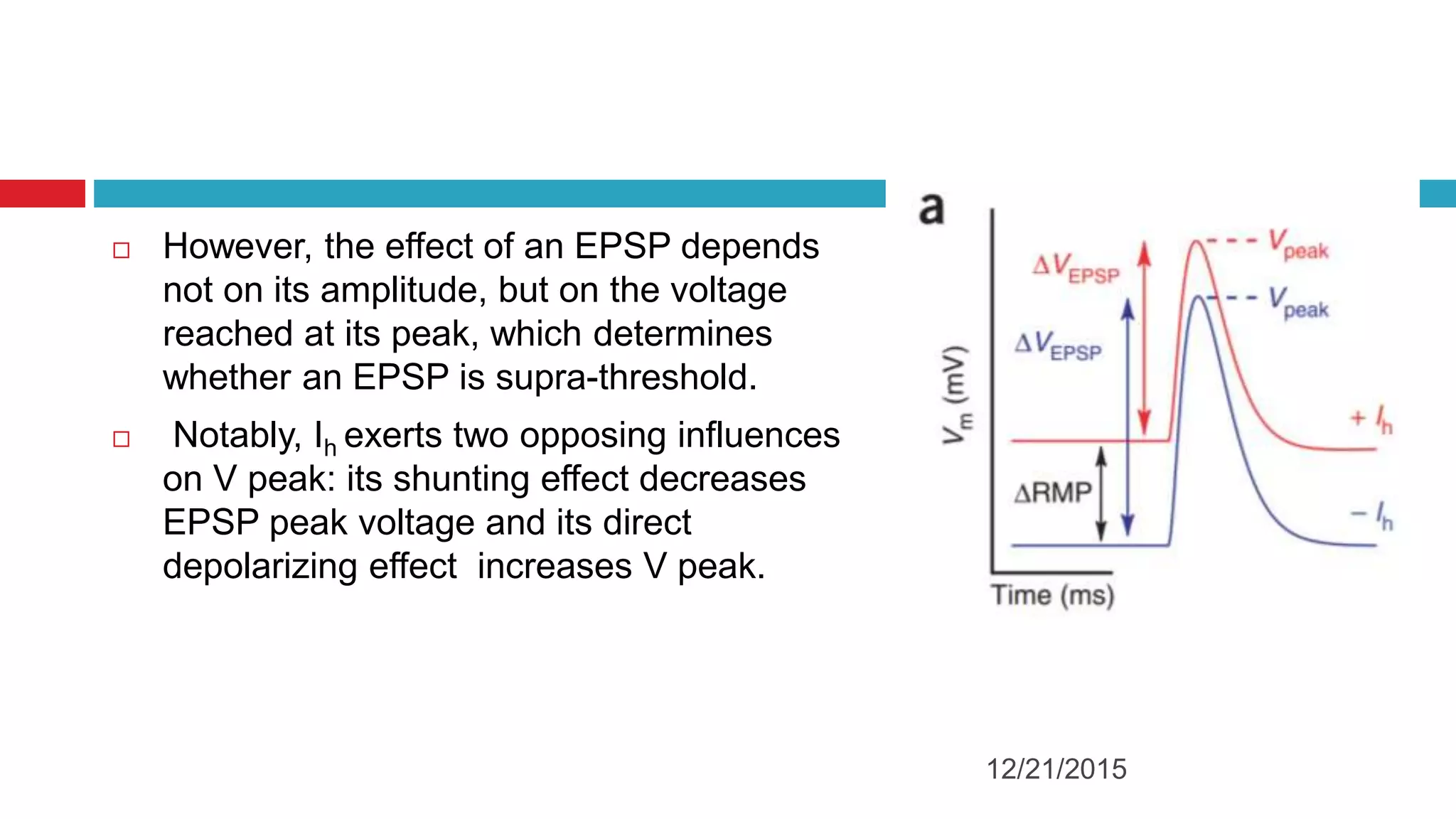
 However, the effect of an EPSP depends
not on its amplitude, but on the voltage
reached at its peak, which determines
whether an EPSP is supra-threshold.
 Notably, Ih exerts two opposing influences
on V peak: its shunting effect decreases
EPSP peak voltage and its direct
depolarizing effect increases V peak.
12/21/2015
 By computational it is proved that HCN has more
excitatory role than inhibitory role.
 Depolarizing effect greater than shunting effect.
12/21/2015
 In principle, this effect of Ih on resting potential and
resting inactivation could also explain how Ih
suppresses the firing of Na+ action potentials.
 But it remains unclear whether Ih can exert an
inhibitory effect on Vpeak for subthreshold EPSPs.
12/21/2015
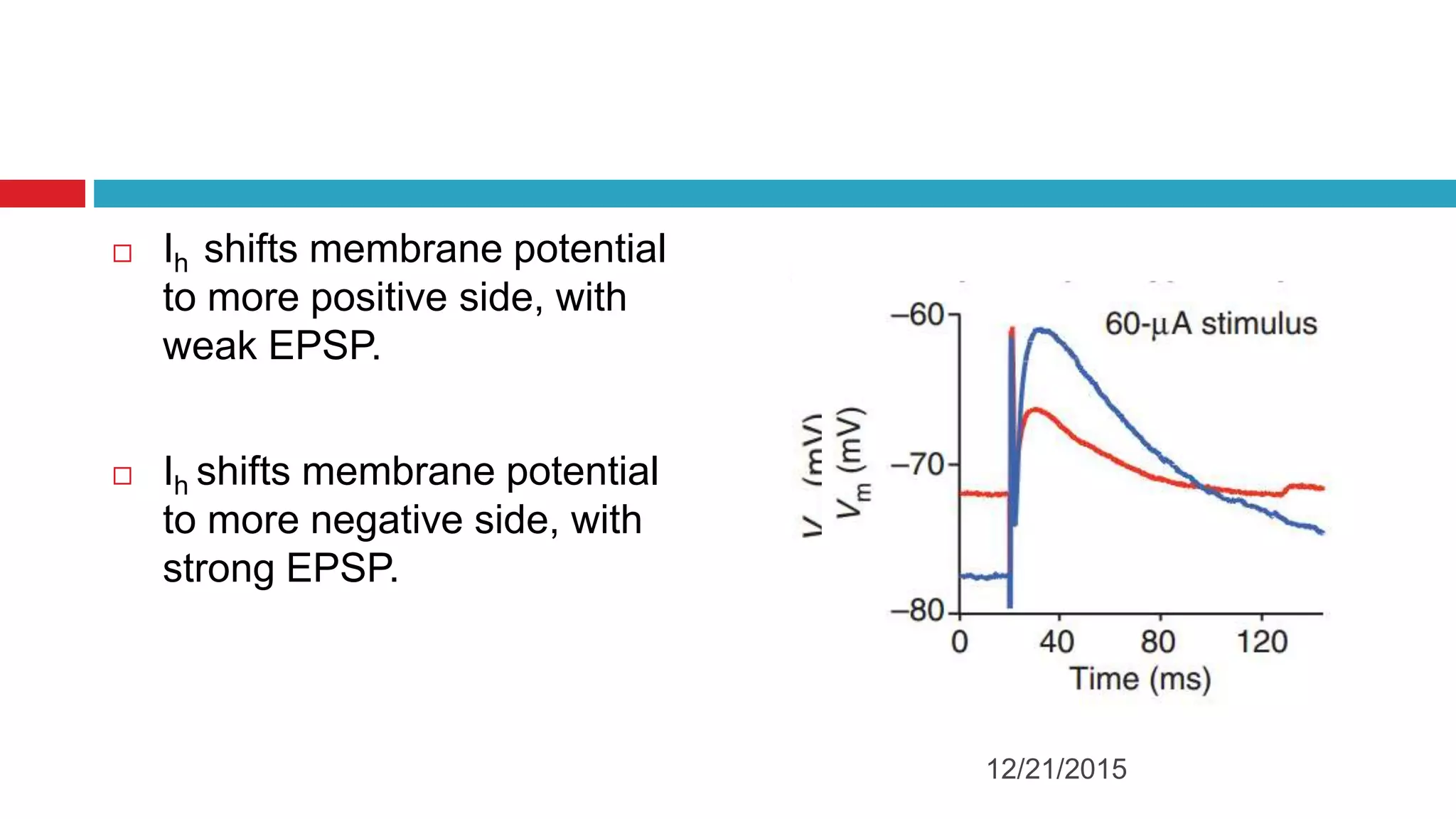
Results
12/21/2015
 Ih suppresses the firing of Na+ action
potentials.
12/21/2015
 Ih shifts membrane potential
to more positive side, with
weak EPSP.
 Ih shifts membrane potential
to more negative side, with
strong EPSP.
12/21/2015
Conclusion
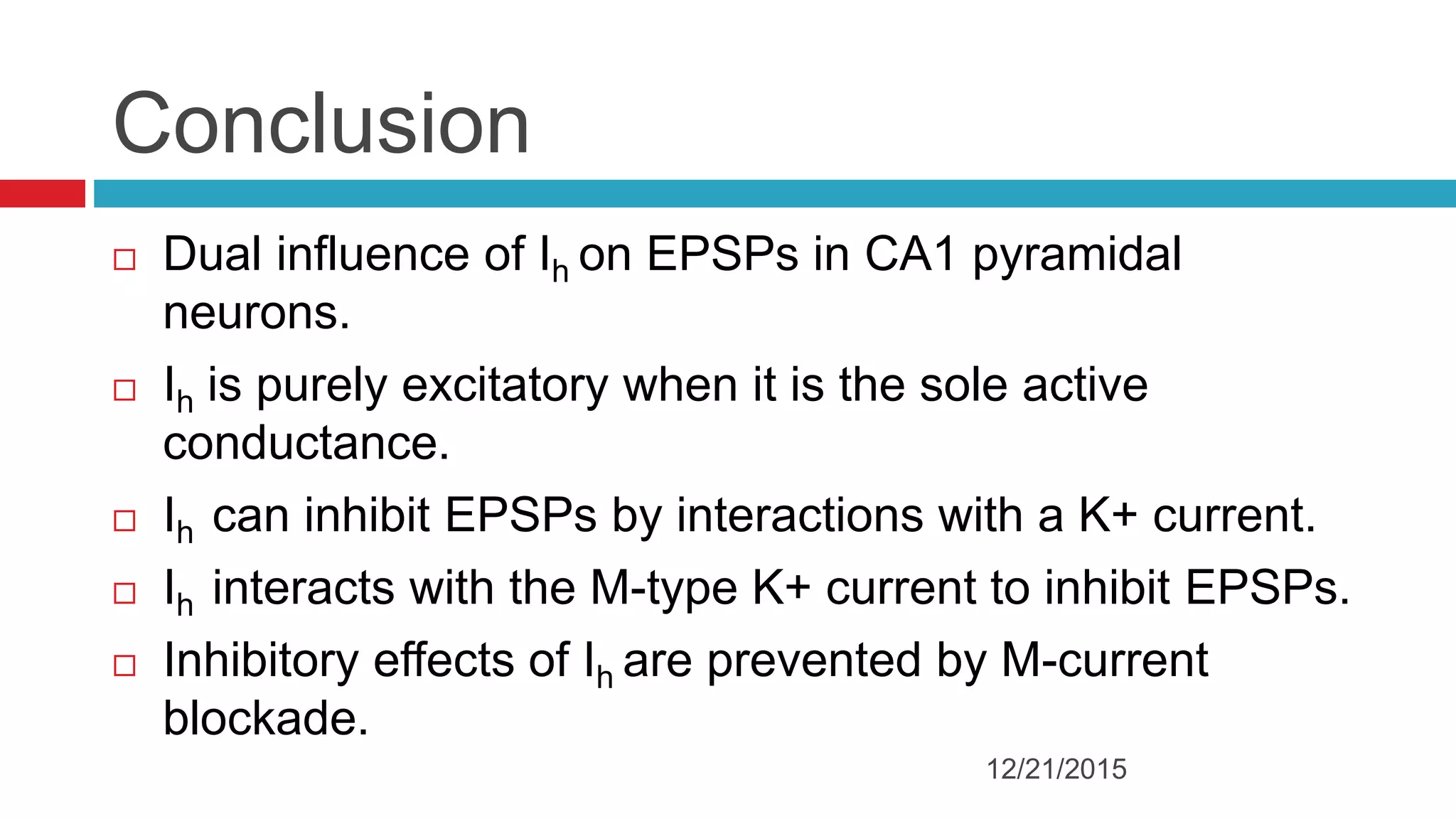
 Dual influence of Ih on EPSPs in CA1 pyramidal
neurons.
 Ih is purely excitatory when it is the sole active
conductance.
 Ih can inhibit EPSPs by interactions with a K+ current.
 Ih interacts with the M-type K+ current to inhibit EPSPs.
 Inhibitory effects of Ih are prevented by M-current
blockade.
12/21/2015
Molecular mechanism of
cAMP modulation of HCN pacemaker channels
 All four family members contain both a core transmembrane segment
domain, homologous to the S1 to S6 regions of voltage-gated K+
channels, and a carboxy-terminal 120 amino-acid cyclic nucleotide-
binding domain (CNBD) motif.
 The direct binding of cyclic AMP to the cytoplasmic site on HCN
channels permits the channels to open more rapidly and completely after
repolarization of the action potential, thereby accelerating
rhythmogenesis.
Reference: Molecular mechanism of cAMP modulation of HCN pacemaker channels Brian J. Wainger*, Matthew
DeGennaro², Bina Santoro*, Steven A. Siegelbaum*²³ & Gareth R. Tibbs³§ * Center for Neurobiology and Behavior; ² Howard
Hughes Medical Institute; ³ Department of Pharmacology; and § Department of Anesthesiology, Columbia University, New
York, NY 10032, USA
12/21/2015
Activation kinetics
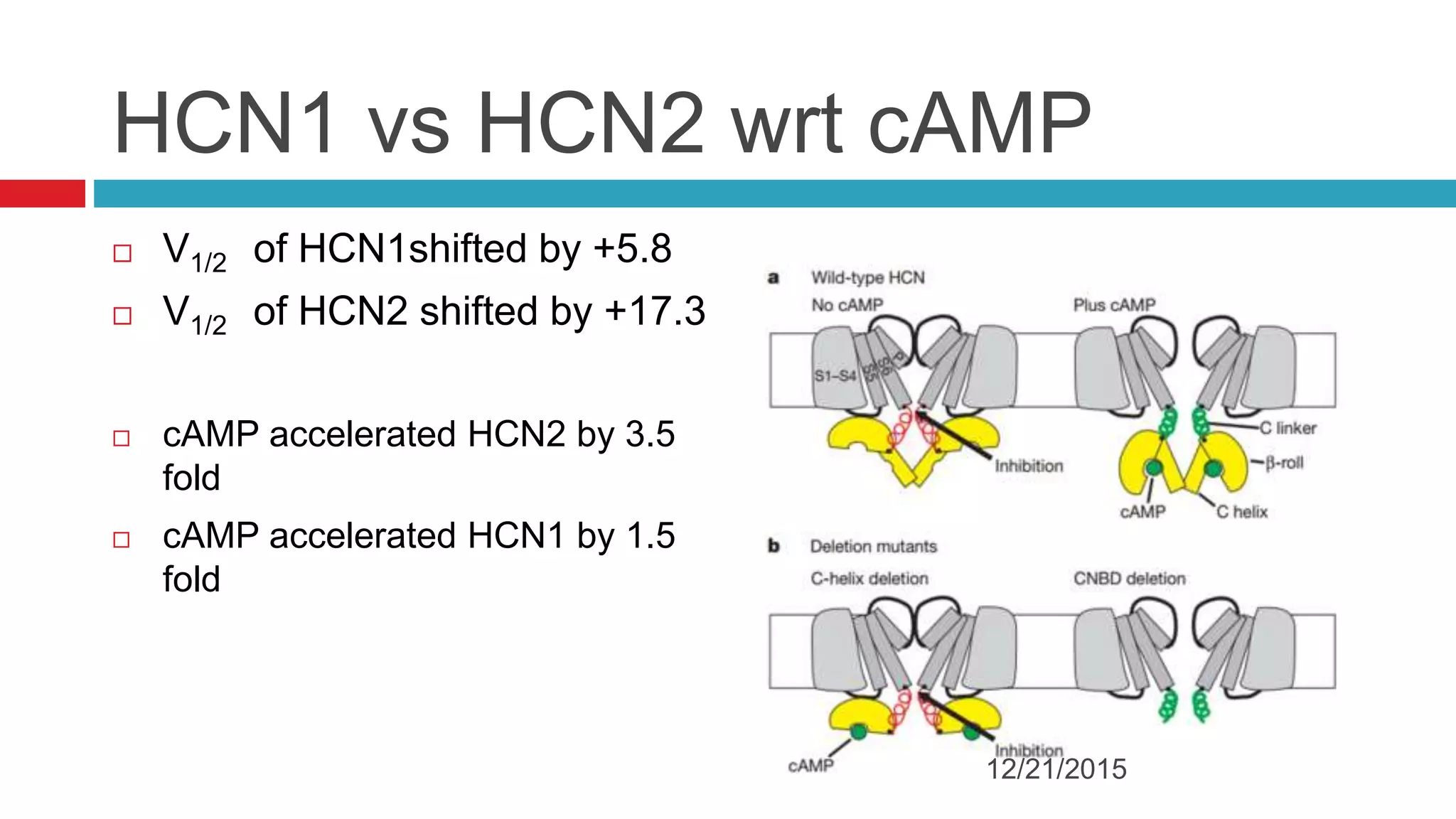
 It is demonstrated that the CNBD inhibits activation of the core
transmembrane domain, cAMP binding relieves this inhibition.
 Differences in activation gating and extent of cAMP modulation between
the HCN1 and HCN2 isoforms result largely from differences in the efficacy
of CNBD inhibition.
 HCN1 channels activate more rapidly on hyperpolarization than HCN2
channels; additionally, HCN1 channels turn on at voltages of about 20 mV
more positive than HCN2 channels.
12/21/2015
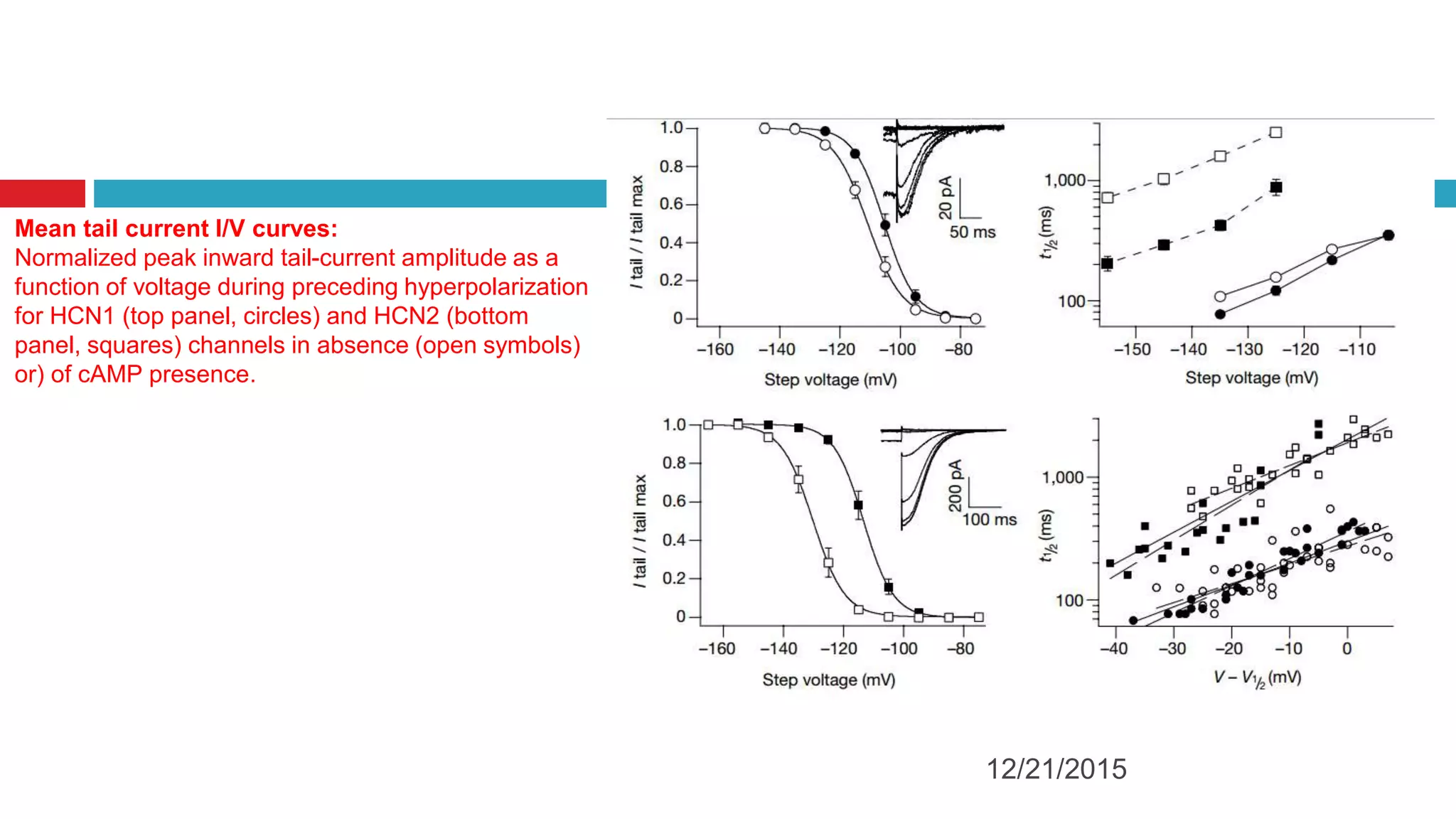
Mean tail current I/V curves:
Normalized peak inward tail-current amplitude as a
function of voltage during preceding hyperpolarization
for HCN1 (top panel, circles) and HCN2 (bottom
panel, squares) channels in absence (open symbols)
or) of cAMP presence.
12/21/2015
12/21/2015
HCN1 vs HCN2
V1/2 of HCN1 = -110.6
V1/2 of HCN2 = -129.6
HCN2 activation was about 15-fold slower than
HCN1 activation.
12/21/2015
HCN1 vs HCN2 wrt cAMP
 V1/2 of HCN1shifted by +5.8
 V1/2 of HCN2 shifted by +17.3
 cAMP accelerated HCN2 by 3.5
fold
 cAMP accelerated HCN1 by 1.5
fold
12/21/2015
12/21/2015

Epilepsy

  • 1.
    IMPACT OF HCNCHANNEL MUTATION ON EPILEPSY YANAMALA VIJAY RAJ12/21/2015
  • 2.
    Outline 12/21/2015  Epilepsy  HCNchannel  K channel  Signal transduction pathways  Interactions
  • 3.
    Hyper-polarization activated cyclic nucleotide(HCN)  Non selective channel  Brian and heart  Oscillatory rhythm  HCN channels have a major role in controlling neuronal excitability, dendritic integration of synaptic potentials, synaptic transmission, and rhythmic oscillatory activity in individual neurons and neuronal networks. 12/21/2015
  • 4.
  • 5.
    Distribution 12/21/2015 Reference HCN channels: Function and clinical implica Eduardo E. Benarroch, MD
  • 6.
    Functions 12/21/2015 Reference HCN channels: Function and clinical implic Eduardo E. Benarroch, MD
  • 7.
    HCN role inepilepsy  Abnormal regulation of HCN expression or function has been implicated in epilepsy.  However, the role of HCN dysregulation in epilepsy is complex. Studies in experimental models indicate that both upregulation and downregulation of HCN channels can be associated with seizures;  Different HCN types may contribute to different extents to focal or generalized epilepsy syndromes; and the role of HCN channels strongly depends on cellular localization and physiologic context. 12/21/2015
  • 8.
    Complications  The numberof surface-expressed HCN channels influences the magnitude and properties of Ih.  Mechanisms controlling the number of surface HCN channels act at different time-scales.  At a relatively long time scale (hours to days), transcriptional regulation determines the total amount of HCN channel protein in the cell.  This regulation is isoform-specific, acts via specific transcription factors, and depends on network activity. 12/21/2015
  • 9.
    Transcription factors alteringHCN  NRSF also known as REST, repressor element 1-silencing transcription factor).  repressor element 1-silencing transcription factor), which binds to neuron restrictive silencer elements (NRSE). 12/21/2015
  • 10.
    Post-translational modifications of HCN HCN channels are heavily glycosylated in the mammalian brain and glycosylation influences both the total number of HCN channels in the membrane and their heteromerization.  Modulation of HCN channel surface expression at shorter time-scales can occur via local regulation of channel membrane insertion, internalization and recycling.  Importantly, the dynamics of HCN channel trafficking and surface expression are activity-dependent, with implications to neuroplasticity and disease.  TRIP8b (an auxiliary protein that interacts directly with HCN channels)12/21/2015
  • 11.
     The targeting ofHCN channels to distinct sub-cellular domains influences their location dependent roles in regulation of excitability.  Distinct distribution patterns of HCN channels exist in dendrites of specific cell types and brain regions, as well as during development.  Whereas ample information exists on the distribution of HCN channels, little is known of the molecular mechanisms that underlie their targeting. 12/21/2015
  • 12.
    Reporting of HCNrole in epilepsy  Enhanced levels of HCN1 channel expression and dendritic localization were found in granule cells of the dentate gyrus.  Recent work has identified a mutation in the HCN2 gene and augmentation of Ih in patients with genetic epilepsy with febrile seizures plus (GEFS).  Deletion of the HCN1 gene in mice results in increased excitability and seizure susceptibility, and reduction or deletion of the HCN2 isoform leads to spontaneous ‘absence’ seizures. 12/21/2015
  • 13.
     In accordwith the diverse regulatory mechanisms and versatile functions of Ih in the normal brain, the dysregulation of Ih and HCN channels in epilepsy is dynamic and intricate. 12/21/2015
  • 14.
    REFERENCE: Jasper's BasicMechanisms of the Epilepsies. 4th edition, Noebels JL, Avoli M, Rogawski MA, et al., editors. Bethesda (MD): National Center for Biotechnology Information (US); 2012. 12/21/2015
  • 15.
    REFERENCE: Jasper's BasicMechanisms of the Epilepsies [Internet]. 4th edition, Noebels JL, Avoli M, Rogawski MA, et al., editors. Bethesda (MD): National Center for Biotechnology Information (US); 2012. 12/21/2015
  • 16.
    Do Seizures CauseNeuronal Death in the Human Hippocampus? Luisa L Rocha, MD PhD, Maria-Leonor Lopez-Meraz, PhD, Jerome Niquet PhD and Claude G Wasterlain MD,  Based on Indirect Markers of Neuronal Injury, it is conformed that repetitive seizures caused neuronal death. 12/21/2015
  • 17.
    “CypD” The Keyto the Death Door: Shaik M. Fayaz, Yanamala V. Raj and Rajanikant G. Krishnamurthy: School of Biotechnology, Coordinator, DBT - Centre for Bioinformatics, National Institute of Technology Calicut, Calicut - 673601, India. 12/21/2015
  • 18.
    Genotype–phenotype correlations inneonatal epilepsies caused by mutations in the voltage sensor of K v7.2 potassium channel subunits Francesco Micelia, Maria Virginia Soldovierib, Paolo Ambrosinob, Vincenzo Barresea, Michele Migliorec, Maria Roberta Ciliod,e,1, and Maurizio Taglialatela 1. Mutations in Kv7.2 gene encoding for voltage dependent potassium channel cause neonatal epilepsies. 2. Kv7.2 channels fall under delayed rectifiers category. 3. Mutations reported in S4 domain 12/21/2015
  • 19.
  • 20.
  • 21.
  • 22.
  • 23.
    Mutations 1. R213W 2. R213Q Mutationsmarkedly destabilized open state causing decrease in channel voltage sensitivity. 12/21/2015
  • 24.
    Functional changes ofmutation  These functional changes were 1. More pronounced for channels incorporating R213Q- than R213W- carrying KV7.2 subunits. 2. (ii) proportional to the number of mutant subunits incorporated; 3. (iii) fully restored by the neuronal Kv7 activator retigabin. NOTE: Both mutations increased firing, but R213Q has more dramatically functional changes compared to others. 12/21/2015
  • 25.
    Anticonvulsant therapy  Kv7openers as a targeted anticonvulsant therapy to improve developmental outcome in neonates with KV7.2 encephalopathy CLINICAL IDENTIFICATIONS: 1. seizures with psychomotor retardation, 2. suppression-burst pattern at EEG, 3. and distinct neuroradiological features 12/21/2015
  • 26.
     Threshold voltagesfor current activation were -50mV in Kv7.2 −10 mV in Kv7.2 R6W channels 0 mV in Kv7.2 R6Q channels.  The half activation potential (V1/2) was −23 mV in Kv7.2 channels; this value was right-shifted by i. 58 mV R6W mutant ii. 68 mV R6Q mutant 12/21/2015
  • 27.
    Deactivation kinetics  Deactivationkinetics of KV7.2 R6W & KV7.2 R6Q channels were faster than KV7.2 channels.  At the end of a −20 mV step, a significant fraction of KV7.2 channels appeared to still be in the open state; by contrast, more complete deactivation was observed for KV7.2 R6W and KV7.2 R6Q channels, the latter being fully closed at the end of the voltage step. 12/21/2015
  • 28.
  • 29.
    Functional and PharmacologicalProperties of KV7.2 and/or KV7.3 Heteromeric Channels Incorporating Mutant KV7.2 R6W and R6Q Subunits.  To evaluate the possible functional changes caused by KV7.2 R6W and KV7.2 R6Q mutant subunits in Heteromeric assembly with KV7.2 and/or KV7.3 subunits.  CHO cells were transfected with KV7.2+KV7.3 cDNAs at a 1:1 ratio to mimic the genetic balance of normal individuals, and with KV7.2+KV7.2 R6W+KV7.3 or KV7.2+KV7.2 R6Q+KV7.3 (each at 0.5:0.5:1 ratio) to mimic the genetic balance of individuals who carried the mutant KV7.2 alleles in heterozygosity. 12/21/2015
  • 30.
     Incorporation of KV7.3subunits into KV7.2+KV7.3, heteromeric channels generated currents with larger size and a reduced sensitivity to the pore blocker tetraethylammonium (TEA) than KV7.2 homomers.  Compared with KV7.2+KV7.3-transfected cells, cells transfected with KV7.2+KV7.2 R6W+KV7.3 or KV7.2+KV7.2 R6Q+KV7.3 cDNAs generated K+ currents of identical size and TEA sensitivity, suggesting that these mutations failed to interfere with heteromeric subunit assembly. 12/21/2015
  • 31.
  • 32.
  • 33.
  • 34.
    HCN hyperpolarization-activated cationchannels inhibit EPSPs by interactions with M-type K+ channels Meena S George, L F Abbott & Steven A Siegelbaum  Characterization of HCN channels on dendritic processing of subthreshold excitatory postsynaptic potentials (EPSPs).  The HCN channels generated an excitatory inward current (Ih) that exerted a direct depolarizing effect on the peak voltage of weak EPSPs, but produced a paradoxical hyperpolarizing effect on the peak voltage of stronger, but still subthreshold EPSPs.  Its found that the inhibitory action of (Ih) was caused by its interaction with the delayed-rectifier M-type K current. 12/21/2015
  • 35.
    M current  Mcurrent is a type of non-inactivating potassium current first discovered in bullfrog sympathetic ganglion cells.  The M-channel is important in raising the threshold for firing an action potential. It is unique because it is open at rest and even more likely to be open during depolarization.  The M-channel is a PIP2-regulated ion channel. 12/21/2015
  • 36.
  • 37.
    PIP2 role inrundown of HCN  The voltage dependence of activation of the HCN hyperpolarization- activated cation channels is shifted in inside-out patches by -40 to -60 mV relatively.  Role of phosphatidylinositol 4,5-bisphosphate PIP(2) in HCN channel rundown, as hydrolysis of PIP(2) by lipid phosphatases is thought to underlie rundown of several other channels.  We find that bath application of exogenous PIP(2) reverses the effect of rundown, producing a large depolarizing shift in HCN2 activation.12/21/2015
  • 38.
    Coordinated signal integrationa t the M-type potassium channel upon muscarinic stimulation Anastasia Kosenko1, Seungwoo Kang1, Ida M Smith1, Derek L Greene1, Lorene K Langeberg2, John D Scott2 and Naoto Hoshi1,* 1Department of Pharmacology, University of California, Irvine, CA, USA and 2Department of Pharmacology, Howard Hughes Medical Institute, University of Washington, Seattle, WA, USA 12/21/2015
  • 39.
  • 40.
    Regulation of gatingand rundown of HCN hyperpolarization-activated channels by exogenous and endogenous PIP2. Pian P1, Bucchi A, Robinson RB, Siegelbaum SA. Author information 1Center for Neurobiology and Behavior, Columbia University Medical Center, New York, NY 10032, USA. 12/21/2015
  • 41.
    The Cyclic AMPPathway Paolo Sassone-Corsi Center for Epigenetics and Metabolism, School of Medicine, University of California, Irvine, California 92697 Correspondence: psc@uci.edu 12/21/2015
  • 42.
    cAMP  Activated Gprotein bind to PLC.  PLC cleaves PIP2 into IP3 and DAG.  IP3 triggers calcium release from endo-plastic reticulum, and it ultimately regulates cAMP.  DAG in a chain of reaction too increase cyclic nucleotide activity. 12/21/2015
  • 43.
  • 44.
    Dendride channels  Voltagegated sodium and calcium channels amplify synaptic potential.  Voltage gated calcium activated potassium channel inhibit synaptic potential.  HCN channel has both inhibitory and excitatory action on synaptic potential. 12/21/2015
  • 45.
    HCN role  Unlikemost voltage-gated channels, HCN channels activate with hyperpolarization and deactivate with depolarization.  Their mixed permeability to K+ and Na+ ions results in a reversal potential ( Eh) of approximately –30 mV, causing these channels to generate an excitatory inward current ( Ih) at subthreshold potentials.  These biophysical properties underlie the role of (Ih) as a pacemaker current in cardiac myocytes and thala-mocortical relay neurons, in which activation of Ih following action potential repolarization generates a depolarizing current that drives spontaneous, rhythmic firing. 12/21/2015
  • 46.
     HCN channelsare not spontaneously active, Ih contributes 5 to 10-mV depolarizing influence on the resting membrane potential (RMP) and increases the resting membrane conductance (that is, it lowers the input resistance).  Conversely from the fact that Ih provides a depolarizing current at subthreshold potentials, results from several studies have indicated that it has a paradoxical inhibitory effect on the ability of an EPSP to trigger an action potential.  Thus, enhancement of Ih by the anticonvulsant lamotrigine, application of dopamine or induction of long-term potentiation decreases excitability and spike firing. 12/21/2015
  • 47.
     Conversely, downregulationof Ih via genetic deletion of HCN1, pharmacological blockade using cesium or the organic antagonist ZD7288 following induction of long-term depression or seizures increases EPSP amplitude, temporal summation and spike firing.  The inhibitory effects of Ih , by which we mean the inhibition that is seen when Ih is enhanced, have generally been attributed to its ability to increase the resting membrane conductance.  This so-called ‘shunting effect’ on the excitatory postsynaptic current decreases the amplitude of an EPSP with EPSP amplitude being defined as the difference between the peak voltage of an EPSP (V peak) and the resting potential. 12/21/2015
  • 48.
    The Yin andYang of the H-Channel and Its Role in Epilepsy: Nicholas P. Poolos, M.D., Ph.D 12/21/2015
  • 49.
     However, theeffect of an EPSP depends not on its amplitude, but on the voltage reached at its peak, which determines whether an EPSP is supra-threshold.  Notably, Ih exerts two opposing influences on V peak: its shunting effect decreases EPSP peak voltage and its direct depolarizing effect increases V peak. 12/21/2015
  • 50.
     By computationalit is proved that HCN has more excitatory role than inhibitory role.  Depolarizing effect greater than shunting effect. 12/21/2015
  • 51.
     In principle,this effect of Ih on resting potential and resting inactivation could also explain how Ih suppresses the firing of Na+ action potentials.  But it remains unclear whether Ih can exert an inhibitory effect on Vpeak for subthreshold EPSPs. 12/21/2015
  • 52.
  • 53.
     Ih suppressesthe firing of Na+ action potentials. 12/21/2015
  • 54.
     Ih shiftsmembrane potential to more positive side, with weak EPSP.  Ih shifts membrane potential to more negative side, with strong EPSP. 12/21/2015
  • 55.
    Conclusion  Dual influenceof Ih on EPSPs in CA1 pyramidal neurons.  Ih is purely excitatory when it is the sole active conductance.  Ih can inhibit EPSPs by interactions with a K+ current.  Ih interacts with the M-type K+ current to inhibit EPSPs.  Inhibitory effects of Ih are prevented by M-current blockade. 12/21/2015
  • 56.
    Molecular mechanism of cAMPmodulation of HCN pacemaker channels  All four family members contain both a core transmembrane segment domain, homologous to the S1 to S6 regions of voltage-gated K+ channels, and a carboxy-terminal 120 amino-acid cyclic nucleotide- binding domain (CNBD) motif.  The direct binding of cyclic AMP to the cytoplasmic site on HCN channels permits the channels to open more rapidly and completely after repolarization of the action potential, thereby accelerating rhythmogenesis. Reference: Molecular mechanism of cAMP modulation of HCN pacemaker channels Brian J. Wainger*, Matthew DeGennaro², Bina Santoro*, Steven A. Siegelbaum*²³ & Gareth R. Tibbs³§ * Center for Neurobiology and Behavior; ² Howard Hughes Medical Institute; ³ Department of Pharmacology; and § Department of Anesthesiology, Columbia University, New York, NY 10032, USA 12/21/2015
  • 57.
    Activation kinetics  Itis demonstrated that the CNBD inhibits activation of the core transmembrane domain, cAMP binding relieves this inhibition.  Differences in activation gating and extent of cAMP modulation between the HCN1 and HCN2 isoforms result largely from differences in the efficacy of CNBD inhibition.  HCN1 channels activate more rapidly on hyperpolarization than HCN2 channels; additionally, HCN1 channels turn on at voltages of about 20 mV more positive than HCN2 channels. 12/21/2015
  • 58.
    Mean tail currentI/V curves: Normalized peak inward tail-current amplitude as a function of voltage during preceding hyperpolarization for HCN1 (top panel, circles) and HCN2 (bottom panel, squares) channels in absence (open symbols) or) of cAMP presence. 12/21/2015
  • 59.
  • 60.
    HCN1 vs HCN2 V1/2of HCN1 = -110.6 V1/2 of HCN2 = -129.6 HCN2 activation was about 15-fold slower than HCN1 activation. 12/21/2015
  • 61.
    HCN1 vs HCN2wrt cAMP  V1/2 of HCN1shifted by +5.8  V1/2 of HCN2 shifted by +17.3  cAMP accelerated HCN2 by 3.5 fold  cAMP accelerated HCN1 by 1.5 fold 12/21/2015
  • 62.