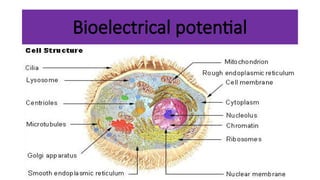
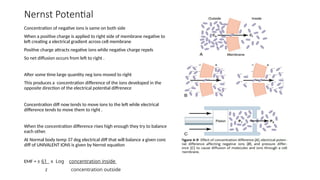
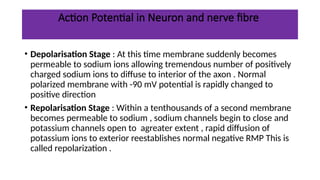
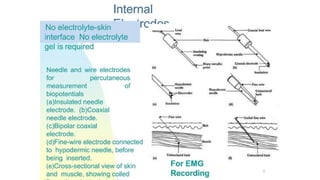
Bioelectric potentials refer to the electrical signals generated by living organisms through the movement of ions across cellular membranes, playing a crucial role in various physiological processes such as nerve signaling and muscle contraction. Key concepts include action potentials in neurons, resting membrane potential, and the contributions of different ion channels, which are essential for understanding physiological functions like cardiac activity. Significant advancements in the field, such as Einthoven's work on electrocardiograms, laid the groundwork for modern cardiovascular physiology.