Enzymes in
JUICE INDUSTRY
 Juice extracted from a wide variety of fruits such
as apples, pears, mango and berries is used to
produce natural beverages
 This can be done simply by squeezing the fruits
but it is more common to use enzymes to increase
the volume of juice produced and the speed of
extraction
 Extraction Processes depend upon following
parameters:
 Type of fruit
 Age of fruit
 Maturity of fruit
Role of Enzymes in juice processing
 Extraction involves maceration (a process of
softening tissues by soaking in liquid) followed by
pressing to separate the juice from the solids
 Enzymes can play a key role in these processes in
order to;
 Improve yield
 Clarify the juice
 Stability
 Enzymes break down cell walls within the
fruits and release liquids and sugars
 Pectinases in combination with other
carbohydrate degrading enzymes, specially
cellulases, are useful in breaking fruit tissues to
release more juice
 Enzymatic maceration can result in extraction
of more than 95% of the soluble solids from
the fruit
 Enzymes are also used to clarify & stabilize
the juices by degrading soluble pectins and
starches that would cause haze
Cell Wall
 Affects the extraction of juice
 Provides structure & rigidity to pulp
 Fruit is made up of cells linked by middle lamellae
which contain insoluble proto-pectins
 Pectinases break down the pectin chains & therefore
reduce their binding action
 Cell Wall mainly Consists of:
 Pectin
 Cellulose
 Hemicellulose
 Lignin and other components
Enzymes used in Fruit Processing
 PECTINASES
 Break pectin into simpler units
 Clear the juice and more yield is obtained
TYPES OF PECTINASES
 Polygalacturonase
Responsible for the random hydrolysis of 1,4-α-
D-galacturonic linkages
 Pectin lyase
Cleaves the pectin, by an elimination reaction
releasing oligosaccharides with non-reducing
terminal 4-deoxymethyl-a-D-galact-4-enuronosyl
residues without the necessity of pectin methyl
esterase action
 Pectin methylesterase
 Releases methanol from the pectyl methyl
esters, a necessary stage before the
polygalacturonase can act fully
 Increase in the methanol content of such
treated juice is generally less than the natural
concentrations and poses no health risk
Native Pectic Enzymes
 Apples and grapes contain pectic enzymes
which can lead to spontaneous clarification of
the juices and wines if they are permitted to
stand for a considerable length of time
 Significant amount of polygalacturonase and
pectin methylesterase are found in apple juice
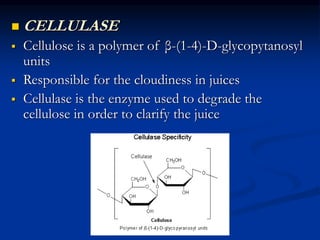
 CELLULASE
 Cellulose is a polymer of β-(1-4)-D-glycopytanosyl
units
 Responsible for the cloudiness in juices
 Cellulase is the enzyme used to degrade the
cellulose in order to clarify the juice
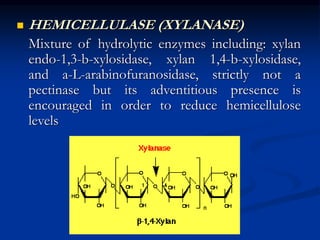
 HEMICELLULASE (XYLANASE)
Mixture of hydrolytic enzymes including: xylan
endo-1,3-b-xylosidase, xylan 1,4-b-xylosidase,
and a-L-arabinofuranosidase, strictly not a
pectinase but its adventitious presence is
encouraged in order to reduce hemicellulose
levels
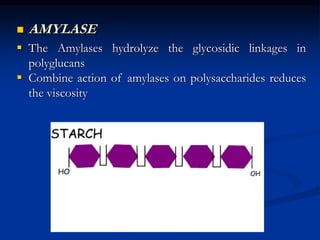
 AMYLASE
 The Amylases hydrolyze the glycosidic linkages in
polyglucans
 Combine action of amylases on polysaccharides reduces
the viscosity
Glucose Oxidase
 During juice processing a considerable air is
dissolved in the juice resulting in formation of
foam
 It is undesirable because it reduces the shelf life
 Glucose oxidase is used for the removal of
oxygen from fruit juices and soft drinks
Naringinase
 Bitter taste of the juice and peel of citrus fruits
is largely due to the presence of naringin
 Hydrolysis of naringin first leads to a mixture of
rhamnose and prunin
 Further hydrolysis leads to glucose and
naringenin
 Enzyme responsible for the decrease in naringin
concentration is called Naringinase
 Its optimum pH is 4 with a range of good
activity between pH 3 to 5
 Optimum temperature for naringinase is 60 °C
 0.6% of the commercial pectic enzyme
preparation is sufficient to hydrolyze 50% of the
naringin in 3 hr
Polyphenol Oxidase and Methyltransferase
 Browning reactions in juices takes place in the
presence of diphenols, oxygen and enzyme
polyphenol oxidase
 Browning is undesirable but in some instances such
as apple juice consumers like amber to brown color
 Browning is most common in fruits and potatoes
which are preserved by freezing or drying
 Heat inactivation of enzymes is possible but effects
the texture of fruit
 Methyltransferase is used to control the browning
action by modify the substrate in such a manner that
it will not be attacked by polypenol oxidase
 Most active at an alkaline pH
 A simple adjustment of the pH of fruits to alkaline
pH levels appears to have a cosiderable effect in
preventing the browning reaction even if no methyl
transferase is added to the system
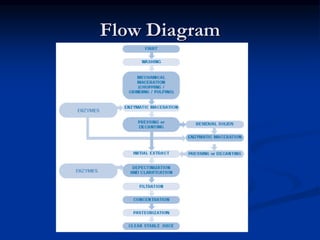
Fruit Juice Extraction Process
 Washing & Mechanical Maceration
 Washing
 Removal of external surface dirt & chemical
residues
 Chopping & crushing
 As the breakdown of the fruit cells continues a
variety of polysaccharides are found within the juice
extract
 These can cause the juice to become cloudy and
reduce its market value
 Enzymatic Maceration
 Treatment of mashed fruit with macerating
enzymes
 Either directly into the crusher/pulper or after
dilution with water, to assist homogeneous
distribution through the pulp
 Separation of Juice and Solids
Juice separation from the remaining solids in a press
or in a decanter
 Secondary Extraction
To achieve maximum utilization of the raw material
by using further enzymes
 Clarification
 Cloudiness due to presence of pectins
 One liter of juice with a dry matter content of
13% can contain 2-5g of pectin
 Pectin can be associated with other plant
polymers & the cell debris and cause cloudiness
in the juice
 Cloudiness can only be removed by enzymatic
depectinization
 After pressing, the juice is transferred to a
stirred holding tank
 Pectinases are added to the juice and incubated
at 40-50 °C
 Reaction is allowed to continue until a negative
pectin test is obtained
 Pectic enzymes are used in fruit juice industry to
facilitate :
 Extraction of juice
 Clarification of juice
 Separation of flocculent precipitate by
sedimentation, filtration or by centrifugation
 Resulting juices have excellent stability against
hazing
Desirability Of Clarifying Juice
 Sometimes use of pectic enzymes is avoided when :
 A stable cloud should be maintained in the fruit
juice
 Fruit drinks of fairly high viscosity are desired
 Pectin content of the juice must be preserved for
subsequent production of fruit jellies
 The need for the use of enzyme varies with the
difficulties of production
 Apples may be readily pressed without use of
the enzymes while fresh prunes cannot be
pressed without the addition of pectic enzymes
to the fruit pulp
 Enzyme concentration and reaction time should
be precise in order to have good final product
 A lengthy enzyme treatment results in the loss
of highly volatile flavor constituents
 Presence of pectin and haze in the juice leads to
cooked flavors in the pasteurized juice
 Fining Agents
 Activity of pectinases is reduced by fining agents
like bentonite
 Enzyme activity is allowed to complete before
fining agents are used
 Concentration / Pasteurization
 To kill any microorganism that might be present
 Also helps to improve the overall clarity of juice
 Before filling the juice it may be further filtered
and given an additional heat treatment to ensure
safety
Flow Diagram
Thank u

Enzymes in juices.ppt

  • 1.
  • 2.
     Juice extractedfrom a wide variety of fruits such as apples, pears, mango and berries is used to produce natural beverages  This can be done simply by squeezing the fruits but it is more common to use enzymes to increase the volume of juice produced and the speed of extraction  Extraction Processes depend upon following parameters:  Type of fruit  Age of fruit  Maturity of fruit
  • 3.
    Role of Enzymesin juice processing  Extraction involves maceration (a process of softening tissues by soaking in liquid) followed by pressing to separate the juice from the solids  Enzymes can play a key role in these processes in order to;  Improve yield  Clarify the juice  Stability
  • 4.
     Enzymes breakdown cell walls within the fruits and release liquids and sugars  Pectinases in combination with other carbohydrate degrading enzymes, specially cellulases, are useful in breaking fruit tissues to release more juice  Enzymatic maceration can result in extraction of more than 95% of the soluble solids from the fruit  Enzymes are also used to clarify & stabilize the juices by degrading soluble pectins and starches that would cause haze
  • 5.
    Cell Wall  Affectsthe extraction of juice  Provides structure & rigidity to pulp  Fruit is made up of cells linked by middle lamellae which contain insoluble proto-pectins  Pectinases break down the pectin chains & therefore reduce their binding action  Cell Wall mainly Consists of:  Pectin  Cellulose  Hemicellulose  Lignin and other components
  • 6.
    Enzymes used inFruit Processing  PECTINASES  Break pectin into simpler units  Clear the juice and more yield is obtained
  • 7.
    TYPES OF PECTINASES Polygalacturonase Responsible for the random hydrolysis of 1,4-α- D-galacturonic linkages  Pectin lyase Cleaves the pectin, by an elimination reaction releasing oligosaccharides with non-reducing terminal 4-deoxymethyl-a-D-galact-4-enuronosyl residues without the necessity of pectin methyl esterase action
  • 8.
     Pectin methylesterase Releases methanol from the pectyl methyl esters, a necessary stage before the polygalacturonase can act fully  Increase in the methanol content of such treated juice is generally less than the natural concentrations and poses no health risk
  • 9.
    Native Pectic Enzymes Apples and grapes contain pectic enzymes which can lead to spontaneous clarification of the juices and wines if they are permitted to stand for a considerable length of time  Significant amount of polygalacturonase and pectin methylesterase are found in apple juice
  • 10.
     CELLULASE  Celluloseis a polymer of β-(1-4)-D-glycopytanosyl units  Responsible for the cloudiness in juices  Cellulase is the enzyme used to degrade the cellulose in order to clarify the juice
  • 11.
     HEMICELLULASE (XYLANASE) Mixtureof hydrolytic enzymes including: xylan endo-1,3-b-xylosidase, xylan 1,4-b-xylosidase, and a-L-arabinofuranosidase, strictly not a pectinase but its adventitious presence is encouraged in order to reduce hemicellulose levels
  • 12.
     AMYLASE  TheAmylases hydrolyze the glycosidic linkages in polyglucans  Combine action of amylases on polysaccharides reduces the viscosity
  • 13.
    Glucose Oxidase  Duringjuice processing a considerable air is dissolved in the juice resulting in formation of foam  It is undesirable because it reduces the shelf life  Glucose oxidase is used for the removal of oxygen from fruit juices and soft drinks
  • 14.
    Naringinase  Bitter tasteof the juice and peel of citrus fruits is largely due to the presence of naringin  Hydrolysis of naringin first leads to a mixture of rhamnose and prunin  Further hydrolysis leads to glucose and naringenin  Enzyme responsible for the decrease in naringin concentration is called Naringinase
  • 15.
     Its optimumpH is 4 with a range of good activity between pH 3 to 5  Optimum temperature for naringinase is 60 °C  0.6% of the commercial pectic enzyme preparation is sufficient to hydrolyze 50% of the naringin in 3 hr
  • 16.
    Polyphenol Oxidase andMethyltransferase  Browning reactions in juices takes place in the presence of diphenols, oxygen and enzyme polyphenol oxidase  Browning is undesirable but in some instances such as apple juice consumers like amber to brown color  Browning is most common in fruits and potatoes which are preserved by freezing or drying
  • 17.
     Heat inactivationof enzymes is possible but effects the texture of fruit  Methyltransferase is used to control the browning action by modify the substrate in such a manner that it will not be attacked by polypenol oxidase  Most active at an alkaline pH  A simple adjustment of the pH of fruits to alkaline pH levels appears to have a cosiderable effect in preventing the browning reaction even if no methyl transferase is added to the system
  • 18.
    Fruit Juice ExtractionProcess  Washing & Mechanical Maceration  Washing  Removal of external surface dirt & chemical residues  Chopping & crushing  As the breakdown of the fruit cells continues a variety of polysaccharides are found within the juice extract  These can cause the juice to become cloudy and reduce its market value
  • 19.
     Enzymatic Maceration Treatment of mashed fruit with macerating enzymes  Either directly into the crusher/pulper or after dilution with water, to assist homogeneous distribution through the pulp  Separation of Juice and Solids Juice separation from the remaining solids in a press or in a decanter  Secondary Extraction To achieve maximum utilization of the raw material by using further enzymes
  • 20.
     Clarification  Cloudinessdue to presence of pectins  One liter of juice with a dry matter content of 13% can contain 2-5g of pectin  Pectin can be associated with other plant polymers & the cell debris and cause cloudiness in the juice  Cloudiness can only be removed by enzymatic depectinization
  • 21.
     After pressing,the juice is transferred to a stirred holding tank  Pectinases are added to the juice and incubated at 40-50 °C  Reaction is allowed to continue until a negative pectin test is obtained
  • 22.
     Pectic enzymesare used in fruit juice industry to facilitate :  Extraction of juice  Clarification of juice  Separation of flocculent precipitate by sedimentation, filtration or by centrifugation  Resulting juices have excellent stability against hazing Desirability Of Clarifying Juice
  • 23.
     Sometimes useof pectic enzymes is avoided when :  A stable cloud should be maintained in the fruit juice  Fruit drinks of fairly high viscosity are desired  Pectin content of the juice must be preserved for subsequent production of fruit jellies  The need for the use of enzyme varies with the difficulties of production
  • 24.
     Apples maybe readily pressed without use of the enzymes while fresh prunes cannot be pressed without the addition of pectic enzymes to the fruit pulp  Enzyme concentration and reaction time should be precise in order to have good final product  A lengthy enzyme treatment results in the loss of highly volatile flavor constituents  Presence of pectin and haze in the juice leads to cooked flavors in the pasteurized juice
  • 25.
     Fining Agents Activity of pectinases is reduced by fining agents like bentonite  Enzyme activity is allowed to complete before fining agents are used  Concentration / Pasteurization  To kill any microorganism that might be present  Also helps to improve the overall clarity of juice  Before filling the juice it may be further filtered and given an additional heat treatment to ensure safety
  • 26.
  • 27.