BMM480 ENZYMOLOGY
FOOD AND INDUSTRIAL APPLICATIONS
Use in Alcohol
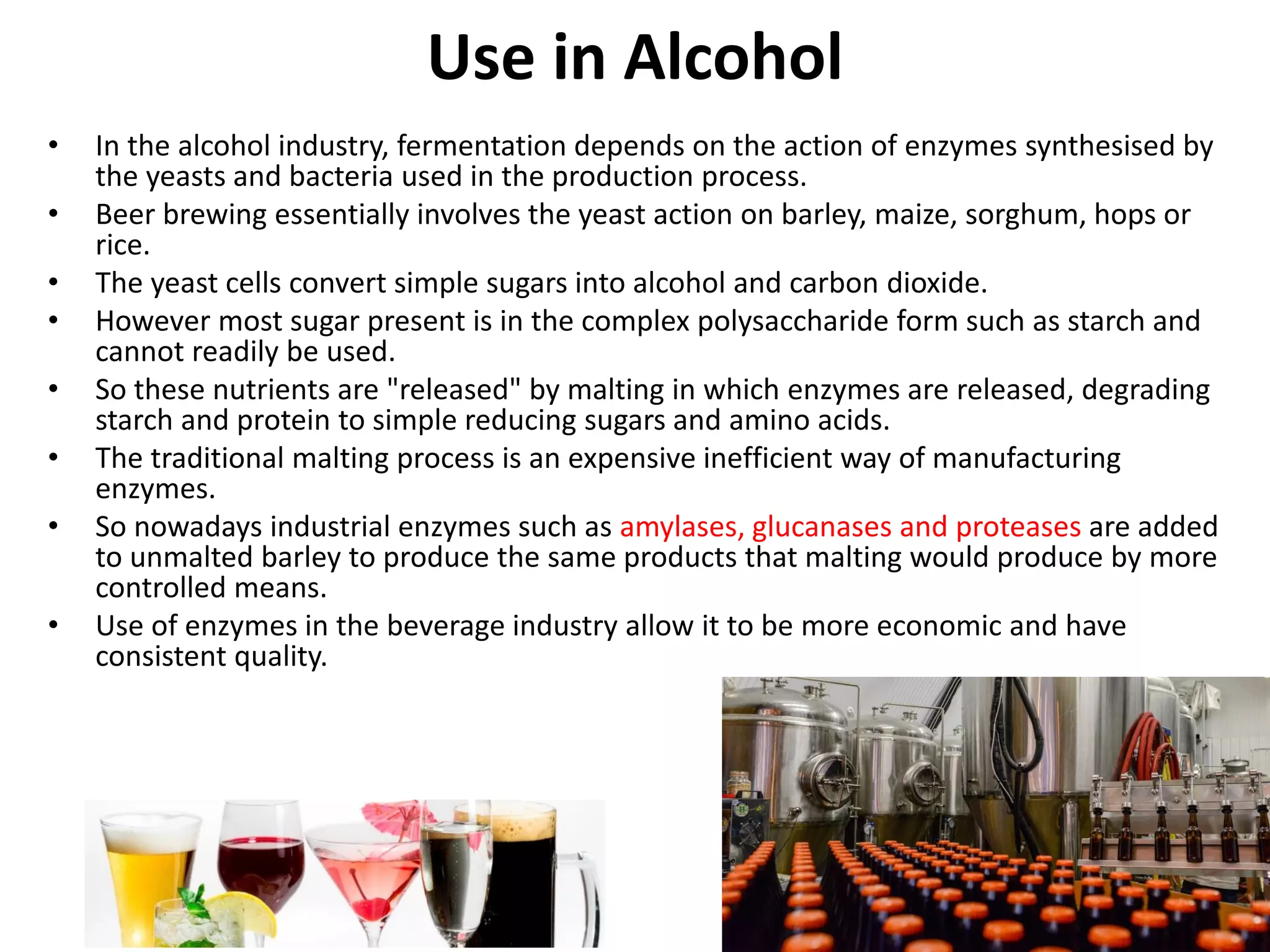
• In the alcohol industry, fermentation depends on the action of enzymes synthesised by
the yeasts and bacteria used in the production process.
• Beer brewing essentially involves the yeast action on barley, maize, sorghum, hops or
rice.
• The yeast cells convert simple sugars into alcohol and carbon dioxide.
• However most sugar present is in the complex polysaccharide form such as starch and
cannot readily be used.
• So these nutrients are "released" by malting in which enzymes are released, degrading
starch and protein to simple reducing sugars and amino acids.
• The traditional malting process is an expensive inefficient way of manufacturing
enzymes.
• So nowadays industrial enzymes such as amylases, glucanases and proteases are added
to unmalted barley to produce the same products that malting would produce by more
controlled means.
• Use of enzymes in the beverage industry allow it to be more economic and have
consistent quality.
Use in Fruit Juices
• Enzymes are used in the processing of fruit juices to maximize the production of clear or
cloudy juice.
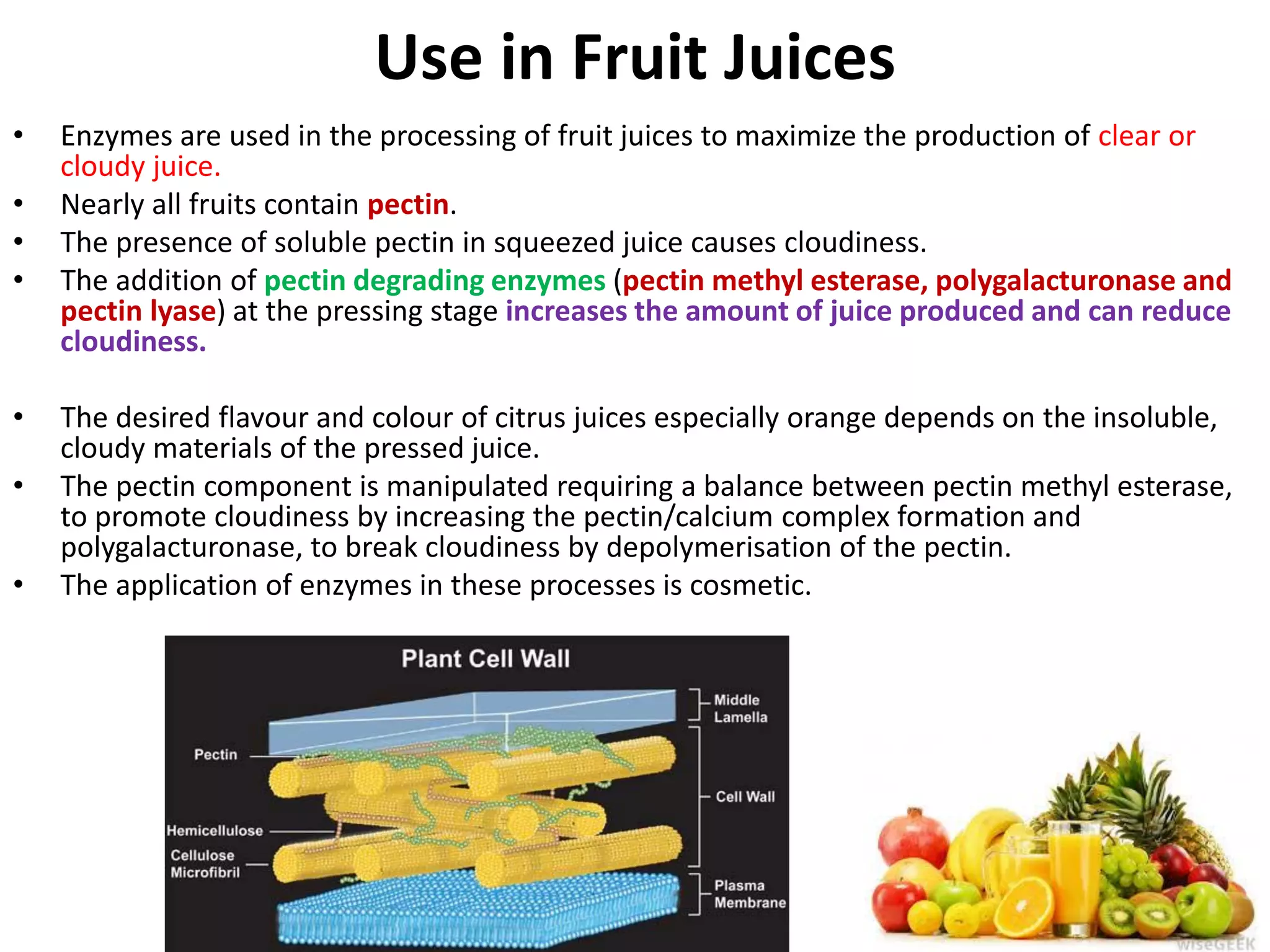
• Nearly all fruits contain pectin.
• The presence of soluble pectin in squeezed juice causes cloudiness.
• The addition of pectin degrading enzymes (pectin methyl esterase, polygalacturonase and
pectin lyase) at the pressing stage increases the amount of juice produced and can reduce
cloudiness.
• The desired flavour and colour of citrus juices especially orange depends on the insoluble,
cloudy materials of the pressed juice.
• The pectin component is manipulated requiring a balance between pectin methyl esterase,
to promote cloudiness by increasing the pectin/calcium complex formation and
polygalacturonase, to break cloudiness by depolymerisation of the pectin.
• The application of enzymes in these processes is cosmetic.
Use in Washing Powders
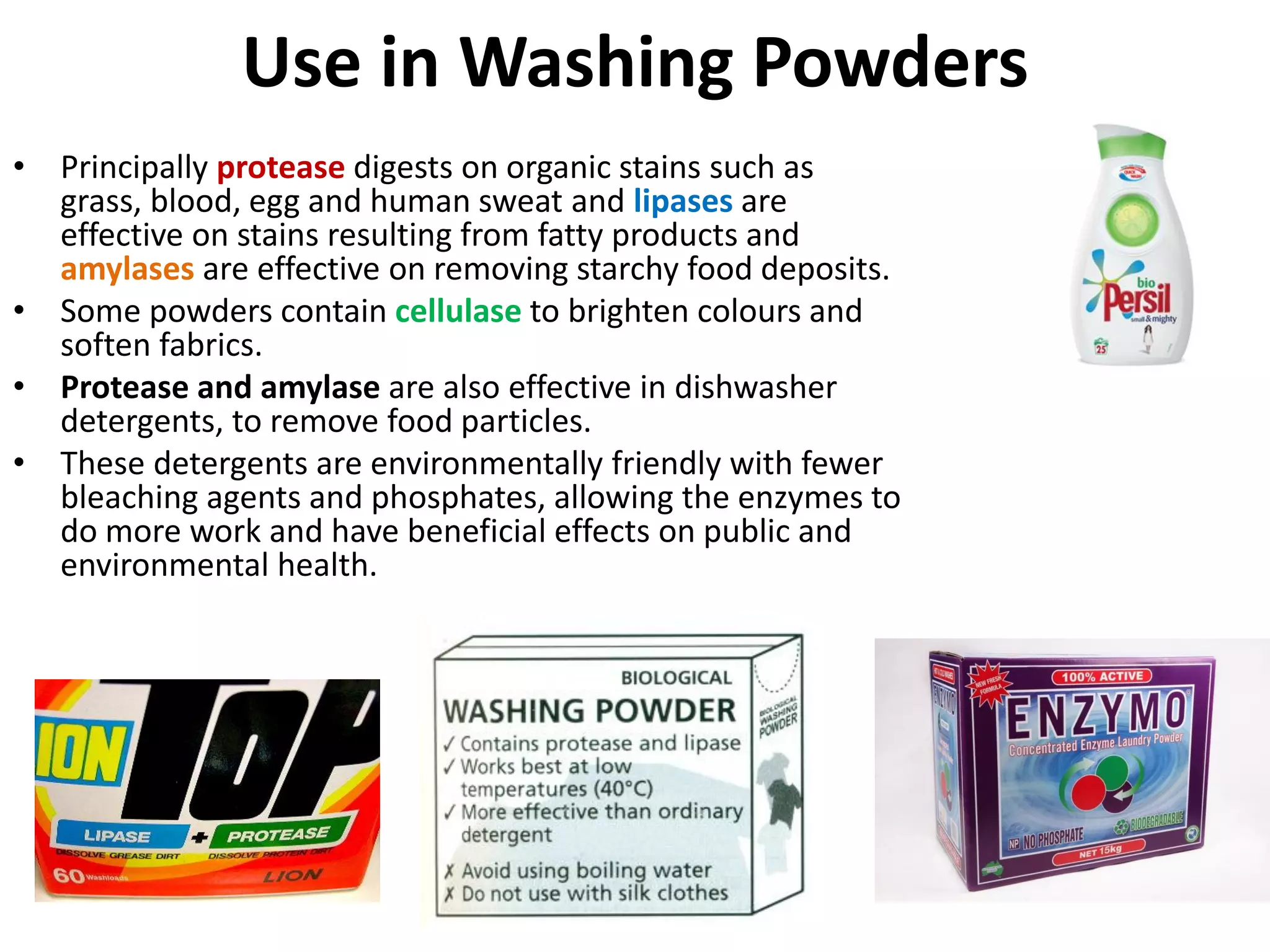
• Principally protease digests on organic stains such as
grass, blood, egg and human sweat and lipases are
effective on stains resulting from fatty products and
amylases are effective on removing starchy food deposits.
• Some powders contain cellulase to brighten colours and
soften fabrics.
• Protease and amylase are also effective in dishwasher
detergents, to remove food particles.
• These detergents are environmentally friendly with fewer
bleaching agents and phosphates, allowing the enzymes to
do more work and have beneficial effects on public and
environmental health.
Use in the Textile Industry
• Enzymes are used in the leather and the textile industries in finishing processes.
• Proteases help in the de-hairing of the animal hides and lipases are used for de-
greasing.
• The correct application of a cellulase enzyme can give a smoother, glossier
brighter fabric to cellulose fibres like cotton.
• This technique is known as bio-polishing.
• In the denim industry, cloth was traditionally stonewashed with pumice stones to
fade the fabric.
• A small application of cellulase minimises damage to the garments and also to
machinery. This technique is known as bio-stoning and can ensure greater fading
without high abrasive damage to fabric and accessories (buttons, rivets).
• The use of enzymes in this area of industry illustrates their valuable technological
contribution.
Enzymes are also used in Contact Lense solution and in Pet Toothpaste.
The end…

Enzymology lecture-9

  • 1.
  • 2.
    FOOD AND INDUSTRIALAPPLICATIONS
  • 3.
    Use in Alcohol •In the alcohol industry, fermentation depends on the action of enzymes synthesised by the yeasts and bacteria used in the production process. • Beer brewing essentially involves the yeast action on barley, maize, sorghum, hops or rice. • The yeast cells convert simple sugars into alcohol and carbon dioxide. • However most sugar present is in the complex polysaccharide form such as starch and cannot readily be used. • So these nutrients are "released" by malting in which enzymes are released, degrading starch and protein to simple reducing sugars and amino acids. • The traditional malting process is an expensive inefficient way of manufacturing enzymes. • So nowadays industrial enzymes such as amylases, glucanases and proteases are added to unmalted barley to produce the same products that malting would produce by more controlled means. • Use of enzymes in the beverage industry allow it to be more economic and have consistent quality.
  • 4.
    Use in FruitJuices • Enzymes are used in the processing of fruit juices to maximize the production of clear or cloudy juice. • Nearly all fruits contain pectin. • The presence of soluble pectin in squeezed juice causes cloudiness. • The addition of pectin degrading enzymes (pectin methyl esterase, polygalacturonase and pectin lyase) at the pressing stage increases the amount of juice produced and can reduce cloudiness. • The desired flavour and colour of citrus juices especially orange depends on the insoluble, cloudy materials of the pressed juice. • The pectin component is manipulated requiring a balance between pectin methyl esterase, to promote cloudiness by increasing the pectin/calcium complex formation and polygalacturonase, to break cloudiness by depolymerisation of the pectin. • The application of enzymes in these processes is cosmetic.
  • 5.
    Use in WashingPowders • Principally protease digests on organic stains such as grass, blood, egg and human sweat and lipases are effective on stains resulting from fatty products and amylases are effective on removing starchy food deposits. • Some powders contain cellulase to brighten colours and soften fabrics. • Protease and amylase are also effective in dishwasher detergents, to remove food particles. • These detergents are environmentally friendly with fewer bleaching agents and phosphates, allowing the enzymes to do more work and have beneficial effects on public and environmental health.
  • 6.
    Use in theTextile Industry • Enzymes are used in the leather and the textile industries in finishing processes. • Proteases help in the de-hairing of the animal hides and lipases are used for de- greasing. • The correct application of a cellulase enzyme can give a smoother, glossier brighter fabric to cellulose fibres like cotton. • This technique is known as bio-polishing. • In the denim industry, cloth was traditionally stonewashed with pumice stones to fade the fabric. • A small application of cellulase minimises damage to the garments and also to machinery. This technique is known as bio-stoning and can ensure greater fading without high abrasive damage to fabric and accessories (buttons, rivets). • The use of enzymes in this area of industry illustrates their valuable technological contribution. Enzymes are also used in Contact Lense solution and in Pet Toothpaste.
  • 7.