ENVIRONMENTAL
MANAGEMENT
SYSTEM AND
AUDITING
MARIMAR A. PAROLA
DISCUSSANT
What is environmental management
system (EMS?)
 is a structured framework and set of processes that an organization implements to manage its
environmental responsibilities and impacts.
 it provides a systematic approach for organizations to identify, monitor, manage, and continuously
improve their interactions with the environment.
 According to ISO 14001- the part of the overall management system that includes organizational
structure, planning activities, responsibilities, practices, procedures, processes and resources for
developing, implementing, achieving, reviewing and maintaining the environment policy.
What is ISO 14001?
 is an international standard for environmental
management systems (EMS) developed by the
International Organization for Standardization (ISO).
 set out the criteria for an environmental management
system. It does not state requirements for
environmental performance, but maps out a
framework that a company or organization can follow
to set up an effective environmental management
system. Certification in meeting this standard allows
companies to claim state-of –the-art ecological
responsibility.
IMPORTANCE OF ISO14001
 Environmental Performance Improvement
 Legal and Regulatory Compliance
 Risk Management
 Cost saving
 Stakeholder trust and reputation
 Competitive Advantage
 Global Recognition
 Integration with Other Management System
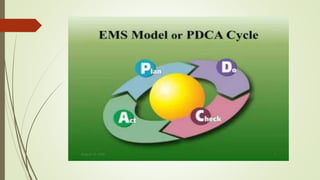
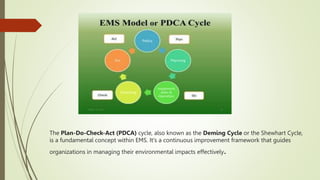
The Plan-Do-Check-Act (PDCA) cycle, also known as the Deming Cycle or the Shewhart Cycle,
is a fundamental concept within EMS. It's a continuous improvement framework that guides
organizations in managing their environmental impacts effectively.
The PDCA cycle consists of four stages:
 PLAN
 the organization establishes its goals and
objectives related to environmental
performance. This involves identifying
environmental aspects and impacts,
setting targets, and developing action
plans to achieve those targets
 DO
 , the organization implements the plans
and actions outlined in the planning
phase. This involves training employees,
allocating resources, and putting the
proposed changes into action.
 CHECK
 the organization assesses and monitors the results of the actions taken in the "Do"
phase. This involves measuring and evaluating environmental performance against
the set objectives and targets. Data collection and analysis are crucial during this
phase to determine whether the intended improvements have been achieved.
 ACT
 Based on the results gathered during the "Check" phase, the organization takes
corrective actions and makes necessary adjustments to improve environmental
performance. This can involve refining processes, addressing identified issues, and
updating goals and action plans as needed. The "Act" phase closes the loop by
initiating the next cycle of planning, doing, checking, and acting.
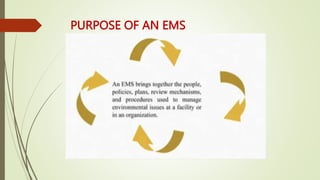
PURPOSE OF AN EMS
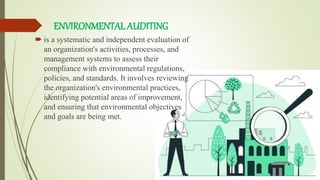
ENVIRONMENTALAUDITING
 is a systematic and independent evaluation of
an organization's activities, processes, and
management systems to assess their
compliance with environmental regulations,
policies, and standards. It involves reviewing
the organization's environmental practices,
identifying potential areas of improvement,
and ensuring that environmental objectives
and goals are being met.
TPES OF ENVIRONMENTAL AUDIT
 Environmental Compliance Audit
 Management System Audit
 Energy Audit
 Waste Audit
 Water Audit
 Product Life Cycle Assessment (LCA)
Environmental Compliance Audit
 Purpose: Compliance audits assess an organization's adherence to environmental laws,
regulations, and permits. .
 Scope: Compliance audits involve reviewing permits, records, reports, and operational
practices to verify that the organization is complying with applicable laws and
regulations.
Management System Audit
 Purpose: Management system audits evaluate the effectiveness of an organization's
environmental management system (EMS). The aim is to assess how well the
organization's policies, procedures, and practices align with established environmental
standards and objectives.
 Scope: These audits assess the entire EMS, including its design, implementation,
maintenance, and continuous improvement. They cover areas such as policy
development, planning, implementation, monitoring, corrective actions, and
management review.
Energy Audit
 Purpose: An energy audit focuses specifically on energy consumption and efficiency within
an organization's operations. It aims to identify opportunities for reducing energy
consumption and related environmental impacts.
 Scope: This audit assesses energy usage patterns, identifies areas of energy waste, and
recommends measures to improve energy efficiency and reduce the organization's carbon
footprint.
Waste Audit
 Purpose: A waste audit evaluates an organization's waste management practices,
including waste generation, handling, disposal, and recycling efforts.
 Scope: This audit involves quantifying and categorizing the types and amounts of
waste generated, identifying opportunities to minimize waste generation, and
ensuring compliance with waste disposal regulations.
Product Life Cycle Assessment (LCA)
 Purpose: An LCA assesses the environmental impact of a product throughout
its entire life cycle, from raw material extraction to manufacturing,
transportation, use, and disposal.
 Scope: This assessment evaluates factors such as resource consumption,
emissions, and waste generation at various stages of the product's life, helping
organizations make informed decisions to minimize environmental impacts.
Environmental Audit Process
 Stage I Pre-audit/ planning stage
 Collection of data
 Define objectives of audit
 Define scope
 Choose criteria
 Select the team members
 Develop audit plan and protocols
 Stage – II Onsite/ Field Audit
 Opening conference
 Facility tour
 Site/ facility inspection
 Evidence
 Records/ document review
 Initial review of findings
 Closing / exit conference
 Stage III Post Audit
 Final evaluation of findings
 Drafting of preliminary audit report
 Approval of the management
 Holding of exit conference
 Discussion on recommendations, if any
 Preparation and submission of final report
 Stage IV Follow up/ Review Stage
Tools and techniques Used
 Checklist and Questionnaires
 Questioning/ interview
 Sampling
 Site Inspections and Observations
 Document Review
 Data Analysis
ENVIRONMENTAL-MANAGEMENT-SYSTEM-AND-AUDITING-ppt.pptx

ENVIRONMENTAL-MANAGEMENT-SYSTEM-AND-AUDITING-ppt.pptx

  • 1.
  • 2.
    What is environmentalmanagement system (EMS?)  is a structured framework and set of processes that an organization implements to manage its environmental responsibilities and impacts.  it provides a systematic approach for organizations to identify, monitor, manage, and continuously improve their interactions with the environment.  According to ISO 14001- the part of the overall management system that includes organizational structure, planning activities, responsibilities, practices, procedures, processes and resources for developing, implementing, achieving, reviewing and maintaining the environment policy.
  • 3.
    What is ISO14001?  is an international standard for environmental management systems (EMS) developed by the International Organization for Standardization (ISO).  set out the criteria for an environmental management system. It does not state requirements for environmental performance, but maps out a framework that a company or organization can follow to set up an effective environmental management system. Certification in meeting this standard allows companies to claim state-of –the-art ecological responsibility.
  • 4.
    IMPORTANCE OF ISO14001 Environmental Performance Improvement  Legal and Regulatory Compliance  Risk Management  Cost saving  Stakeholder trust and reputation  Competitive Advantage  Global Recognition  Integration with Other Management System
  • 6.
    The Plan-Do-Check-Act (PDCA)cycle, also known as the Deming Cycle or the Shewhart Cycle, is a fundamental concept within EMS. It's a continuous improvement framework that guides organizations in managing their environmental impacts effectively.
  • 7.
    The PDCA cycleconsists of four stages:  PLAN  the organization establishes its goals and objectives related to environmental performance. This involves identifying environmental aspects and impacts, setting targets, and developing action plans to achieve those targets  DO  , the organization implements the plans and actions outlined in the planning phase. This involves training employees, allocating resources, and putting the proposed changes into action.
  • 8.
     CHECK  theorganization assesses and monitors the results of the actions taken in the "Do" phase. This involves measuring and evaluating environmental performance against the set objectives and targets. Data collection and analysis are crucial during this phase to determine whether the intended improvements have been achieved.  ACT  Based on the results gathered during the "Check" phase, the organization takes corrective actions and makes necessary adjustments to improve environmental performance. This can involve refining processes, addressing identified issues, and updating goals and action plans as needed. The "Act" phase closes the loop by initiating the next cycle of planning, doing, checking, and acting.
  • 9.
  • 10.
    ENVIRONMENTALAUDITING  is asystematic and independent evaluation of an organization's activities, processes, and management systems to assess their compliance with environmental regulations, policies, and standards. It involves reviewing the organization's environmental practices, identifying potential areas of improvement, and ensuring that environmental objectives and goals are being met.
  • 11.
    TPES OF ENVIRONMENTALAUDIT  Environmental Compliance Audit  Management System Audit  Energy Audit  Waste Audit  Water Audit  Product Life Cycle Assessment (LCA)
  • 12.
    Environmental Compliance Audit Purpose: Compliance audits assess an organization's adherence to environmental laws, regulations, and permits. .  Scope: Compliance audits involve reviewing permits, records, reports, and operational practices to verify that the organization is complying with applicable laws and regulations.
  • 13.
    Management System Audit Purpose: Management system audits evaluate the effectiveness of an organization's environmental management system (EMS). The aim is to assess how well the organization's policies, procedures, and practices align with established environmental standards and objectives.  Scope: These audits assess the entire EMS, including its design, implementation, maintenance, and continuous improvement. They cover areas such as policy development, planning, implementation, monitoring, corrective actions, and management review.
  • 14.
    Energy Audit  Purpose:An energy audit focuses specifically on energy consumption and efficiency within an organization's operations. It aims to identify opportunities for reducing energy consumption and related environmental impacts.  Scope: This audit assesses energy usage patterns, identifies areas of energy waste, and recommends measures to improve energy efficiency and reduce the organization's carbon footprint.
  • 15.
    Waste Audit  Purpose:A waste audit evaluates an organization's waste management practices, including waste generation, handling, disposal, and recycling efforts.  Scope: This audit involves quantifying and categorizing the types and amounts of waste generated, identifying opportunities to minimize waste generation, and ensuring compliance with waste disposal regulations.
  • 16.
    Product Life CycleAssessment (LCA)  Purpose: An LCA assesses the environmental impact of a product throughout its entire life cycle, from raw material extraction to manufacturing, transportation, use, and disposal.  Scope: This assessment evaluates factors such as resource consumption, emissions, and waste generation at various stages of the product's life, helping organizations make informed decisions to minimize environmental impacts.
  • 17.
    Environmental Audit Process Stage I Pre-audit/ planning stage  Collection of data  Define objectives of audit  Define scope  Choose criteria  Select the team members  Develop audit plan and protocols
  • 18.
     Stage –II Onsite/ Field Audit  Opening conference  Facility tour  Site/ facility inspection  Evidence  Records/ document review  Initial review of findings  Closing / exit conference
  • 19.
     Stage IIIPost Audit  Final evaluation of findings  Drafting of preliminary audit report  Approval of the management  Holding of exit conference  Discussion on recommendations, if any  Preparation and submission of final report  Stage IV Follow up/ Review Stage
  • 20.
    Tools and techniquesUsed  Checklist and Questionnaires  Questioning/ interview  Sampling  Site Inspections and Observations  Document Review  Data Analysis