Downloaded 27 times




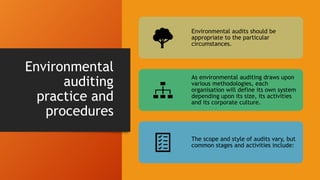
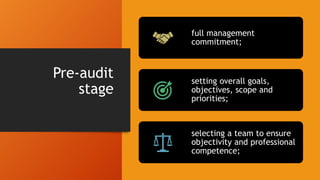
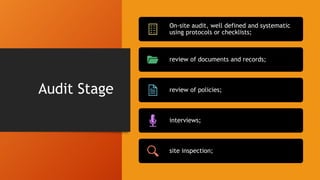
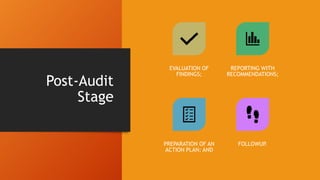



Environmental auditing originated in the 1970s in the US and was initially reactive, focusing on end-of-pipe solutions after environmental damage occurred. It is now a more proactive management tool to evaluate environmental performance, compliance, and management systems. Environmental audits are conducted according to standardized procedures and incorporate reviews, inspections, and reporting to facilitate improvement. They provide benefits like ensuring compliance and anticipating risks while demonstrating environmental awareness.


