ENVIRONMENTAL AUDIT 
METHODOLOGY
Definition 
Environmental auditing is defined as a management 
tool comprising of a systematic, documented, 
periodic and objective evaluation of how well 
environmental organization, management and 
equipment are performing with the aim of helping the 
environment by:- 
 Facilitating management control of environmental 
practice, and 
 Assessing compliance with company policies which would 
include meeting regulatory requirements
cont'd 
 The factors which have influenced the audit are:- 
 Industrial accidents: 
Major accident like Chanobly Nuclear accident, the Bhopal 
(India) and Three Mile (USA) have reminded the concerned that 
corporate policies are not enough. Audits should be carried out 
to avoid these unpleasant surprises. 
 Regulatory development 
Organizations to operate within the framework of government 
legislation. 
 Public awareness 
The Public have become aware and vocal about the environment. 
Corporations should operate so that they can manage the 
environment, effectively (i.e, create sustainable environment)
cont'd 
Litigation 
Liability claims have led operating organizations to 
make information available to the public about 
environment. 
Public awareness 
The public have become aware and vocal about 
corporations should operate so that they can manage 
the environment effectively (i.e create sustainable 
environment)
Objective of environmental auditing 
The main objective is to help safeguard the 
environment and minimize risks to human health. 
From the above, key objective's emerge: 
 Determine how well the environmental management systems 
and equipment are performing. 
 Verify compliance with the relevant national, local and 
international laws and regulations 
 Minimize human exposure to risks from environmental health 
and safety problems.
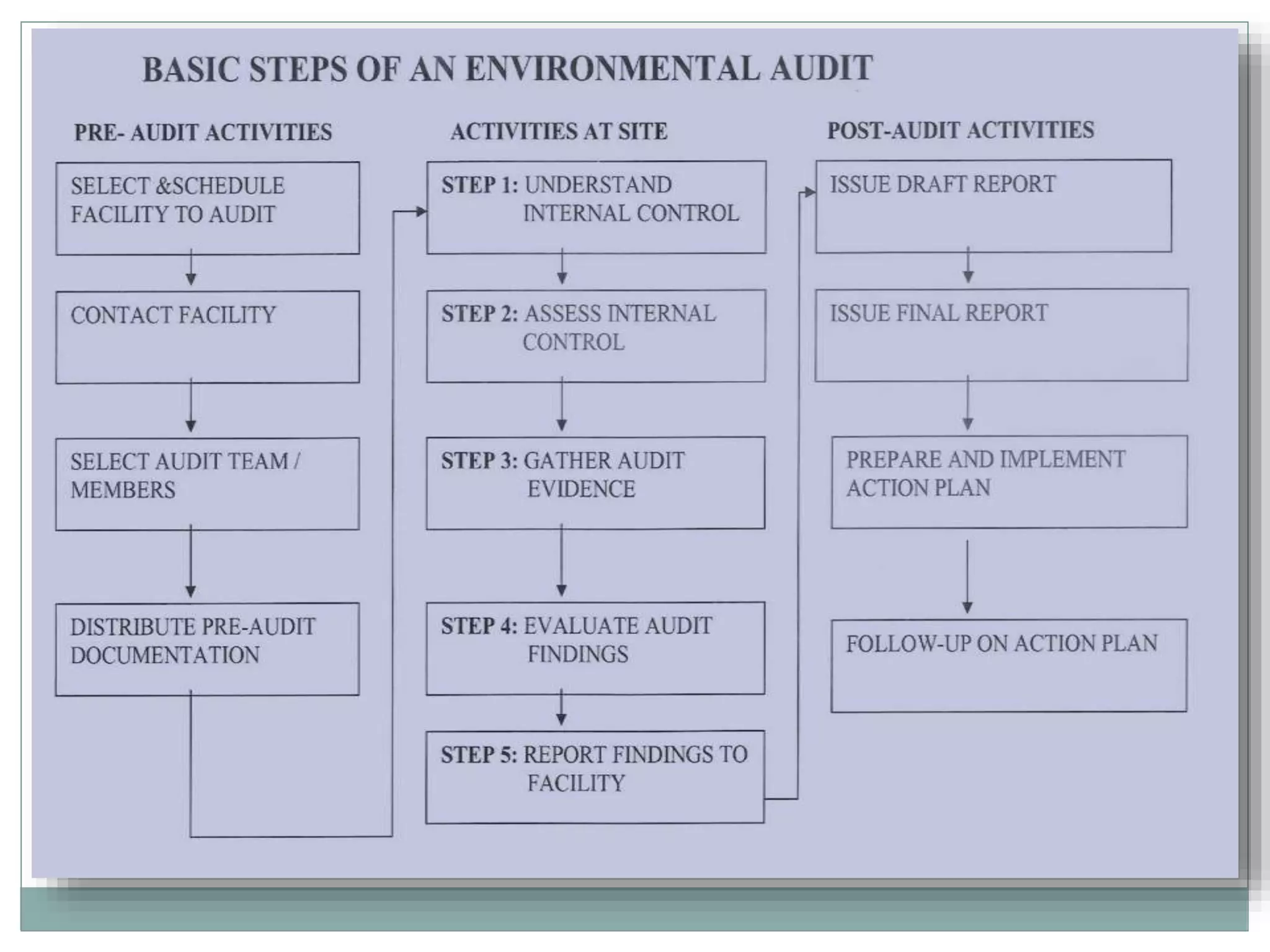
Basic steps in Environmental Audit 
Criteria 
What do you do against? Typical criteria for audit are: 
 Company policies and procedures on environmental 
matters 
 Applicable legislation and regulations; 
 Good management practices
The following are then the steps 
1. Pre-audit steps:- include 
Administrative issues associated with the planning 
audit 
 Selecting the personnel for the audit team 
Preparing the audit protocol used by organization, 
 Obtaining background information about the facility.
cont'd 
2. Onsite steps:- include 
 Understanding internal controls 
 Assessing strengths and weaknesses of internal 
control 
 Gathering audit evidence 
 Recording audit findings 
 Evaluating the audit findings 
 Pre-sell audits i.e. pre-acquistion audit
Scope of environmental audit 
This falls into the following:- 
Environmental 
 Site history – process/materials 
 Storage of materials both above ground and below 
ground 
 Air emissions and liquid discharges 
 Liquid/hazardous wastes or effluent 
 Waste disposal i.e onsite and offsite 
 Oil/chemical spills prevention
cont'd 
Safety 
 Safety policy 
 Accident reporting, accident investigation, risk 
assessment 
 Permit to work and special working procedures 
 Fire safety policy 
 Job safety analysis 
 Safety training 
 Safety communication 
 Housekeeping 
 Emergency response 
 Regulatory compliance
cont'd 
Product Safety 
 Product Safety programme 
 Product quality 
 Process control 
 Product packaging and storage and transportation 
 Product recall/withdrawal procedures 
 Product handling and quality 
 Product labeling 
 Specification of purchased materials/products 
 Material safety datasheet (MSDS 
 Vendor qualification 
 QA testing and inspection 
 Record Keeping 
 Product lifetime
cont'd 
Occupational health 
 Employee exposure to air contaminants 
 Exposure to physical agents e.g noise 
 Measurement of employee exposure 
 Exposure records 
 Ventilation/engineering controls 
 Personal protective equipment 
 Information and training on health hazardous, medical 
surveillance programme 
 Hearing conservation 
 First aid 
 Regular requirements
Summary 
Environmental audit should cover the following: 
 Waste management 
 Waste minimization 
 Emission to air 
 Ground and ground water protection 
 Surface water management 
 Energy and utility consumption 
 Environmental emergencies 
 Protection of environmetally sensitivee areas 
 product./surface stewardship TQM 
 Management of contractors 
 Control of visitors 
 Local issues
Environmental audit methodology

Environmental audit methodology

  • 1.
  • 2.
    Definition Environmental auditingis defined as a management tool comprising of a systematic, documented, periodic and objective evaluation of how well environmental organization, management and equipment are performing with the aim of helping the environment by:-  Facilitating management control of environmental practice, and  Assessing compliance with company policies which would include meeting regulatory requirements
  • 3.
    cont'd  Thefactors which have influenced the audit are:-  Industrial accidents: Major accident like Chanobly Nuclear accident, the Bhopal (India) and Three Mile (USA) have reminded the concerned that corporate policies are not enough. Audits should be carried out to avoid these unpleasant surprises.  Regulatory development Organizations to operate within the framework of government legislation.  Public awareness The Public have become aware and vocal about the environment. Corporations should operate so that they can manage the environment, effectively (i.e, create sustainable environment)
  • 4.
    cont'd Litigation Liabilityclaims have led operating organizations to make information available to the public about environment. Public awareness The public have become aware and vocal about corporations should operate so that they can manage the environment effectively (i.e create sustainable environment)
  • 5.
    Objective of environmentalauditing The main objective is to help safeguard the environment and minimize risks to human health. From the above, key objective's emerge:  Determine how well the environmental management systems and equipment are performing.  Verify compliance with the relevant national, local and international laws and regulations  Minimize human exposure to risks from environmental health and safety problems.
  • 6.
    Basic steps inEnvironmental Audit Criteria What do you do against? Typical criteria for audit are:  Company policies and procedures on environmental matters  Applicable legislation and regulations;  Good management practices
  • 7.
    The following arethen the steps 1. Pre-audit steps:- include Administrative issues associated with the planning audit  Selecting the personnel for the audit team Preparing the audit protocol used by organization,  Obtaining background information about the facility.
  • 8.
    cont'd 2. Onsitesteps:- include  Understanding internal controls  Assessing strengths and weaknesses of internal control  Gathering audit evidence  Recording audit findings  Evaluating the audit findings  Pre-sell audits i.e. pre-acquistion audit
  • 9.
    Scope of environmentalaudit This falls into the following:- Environmental  Site history – process/materials  Storage of materials both above ground and below ground  Air emissions and liquid discharges  Liquid/hazardous wastes or effluent  Waste disposal i.e onsite and offsite  Oil/chemical spills prevention
  • 10.
    cont'd Safety Safety policy  Accident reporting, accident investigation, risk assessment  Permit to work and special working procedures  Fire safety policy  Job safety analysis  Safety training  Safety communication  Housekeeping  Emergency response  Regulatory compliance
  • 11.
    cont'd Product Safety  Product Safety programme  Product quality  Process control  Product packaging and storage and transportation  Product recall/withdrawal procedures  Product handling and quality  Product labeling  Specification of purchased materials/products  Material safety datasheet (MSDS  Vendor qualification  QA testing and inspection  Record Keeping  Product lifetime
  • 12.
    cont'd Occupational health  Employee exposure to air contaminants  Exposure to physical agents e.g noise  Measurement of employee exposure  Exposure records  Ventilation/engineering controls  Personal protective equipment  Information and training on health hazardous, medical surveillance programme  Hearing conservation  First aid  Regular requirements
  • 13.
    Summary Environmental auditshould cover the following:  Waste management  Waste minimization  Emission to air  Ground and ground water protection  Surface water management  Energy and utility consumption  Environmental emergencies  Protection of environmetally sensitivee areas  product./surface stewardship TQM  Management of contractors  Control of visitors  Local issues