Downloaded 892 times


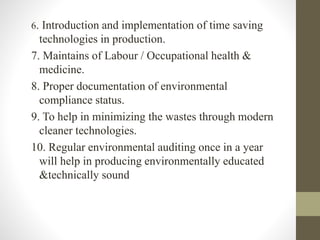
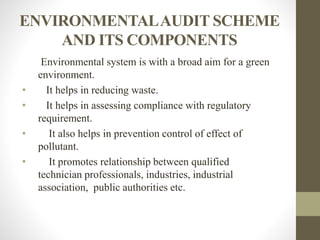
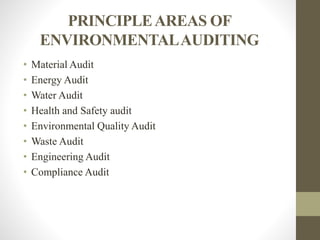

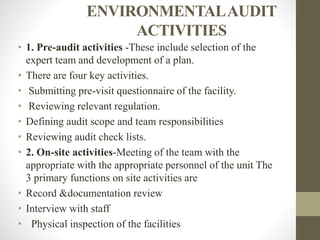



This document discusses environmental auditing, its objectives and benefits. It begins by defining environmental auditing as a management tool that inspects environmental management activities of industries to make them aware of cleaner technologies. The objectives of environmental auditing include enhancing environmental performance, optimizing resource use, evaluating waste characteristics, and ensuring regulatory compliance. Key activities of an environmental audit involve pre-audit planning, on-site assessment of records, interviews and inspections, and post-audit reporting. Benefits include improving pollution control, verifying legal compliance, and enhancing loss prevention. The document concludes that environmental auditing can help apply best practices to preserve the environment from industrial impacts.


