ENVIRONMENTAL AUDIT
Subject: AQC 603
Aquaculture Ecosystem Management and Climate Change
SUBMITTED BY
Vala Foram D.
Introduction
 Environmental Auditing (or Audit) is a management tool used by an industry to evaluate its
environmental performance.
 An environmental audit is essentially an environmental management tool for measuring the
effects of certain activities on the environment against set criteria or standards.
 EA is: “A management tool comprising a systematic, documented, periodic and objective
evaluation of how well environmental organization, management, and equipment are
performing in the aim of helping to safeguard the environment by
• Facilitating management and control of environmental practices,
• Assessing compliance with company policies, which would include meeting regulatory
requirements”.
 Depending on the types of standards and the focus of the audit, there are different types of
environmental audit.
2
Difference between EA and EIA
3
EIA
It attempts to predict the impact on the
environment of future action and to
provide this information to those who
make the decision on whether the project
should be authorized or not.
EIAs take the information gathered
from a range of EAs and carry out an in-
depth examination of the effects that
proposed activity will have on the
receiving environment and may offer
suggestions of alternatives.
EA
Environmental Auditing is carried
out when development is already
in place and the project is working,
and is used to check on existing
practices, assessing the
environmental effects of current
activities
Objectives of Environmental Audit
 Improve risk management systems
 Optimizing environmental resources
 To review the implementation of policies.
 To identify liabilities.
 To review management systems.
 To identify needs, strengths, and weaknesses.
 To assess environmental performance.
 To promote environmental awareness.
 To improve production safety and health
 To reduce waste,
 To assess compliance with a regulatory requirement
5
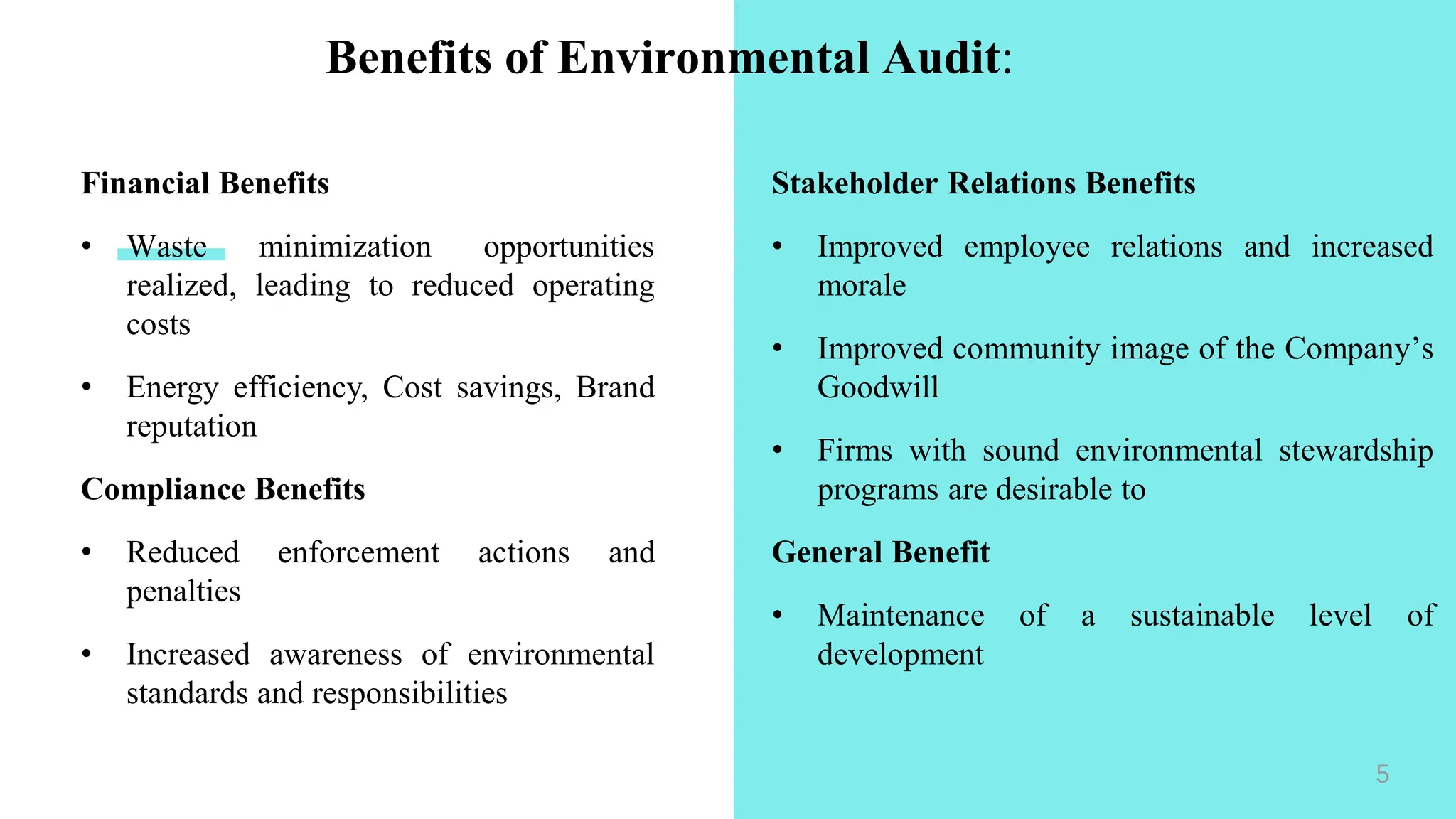
Benefits of Environmental Audit:
Stakeholder Relations Benefits
• Improved employee relations and increased
morale
• Improved community image of the Company’s
Goodwill
• Firms with sound environmental stewardship
programs are desirable to
General Benefit
• Maintenance of a sustainable level of
development
Financial Benefits
• Waste minimization opportunities
realized, leading to reduced operating
costs
• Energy efficiency, Cost savings, Brand
reputation
Compliance Benefits
• Reduced enforcement actions and
penalties
• Increased awareness of environmental
standards and responsibilities
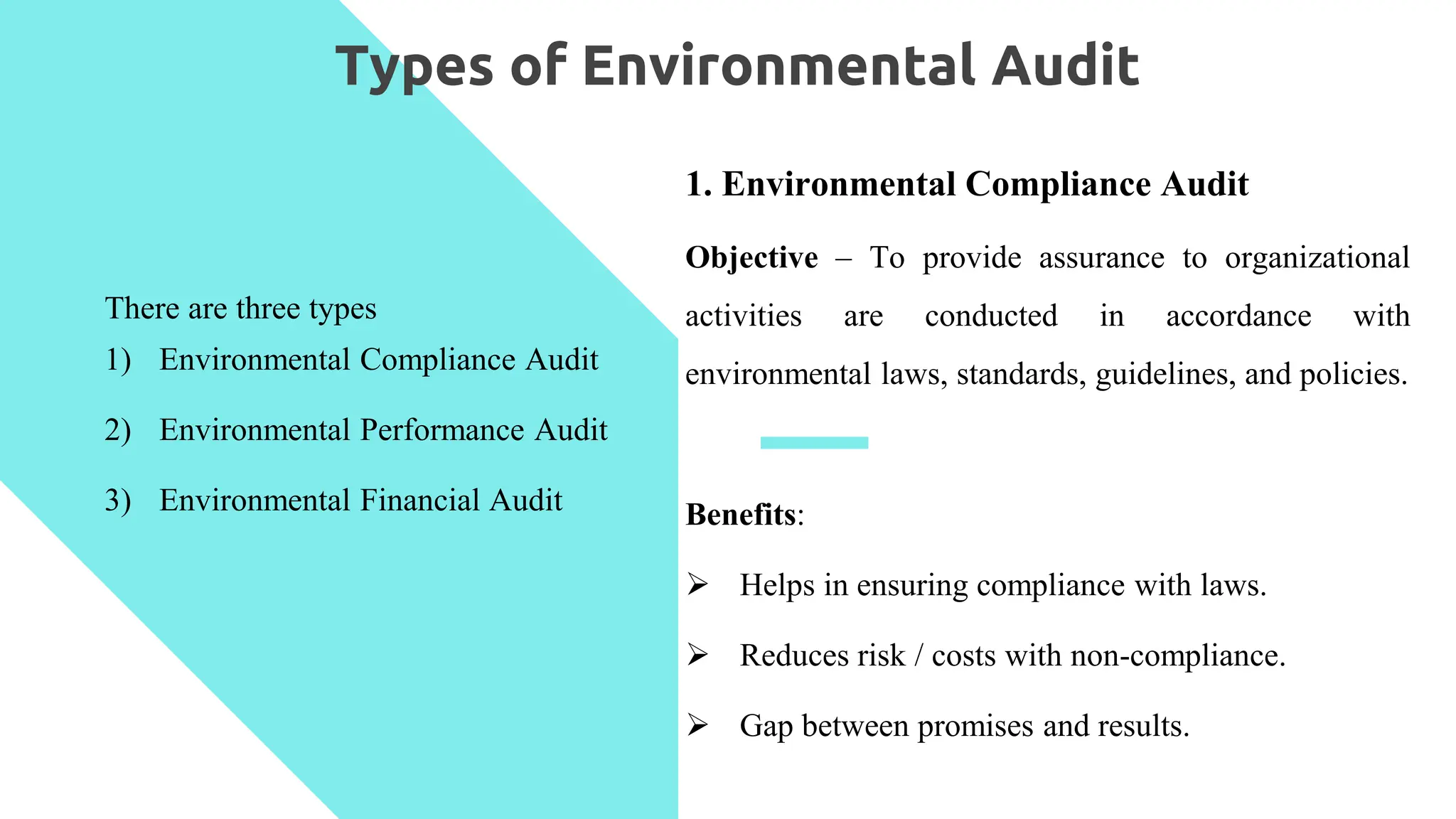
Types of Environmental Audit
1. Environmental Compliance Audit
Objective – To provide assurance to organizational
activities are conducted in accordance with
environmental laws, standards, guidelines, and policies.
Benefits:
 Helps in ensuring compliance with laws.
 Reduces risk / costs with non-compliance.
 Gap between promises and results.
There are three types
1) Environmental Compliance Audit
2) Environmental Performance Audit
3) Environmental Financial Audit
7
2. Environmental Performance Audit
Objective – To assess whether an organization
meets its environmental objectives, and is effective
in producing environmental results with efficiency
and economy. Helps in improving Environmental
Performance.
Benefits:
 Health & Safety Audit
 Site Audit
 Activity Audit
 Process Audit
CONT…
3. Environmental Financial Audit •
Objective – To enable an auditor to establish whether the
reporting entity has appropriately recognized, valued &
reported all significant environmental costs, benefits, assets,
liabilities and contingencies.
Benefits:
 Environmental Matters affect financial statements.
 Initiatives to prevent damage to Environment.
 Consequences of violating laws.
 Consequences of damage to resources.
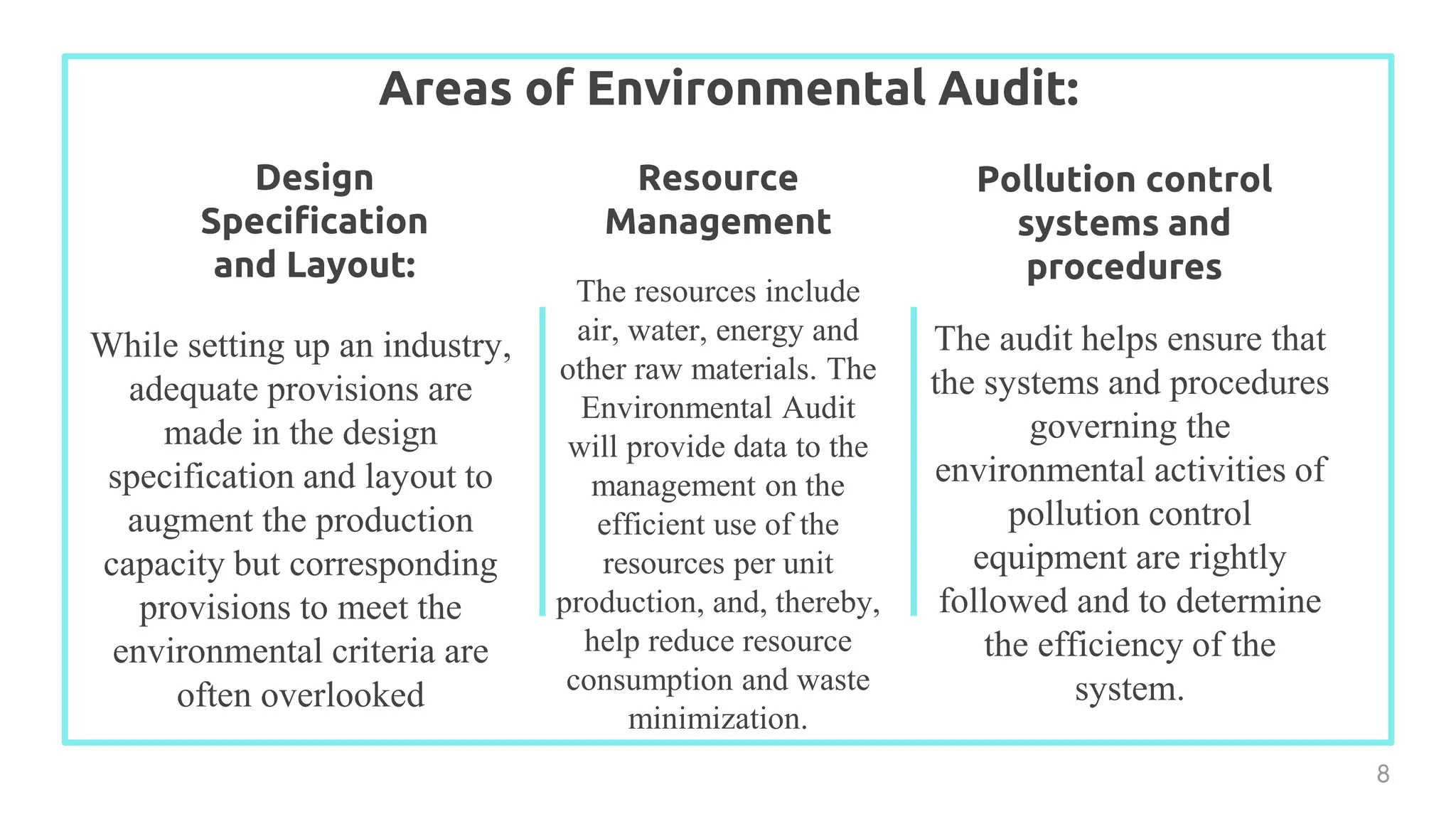
Areas of Environmental Audit:
8
Design
Specification
and Layout:
While setting up an industry,
adequate provisions are
made in the design
specification and layout to
augment the production
capacity but corresponding
provisions to meet the
environmental criteria are
often overlooked
Resource
Management
The resources include
air, water, energy and
other raw materials. The
Environmental Audit
will provide data to the
management on the
efficient use of the
resources per unit
production, and, thereby,
help reduce resource
consumption and waste
minimization.
Pollution control
systems and
procedures
The audit helps ensure that
the systems and procedures
governing the
environmental activities of
pollution control
equipment are rightly
followed and to determine
the efficiency of the
system.
9
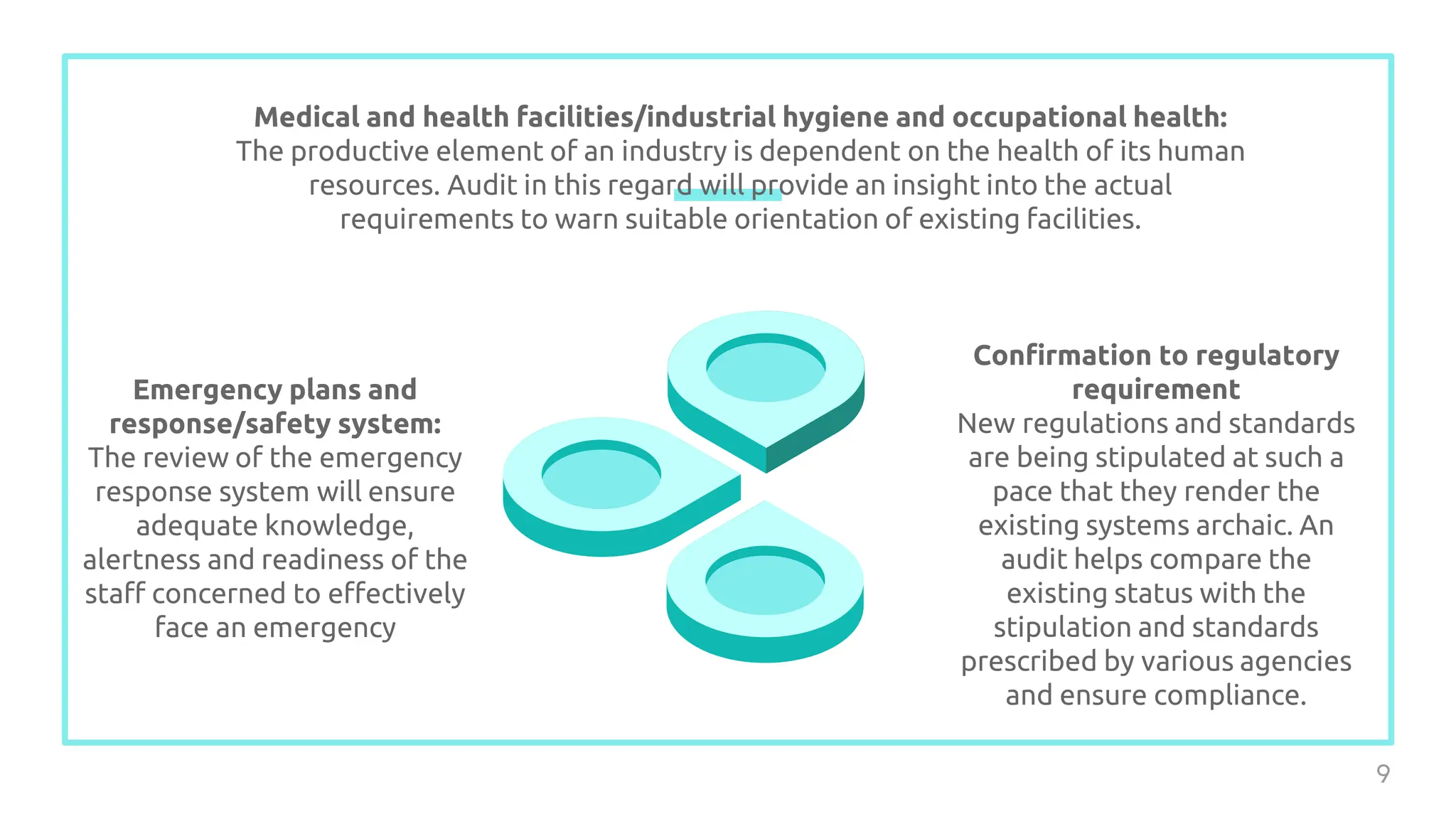
Emergency plans and
response/safety system:
The review of the emergency
response system will ensure
adequate knowledge,
alertness and readiness of the
staff concerned to effectively
face an emergency
Medical and health facilities/industrial hygiene and occupational health:
The productive element of an industry is dependent on the health of its human
resources. Audit in this regard will provide an insight into the actual
requirements to warn suitable orientation of existing facilities.
Confirmation to regulatory
requirement
New regulations and standards
are being stipulated at such a
pace that they render the
existing systems archaic. An
audit helps compare the
existing status with the
stipulation and standards
prescribed by various agencies
and ensure compliance.
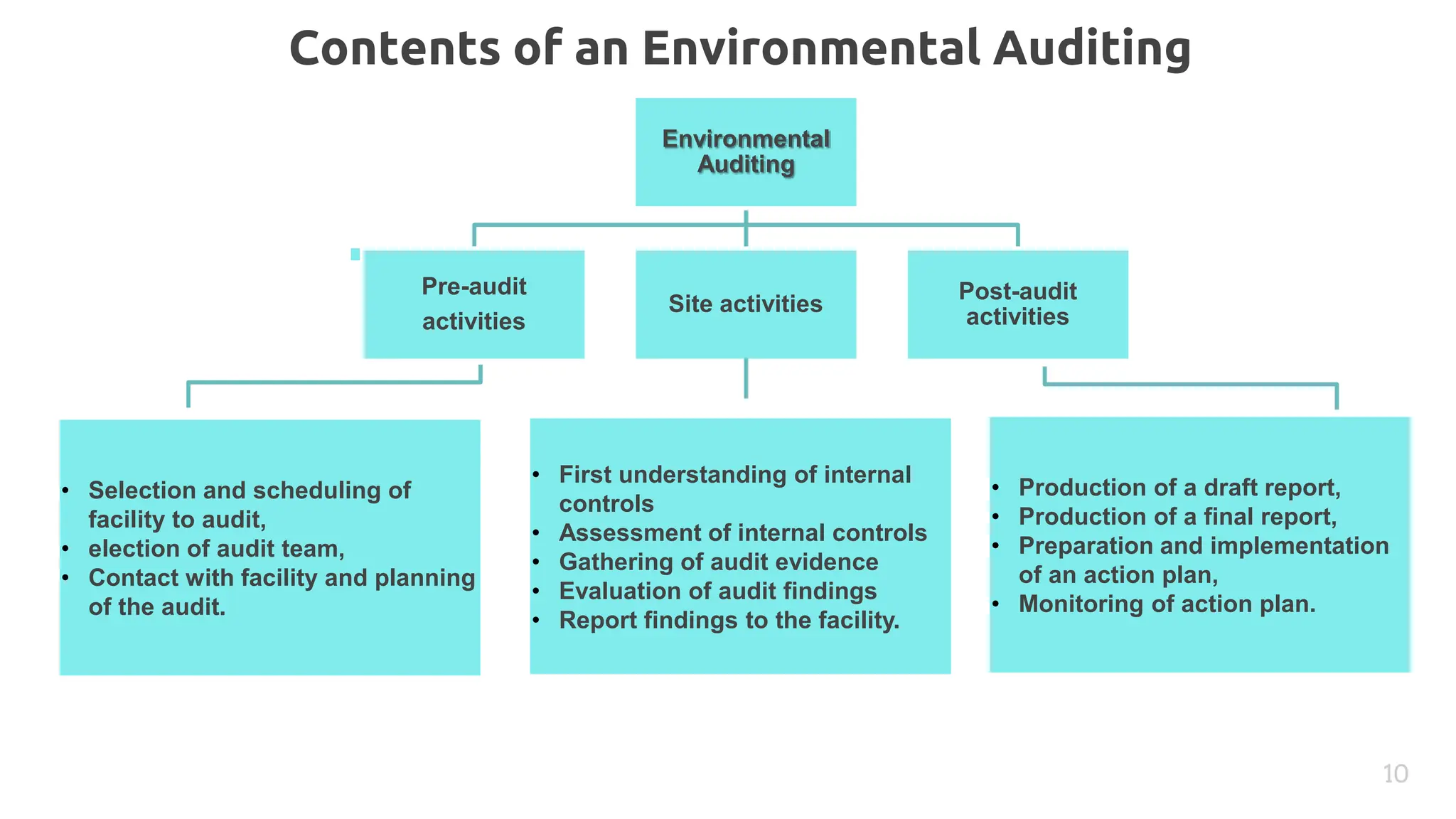
Contents of an Environmental Auditing
10
Environmental
Auditing
Pre-audit
activities
Site activities
Post-audit
activities
• Selection and scheduling of
facility to audit,
• election of audit team,
• Contact with facility and planning
of the audit.
• First understanding of internal
controls
• Assessment of internal controls
• Gathering of audit evidence
• Evaluation of audit findings
• Report findings to the facility.
• Production of a draft report,
• Production of a final report,
• Preparation and implementation
of an action plan,
• Monitoring of action plan.
11
Environmental audit in
aquaculture
• Aquaculture environmental audit is a systematic assessment of the environmental
impact and sustainability of aquaculture operations.
• It involves evaluating various aspects of the aquaculture facility, including water
quality, waste management, disease control, feed management, and the overall
ecological impact on surrounding ecosystems.
• The purpose of the audit is to identify potential environmental risks, ensure compliance
with regulations, and promote sustainable practices in the aquaculture industry.
12
Site Selection and Design:
• Assess the environmental suitability of the aquaculture site, considering factors such as water
quality, tidal exchange, and proximity to sensitive habitats or protected areas.
Water Quality Management:
• Evaluate water quality parameters, including dissolved oxygen, temperature, pH, salinity, and
nutrient concentrations, to ensure optimal conditions for aquaculture species and minimize
environmental impacts.
• Assess the composition and sourcing of aquaculture feeds, considering the use of fishmeal,
fish oil, and other ingredients to minimize reliance on wild-caught fish for feed production.
• Evaluate nutrient utilization efficiency and the potential for nutrient discharge into the
surrounding environment.
13
Disease Prevention and Management:
• Review biosecurity measures, vaccination protocols, and disease monitoring strategies to
minimize the risk of disease outbreaks and the use of antibiotics or chemicals.
• Evaluate the potential impacts of diseases on wild fish populations and surrounding
ecosystems.
Waste Management and Effluent Treatment:
• Assess waste capture and treatment systems, such as sedimentation ponds, and biofilters, to
minimize nutrient enrichment, organic matter accumulation, and pathogen discharge into the
environment.
• Evaluate the efficiency of waste management practices, including sludge removal, proper
storage, and disposal.
14
Energy Efficiency and Renewable Energy:
• Assess energy consumption and explore opportunities for energy efficiency improvements, such
as optimizing aeration systems, reducing water pumping requirements, and adopting energy-
saving technologies.
• Consider the integration of renewable energy sources, such as solar panels or wind turbines, to
reduce dependence on fossil fuels and minimize greenhouse gas emissions.
Compliance and Certification:
• Review compliance with relevant environmental regulations and standards, such as those
established by the Aquaculture Stewardship Council (ASC) or the Global Aquaculture Alliance's
Best Aquaculture Practices (BAP) program.
• Verify the accuracy and completeness of environmental monitoring, data recording, and
reporting.
• They cover a range of topics, including site selection, water quality management, feed sourcing,
disease management, waste treatment, energy efficiency, and certification.
Summury and conclusion
15
• Environmental audit is a systematic and comprehensive evaluation of an organization's activities,
practices, and procedures to assess their impact on the environment.
• It involves examining the organization's compliance with environmental regulations, identifying
potential environmental risks and liabilities, and evaluating the effectiveness of environmental
management systems in place.
• The purpose of an environmental audit is to identify areas where environmental performance
can be improved, promote sustainable practices, and ensure compliance with environmental
laws and regulations.
• By conducting thorough and regular audits, aquaculture operators can identify areas for
improvement and implement effective environmental management strategies.
• This includes optimizing feed efficiency, reducing the use of chemicals and antibiotics,
implementing proper waste management systems, and monitoring and mitigating the ecological
impact on surrounding environments.
• Moreover, audits help enhance stakeholder engagement and promote transparency, allowing
consumers, regulatory bodies, and communities to make informed choices and hold aquaculture
operations accountable for their environmental practices.
16
Reference:
Bondad-Reantaso, M. G., et al. (2005). Disease and health management in Asian aquaculture. Veterinary Parasitology,
132(3-4), 249-272.
Boyd, C. E. (2015). Water quality in ponds for aquaculture. John Wiley & Sons. Feed Sourcing and Nutrient
Management:
Cabello, F. C. (2006). Heavy use of prophylactic antibiotics in aquaculture: A growing problem for human and animal
health and for the environment. Environmental Microbiology, 8(7), 1137-1144.
Colt, J. (2011). Energy use in the seafood industry: An analysis of energy consumption in the supply chains of salmon,
tuna, and shrimp. Marine Policy, 35(4), 503-511.
Environmental Audit: Concept, objectives and benefits (thefactfactor.com) [cited at 5/6/2023]
environmental-audit- www.slideshare.net (Cite at 5/6/2023).
FAO Environmental impact assessment and environmental auditing in the pulp and paper industry (fao.org) (Cited at
5/6/20).
FAO- technical-guide-line-ecosystem-approach-to-aquaculture- www.slideshare.net (cited at 5/6/2023).
Fitzsimmons, K. (2012). Sustainable aquaculture: Global perspectives. Wiley-Blackwell.
Phillips, M. J., et al. (2011). Environmental benefits of constructed wetlands for aquaculture: Potential for reducing
impacts of pond effluents on sensitive receiving waters. Aquaculture, 311(1-4), 1-11.
Primavera, J. H., et al. (2004). Environmental carrying capacity and shrimp farm certification in Thailand.
Environmental Management, 33(4), 502-516.
17
Thank you

Environmental Audit

  • 1.
    ENVIRONMENTAL AUDIT Subject: AQC603 Aquaculture Ecosystem Management and Climate Change SUBMITTED BY Vala Foram D.
  • 2.
    Introduction  Environmental Auditing(or Audit) is a management tool used by an industry to evaluate its environmental performance.  An environmental audit is essentially an environmental management tool for measuring the effects of certain activities on the environment against set criteria or standards.  EA is: “A management tool comprising a systematic, documented, periodic and objective evaluation of how well environmental organization, management, and equipment are performing in the aim of helping to safeguard the environment by • Facilitating management and control of environmental practices, • Assessing compliance with company policies, which would include meeting regulatory requirements”.  Depending on the types of standards and the focus of the audit, there are different types of environmental audit. 2
  • 3.
    Difference between EAand EIA 3 EIA It attempts to predict the impact on the environment of future action and to provide this information to those who make the decision on whether the project should be authorized or not. EIAs take the information gathered from a range of EAs and carry out an in- depth examination of the effects that proposed activity will have on the receiving environment and may offer suggestions of alternatives. EA Environmental Auditing is carried out when development is already in place and the project is working, and is used to check on existing practices, assessing the environmental effects of current activities
  • 4.
    Objectives of EnvironmentalAudit  Improve risk management systems  Optimizing environmental resources  To review the implementation of policies.  To identify liabilities.  To review management systems.  To identify needs, strengths, and weaknesses.  To assess environmental performance.  To promote environmental awareness.  To improve production safety and health  To reduce waste,  To assess compliance with a regulatory requirement
  • 5.
    5 Benefits of EnvironmentalAudit: Stakeholder Relations Benefits • Improved employee relations and increased morale • Improved community image of the Company’s Goodwill • Firms with sound environmental stewardship programs are desirable to General Benefit • Maintenance of a sustainable level of development Financial Benefits • Waste minimization opportunities realized, leading to reduced operating costs • Energy efficiency, Cost savings, Brand reputation Compliance Benefits • Reduced enforcement actions and penalties • Increased awareness of environmental standards and responsibilities
  • 6.
    Types of EnvironmentalAudit 1. Environmental Compliance Audit Objective – To provide assurance to organizational activities are conducted in accordance with environmental laws, standards, guidelines, and policies. Benefits:  Helps in ensuring compliance with laws.  Reduces risk / costs with non-compliance.  Gap between promises and results. There are three types 1) Environmental Compliance Audit 2) Environmental Performance Audit 3) Environmental Financial Audit
  • 7.
    7 2. Environmental PerformanceAudit Objective – To assess whether an organization meets its environmental objectives, and is effective in producing environmental results with efficiency and economy. Helps in improving Environmental Performance. Benefits:  Health & Safety Audit  Site Audit  Activity Audit  Process Audit CONT… 3. Environmental Financial Audit • Objective – To enable an auditor to establish whether the reporting entity has appropriately recognized, valued & reported all significant environmental costs, benefits, assets, liabilities and contingencies. Benefits:  Environmental Matters affect financial statements.  Initiatives to prevent damage to Environment.  Consequences of violating laws.  Consequences of damage to resources.
  • 8.
    Areas of EnvironmentalAudit: 8 Design Specification and Layout: While setting up an industry, adequate provisions are made in the design specification and layout to augment the production capacity but corresponding provisions to meet the environmental criteria are often overlooked Resource Management The resources include air, water, energy and other raw materials. The Environmental Audit will provide data to the management on the efficient use of the resources per unit production, and, thereby, help reduce resource consumption and waste minimization. Pollution control systems and procedures The audit helps ensure that the systems and procedures governing the environmental activities of pollution control equipment are rightly followed and to determine the efficiency of the system.
  • 9.
    9 Emergency plans and response/safetysystem: The review of the emergency response system will ensure adequate knowledge, alertness and readiness of the staff concerned to effectively face an emergency Medical and health facilities/industrial hygiene and occupational health: The productive element of an industry is dependent on the health of its human resources. Audit in this regard will provide an insight into the actual requirements to warn suitable orientation of existing facilities. Confirmation to regulatory requirement New regulations and standards are being stipulated at such a pace that they render the existing systems archaic. An audit helps compare the existing status with the stipulation and standards prescribed by various agencies and ensure compliance.
  • 10.
    Contents of anEnvironmental Auditing 10 Environmental Auditing Pre-audit activities Site activities Post-audit activities • Selection and scheduling of facility to audit, • election of audit team, • Contact with facility and planning of the audit. • First understanding of internal controls • Assessment of internal controls • Gathering of audit evidence • Evaluation of audit findings • Report findings to the facility. • Production of a draft report, • Production of a final report, • Preparation and implementation of an action plan, • Monitoring of action plan.
  • 11.
    11 Environmental audit in aquaculture •Aquaculture environmental audit is a systematic assessment of the environmental impact and sustainability of aquaculture operations. • It involves evaluating various aspects of the aquaculture facility, including water quality, waste management, disease control, feed management, and the overall ecological impact on surrounding ecosystems. • The purpose of the audit is to identify potential environmental risks, ensure compliance with regulations, and promote sustainable practices in the aquaculture industry.
  • 12.
    12 Site Selection andDesign: • Assess the environmental suitability of the aquaculture site, considering factors such as water quality, tidal exchange, and proximity to sensitive habitats or protected areas. Water Quality Management: • Evaluate water quality parameters, including dissolved oxygen, temperature, pH, salinity, and nutrient concentrations, to ensure optimal conditions for aquaculture species and minimize environmental impacts. • Assess the composition and sourcing of aquaculture feeds, considering the use of fishmeal, fish oil, and other ingredients to minimize reliance on wild-caught fish for feed production. • Evaluate nutrient utilization efficiency and the potential for nutrient discharge into the surrounding environment.
  • 13.
    13 Disease Prevention andManagement: • Review biosecurity measures, vaccination protocols, and disease monitoring strategies to minimize the risk of disease outbreaks and the use of antibiotics or chemicals. • Evaluate the potential impacts of diseases on wild fish populations and surrounding ecosystems. Waste Management and Effluent Treatment: • Assess waste capture and treatment systems, such as sedimentation ponds, and biofilters, to minimize nutrient enrichment, organic matter accumulation, and pathogen discharge into the environment. • Evaluate the efficiency of waste management practices, including sludge removal, proper storage, and disposal.
  • 14.
    14 Energy Efficiency andRenewable Energy: • Assess energy consumption and explore opportunities for energy efficiency improvements, such as optimizing aeration systems, reducing water pumping requirements, and adopting energy- saving technologies. • Consider the integration of renewable energy sources, such as solar panels or wind turbines, to reduce dependence on fossil fuels and minimize greenhouse gas emissions. Compliance and Certification: • Review compliance with relevant environmental regulations and standards, such as those established by the Aquaculture Stewardship Council (ASC) or the Global Aquaculture Alliance's Best Aquaculture Practices (BAP) program. • Verify the accuracy and completeness of environmental monitoring, data recording, and reporting. • They cover a range of topics, including site selection, water quality management, feed sourcing, disease management, waste treatment, energy efficiency, and certification.
  • 15.
    Summury and conclusion 15 •Environmental audit is a systematic and comprehensive evaluation of an organization's activities, practices, and procedures to assess their impact on the environment. • It involves examining the organization's compliance with environmental regulations, identifying potential environmental risks and liabilities, and evaluating the effectiveness of environmental management systems in place. • The purpose of an environmental audit is to identify areas where environmental performance can be improved, promote sustainable practices, and ensure compliance with environmental laws and regulations. • By conducting thorough and regular audits, aquaculture operators can identify areas for improvement and implement effective environmental management strategies. • This includes optimizing feed efficiency, reducing the use of chemicals and antibiotics, implementing proper waste management systems, and monitoring and mitigating the ecological impact on surrounding environments. • Moreover, audits help enhance stakeholder engagement and promote transparency, allowing consumers, regulatory bodies, and communities to make informed choices and hold aquaculture operations accountable for their environmental practices.
  • 16.
    16 Reference: Bondad-Reantaso, M. G.,et al. (2005). Disease and health management in Asian aquaculture. Veterinary Parasitology, 132(3-4), 249-272. Boyd, C. E. (2015). Water quality in ponds for aquaculture. John Wiley & Sons. Feed Sourcing and Nutrient Management: Cabello, F. C. (2006). Heavy use of prophylactic antibiotics in aquaculture: A growing problem for human and animal health and for the environment. Environmental Microbiology, 8(7), 1137-1144. Colt, J. (2011). Energy use in the seafood industry: An analysis of energy consumption in the supply chains of salmon, tuna, and shrimp. Marine Policy, 35(4), 503-511. Environmental Audit: Concept, objectives and benefits (thefactfactor.com) [cited at 5/6/2023] environmental-audit- www.slideshare.net (Cite at 5/6/2023). FAO Environmental impact assessment and environmental auditing in the pulp and paper industry (fao.org) (Cited at 5/6/20). FAO- technical-guide-line-ecosystem-approach-to-aquaculture- www.slideshare.net (cited at 5/6/2023). Fitzsimmons, K. (2012). Sustainable aquaculture: Global perspectives. Wiley-Blackwell. Phillips, M. J., et al. (2011). Environmental benefits of constructed wetlands for aquaculture: Potential for reducing impacts of pond effluents on sensitive receiving waters. Aquaculture, 311(1-4), 1-11. Primavera, J. H., et al. (2004). Environmental carrying capacity and shrimp farm certification in Thailand. Environmental Management, 33(4), 502-516.
  • 17.