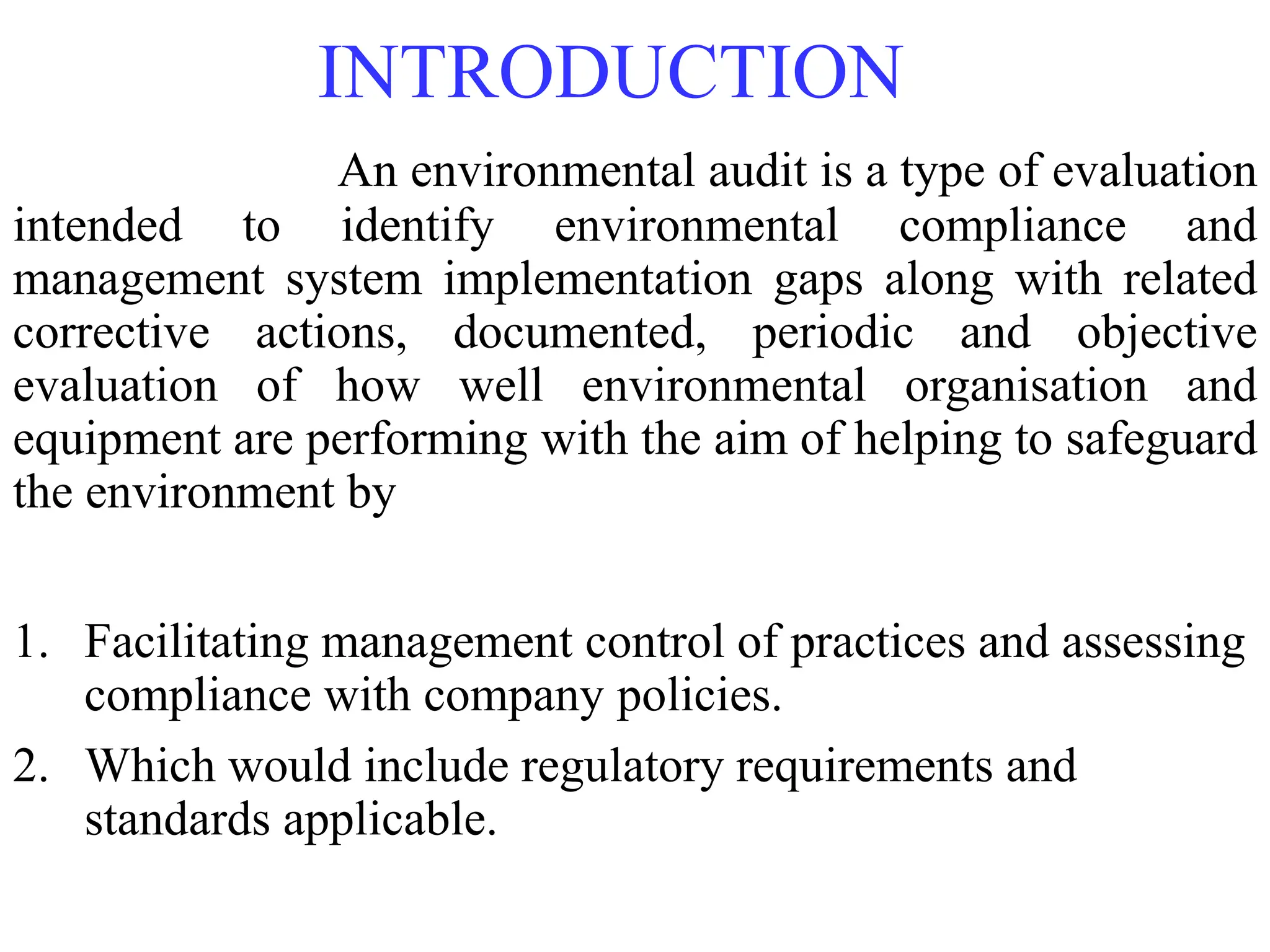
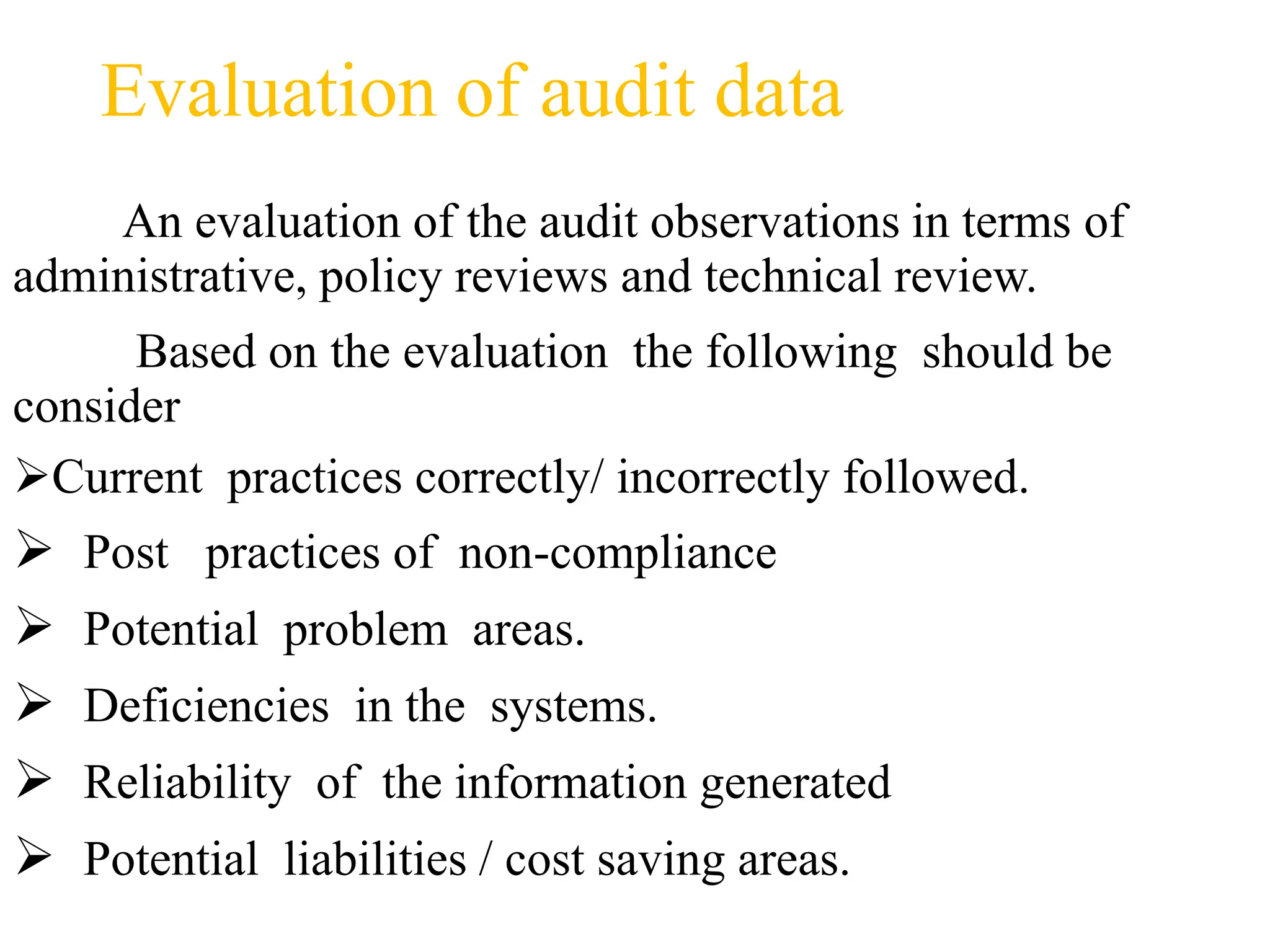
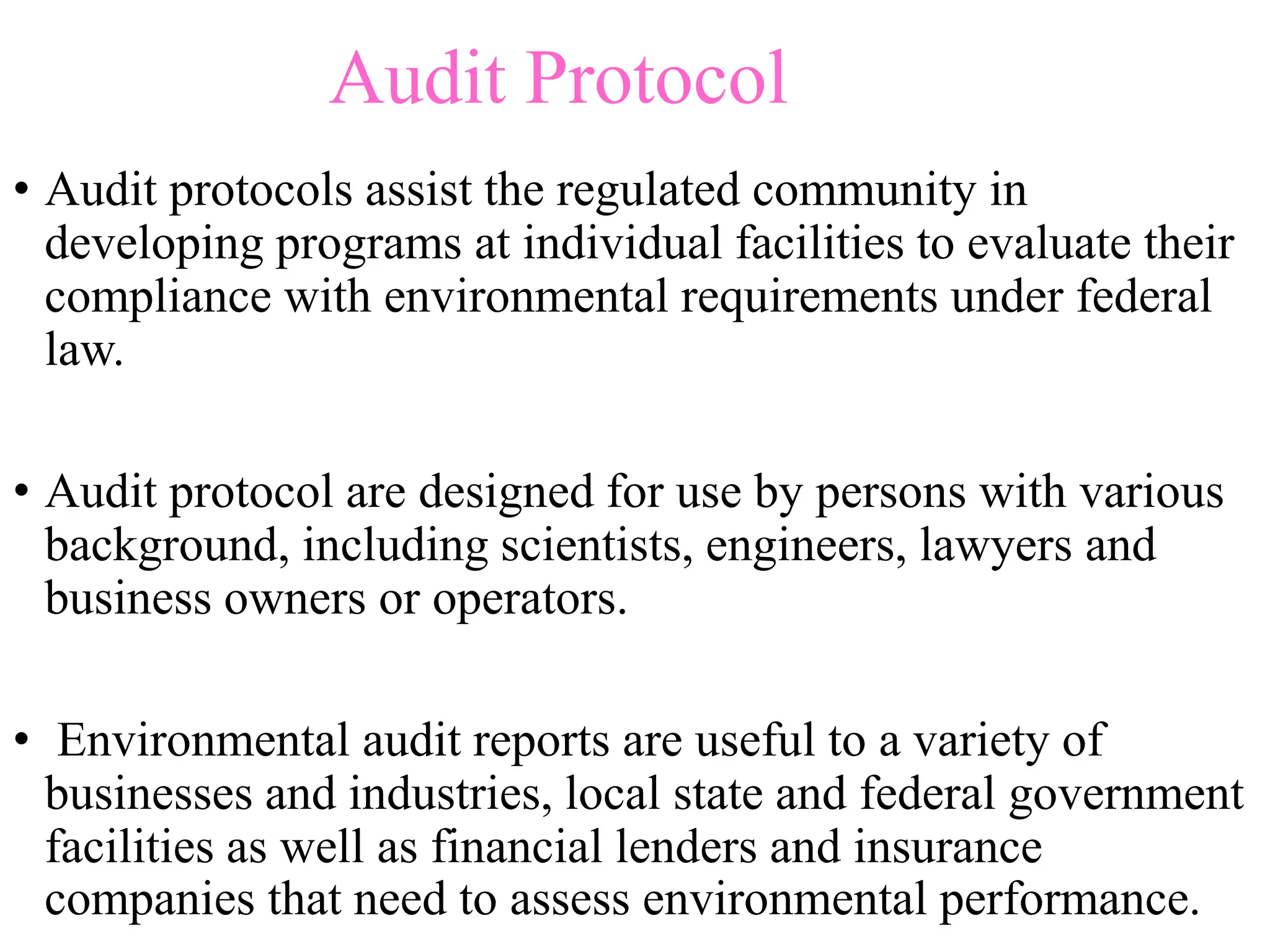
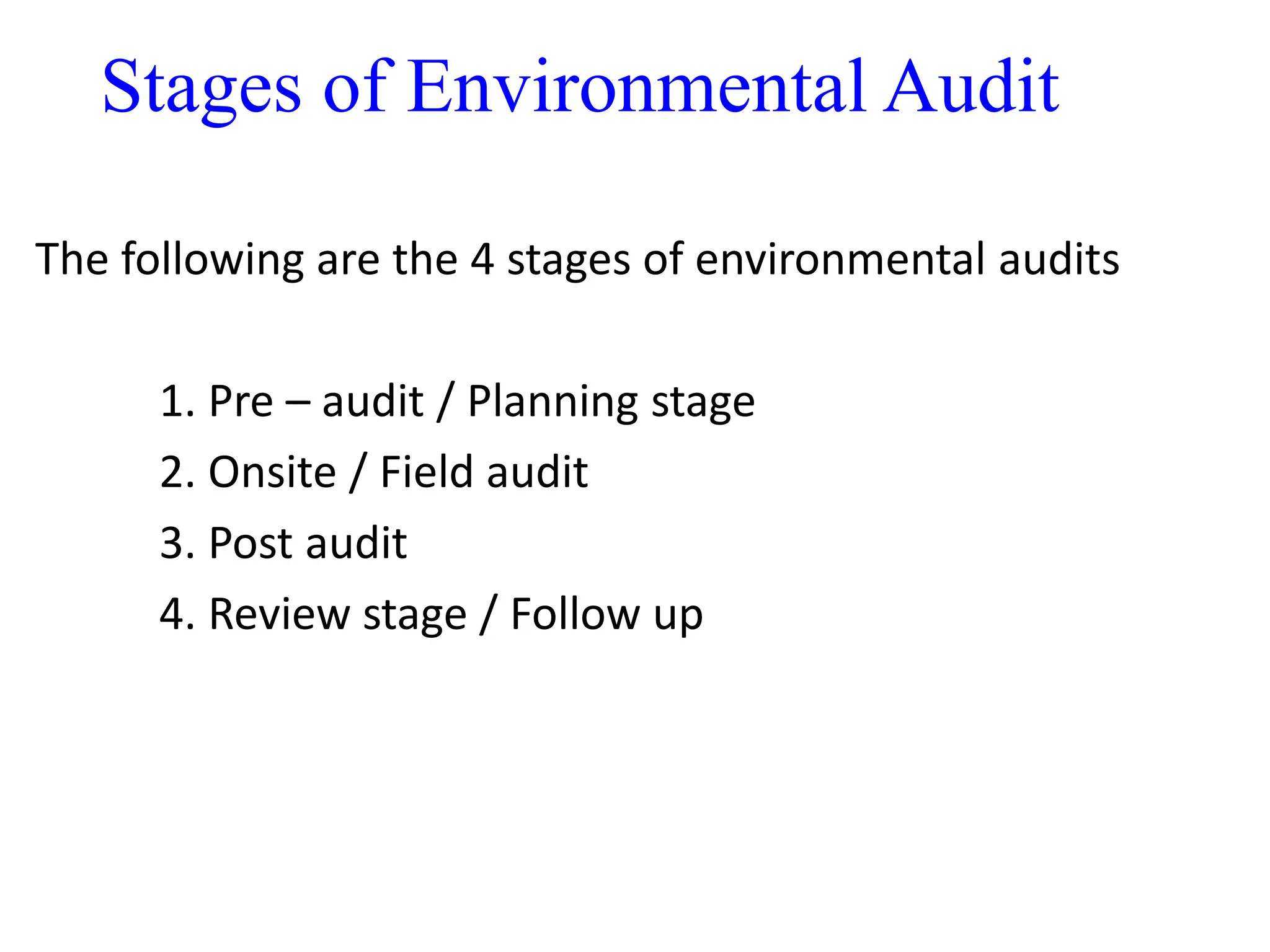
1. An environmental audit evaluates an organization's compliance with environmental regulations and policies through a documented, periodic assessment. It aims to identify gaps and non-compliance issues to help safeguard the environment.
2. Major environmental legislation in India includes the Wildlife Protection Act of 1972, the Water Pollution Control Act of 1974, and the Air Act of 1981. The Ministry of Environment and Forests was established in 1985 to oversee environmental protection efforts.
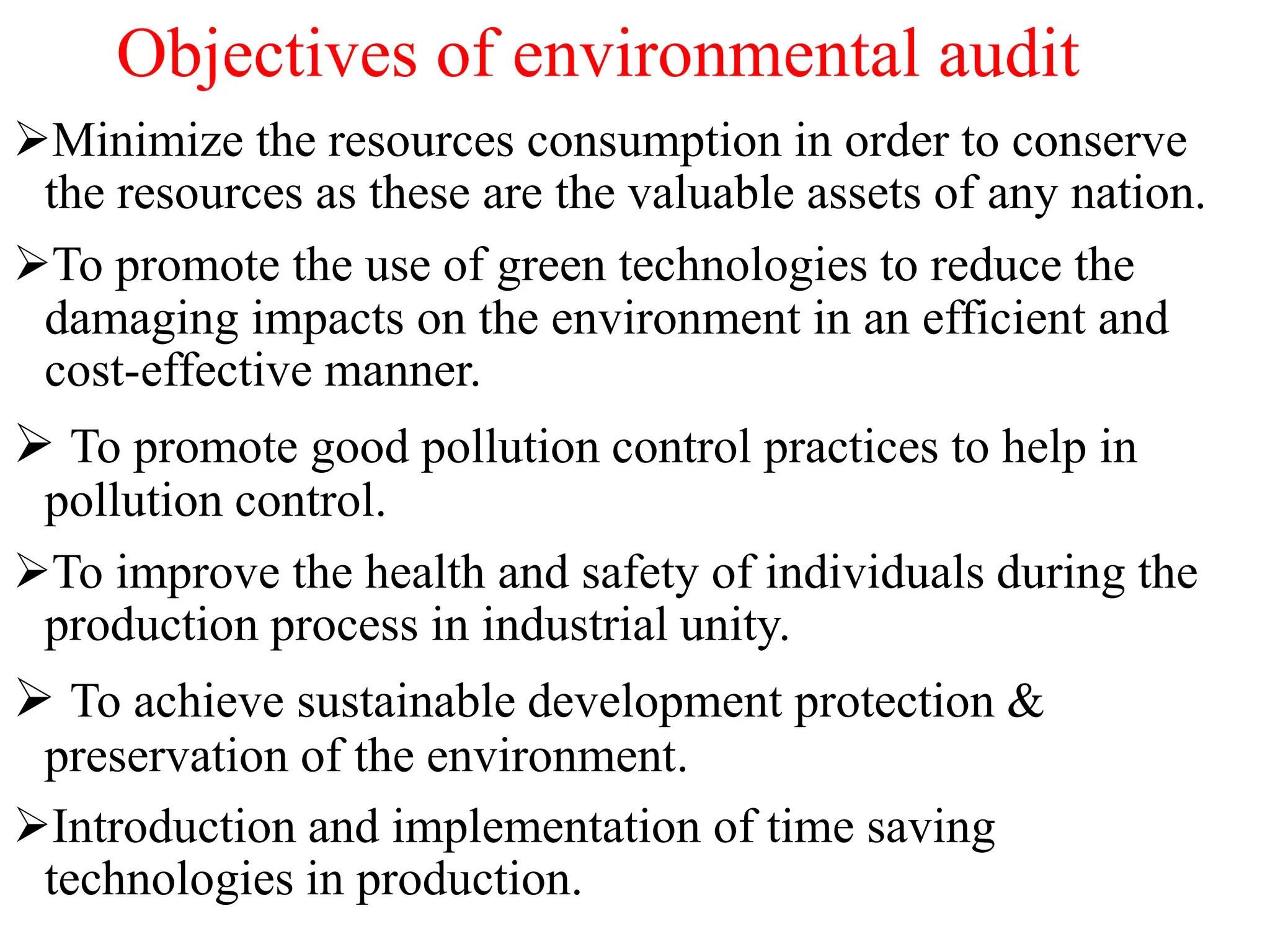
3. The objectives of an environmental audit include minimizing resource consumption, promoting green technologies, improving pollution control practices, and achieving sustainable development goals like environmental protection.