Environmental Influences on theDevelopment of the BrainJonathan Pensotes
What Do We Know AboutBrain Development?FACTSMYTHS
Most of the brain's cells are formed before birth, but most of the connections among cells are made during infancy and early childhood. FACTAt birth the brain is fully developed, just like one's heart or stomach.MYTH Talking to a baby is not important because he or she can't understand what you are saying. MYTHThe brain's development depends entirely on the genes with which you are born.MYTHEarly experience and interaction with the environment are most critical in a child's brain development. FACTTalking to young children establishes foundations for learning language during early critical periods when learning is easiest for a child. FACTWhat children need most is loving care and new experiences, not special attention or costly toys. Talking, singing, playing and reading are some of the key activities that build a child's brain. FACTChildren need special help and specific educational toys to develop their brainpower.FACTA toddler's brain is less active than the brain of a college student.MYTHA 3-year-old toddler's brain is twice as active as an adult's brainFACT
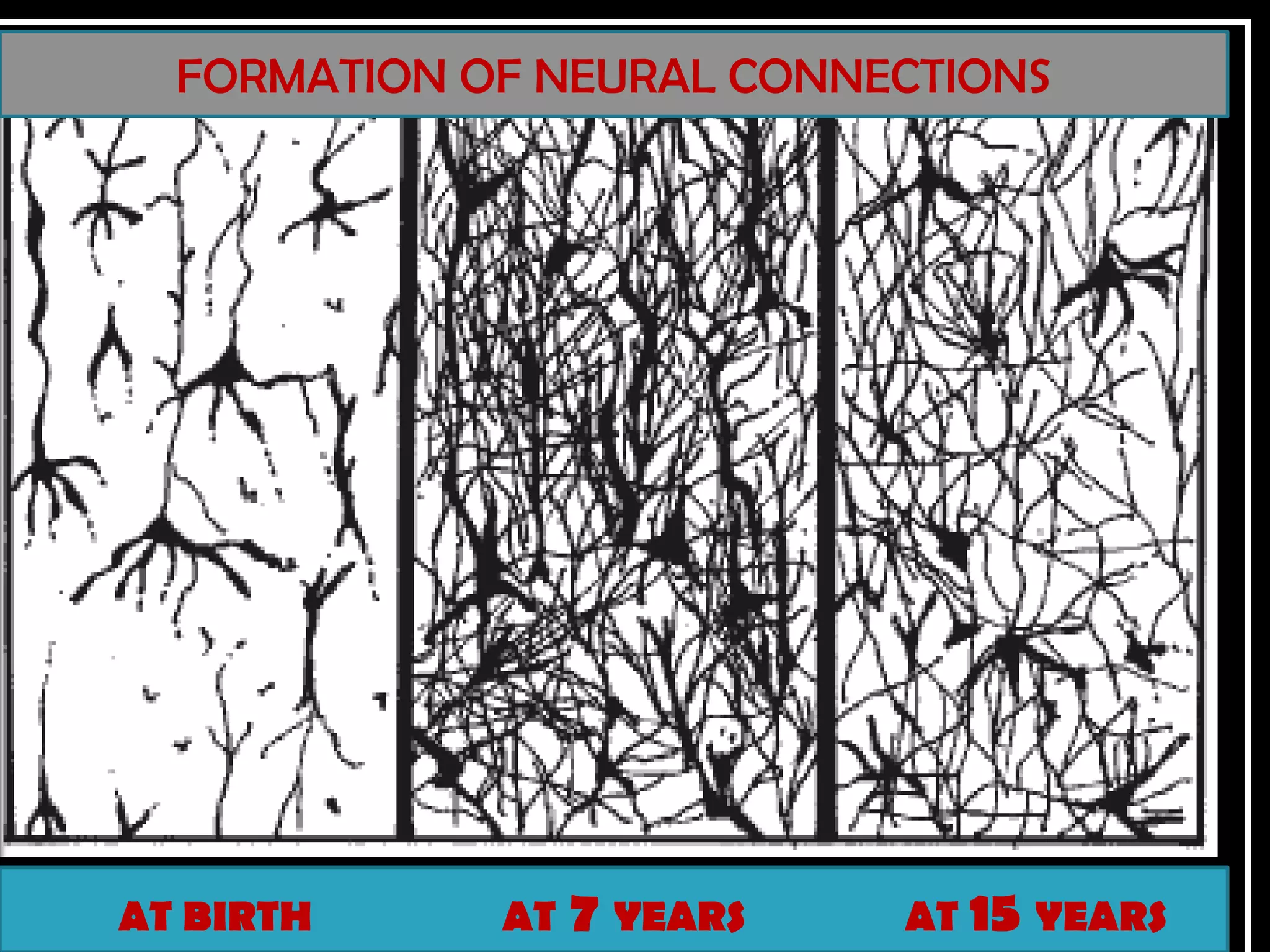
FORMATION OF NEURAL CONNECTIONS          AT BIRTH                  AT 7 YEARS               AT 15 YEARS
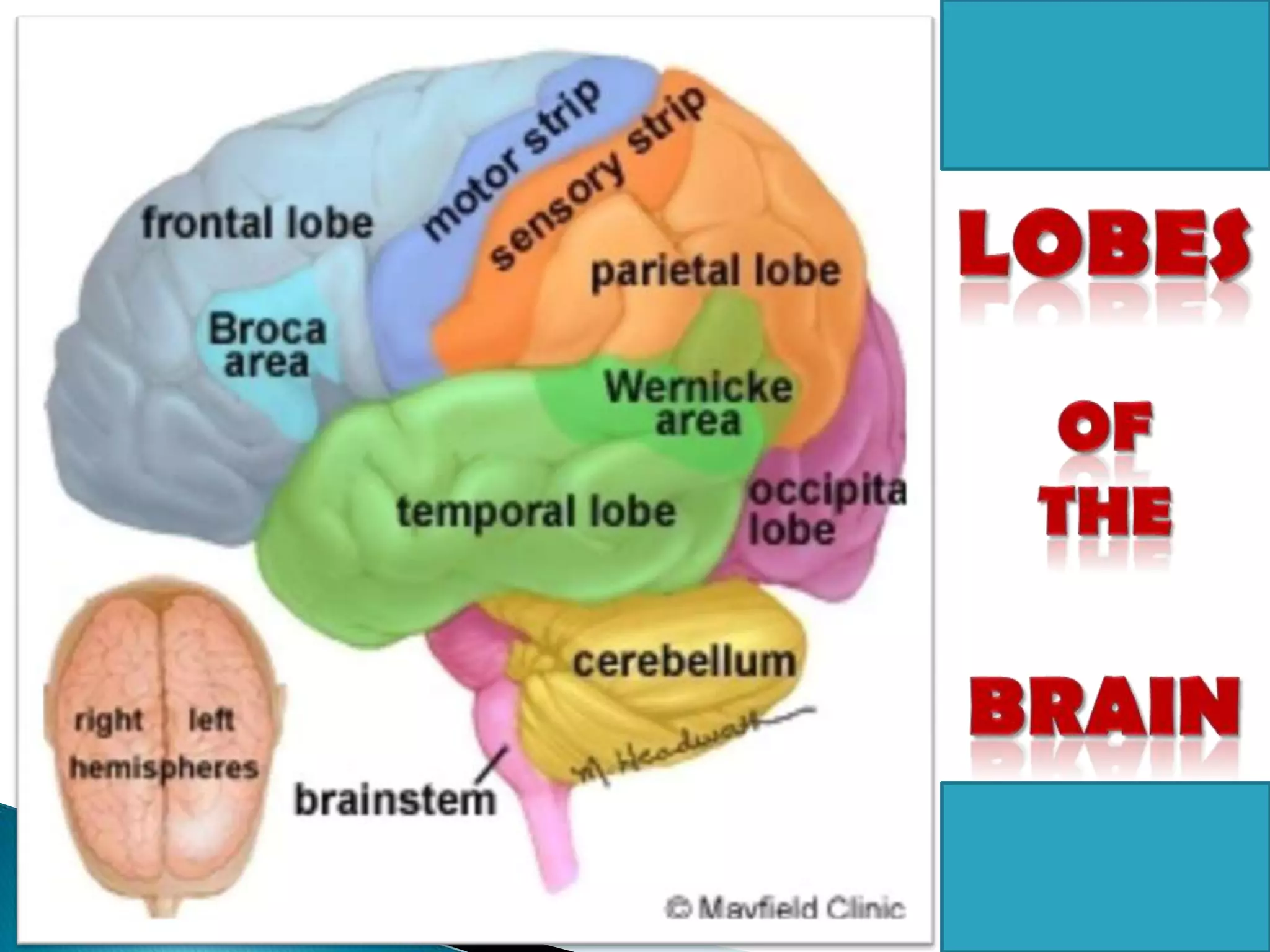
LobesOfThebrain
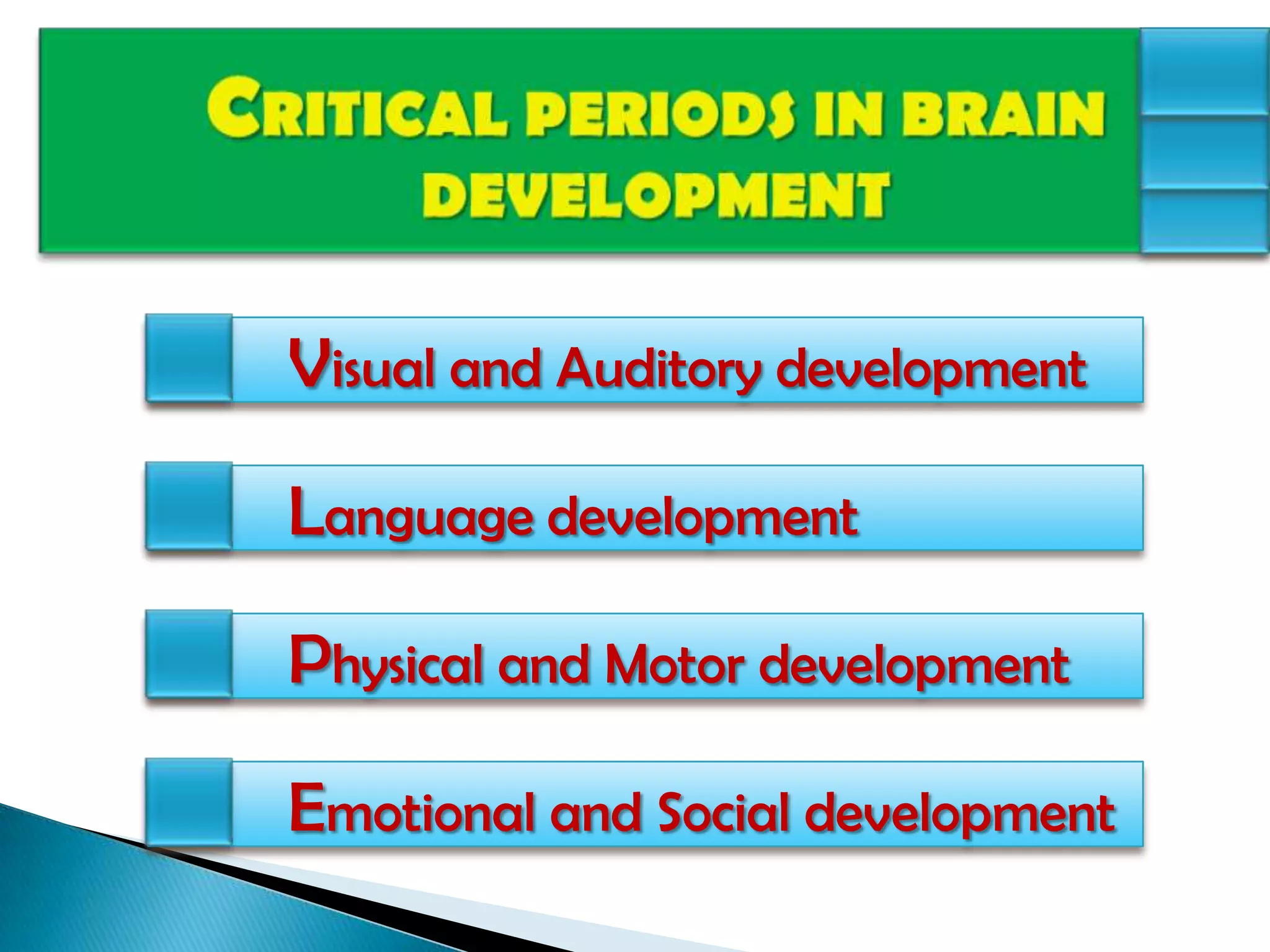
CRITICAL PERIODS IN BRAIN DEVELOPMENT	Visual and Auditory development 	Language development 	Physical and Motor development    	Emotional and Social development
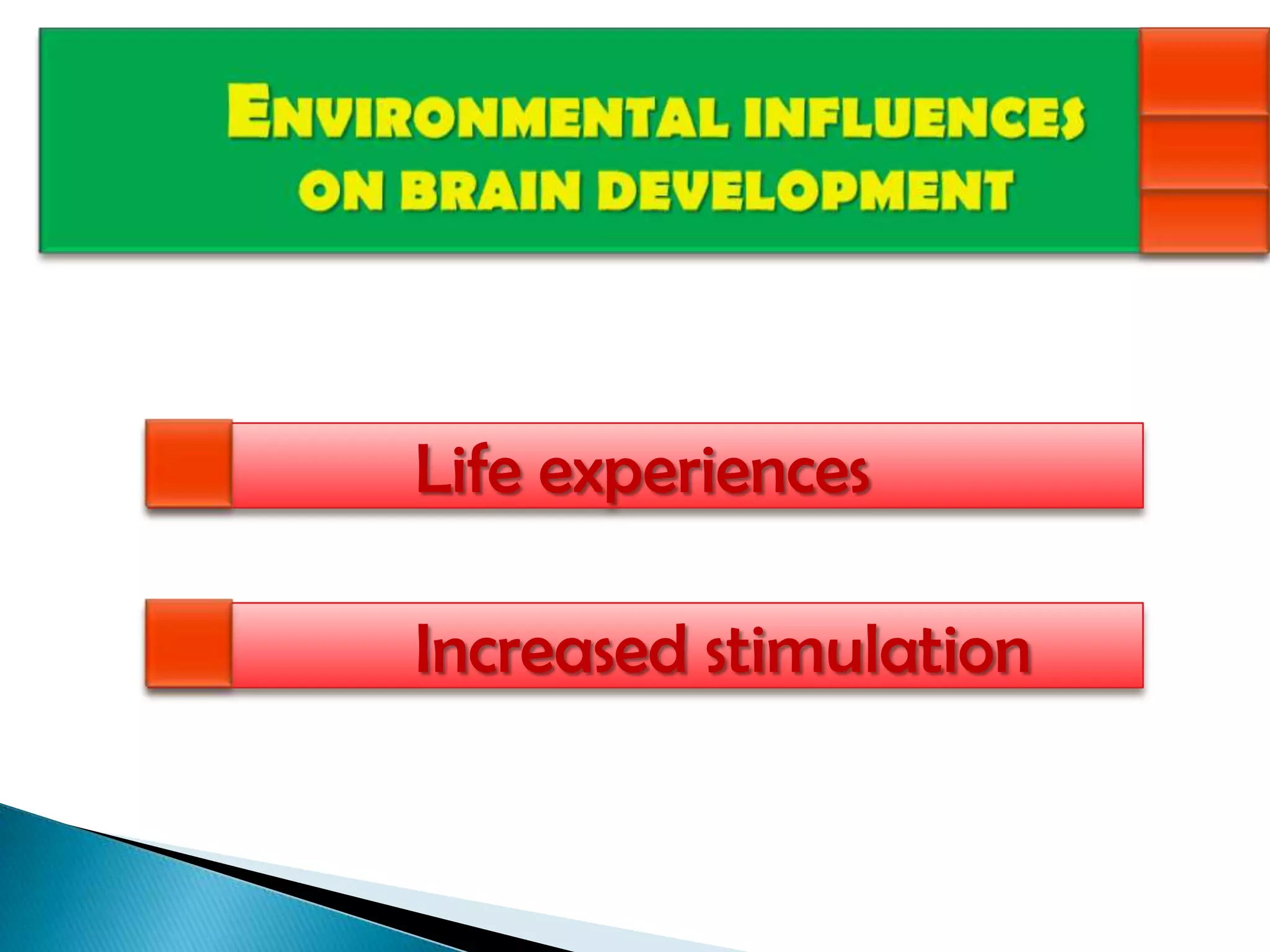
ENVIRONMENTAL INFLUENCES ON BRAIN DEVELOPMENT		Life experiences		Increased stimulation
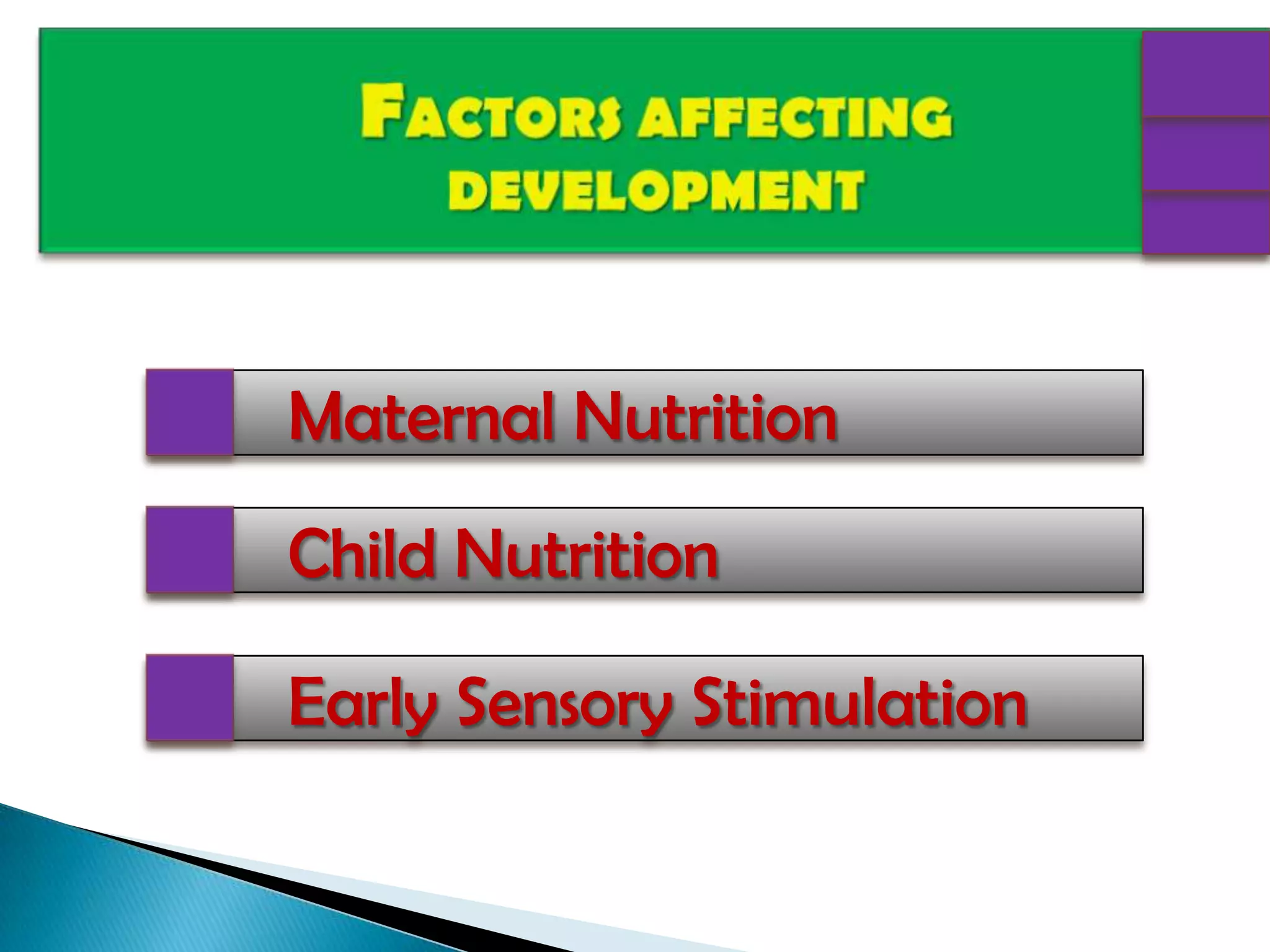
FACTORS AFFECTINGDEVELOPMENT	Maternal Nutrition	Child Nutrition	Early Sensory Stimulation
NUTRITIONDIET
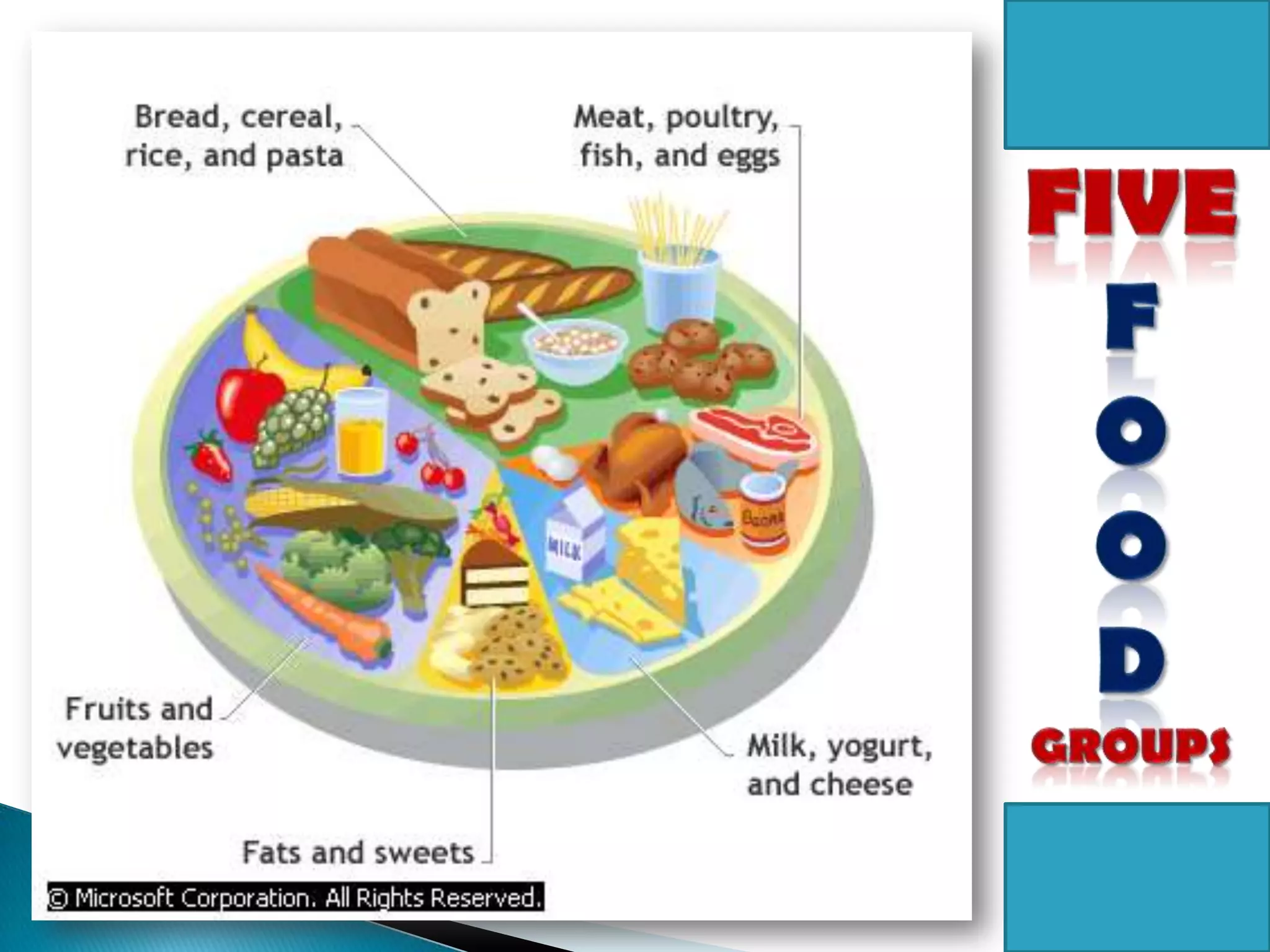
FiveFOODgroups
Maternal NutritionThe mother supplies all the nutrients to inborn fetus through the food intake so that she should take care of her diet for her sake and that of the fetus.
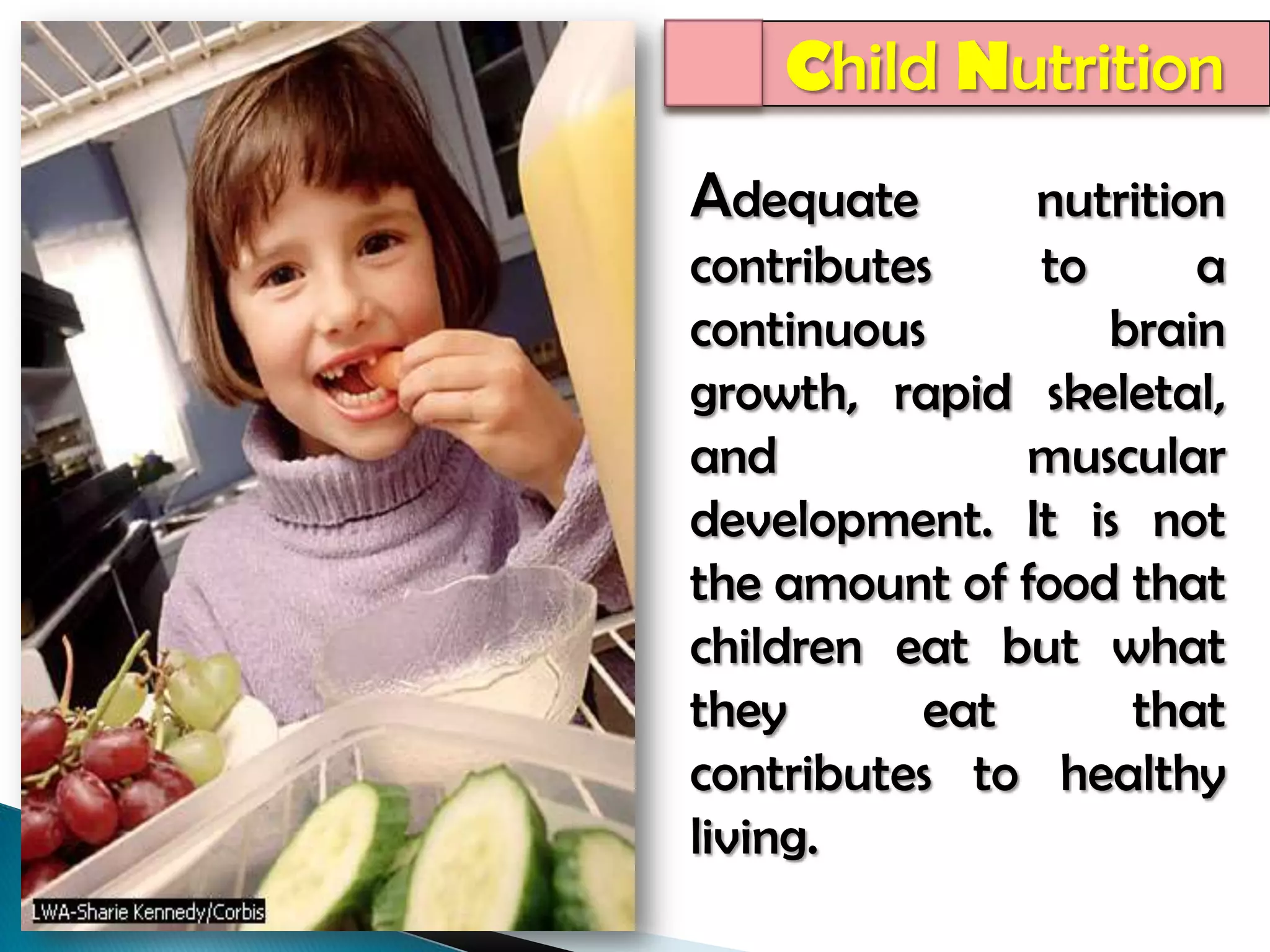
Child NutritionAdequate nutrition  contributes to a continuous brain growth, rapid skeletal, and muscular development. It is not the amount of food that children eat but what they eat that contributes to healthy living.
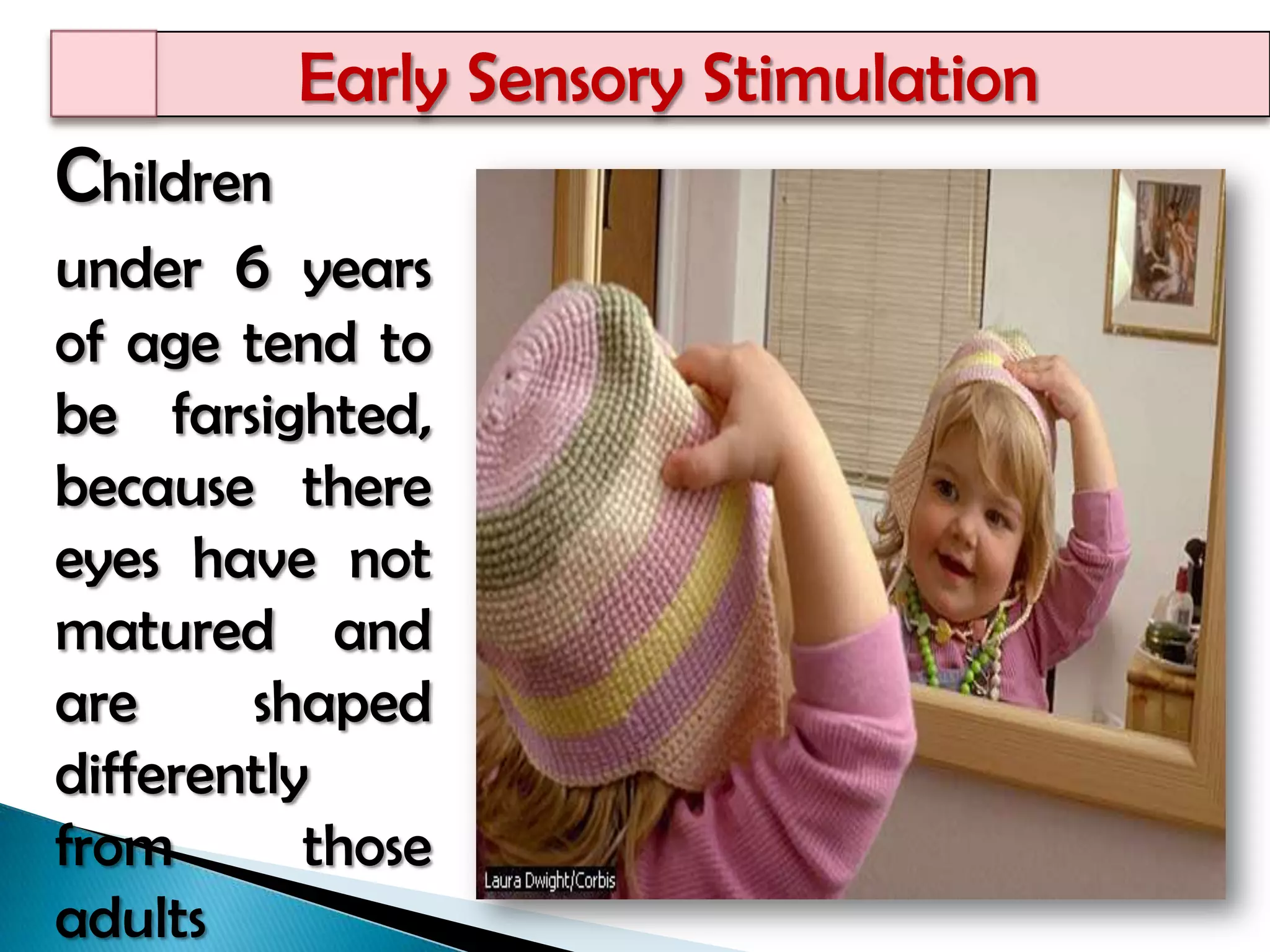
Children under 6 years of age tend to be farsighted, because there eyes have not matured and are shaped differently from thoseadults	      Early Sensory Stimulation
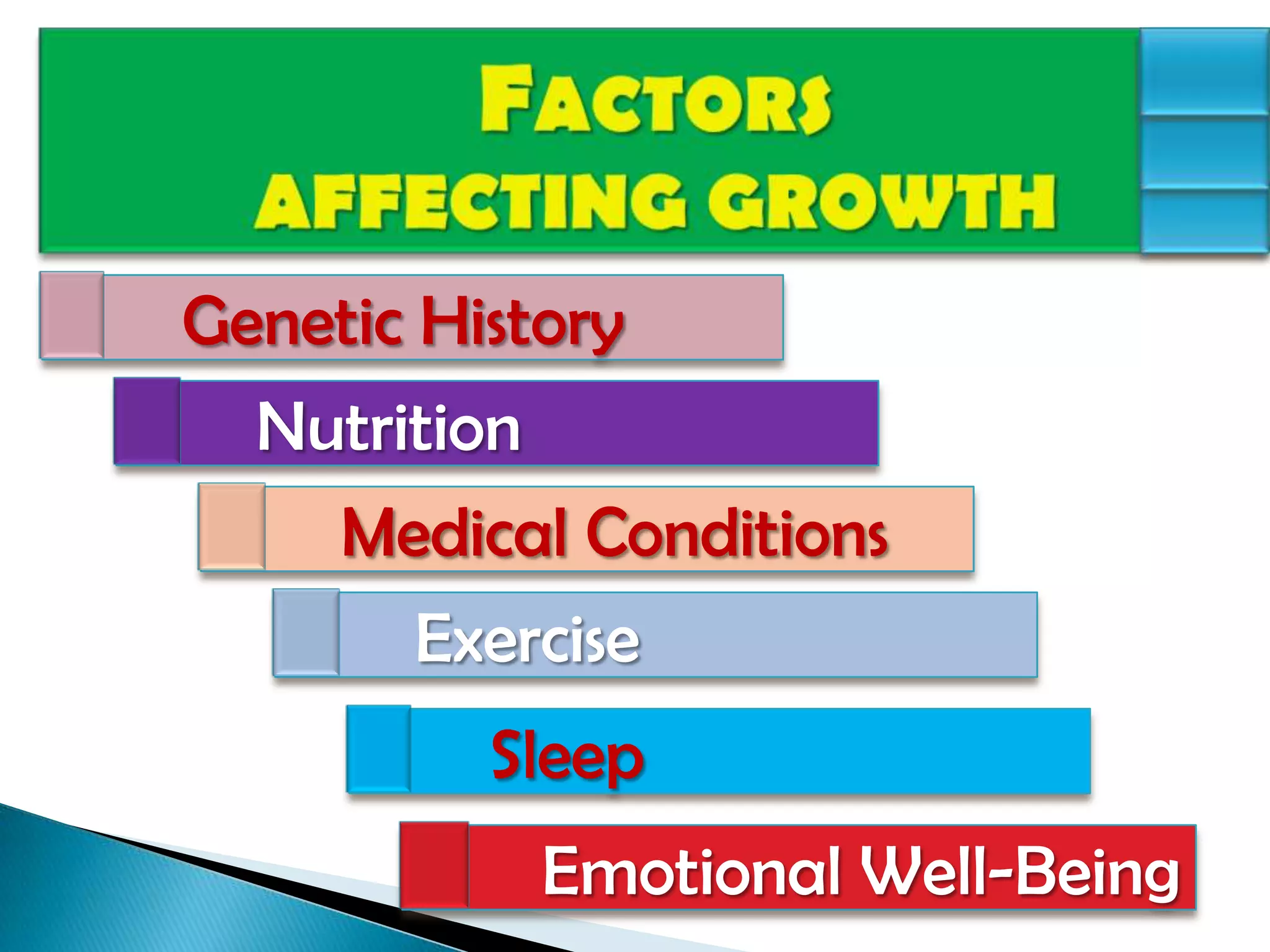
FACTORSAFFECTING GROWTH	Genetic HistoryNutrition   	Exercise   	Sleep   	Emotional Well-Being	Medical Conditions
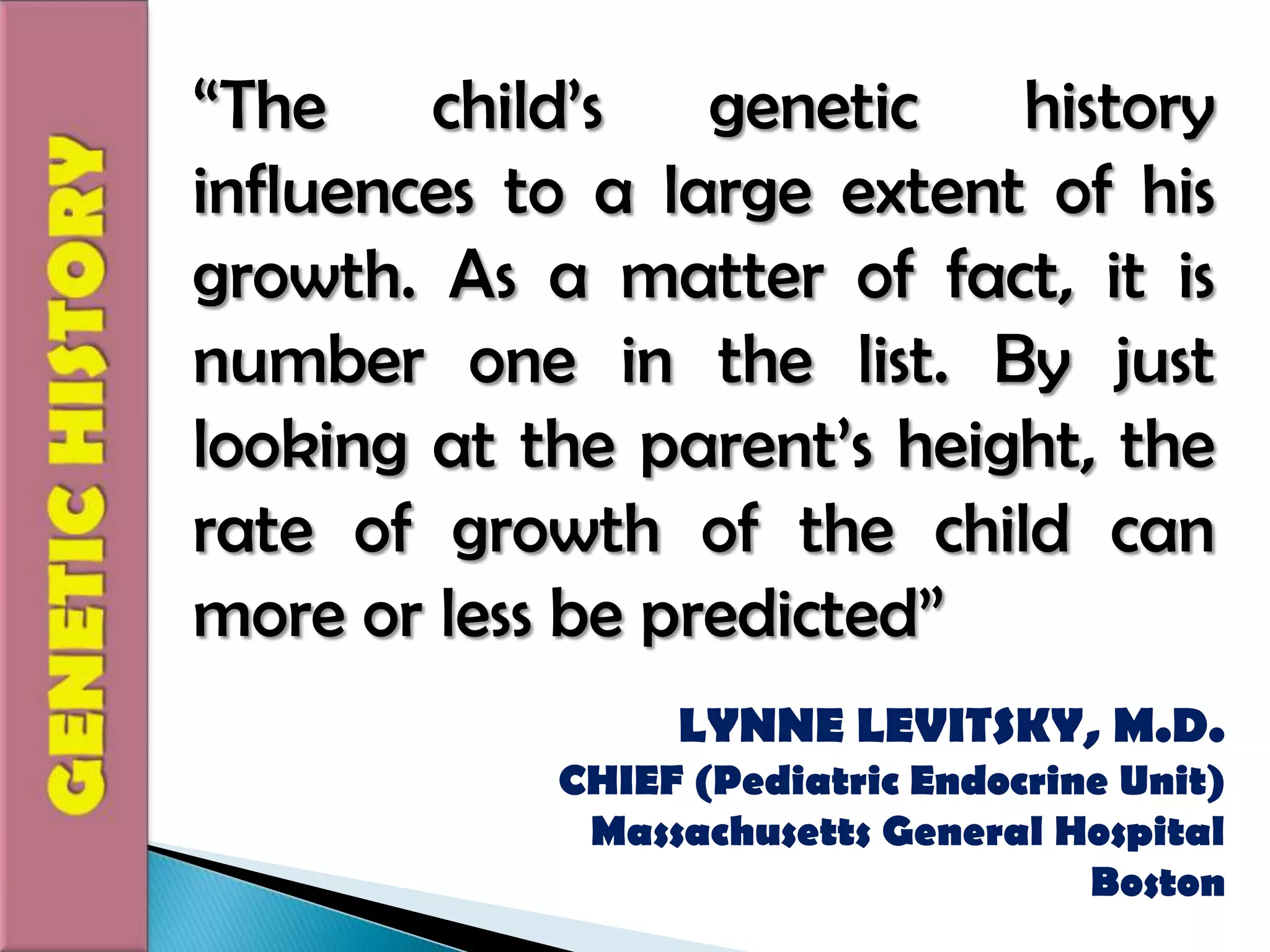
“The child’s genetic history influences to a large extent of his growth. As a matter of fact, it is number one in the list. By just looking at the parent’s height, the rate of growth of the child can more or less be predicted”GENETIC HISTORYLYNNE LEVITSKY, M.D.CHIEF (Pediatric Endocrine Unit)Massachusetts General HospitalBoston
“Without a good diet, kids won’t grow normally”NUTRITIONJO ANNE HATTNER, R.D.Pediatric SpecialistAmerican Dietetic Association
Children born with or develop serious medical conditions can have stunted growth if not treated. Some of these are gastrointestinal disorders such as celiac disease; food allergies; thyroid problems; hormone deficiency; heart, kidney, or liver ailments, and certain chromosomal abnormalitiesMEDICAL CONDITIONS
EXERCISERegular physical activity promotes growth by strengthening bones and muscles.
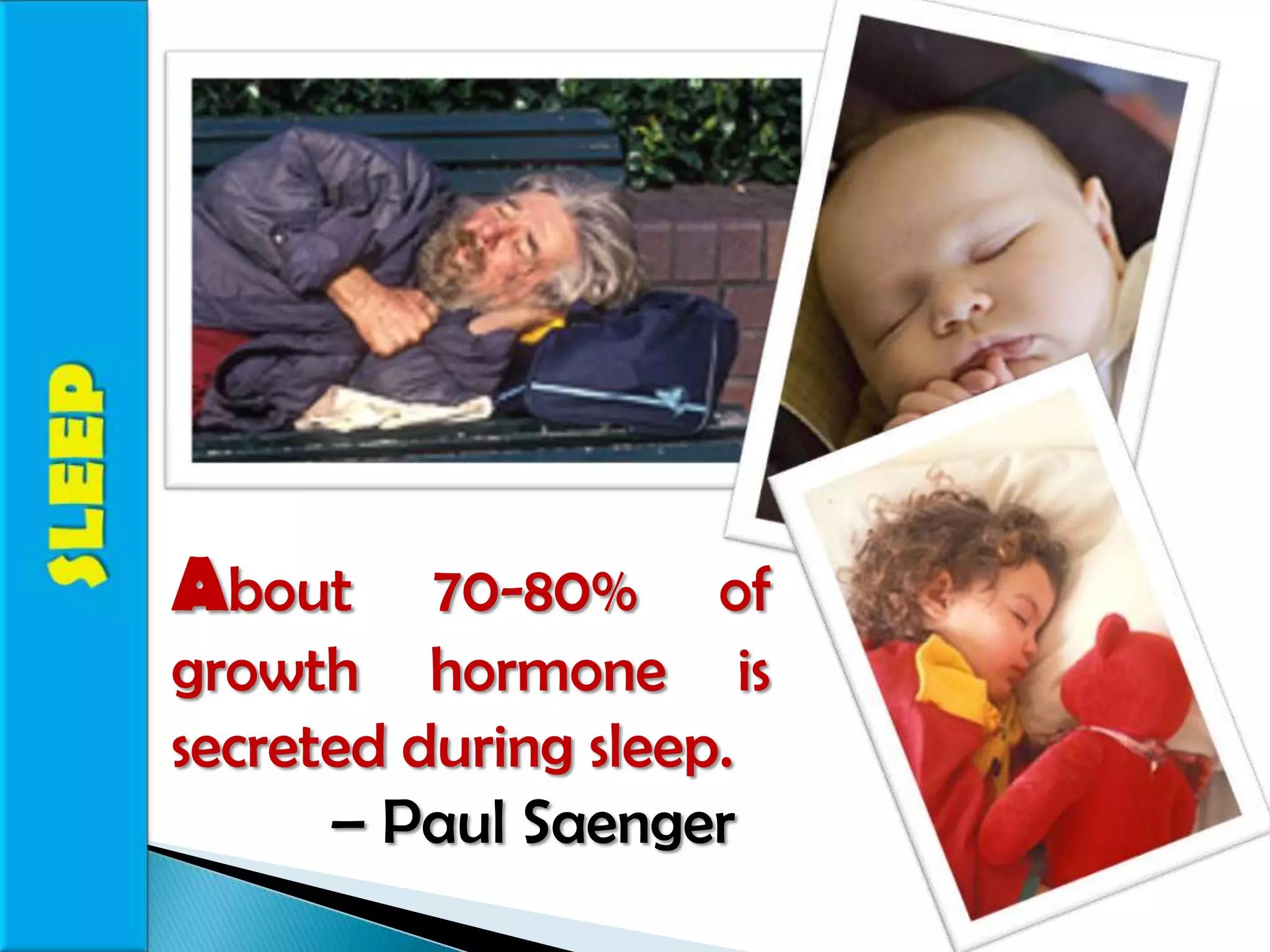
SLEEPAbout 70-80% of growth hormone is secreted during sleep.             – Paul Saenger
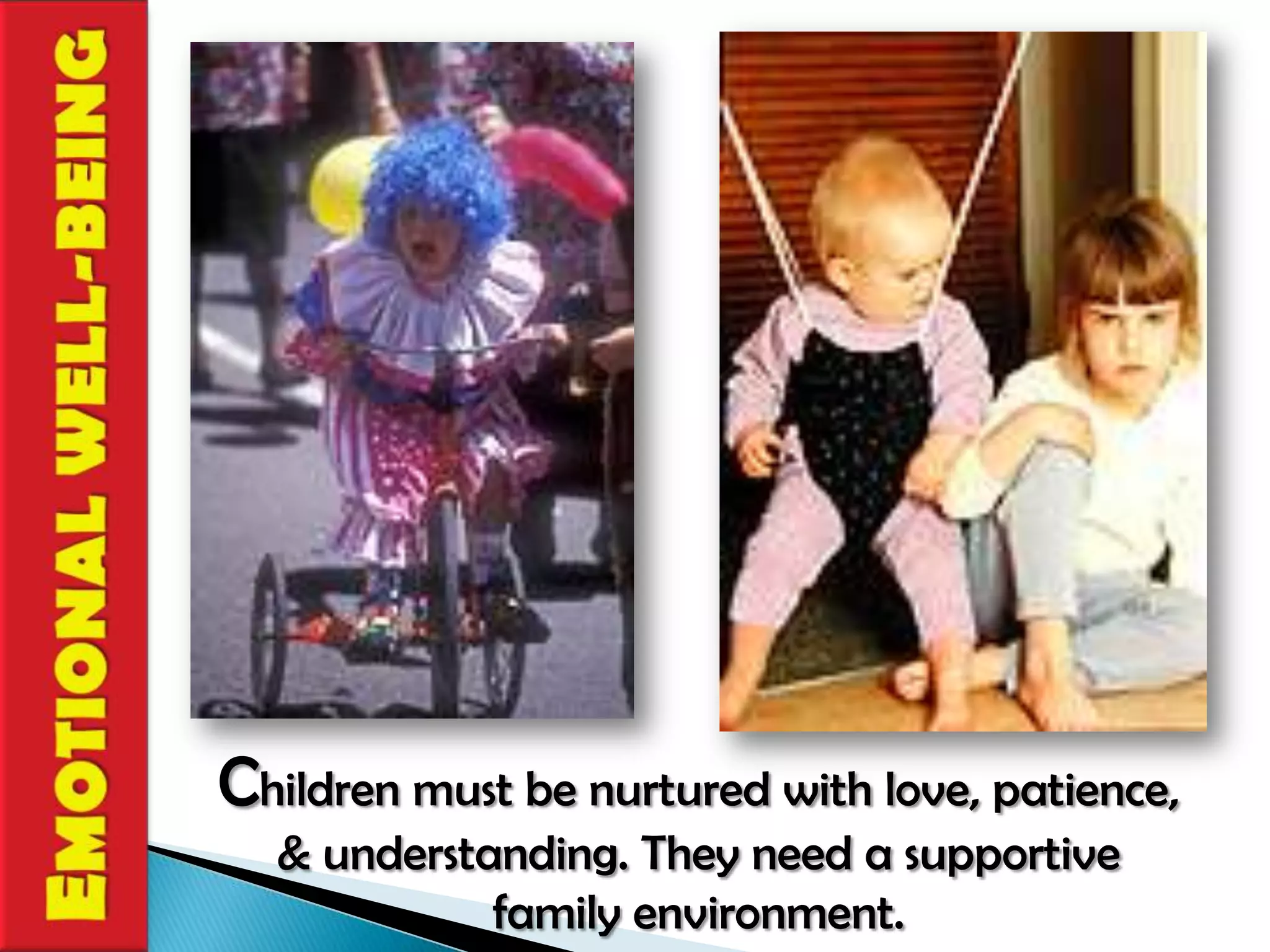
EMOTIONAL WELL-BEINGChildren must be nurtured with love, patience, & understanding. They need a supportive family environment.
Environmental Influences on theDevelopment of the BrainJonathan Pensotes

Environmental Influences On The Development Of The Brain

  • 1.
    Environmental Influences ontheDevelopment of the BrainJonathan Pensotes
  • 2.
    What Do WeKnow AboutBrain Development?FACTSMYTHS
  • 3.
    Most of thebrain's cells are formed before birth, but most of the connections among cells are made during infancy and early childhood. FACTAt birth the brain is fully developed, just like one's heart or stomach.MYTH Talking to a baby is not important because he or she can't understand what you are saying. MYTHThe brain's development depends entirely on the genes with which you are born.MYTHEarly experience and interaction with the environment are most critical in a child's brain development. FACTTalking to young children establishes foundations for learning language during early critical periods when learning is easiest for a child. FACTWhat children need most is loving care and new experiences, not special attention or costly toys. Talking, singing, playing and reading are some of the key activities that build a child's brain. FACTChildren need special help and specific educational toys to develop their brainpower.FACTA toddler's brain is less active than the brain of a college student.MYTHA 3-year-old toddler's brain is twice as active as an adult's brainFACT
  • 4.
    FORMATION OF NEURALCONNECTIONS AT BIRTH AT 7 YEARS AT 15 YEARS
  • 5.
  • 6.
    CRITICAL PERIODS INBRAIN DEVELOPMENT Visual and Auditory development Language development Physical and Motor development Emotional and Social development
  • 7.
    ENVIRONMENTAL INFLUENCES ONBRAIN DEVELOPMENT Life experiences Increased stimulation
  • 8.
  • 9.
  • 10.
  • 11.
    Maternal NutritionThe mothersupplies all the nutrients to inborn fetus through the food intake so that she should take care of her diet for her sake and that of the fetus.
  • 12.
    Child NutritionAdequate nutrition contributes to a continuous brain growth, rapid skeletal, and muscular development. It is not the amount of food that children eat but what they eat that contributes to healthy living.
  • 13.
    Children under 6years of age tend to be farsighted, because there eyes have not matured and are shaped differently from thoseadults Early Sensory Stimulation
  • 14.
    FACTORSAFFECTING GROWTH Genetic HistoryNutrition Exercise Sleep Emotional Well-Being Medical Conditions
  • 15.
    “The child’s genetichistory influences to a large extent of his growth. As a matter of fact, it is number one in the list. By just looking at the parent’s height, the rate of growth of the child can more or less be predicted”GENETIC HISTORYLYNNE LEVITSKY, M.D.CHIEF (Pediatric Endocrine Unit)Massachusetts General HospitalBoston
  • 16.
    “Without a gooddiet, kids won’t grow normally”NUTRITIONJO ANNE HATTNER, R.D.Pediatric SpecialistAmerican Dietetic Association
  • 17.
    Children born withor develop serious medical conditions can have stunted growth if not treated. Some of these are gastrointestinal disorders such as celiac disease; food allergies; thyroid problems; hormone deficiency; heart, kidney, or liver ailments, and certain chromosomal abnormalitiesMEDICAL CONDITIONS
  • 18.
    EXERCISERegular physical activitypromotes growth by strengthening bones and muscles.
  • 19.
    SLEEPAbout 70-80% ofgrowth hormone is secreted during sleep. – Paul Saenger
  • 20.
    EMOTIONAL WELL-BEINGChildren mustbe nurtured with love, patience, & understanding. They need a supportive family environment.
  • 21.
    Environmental Influences ontheDevelopment of the BrainJonathan Pensotes

Editor's Notes

  • #3 INTRODUCTION
  • #11 Food can be divided into five groups according to the nutrients they contain. Bread, cereal, rice, and pasta are important sources of carbohydrates, which provide energy. Fruits and vegetables provide vitamins, minerals, and fiber—nutrients that prevent disease. Foods that come from animals, such as meat, poultry, fish, eggs, and dairy products, are a good source of protein used to build and repair body parts. Fatty foods, such as butter, and sweets, including candy and cookies, provide few nutrients and should be eaten in tiny amounts.
  • #12 It is important that that the mother gets a continuous supply of fresh vegetable, fruits, minerals, and vitamins needed.
  • #13 Eating a wide variety of foods is important since different foods contribute different nutrients (substances your body needs to stay healthy). Healthy eating habits include eating lots of fruits and vegetables and staying away from junk food such as candy, potato chips, and soda.
  • #14 Minority of children’s vision does not develop properly. About 10% of 6 year old have defective near vision, and 7% have defective distant vision, the latter number jumps to 17 percent by 11 years of age. Sensory derivation exist in terms of the reception of sounds from the environment. Same with visual handicaps, children may also suffer from auditory problems.
  • #19 Caution must be observed in doing high-impact sports like running and gymnastics because they too can impede growth if done excessively.
  • #20 Paul Saenger is a pediatric endocrinologist at Children’s Hospital at Montefiore Medical Center
  • #21 ABIDE BY THE RIGHTS OF CHILDREN PURSUANT TO PRESIDENTIAL DECREE 603 IN ORDER FOR CHILDREN TO LIVE IN THE FULLNESS OF LIFE.