Evolution of Social Brains
Rayna M. Harris
Graduate Researcher, Hans Hofmann’s Lab
rayna.harris@utexas.edu
raynamharris@github.io
Comparative Animal Physiology (BIO 361T)
April 7, 2016 1
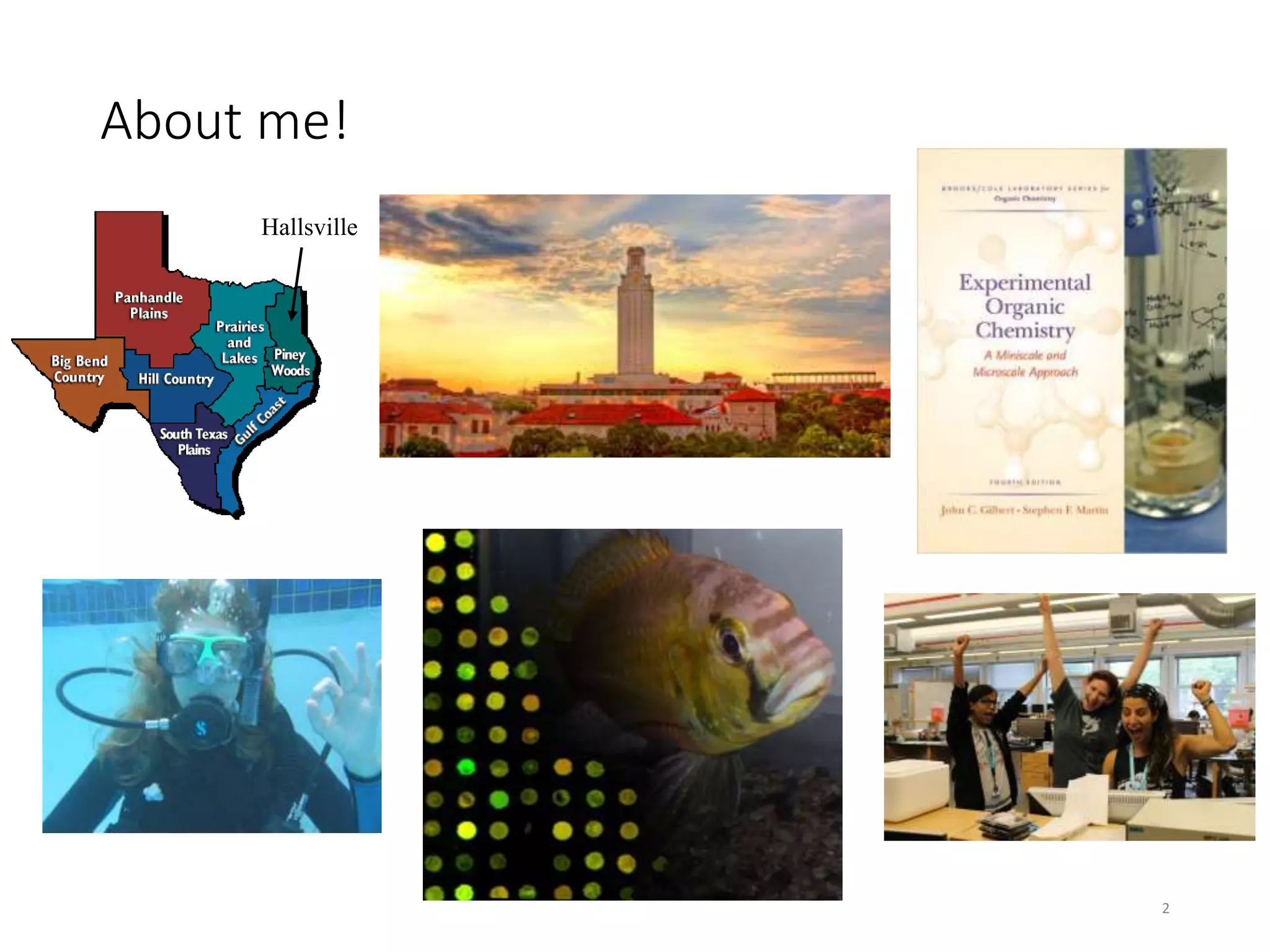
About me!
Hallsville
2
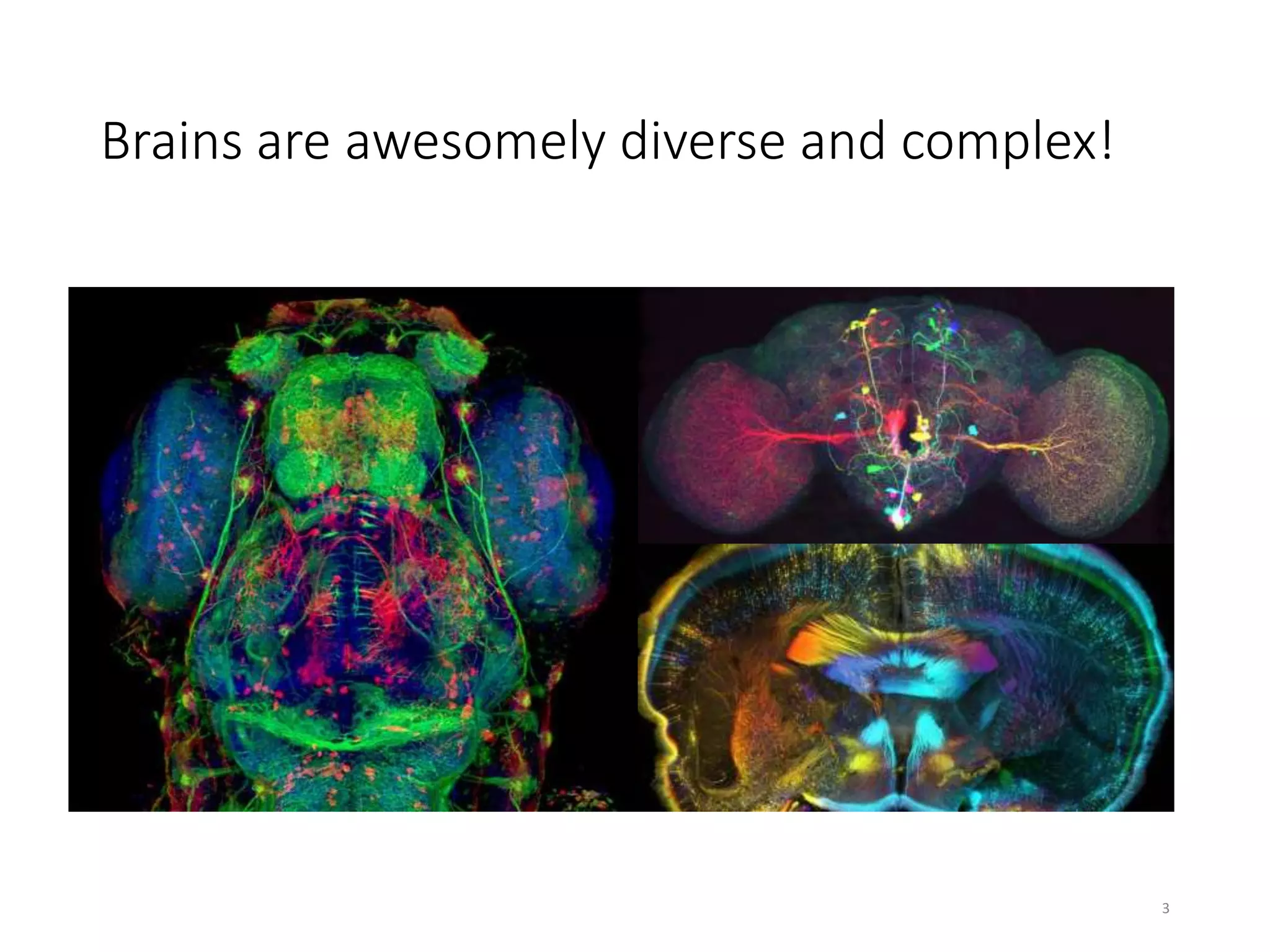
Brains are awesomely diverse and complex!
3
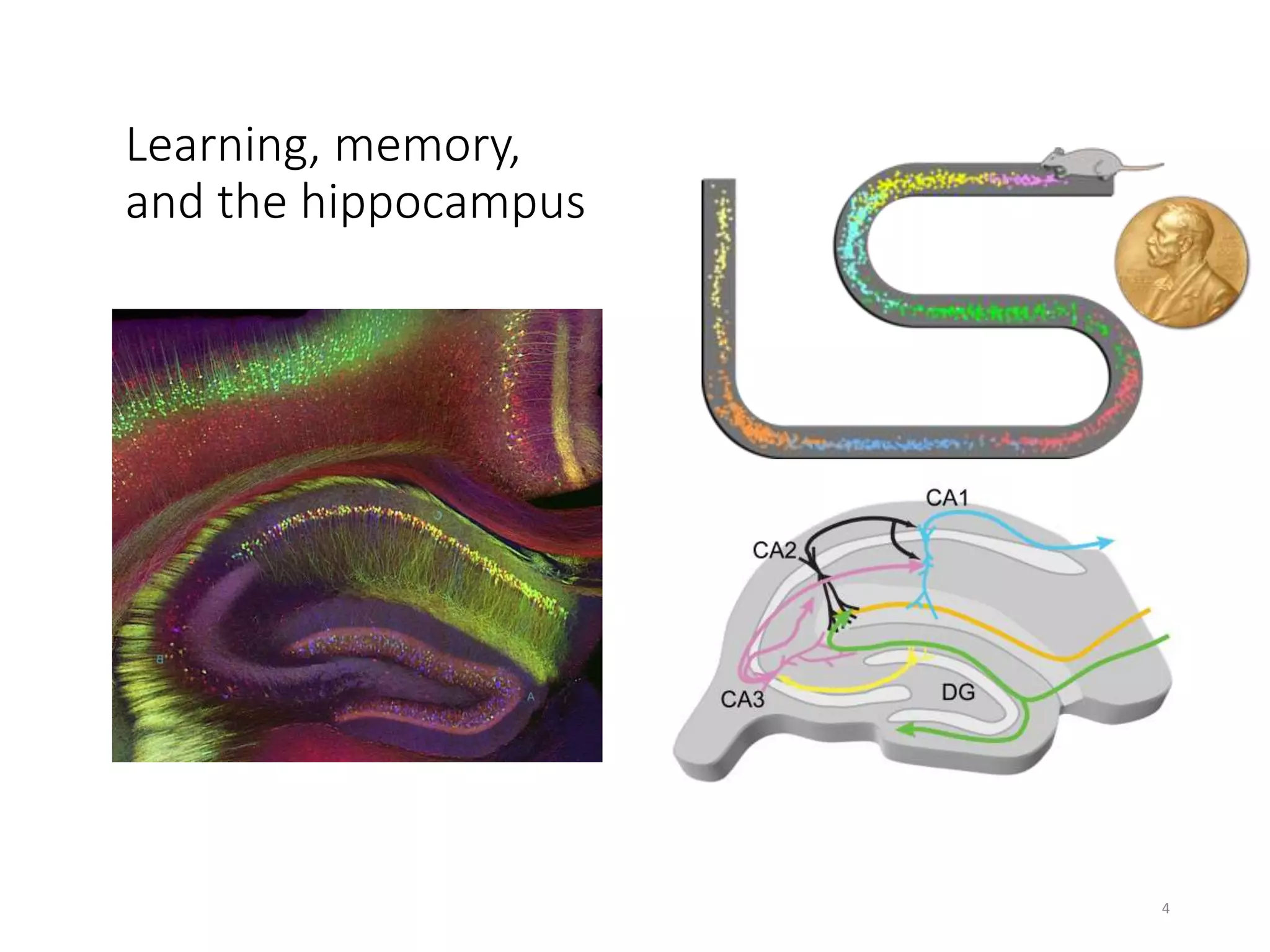
Learning, memory,
and the hippocampus
4
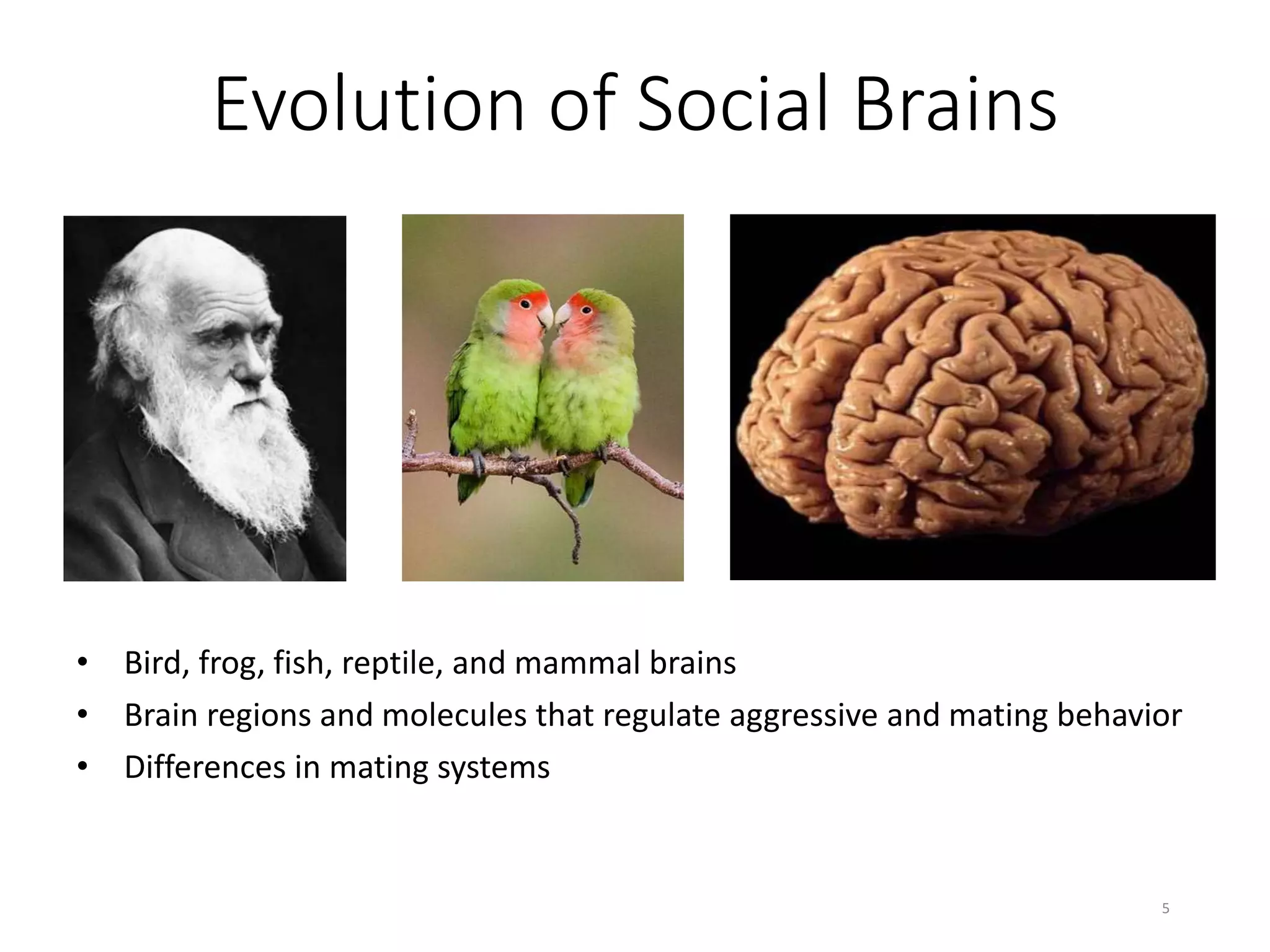
Evolution of Social Brains
• Bird, frog, fish, reptile, and mammal brains
• Brain regions and molecules that regulate aggressive and mating behavior
• Differences in mating systems
5
“Endless forms most beautiful and wonderful”
Fish
Amphibians
Reptiles
Birds
Mammals
6
Animal brains are very diverse as well!
Amphibians
Reptiles
Birds
Mammals
Fish
7
Ecology can shape brain size!
Somatosensory (touch) cortex
Auditory (echolocation) cortex
Visual cortex
“…the fittest succeed in adapting themselves best to their environment.”
8
What else could give rise to the similarities
and differences in animal brains?
9
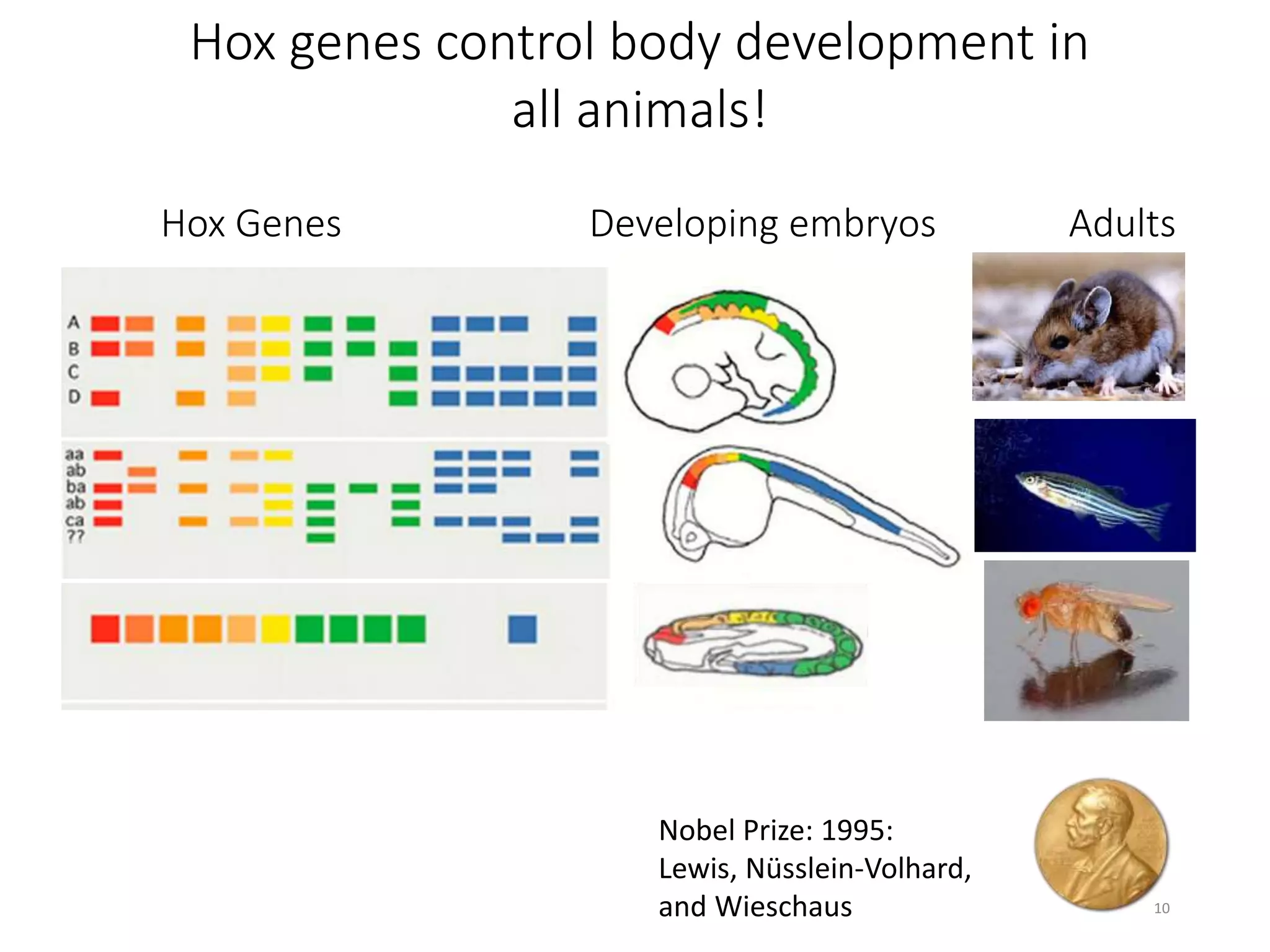
Hox genes control body development in
all animals!
Hox Genes Developing embryos Adults
Rodents
Nobel Prize: 1995:
Lewis, Nüsslein-Volhard,
and Wieschaus
Flies
Fish
10
Do similar genes control brain development?
Amphibians
Reptiles
Birds
Mammals
Fish
O'Connell & Hofmann, 2011 & 2012
11
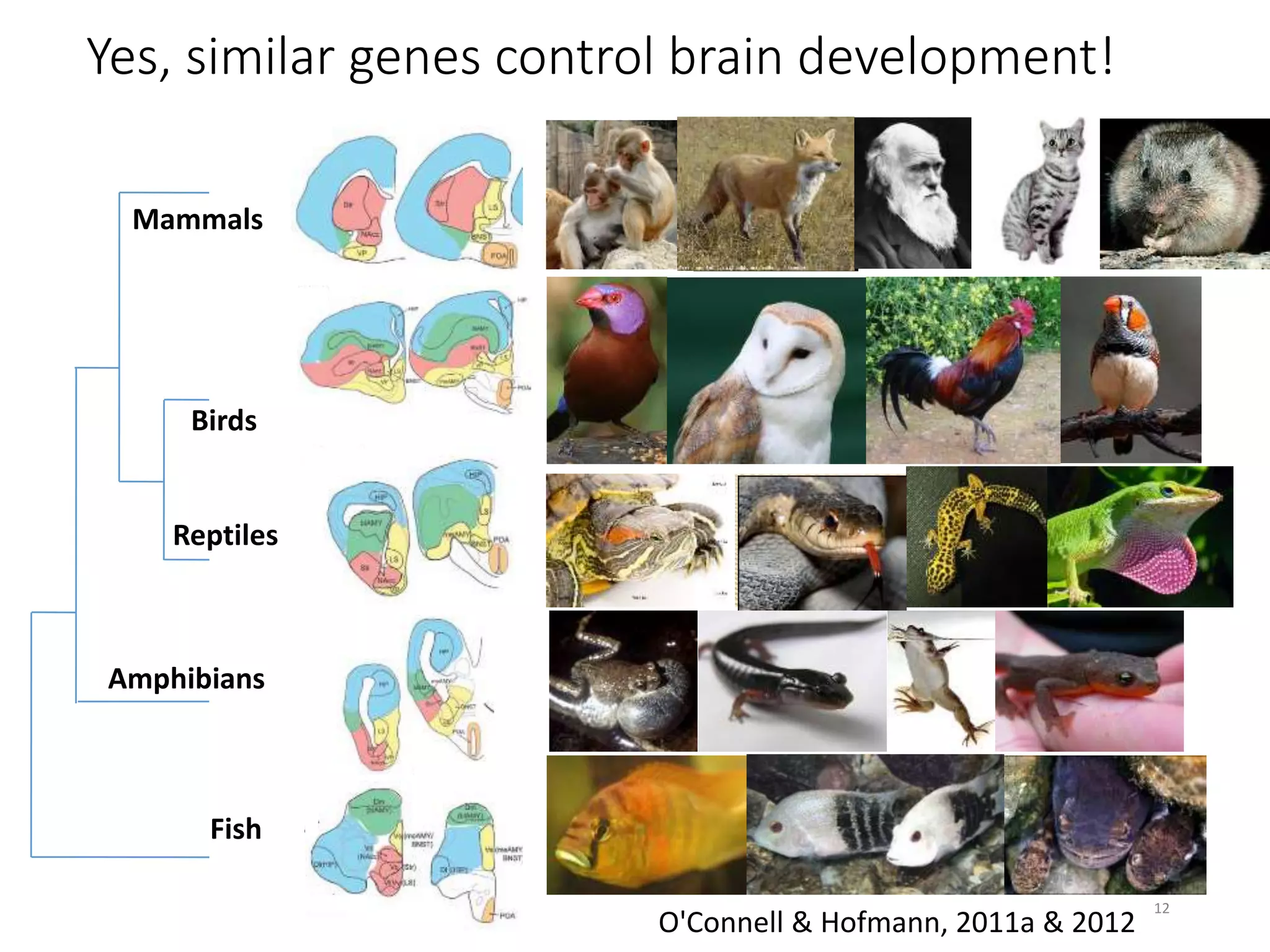
Yes, similar genes control brain development!
Amphibians
Reptiles
Birds
Mammals
Fish
O'Connell & Hofmann, 2011a & 2012
12
What decisions do animals (including
humans) make?
13
Some categories of decision making
Find foodFind mates Find shelter
Care for family
Fight competitors
14
All animals face challengesand opportunities
O'Connell & Hofmann, 2011b
15
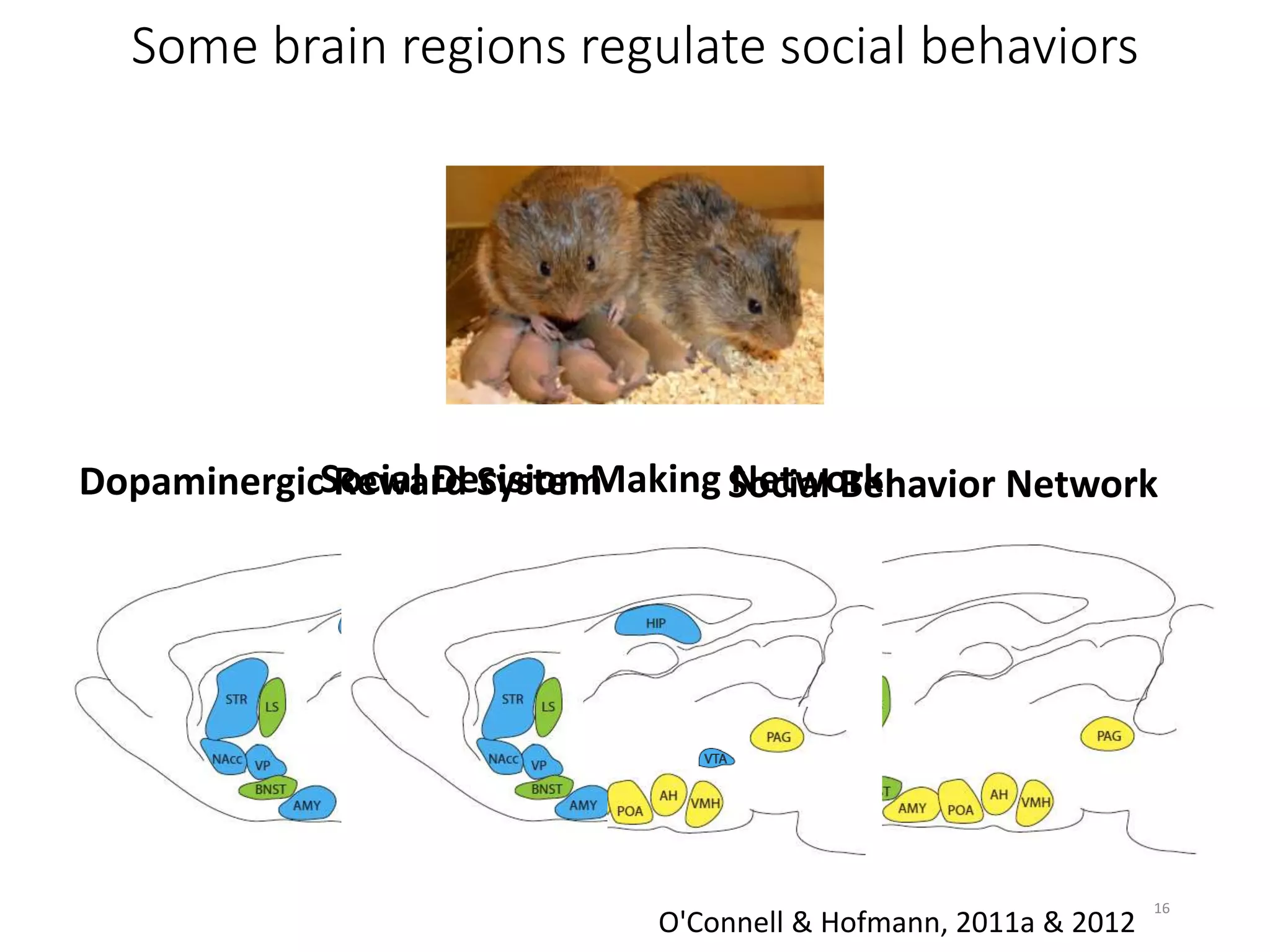
Some brain regions regulate social behaviors
Dopaminergic Reward System Social Behavior NetworkSocial Decision Making Network
O'Connell & Hofmann, 2011a & 2012
16
Do the same brain regions control
social behavior in all animals?
Fish
Amphibians
Reptiles
Birds
Mammals
O'Connell & Hofmann, 2011a & 2012
17
Yes, the same brain regions
control behavior!
Mesolimbic Reward System
Newman’s Social Behavior Network
Shared by both circuits
Fish
O'Connell & Hofmann, 2011a & 2012
18
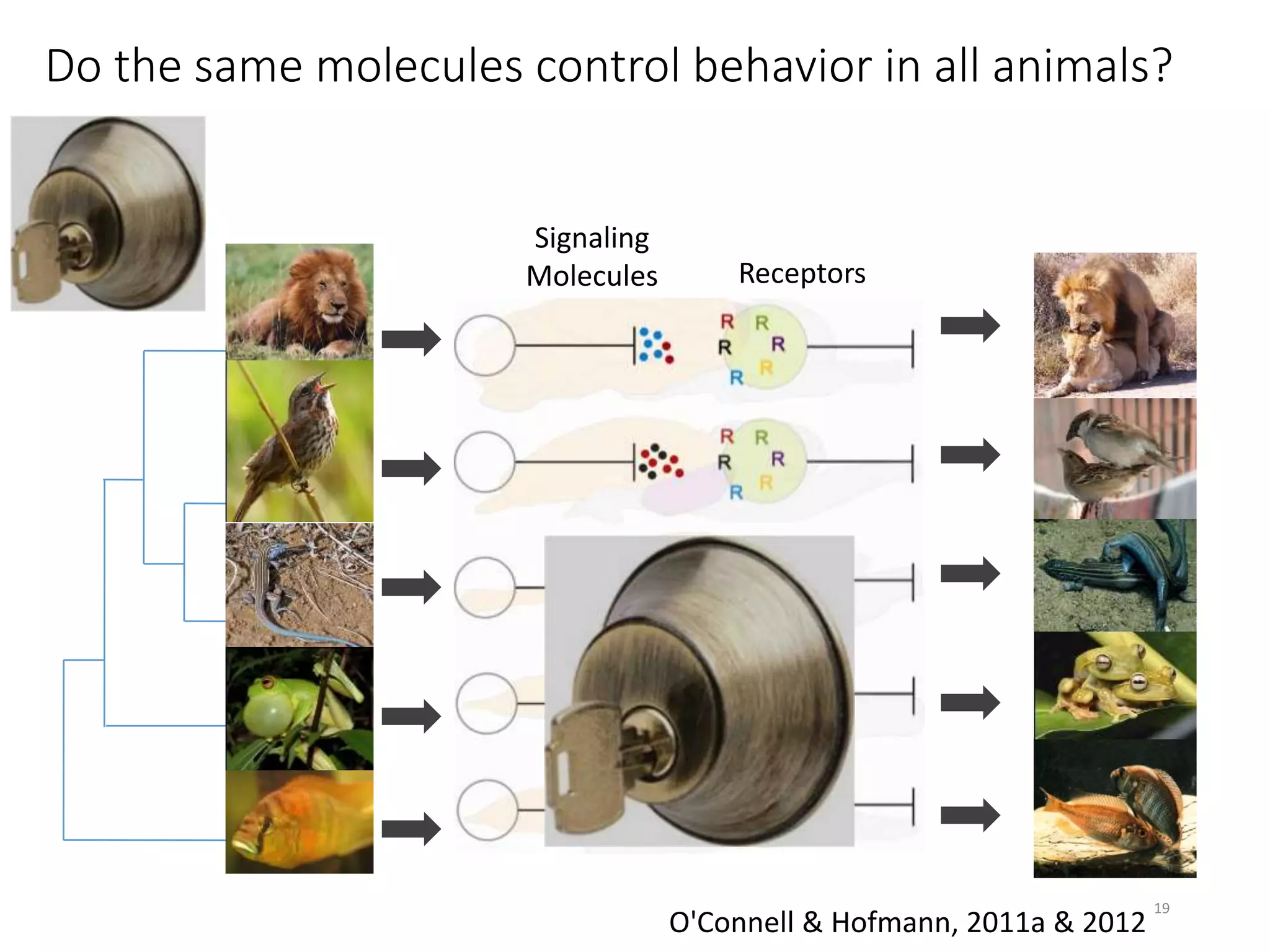
Do the same molecules control behavior in all animals?
Signaling
Molecules Receptors
O'Connell & Hofmann, 2011a & 2012
19
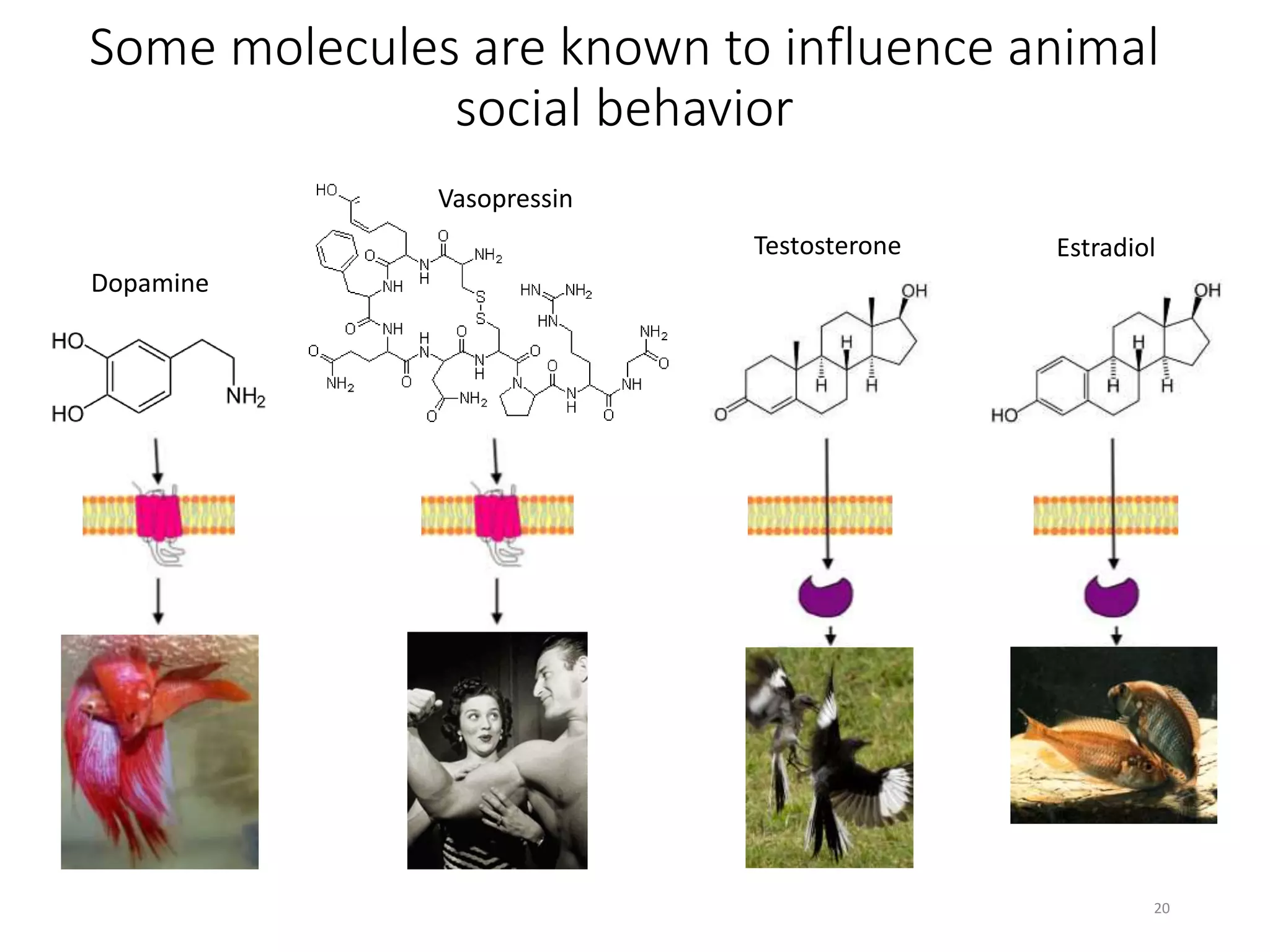
Some molecules are known to influence animal
social behavior
Dopamine
Vasopressin
Testosterone Estradiol
20
How conserved is gene activity in the same brain
regions?
O'Connell & Hofmann 2012
Androgen receptor
Estrogen receptor
Progesterone receptor
Dopamine receptor
Vasopressin receptor
Oxytocin receptor
Vasopressin
Oxytocin
Tyrosine hydroxylase
21
• Which molecules in the striatum
are present in all species
examined?
• Which molecules in the striatum
are absent in all species
examined?
• Which two pairs of species are
more similar to each other than
to the rest?
How conserved is gene activity in the same brain
regions?
O'Connell & Hofmann 2012
22
Androgen receptor
Estrogen receptor
Progesterone receptor
Dopamine receptor
Vasopressin receptor
Oxytocin receptor
Vasopressin
Oxytocin
Tyrosine hydroxylase
• What are the most striking similarities and differences in gene expression
between the striatum and the proptic area
How conserved is gene activity in the same brain
regions?
Where signals are received is well
conserved
Where signals are produced is less
conserved.
12 brain regions * 10 genes = 120 rows
O'Connell & Hofmann 2012
23
Social animals use similar neuromolecular networks
to generate similar behaviors
Fish
Amphibians
Reptiles
Birds
Mammals
24
If all brains are made of the same parts, how
what gives rise to diversity in behavior?
25
Differences in decision making
Find foodFind mates Find shelter
Care for family
Fight competitors
26
How does diversity in mating system arise?
Neuromolecular networks that regulates mating system
Monogamy
Polygamy
Oldfield et al. 2013
27
Herichthys cichlid fishes
Herichthys cyanoguttatus
Texas Cichlid
Herichthys minckleyi
Cuatro Cienegas Cichlid
Oldfield et al. 2013
28
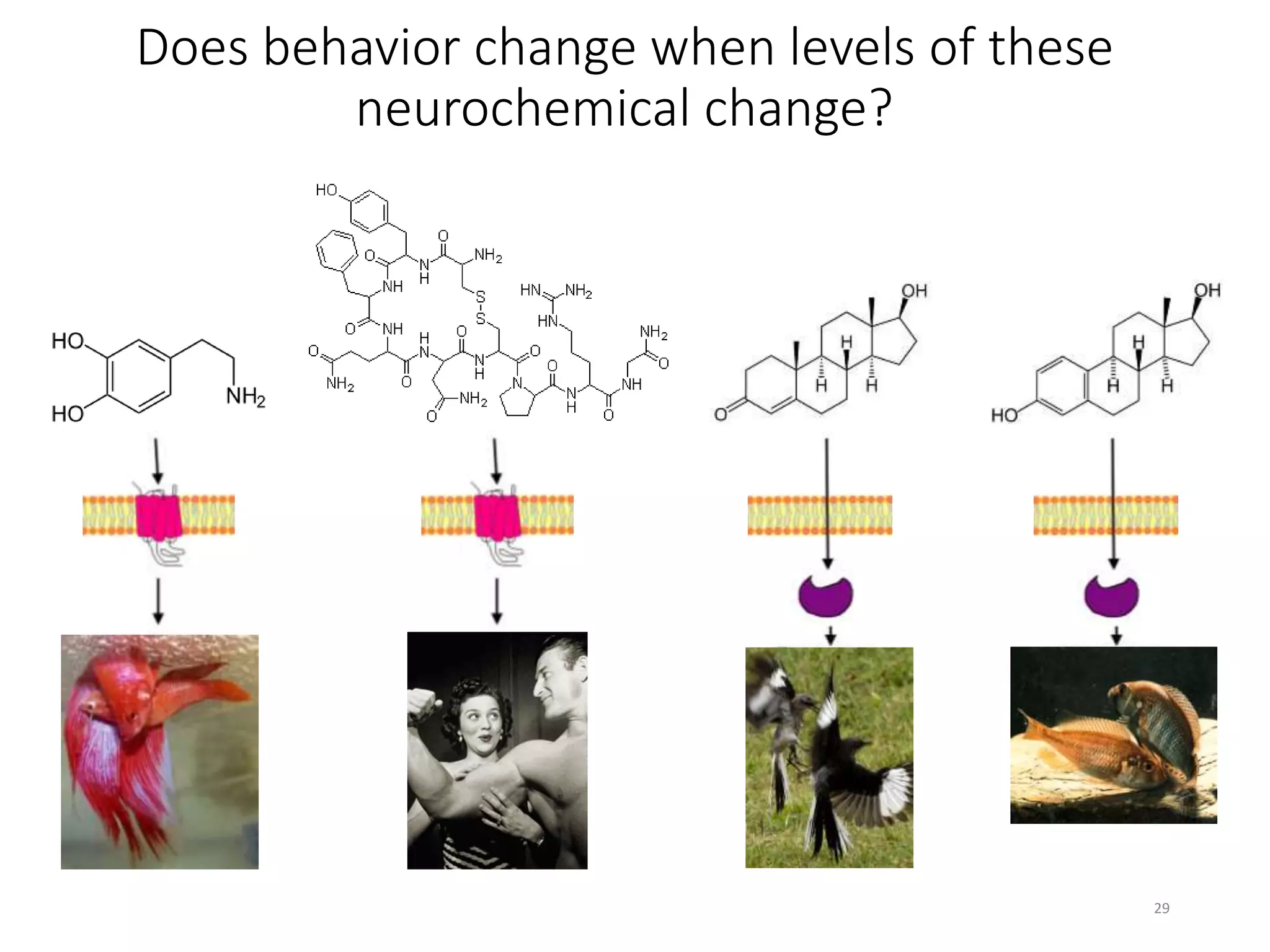
Does behavior change when levels of these
neurochemical change?
• V1aR, OTR, D1, D2
• ER, PR, AR
Dopamine
Arginine Vasopressin
Testosterone Estradiol
29
This experiment integrates
ecology, endocrinology, and molecular biology
1. Catch fish in Shoal Creek 2. Collect blood 3. Dissect brains
4. Quantify hormone levels 5. Extract RNA 6. Quantify gene expression
Oldfield et al. 2013 30
11-ketotestosterone is higher in haremic males
Monogamous Haremic
High testosterone often
leads to:
• Decreased paternal
care
• Increased Aggression
Oldfield et al. 2013 31
Vasopressin Receptor activity is higher in the
hypothalamus of haremic males
Monogamous Haremic
High vasopresin receptor is often
associated with
• Increased aggression
• Increased territory size
• Important for social behavior
Oldfield et al. 2013
32
Diversity in social behavior is a result of quantitative
differences in neuromolecular activity
Fish
Birds
Mammals
33
Links to the four papers discussed
• O’Connell LA, Hofmann HA (2011a) The vertebrate mesolimbic
reward system and social behavior network: A comparative synthesis.
Journal of Comparative Neurology. 519:3599-639. PDF
• O'Connell LA, Hofmann, HA (2011b) Genes, hormones, and circuits:
An integrative approach to study the evolution of social behavior.
Frontiers in Neuroendocrinology 32:320–335. PDF
• O'Connell LA & Hofmann HA (2012) Evolution of a Vertebrate Social
Decision-Making Network. Science 336, 1154-1157. PDF
• Oldfield RG, Harris RM, Hendrickson DA, Hofmann HA (2013)
Arginine Vasotocin and Androgen Pathways are Associated with
Mating System Variation in North American Cichlid Fishes. Hormones
and Behavior 64, 44–52. PDF
34
Acknowledgements
Hans Hofmann Lab
The University of Texas at Austin
rayna.harris@utexas.edu
raynamharris@github.io
35

Evolution of Social Brains

  • 1.
    Evolution of SocialBrains Rayna M. Harris Graduate Researcher, Hans Hofmann’s Lab rayna.harris@utexas.edu raynamharris@github.io Comparative Animal Physiology (BIO 361T) April 7, 2016 1
  • 2.
  • 3.
    Brains are awesomelydiverse and complex! 3
  • 4.
  • 5.
    Evolution of SocialBrains • Bird, frog, fish, reptile, and mammal brains • Brain regions and molecules that regulate aggressive and mating behavior • Differences in mating systems 5
  • 6.
    “Endless forms mostbeautiful and wonderful” Fish Amphibians Reptiles Birds Mammals 6
  • 7.
    Animal brains arevery diverse as well! Amphibians Reptiles Birds Mammals Fish 7
  • 8.
    Ecology can shapebrain size! Somatosensory (touch) cortex Auditory (echolocation) cortex Visual cortex “…the fittest succeed in adapting themselves best to their environment.” 8
  • 9.
    What else couldgive rise to the similarities and differences in animal brains? 9
  • 10.
    Hox genes controlbody development in all animals! Hox Genes Developing embryos Adults Rodents Nobel Prize: 1995: Lewis, Nüsslein-Volhard, and Wieschaus Flies Fish 10
  • 11.
    Do similar genescontrol brain development? Amphibians Reptiles Birds Mammals Fish O'Connell & Hofmann, 2011 & 2012 11
  • 12.
    Yes, similar genescontrol brain development! Amphibians Reptiles Birds Mammals Fish O'Connell & Hofmann, 2011a & 2012 12
  • 13.
    What decisions doanimals (including humans) make? 13
  • 14.
    Some categories ofdecision making Find foodFind mates Find shelter Care for family Fight competitors 14
  • 15.
    All animals facechallengesand opportunities O'Connell & Hofmann, 2011b 15
  • 16.
    Some brain regionsregulate social behaviors Dopaminergic Reward System Social Behavior NetworkSocial Decision Making Network O'Connell & Hofmann, 2011a & 2012 16
  • 17.
    Do the samebrain regions control social behavior in all animals? Fish Amphibians Reptiles Birds Mammals O'Connell & Hofmann, 2011a & 2012 17
  • 18.
    Yes, the samebrain regions control behavior! Mesolimbic Reward System Newman’s Social Behavior Network Shared by both circuits Fish O'Connell & Hofmann, 2011a & 2012 18
  • 19.
    Do the samemolecules control behavior in all animals? Signaling Molecules Receptors O'Connell & Hofmann, 2011a & 2012 19
  • 20.
    Some molecules areknown to influence animal social behavior Dopamine Vasopressin Testosterone Estradiol 20
  • 21.
    How conserved isgene activity in the same brain regions? O'Connell & Hofmann 2012 Androgen receptor Estrogen receptor Progesterone receptor Dopamine receptor Vasopressin receptor Oxytocin receptor Vasopressin Oxytocin Tyrosine hydroxylase 21 • Which molecules in the striatum are present in all species examined? • Which molecules in the striatum are absent in all species examined? • Which two pairs of species are more similar to each other than to the rest?
  • 22.
    How conserved isgene activity in the same brain regions? O'Connell & Hofmann 2012 22 Androgen receptor Estrogen receptor Progesterone receptor Dopamine receptor Vasopressin receptor Oxytocin receptor Vasopressin Oxytocin Tyrosine hydroxylase • What are the most striking similarities and differences in gene expression between the striatum and the proptic area
  • 23.
    How conserved isgene activity in the same brain regions? Where signals are received is well conserved Where signals are produced is less conserved. 12 brain regions * 10 genes = 120 rows O'Connell & Hofmann 2012 23
  • 24.
    Social animals usesimilar neuromolecular networks to generate similar behaviors Fish Amphibians Reptiles Birds Mammals 24
  • 25.
    If all brainsare made of the same parts, how what gives rise to diversity in behavior? 25
  • 26.
    Differences in decisionmaking Find foodFind mates Find shelter Care for family Fight competitors 26
  • 27.
    How does diversityin mating system arise? Neuromolecular networks that regulates mating system Monogamy Polygamy Oldfield et al. 2013 27
  • 28.
    Herichthys cichlid fishes Herichthyscyanoguttatus Texas Cichlid Herichthys minckleyi Cuatro Cienegas Cichlid Oldfield et al. 2013 28
  • 29.
    Does behavior changewhen levels of these neurochemical change? • V1aR, OTR, D1, D2 • ER, PR, AR Dopamine Arginine Vasopressin Testosterone Estradiol 29
  • 30.
    This experiment integrates ecology,endocrinology, and molecular biology 1. Catch fish in Shoal Creek 2. Collect blood 3. Dissect brains 4. Quantify hormone levels 5. Extract RNA 6. Quantify gene expression Oldfield et al. 2013 30
  • 31.
    11-ketotestosterone is higherin haremic males Monogamous Haremic High testosterone often leads to: • Decreased paternal care • Increased Aggression Oldfield et al. 2013 31
  • 32.
    Vasopressin Receptor activityis higher in the hypothalamus of haremic males Monogamous Haremic High vasopresin receptor is often associated with • Increased aggression • Increased territory size • Important for social behavior Oldfield et al. 2013 32
  • 33.
    Diversity in socialbehavior is a result of quantitative differences in neuromolecular activity Fish Birds Mammals 33
  • 34.
    Links to thefour papers discussed • O’Connell LA, Hofmann HA (2011a) The vertebrate mesolimbic reward system and social behavior network: A comparative synthesis. Journal of Comparative Neurology. 519:3599-639. PDF • O'Connell LA, Hofmann, HA (2011b) Genes, hormones, and circuits: An integrative approach to study the evolution of social behavior. Frontiers in Neuroendocrinology 32:320–335. PDF • O'Connell LA & Hofmann HA (2012) Evolution of a Vertebrate Social Decision-Making Network. Science 336, 1154-1157. PDF • Oldfield RG, Harris RM, Hendrickson DA, Hofmann HA (2013) Arginine Vasotocin and Androgen Pathways are Associated with Mating System Variation in North American Cichlid Fishes. Hormones and Behavior 64, 44–52. PDF 34
  • 35.
    Acknowledgements Hans Hofmann Lab TheUniversity of Texas at Austin rayna.harris@utexas.edu raynamharris@github.io 35