

NUTRITION
&
COGNITION
“Exploring fuel for smarter future”
Speaker: Dr Arnab Nandy, MB;BS
Post-graduate trainee
Moderator: Dr Rakesh Mondal, MD
Professor
From, Department of Pediatrics
North Bengal Medical College & Hospital,
Siliguri, Darjeeling
Introduction
– What is nutrition?
It is the process of providing or obtaining the food necessary for health and
growth of an individual.
– What is Nutrient?
A nutrient is a substance that serves the purpose to survive, grow, and
reproduce.
– What is cognition?
It is higher brain function or process of acquiring knowledge and understanding
through thought, experience, and the senses.
• What is the role of nutrition to
improve cognitive functionary?
o How are they interlinked?
Nutritional perspective of brain
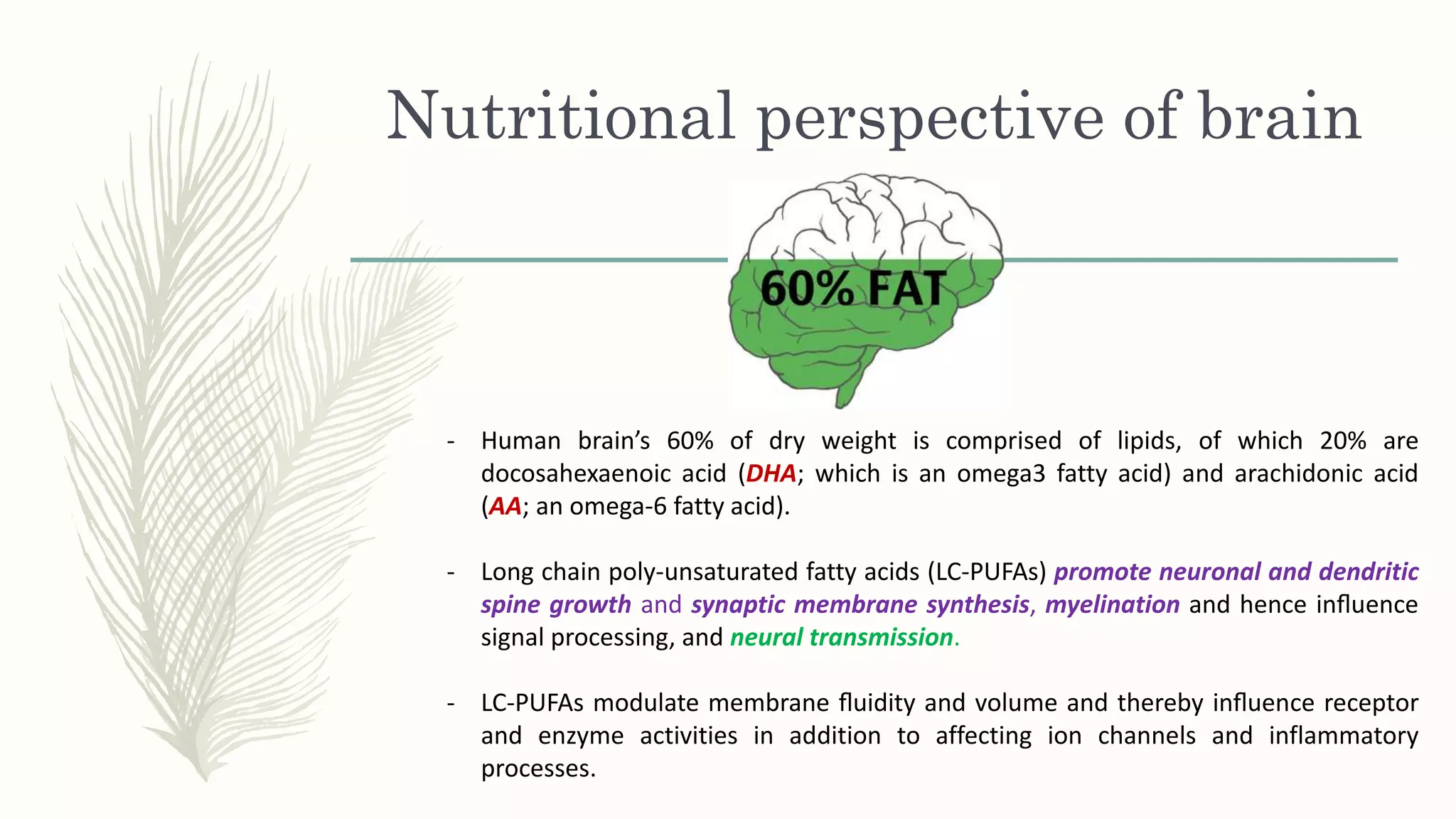
- Human brain’s 60% of dry weight is comprised of lipids, of which 20% are
docosahexaenoic acid (DHA; which is an omega3 fatty acid) and arachidonic acid
(AA; an omega-6 fatty acid).
- Long chain poly-unsaturated fatty acids (LC-PUFAs) promote neuronal and dendritic
spine growth and synaptic membrane synthesis, myelination and hence influence
signal processing, and neural transmission.
- LC-PUFAs modulate membrane fluidity and volume and thereby influence receptor
and enzyme activities in addition to affecting ion channels and inflammatory
processes.
- Dietary amino acids acts as important source of different
neurotransmitters in brain.
- Carbohydrate might be major source of energy for brain but it
utilise fatty acid in energy deprived status. Saccharides
influences reaction time, verbal and figural fluency, affects
attention span and declarative memory. Energy from lactose
important for developing human brain.
- Glycogen reported to have crucial for communication activity and
maintaining memory function, providing necessary energy at a
subcellular level.
- Folic acid and choline affects neural stem cell proliferation and
differentiation, decreases apoptosis, alters DNA biosynthesis, and
has an important role in homocysteine and S-adenosylmethionine
biosynthesis
Wainwright PE, Colombo J. Nutrition and the development of cognitive functions: interpretation of behavioral
studies in animals and human infants. The American journal of clinical nutrition. 2006;84(5):961-70.
- Vitamin B12 has a role in axon myelination. It also alter the
synthesis of different cytokines, growth factors and
oxidative energy metabolites such as lactic acid.
- Zinc plays a role in neurogenesis, maturation, and
migration of neurons and in synapse formation. It is found
in high concentrations in synaptic vesicles of hippocampal
neurons (which are centrally involved in learning and
memory), and seems to modulate some neurotransmitters
including glutamate and gamma- aminobutyric acid (GABA)
receptors.
- Iodine being a component of thyroid hormones, it is
indirectly linked to neurodevelopment, neuronal cell
differentiation, maturation and migration, myelination,
neurotransmission, and synaptic plasticity.
- Anemia due to iron deficiency reported to cause
psychomotor retardation as it acts as cofactor for different
brain enzymes.
Nurliyana AR, Shariff ZM, Taib MN, Gan WY, Tan KA. Early nutrition, growth and cognitive development of infants from birth to 2 years in Malaysia: a study protocol. BMC pediatrics. 2016 ;16(1):160.
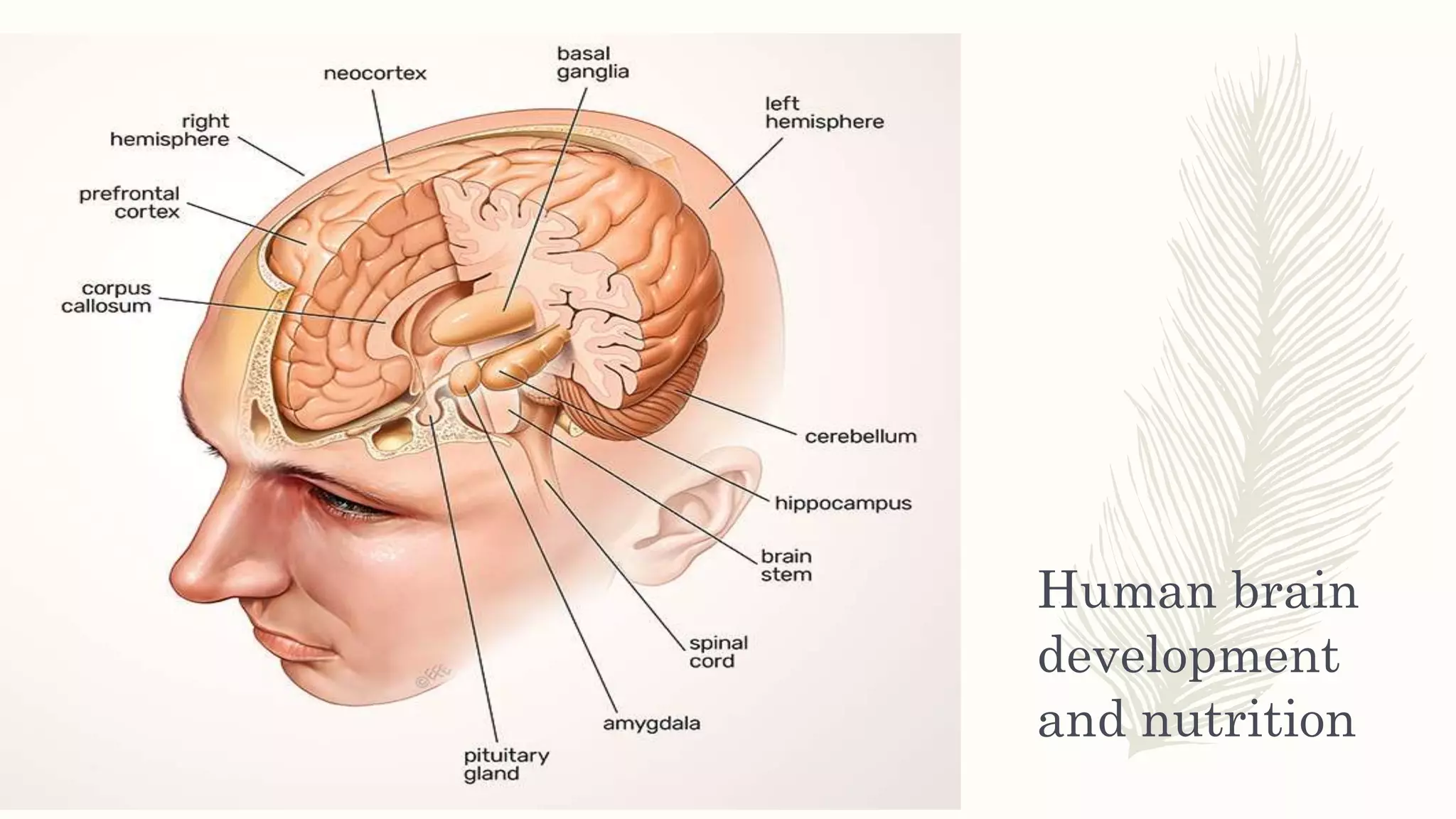
Human brain
development
and nutrition
 Nutrition in Early days of life and development of human brain:
Anterior-
posterior and
dorsal-ventral
axes of the neural
tube develops
• 5 weeks IU
The cortical
plate and some
inter-neuronal
connections
• 8-16 weeks IU
Neurons in the
cortical plate die
and replaced by
mature cortical
neurons and
neuronal connection
• 24weeks IU to birth
Peak synapse
development
• Post-
conceptional
34 weeks to
2 years
 By 5-6 years of age,
synaptic density reaches
adult level.
 Myelination in some part
of brain, frontal lobe
continues in adolescence.
 What is Critical period for developing brain ?
A sensitive period tends to reflect a broader timeframe
and during such a developmental period the brain is more
sensitive to specific interventions.
 Why do we confront such scenario?
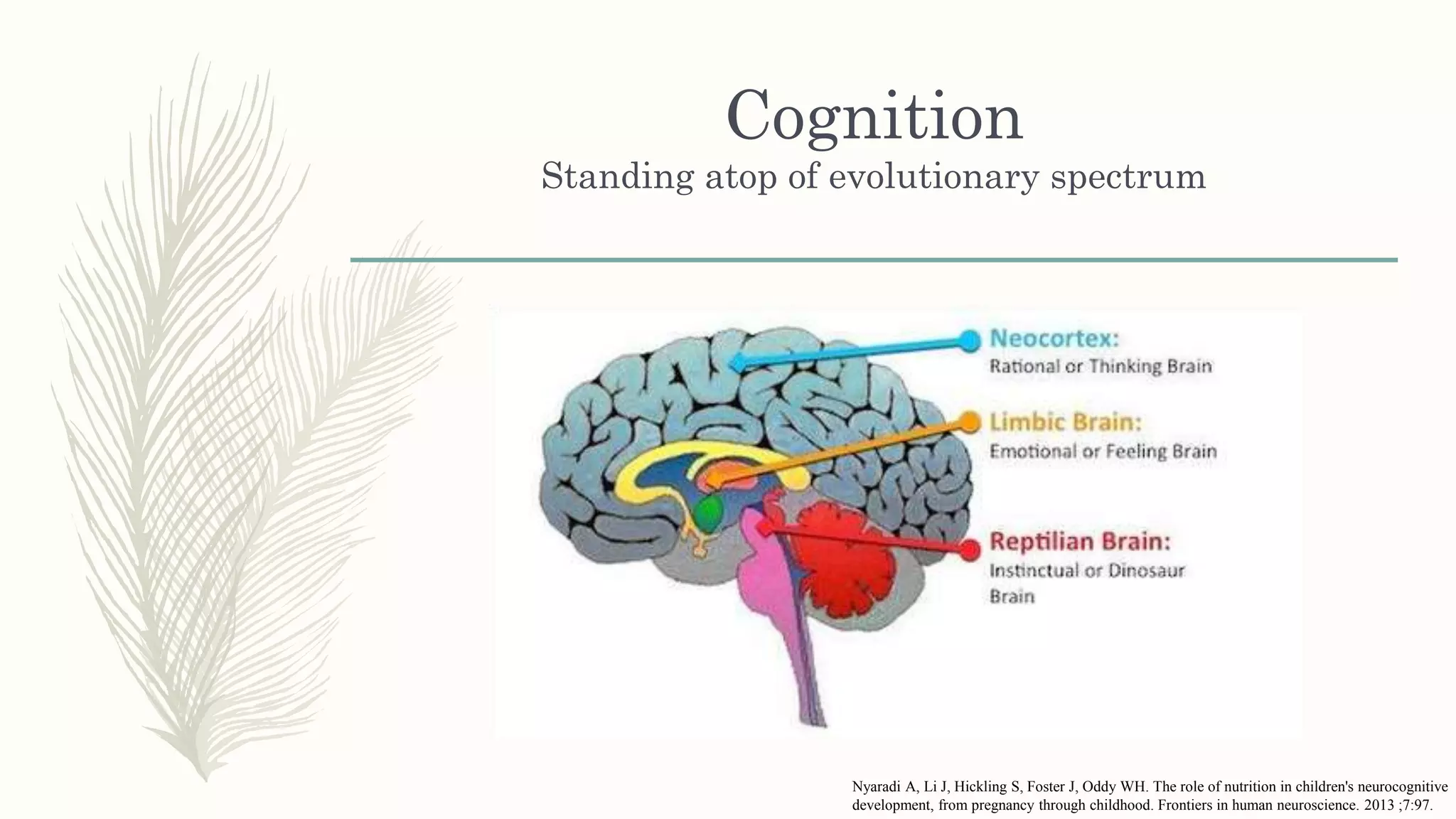
Cognition
Standing atop of evolutionary spectrum
Nyaradi A, Li J, Hickling S, Foster J, Oddy WH. The role of nutrition in children's neurocognitive
development, from pregnancy through childhood. Frontiers in human neuroscience. 2013 ;7:97.
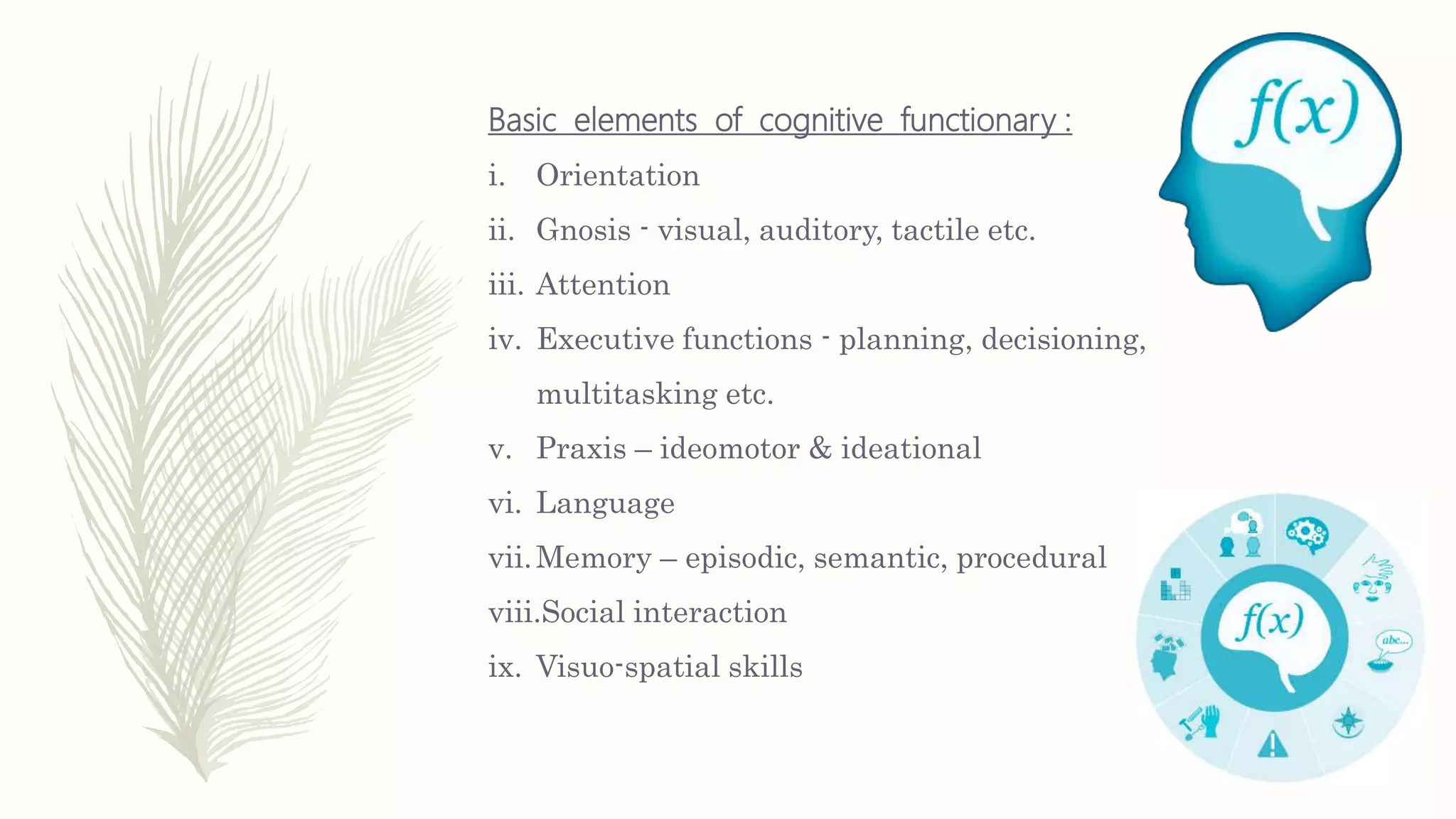
Basic elements of cognitive functionary :
i. Orientation
ii. Gnosis - visual, auditory, tactile etc.
iii. Attention
iv. Executive functions - planning, decisioning,
multitasking etc.
v. Praxis – ideomotor & ideational
vi. Language
vii.Memory – episodic, semantic, procedural
viii.Social interaction
ix. Visuo-spatial skills
Physiologic layout of smartness:
- The processing of information in the human brain takes
place through the cognitive system.
- The reception, selection, elaboration, recovery and
transformation of the information that reaches the
brain happen through this system.
- Cognitive process can operate by working its most basic
units (cognitive functions) or its more elaborate
processes (thinking skills).
Breaking the barrier of neuronal circuit:
NOTE:
glutamate (excitatory)
------ gamma amino butyric acid (inhibitory)
dopamine (excitatory)
VTA – Ventral tegmental area
SNc – Striato nigrum, pars compacta
Impact of nutrition on cognition
Cognitive system can be affected by nutrition in two basic ways :
A. Adequacy of macro and
micro-nutrients which act
as building blocks.
B. Modification of gene
expression through epigenetic
mechanism.
A. Nutrients as structural and functional components of
cognitive system –
– Formation of different areas associated to cognitive system in
brain and proper integrity of those areas are related to
appropriate nutrition.
– Nutrients provide building blocks that play a critical role in cell
proliferation, DNA synthesis, neurotransmitter and hormone
metabolism, and are important constituents of enzyme systems
in brain.
– Brain development is faster in the early years of life compared
to the rest of the body which may make development of
cognitive system vulnerable to nutrient deficiencies in diet.
 Eating a healthy, balanced diet is key for optimal cognitive
development:
Neither insufficiency nor excess of nutrient is preferred.
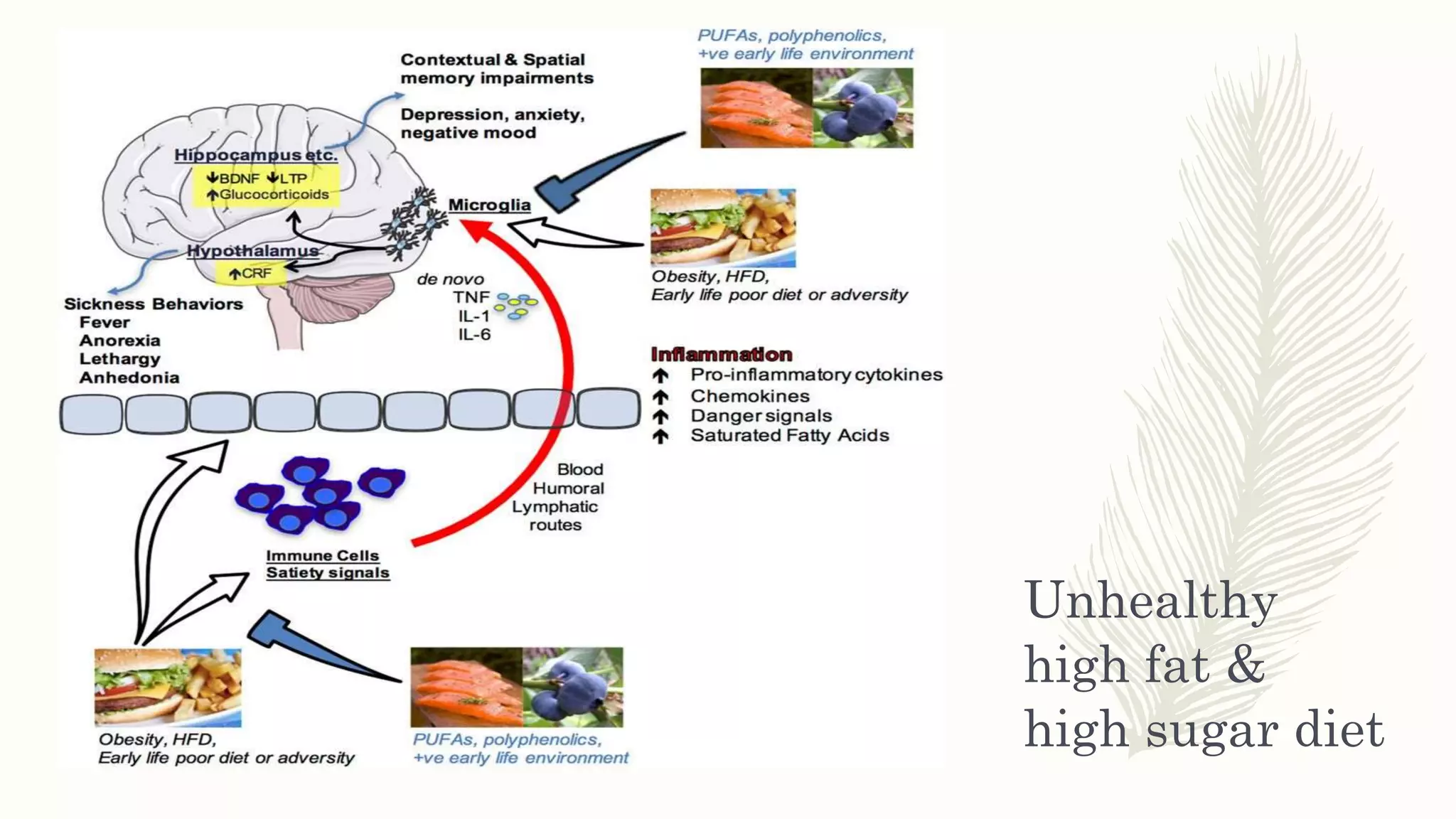
 Why high fat and high sugar diet are discouraged?
High fat and high sugar foods are highly rewarding
↓
But excessive consumption leads to enduring alterations in brain regions
involved in learning, memory, and reward
↓
The neuroplasticity mechanisms that under pin cognitive and behaviour
alterations are seen
↓
Due to neuronal alterations in the hippocampus and prefrontal cortex (PFC),
what encode for memories and controlling behaviour
(as well as in the amygdala and nucleus accumbens involved in processing
and seeking rewards)
Unhealthy
high fat &
high sugar diet
Normal feeding and cognitive development interaction gets
distorted with high fat & high sugar diet
Morley R, Lucas A. Nutrition and cognitive development. British medical bulletin. 1997;53(1):123-34.
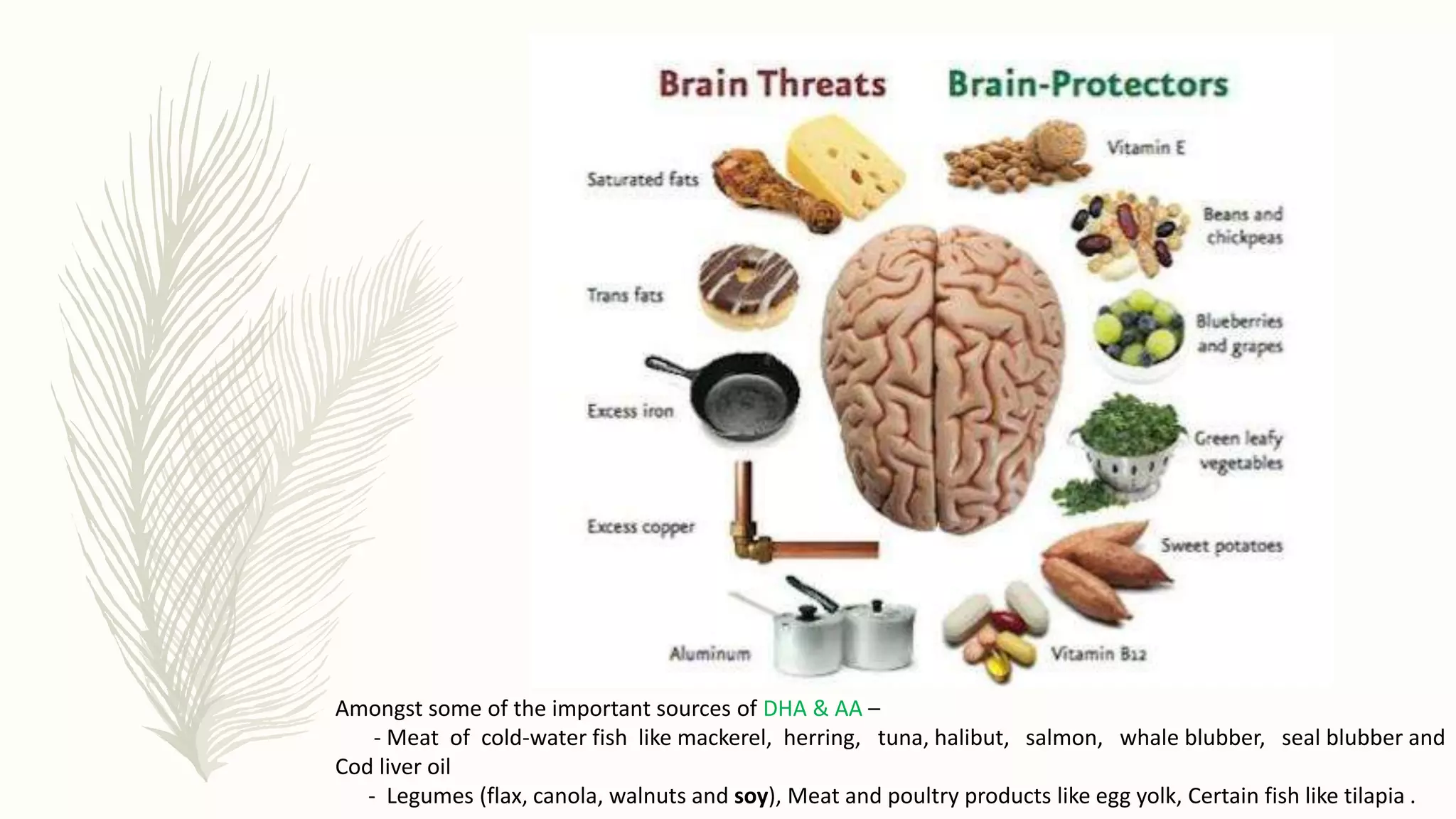
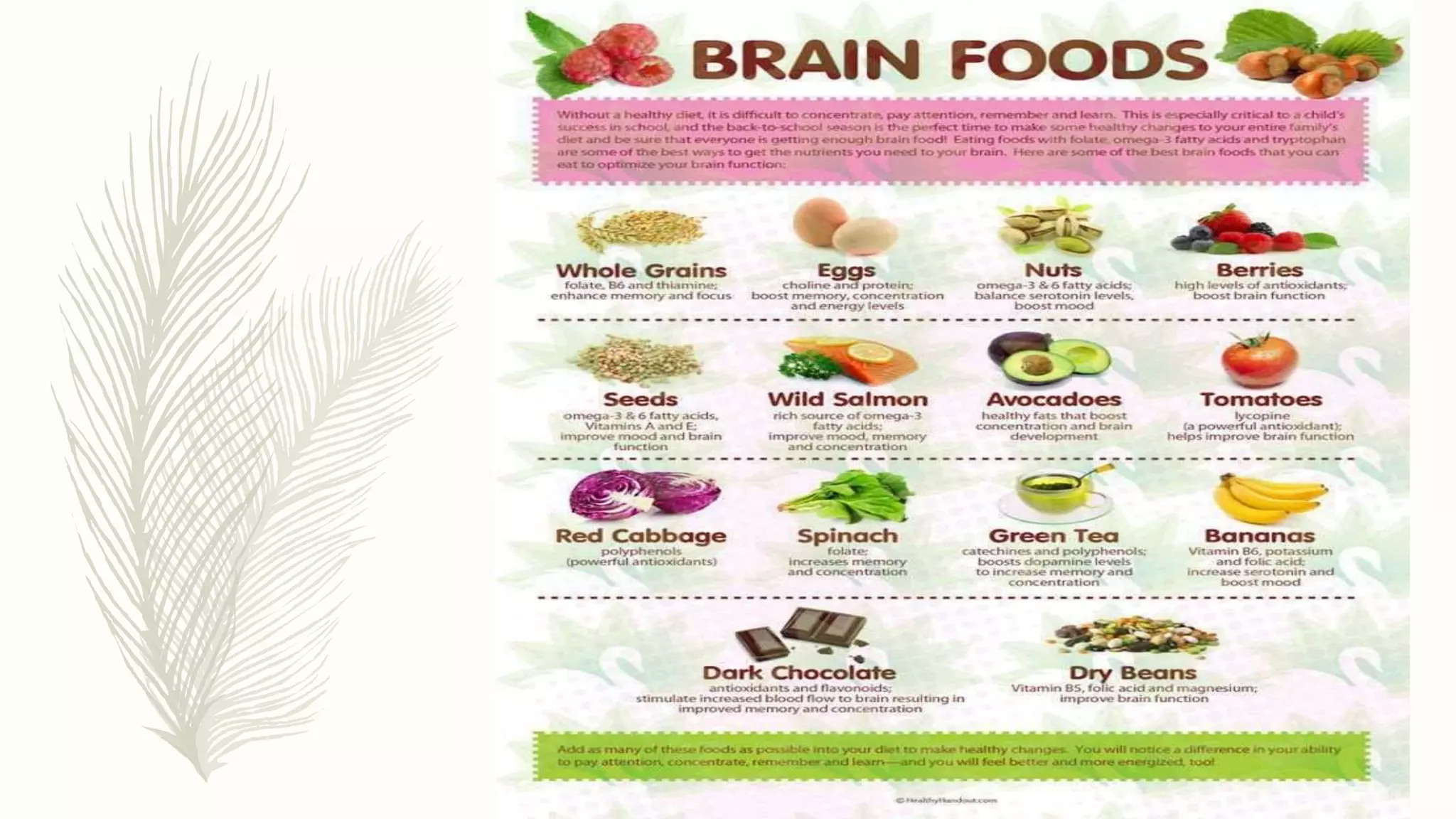
Amongst some of the important sources of DHA & AA –
- Meat of cold-water fish like mackerel, herring, tuna, halibut, salmon, whale blubber, seal blubber and
Cod liver oil
- Legumes (flax, canola, walnuts and soy), Meat and poultry products like egg yolk, Certain fish like tilapia .
B. Nutrition acts as environmental factor to affect epigenetic
expression –
- Individual brain development follows a genetic program which is
influenced by environmental factors including nutrition
- Recently in human studies that nutrition is one of the most salient
environmental factors,
- Environmental influences may modify gene expression through
epigenetic mechanisms, whereby gene function is altered through the
processes of DNA methylation, histone modification and the
modulating effect of non-coding RNAs, without the alteration of the
gene sequence per se.
- These epigenetic factors can cause long lasting or even heritable
changes in biological programs.
An example by: Richard Wrangham
primatologist and biological anthropologist
Havard University
- Early humans used fire to overcome their energy need. They
cognise that heat helps to free up energy by softening foods,
denaturing their proteins and breaking down toxins.
- That is why cooking can explain human brain size as well as
small canine teeth and small guts in comparison to other
primates.
- Cooking an cognisable action of brain and food is the
environmental factor.
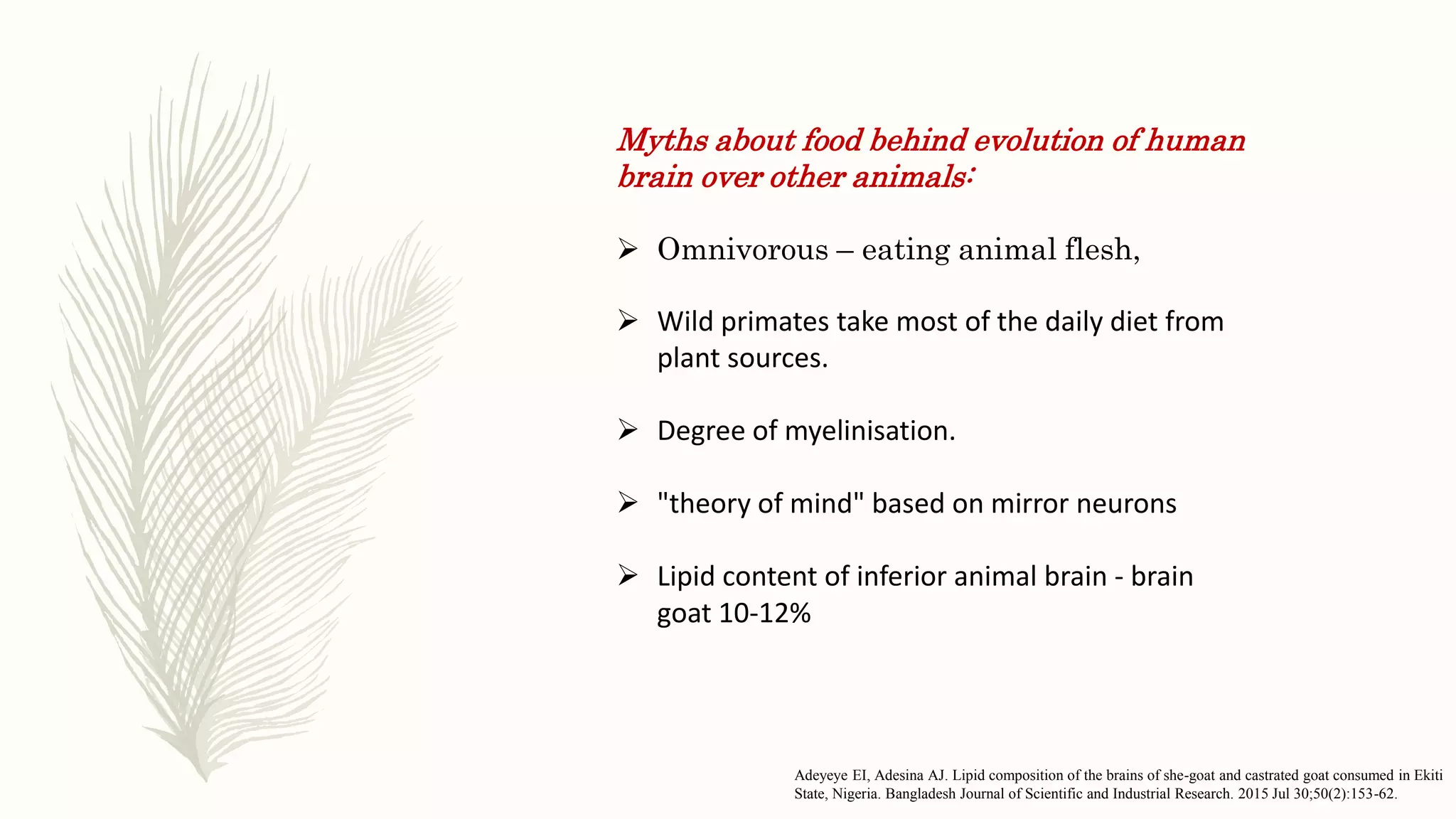
Myths about food behind evolution of human
brain over other animals:
 Omnivorous – eating animal flesh,
 Wild primates take most of the daily diet from
plant sources.
 Degree of myelinisation.
 "theory of mind" based on mirror neurons
 Lipid content of inferior animal brain - brain
goat 10-12%
Adeyeye EI, Adesina AJ. Lipid composition of the brains of she-goat and castrated goat consumed in Ekiti
State, Nigeria. Bangladesh Journal of Scientific and Industrial Research. 2015 Jul 30;50(2):153-62.
Thank you

Nutrition and cognition

  • 1.
  • 2.
    Speaker: Dr ArnabNandy, MB;BS Post-graduate trainee Moderator: Dr Rakesh Mondal, MD Professor From, Department of Pediatrics North Bengal Medical College & Hospital, Siliguri, Darjeeling
  • 3.
    Introduction – What isnutrition? It is the process of providing or obtaining the food necessary for health and growth of an individual. – What is Nutrient? A nutrient is a substance that serves the purpose to survive, grow, and reproduce. – What is cognition? It is higher brain function or process of acquiring knowledge and understanding through thought, experience, and the senses.
  • 4.
    • What isthe role of nutrition to improve cognitive functionary? o How are they interlinked?
  • 5.
    Nutritional perspective ofbrain - Human brain’s 60% of dry weight is comprised of lipids, of which 20% are docosahexaenoic acid (DHA; which is an omega3 fatty acid) and arachidonic acid (AA; an omega-6 fatty acid). - Long chain poly-unsaturated fatty acids (LC-PUFAs) promote neuronal and dendritic spine growth and synaptic membrane synthesis, myelination and hence influence signal processing, and neural transmission. - LC-PUFAs modulate membrane fluidity and volume and thereby influence receptor and enzyme activities in addition to affecting ion channels and inflammatory processes.
  • 6.
    - Dietary aminoacids acts as important source of different neurotransmitters in brain. - Carbohydrate might be major source of energy for brain but it utilise fatty acid in energy deprived status. Saccharides influences reaction time, verbal and figural fluency, affects attention span and declarative memory. Energy from lactose important for developing human brain. - Glycogen reported to have crucial for communication activity and maintaining memory function, providing necessary energy at a subcellular level. - Folic acid and choline affects neural stem cell proliferation and differentiation, decreases apoptosis, alters DNA biosynthesis, and has an important role in homocysteine and S-adenosylmethionine biosynthesis Wainwright PE, Colombo J. Nutrition and the development of cognitive functions: interpretation of behavioral studies in animals and human infants. The American journal of clinical nutrition. 2006;84(5):961-70.
  • 7.
    - Vitamin B12has a role in axon myelination. It also alter the synthesis of different cytokines, growth factors and oxidative energy metabolites such as lactic acid. - Zinc plays a role in neurogenesis, maturation, and migration of neurons and in synapse formation. It is found in high concentrations in synaptic vesicles of hippocampal neurons (which are centrally involved in learning and memory), and seems to modulate some neurotransmitters including glutamate and gamma- aminobutyric acid (GABA) receptors. - Iodine being a component of thyroid hormones, it is indirectly linked to neurodevelopment, neuronal cell differentiation, maturation and migration, myelination, neurotransmission, and synaptic plasticity. - Anemia due to iron deficiency reported to cause psychomotor retardation as it acts as cofactor for different brain enzymes. Nurliyana AR, Shariff ZM, Taib MN, Gan WY, Tan KA. Early nutrition, growth and cognitive development of infants from birth to 2 years in Malaysia: a study protocol. BMC pediatrics. 2016 ;16(1):160.
  • 8.
  • 9.
     Nutrition inEarly days of life and development of human brain: Anterior- posterior and dorsal-ventral axes of the neural tube develops • 5 weeks IU The cortical plate and some inter-neuronal connections • 8-16 weeks IU Neurons in the cortical plate die and replaced by mature cortical neurons and neuronal connection • 24weeks IU to birth Peak synapse development • Post- conceptional 34 weeks to 2 years  By 5-6 years of age, synaptic density reaches adult level.  Myelination in some part of brain, frontal lobe continues in adolescence.
  • 10.
     What isCritical period for developing brain ? A sensitive period tends to reflect a broader timeframe and during such a developmental period the brain is more sensitive to specific interventions.  Why do we confront such scenario?
  • 11.
    Cognition Standing atop ofevolutionary spectrum Nyaradi A, Li J, Hickling S, Foster J, Oddy WH. The role of nutrition in children's neurocognitive development, from pregnancy through childhood. Frontiers in human neuroscience. 2013 ;7:97.
  • 12.
    Basic elements ofcognitive functionary : i. Orientation ii. Gnosis - visual, auditory, tactile etc. iii. Attention iv. Executive functions - planning, decisioning, multitasking etc. v. Praxis – ideomotor & ideational vi. Language vii.Memory – episodic, semantic, procedural viii.Social interaction ix. Visuo-spatial skills
  • 13.
    Physiologic layout ofsmartness: - The processing of information in the human brain takes place through the cognitive system. - The reception, selection, elaboration, recovery and transformation of the information that reaches the brain happen through this system. - Cognitive process can operate by working its most basic units (cognitive functions) or its more elaborate processes (thinking skills).
  • 14.
    Breaking the barrierof neuronal circuit: NOTE: glutamate (excitatory) ------ gamma amino butyric acid (inhibitory) dopamine (excitatory) VTA – Ventral tegmental area SNc – Striato nigrum, pars compacta
  • 15.
    Impact of nutritionon cognition Cognitive system can be affected by nutrition in two basic ways : A. Adequacy of macro and micro-nutrients which act as building blocks. B. Modification of gene expression through epigenetic mechanism.
  • 16.
    A. Nutrients asstructural and functional components of cognitive system – – Formation of different areas associated to cognitive system in brain and proper integrity of those areas are related to appropriate nutrition. – Nutrients provide building blocks that play a critical role in cell proliferation, DNA synthesis, neurotransmitter and hormone metabolism, and are important constituents of enzyme systems in brain. – Brain development is faster in the early years of life compared to the rest of the body which may make development of cognitive system vulnerable to nutrient deficiencies in diet.
  • 17.
     Eating ahealthy, balanced diet is key for optimal cognitive development: Neither insufficiency nor excess of nutrient is preferred.  Why high fat and high sugar diet are discouraged? High fat and high sugar foods are highly rewarding ↓ But excessive consumption leads to enduring alterations in brain regions involved in learning, memory, and reward ↓ The neuroplasticity mechanisms that under pin cognitive and behaviour alterations are seen ↓ Due to neuronal alterations in the hippocampus and prefrontal cortex (PFC), what encode for memories and controlling behaviour (as well as in the amygdala and nucleus accumbens involved in processing and seeking rewards)
  • 18.
  • 19.
    Normal feeding andcognitive development interaction gets distorted with high fat & high sugar diet Morley R, Lucas A. Nutrition and cognitive development. British medical bulletin. 1997;53(1):123-34.
  • 20.
    Amongst some ofthe important sources of DHA & AA – - Meat of cold-water fish like mackerel, herring, tuna, halibut, salmon, whale blubber, seal blubber and Cod liver oil - Legumes (flax, canola, walnuts and soy), Meat and poultry products like egg yolk, Certain fish like tilapia .
  • 22.
    B. Nutrition actsas environmental factor to affect epigenetic expression – - Individual brain development follows a genetic program which is influenced by environmental factors including nutrition - Recently in human studies that nutrition is one of the most salient environmental factors, - Environmental influences may modify gene expression through epigenetic mechanisms, whereby gene function is altered through the processes of DNA methylation, histone modification and the modulating effect of non-coding RNAs, without the alteration of the gene sequence per se. - These epigenetic factors can cause long lasting or even heritable changes in biological programs.
  • 23.
    An example by:Richard Wrangham primatologist and biological anthropologist Havard University - Early humans used fire to overcome their energy need. They cognise that heat helps to free up energy by softening foods, denaturing their proteins and breaking down toxins. - That is why cooking can explain human brain size as well as small canine teeth and small guts in comparison to other primates. - Cooking an cognisable action of brain and food is the environmental factor.
  • 24.
    Myths about foodbehind evolution of human brain over other animals:  Omnivorous – eating animal flesh,  Wild primates take most of the daily diet from plant sources.  Degree of myelinisation.  "theory of mind" based on mirror neurons  Lipid content of inferior animal brain - brain goat 10-12% Adeyeye EI, Adesina AJ. Lipid composition of the brains of she-goat and castrated goat consumed in Ekiti State, Nigeria. Bangladesh Journal of Scientific and Industrial Research. 2015 Jul 30;50(2):153-62.
  • 25.

Editor's Notes

  • #15 Interplay of Cortical – subcortical neuronal circuit mediating cognitive function in human brain:
  • #20 Binge eating disorder, obesity