Infant and Toddler Environments Interpreting  Play and Exploration
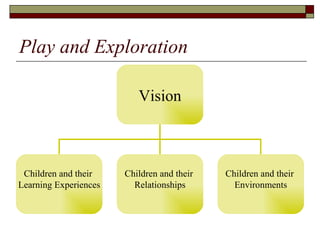
Play and Exploration Vision Children and their  Learning Experiences Children and their  Relationships Children and their  Environments
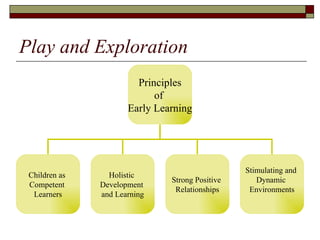
Play and Exploration Principles of  Early Learning Children as  Competent  Learners Holistic  Development  and Learning Strong Positive  Relationships Stimulating and  Dynamic  Environments
“ Respect for the image of the child as rich, strong, and powerful is fundamental in preparing an environment that allows the child to be actively engaged in the process of learning.”  (Fraser, 2006, p103) Children and the Environment
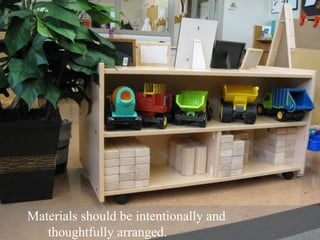
Materials should be intentionally and  thoughtfully arranged.
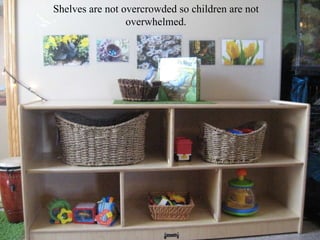
Shelves are not overcrowded so children are not overwhelmed.
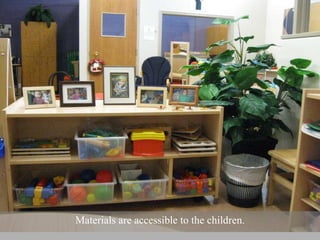
Materials are accessible to the children.
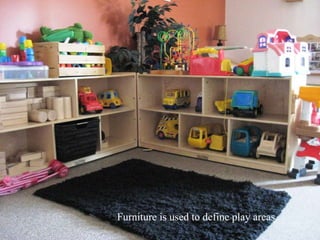
Furniture is used to define play areas.
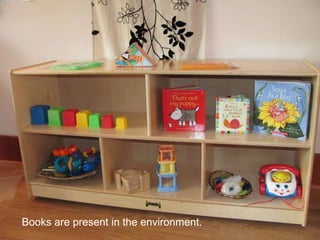
Books are present in the environment.
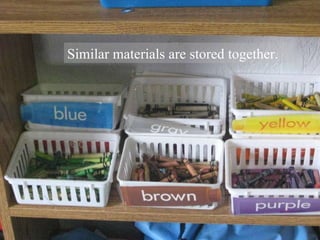
Similar materials are stored together.
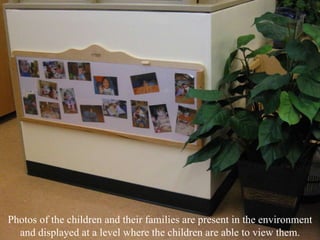
Photos of the children and their families are present in the environment and displayed at a level where the children are able to view them.
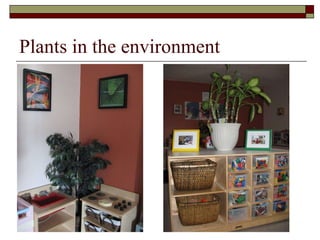
Plants in the environment
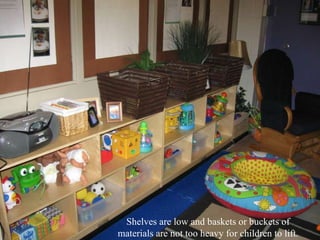
Shelves are low and baskets or buckets of materials are not too heavy for children to lift.
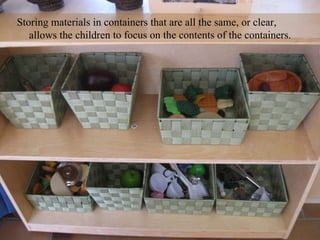
Storing materials in containers that are all the same, or clear,  allows the children to focus on the contents of the containers.
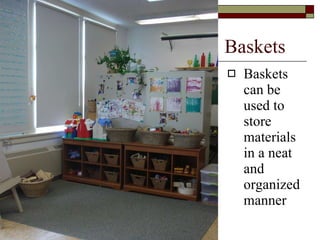
Baskets Baskets can be used to store materials in a neat and organized manner
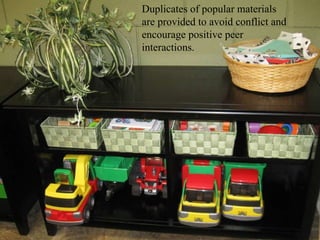
Duplicates of popular materials are provided to avoid conflict and encourage positive peer interactions.
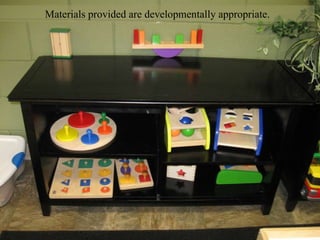
Materials provided are developmentally appropriate.
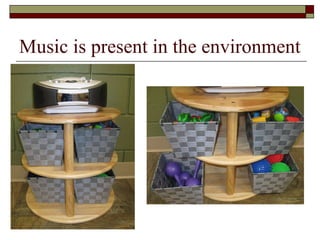
Music is present in the environment
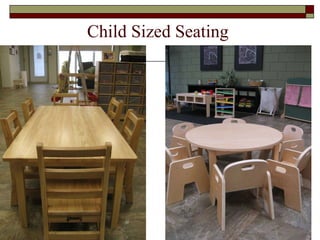
Child Sized Seating
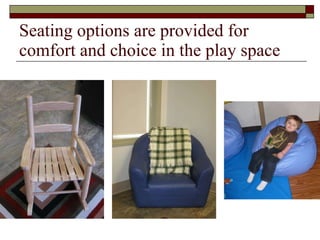
Seating options are provided for comfort and choice in the play space
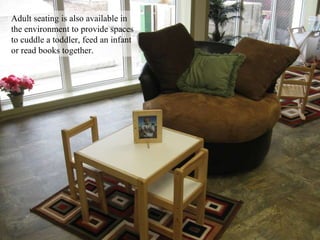
Adult seating is also available in the environment to provide spaces to cuddle a toddler, feed an infant or read books together.
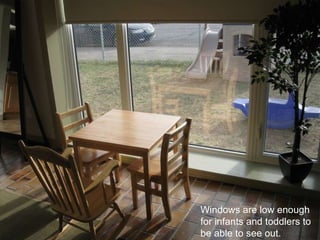
Windows are low enough for infants and toddlers to be able to see out.
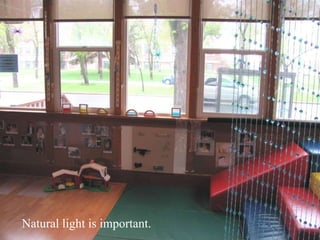
Natural light is important.
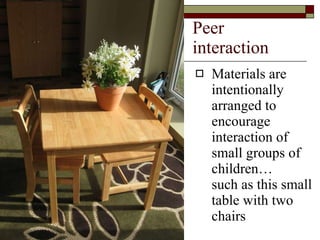
Peer interaction Materials are intentionally arranged to encourage interaction of small groups of children…  such as this small table with two chairs
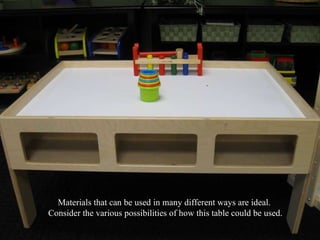
Materials that can be used in many different ways are ideal.  Consider the various possibilities of how this table could be used.
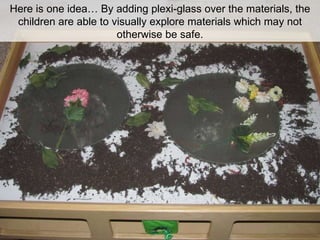
Here is one idea… By adding plexi-glass over the materials, the children are able to visually explore materials which may not otherwise be safe.
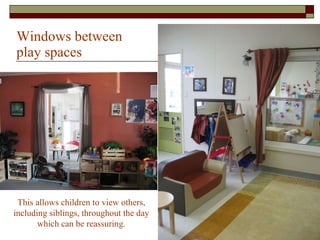
Windows between play spaces  This allows children to view others, including siblings, throughout the day which can be reassuring.
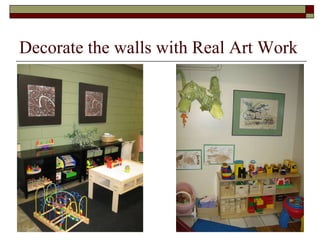
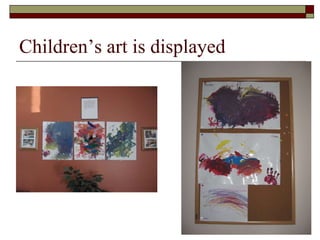
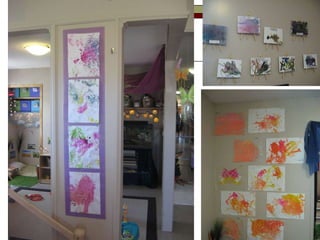
Decorate the walls with Real Art Work
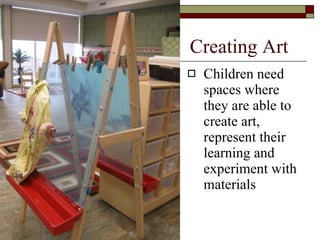
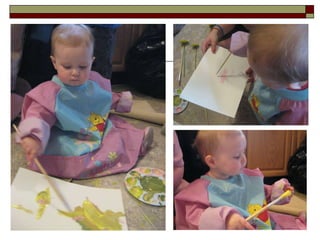
Creating Art Children need spaces where they are able to create art, represent their learning and experiment with materials
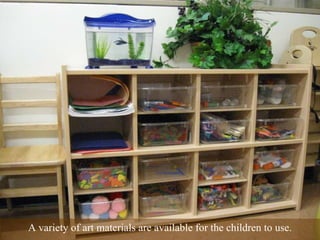
A variety of art materials are available for the children to use.
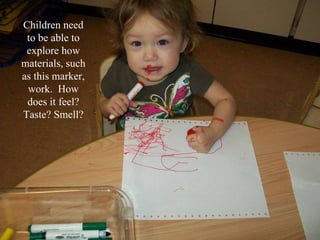
Children need to be able to explore how materials, such as this marker, work.  How does it feel? Taste? Smell?
 
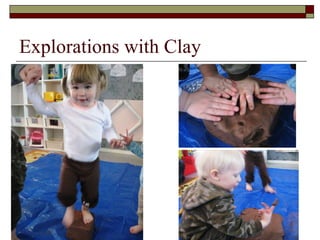
Explorations with Clay
Children’s art is displayed
 
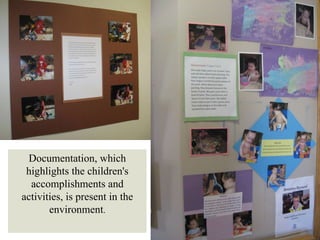
Documentation, which highlights the children's accomplishments and activities, is present in the environment .
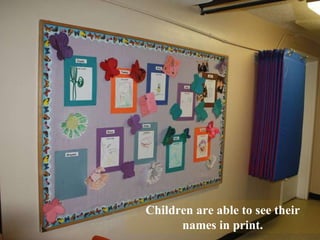
Children are able to see their names in print.
Sinks in the play space allow for easier clean up and supervision.  Child sized sinks allow for greater independence and safety.
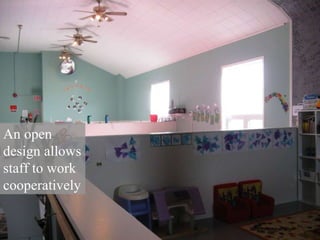
An open design allows staff to work cooperatively
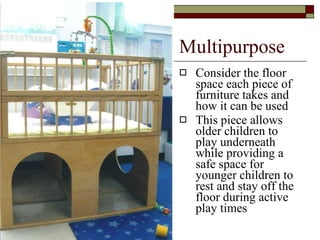
Multipurpose Consider the floor space each piece of furniture takes and how it can be used This piece allows  older children to play underneath while providing a safe space for younger children to rest and stay off the floor during active play times
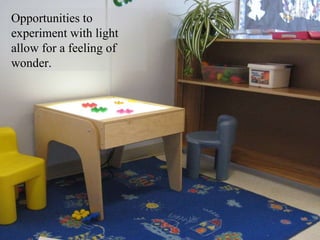
Opportunities to experiment with light allow for a feeling of wonder.
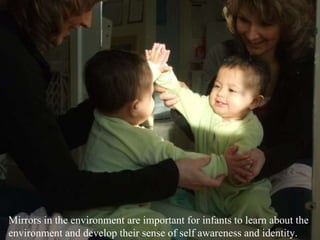
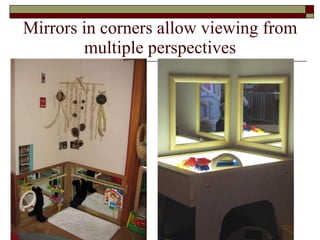
Mirrors in the environment are important for infants to learn about the environment and develop their sense of self awareness and identity.
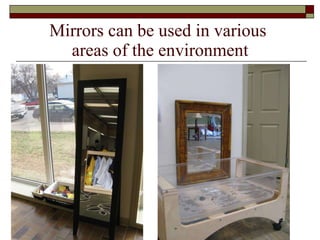
Mirrors can be used in various  areas of the environment
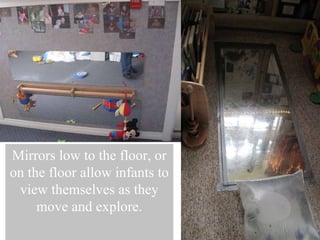
Mirrors low to the floor, or on the floor allow infants to view themselves as they move and explore.
Mirrors in corners allow viewing from multiple perspectives
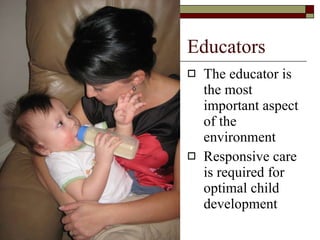
Educators The educator is the most important aspect of the environment Responsive care is required for optimal child development

Early Learning Environments

  • 1.
    Infant and ToddlerEnvironments Interpreting Play and Exploration
  • 2.
    Play and ExplorationVision Children and their Learning Experiences Children and their Relationships Children and their Environments
  • 3.
    Play and ExplorationPrinciples of Early Learning Children as Competent Learners Holistic Development and Learning Strong Positive Relationships Stimulating and Dynamic Environments
  • 4.
    “ Respect forthe image of the child as rich, strong, and powerful is fundamental in preparing an environment that allows the child to be actively engaged in the process of learning.” (Fraser, 2006, p103) Children and the Environment
  • 5.
    Materials should beintentionally and thoughtfully arranged.
  • 6.
    Shelves are notovercrowded so children are not overwhelmed.
  • 7.
    Materials are accessibleto the children.
  • 8.
    Furniture is usedto define play areas.
  • 9.
    Books are presentin the environment.
  • 10.
    Similar materials arestored together.
  • 11.
    Photos of thechildren and their families are present in the environment and displayed at a level where the children are able to view them.
  • 12.
    Plants in theenvironment
  • 13.
    Shelves are lowand baskets or buckets of materials are not too heavy for children to lift.
  • 14.
    Storing materials incontainers that are all the same, or clear, allows the children to focus on the contents of the containers.
  • 15.
    Baskets Baskets canbe used to store materials in a neat and organized manner
  • 16.
    Duplicates of popularmaterials are provided to avoid conflict and encourage positive peer interactions.
  • 17.
    Materials provided aredevelopmentally appropriate.
  • 18.
    Music is presentin the environment
  • 19.
  • 20.
    Seating options areprovided for comfort and choice in the play space
  • 21.
    Adult seating isalso available in the environment to provide spaces to cuddle a toddler, feed an infant or read books together.
  • 22.
    Windows are lowenough for infants and toddlers to be able to see out.
  • 23.
    Natural light isimportant.
  • 24.
    Peer interaction Materialsare intentionally arranged to encourage interaction of small groups of children… such as this small table with two chairs
  • 25.
    Materials that canbe used in many different ways are ideal. Consider the various possibilities of how this table could be used.
  • 26.
    Here is oneidea… By adding plexi-glass over the materials, the children are able to visually explore materials which may not otherwise be safe.
  • 27.
    Windows between playspaces This allows children to view others, including siblings, throughout the day which can be reassuring.
  • 28.
    Decorate the wallswith Real Art Work
  • 29.
    Creating Art Childrenneed spaces where they are able to create art, represent their learning and experiment with materials
  • 30.
    A variety ofart materials are available for the children to use.
  • 31.
    Children need tobe able to explore how materials, such as this marker, work. How does it feel? Taste? Smell?
  • 32.
  • 33.
  • 34.
  • 35.
  • 36.
    Documentation, which highlightsthe children's accomplishments and activities, is present in the environment .
  • 37.
    Children are ableto see their names in print.
  • 38.
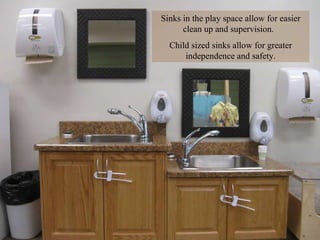
    Sinks in theplay space allow for easier clean up and supervision. Child sized sinks allow for greater independence and safety.
  • 39.
    An open designallows staff to work cooperatively
  • 40.
    Multipurpose Consider thefloor space each piece of furniture takes and how it can be used This piece allows older children to play underneath while providing a safe space for younger children to rest and stay off the floor during active play times
  • 41.
    Opportunities to experimentwith light allow for a feeling of wonder.
  • 42.
    Mirrors in theenvironment are important for infants to learn about the environment and develop their sense of self awareness and identity.
  • 43.
    Mirrors can beused in various areas of the environment
  • 44.
    Mirrors low tothe floor, or on the floor allow infants to view themselves as they move and explore.
  • 45.
    Mirrors in cornersallow viewing from multiple perspectives
  • 46.
    Educators The educatoris the most important aspect of the environment Responsive care is required for optimal child development