1
ENVIRONMENTAL CONTROL
Air Handling, Air Conditioning and
Refrigeration
2
 Environmental control of pharmaceutical cleanrooms is essential to the
manufacture of a quality product.
 Control of such conditions as airborne particulate, microorganisms,
temperature, humidity, differential pressure, airflow, air velocity and
personnel is crucial to protect the product from contamination.
 Therefore, the design, validation and ongoing monitoring of a cleanroom
HVAC system are necessary to assure the quality and safety of the
pharmaceutical product.
Why is environment control needed in a Pharma industry?
Factors contributing to quality products
Starting materials
Personnel
Procedures
Validated processes
Equipment
Premises
Environment
Packing materials
The manufacturing environment is critical for
product quality
1. Light
2. Temperature
3. Humidity
4. Air movement
5. Microbial contamination
6. Particulate contamination
7. Uncontrolled environment can lead to product degradation
product contamination
loss of product and profit
What are contaminants ?
Contaminants are
1. Products or substances other than product
manufactured
2. Foreign products
3. Particulate matter
4. Micro-organisms
5. Endotoxins (degraded micro-organisms)
Cross-contamination is a particular case of contamination
Cross-Contamination
What is Cross-Contamination ?
Contamination of a starting material, intermediate
product, or finished product with another starting
material or product during production.
Cross-Contamination
From where does Cross-Contamination originate?
1. Poorly designed air handling systems and dust extraction
systems
2. Poorly operated and maintained air handling systems and
dust extraction systems
3. Inadequate procedures for personnel and equipment
4. Insufficiently cleaned equipment
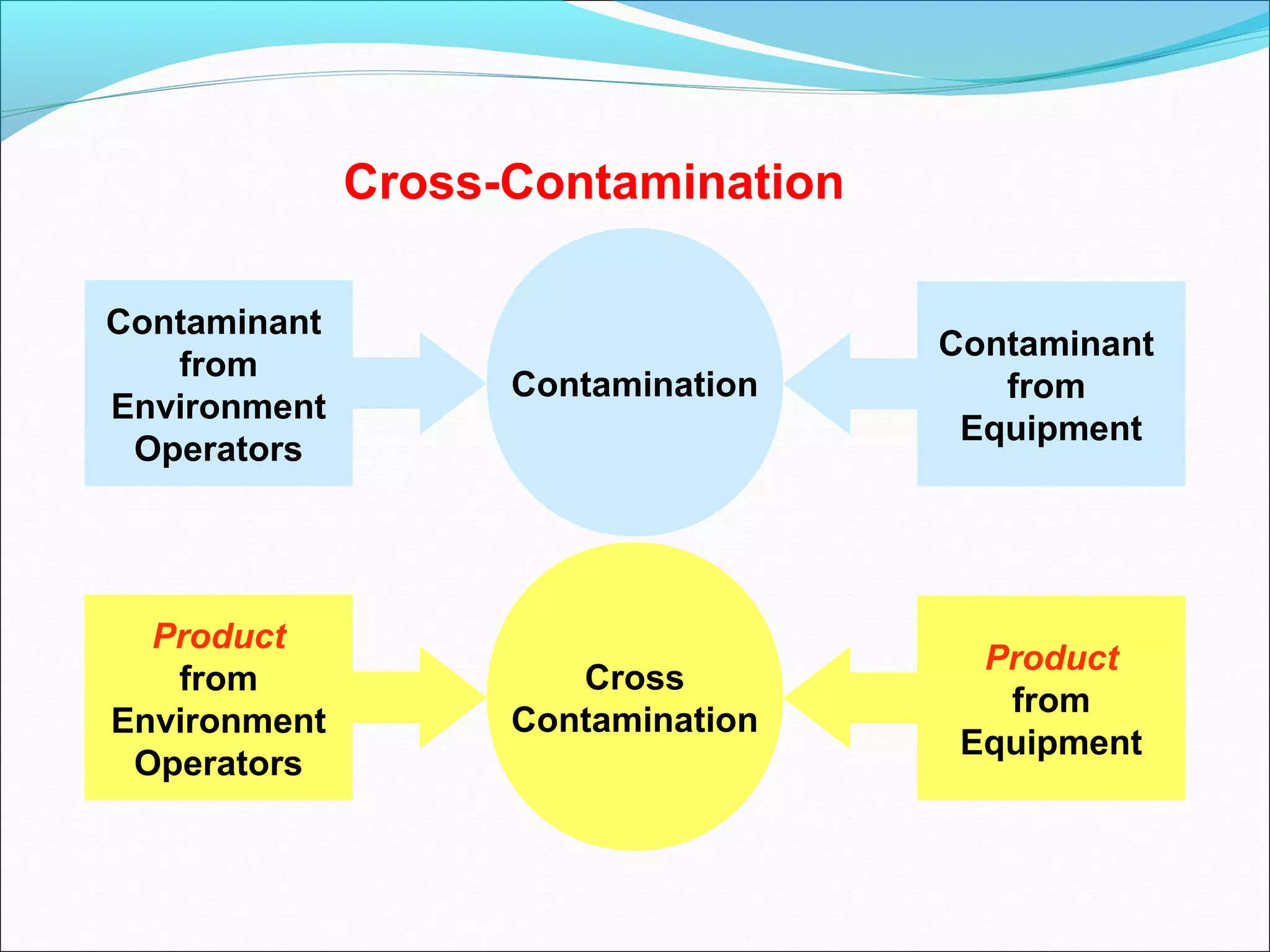
Contamination
Contaminant
from
Environment
Operators
Contaminant
from
Equipment
Cross
Contamination
Product
from
Environment
Operators
Product
from
Equipment
Cross-Contamination
Cross-Contamination
Cross-contamination can be minimized by:
1. Personnel procedures
2. Adequate premises
3. Use of closed production systems
4. Adequate, validated cleaning procedures
5. Appropriate levels of protection of product
6. Correct air pressure cascade
10
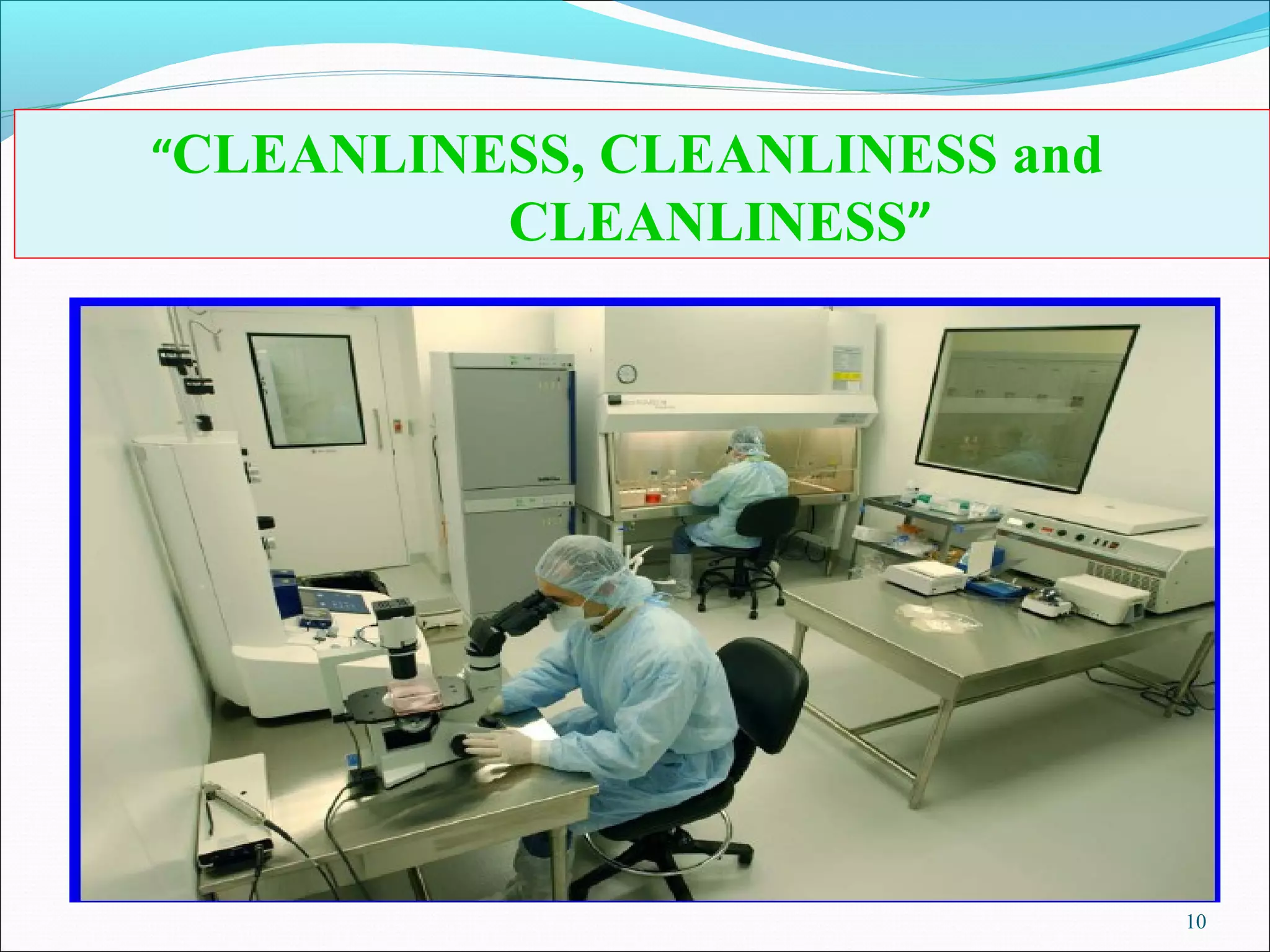
“CLEANLINESS, CLEANLINESS and
CLEANLINESS”
11
12
13
14
A Heating system (“H” in HVAC)
A Ventilating system (“V” in HVAC)
A Cooling system (“AC" in HVAC)
15
16
HVAC
17
HVAC – Heating, Ventilation, Air-conditioning
Temperature
Humidity
Pressure
Ventilation
68°F (20°C) and 75°F (25°C)
30% relative humidity (RH) and 60% RH
A slightly positive pressure to reduce
outside air infiltration.
Rooms typically have several
complete air changes per hour
What can HVAC do?
18
Control airborne particles, dust and micro-
organisms
Maintain room pressure (delta P)
Maintain space moisture (Relative Humidity)
Maintain space temperature
What HVAC can’t do?
1. HVAC can not clean up the surfaces of a
contaminated places, room or equipment
2. HVAC can not compensate for workers who do not
follow procedures
19
Block Diagram
20
Local heating systems
heat source, distributors, and Portable electric heaters, built-in
electric resistance heaters, infrared heaters and wood stoves
Local cooling systems
Air circulation devices, such as paddle or desk fans
Local ventilating systems
Local air-conditioning systems
21
Components Of HVAC System
22
Clean Room
Class
Class Limits "not to exceed" particles per
cu ft for particle sizes shown
0.1µm 0.2µm 0.3µm 0.5µm 5 µm
1 35.0 7.50 3.0 1.0 --
10 350 75.0 30.0 10.0 --
100 -- 750 300 100 --
1000 -- -- -- 1000 7.0
10000 -- -- -- 10000 70.0
10000 -- -- -- 100000 700
Classification Of Clean Room :
REGULATORY POINT OF VIEW
US Federal Standard 209E
HEPA FILTER : At Glance
23
High Efficiency Particulate Air capture a minimum of
99.97% of contaminants at 0.3 microns in size.
Monitoring and Testing of HVAC Clean
Room
Physical
Air borne particulate matter
HEPA integrity
Air Changes per hour
Flow pattern in room
Pressure Diff across filter
Temperature and Humidity
Microbiological
Settling Plate
Slit Plate
Surface Sampling
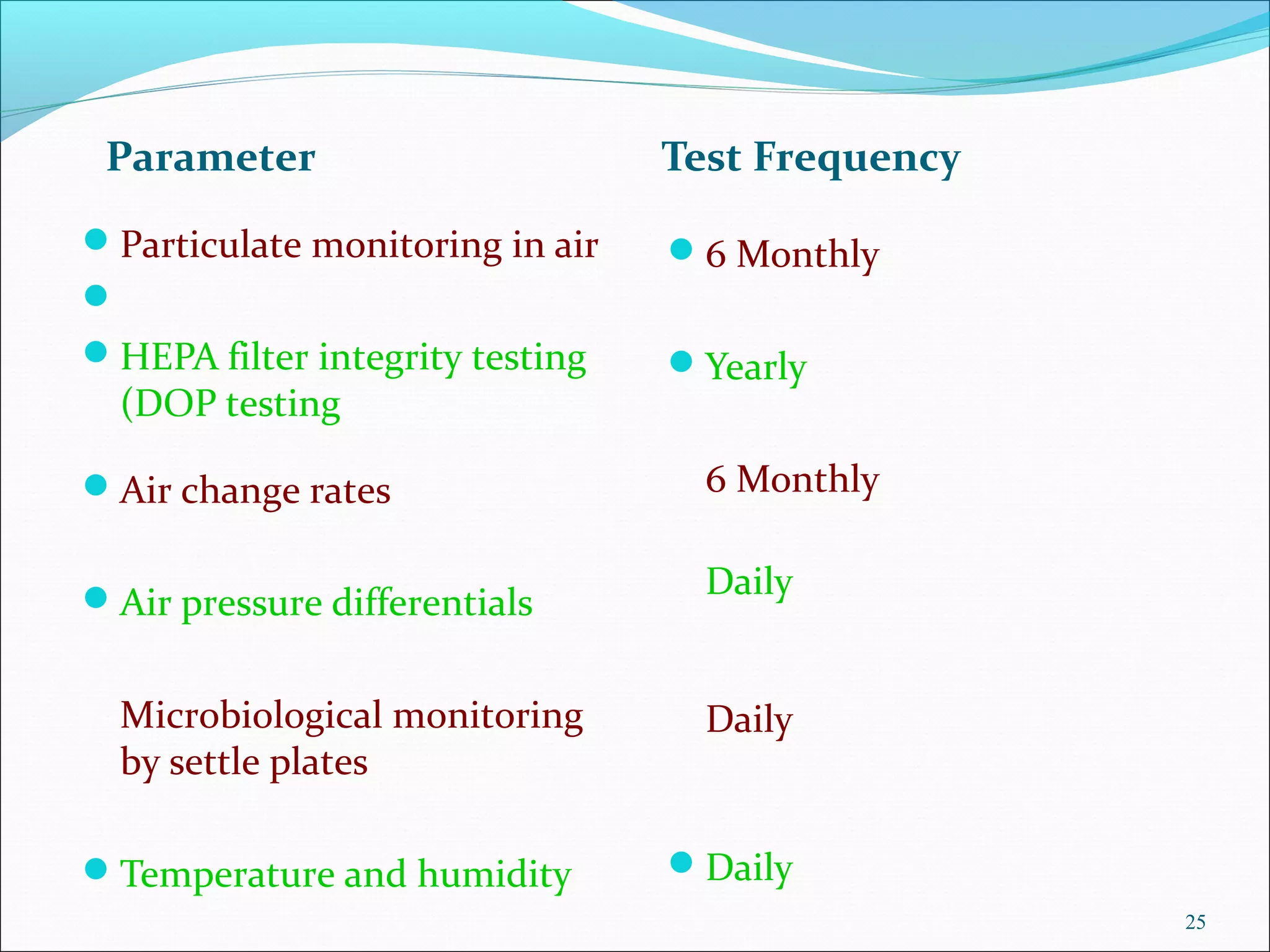
Parameter Test Frequency
Particulate monitoring in air

HEPA filter integrity testing
(DOP testing
Air change rates
Air pressure differentials
Microbiological monitoring
by settle plates
Temperature and humidity
6 Monthly
Yearly
6 Monthly
Daily
Daily
Daily
25
26
Thank you

Environmental Control in Pharma industry

  • 1.
    1 ENVIRONMENTAL CONTROL Air Handling,Air Conditioning and Refrigeration
  • 2.
    2  Environmental controlof pharmaceutical cleanrooms is essential to the manufacture of a quality product.  Control of such conditions as airborne particulate, microorganisms, temperature, humidity, differential pressure, airflow, air velocity and personnel is crucial to protect the product from contamination.  Therefore, the design, validation and ongoing monitoring of a cleanroom HVAC system are necessary to assure the quality and safety of the pharmaceutical product. Why is environment control needed in a Pharma industry?
  • 3.
    Factors contributing toquality products Starting materials Personnel Procedures Validated processes Equipment Premises Environment Packing materials
  • 4.
    The manufacturing environmentis critical for product quality 1. Light 2. Temperature 3. Humidity 4. Air movement 5. Microbial contamination 6. Particulate contamination 7. Uncontrolled environment can lead to product degradation product contamination loss of product and profit
  • 5.
    What are contaminants? Contaminants are 1. Products or substances other than product manufactured 2. Foreign products 3. Particulate matter 4. Micro-organisms 5. Endotoxins (degraded micro-organisms) Cross-contamination is a particular case of contamination
  • 6.
    Cross-Contamination What is Cross-Contamination? Contamination of a starting material, intermediate product, or finished product with another starting material or product during production.
  • 7.
    Cross-Contamination From where doesCross-Contamination originate? 1. Poorly designed air handling systems and dust extraction systems 2. Poorly operated and maintained air handling systems and dust extraction systems 3. Inadequate procedures for personnel and equipment 4. Insufficiently cleaned equipment
  • 8.
  • 9.
    Cross-Contamination Cross-contamination can beminimized by: 1. Personnel procedures 2. Adequate premises 3. Use of closed production systems 4. Adequate, validated cleaning procedures 5. Appropriate levels of protection of product 6. Correct air pressure cascade
  • 10.
  • 11.
  • 12.
  • 13.
  • 14.
    14 A Heating system(“H” in HVAC) A Ventilating system (“V” in HVAC) A Cooling system (“AC" in HVAC)
  • 15.
  • 16.
  • 17.
    HVAC 17 HVAC – Heating,Ventilation, Air-conditioning Temperature Humidity Pressure Ventilation 68°F (20°C) and 75°F (25°C) 30% relative humidity (RH) and 60% RH A slightly positive pressure to reduce outside air infiltration. Rooms typically have several complete air changes per hour
  • 18.
    What can HVACdo? 18 Control airborne particles, dust and micro- organisms Maintain room pressure (delta P) Maintain space moisture (Relative Humidity) Maintain space temperature
  • 19.
    What HVAC can’tdo? 1. HVAC can not clean up the surfaces of a contaminated places, room or equipment 2. HVAC can not compensate for workers who do not follow procedures 19
  • 20.
  • 21.
    Local heating systems heatsource, distributors, and Portable electric heaters, built-in electric resistance heaters, infrared heaters and wood stoves Local cooling systems Air circulation devices, such as paddle or desk fans Local ventilating systems Local air-conditioning systems 21 Components Of HVAC System
  • 22.
    22 Clean Room Class Class Limits"not to exceed" particles per cu ft for particle sizes shown 0.1µm 0.2µm 0.3µm 0.5µm 5 µm 1 35.0 7.50 3.0 1.0 -- 10 350 75.0 30.0 10.0 -- 100 -- 750 300 100 -- 1000 -- -- -- 1000 7.0 10000 -- -- -- 10000 70.0 10000 -- -- -- 100000 700 Classification Of Clean Room : REGULATORY POINT OF VIEW US Federal Standard 209E
  • 23.
    HEPA FILTER :At Glance 23 High Efficiency Particulate Air capture a minimum of 99.97% of contaminants at 0.3 microns in size.
  • 24.
    Monitoring and Testingof HVAC Clean Room Physical Air borne particulate matter HEPA integrity Air Changes per hour Flow pattern in room Pressure Diff across filter Temperature and Humidity Microbiological Settling Plate Slit Plate Surface Sampling
  • 25.
    Parameter Test Frequency Particulatemonitoring in air  HEPA filter integrity testing (DOP testing Air change rates Air pressure differentials Microbiological monitoring by settle plates Temperature and humidity 6 Monthly Yearly 6 Monthly Daily Daily Daily 25
  • 26.