PURCHASE SPECIFICATIONS
AND MAINTENANCE OF
STORES FOR RAW MATERIALS
PRESENTED BY YASH R MENGHANI
M.PHARM 1ST YEAR
SMT.KISHORITAI BHOYAR COLLEGE OF
PHARMACY,KAMPTEE
1QUALITY ASSURANCE & QUALITY CONTROL
WHAT ARE RAW MATERIALS :
 All materials that are used in the manufacturing of the finished bulk
and which are consumed by Person using it are called as raw
materials.
 Raw materials can be either active drug or inactive substances.
 Eg.Hard Gelatin Capsules
2
INTRODUCTION :
 Raw materials, including ingredients, processing aids, and
packaging, are the foundation of finished food products. As such,
they must meet not only specifications, but also regulatory
requirements.
 As such, they must meet regulatory requirements (safe and legal
for intended use) and specifications
3
PURCHASE SPECIFICATION :
Definition :
Written Guidelines That Precisely Define The Operational, Physical, And/Or Chemical
Characteristics, As Well As The Quality And Quantity Of A Particular Item To Be Acquired.
Mode Of Purchasing :
 By Inspection
 By Sample
 By Description Of Brand
 By Grading
4
PURCHASE SPECIFICATIONS :
 Purchase Specifications Should Be Used Whenever Possible In
Purchasing. It is concise Description of the Quality,Size and Weight
required for a particular item.
 REASONS FOR PREPARING SPECIFICATIONS :
 It establish a buying standard of a commodity.
 It informs the supplier in writing precisely what is required.
 It Provides detail information of the goods to the receiving clerk and
storekeeper.
5
Steps involved in purchase procedure :
 1. Purchase requisition
 2. Selection of supplies
 3. Inviting Quotation
 4. Placing the order
 5. Receiving the material
 6. Checking of invoice or bill
 7. Recording of bills in books
 8. Releasing the payment to the supplier
6
RAW MATERIAL SELECTION :
 R&D selects the appropriate raw materials based on functionality.
Functionality can holds multiple areas, such as providing identified
characteristics of the finished product (binders, thickeners, type of
resin for plastic packaging, etc.), organoleptic characteristics (flavor,
color, aroma, texture), product safety characteristics (to lower the pH
or water activity), and preservatives (extension of shelf life, color, or
flavor retention, etc.).
7
SPECIFICATIONS FOR RAW
MATERIALS AND CONTENT OF
INGREDIENTS :
 Specifications for raw materials and ingredients should
contain the following information:
 Name of the material
 A description of the material, including biological, chemical and
physical characteristics
8
 Composition of the material, including additives and processing aids
 Method of production
 Packaging format/s or unit of measure
 Delivery method/s
9
SPECIFICATIONS
 A description of the labelling, lot ID
 Storage conditions and shelf life
 Preparation and/or handling before use
 Acceptance and rejection criteria
10
SPECIFICATIONS
 Special requirements such as allergen information, organic status,
GMO status, fair-trade and ethical sourcing policies
 Information about compliance with statutory and regulatory
requirements, where relevant
 A requirement for suppliers to notify of any authenticity issues with the
product
11
SPECIFICATIONS
 A requirement for suppliers to notify of any changes to the product
 Formal agreement between the supplier and purchaser
 Document control features, such as author, date and page numbers.
12
SPECIFICATIONS
13
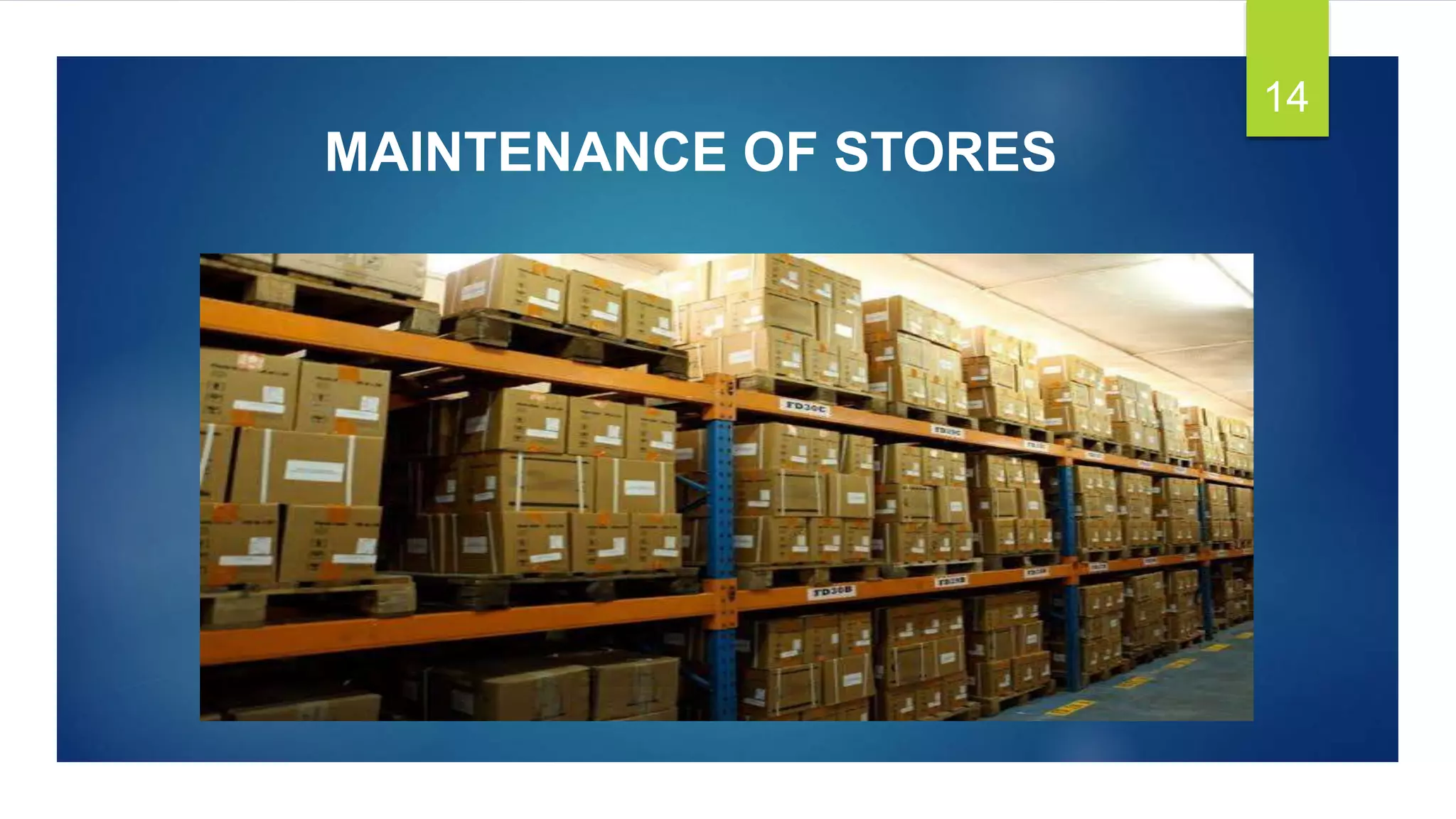
MAINTENANCE OF STORES
14
MAINTENANCE OF STORES
15
MAINTENANCE OF STORES
16
FACILITIES :
 Inspection Centre
 Space For Storing Retained Samples For Quality Control
 Centralised Weighing Room
 Wash Room Quarantine Room
17
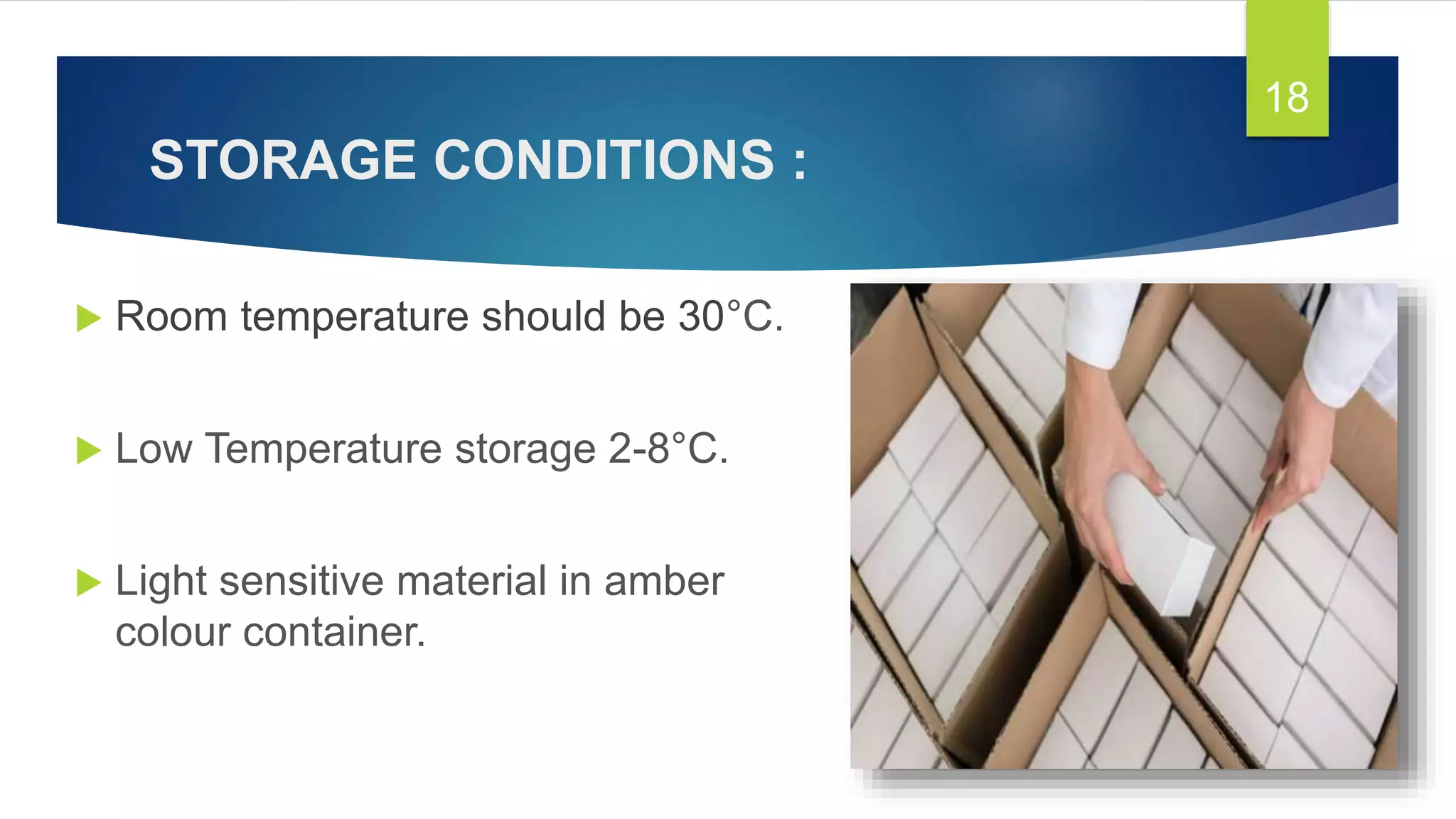
STORAGE CONDITIONS :
 Room temperature should be 30°C.
 Low Temperature storage 2-8°C.
 Light sensitive material in amber
colour container.
18
LABELLING OF MATERIAL IN STORAGE
AREA :
 Designated name of product and internal code reference
 Batch no given by supplier
 Status of content expiry date or date beyond which retesting is
necessary.
19
20

Purchase specifications & Maintenance of stores For Raw materials

  • 1.
    PURCHASE SPECIFICATIONS AND MAINTENANCEOF STORES FOR RAW MATERIALS PRESENTED BY YASH R MENGHANI M.PHARM 1ST YEAR SMT.KISHORITAI BHOYAR COLLEGE OF PHARMACY,KAMPTEE 1QUALITY ASSURANCE & QUALITY CONTROL
  • 2.
    WHAT ARE RAWMATERIALS :  All materials that are used in the manufacturing of the finished bulk and which are consumed by Person using it are called as raw materials.  Raw materials can be either active drug or inactive substances.  Eg.Hard Gelatin Capsules 2
  • 3.
    INTRODUCTION :  Rawmaterials, including ingredients, processing aids, and packaging, are the foundation of finished food products. As such, they must meet not only specifications, but also regulatory requirements.  As such, they must meet regulatory requirements (safe and legal for intended use) and specifications 3
  • 4.
    PURCHASE SPECIFICATION : Definition: Written Guidelines That Precisely Define The Operational, Physical, And/Or Chemical Characteristics, As Well As The Quality And Quantity Of A Particular Item To Be Acquired. Mode Of Purchasing :  By Inspection  By Sample  By Description Of Brand  By Grading 4
  • 5.
    PURCHASE SPECIFICATIONS : Purchase Specifications Should Be Used Whenever Possible In Purchasing. It is concise Description of the Quality,Size and Weight required for a particular item.  REASONS FOR PREPARING SPECIFICATIONS :  It establish a buying standard of a commodity.  It informs the supplier in writing precisely what is required.  It Provides detail information of the goods to the receiving clerk and storekeeper. 5
  • 6.
    Steps involved inpurchase procedure :  1. Purchase requisition  2. Selection of supplies  3. Inviting Quotation  4. Placing the order  5. Receiving the material  6. Checking of invoice or bill  7. Recording of bills in books  8. Releasing the payment to the supplier 6
  • 7.
    RAW MATERIAL SELECTION:  R&D selects the appropriate raw materials based on functionality. Functionality can holds multiple areas, such as providing identified characteristics of the finished product (binders, thickeners, type of resin for plastic packaging, etc.), organoleptic characteristics (flavor, color, aroma, texture), product safety characteristics (to lower the pH or water activity), and preservatives (extension of shelf life, color, or flavor retention, etc.). 7
  • 8.
    SPECIFICATIONS FOR RAW MATERIALSAND CONTENT OF INGREDIENTS :  Specifications for raw materials and ingredients should contain the following information:  Name of the material  A description of the material, including biological, chemical and physical characteristics 8
  • 9.
     Composition ofthe material, including additives and processing aids  Method of production  Packaging format/s or unit of measure  Delivery method/s 9 SPECIFICATIONS
  • 10.
     A descriptionof the labelling, lot ID  Storage conditions and shelf life  Preparation and/or handling before use  Acceptance and rejection criteria 10 SPECIFICATIONS
  • 11.
     Special requirementssuch as allergen information, organic status, GMO status, fair-trade and ethical sourcing policies  Information about compliance with statutory and regulatory requirements, where relevant  A requirement for suppliers to notify of any authenticity issues with the product 11 SPECIFICATIONS
  • 12.
     A requirementfor suppliers to notify of any changes to the product  Formal agreement between the supplier and purchaser  Document control features, such as author, date and page numbers. 12 SPECIFICATIONS
  • 13.
  • 14.
  • 15.
  • 16.
  • 17.
    FACILITIES :  InspectionCentre  Space For Storing Retained Samples For Quality Control  Centralised Weighing Room  Wash Room Quarantine Room 17
  • 18.
    STORAGE CONDITIONS : Room temperature should be 30°C.  Low Temperature storage 2-8°C.  Light sensitive material in amber colour container. 18
  • 19.
    LABELLING OF MATERIALIN STORAGE AREA :  Designated name of product and internal code reference  Batch no given by supplier  Status of content expiry date or date beyond which retesting is necessary. 19
  • 20.